Frequently Asked Questions
The answers provided below are based on answers previously given to customers' questions.
France rewards almost every kind of traveler, and it does so one region at a time. Île-de-France gives you grand museums, river views and boulevards built for strolling, while the French Riviera and Provence trade that pace for sea light, hill villages and lavender country. Normandy carries the weight of modern history along its beaches, and the vineyards of Aquitaine, Burgundy and Champagne turn an ordinary afternoon into a lesson in wine. Farther east, Alsace and Rhône-Alpes mix painted half-timbered lanes with mountain air and some of the most serious cooking in Europe, and the Loire Valley lines its gentle river with royal castles. Down south, Languedoc-Roussillon and Midi-Pyrénées hold Roman monuments, walled citadels and rose-brick squares. Most visitors here book cultural and heritage outings, private sightseeing with a driver, and walking or biking tours, with food and wine woven through almost every plan.
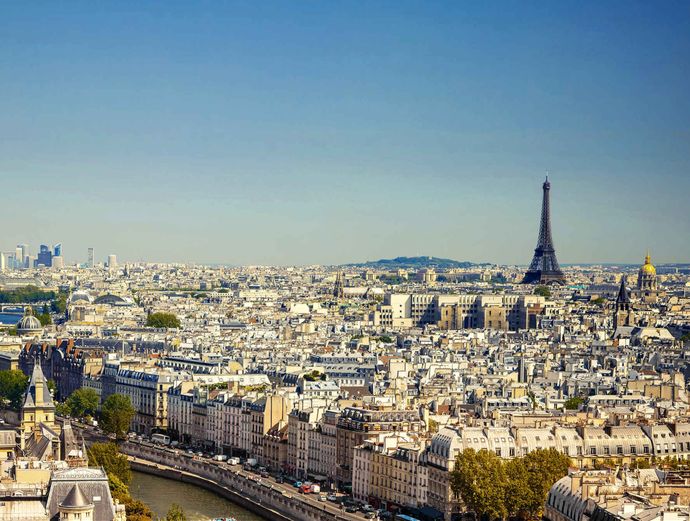
The region around the capital packs more art, architecture and street life into a small area than almost anywhere else on the continent. You can spend a morning among the paintings and sculpture of the Louvre, cross the river for lunch, and finish at the foot of the Eiffel Tower as its lights come on. The old lanes of the 4th Arrondissement, with their courtyards, bakeries and small museums, are made for slow wandering, while the 8th Arrondissement shows a grander face, all wide avenues and elegant shopfronts.
Walking tours and bike rides fit this place naturally, since so much of it sits close together. Heritage guides bring context to the palaces, churches and squares you pass, and private sightseeing with a car suits travelers short on time or on energy. Book museum visits early, because the best-known collections draw long lines on most days.
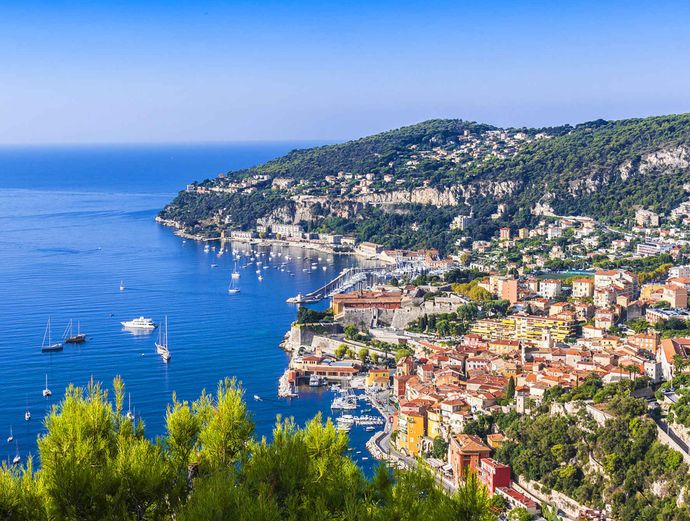
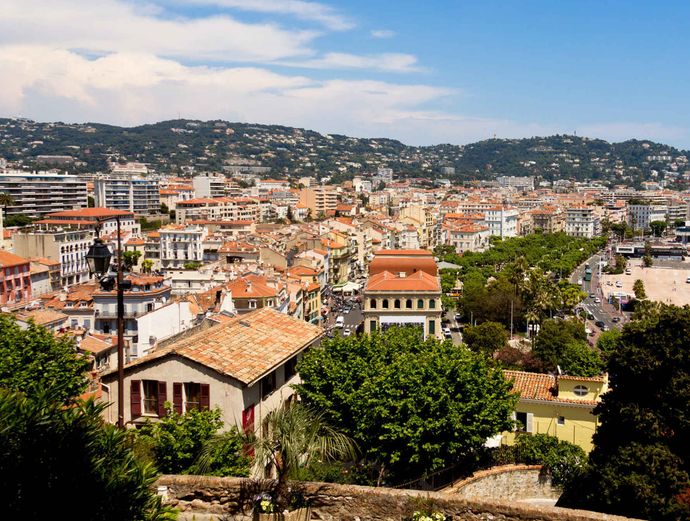
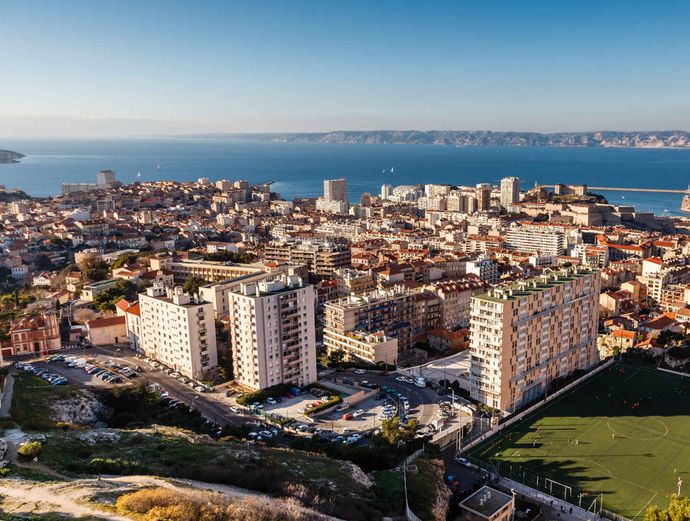
Sun, sea and a long history of glamour set the tone along this stretch of Mediterranean coast. Plenty of visitors arrive by cruise ship, which explains why port transfers and full-day minivan outings are so common here: they let you string several stops together without worrying about trains or parking. A walk along the Promenade des Anglais gives you the classic seafront view of palm trees and pebble beach, and a short drive inland brings you to St Paul de Vence, a walled hilltop village where painters once lived and galleries still fill the lanes.
Just over the border, the Old Town of Monaco sits high on its rock above the harbor, and the Monte Carlo Casino draws people in for its gilded rooms as much as for its tables. Private sightseeing works especially well on this coast, because a driver can fit the day around a ship schedule.
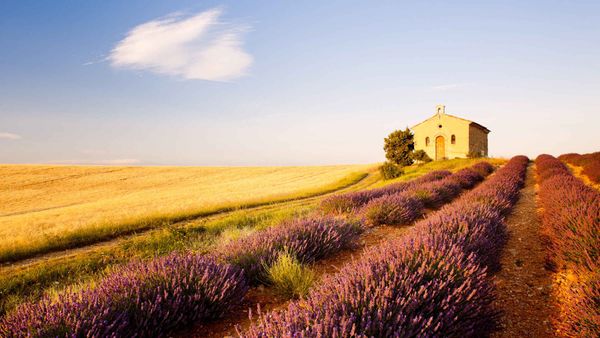
Lavender fields, olive groves and stone villages perched on hilltops give Provence its slow, sunlit character. Day trips by minivan are the usual way in, since its loveliest corners are scattered across the countryside and public transport between them is thin. Roussillon stands out for its ochre cliffs, which color the village walls in shades of rust, gold and red, and the vineyards around Châteauneuf-du-Pape make for a relaxed afternoon of tasting.
The Pont du Gard, a Roman aqueduct bridge of honey-colored stone, ranks among the best-known ancient monuments in the country. On the coast, Notre-Dame de la Garde Basilica (La Bonne Mère) looks down over the old port from its hilltop perch. Cultural outings and private tours that let you linger wherever you like suit the region best.
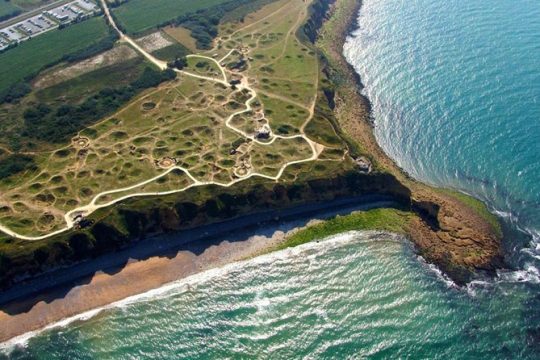
For many travelers, a trip to Normandy means the D-Day landing beaches, and few places in Europe wear their history so plainly. Heritage tours here usually run a full day, often with a private guide and a car, because the landing sites, museums and memorials are spread along a long coastline. Omaha Beach and the cliffs of Pointe du Hoc show you the ground Allied soldiers faced, and the Normandy American Cemetery and Memorial, with its rows of white crosses above the sea, is a deeply moving stop.
Inland, Sainte-Mere-Eglise is remembered for the paratroopers who dropped into its square on the night of the invasion. Away from the war sites, the region greets you with apple orchards, cider, creamy cheeses and timbered farmhouses. Wear comfortable shoes, as you will walk on sand, grass and uneven paths.
Wine draws most people to the southwest, and Aquitaine is home to some of the most celebrated vineyards on earth. Food, wine and nightlife outings lead the way, from tastings at grand estates to evenings spent sampling regional dishes. In town, the classical sweep of the Place de la Bourse (Place Royale) and the shallow reflecting pool in front of it set the scene for a walk through the old quarter.
Porte Cailhau, a turreted gate, and the Grosse Cloche, an old bell tower, recall the medieval town, while the columned Grand Theatre still stages opera and ballet. Cultural walks pair well with a day among the vines, and minivan tours carry small groups out to the estates so nobody has to drive after tasting.
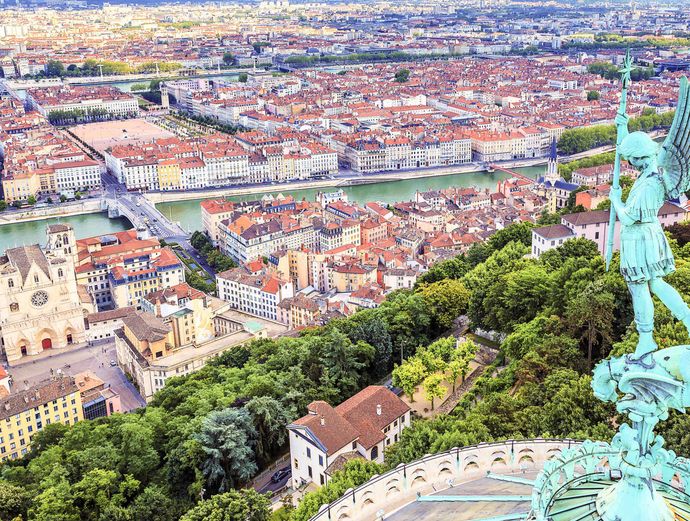
Ask a French chef where to eat and the answer often points here. The region's main city is a natural base for food lovers, with traditional bistros, covered markets and a proud cooking culture, and its slopes and old quarters are best explored on foot or by bike. Bellecour Square (Place Bellecour), a vast open plaza, makes an easy starting point, and a climb from the river brings you to the Basilica of Notre-Dame de Fourvière (Basilique Notre-Dame de Fourvière), whose terrace looks out over a sea of rooftops.
On the hill of Croix-Rousse, once home to silk weavers, walking guides lead you through covered passageways tucked between buildings. When you need a break, Tête d'Or Park (Parc de la Tête d'Or) offers a lake, rose gardens and wide lawns.
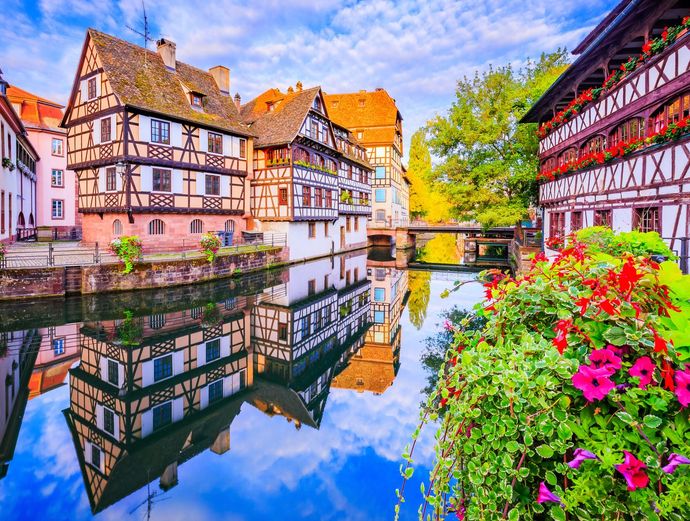
Brightly painted half-timbered houses, flower boxes on every sill and a culture that blends French and German roots make Alsace feel like a small world of its own. Walking tours are the best fit. In La Petite France, canals wind between the old houses of tanners and millers, and the Vauban Dam (Barrage Vauban) has a rooftop terrace overlooking the covered bridges. Place Gutenberg, named for the printing pioneer, is a lively square close to the cathedral.
Out in the countryside, the Château du Haut-Koenigsbourg watches over the plain from a forested ridge, a restored medieval castle well worth the climb. Private sightseeing and cultural tours often add a drive along the wine route, where small villages pour crisp local whites.
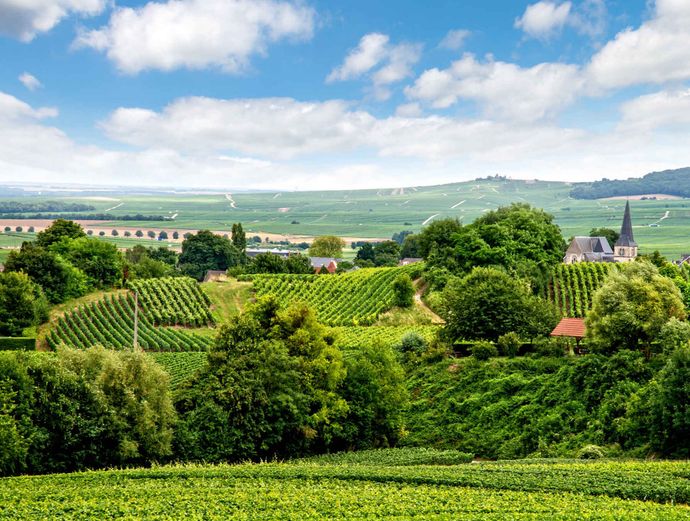
Only sparkling wine from this corner of the northeast may carry its name, and a visit here revolves around the bubbles. Wine tastings and cellar visits fill most itineraries, usually by minivan so you can sip without a care. Deep underground, Moët & Chandon Champagne Cellars (Les Caves Moët & Chandon) stretch through long chalk tunnels lined with bottles. Pommery Champagne (Domaine Pommery) pairs its old cellars with modern art, and Champagne Mercier is famous for a giant barrel and a little train that carries visitors through its galleries.
Above ground, the hilltop village of Hautvillers, linked to the monk who helped shape the wine's story, looks out over terraced vines and a quiet river valley. Pack a light layer, since the cellars stay cool.
This sunny southern region runs from salt marshes near the Rhône to the Spanish border, mixing Roman ruins, medieval fortresses and a relaxed Mediterranean rhythm. Nimes keeps a Roman arena and temple still in use, which makes it one of the best places in France to see ancient buildings up close. Farther west, the Count's Castle in Carcassone Citadel (Chateau Comtal) stands at the heart of a double ring of walls and pointed towers.
Place de la Comédie, a broad pedestrian square, and the paintings of the Musée Fabre give the region's lively university city its character. Walking and heritage tours, often with a private guide inside the citadel, are the natural choice.
Rolling hills, small stone villages and some of the most respected wines in the world give Burgundy a quiet, rural charm. The Route des Grands Crus, a road threading through famous vineyards, is the easiest way to sample it, and tasting tours by minivan let you visit cellars without driving. Clos de Vougeot, a walled vineyard with a historic château first built by monks, tells the story of how winemaking here began.
The regional capital brings an urban side to a wine trip. Place de la Liberation, a half-moon square facing the old ducal palace, is the center of town life, and the Jardin Darcy offers a calm park with fountains.
Kings and nobles built hundreds of castles along this gentle river, and seeing a few of them is the main reason to come. Château de Chenonceau, which spans the water on graceful arches, is the one most visitors put first. Amboise, a pretty riverside town, has its own royal fortress, Château d’Amboise, and just up the lane the Château du Clos Lucé was the final home of Leonardo da Vinci.
Cultural and heritage tours, often by private car or small van, are the simplest way to link several castles in one day. Biking along the flat riverside paths is another favorite.
Warm pink brick and a strong southwestern flavor set this region apart. Its main city is nicknamed the Pink City for the color of its buildings, and walking tours move from the Place du Capitole, the grand central square, to St. Sernin Basilica (Basilique Saint-Sernin), among the largest Romanesque churches in Europe. The Pont Neuf crosses the river on wide brick arches, a lovely spot at dusk.
Albi, a short trip away, has a vast red-brick cathedral and a museum honoring a famous local painter. South of the cities, the mountains offer hiking, thermal springs and sleepy villages.
Beyond the best-known regions, France has plenty of quieter corners, ports and gateways worth a look.
#1The Eiffel Tower is the wrought-iron lattice tower on the Champ de Mars in Paris, rising beside the Seine and visible from much of the city. Built as the grand entrance to a world's fair in the late 19th century, it became the lasting symbol of Paris, and visitors come to ride up through its ironwork for sweeping views over the rooftops.The tower was designed and built by the engineering firm of Gustave Eiffel. Two of his engineers, Maurice Koechlin and Émile Nouguier, drew the first sketches, and the architect Stephen Sauvestre gave it its arches and finish. It went up for the Exposition Universelle that marked the centenary of the French Revolution, and when it opened it was the tallest structure in the world. Not everyone was pleased. A group of prominent artists and writers published an angry protest against what they saw as a useless iron monster spoiling the city.The tower was only meant to stand for a couple of decades, but it proved its worth for science, as a weather station and a platform for radio experiments, and it was allowed to stay. Over time the protests faded and Parisians claimed it as their own. It has been repainted by hand many times, always in its familiar bronze-brown shade, with tones that shift subtly from base to top so it looks even against the sky.Up close, the structure is a lesson in engineering: crisscrossing girders held by countless rivets, curved legs meeting in wide arches, and the names of French scientists and engineers engraved around the first level. Higher up, views open over the river, the lawns of the Champ de Mars and the grand boulevards, and at the very top you can peek into Eiffel's own restored office. After dark the tower glows gold and bursts into sparkling lights at the start of each hour. A guide can share the stories of its building and the rivalries it stirred.
More
#2The district is easy to explore on your own, but a guided walk adds the stories behind the mansions of the Marais, Place des Vosges, the old Jewish quarter around Rue des Rosiers and the two islands. Some interiors open only on organized visits. Food-focused and history walks both work well here. A boat trip along the Seine shows the quays of Île Saint-Louis and Île de la Cité from the water. This is a walking district of narrow streets, cafés and shops, so plan a half day on foot and wear comfortable shoes. Place des Vosges is open at all hours, and the Maison de Victor Hugo museum sits on the square. Île Saint-Louis has no set hours and is pleasant to circle along the quays, with its well-known ice cream shop on the main street. The interior of the Hôtel de Sully opens only on organized visits, though you can see its garden and orangery. Museums and churches set their own hours, so check each one before you build a route around it.
More
#3The 8th arrondissement is easy to explore on foot, and a walk from Place de la Concorde up the Champs-Élysées to the Arc de Triomphe covers its best-known stretch. Guided walking tours add history and stories behind the avenues, palaces and shops. Bus and evening itineraries can pair the district with nearby sights, and a guide helps you fit more into a day. The district suits walkers, shoppers and architecture lovers, and a few hours is enough to cover the Champs-Élysées and the main landmarks. The roundabout around the Arc de Triomphe is very busy, so use the underground passage to reach the monument. The Arc de Triomphe has a ticketed climb to the top for those who want the view. The Madeleine church is a working church, so dress modestly and keep quiet during services. Parc Monceau, in the northwest of the district, is a green place to rest between the shopping streets.
More
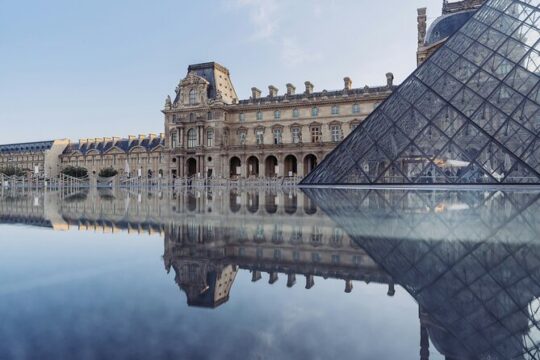
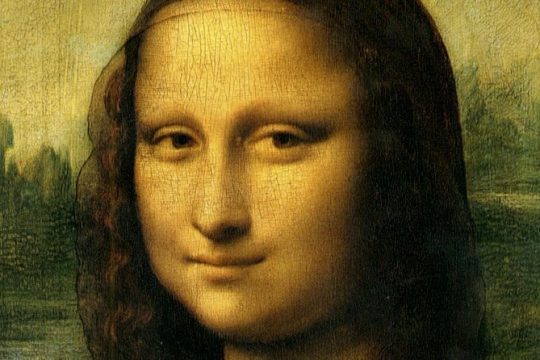
#4The Louvre is the great art museum of Paris, set in a former royal palace on the right bank of the Seine. It is one of the largest museums in the world, and visitors come for masterpieces such as the Mona Lisa and the Venus de Milo and for a collection that spans ancient civilizations to the 19th century.The building began as a fortress. In the late 12th century, King Philip Augustus built a stronghold here to guard the western side of Paris, and its massive foundations can still be seen beneath the Sully wing. Later kings turned the fortress into a palace, and from the Renaissance onward one ruler after another added wings, courtyards and grand galleries. When Louis XIV moved the court to Versailles, the Louvre was left to artists and academies, and during the French Revolution it opened as a public museum. Napoleon filled it with art taken during his campaigns, and in the late 20th century the glass pyramid by the architect I. M. Pei was added in the main courtyard as the new entrance.The collections are divided among three wings. The Denon wing holds the best-known Italian paintings, including Leonardo da Vinci's Mona Lisa, as well as large French canvases such as The Raft of the Medusa and Liberty Leading the People. At the top of a broad staircase stands the Winged Victory of Samothrace, a Greek statue of a goddess landing on the prow of a ship.The Sully wing is home to Egyptian antiquities, Greek sculpture including the Venus de Milo, and the remains of the medieval fortress. The Richelieu wing has the ancient Near East, with the law code of Hammurabi, along with Dutch and Flemish painting and the lavish apartments of Napoleon III. A knowledgeable guide makes a route through it all far easier to choose.
More
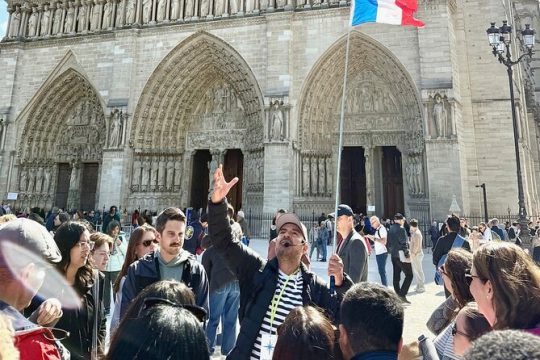
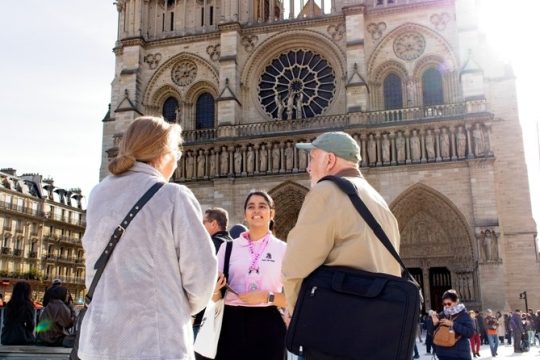
#5Notre Dame Cathedral is the great Gothic cathedral on the Île de la Cité in the heart of Paris, and for centuries it has stood at the center of the city's religious and civic life. People come to see its twin-towered facade, flying buttresses and rose windows, and the restored interior where light filters through medieval stained glass.Construction began in the 12th century under Bishop Maurice de Sully and continued for nearly two centuries, as masons raised one of the first great churches to use flying buttresses. Over the years it saw royal weddings, the coronation of Napoleon as emperor and a service celebrating the liberation of Paris at the end of the Second World War. Badly damaged during the French Revolution, it was later rescued by a wave of public affection sparked partly by Victor Hugo's novel.In the 19th century the architect Eugène Viollet-le-Duc led a long restoration, adding a slender spire and the gallery of chimeras, the brooding stone creatures that peer down over the rooftops. In the early 21st century a fire destroyed the roof and spire, and the cathedral closed for years while craftspeople rebuilt the timber frame, restored the vaults and cleaned the walls before it reopened to worshippers and visitors.The west front is carved with three great portals, including the Last Judgement at the center, with rows of saints, kings and biblical scenes above them. Inside, the long nave rises to ribbed vaults, chapels line the sides, and the three rose windows glow in deep blues and reds. The treasury holds precious relics and liturgical objects, and on the square outside, a bronze marker sets the point from which road distances across France are measured.
More
#6The Orsay Museum, or Musée d'Orsay, is a major art museum in a former railway station on the Left Bank of the Seine in Paris. It holds the world's largest collection of Impressionist and Post-Impressionist paintings, and visitors come for works by Monet, Renoir, Degas, Van Gogh and Cézanne beneath a soaring glass and iron roof.The building began as the Gare d'Orsay, a grand station and hotel designed by Victor Laloux for the Paris world's fair at the turn of the 20th century. Within a few decades its platforms were too short for modern trains, and the station slowly fell out of use. It served as a mail center, a film set and a theater before plans to demolish it gave way to the idea of turning it into a museum, which opened late in the 20th century.The collection bridges the gap between the old masters of the Louvre and the modern art of the Pompidou Centre, covering painting, sculpture, photography and decorative arts from the middle of the 19th century to the eve of the First World War. Highlights include Manet's Olympia and Luncheon on the Grass, Monet's views of Rouen Cathedral, Renoir's Dance at Le Moulin de la Galette, Whistler's portrait of his mother and Van Gogh's self-portraits. Degas's dancers, Cézanne's apples and Gauguin's Tahitian scenes extend an almost endless list.The station itself is part of the show. Sculptures line the long central nave beneath the vaulted roof, gilded mirrors and chandeliers survive in the former hotel's dining room, and from the upper floor you can look across the river toward the Louvre and Montmartre through the glass face of a giant clock. Rooms of Art Nouveau furniture and a cutaway model of the Opera district add surprising detail.
More
#7Most visitors cross the bridge on their own as part of a riverside walk between the Champs-Élysées and Les Invalides. A guided walking tour explains the sculpture and the world fair that the bridge was built for. River cruises pass beneath the arch, giving a different view of the lamps and statues, and many itineraries pair the bridge with the Grand Palais, the Petit Palais and the Eiffel Tower. The bridge is a public crossing over the Seine, so you can walk across it at any hour. Allow 20 to 30 minutes for photos and details, longer if you add the Grand Palais or the Petit Palais. Look closely at the Art Nouveau lamps, cherubs, nymphs and winged horses along the span. Four gilded statues stand on stone bases at the corners, each one topped by a winged horse.
More
#8The Place de la Concorde is the largest square in Paris, a vast open space between the Tuileries Garden and the Champs-Élysées. Crowned by an ancient Egyptian obelisk and flanked by grand fountains, it offers sweeping views and a dramatic past, for this is where the French Revolution played out some of its darkest scenes.The square was laid out in the 18th century by the architect Ange-Jacques Gabriel to honor King Louis XV, whose equestrian statue stood at its center. During the Revolution the statue was torn down, the space was renamed Place de la Révolution, and the guillotine was set up here. Louis XVI and Marie Antoinette were among those executed before large crowds, followed later by revolutionaries such as Danton and Robespierre. Afterward the square received its present name, chosen to signal reconciliation after years of bloodshed.The centerpiece arrived in the 19th century. The Luxor Obelisk, a pink granite monolith that once stood at the entrance to the Luxor Temple in Egypt, was a gift from Egypt's ruler Muhammad Ali, and its journey to Paris by river and sea took years. Its sides are carved with hieroglyphs celebrating the pharaoh Ramesses II, and its gilded cap was added much later to replace one lost in antiquity. Diagrams on the base show the machinery used to raise it into place.Around the obelisk, two great fountains by the architect Jacques Ignace Hittorff celebrate France's rivers and seas with bronze tritons, nymphs and river gods. Seated figures at the corners represent French cities, and the one for Strasbourg was draped in black for decades after the city was lost to Germany. Along the north side rise two matching colonnaded palaces by Gabriel, now the Hôtel de Crillon and the Hôtel de la Marine. A guide can trace the grand sight lines that link the square to the Louvre, the Arc de Triomphe and the Madeleine.
More
#9You can wander the island on your own, crossing the Seine bridges between the cathedral, the courts and the tip of the island. A guided walking tour adds the medieval history, and many include timed entry to Sainte-Chapelle or the Conciergerie so you spend less time in line. Combine a walk with a Seine river cruise that passes the island, or follow it with a tour of the Latin Quarter next door. The island is small and flat, so you can see its main sights on foot in a few hours. Notre-Dame, Sainte-Chapelle and the Conciergerie each have their own entrance and queue, and security checks apply at the monuments. Sainte-Chapelle and the Conciergerie are close together, so many visitors plan them back to back. Wear comfortable shoes, since the streets and bridges are cobbled in places. The Flower Market on Place Louis-Lépine and the riverside park at the western tip are free to enjoy.
More
#10The 5th arrondissement is easy to explore on foot, but a guided walk helps you read its layers, from Roman arenas and medieval colleges to the Panthéon and the old university streets. Walking tours of the Latin Quarter often include literary cafés and hidden courtyards. Food tours along Rue Mouffetard and combined itineraries with Notre-Dame and the Seine are also popular. Allow a half day to a full day to cover the Panthéon, the Latin Quarter streets and the Jardin des Plantes at an easy pace. The Panthéon has an outside ramp and a lift serving the nave, and strollers are allowed inside. The Panthéon has no cloakroom or lockers, and food, drink, helmets and scooters are not allowed in. Streets around the Sorbonne and Rue Mouffetard are cobbled and hilly, so wear comfortable shoes. Cafés and bistros are packed along the main streets, so many visitors plan a lunch stop between sights.
More
#11The Grand Palais is a vast exhibition hall in Paris, standing between the Champs-Élysées and the Seine. Famous for its great glass and steel roof, it hosts major art exhibitions, fairs, fashion shows and public events, and people come as much to stand beneath its soaring nave as to see whatever is on inside.The building went up for the Universal Exhibition held in Paris at the turn of the 20th century, along with the Petit Palais across the street and the Alexandre III Bridge nearby. Its architects paired a classical stone facade with an iron framework and one of the largest glass roofs in Europe, a bold mix of tradition and engineering for the time. Over the following decades it held motor shows, aviation fairs, horse shows and art salons, and it was put to military use during both world wars. A long restoration has since refreshed the nave and reopened spaces that had been shut for years.The great draw is the nave itself, a long hall under a curved glass vault that floods with daylight, ringed by balconies and green-painted ironwork full of Art Nouveau curves. Outside, look up at the bronze horse-drawn chariots that crown the corners of the building, and at the sculpted friezes, columns and mosaics along the front. Inside, the program shifts from blockbuster painting shows to contemporary installations, concerts and design fairs, so each visit can feel quite different. The Palais de la Découverte, a science museum, has long occupied the western wing.The building rewards a slow look, since the staircases, railings and roof joints are as carefully designed as the facade. A guide can point out details that are easy to miss, such as the meaning of the sculpture groups and the engineering that holds up the glass.
More
#12The Hôtel de Ville is the Paris city hall, a grand neo-Renaissance palace on a broad square on the Right Bank, steps from the Seine. People come to admire its richly carved facade, to see where Paris has been run since the Middle Ages, and to stand on a square that has witnessed many of the city's turning points.The city's merchant leaders moved their council to this spot in the 14th century, when the square was the Place de Grève, a gravelly riverbank where boats unloaded goods and executions drew crowds. Workers seeking jobs also gathered here, and the French expression for going on strike, faire grève, is said to come from the square. In the 16th century Francis I ordered a new Renaissance building, designed by the Italian architect Domenico da Cortona.That palace did not survive. In the final days of the Paris Commune, insurgents set it alight, and the fire gutted the interiors and destroyed the city's archives. The building you see now went up in the late 19th century, echoing the old design outside but larger and far more ornate. The roofline rises in steep slate pavilions, dormers and a central clock tower, in the manner of a French Renaissance chateau. Statues of famous Parisians, from writers and artists to scientists and statesmen, stand in niches across the facades. Inside, the ceremonial halls glitter with gilding and painted ceilings, and the long Salle des Fêtes is often likened to the Hall of Mirrors at Versailles.The square has remained a stage for history. Revolutionaries seized the building more than once, and at the liberation of Paris in the Second World War, Charles de Gaulle gave his famous speech hailing the freed city here. A guide can match the statues to their names and connect the building to the uprisings and celebrations staged in front of it.
More
#13The Arc de Triomphe is the great triumphal arch at the top of the Champs-Élysées in Paris, standing in the middle of the circle where twelve avenues meet. It honors those who fought for France, and people come for its sculpture, its national memorial and the sweeping view from its roof.Napoleon ordered the arch in the early 19th century, after his victory at Austerlitz, to celebrate the achievements of his armies. Its design, by the architect Jean Chalgrin, drew on the triumphal arches of ancient Rome but on a far grander scale. Work slowed and stopped as Napoleon's fortunes fell, and the monument was only finished under King Louis-Philippe, who dedicated it to all the armies of the Revolution and the Empire. Napoleon himself passed beneath it only in death, when his remains returned to Paris.The arch has framed many of the defining moments of French history since. The writer Victor Hugo lay in state beneath it, victory parades marched through it at the end of both world wars, and the national day parade still sets off from here. Beneath the vault lies the Tomb of the Unknown Soldier, a French soldier of the First World War, and its eternal flame is rekindled each evening in a short ceremony attended by veterans' groups.Look closely and the arch is covered in detail. Large sculpture groups adorn the pillars, the best known being François Rude's Departure of the Volunteers, often called La Marseillaise, with a winged figure of Liberty urging soldiers forward. The inner walls are carved with the names of battles and of hundreds of generals, and a small museum inside the attic tells the monument's story. From the terrace on top, the avenues fan out in a star toward the city's landmarks. A guide can decode the reliefs and the stories hidden in the names.
More
#14The Conciergerie is a Gothic former royal palace on the Île de la Cité in the heart of Paris, later the most feared prison of the French Revolution. Visitors come for its vast vaulted medieval halls, the cells where prisoners awaited the guillotine, and the place where Marie Antoinette spent her final weeks.The palace was the seat of French kings from the early Middle Ages, and Philip the Fair rebuilt it on a grand scale around the start of the 14th century. When the royal household moved to the Louvre and other residences later that century, the building passed to the courts and the royal administration. A royal officer called the concierge ran the place and its prison, and the name stuck.During the Revolution the Revolutionary Tribunal sat in the same palace, and the Conciergerie became the last stop before the scaffold for many victims of the Terror. Marie Antoinette was held here, and so, in their turn, were Danton and Robespierre. After the monarchy returned, a chapel was built on the site of the queen's cell in her memory, and other rooms now recreate prison life, from straw-covered common cells to the slightly better quarters of inmates who could pay for a bed.The highlight for many is the Hall of Men-at-Arms, a forest of Gothic columns and ribbed vaults that once fed the palace staff and ranks among the largest surviving medieval halls in Europe. Look too for the vaulted Guard Room, the Women's Courtyard where female prisoners washed and took the air, and, outside, the pointed riverside towers and the corner clock tower that carries the oldest public clock in Paris. A guide brings back the voices of the guards, judges and condemned who once crossed these echoing rooms.
More
#15Pont Neuf is the oldest standing bridge across the Seine in Paris, even though its name means New Bridge. It strides over the river where the Île de la Cité narrows to a point on its west side, and people come for its carved stone faces, the statue of Henry IV and some of the finest river views in the city.Work began under Henry III in the late 16th century and was finished under Henry IV in the early 17th. The bridge broke with tradition in ways that changed how Parisians used their city. Earlier bridges were lined with houses, but this one was left open, with raised walkways that kept pedestrians out of the mud and the traffic, among the first of their kind in Paris. Its two spans meet on the island, and the half-round bays above each pier, once crowded with peddlers, tooth pullers and street performers, made it the busiest public stage in town for generations.Look along the cornice to find the mascarons, a long row of carved heads of woodland spirits and satyrs that grin, scowl and pull faces at the river below. Where the bridge touches the island stands the bronze horseman of Henry IV, the king who opened it. The first statue was melted down during the French Revolution, and the one in its place was cast in the early 19th century. Below it lies the Square du Vert-Galant, a leafy point named after the king's reputation as a ladies' man.Renoir and Pissarro painted it, filmmakers have used it as a backdrop, and the artist Christo once wrapped the entire bridge in sand-colored fabric. From the benches you look downstream toward the Louvre and the Pont des Arts, and upstream along the quays of the island. A guide can bring back the bustle that once filled the bridge and explain how it shaped the city around it.
MoreFrench days often start with a guided walk or a drive into the countryside, then slow right down over a long lunch. Cultural and heritage outings, private drives and food and wine tours are what most people book.
Many travelers pair a few busy days in Île-de-France with slower stretches in Provence, Normandy or the vineyards of Burgundy, where evenings end over regional wine.
The country suits first-time visitors, couples, history fans and families, and private options with a driver make it easy to set your own pace.
Late spring and early fall are the easiest seasons, with mild days and open vineyards in most regions. September and October bring the harvest to Champagne, Burgundy and Aquitaine, a lively time for tastings.
July and August are hot and busy, so go for the sea on the French Riviera, in Corsica or in Brittany, and book boat trips and coastal outings early.
Winter is cool and quiet, a good time for museums in Île-de-France and the Christmas markets of Alsace, while Rhône-Alpes turns to skiing.

The answers provided below are based on answers previously given to customers' questions.