Save Today Black Friday 06HRS 52MIN 38SEC Up to 20% off gift cards BLACK FRIDAY
GIFT CARD SAVINGS
$100 – $249SAVE 5% $250 – $499SAVE 10% $500 – $999SAVE 15% $1,000+SAVE 20% Shop gift cards Discount applied automatically at checkout. Each card keeps its full value.
Save Today Black Friday 06HRS 52MIN 38SEC
UP TO 20% OFF GIFT CARDS
$100–$249(save 5%) $250–$499(save 10%) $500–$999(save 15%) $1,000+(save 20%)
Shop gift cards Discount applied automatically at checkout. Each card keeps its full value.
Nice

Cool things to do in Nice

Welcome to Nice

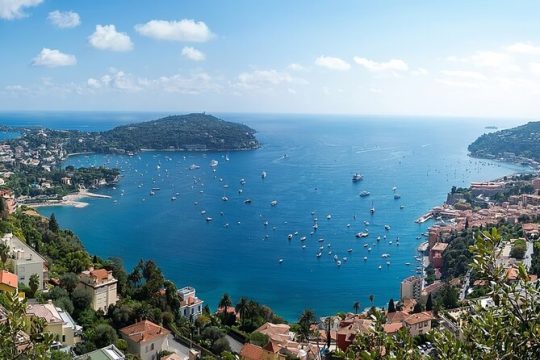
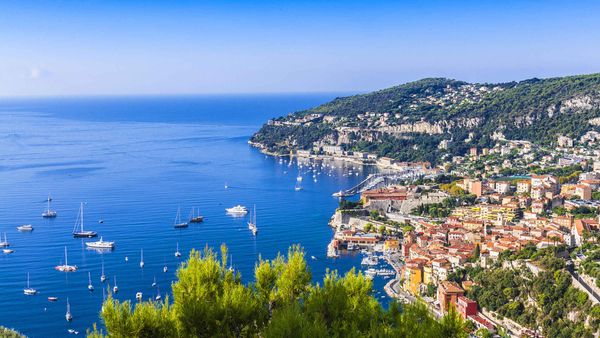
Nice is the natural base for exploring the French Riviera, and its own streets are just as rewarding as the coast it opens onto. You can start a morning among the stalls of the Cours Saleya Flower Market, walk the length of the Promenade des Anglais beside the pebbled shore, and climb Castle Hill for a view across the Baie des Anges. Beyond the city, perched villages and the principality of Monaco are close enough for a day out. Most of the hundreds of experiences here are private, and more than half include pickup from your hotel, which makes the winding hill roads easy to enjoy without driving them yourself.

Old Nice and the seafront

Nice Old Town, or Vieux Nice, is a tangle of ochre and pink buildings, Baroque chapels and narrow lanes where you will find socca, the chickpea pancake that locals eat warm from the pan. A walking tour links the old town with Massena Square, the grand open plaza that marks the edge of the newer city, and then with the long seafront. Shorter walks of a couple of hours are a good first-day plan and leave you free to return to a beach chair or a cafe on the Cours Saleya by afternoon. Castle Hill rewards the climb with a park, an artificial waterfall and views along the whole curve of the bay, and a lift spares you the steps if you prefer.

Monaco, Eze and the perched villages

The largest share of experiences from Nice are full-day outings, and the classic route runs east along the corniche roads. Eze clings to a rocky peak above the sea, with an exotic garden at the top and perfume makers below. In Monaco you can walk the Old Town of Monaco on its rock, watch the changing of the guard outside the Prince's Palace, and see the Belle Epoque facade of the Monte Carlo Casino in the evening light. Heading inland instead brings you to St Paul de Vence, a walled village long loved by artists, and higher still to Gourdon on its cliff edge and Tourrettes, known for violets and craft workshops. Many day trips combine several of these, so check how long you have in each.

Cruise days and practical choices

About a third of the experiences are set up for cruise passengers, with port pickup and a return timed for the ship, which is worth confirming before you book. Free cancellation applies to nearly every option. Only some tours are marked as suitable for children, and the long drives and village steps can tire small legs, so families may prefer shorter outings. Evening outings are fewer, though a night drive to Monaco to see the casino lit up is a favorite with couples. A few points to check:

  • Whether the casino visit includes entry, and its age and dress rules
  • How many villages fit into the day
  • Whether pickup is at your hotel or a central point

A balanced stay gives one day to Nice itself, one to Monaco and Eze, and one to the hill villages.

Read more
Top 15 attractions in Nice
Promenade des Anglais#1
4.8 (7,069)

Promenade des Anglais

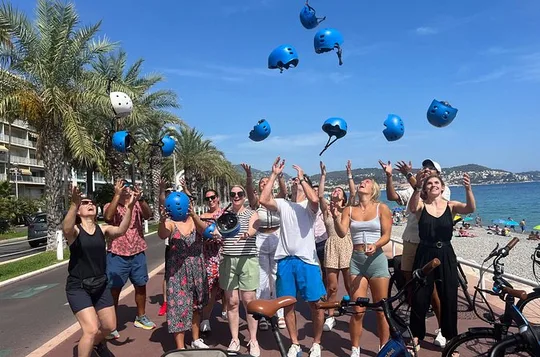
You can walk, rent a bike or use bike-share along the full length at your own pace. A guided walking tour adds the story of the English community who funded the first path, and often links the promenade with Old Town and the harbor. Guided bike tours cover more of the seafront in less time and suit anyone who wants to see beyond the center. La Prom is a public seafront walkway about 7 kilometers long, open to everyone at any hour. Plan on a few hours to walk the full length, or pick a section near the center. You share the space with cyclists, in-line skaters and families, especially on Sundays, so stay aware of the bike lane. The coastal road runs alongside, so cross only at marked crossings. It is a flat seafront path, which suits strollers and wheelchairs.

More
Monte Carlo Casino#2
4.7 (8,925)

Monte Carlo Casino

The Monte Carlo Casino is the grand Belle Époque gaming house on Place du Casino in Monte-Carlo, Monaco. Built in the 19th century, it is known for its lavish halls and its long association with royalty, film stars and high-stakes play, and visitors come both to admire the interiors and to try their luck.The casino began as a plan to save the finances of the ruling Grimaldi family, whose small principality badly needed new income in the mid-19th century. Prince Charles III backed a gaming house on a rocky plateau facing the sea, and the district that grew up around it was renamed Monte-Carlo in his honor. A new railway along the coast soon brought wealthy visitors from across Europe, and the casino became so profitable that Monaco was able to do away with income tax for its residents.Charles Garnier, the architect of the Paris Opera, later redesigned part of the building, including the sea-facing facade and the concert hall that serves as the Monte Carlo Opera. His style shows in the gilding, sculpture and painted ceilings throughout. The marble Atrium, ringed by onyx columns, links the opera hall on one side with the gaming rooms on the other.The gaming rooms unfold as a series of richly decorated salons with painted ceilings, stained glass and glittering chandeliers, where roulette, card games and slot machines share space with bars. The setting has made the casino a favorite backdrop for films, including more than one James Bond adventure, and its image has come to stand for the glamour of the whole Riviera. Even without placing a bet, walking through the halls gives a vivid picture of the age of grand hotels, private trains and fortunes won and lost on a single spin.

More
Eze#3
4.8 (5,410)

Eze

Èze is a medieval hilltop village on the French Riviera, perched on a rocky peak high above the sea between Nice and Monaco. Its narrow stone lanes, flower-filled corners and the cactus garden at its summit draw visitors for wide views of the Mediterranean and a taste of village life from centuries past.People have lived on this easily defended rock since ancient times, and it changed hands many times over the centuries. Moors held it in the early Middle Ages, and later it became part of the County of Nice under the House of Savoy. A castle crowned the hill until the early 18th century, when troops of the French king Louis XIV destroyed it during a war. The village kept its tight medieval plan, with houses built into the rock and a gate that once closed at night.The ruins of the castle are now home to the Jardin Exotique, a garden of cacti and succulents laid out after the Second World War. Among the plants stand clay sculptures of graceful female figures, and from the top terrace the view takes in the coast toward Cap Ferrat and, on clear days, far out to sea. Lower down, the Church of Our Lady of the Assumption has a warm ochre facade and an elaborate Baroque interior, and the small Chapel of the White Penitents is one of the oldest buildings in the village.The German philosopher Friedrich Nietzsche loved the steep path from the coast up to the village, and he is said to have composed part of Thus Spoke Zarathustra while walking it. The path still carries his name. Today the lanes are filled with art galleries, craft shops and two well-known perfume houses, and luxury hotels occupy old stone houses on the cliff edge. A guide shares the stories behind the walls and the village's long history.

More
Massena Square (Place Masséna)#4
4.8 (4,201)

Massena Square (Place Masséna)

Place Masséna is the main square of Nice, on the French Riviera, linking the old town, the modern shopping streets and the green Promenade du Paillon park. With its red-ochre arcaded buildings, checkerboard paving and modern sculptures, it is the city's central meeting point, and visitors come to stroll, people-watch and feel the pulse of Nice.The square was laid out in the first half of the 19th century, when Nice still belonged to the Kingdom of Sardinia, ruled from Turin. Its architecture follows Italian models, with deep arcades and warm red facades in the Piedmontese style. Gradually the Paillon river, which ran through the site, was covered over, and the land above it became gardens and public space. The square takes its name from André Masséna, a marshal of Napoleon who was born in Nice and became one of the most successful French generals of his age.In the early 21st century the square was redesigned when the tram arrived, and cars were cleared away. Black and white paving now spreads out like a giant chessboard, and above it sit seven figures by the Spanish artist Jaume Plensa, each kneeling on a tall pole. The work is called Conversation in Nice and represents the continents in dialogue. At night the figures glow and slowly change color, giving the square a very different mood after dark.On the southern side, the Fountain of the Sun is crowned by a large bronze Apollo surrounded by figures standing for the planets, a statue whose nudity caused a stir when it was first installed. Just beyond, the Promenade du Paillon opens out with lawns, play areas and a broad shallow water mirror where jets of mist rise from the stone. A guide can explain how Italian and French influences mixed to give Nice its look.

More
Monte Carlo Cruise Port#5
4.8 (3,390)

Monte Carlo Cruise Port

Monte Carlo Cruise Port is the cruise terminal of Port Hercule, the main harbor of Monaco, in a natural bay between the Rock of Monaco and the hillside of Monte-Carlo. Ships tie up within sight of the Prince's Palace and the Casino district, so passengers step ashore in the heart of the principality.Sailors have sheltered in this deep bay since antiquity, when Greek and later Roman ships used it, and it ranks among the earliest settled spots in Monaco. The port's name recalls Hercules, whom ancient legend linked with this stretch of the coast. Over the centuries it grew from a modest anchorage into a deep-water harbor with hundreds of berths. The great Rainier III breakwater, a huge semi-floating structure built in Spain and towed here by sea, shelters it from wind and swell and holds the cruise terminal on its long seaward arm.The harbor is a show in itself. Superyachts line the quays, their crews polishing decks beneath the apartment blocks of La Condamine. Above one side rise the palace and the old town on the Rock, and above the other the terraces climbing toward the Casino. The quays form part of the Monaco Grand Prix circuit, and even when no race is on you can trace the route where cars sweep along the water past the open-air swimming pool. That pool on the quay turns into an ice rink in the cooler months. Nearby stands the modern Yacht Club de Monaco, its decks styled like those of an ocean liner.Because the port sits so close to the main sights, even a short call can cover a lot of ground, and a guide helps link the harbor views to the story of the Grimaldi family, who have ruled here for centuries.

More
Nice Old Town (Vieux Nice)#6
4.8 (4,905)

Nice Old Town (Vieux Nice)

Nice Old Town, known locally as Vieux Nice, is the tangle of narrow lanes, ochre facades and baroque churches packed between Castle Hill and the seafront in the heart of Nice. Travelers come for its markets and squares, its Italian-flavored food and the feeling of an older Mediterranean port that the grand hotels along the bay never erased.Greek traders from Marseille founded a settlement on the hill above the bay in ancient times, and for centuries the town clustered around a castle on the summit. After French troops tore that fortress down in the early 18th century, life spread into the streets below. For most of its history Nice belonged not to France but to the House of Savoy, and it joined France only in the middle of the 19th century. That long Italian connection shows everywhere, from the warm colors of the houses to street signs in both French and the local Nissart language.The old town is best enjoyed by looking up and around. Sainte-Réparate Cathedral on Place Rossetti, with its glazed tile dome, is the grandest of several baroque churches, and smaller chapels such as the Miséricorde hide lavish gilded interiors behind modest doors. The Palais Lascaris, a noble family's townhouse, keeps painted ceilings and a collection of historic musical instruments. Laundry hangs between upper windows, and tiny shops sell olive oil, soap and local sweets.Cours Saleya, the long market street near the sea, fills with flower and produce stalls, and Henri Matisse once lived in an apartment overlooking its far end. Look for socca, a crisp chickpea pancake baked in wood-fired ovens, and pissaladière, an onion tart topped with anchovies and olives. From the edge of the old town, steps lead up Castle Hill to gardens, an artificial waterfall and views over the rooftops and the bay. A local guide can unlock the stories behind the facades and the old dialect names.

More
Palais des Festivals et des Congrès#7
4.7 (3,009)

Palais des Festivals et des Congrès

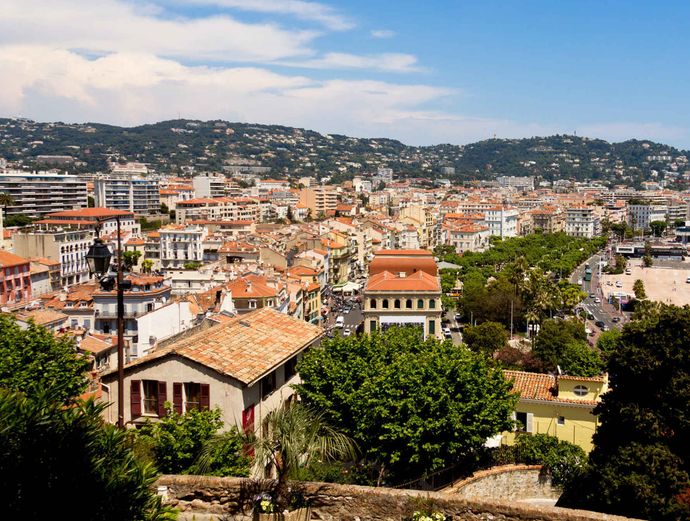
The Palais des Festivals et des Congrès is the big convention center at the start of the Croisette in Cannes, best known as the home of the Cannes Film Festival and its red-carpeted steps. People come to climb the famous stairs where stars pose for photographers, look for handprints of film legends in the pavement and soak up the seafront glamour.The film festival began after the Second World War and was first held in an older palace farther along the Croisette. As the event and the city's business congresses grew, Cannes built the present Palais on the waterfront by the old port in the late 20th century, a large modern building whose blocky concrete look earned it the teasing nickname of the bunker. Beyond the festival, it hosts a busy calendar of international trade fairs for television, property, advertising and music, along with concerts, dance and theater.The heart of the building is the Grand Auditorium Louis Lumière, named for the pioneering French filmmaker, where the festival's premieres and its closing ceremony with the Palme d'Or take place. Outside, the red-carpeted steps rise to its doors, perhaps the most photographed staircase in cinema. Along the paths around the Palais, the Allée des Étoiles sets the handprints of actors and directors in the pavement, and the Croisette stretches east with palm trees, beaches and grand hotels.During the festival the square in front fills with photographers, fans and security, and the whole seafront takes on a carnival mood, while for the rest of the year the steps are a playful backdrop for holiday photos. Right beside the Palais lies the old port, with Le Suquet's hilltop old town rising above it, so the building sits where the fishing village of old Cannes meets its modern resort. A guide adds the stories and scandals of the festival's long history.

More
Prince's Palace (Palais du Prince)#8
4.8 (4,588)

Prince's Palace (Palais du Prince)

The Prince's Palace is the official residence of the Prince of Monaco, set on the Rock, the high headland of Monaco-Ville that looks out over the harbor and the sea. It has been the home of the Grimaldi family for centuries, and visitors come to see its square, its guards and the richly decorated State Apartments.The palace began as a fortress built by the Republic of Genoa in the late 12th century to guard the coast. In the late 13th century, François Grimaldi and his men are said to have slipped inside disguised as monks and seized it, a story remembered in the two sword-wielding monks on the family coat of arms. The Grimaldis have ruled Monaco from here almost without a break ever since. Over the centuries the fortress softened into a princely home, with Italian painters brought in to decorate its walls. During the French Revolution the palace was seized and its contents sold off, and later princes spent many years restoring it.The heart of the palace is the Court of Honor, a courtyard paved with patterns of white and colored pebbles. A double horseshoe staircase in white marble, modeled on the one at Fontainebleau, rises from it to the Gallery of Hercules, where frescoes show the hero's labors. The State Apartments beyond are lined with silk, gilded furniture and portraits of the princely family, and they include the Throne Room, where official ceremonies take place, and the Mazarin Room with its painted wood paneling. Outside, the palace square is lined with cannons from past centuries, and the guards of the Compagnie des Carabiniers du Prince stand watch in their crisp uniforms.The palace is still the working seat of the principality, where the prince lives and receives official guests. A guide can trace the family story from the disguised monks onward.

More
St Paul de Vence#9
4.6 (4,496)

St Paul de Vence

Saint-Paul de Vence is a walled medieval village set on a rise in the hills behind Nice, famous for its stone lanes, art galleries and long links with painters. People come to wander inside the ramparts, look out over the countryside toward the sea, and see where artists such as Marc Chagall lived and worked.The village grew up in the Middle Ages as a fortified outpost on the frontier between Provence and the lands of Savoy. In the 16th century King Francis I rebuilt its defenses, and the massive ramparts he ordered still wrap almost the whole village, broken by old gateways and a watchtower. For centuries it remained a quiet farming and market town. Then in the early 20th century painters began arriving, drawn by the light, and an inn just outside the walls became their meeting place, where the owners accepted canvases in exchange for meals and rooms. Picasso, Matisse, Miró and others came through, and later actors, writers and singers followed.Inside the walls, the narrow Rue Grande runs the length of the village past fountains, carved doorways and a long run of small galleries selling paintings, sculpture and crafts. Side lanes are paved with pebble mosaics, and the collegiate church near the top has a richly decorated Baroque interior. Chagall spent his last years here and is buried in the small cemetery at the southern end, where visitors leave stones and flowers on his grave. Just outside the village, the Fondation Maeght sets modern art in a building and garden filled with sculptures by Giacometti and Miró and mosaics by Chagall and Braque.From the walk along the ramparts, the views take in olive groves, cypress trees and red-tiled villas falling away toward the coast, with the limestone ridges of the pre-Alps rising inland. A guide can match the lanes to the paintings and stories of the people who settled here.

More
Castle Hill (Colline du Château)#10
4.9 (3,378)

Castle Hill (Colline du Château)

Castle Hill, the Colline du Château, is the wooded rock that rises between Nice's old town and its port. It is a public park with sweeping views over the city, taking in the curve of the Bay of Angels, the tiled roofs below and the boats in the harbor, and it holds the traces of the settlement where Nice began.Greek traders from Marseille founded a settlement here in ancient times and called it Nikaia, and through the Middle Ages the hilltop held the town itself, with its cathedral, houses and a powerful fortress. Under the House of Savoy the castle grew into a formidable stronghold. It famously held out when French and Ottoman forces besieged Nice in the 16th century, a siege remembered through the legend of Catherine Ségurane, a local washerwoman said to have beaten back the attackers. In the early 18th century, troops of Louis XIV captured the fortress and pulled it down, leaving only fragments of wall.The park that took its place was laid out in the 19th century, when shady paths, terraces and lookouts turned the rock into a place for an afternoon stroll. Its best-known feature is an artificial waterfall from that era, tumbling down the rock face. Near the summit, excavations have uncovered the foundations of the medieval cathedral and the houses around it. The Bellanda Tower, on the slope facing the sea, once lodged the composer Hector Berlioz, and on the far side of the hill an old cemetery is filled with elaborate marble tombs.From the upper terraces the view runs along the Promenade des Anglais in one direction and over the port in the other, with the bell towers of the old town crowded at the foot of the hill. A guide can read the scattered stones for you and explain how the town gradually moved down from the hilltop to the shore.

More
Cathédrale de Monaco (Monaco Cathedral)#11
4.8 (1,993)

Cathédrale de Monaco (Monaco Cathedral)

Monaco Cathedral, the Cathédrale Notre-Dame-Immaculée, is the principal church of the Principality of Monaco, standing on the Rock in the old town of Monaco-Ville. Visitors come for its pale stone Romanesque-Byzantine architecture, its Renaissance altarpiece and the graves of Monaco's princes, including Princess Grace.The cathedral was built in the late 19th century on the site of an older parish church dedicated to Saint Nicholas, which had served the town since the Middle Ages. Prince Charles III, the ruler who also founded the casino at Monte-Carlo, backed the project, and it was built from white stone quarried at La Turbie, just above the principality. It has been at the center of Monaco's royal life ever since. Prince Rainier III and the American actress Grace Kelly held their religious wedding here, a ceremony watched by millions on television, and both now rest in the choir beside earlier members of the Grimaldi family.The bright facade, with its arched doorway and carved details, gives way to a calm interior of rounded arches and soaring vaults. Around the ambulatory behind the altar lie the tombs of the princes, each marked by a simple slab, and fresh flowers are often left on the grave of Princess Grace. The chief artwork is a large altarpiece of Saint Nicholas by the Nice painter Louis Bréa, divided into many panels of saints painted in rich golds and reds, rescued from the earlier church. A glittering mosaic fills the apse above the altar, and a grand organ with four keyboards rises at the back of the nave. Concerts and services are often accompanied by the boys' choir of Monaco, whose voices fill the church.A guide can explain the Grimaldi story and how the cathedral ties into the life of the palace nearby.

More
Chateau de Cremat#12
4.8 (205)

Chateau de Cremat

Château de Crémat is a wine estate and castle in the Bellet hills on the western edge of Nice, where vineyards climb toward a turreted house above the Var valley. Visitors come to walk among the vines, see the cellars and the art-filled rooms of the chateau, and taste wines from one of the rarest appellations in France.Bellet is a small wine area set inside the city limits of Nice, with vineyards spread over steep terraces where breezes from the sea and air from the Alps meet. Vines have grown on these slopes for many centuries, and the area won its own appellation as one of the earliest in Provence. Its wines rely on a short list of grapes: Rolle for the fragrant whites, and the rare local Braquet and Folle Noire for rosés and reds.Crémat is one of the leading houses in Bellet, a castle-like building with towers looking out over its own vines. The whole process happens on site, from the rows of vines to the room where the wine is made and the barrel cellar where it ages. Inside the chateau, the salons have been refitted with furniture from the Ritz, and a gallery hosts art exhibitions. A panoramic tower gives a full circle of views across the hills toward the city and the sea.A visit here feels less like a cellar door on a wine route and more like a private country house that happens to make wine. Tastings usually range across the estate's whites, rosés and reds, which give a sense of how the hills, the sea air and the old local grapes shape the glass. Because Bellet wines are made in small quantities and seldom travel far from Nice, the chance to taste them where they grow is a large part of the appeal. A guide adds the story of the appellation and its winemakers.

More
Chateau Font du Broc#13
5.0 (224)

Chateau Font du Broc

Château Font du Broc is a hillside wine domain outside Les Arcs-sur-Argens, in the Var countryside of Provence, farmed organically and producing wines under the Côtes de Provence appellation. Visitors come to tour its cellar and taste its wines on a working Provençal estate of vines, olive groves and horses.Sylvain Massa founded the estate in the late 20th century on land that spans around a hundred hectares of hillside. It is laid out in restanques, the dry-stone terraces that Provençal farmers have long built to hold soil on steep slopes. The whole property is certified under the official French organic label, which rules out synthetic pesticides and fertilizers in the vineyard.The heart of a visit is the cellar, where the wines rest underground in cool, quiet rooms before bottling. The estate sits within the Côtes de Provence appellation, the largest wine area of Provence and best known for pale, dry rosé, the style that has carried the region's name around the world. A tasting is the chance to see how organic farming and these hillside terraces show up in the glass. The olive groves fall under the Provence olive oil appellation too, and the estate's reception halls host private and business events among the vines.Les Arcs-sur-Argens itself makes a fine companion to the visit. Its medieval quarter, Le Parage, climbs in winding cobbled lanes to the old castle tower, and outside the town the chapel of Sainte-Roseline, dedicated to a local noblewoman who became a nun in the Middle Ages, holds a mosaic by Marc Chagall. The town is also home to the Maison des Vins, the appellation's showcase for its many producers. A guide can explain how Provençal rosé is made and help you read the terraced landscape around the estate.

More
Château de Bellet#14
4.8 (222)

Château de Bellet

Château de Bellet is an organic wine estate in the hills above Nice, set at the highest point of the Bellet appellation. Wine lovers come to see its vineyards and olive trees, taste wines from one of the smallest winegrowing areas in France and enjoy a slice of rural Provence within the city limits.The Bellet appellation is a rare thing: a historic wine area that lies entirely inside the boundaries of a major city, its vines spread across steep hillsides between the Var valley and the Mediterranean. The vineyards grow on terraces of pebbly soil, and the mix of strong sunshine, altitude, sea breezes and cooler air from the mountains gives the wines their freshness. Local grapes such as Rolle for the whites, and Braquet and Folle Noire for the reds, give Bellet wines a character that is hard to find anywhere else.Château de Bellet sits at the top of this small area, looking out over the surrounding hills. Vines and olive trees have grown on the property since its beginnings, and the estate still tends both side by side. Its wines are grown organically, with the work in the vineyard aimed at letting the hillside and the local grapes speak clearly in the glass. For anyone used to the beaches and promenades of Nice, the quiet of the estate comes as a pleasant surprise.One of its most charming details is the chapel. No longer used for worship, the old building now serves as the shop and tasting room, so visitors sample the wines beneath a chapel roof rather than in a modern cellar. Guided and themed visits look at the vines, the winemaking and the estate's past. With a guide, the visit becomes a way to understand how a small wine tradition has survived on the edge of one of the Riviera's busiest cities.

More
Cours Saleya Flower Market (Marché aux Fleurs Cours Saleya)#15
4.8 (4,760)

Cours Saleya Flower Market (Marché aux Fleurs Cours Saleya)

The Cours Saleya Flower Market is the colorful open-air market that fills Cours Saleya, a long pedestrian square in Old Nice on the French Riviera. Stalls of fresh flowers, plants, fruit, vegetables and Provençal specialties spread beneath striped awnings, and visitors come to browse, taste and soak up the atmosphere of the old town just steps from the sea.Cours Saleya has been a market place since the late 19th century, when the flower trade of the Riviera was booming and growers from the surrounding hills brought blooms to sell to the city. The square lies between the old town and the seafront, separated from the beach by a row of low houses with flat roofs once used for promenades above the shore. At one end stands the grand Palais de la Préfecture, once the residence of the rulers of Savoy and Sardinia, and along the square rises the baroque Chapelle de la Miséricorde. The painter Henri Matisse lived for years in an apartment overlooking the eastern end, drawn by the light that fills the square.The flower stalls change with the seasons, from bright yellow mimosa in winter to roses, peonies and lavender in warmer months. Between them, sellers offer olives, tapenade, candied fruit, honey, local cheeses, herbs, soaps and spices. Look for socca, a thin chickpea pancake baked in a wood oven and eaten hot with black pepper, as well as pissaladière, an onion tart with anchovies and olives, both classic tastes of Nice. Cafes and restaurants line the edges, their terraces spilling out among the stalls.The narrow streets of Old Nice lead off in every direction, toward churches, small squares and the steps up Castle Hill. A guide helps you choose the best local flavors and explains the traditions behind the market.

More

Good to know Nice

Nice mixes beach time with city life at an easy pace. Most travelers book a full-day trip with a driver, east to Monaco or inland to St Paul de Vence and Gourdon, then fill spare hours with markets, museums and a swim.

Evenings mean a stroll on the Promenade des Anglais, dinner in Vieux Nice and sometimes a drive to see the Monte Carlo Casino lit up. Cruise passengers often join a guided day ashore.

The city suits couples, art lovers and food fans, and makes a comfortable base for a first Riviera trip.

May, June and September are the sweet spot, with a warm sea, long sunny days and fewer crowds than midsummer. October stays mild and suits walks and the hill villages.

July and August are hot and busy, with packed beaches and higher room rates. Reserve day trips early and set off in the cooler morning hours.

Winter is gentle by European standards, with bright, cool days and quieter streets in the old town. February brings the city's famous carnival and the lemon festival in nearby Menton.

  • Nice Côte d'Azur Airport sits on the western edge of town, with a tram straight to the center.
  • Coastal trains run to Monaco, Cannes and Antibes, so a car is optional for the seaside towns.
  • Trams, buses and walking cover the city, while tours with pickup handle the steep hill villages.
  • Choose free cancellation for summer outings, since plans on the coast can shift.
  • Bring a neat layer for Monaco, where some venues expect smart dress.
  • Watch your bags in busy markets and on trains.
Nice
Peak season Jun – Aug
Local Currency Euro (€)
Weather now
Time Zone CET (+1)
Attractions 52
Tours 523
Reviews 30,446

Frequently Asked Questions

The answers provided below are based on answers previously given to customers' questions.

Activity name

Discover Nice