Extended Today Black Friday 17HRS 46MIN 44SEC Up to 20% off gift cards BLACK FRIDAY
GIFT CARD SAVINGS
$100 – $249SAVE 5% $250 – $499SAVE 10% $500 – $999SAVE 15% $1,000+SAVE 20% Shop gift cards Discount applied automatically at checkout. Each card keeps its full value.
Top activities
Top landmarks
Cruise ship visitors
Trip ideas
Nearby places
Black Friday
Extended Today Black Friday 17HRS 46MIN 44SEC
UP TO 20% OFF GIFT CARDS
$100–$249(save 5%) $250–$499(save 10%) $500–$999(save 15%) $1,000+(save 20%)
Shop gift cards Discount applied automatically at checkout. Each card keeps its full value.
St Augustine

Cool things to do in St Augustine

Welcome to St Augustine

St. Augustine is the oldest continuously inhabited European settlement in the United States, and its history is the main reason to come. Spanish soldiers and missionaries, British governors and later the railroad builder Henry Flagler all left their mark on these narrow streets. Most outings are short, under two hours, and many happen after dark, when ghost stories take over the old town. Days fill easily with forts, museums and the waterfront, and almost all bookings can be cancelled free, so you can plan loosely and adjust as you go.

Spanish Forts and Old Missions

Castillo de San Marcos National Monument is the star attraction, a fort of coquina stone, built from compressed shells, whose walls were never taken by force. Nearby, Mission Nombre de Dios marks the place where the city was founded, and the Fountain of Youth park recalls the legend tied to Ponce de Leon. The Spanish Military Hospital Museum and the Governor's House Cultural Center and Museum add detail on colonial life. Walking tours connect these sites in an hour or two, a good fit for first-timers and families with school-age kids.

Gilded Age Landmarks

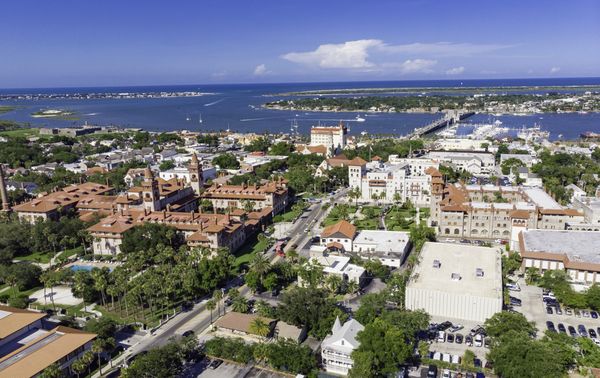
Flagler's grand hotels turned the town into a resort for wealthy travelers, and two of them survive as Flagler College and the Lightner Museum, both worth seeing for their Spanish Renaissance towers and courtyards. The museum fills the former Alcazar Hotel with Victorian collections, and the college still houses students in the old Ponce de Leon Hotel. Memorial Presbyterian Church, built by Flagler in memory of his daughter, has a copper dome that rises above the old town. The Oldest Wooden School House and Potter's Wax Museum are lighter stops, and the St. Augustine Lighthouse & Maritime Museum offers a climb with views over the inlet and Anastasia Island.

Ghost Tours and Night Walks

With so much history, St. Augustine has a deep store of ghost stories, and evening tours are the most common kind here. You can walk lamp-lit streets with a storyteller, ride through town after dark, or step inside the St Augustine Old Jail or the lighthouse grounds once the crowds have gone. These tours mix history and legend and suit couples, groups of friends and families with older kids. Check age guidance, as some night tours are aimed at adults.

Planning Your Days

Most visitors base themselves in or near the historic district and explore on foot. Close to half of tours are kid friendly, so families have plenty of choice. Very few tours include hotel pickup, so choose lodging within walking distance of the old town if you can. About a quarter of tours are wheelchair accessible, though brick and cobbled streets can be uneven. Boat trips on the Matanzas River, kayaking and a round of golf nearby round out a longer stay, and private tours give a quieter option for couples. Because tours are short, you can easily fit a fort visit in the morning, a museum after lunch and a ghost walk at night. Bring sunscreen and a water bottle, since even short walks are spent mostly outdoors.

Read more
Top 15 attractions in St Augustine
Castillo de San Marcos National Monument#1
4.7 (19,393)

Castillo de San Marcos National Monument

Castillo de San Marcos National Monument protects the oldest masonry fort in the continental United States, a Spanish stronghold on the waterfront of St. Augustine, Florida. Built to guard the town and the sea lanes used by Spanish treasure fleets, it draws visitors for its massive stone walls, its harbor views and more than three centuries of history.Spain founded St. Augustine in the 16th century, and a series of wooden forts came first, none of which lasted. After pirates sacked the town, the Spanish crown ordered a stone fort, and work began in the late 17th century using coquina, a soft local stone made of compressed shells quarried on a nearby island. That choice proved wise. During sieges, cannonballs sank into the porous walls instead of shattering them, and the fort was never taken by force.Control changed hands through treaties rather than battle. Britain took over in the 18th century, Spain returned, and the fort became American when Spain handed Florida to the United States, which renamed it Fort Marion. In the 19th century it served as a military prison, holding Seminole and later Plains and Apache prisoners whose stories are part of the site. It became a national monument in the early 20th century and later took back its original Spanish name.The fort follows a star-shaped plan with pointed bastions at each corner, laid out so defenders could cover every approach. Vaulted chambers that once held stores, guardrooms and a chapel ring a central parade ground, and cannons on the upper level still point out over Matanzas Bay. A broad dry moat and sloping earthworks surround the walls. A guide brings the soldiers, families and prisoners who lived within them into sharper focus.

More
St. Augustine Lighthouse & Maritime Museum#2
4.7 (5,702)

St. Augustine Lighthouse & Maritime Museum

The St. Augustine Lighthouse and Maritime Museum stands on Anastasia Island, across the water from the oldest city in the United States. Its black-and-white spiral tower topped by a red lantern is a landmark of the Florida coast, and visitors come to climb it, tour the keepers' house and learn about the region's maritime past.The Spanish kept a wooden watchtower on Anastasia Island to look out for ships approaching St. Augustine, and after Florida joined the United States it was replaced by an early lighthouse. The sea slowly ate away the shoreline beneath that tower, and in the late 19th century a new and taller lighthouse was built farther inland, while the old one later toppled into the ocean. The new tower still holds its original first-order Fresnel lens, a tall beehive of glass prisms that sends the light far out to sea. During the Second World War the station became a lookout post for enemy submarines along the coast.Next to the tower, the brick keepers' house was restored after a fire and now holds exhibits about the families who tended the light, trimmed the wicks and polished the lens. The museum grounds include a boatbuilding shop where wooden boats are crafted by hand using traditional methods, and displays on shipwrecks found along the coast. The museum runs its own underwater archaeology program, which has studied wrecks lying offshore and brought up artifacts now shown on site, from ship fittings to everyday goods carried by sailors.From the top of the tower, the view takes in the inlet, the Matanzas River, the beaches of Anastasia Island and the spires of the old city. A guide can share the stories of the keepers, their wives and children and of the ships lost on this coast.

More
Mission Nombre de Dios#3
4.6 (8,399)

Mission Nombre de Dios

You can wander the grounds on your own and follow the markers from the chapel to the Great Cross. A guided tour of St. Augustine adds the story behind the landing and the first Thanksgiving Mass, and many history tours by trolley, on foot or by carriage pair the mission with the Old City's colonial sights, which saves you piecing the timeline together yourself. The grounds hold a historic chapel, a shrine church, a museum, a cemetery and the Great Cross, so wear comfortable shoes for walking outdoors. A marked walking route passes the cross, the cemetery, the mission plaque and the rustic altar. It is an active place of worship, so keep voices low and respect any service in the church or chapel. The museum shows artifacts from archaeological digs, church vestments and copies of early documents. Only service animals are allowed on the grounds.

More
Fountain of Youth#4
4.7 (8,358)

Fountain of Youth

The Fountain of Youth Archaeological Park is a waterfront historic park in St. Augustine, Florida, built around a spring tied to the legend of Juan Ponce de León. It also protects the ground where Spanish settlers founded the city, and visitors come for the legend, the archaeology and the story of St. Augustine's first days.Spanish explorer Juan Ponce de León reached the coast of Florida in the early 16th century, and later writers linked his voyage to a search for waters that could restore youth. Whether he ever looked for such a fountain is doubtful, but the legend proved irresistible. In the early 20th century the spring on this land was promoted as the one he found, and visitors have been sipping its water ever since.The deeper story lies underground. Archaeologists working on the grounds found traces of Seloy, a village of the Timucua people, and of the first settlement built by Pedro Menéndez de Avilés, who founded St. Augustine in the 16th century. That makes the park the birthplace of the oldest continuously inhabited city of European origin in the United States, and excavations here have shaped what historians know about how the Spanish and the Timucua first met.The spring itself rises inside a stone springhouse, where you can taste its mineral-heavy water. Around the grounds stand a replica Timucua village with thatched dwellings, a reconstructed Spanish mission church and the excavation areas, while a planetarium shows the night sky as early navigators used it to cross the ocean. Interpreters in period dress fire cannons and work at a forge, and peacocks wander freely across the lawns and along the water. A guide can tie the spring, the dig and the founding of the city into one connected story.

More
Flagler College#5
4.6 (7,247)

Flagler College

Flagler College is a private college in downtown St. Augustine whose main building is the former Hotel Ponce de Leon, a grand resort built by the oil and railroad tycoon Henry Flagler. People come to see its Spanish Renaissance Revival towers, ornate interiors and Tiffany glass, some of the finest Gilded Age design in Florida.Flagler, a partner of John D. Rockefeller in Standard Oil, visited St. Augustine in the late 19th century and saw a chance to turn the old Spanish town into a winter resort for wealthy Northerners. He hired two young architects, John Carrère and Thomas Hastings, who went on to design the New York Public Library, and the hotel opened with electric lighting powered by generators from Thomas Edison's company, a rare luxury at the time. Flagler's railroad carried guests south, and the hotel became the centerpiece of a new St. Augustine.The building was one of the first large structures in the country made of poured concrete, mixed with local coquina shell. Its towers, red tile roofs and arched courtyard echo the city's Spanish colonial past. Louis Comfort Tiffany created much of the interior decoration, including the stained glass of the dining hall, and the artist George Maynard painted murals on the ceilings. The rotunda, with carved oak columns and a painted dome, leads into rooms of gold leaf, marble, mosaic and richly carved wood.As the age of the great winter resorts faded, the hotel lost its guests, and in the 20th century it became the home of Flagler College, which has restored the building room by room. Students now take their meals in the grand dining hall and live in former guest rooms. A guided visit shares the stories of Flagler, his guests and the craftsmen who built it.

More
Lightner Museum#6
4.6 (7,396)

Lightner Museum

You can tour the galleries on your own and take your time with the Gilded Age antiques, Tiffany glass and mechanical music collection. The museum also offers guided tours of the former Hotel Alcazar on select days, and a digital guide for self-paced visits. Pair it with a walking or trolley tour of the historic district to see Flagler College and nearby sights in one day. The museum fills the former Hotel Alcazar, built for Henry Flagler's winter guests, and its galleries are spread over several floors. Allow about one to two hours to see the Gilded Age antiques, Tiffany glass, mechanical instruments and Victorian science rooms. Cafe Alcazar sits in the former hotel swimming pool, so you can stop for a meal or a break inside the building. The central courtyard with palms and a koi pond makes a quiet spot to rest between galleries. Arrive well before closing, because last entry is earlier than closing time and upper floors may close sooner.

More
Oldest Wooden School House#7
4.6 (6,992)

Oldest Wooden School House

Most visitors walk through on their own, following the self-guided route past the classroom, the preserved Minorcan homestead, the kitchen and the garden. Groups can reserve a guided program of about half an hour covering Minorcan and British history, colonial home life and old-style lessons. An after-hours program adds period games, preservation stories and ghost tales. It also pairs well with a walking tour of the historic district. Plan on a short visit, since the self-guided route covers the classroom, the homestead kitchen and the garden. Families with children enjoy it most, because the classroom figures and the diploma at the end keep younger visitors engaged. A costumed "Professor" greets you at the start and sets you off on the self-guided tour. Evening hours run later on Fridays and Saturdays, and the site is closed on Christmas Day. Groups of ten or more should reserve ahead.

More
St Augustine Old Jail#8
4.5 (5,453)

St Augustine Old Jail

The St. Augustine Old Jail is a red brick lockup on San Marco Avenue that housed the county's prisoners and its sheriff's family for more than half a century. Built in the late 19th century, it now works as a living history museum where costumed guides recount the lives of lawmen, inmates and the town around them.The jail owes its looks to Henry Flagler, the railroad and hotel magnate who was turning St. Augustine into a winter resort for wealthy Northerners. The county's old jail stood close to his grand hotels, so he paid to move it to the northern edge of town and hired a firm that specialized in prison design to build a replacement that looked more like a Victorian residence than a place of punishment. The result, with its arched windows and steep roof, could pass for a comfortable inn from the street. The Old Jail stayed in service until the middle of the 20th century and is now listed on the National Register of Historic Places.Inside, the story turns grittier. The sheriff lived on site with his wife and children, and his wife cooked meals for the prisoners in the family kitchen. Visitors see the sheriff's quarters, the cramped cells where men waited for trial, and the separate areas once used for women and for the most hardened offenders. Displays of old weapons, restraints and wanted posters recall the frontier side of Florida law enforcement, and a reproduction gallows in the yard is a sober reminder of how some sentences ended. Tales of outlaws, escapes and hard justice fill the rooms, along with stories of strange happenings that have earned the building a place on many lists of haunted Florida sites.Guides who play the characters of the jail's past add humor and color, making the history easy to follow for children and adults alike.

More
Potter's Wax Museum#9
4.4 (4,703)

Potter's Wax Museum

Most guests browse the galleries at their own pace and pose with the figures. The museum sits in the heart of the old town, so it pairs well with a walking tour, a trolley tour or a horse-drawn carriage ride through the historic streets. A guided evening ghost walk adds a very different side of the city after you have seen the wax figures by day. The museum has more than 160 figures across 10 galleries, plus a wax studio where figures are made on site. Most figures can be touched and photographed, which suits families with children. Some interactive displays use sound and flashing or strobe effects, so guests with epilepsy or light sensitivity should contact the museum beforehand. The museum is inside the Old Drugstore building in the historic district.

More
Governor's House Cultural Center and Museum#10
4.7 (6,985)

Governor's House Cultural Center and Museum

You can walk through the exhibits on your own in a short visit. The museum sits right on the plaza, so it works well as one stop on a walking tour of the old town, where a guide can explain the Spanish, British and American layers of the building and the streets around it. Trolley and carriage tours also pass nearby, and many visitors pair the museum with the cathedral and the forts. The museum fills a historic building on the plaza and suits a short, relaxed stop between other sights. Most of the space holds one large art, archaeology or history exhibit, while the lobby and a smaller room change more often. Public restrooms are in the building, which helps during a walk around the old town. The gallery closes briefly in the early afternoon and stops admitting new visitors shortly before closing time. Shops, cafes and restaurants are within a block, so it is easy to add a meal to your visit.

More
Spanish Military Hospital Museum#11
4.5 (4,964)

Spanish Military Hospital Museum

The museum can only be seen with its guided tour, where a guide leads a hands-on look at 18th-century medicine, from surgery demonstrations to herb remedies. It fits neatly into a walking tour of St. Augustine's historic district, with St. George Street, the plaza and the Castillo de San Marcos close by. Evening history and ghost walks, or a trolley tour with stops, let you cover more of the old city in a day. The museum is a guided experience of about 45 minutes, so plan your visit around the tour start times. The tour covers colonial medicine, including a surgical demonstration and an apothecary with a medicinal herb garden. Some demonstrations show historic surgical methods, which younger or squeamish visitors may find uncomfortable. Parking on Aviles Street is limited, and the Historic Downtown garage is nearby with metered spaces on surrounding streets. Call ahead about accessibility in this historic building, since step-free access can vary between floors and rooms.

More
Oldest Store Museum#12
4.5 (4,661)

Oldest Store Museum

If you are looking for things to do in St Augustine we have 3 Tours and Activities to Experience Oldest Store Museum. Check out our verified traveler reviews and photos of Oldest Store Museum tours and other things to do in St Augustine, and book securely when you find the perfect one. Learn the best ways to see famous Oldest Store Museum and explore the most popular things to do in St Augustine.

More
Medieval Torture Museum#13
4.7 (6,719)

Medieval Torture Museum

The Medieval Torture Museum in St. Augustine, Florida, is an interactive museum on St. George Street that shows a private collection of torture, execution and restraint devices. It is the original of several sister museums, and visitors come for a grim and oddly educational look at how punishment once worked.St. Augustine, with its Spanish colonial streets, makes a fitting home for a museum about the darker side of the past. Its galleries sit on an upper level along the main pedestrian street of the historic district. Most of the collection covers the Middle Ages and the Renaissance, though some pieces come from earlier or later times. Historians note that some devices often shown in places like this, such as the iron maiden, were fakes or much later inventions, so a little skepticism adds to the experience.Each exhibit pairs a device with a lifelike mannequin in period costume, caught in the moment of punishment. Narrated audio stories explain who the person was, what crime they were accused of and what followed, turning each display into a short, chilling tale. Among the devices are the spiked chair, the Spanish boot, which crushed the leg, the pillory, where offenders faced the jeers of the crowd, a witch-weighing scale and a guillotine.The museum does not keep visitors at a distance. At several hands-on displays you can play executioner or victim, which makes for memorable and slightly uneasy photos. Seeing the devices up close makes the cruelty of old justice feel far less abstract than it does in books. The mix of horror and history suits travelers who like their sightseeing with an edge. A guide to the old town can connect what you see inside with the colonial past of St. Augustine itself.

More
Micro Masterpieces Art Gallery#14
4.7 (6,719)

Micro Masterpieces Art Gallery

Micro Masterpieces Art Gallery is a small museum of miniature art on St. George Street in the historic heart of St. Augustine, Florida. Every piece is so tiny that it can only be appreciated through a microscope, and visitors come to marvel at portraits, scenes and sculptures that fit on a seed or inside the eye of a needle.Microminiature art is a demanding specialty in which artists work at a scale far beyond what the naked eye can follow, often timing their strokes between heartbeats to keep their hands steady. The gallery's collection belongs to Eugene Grach and runs to hundreds of works, of which around 30 are on display at any one time. Pieces move regularly between this gallery and his other museum, so the selection changes from one visit to the next.Peering into the eyepiece is part of the fun, because nothing quite prepares you for the detail that appears. One portrait is painted on a single poppy seed, and another work sends a caravan of camels through the eye of a needle, a playful nod to the old proverb. Artists have painted with a single strand of hair and shaped minute sculptures from porcelain, precious metals and crushed gemstones, building whole scenes at a scale that seems impossible until it is magnified.The setting adds to the charm. St. Augustine was founded by Spain in the 16th century and is the oldest continuously inhabited European-founded city in the continental United States, and St. George Street, the spine of its historic district, is lined with old buildings, shops and small museums. Time spent here makes a delightful contrast to the fort and churches of the old town, swapping grand scale for the astonishingly small. Works like these demand enormous patience, and most visitors leave with new respect for the skill involved.

More
Memorial Presbyterian Church#15
4.9 (1,384)

Memorial Presbyterian Church

Most visitors look around the sanctuary on their own on the days it opens to guests, and volunteer docents lead visits on some days. The church fits neatly into a guided walking tour of downtown St. Augustine, where a guide can explain its Venetian-inspired design and the Flagler story behind it. Trolley and walking tours of the historic district make it easy to see several landmarks in one outing. The sanctuary is open to visitors on set days, so it suits anyone who likes architecture and local history. This is a working church, so keep your voice low and dress modestly. Visits do not run when a wedding or funeral is scheduled, so have a second stop in mind. Sunday mornings are for worship, and sightseeing visits begin in the afternoon. A short visit is enough to take in the interior, so it pairs well with other downtown stops.

More

Good to know St Augustine

St Augustine keeps an easy, small-town pace. Mornings suit a guided stroll past Spanish colonial houses and the old stone fort, then a long lunch and a trolley loop or harbor cruise in the afternoon.

Evenings are the busiest time for tours, when storytellers lead groups through the dark lanes and old buildings. Short outings leave room for beach time on Anastasia Island too.

The city suits history lovers, couples on a weekend escape and families who want short outings that fit around naps and the beach.

Spring brings warm, mostly dry days made for long walks, and from March through April the streets feel at their liveliest. Book lodging in the old town early for these weeks.

Summer is hot and humid, with short afternoon downpours. Plan outdoor sights for the morning and keep museums for the steamy middle of the day.

Fall is calmer, though rainy spells can last into November. Winter is mild and quiet, and in December the old town glows with holiday lights that make night tours especially popular.

  • Most travelers fly into Jacksonville, about an hour's drive north, or Orlando, farther to the southwest.
  • Park once and explore the historic center on foot, since its lanes are narrow and spaces fill fast.
  • Trolleys link the main sights, and the Bridge of Lions leads to the beaches of Anastasia Island.
  • Reserve evening tours early, because weekend groups are the first to fill.
  • Comfortable shoes help on brick lanes, and a rain jacket earns its place in summer.
  • Pack bug spray for dusk by the water, and sunscreen.
St Augustine
Peak season Mar – Jul
Local Currency US Dollar ($)
Weather now
Language(s) English
Time Zone EST (-5)
Country Code +1
Attractions 23
Tours 158
Reviews 33,449

Frequently Asked Questions

The answers provided below are based on answers previously given to customers' questions.

Activity name

Discover St Augustine