Save Today Black Friday 04HRS 52MIN 04SEC Up to 20% off gift cards BLACK FRIDAY
GIFT CARD SAVINGS
$100 – $249SAVE 5% $250 – $499SAVE 10% $500 – $999SAVE 15% $1,000+SAVE 20% Shop gift cards Discount applied automatically at checkout. Each card keeps its full value.
Save Today Black Friday 04HRS 52MIN 03SEC
UP TO 20% OFF GIFT CARDS
$100–$249(save 5%) $250–$499(save 10%) $500–$999(save 15%) $1,000+(save 20%)
Shop gift cards Discount applied automatically at checkout. Each card keeps its full value.
Outer Banks

Cool things to do in the Outer Banks

Welcome to the Outer Banks

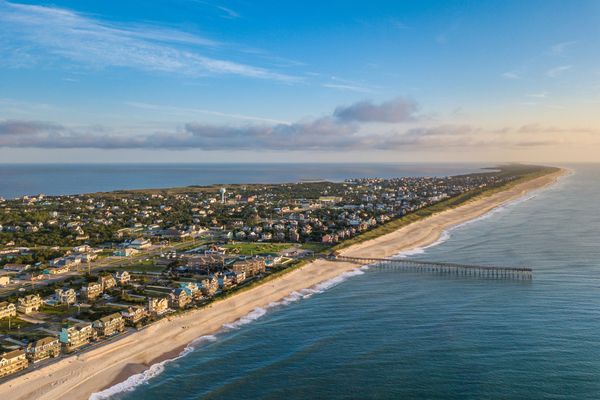
The Outer Banks are a thin chain of barrier islands off the North Carolina coast, where wide beaches face the Atlantic on one side and quiet sounds lie on the other. This is where the Wright brothers first flew, where wild horses still roam the northern dunes and where lighthouses guard a coast known for shipwrecks. Most outings here are short, many run two hours or less, and they are spread across morning, afternoon and evening, so you can fit a paddle, a history stop and a sunset cruise around long days on the sand.

Flight, lighthouses and island history

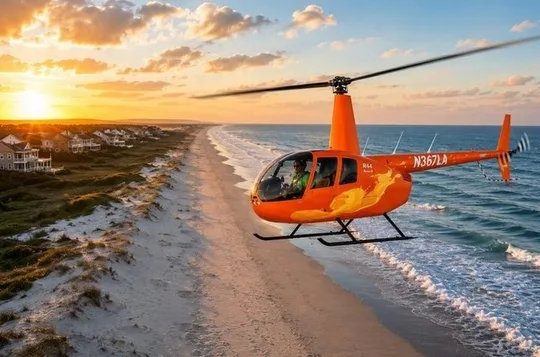
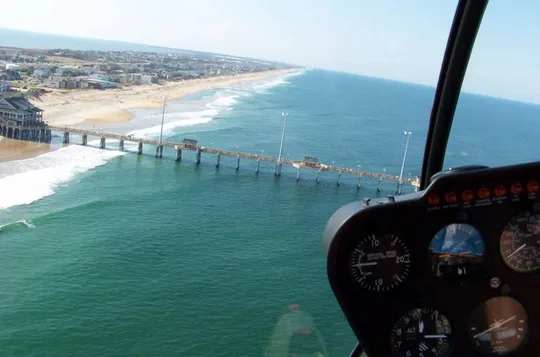
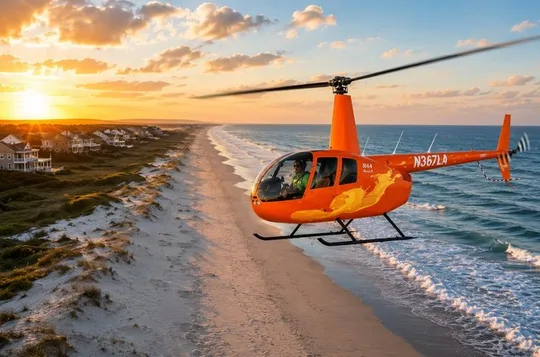
The Wright Brothers National Memorial at Kill Devil Hills marks the spot where the first powered flights took off, with a granite monument on the hill and markers showing how far each flight went. Guided and audio tours bring the story to life, and a flightseeing trip above the dunes gives you a pilot's view of the same coast. To the north, the red-brick Currituck Beach Lighthouse in Corolla can be climbed for views over the sound. On Roanoke Island, the North Carolina Aquarium shows sharks, river otters and sea turtles, and the island also holds the story of the lost colony that vanished in the earliest days of English settlement.

Wild horses, dunes and the water

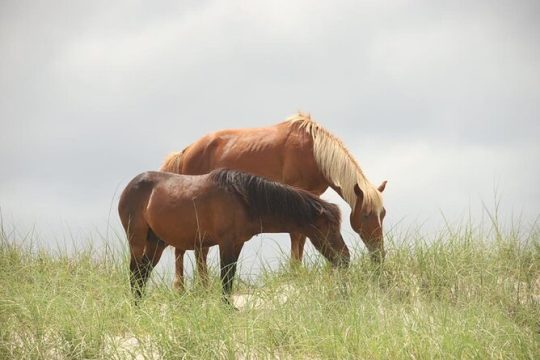
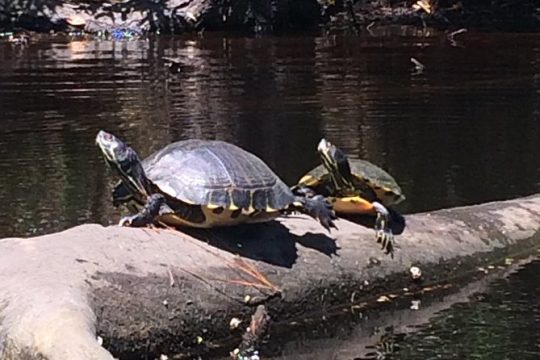
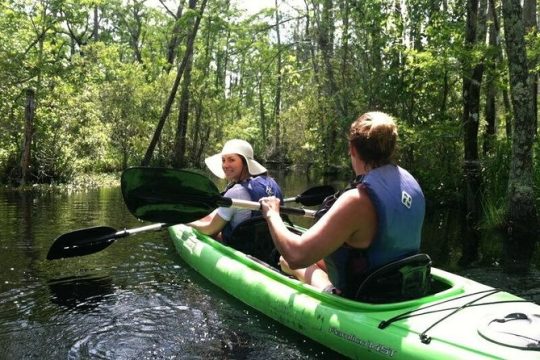
Beyond the paved road at Corolla, the beach becomes a sandy track where the wild horses of the Currituck Outer Banks graze among the dunes, and guided four-wheel-drive outings are the usual way to find them. The calm sounds behind the islands are ideal for kayaking and paddleboarding, and the maritime forest of the Kitty Hawk woodland and the marshes along Hatteras Island and the national seashore at Cape Hatteras are rich with herons, egrets and turtles. Dolphin cruises, sunset sails and fishing trips leave from the island marinas, while the tall dunes at Jockey's Ridge are a popular spot for hang gliding lessons.

Choosing the right length and time

Most trips here are under four hours, and very few take a full day, which leaves plenty of time for the beach. Evening options are common, so a twilight boat ride or a walk after dinner is easy to arrange. A good number are private, a sensible choice for families or groups who want their own boat or vehicle, and some self-guided rentals let you explore at your own pace. Couples often save the evening slot for a sail on the sound, when the wind drops and the light turns gold.

Before you book

Hardly any trips include pickup, so plan to drive to the marina or meeting spot, and allow extra time for traffic on the bridges at busy times. Booking ahead matters most for small boats and horse outings, which fill quickly. Points to check:

  • age limits for horse tours and paddle trips
  • whether lighthouse climbs are open on the day you visit
  • sun protection and water for exposed sound crossings
  • weather policies for boats and flights

Almost every trip allows free cancellation, and a few are accessible to wheelchair users, so ask ahead if you need it.

Read more
Top 3 attractions in the Outer Banks
Wright Brothers National Memorial#1
4.5 (103)

Wright Brothers National Memorial

Wright Brothers National Memorial, in Kill Devil Hills on North Carolina's Outer Banks, marks the place where Wilbur and Orville Wright made the first sustained, powered flights in a heavier-than-air machine. Visitors come to stand on the field where flight began, see a full-size replica of the flyer and look up at the granite monument on the hill.The brothers, bicycle makers from Ohio, chose this remote stretch of coast for its steady winds and its privacy, ideal conditions for testing gliders and then a powered aircraft. They returned over several seasons before making four flights in a single day, the first lasting only seconds yet changing the course of the modern world. Kill Devil Hill, the great dune from which they launched many glider flights, is topped by a 60-foot granite tower crowned with a marine beacon.On the field below, markers show where each of the four flights started and landed, making the short distances that changed history easy to grasp. Replica sheds recreate the brothers' first hangar and their living quarters, a reminder of how basic camp life was on the dunes. In the visitor center, models, tools, a wind tunnel reproduction and the full-size flyer replica show how the Wrights worked out the problems of lift and control, and part of the original engine is on display. An interactive sculpture captures the instant the first flight left the ground.The memorial, managed by the National Park Service, honors not only a single achievement but the patient, methodical work that led up to it. Standing on this open ground, it is striking to think how quickly flight grew from these brief hops into a part of everyday life. The story also includes local people who helped the brothers, among them men from the nearby lifesaving station, which adds a human side to the engineering.

More
Currituck Beach Lighthouse#2
4.4 (54)

Currituck Beach Lighthouse

Currituck Beach Lighthouse is a tall, red brick lighthouse in the village of Corolla on the northern Outer Banks of North Carolina. Its brick is left bare and its original lens still shines, and visitors climb to an outdoor gallery for views that stretch from the Atlantic to Currituck Sound.Ships passing this coast once faced a long, dark shoreline with shifting shoals, and many were wrecked along it. The lighthouse was built in the 19th century to light the gap between Cape Henry Light to the north and Bodie Island Lighthouse to the south. Unlike its striped and spiraled cousins along the Outer Banks, it was never painted, so the warm red of its brick shows exactly how it was made. That plain finish has become its signature.The tower rises more than 160 feet, and a spiral of 220 steps winds up inside to the gallery near the top. Above it sits the original first-order Fresnel lens, a great beehive of glass prisms that still flashes in a set rhythm for ships at sea. From the gallery, the view sweeps over the ocean beach, the dunes, the rooftops of the village and the wide waters of the sound, with marsh and maritime forest spread below.On the grounds stands the keepers' house, a Victorian stick-style home built for the keepers and their families, along with a smaller restored house that serves as a museum shop. Together they recall the isolated life of the keepers, who tended the light in all weathers on a remote strip of sand long before roads reached it. A guide can add tales of shipwrecks, lonely keepers and the wild horses that still roam the dunes to the north.

More
North Carolina Aquarium (Roanoke Island)#3
5.0 (3)

North Carolina Aquarium (Roanoke Island)

The North Carolina Aquarium on Roanoke Island is a state-run aquarium near Manteo, in the Outer Banks of North Carolina. It focuses on the waters of the coast, from quiet sounds to the open ocean, and families come for its sharks, sea turtles and hands-on exhibits.It is one of three public aquariums run by the state, each telling the story of a different stretch of the North Carolina shore. This one leans into the dramatic history of its own coastline. The shifting shoals and fierce storms off the Outer Banks have wrecked so many ships that the area is known as the Graveyard of the Atlantic, and that theme runs through the galleries, linking marine life with maritime history.The centerpiece is the open ocean tank, which holds about 285,000 gallons of water and is home to sharks, large game fish and other ocean wanderers. A 35-foot viewing window lets you watch them glide past, and in the same room stands a one-third scale replica of the USS Monitor, the Civil War ironclad that sank off Cape Hatteras. Fish now drift around it much as they gather at real wrecks offshore. Elsewhere, windows into the tanks of a sea turtle rehabilitation center show turtles on the mend, and touch tanks let visitors gently feel stingrays, horseshoe crabs, bamboo sharks and sea stars. Outside, a walking trail follows the shore of Croatan Sound through marsh and woods, and a sandy dig area invites young fossil hunters to search for ancient shark teeth.The aquarium works as both an introduction to the coast and a reason to look at it with fresh eyes. It sits close to other Roanoke Island sights, which makes it an easy part of a day exploring the area's history. Staff and guides add context on the turtles and the shipwrecks that shaped this shoreline.

More

Good to know Outer Banks

The Outer Banks run at beach speed. Days start early on the water, and most outings last a couple of hours or less, so a kayak paddle or a wild horse ride fits neatly around long stretches on the sand.

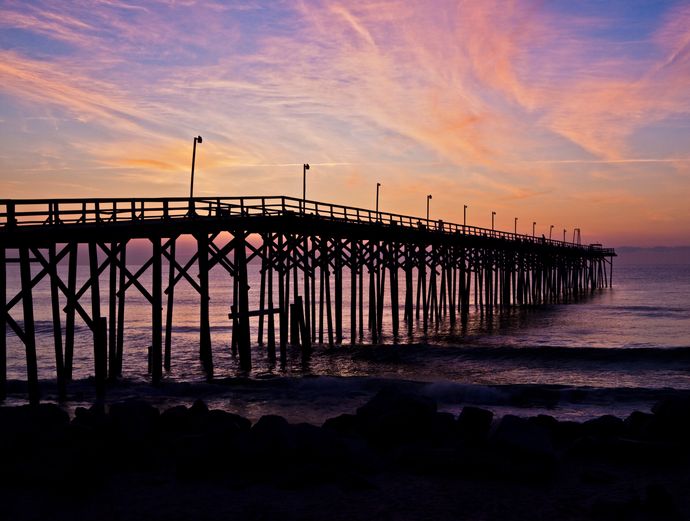
Evenings bring a slow dinner as the sound turns pink, or a sail at sunset. History fans can climb a lighthouse or stand on the dunes where powered flight began.

The islands suit families, couples and groups of friends who want nature and a little history without a packed schedule.

Summer is the classic season, with warm ocean water, crowded beaches and long evenings. June through August fills fast, so reserve boats and horse outings early.

Late spring and early fall are milder and quieter, ideal for fishing, birding and paddling the sound. Storms are more likely from late summer into fall, so check the forecast before boat days.
Winter is cool and windy, and many shops and outfitters close for the season. The islands feel wonderfully empty, though, and long beach walks are peaceful.
  • Most visitors drive in over the bridges, and the closest big airports are Norfolk and Raleigh.
  • A car is close to essential, and free state ferries carry cars on to Ocracoke.
  • Drive to each marina yourself, with extra time in summer.
  • Book early for summer weeks, since most outings can still be canceled for free.
  • Pack reef-safe sunscreen, a hat and water shoes for the sound, plus bug spray for evenings.
  • Hold a free morning in case wind or tides cancel a trip, and keep back from the horses.
Outer Banks
Peak season Jun – Aug
Local Currency US Dollar ($)
Weather now
Language(s) English
Time Zone EST (-5)
Country Code +1
Attractions 3
Tours 21
Reviews 3,458

Frequently Asked Questions

The answers provided below are based on answers previously given to customers' questions.

Activity name

Discover Outer Banks