


Scotland attractions
More things to do in the country
 #16
Culloden Battlefield
If you are looking for things to do in Scotland we have 119 Tours and Activities to Experience Culloden Battlefield. Check out our verified traveler reviews and photos of Culloden Battlefield tours and other things to do in Scotland, and book securely when you find the perfect one. Learn the best ways to see famous Culloden Battlefield and explore the most popular things to do in Scotland.
More #17
Edinburgh Dungeon
The Edinburgh Dungeon is a live-actor attraction in the center of Edinburgh that turns the grimmest episodes of the city's history into theater. Costumed actors, themed sets and special effects lead groups through shows about trials, torture and notorious crimes, and people come for the fun of being frightened while picking up some history.Instead of objects in glass cases, the Dungeon tells its stories through performance. A professional cast takes on the roles of characters from the past, and the audience becomes part of each scene rather than simply watching it. Groups move from one set to the next, so the visit unfolds like a play in several acts. Everything begins below street level, and the dim rooms and theatrical sets make the old city feel close and menacing.The shows include The Courtroom, The Torture Chamber, Cannibal's Cave and Burke and Hare, each built around a different dark episode. Burke and Hare were real killers who murdered people in 19th-century Edinburgh and sold the bodies to an anatomist for dissection. Edinburgh was a leading center of medical teaching, and the demand for bodies to study fed a grim underground trade. Cannibal's Cave draws on grisly Scottish legend, and the Torture Chamber dwells on the harsh justice of earlier centuries. A drop ride has also been part of the show, adding a sudden jolt of adrenaline.Behind the scares lies real history, since Edinburgh's past includes plague, body snatching, witch trials and public executions. The Dungeon recasts such stories as entertainment that stays in the memory far longer than a plaque on a wall. It makes a lively, unsettling counterpoint to the castle and grand museums nearby. Here the actors are the guides, and their timing and storytelling carry the whole experience.
More #18
Glasgow Cathedral
You can explore the nave, choir and crypt on your own with the audio guide, taking time at the stained glass and the medieval stonework. A guided walking tour of Glasgow's old town puts the cathedral in context, with a guide telling the story of the city's patron saint and the medieval quarter around it. The St Mungo Museum next door pairs well with a visit. Glasgow Cathedral is a working church, so private services and events can change opening hours on any given day. There are no toilets in the cathedral, and the nearest accessible toilet is at the St Mungo Museum, about 15 meters away. The west door has a stair lift into the nave, but the crypt is down 25 steps and the Blacader aisle has 13 very steep steps. Only assistance dogs are allowed, and children under 16 must be with an adult. An audio guide is available, and you choose an entry slot when you book.
More #19
Glen Ord Distillery
Glen Ord Distillery is a Highland malt whisky distillery on the edge of Muir of Ord, a village west of Inverness at the foot of the Black Isle. It is the home of the Singleton of Glen Ord single malt, and visitors come to see how whisky is made from barley to cask and to taste the result where it is produced.The distillery owes its start to a local laird. In the early 19th century Thomas Mackenzie of Ord inherited the estate, where much of the land grew barley, and he leased ground for a distillery partly to provide steady work for local people all year round. It was licensed in the first half of the 19th century, but its first operators went bankrupt, and new license holders revived it some years later. Ownership changed hands several times after that, including a spell with the Dewar family's whisky business, before it became part of one of the large modern whisky groups.Glen Ord has a long link with malting. In the 20th century, large maltings were built next to the distillery, and they still prepare malted barley for this and other distilleries in the region. Water comes from Loch nam Bonnach and Loch nan Eun, two small lochs in the hills that feed the White Burn, and in earlier times that same water turned two water wheels that powered the site.Inside, visitors follow production through the main stages: grinding the malt, mashing it in a large mash tun, fermenting the liquid in washbacks and distilling it in a stillhouse of tall copper stills. The Singleton of Glen Ord is matured in a mix of bourbon and sherry casks. Besides its single malt, Glen Ord whisky goes into Johnnie Walker blends. A guide brings the process and the distillery's long story together over a closing dram.
More #20
Scott Monument
The Scott Monument is a soaring Victorian Gothic spire in East Princes Street Gardens, raised in honor of the novelist Sir Walter Scott. Its dark, pinnacled tower is one of the defining shapes of the Edinburgh skyline, and visitors come to admire its carvings and to climb to galleries with wide views over the city.Scott's novels and poems made him the most famous Scottish writer of his age, and after his death the city launched a design competition for a memorial. The winner was a surprise. George Meikle Kemp was a joiner and draftsman who had taught himself architecture by studying Gothic abbeys and cathedrals, and he entered under an assumed name. His design, inspired in part by the ruins of Melrose Abbey, went up in the 19th century, but Kemp never saw it finished: he drowned in the Union Canal before the monument was complete. It rises to about 200 feet, making it one of the largest monuments to a writer anywhere.Beneath the canopy sits a statue of Scott carved from white Carrara marble, showing him seated with a quill in hand and his deerhound Maida at his side. Around the tower, dozens of small stone figures portray characters from his books, and carved heads of other Scottish poets and writers look out from the lower faces. The sandstone was darkened by generations of city smoke, and when the monument was restored, the decision was made to leave it uncleaned, so repairs in fresh stone stand out against the old, almost black surfaces.From the upper galleries the view takes in the castle on its rock, the crowded rooftops of the Old Town, the orderly streets of the New Town and the hills beyond. A guide can bring the carved characters to life, picking out heroes and villains from the novels that shaped how the wider world imagined Scotland.
More #21
George Square
Many visitors stroll through the square on their own as part of a day in the city center. A guided walking tour adds the stories behind the statues, the Cenotaph and the Victorian City Chambers, and often continues to Buchanan Street, the Merchant City and the cathedral area. City sightseeing bus tours and architecture walks also stop nearby. George Square is an open public square in the city center, so there are no tickets, dress code or security checks. Allow 20 to 30 minutes to see the statues, the Scott Monument, the Cenotaph and the City Chambers frontage. The square hosts concerts, light shows, ceremonies and parades, so it can be crowded on event days. Scottish weather changes quickly, so carry a rain layer.
More #22
Isle of Skye
The Isle of Skye is the largest island of the Inner Hebrides, off the west coast of the Scottish Highlands, and one of the most loved landscapes in Scotland. People go for its jagged mountains, sea cliffs and rock pinnacles, its castles and Gaelic heritage, and the sense of space that comes with island life.Skye's scenery was shaped by ancient volcanoes and glaciers. The Black Cuillin, a ridge of dark, rough peaks in the south, draws serious climbers, while the gentler Red Cuillin rises beside it. On the Trotternish peninsula in the north, huge landslips have left strange shapes: the Old Man of Storr, a tall rock pinnacle above the coast, and the Quiraing, a maze of cliffs, spires and hidden grassy hollows. Near Staffin, dinosaur footprints are preserved in the rocks along the shore.The island's human story is just as strong. Dunvegan Castle has been the seat of the chiefs of Clan MacLeod for centuries, and it keeps the Fairy Flag, a faded silk banner wrapped in legend. After the defeat at Culloden in the 18th century, Bonnie Prince Charlie escaped to Skye disguised as a maid with the help of Flora MacDonald, who is buried in the north of the island. Gaelic is still spoken in many communities, and place names on signs appear in both languages.Portree curves around a harbor lined with brightly painted houses. Elsewhere you find the clear blue Fairy Pools below the Cuillin, the waterfall at Kilt Rock dropping into the sea, the lighthouse at Neist Point on the far western edge, and a whisky distillery on the shores of Loch Harport. Seals, otters, sea eagles and red deer are all part of island life. A guide shares the folklore and clan history behind the place names you pass.
More #23
Kilt Rock
You can pull in at the car park and enjoy the view of the cliffs and Mealt Falls in a short stop. Guided day tours from Portree often combine Kilt Rock with other stops around the Trotternish peninsula, such as Staffin and the dinosaur museum nearby. A local guide can explain the basalt columns and the nearby Jurassic fossil site. Kilt Rock is a roadside viewpoint, so most visits take only 15 to 30 minutes. The viewing platform sits beside the car park, and the car park and viewing areas are suitable for wheelchairs. There are no toilets at the site, so plan a stop in Portree or Staffin. A barrier separates you from the cliff edge, so stay behind it and hold on to hats and phones in the wind.
More #24
Arthur's Seat
Arthur's Seat is the highest of the hills in Holyrood Park, a wild stretch of crags, lochs and grassland on the east side of central Edinburgh. It is the worn core of an ancient volcano, and people climb it for the open summit and the sweep of views over the city, the Firth of Forth and the hills beyond.The volcano fell silent long before the age of the dinosaurs, and later glaciers scraped away its softer rock, leaving the craggy summit and the cliffs of Salisbury Crags. Geology took a leap here: in the 18th century James Hutton studied the rocks at the base of the crags, and the exposure now called Hutton's Section helped him argue that the earth was immensely old and shaped by slow, repeating processes.People have left their mark on the hill for thousands of years. Traces of prehistoric forts ring the slopes, along with the outlines of ancient farming terraces, and the ruined chapel of St Anthony stands above St Margaret's Loch. The name has long been linked to the legends of King Arthur, though nobody knows for certain where it comes from. In the 19th century, boys hunting rabbits found a set of tiny carved coffins hidden in a crevice, and their purpose remains a mystery.Much of the appeal is the contrast: within sight of the Royal Mile you are among gorse, rough grass and rock, and the summit looks from Edinburgh Castle to the Pentland Hills and across the water to Fife. Below the hill, Duddingston Loch is a haven for waterbirds, and the Radical Road traces the foot of Salisbury Crags. A guide can read the landscape for you, picking out old lava flows, fort ramparts and the places where geology was rewritten.
More #25
Merchant City
Walk it yourself with a map: start at George Square, follow Ingram Street past the shops and Hutchesons' Hall, and finish at Glasgow Cross. A guided walking tour adds the stories of the tobacco lords who built the district and points out murals, galleries and music history you might otherwise walk past. Themed trails cover music, city murals and contemporary art, and they link easily with the rest of the city center. Merchant City is a district of streets rather than a single ticketed site, so you can explore it freely. Allow two to three hours to walk the grid between George Square and Glasgow Cross, longer with shopping, a meal or gallery stops. Galleries, theaters and historic halls keep their own opening hours, so check the venue you want before you go. Some streets are cobbled, so wear comfortable shoes. Bars and restaurants fill up in the evening, especially around Miller Street and Merchant Square.
More #26
Palace of Holyroodhouse
The Palace of Holyroodhouse in Edinburgh is the official residence of the British monarch in Scotland, standing at the foot of the Royal Mile with the cliffs of Arthur's Seat rising behind it. Visitors come for its grand royal rooms, its links with Mary, Queen of Scots, and the romantic ruins of the abbey beside it.The story begins with Holyrood Abbey, founded by King David I in the 12th century. Scottish kings often lodged in the abbey guesthouse, and in the early 16th century James IV began building a proper palace next to it. Holyroodhouse became the setting for some of the most dramatic episodes in Scottish history. Mary, Queen of Scots, lived here during her reign in Scotland, and in her private rooms her secretary David Rizzio was murdered in front of her by a group that included her husband, Lord Darnley. In the late 17th century the palace was largely rebuilt for Charles II in a grand classical style, giving it the shape it has now.Inside, a sequence of state rooms shows off fine plasterwork ceilings, tapestries and carved woodwork, and they are still used for royal ceremonies and receptions. The Great Gallery, the largest room in the palace, is lined with portraits of Scottish monarchs, some real and some legendary, painted to support the royal line's ancient claims. Up a narrow winding stair, Mary's apartments in the oldest tower keep their painted ceilings, panelled walls and the small supper room linked to Rizzio's death. Outside, the roofless nave of the abbey frames views of the sky, and the gardens open toward the slopes of Holyrood Park.The palace works on two levels, as a living royal home and as a stage for centuries of intrigue. A guide or a good narrator helps connect the rooms to the people who loved, plotted and died within them.
More #27
Quiraing
You can walk the loop on your own, but a guide takes the hassle out of a remote spot. Many visitors join day tours from Portree that drive the Trotternish loop and combine the Quiraing with the Old Man of Storr and Kilt Rock. A local guide handles the narrow single-track road, explains how the landslip formed the cliffs and pinnacles, and adjusts the route if the weather turns. The classic loop is about 6.8 km, takes around two hours without stops and is rated hard, so it suits reasonably fit walkers. The path is rough, steep and often wet and muddy, so wear sturdy waterproof boots and bring layers. Some sections run close to high cliff edges with big drops, so take care and keep children and dogs close. Save the walk for a calm, clear day, when you can see the cliffs and the path ahead. The car park holds around 100 cars and fills quickly in midsummer, and parking on the soft verges is not allowed.
More #28
St Andrews Castle
St Andrews Castle is the ruined palace of the medieval bishops and archbishops of St Andrews, set on a rocky point above the North Sea in the Fife town best known for golf and its ancient university. It played a violent part in the Scottish Reformation, and visitors come for its sea views, its grim bottle dungeon and a rare pair of siege tunnels cut through the rock.Bishop Roger began the castle around the turn of the 13th century as a home and fortress for the leaders of the Scottish church, whose cathedral stood a short walk away. It was fought over and rebuilt several times during the wars with England, and much of what stands dates from later rebuilding by the bishops and archbishops.Its most dramatic chapter came in the 16th century. Cardinal David Beaton, archbishop and a fierce opponent of the Protestant reformers, had the preacher George Wishart burned at the stake outside the castle, and months later a band of Protestant lairds slipped in, murdered him and hung his body from the walls. A long siege followed, during which the attackers dug a mine toward the walls and the defenders dug a countermine to meet it, and both tunnels can still be explored. The reformer John Knox joined the garrison, and when a French fleet finally forced its surrender, he was sent to row in the galleys.In the Sea Tower, the bottle dungeon is a narrow-necked pit cut deep into the rock, with no way out except by rope. After the Reformation the castle lost its purpose, and much of its stone was carried off for other buildings. A guide can explain how this quiet seaside town was once the center of power in the Scottish church.
More #29
St. Andrews Cathedral
You can wander the ruins and graveyard on your own at an easy pace. Guided tours led by site staff explain the history of the cathedral and end with a climb of St Rule's Tower, which gives views over the town, harbor and sea. Many visitors pair the cathedral with St Andrews Castle, the university buildings and a walk through the old town. These are the ruins of what was once Scotland's largest church, set in open grounds with a graveyard. The memorial gate gives level access to a compacted gravel path running the length of the site. Parts of the grounds have steps, raised thresholds and gravestones, so watch your footing. Climbing St Rule's Tower means a narrow, uneven spiral stair, which is not suitable for wheelchairs. Allow about an hour, and note that last entry is before closing and hours change by season.
More #30
Stirling Castle
Stirling Castle stands on a volcanic crag above the old town of Stirling in central Scotland, guarding the old route between the Lowlands and the Highlands. It was a favorite home of Scotland's Stewart kings and queens, and people come for its restored royal rooms, its sweeping views and its place at the center of Scottish history.Whoever held the castle controlled the lowest crossing of the River Forth, and with it the way north, which made it one of the most fought-over strongholds in the country. Two of Scotland's best-known battles took place within sight of its walls: William Wallace's victory at Stirling Bridge and Robert the Bruce's triumph at Bannockburn. Most of what stands today dates from the 15th and 16th centuries, when James IV, James V and their successors turned a fortress into a Renaissance royal court. Mary, Queen of Scots was crowned here as an infant, and her son James VI spent much of his childhood within its walls. After the court left for London, the castle became an army garrison.The Great Hall, the largest medieval banqueting hall built in Scotland, gleams again in the golden limewash it once wore, under a vast hammerbeam roof. The Royal Palace of James V has been restored with brightly painted ceilings, rich fabrics and copies of the Stirling Heads, carved oak portrait medallions whose originals are displayed nearby. Hand-woven wall hangings showing the hunt of the unicorn, made over many years with traditional methods, hang in the royal apartments.From the ramparts, views take in the Wallace Monument, the winding Forth and the hills toward the Highlands. A guide can add the intrigue of the royal court, from coronations to the plots that shaped the Scottish crown.
More #31
The Scotch Whisky Experience
The Scotch Whisky Experience is a whisky visitor attraction at the top of the Royal Mile in Edinburgh, a few steps from the castle esplanade. People come to learn how Scotland's national drink is made, discover how the flavors of the whisky regions differ, taste a few drams, and see a vast collection of bottles gathered over a lifetime.The attraction occupies a handsome Victorian building on Castlehill that was once a school, in the oldest part of the city where the Royal Mile begins its run down from the castle. It sets out to tell the story of Scotch in one place, for visitors who may never reach the distilleries scattered across the Highlands and islands. Over the years it has grown to include tasting rooms, a restaurant and a large shop stocked with bottles from every whisky region, from the peaty malts of Islay to the lighter, floral styles of the Lowlands.The visit begins with a ride in a moving barrel car through a replica distillery, where the stages of whisky making unfold around you: malting the barley, mashing, fermenting, distilling in copper stills and the long wait while the spirit matures in oak casks. A guide then leads you through the main regions, using scents and colors to show how place and method shape the taste, before a tasting in a room lined with bottles. That room holds one of the largest collections of Scotch whisky in the world, assembled by a Brazilian collector and later brought to Edinburgh, with rare and unusual bottlings glowing in amber rows from floor to ceiling.Even visitors who rarely drink whisky tend to leave with a clearer sense of why a single malt from one glen tastes so different from a blend. Along the way you also pick up the language of whisky, from cask strength to peat smoke, which makes any later distillery visit or bar menu easier to read.
More #32
The Scottish Parliament
You can walk in and look around on your own, but a guided tour explains the design by Enric Miralles, the Debating Chamber and the Garden Lobby in much more depth. You can also watch a debate or committee meeting from the public galleries. The building sits at the foot of the Royal Mile, so many people pair it with the Palace of Holyroodhouse and a walk up Arthur's Seat. The building is free to enter and does not need booking, though guided tours and events are best arranged ahead. Everyone passes through airport-style security, so arrive about 20 minutes early, or an hour early for First Minister's Questions. In the public galleries there is no photography or recording, no applause and no shouting, and phones must be switched off. The building is accessible, with accessible, Changing Places and gender-neutral toilets, and an accessibility guide is available. A cafe and a shop are on site, and lockers are available, so you can leave bags before a tour or a visit to the galleries.
More #33
Buchanan Street
Buchanan Street is Glasgow's main shopping street, a pedestrian avenue running downhill through the city center from the Royal Concert Hall to St Enoch Square. People come to shop, to admire the Victorian and Edwardian architecture above the storefronts, and to hear the buskers who play along the way.The street takes its name from Andrew Buchanan, one of the tobacco lords who grew rich on trade with the American colonies in the 18th century and who owned the land where it was laid out. During the following century it filled with banks, offices and fine shops, and much later it was closed to traffic. It forms the spine of the shopping district Glasgow promotes as its Style Mile, linking with Sauchiehall Street at the top and Argyle Street at the foot.The Argyll Arcade, an L-shaped passage under a glass roof from the early 19th century, is one of the oldest covered shopping arcades in Europe and is lined almost entirely with jewelers. Farther up, Princes Square hides a galleried interior of shops and restaurants behind a restored facade decorated with a metal peacock. Just off the street, the Lighthouse in Mitchell Lane is a former newspaper office designed by Charles Rennie Mackintosh, and at the top a statue of Donald Dewar, the first First Minister of Scotland, stands near the concert hall steps.At the southern end, the small turreted building in St Enoch Square was once the ticket office for the subway, among the oldest underground railways in the world. Keep looking up as you walk, because the carved stonework and ornate upper floors of the older blocks recall the merchants and bankers who built the city's wealth. A guide can explain how the street grew alongside Glasgow and point out details most shoppers pass without noticing.
More #34
Cawdor Castle and Gardens
Cawdor Castle is a medieval tower house set among gardens and woodland near the village of Cawdor, between Nairn and Inverness in the Scottish Highlands. Still a family home, it is famous for its links with Shakespeare's Macbeth, and visitors come for its furnished rooms, its legends and its much-loved gardens.The Thanes of Cawdor built the central tower in the late 14th century as a private fortress. Legend says the thane of the day loaded a donkey with gold and vowed to build wherever it lay down to rest, and it stopped beside a tree. The castle was raised around it, and the remains of an old holly tree still stand in a vault at the base of the tower, later dated to around the time the tower went up. Mostly in the 17th century, the Campbells, who came into the estate through marriage, added wings with slate roofs and crow-stepped gables in a Scottish style.The Macbeth connection is more poetry than history. Shakespeare made his hero Thane of Cawdor, but the real Macbeth lived centuries before the tower was built. That has never dimmed the appeal of the rooms, which are filled with family portraits, fine furniture and curious objects gathered over generations, with muskets lining the staircase and a bedroom hung with tapestries.The grounds rival the castle. The walled garden holds a holly maze, the flower garden is laid out in long borders of color, and the wild garden slopes down toward the Cawdor Burn. Beyond them lie parkland with a small golf course and the Cawdor Big Wood, an old native woodland threaded with nature trails. A guide ties the family stories, the legends and the Shakespeare lore together as you move from the rooms out into the gardens.
More #35
Falkland
If you are looking for things to do in Scotland we have 35 Tours and Activities to Experience Falkland. Check out our verified traveler reviews and photos of Falkland tours and other things to do in Scotland, and book securely when you find the perfect one. Learn the best ways to see famous Falkland and explore the most popular things to do in Scotland.
More #36
Fort Augustus
Many visitors simply wander the lock flight, watch boats step down toward Loch Ness and browse the village. A guided option adds a lot of context, whether it is a boat trip on Loch Ness, a Highlands day tour that stops here, or a guided walk along the canal towpath. Fort Augustus also pairs well with a Great Glen route between Inverness and Fort William. Fort Augustus is a small village, so you can see the main sights on foot in an hour or two. The lock flight is a working canal, so watch from the paths and keep clear of the lock edges and gates. The Caledonian Canal Heritage Centre beside the locks explains how the canal was built and how it runs. The village has shops and places to eat, and it is a regular stop for walkers on the Great Glen Way. Little remains of the original fort, though parts of it were built into the former Benedictine abbey buildings.
More #37
Glasgow West End
Glasgow's West End is the city's leafy university district, spread along the River Kelvin a short way west of the center. Travelers come for Kelvingrove Art Gallery and Museum, the Gothic towers of the University of Glasgow, the glasshouses of the Botanic Gardens and the cafés and bars of Byres Road and Ashton Lane.The district took shape in the 19th century, when merchants and industrialists grown rich on shipbuilding and trade moved west, away from the smoke of the city. They built grand terraces and handsome sandstone tenements on the slopes above the Kelvin, and the city laid out Kelvingrove Park as a green retreat. The University of Glasgow, founded in the 15th century and among the oldest in the English-speaking world, left the crowded old town for Gilmorehill, where Sir George Gilbert Scott designed its great Gothic Revival main building. Kelvingrove's red sandstone palace of art opened at the start of the 20th century, during an international exhibition held in the park.Inside Kelvingrove, a Spitfire hangs above the galleries, Salvador Dalí's Christ of Saint John of the Cross holds pride of place, and the Scottish rooms show the Glasgow Boys and the designer Charles Rennie Mackintosh. On the university campus, the Hunterian, Scotland's oldest public museum, ranges from Roman finds to a reconstruction of Mackintosh's own home. At the top of Byres Road, the domed Victorian Kibble Palace in the Botanic Gardens shelters tree ferns and white marble statues.Between the big sights, the pleasure lies in the streets themselves: cobbled Ashton Lane strung with fairy lights, curving crescents of blond and red sandstone, and the vaulted cloisters beneath the university's main building, where students cut between the quadrangles. A guide can trace how the wealth of the industrial city shaped these streets and point out architectural details that most people walk straight past.
More #38
Housesteads Roman Fort (Vercovicium)
Housesteads Roman Fort (Vercovicium) is one of the best-preserved forts on Hadrian's Wall, set high on a ridge in Northumberland near Hexham, within easy reach of Carlisle and Cumbria. Visitors come to walk among the remains of a frontier garrison, see its celebrated stone latrine and gaze along the wall as it rides the crags.The Romans built the fort in stone soon after work on Hadrian's Wall began, as one of the auxiliary bases that guarded the frontier. It perches at the end of a crag on the Whin Sill, a long ridge of hard igneous rock that gave the wall a natural defensive line, with quiet hills rolling away below. Over almost 300 years of occupation the fort was repaired and rebuilt several times, until the Romans finally withdrew.The ruins reveal a surprising amount about daily life on the edge of the empire. The granary was raised on stone pillars so that air could flow beneath the floor and keep the grain dry. Large stone tanks gathered rainwater, a vital supply on this windswept ridge. Most famous of all is the latrine, among the most complete Roman toilets in Britain, where soldiers sat side by side on wooden seats above a channel of running water.Outside the walls to the south lie the foundations of a civilian settlement, where traders, craftspeople and soldiers' families lived in the shadow of the garrison. A small site museum displays finds from the fort and settlement that help put faces to the stones. The site is owned by the National Trust and cared for by English Heritage. Standing among the barracks with the wind in your face, it is easy to imagine life here for a soldier sent from a distant province to guard the edge of the Roman world.
More #39
Inveraray Castle
Inveraray Castle is the family seat of the Dukes of Argyll, chiefs of Clan Campbell, set on the edge of Loch Fyne within easy reach of Oban. With its round corner towers topped by pointed roofs, it draws visitors for its grand state rooms, a striking display of arms and its formal gardens.The present house went up in the 18th century, replacing a 15th-century castle, after the 3rd Duke of Argyll set about improving the estate. Roger Morris and William Adam drew up the designs, and the result ranks among the earliest Gothic Revival buildings in Britain. To give the new castle a more private setting, the old village of Inveraray was later pulled down and rebuilt a short distance away, which is why the neat white town nearby looks so orderly.The castle has changed shape since then. Its roofs were first flat and battlemented, and a third floor and the conical tower roofs came later. Inside, the neoclassical rooms created by Robert Mylne for the 5th Duke are the showpieces, with painted panels, gilded detail and family portraits. The towering armoury hall displays more than 1,300 pikes, muskets, swords and other weapons arranged in bold patterns across its walls. A serious fire in the 20th century forced the family to live in the basement while the house was restored with money from a worldwide fundraising drive.Inveraray is still a lived-in home: the duke and his family keep private apartments in part of the building, and his banner flies above the towers when he is in residence. Television audiences may recognize the house from Downton Abbey, where it stood in for a Highland castle. Outside, the gardens and wider estate of woods and hills frame the castle against the loch. A guide can add the Campbell stories behind the portraits and weapons.
More #40
John Knox House
Most visitors explore the house on their own using the written or audio guide. Guided walking tours of the Royal Mile and Old Town often pass this stretch of the High Street and add stories about the Reformation and the people who lived nearby. Combining the house with the Storytelling Centre next door and a walk up to the castle makes an easy half day. It is a small medieval house, so plan a short visit rather than a half day, ideally alongside other Royal Mile stops. Entry is limited to a set number of visitors each hour, so you may need to wait at busy times. Look for the Oak Room ceiling, the tricks built to fool intruders, and the carved stonework facing the street. A written guide in several languages is available at reception, and an English audio version can be downloaded in advance. It is an old building with a wooden gallery, so check with the venue about stairs and access before you go.
More #41
Kelvingrove Art Gallery and Museum
Wander on your own with the digital guide, then add a guided tour or themed trail if you want the stories behind the collection, such as the Dali painting, the Spitfire and the Egyptian displays. Organ recitals run daily in the main hall, so time your visit around one. Many visitors pair the museum with a stroll through Kelvingrove Park or a guided walk around the West End. The museum suits families, art lovers and anyone looking for a good rainy-day stop. Plan two to three hours, since the galleries cover natural history, Egyptian antiquities, Scottish art and much more. Lifts serve all public areas, and accessible toilets are on every floor, so wheelchairs and strollers manage the galleries well. The cloakroom takes coats and small items only, so strollers and bulky bags stay with you. Two cafes on site offer vegan, gluten-free and dairy-free choices.
More #42
Kilchurn Castle
Kilchurn Castle is a roofless Campbell stronghold on a low spit of land at the northeast end of Loch Awe, near Dalmally in Argyll, within reach of Oban. Its broken towers mirrored in the water, with hills rising behind, make it one of the most photographed ruins in the Highlands, and people come for the setting as much as the history.The first tower house was raised in the 15th century by Sir Colin Campbell, the first laird of Glenorchy, on what was then a small island in the loch. Local tradition says his wife oversaw much of the work while he was away on a long journey abroad. It was the seat of the Glenorchy branch of the Campbells, who later became Earls of Breadalbane and among the greatest landowners in the Highlands.In the late 17th century the castle was enlarged into a barracks, and it counts among the oldest surviving barracks in Britain. Government troops used it during the Jacobite risings of the 18th century. Soon after, the family moved away, and a lightning strike later in that century wrecked the building. One turret, toppled in that storm, still lies upside down in the courtyard.Over time the water level of Loch Awe dropped, joining the island to the shore, and the castle now stands on a grassy peninsula. Loch Awe itself stretches far to the southwest, one of the longest freshwater lochs in Scotland, and its islands hold other ruins and old burial grounds. Around the ruin you can trace the old tower house, the barracks ranges and the corbelled corner turrets, and frame the walls against the water from almost any angle. A guide adds the feuds, alliances and ambitions of the family that built it.
More #43
Melrose Abbey
Walk the ruins at your own pace with an audio guide that plays on your own phone, or join a guided tour to hear the story of the abbey and its carved stonework. Guided tours usually run on Tuesday to Friday mornings, and short talks run on Tuesday to Saturday afternoons, subject to availability. Many visitors pair Melrose with other Borders sights on a day trip from Edinburgh. Wear sturdy shoes, because the ground is mostly grass with a short cobbled section between the abbey and the cemetery. Two stone steps lead into the abbey, and there is no step-free route to the spot where a heart believed to be Robert the Bruce's is buried. Dogs on a lead are welcome in the grounds but not in roofed areas, while assistance dogs are welcome throughout. The small museum closes for a lunch break around midday, so plan that part of your visit for the morning or later afternoon. A shop, toilets, a picnic area and water bottle refill are on site.
More #44
Rosslyn Chapel
Rosslyn Chapel is a small medieval church in the village of Roslin, just south of Edinburgh, famous for the extraordinary stone carving that covers almost every surface of its interior. Visitors come to see that carving up close, to hear the legends that have gathered around it, and to look out over the wooded glen below.Sir William St Clair, Earl of Orkney and a member of one of Scotland's leading noble families, founded the chapel in the 15th century as a collegiate church, where priests would pray for his family's souls. He planned a much larger cross-shaped building, but only the choir was finished before his death, and the work stopped there. After the Reformation the chapel fell out of use, suffered damage and stood neglected for long stretches. Later generations of the family and other restorers brought it back, and a long conservation project in modern times dried out the stonework and repaired the roof.Inside, the carvings crowd together: angels playing bagpipes, biblical scenes, knights, a dance of death and a host of green men, faces with leaves sprouting from their mouths. Some carvings show plants that people have argued resemble New World species, fueling theories about early voyages across the Atlantic. The most famous single piece is the Apprentice Pillar, wrapped in spiraling vines with dragons at its base, tied to a tale about a master mason who struck down his gifted apprentice in a fit of jealousy.Over the centuries the chapel has drawn stories of Knights Templar, Freemasons and hidden treasure, and its part in a best-selling mystery novel and the film that followed brought a fresh wave of curiosity. The chapel is still a place of worship as well as a historic site. A guide helps separate what the stones actually show from what legend has added to them.
More #45
The Lighthouse
You can see the exterior in a few minutes on your own, then continue on foot. A guided walking tour of the city center works well here, linking The Lighthouse with other Mackintosh buildings, the Merchant City and George Square. Architecture-focused tours add context on the design, the building's days as the Glasgow Herald offices and the city's Victorian growth, which a quick look at the facade cannot give you. The Lighthouse is a building designed by Charles Rennie Mackintosh as his first public commission, so it suits architecture and design fans most. Looking at the exterior and its tower takes only about 15 minutes, and it fits easily into a walk through the city center. Its interior has held a Mackintosh exhibition, a spiral tower with rooftop views and a rooftop cafe, and what is open inside can change. The tower is reached by a spiral staircase, so it is not step-free, although the main floors have a lift.
MoreDiscover Scotland

Cultural & Theme Tours
Prices from $3
Luxury & Special Occasions
Prices from $5
Tours & Sightseeing
Prices from $3
Walking & Biking Tours
Prices from $3
Day Trips & Excursions
Prices from $15
Food, Wine & Nightlife
Prices from $7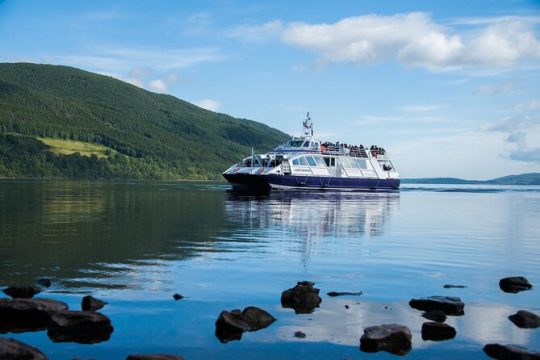
Outdoor Activities
Prices from $13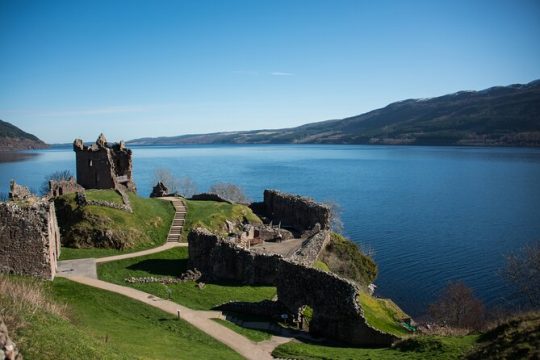
Cruises, Sailing & Water Tours
Prices from $24
Sightseeing Tickets & Passes
Prices from $6
Private & Custom Tours
Prices from $6
Shore Excursions
Prices from $27
Classes & Workshops
Prices from $57


Edinburgh Castle
Prices from $7
Loch Ness
Prices from $33
Royal Mile
Prices from $4
Glencoe (Glen Coe)
Prices from $52
Forth Bridge
Prices from $36
Deanston Distillery
Prices from $60
Loch Lomond & the Trossachs National Park
Prices from $33
Urquhart Castle
Prices from $33
Cairngorms National Park
Prices from $48
Grassmarket
Prices from $4
St. Giles Cathedral
Prices from $4
Edinburgh Old Town
Prices from $16
Hanukkah in Scotland
Dec 4–12, 2026
Christmas Eve in Scotland
Thu, Dec 24, 2026
Christmas activities in Scotland
Fri, Dec 25, 2026
Rainy day activities in Scotland
15 tours & activities
Senior-friendly tours Scotland
322 tours & activities
Scotland Foodie Tours
197 tours & activities
Family-friendly Scotland Tours
391 tours & activities
The best tours and activities for culture lovers in Scotland
988 tours & activities
Top 10 Scotland 2026
10 tours & activities
Top Day Trips from Scotland
563 tours & activities
Things to do in Scotland this summer
1,121 tours & activities
 From $5
 From $3


