Frequently Asked Questions
The answers provided below are based on answers previously given to customers' questions.
The United Kingdom brings four nations together on a compact set of islands, so you can move from royal ceremony to misty glens to a basalt coastline in a single trip. England holds the biggest share of famous landmarks, Scotland brings mountains, lochs and castles, Northern Ireland adds dramatic shores and folklore, and Wales rounds things out with hills and heritage. Guided walks, heritage tours and private sightseeing are the most popular ways to explore, and plenty of outings are short enough to fit around a museum visit or a long pub lunch. Others run all day, carrying you out into the countryside by minivan. Most offer free cancellation, many can be booked privately, and travelers rate them very highly. Each nation has its own accent, food and sense of humor, which is part of the fun of crossing between them.
Royal pageantry and a thousand years of history make England the busiest part of the country for sightseeing. In the capital, Westminster gathers the core of the story in one walkable district: the Houses of Parliament and Big Ben on the riverbank, Westminster Abbey where monarchs are crowned, and the Changing of the Guard with its bearskin hats and marching bands. Walking tours are the classic way to take it in, often led by a guide who knows the scandals and secrets behind each facade. Themed walks follow writers, royals, rock stars and notorious crimes through the old streets, and evening strolls add pub stops and ghost stories.
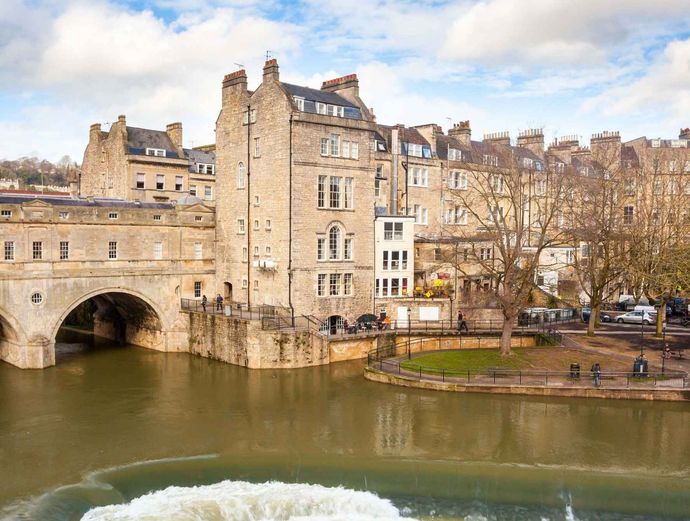
Beyond the capital, private and heritage tours reach cathedral towns, stone villages, university colleges and ancient stone circles, and many day trips combine two or three of these in one loop. Biking trips along canal paths and quiet country lanes give a gentler view of the rolling farmland, with tea rooms and village greens along the way.
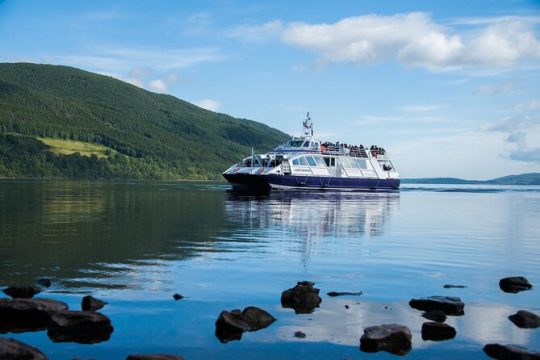
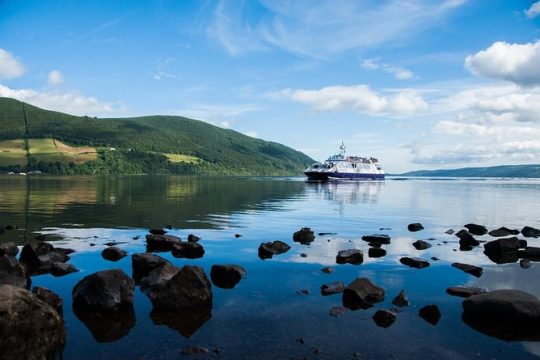
North of the border, the scenery gets wilder and the stories get older. Most visitors start in the capital, where the Royal Mile runs downhill from the castle to the royal palace past narrow closes, kirks and whisky shops. From there, full-day minivan trips head into the mountains through the brooding valley of Glencoe, on to the dark waters of Loch Ness, then past Culloden Battlefield, where the last Jacobite rising ended.
Historical and cultural tours bring clans, kings and ghost stories to life, and private drivers let you linger at castles and distilleries along the way. Expect long stretches of empty moorland, single-track roads, red deer on the hillsides and plenty of photo stops beside still lochs.
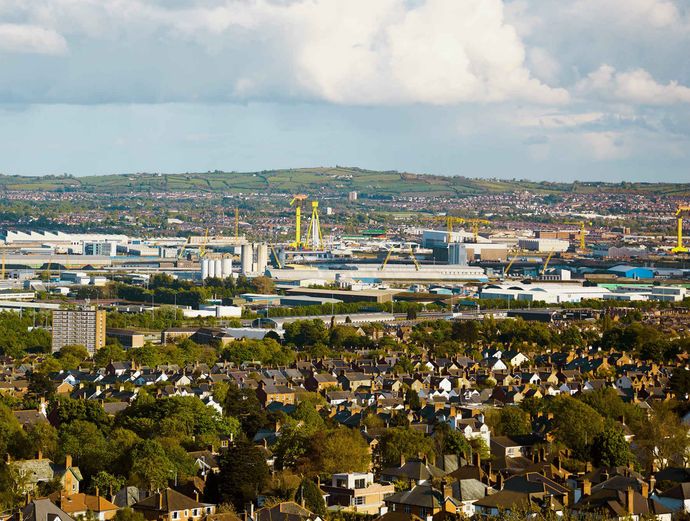
Small enough to cross in an afternoon, Northern Ireland rewards a single long day on its famous coast. The Giant's Causeway, a field of thousands of basalt columns stepping into the sea, is the star attraction, wrapped in a legend about a quarrelsome giant. Close by, Dunluce Castle clings to a crumbling clifftop, the Carrick-a-Rede Rope Bridge swings across a gap to a tiny island, and the Dark Hedges form a tunnel of twisted beech trees that screen fans will recognize.
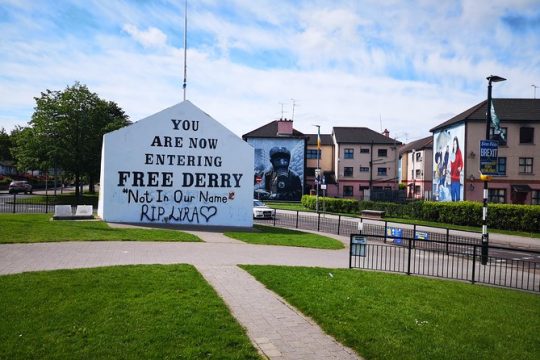
Bus and minivan tours link these in one loop, while cultural tours in the capital explore murals, shipbuilding and recent history. Private guides can tailor a route around your interests, from whiskey to castles to green glens.
One more nation completes the picture, and it is well worth adding to a longer trip.
#1You can explore on your own with a map and guidebook, but many visitors join a Yeoman Warder tour, where a costumed guide shares the stories of prisoners, kings and the ravens. Timed entry or early access helps you reach the Crown Jewels before the crowds build. Others pair the Tower with a Thames river cruise, or add Tower Bridge and a walking tour of the City. Plan on a good part of a day, since there are several buildings, towers and exhibitions to cover. The Crown Jewels are kept in the Waterloo Block, and the queue there can build at busy times. Yeoman Warder tours leave daily from near the entrance and do not need to be booked separately. The site has cobbles, steps and narrow stairs, so wear comfortable shoes and check the access guide if needed. Some routes can close temporarily, so check for closures before you visit.
More
#2The London Eye is the giant observation wheel on the South Bank of the Thames, facing the Houses of Parliament across the river. Its slow-moving glass capsules lift passengers high above the city for wide views over central London and its landmarks, from Big Ben and Westminster to St. Paul's Cathedral and the towers of the City.The wheel began as an entry in a competition to design a landmark for the new millennium. The husband-and-wife architects David Marks and Julia Barfield pursued the idea even though the competition produced no winner, and their design was built at the very end of the 20th century. It was meant to stand for only a few years, but it proved so popular that it became a permanent part of the skyline.Building it was a feat of engineering. The rim and spokes were made in sections, floated up the Thames on barges and assembled lying flat over the river, then slowly hauled upright in one of the largest lifts of its kind. The wheel is held from one side only, like a giant bicycle wheel on a single arm, so it seems to lean out over the water. When it opened, it was the tallest wheel of its kind in the world.The egg-shaped capsules are mounted on the outside of the rim, so the glass gives a clear view in every direction with nothing in the way. There is one capsule for each of London's boroughs, and riders watch the city shift as they rise: the bend of the river, the royal parks, Wren's great dome and the modern towers clustered around it. At night, the wheel itself glows in changing colors. A guide adds the stories behind the skyline you see from the top.
More
#3St. Paul's Cathedral is the great domed church on Ludgate Hill in the City of London, the masterpiece of Sir Christopher Wren and one of the defining shapes of the London skyline. Visitors come for its vast, light-filled interior, the climb to galleries inside and around the dome, and a crypt that holds the tombs of national heroes.A cathedral dedicated to Saint Paul has stood on this hilltop since the early 7th century. Its Gothic predecessor, one of the largest churches in medieval Europe, was destroyed in the Great Fire of London in the 17th century, and Wren was asked to design its replacement. He spent decades on the project, battling committees and budgets, and lived to see the new cathedral finished early in the 18th century. His bold plan crowned the church with a dome inspired by St. Peter's in Rome, built as three nested shells: an inner dome seen from below, a hidden brick cone carrying the stone lantern, and the outer dome that shapes the skyline.Inside, the eye is drawn up to the painted scenes from Saint Paul's life on the inner dome and the glittering mosaics of the quire, added in Victorian times. The Whispering Gallery earns its name from acoustics that carry a murmur around the curve of the dome, and the higher galleries outside open onto views over the Thames and the City. Below, the crypt holds the tombs of Admiral Nelson and the Duke of Wellington, along with Wren himself, whose simple memorial bears a Latin line inviting visitors to look around them for his monument.The cathedral has also been the stage for national moments, from the funerals of Nelson and Winston Churchill to royal celebrations, and its survival amid the flames of the Blitz, captured in a famous wartime photograph, made it a symbol of London's resilience. A guide brings these stories, and the building's hidden engineering, into focus.
More
#4The Houses of Parliament, properly the Palace of Westminster, stand on the bank of the Thames in central London, with the clock tower known worldwide as Big Ben at the north end. It is where the UK Parliament meets, and visitors come to see the Gothic Revival building, its chambers and one of the most recognized clocks in the world.A royal palace stood here from the 11th century, and English kings lived on the site until fire drove them out in the early 16th century, after which Parliament made it home. Most of the old palace burned down in a great fire in the 19th century, though Westminster Hall survived. The architect Charles Barry won the competition to rebuild, and Augustus Pugin supplied much of the Gothic detail, from carved woodwork to tiles and wallpaper. The work took about three decades. The tower at the north end, now called the Elizabeth Tower, holds the Great Bell, whose nickname Big Ben has spread to the tower and the clock. The Commons chamber was bombed in the Second World War and rebuilt afterward.The palace is huge, with more than 1,100 rooms and miles of passageways. Westminster Hall, the oldest part, dates to the late 11th century and has hosted coronation banquets, great state trials and the lying in state of monarchs. The octagonal Central Lobby, under the central tower, links the two chambers and is decorated with mosaics of the patron saints of the UK's nations. The House of Commons is furnished in green and the House of Lords in red, with a gilded throne at one end. The Victoria Tower at the south end, the tallest of the towers, holds the parliamentary archives. Together with Westminster Abbey, the palace is a UNESCO World Heritage Site.From the river or the bridge, the long facade and the clock tower make one of London's defining views. A guide brings the history and the daily workings of Parliament to life.
More
#5Tower Bridge is the Victorian bridge across the River Thames beside the Tower of London, known everywhere for its twin Gothic towers and the roadway that lifts in the middle to let ships through. People come to cross it, to see it open, and to go inside for views along the river and a look at the machinery that once powered it.By the late 19th century the East End of London badly needed a new river crossing, but a fixed low bridge would have blocked ships from reaching the busy wharves of the Pool of London upstream. The answer, chosen from many proposals, was a bascule bridge, whose central roadway splits into two leaves that tilt upward, joined by high walkways between the towers. The City architect Horace Jones drew up the design with the engineer John Wolfe Barry, and after years of work the bridge opened near the end of the century.Its medieval look is a disguise. Beneath the granite and Portland stone chosen to suit the Tower next door is a steel frame, and for decades the bascules were raised by hydraulic power, with steam engines pumping water into huge accumulators that stored the pressure. Those engines, with their polished paintwork and great flywheels, survive in the Victorian Engine Rooms. The high walkways, built so people could cross while the bridge was raised, were little used and later closed, then reopened as part of an exhibition, with glass panels in the floor that look straight down onto the traffic and the river.Visitors often mix it up with London Bridge, its plain neighbor upstream, a confusion behind many a travel story. The bridge is still raised for tall ships, now by modern equipment, and seeing the leaves rise is a classic London sight. A guide adds the human side, from the engineers who solved the river's traffic problem to the crews who have kept the bridge lifting ever since.
More
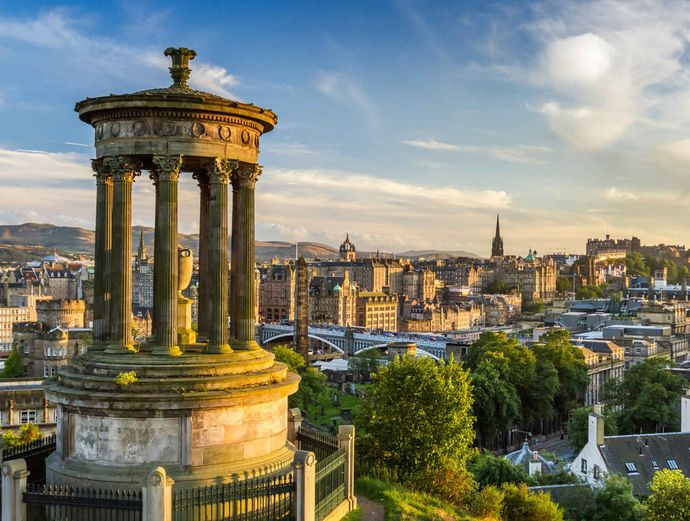
#6Edinburgh Castle crowns Castle Rock, the old volcanic crag that rises above the center of Scotland's capital. For centuries it served as a royal residence, a fortress and a garrison, and people come to walk its walls, see the Scottish crown jewels and look out across the city from the battlements.The rock was a stronghold long before the castle took its present shape. Kings of Scots held it from at least the 12th century, and it changed hands again and again during the wars with England, earning a reputation as one of the most fought-over places in Britain. Over time the medieval royal castle gave way to a military base, with barracks and gun batteries added as warfare changed.The smallest building is among the most moving. St Margaret's Chapel, a plain stone room built in the 12th century, is the oldest surviving building in Edinburgh. Close by stands Mons Meg, a huge medieval siege gun that once fired stones heavy enough to batter castle walls. In the Royal Palace, Mary Queen of Scots gave birth to the son who would become king of both Scotland and England, and the same rooms now hold the Honours of Scotland: the crown, the sceptre and the sword of state, the oldest regalia in the British Isles.The Great Hall, built for James IV in the early 16th century, has a fine timber roof and walls lined with arms and armor. Underground, the vaults recreate the cramped quarters where prisoners of war were held in the 18th century, including sailors captured during the American Revolutionary War, whose carvings survive on the doors. The Scottish National War Memorial, created after the First World War, honors Scots who died in conflicts since. From the ramparts the views reach over the Old Town, the New Town and out to the Firth of Forth.
More
#7Westminster is the district in central London where British government and history meet on the bank of the River Thames. It is home to the Houses of Parliament, Westminster Abbey and the great clock tower beside Westminster Bridge, and travelers come to see the buildings where the country has been ruled, crowned and remembered for centuries.Its importance goes back to the 11th century, when the Anglo-Saxon king Edward the Confessor built a royal palace and a great abbey church on what was then marshy ground beside the river. Since the Norman Conquest, nearly every English and British monarch has been crowned in the abbey, and many are buried there. The palace became the meeting place of Parliament, and after a great fire destroyed most of it in the 19th century, the architects Charles Barry and Augustus Pugin rebuilt it in a richly detailed Gothic Revival style. Westminster Hall, with its vast medieval timber roof, survived the flames.The abbey itself is a treasury of English history. Inside you find royal tombs, carved chapels and the shrine of Edward the Confessor, along with Poets' Corner, where Geoffrey Chaucer is buried and writers from Shakespeare to Jane Austen are honored. Scientists such as Isaac Newton and Charles Darwin also lie here, and the Grave of the Unknown Warrior sits near the great west door.Outside, Parliament Square is lined with statues of figures such as Winston Churchill, Abraham Lincoln and Nelson Mandela, and Whitehall leads north past government offices toward Trafalgar Square. Walking the streets, you pass the gates of Downing Street, the Cenotaph and the river embankment, all within a short stroll of each other. A guide helps connect the stones to the people and events that shaped Britain and explains the rituals still carried out in these halls.
More
#8Westminster Abbey is the great Gothic church beside Parliament Square in London, where English and British monarchs have been crowned for nearly a thousand years. It is also a royal burial place and a national hall of memory, and visitors come to see its soaring nave, its royal tombs and the monuments to poets, scientists and statesmen.A community of Benedictine monks settled here long before the Norman Conquest, and in the 11th century King Edward the Confessor built a large stone church beside his palace, where he was buried. William the Conqueror was crowned in that church, starting a tradition that has run through almost every coronation since. In the 13th century Henry III rebuilt the abbey in the French Gothic style as a grand setting for Edward's shrine, and later centuries added the Lady Chapel of Henry VII and the western towers. After the monasteries were dissolved, the abbey survived as a royal church answerable directly to the sovereign rather than to a bishop.Inside, the narrow, lofty nave leads toward the crossing where coronations take place, above a rare medieval pavement of inlaid stone and glass. Behind the high altar, the shrine of Edward the Confessor is ringed by the tombs of medieval kings and queens, while the Lady Chapel's fan-vaulted ceiling looks almost like lace carved in stone. Elizabeth I and her half-sister Mary I share a tomb, and the oak Coronation Chair has been used at crowning ceremonies for centuries. In Poets' Corner, writers from Chaucer to Dickens are buried or remembered, and scientists including Isaac Newton and Charles Darwin lie nearby. At the west end, the Tomb of the Unknown Warrior honors those killed in the First World War.Beyond the church, the cloisters, the octagonal Chapter House and the galleries high in the triforium show the monastic and royal story in more detail. A guide can explain the rituals of a coronation and the lives of the people buried here.
More
#9The River Thames is the great tidal river that winds through the heart of London, the reason the city stands where it does. Its banks hold many of the capital's best-known sights, from the Houses of Parliament and the London Eye to the Tower of London and Tower Bridge, and people come to see the city unfold along its curves.The Thames rises in the Cotswold hills and flows east past Oxford and Windsor before reaching London and widening toward the North Sea, making it the longest river entirely in England. The Romans founded Londinium at a point where it could be bridged and where seagoing ships could still reach, and for centuries the river was London's main highway and the source of its wealth. Wharves, warehouses and later vast enclosed docks lined its banks as the port grew into one of the busiest in the world.The river has had harder chapters too. In the colder winters of past centuries it sometimes froze solid enough for frost fairs on the ice, and in the 19th century it became so foul that a summer stench pushed Parliament to act, leading to the stone embankments and sewers that still shape the riverside. After the docks moved downstream and closed, old warehouses were reborn as homes, galleries and restaurants, and the water grew clean enough for seals and porpoises to return.A trip along the Thames reads like a timeline of London. Heading downstream, Parliament and Westminster come first, then the South Bank's theaters, Tate Modern and the rebuilt Shakespeare's Globe, the dome of St Paul's, the medieval Tower and the glass towers of the City. At Greenwich, the maritime buildings and the Cutty Sark recall the river's seafaring past. A guide can match each bend to its chapter in the city's story.
More
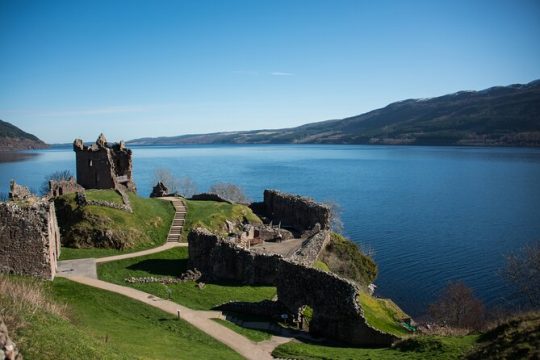
#10Loch Ness is a long, deep freshwater lake in the Scottish Highlands, stretching southwest from near Inverness through the Great Glen. It is famous around the world as the supposed home of a monster, and visitors come for the legend, the castle ruins on its shore and the wild hills that rise straight from the water.The loch fills part of a great geological fault that splits the Highlands in two, carved deeper by glaciers during the ice ages. Its size is hard to grasp: it holds more fresh water than all the lakes of England and Wales put together. Peat washed down from the surrounding hills stains the water a dark, tea-like brown, so even on a bright day you can see only a short way below the surface, which helps explain why stories of hidden creatures have lasted so long.Those stories go back a long way. An early account tells of the Irish missionary Saint Columba confronting a beast in the nearby River Ness in the early Middle Ages. The modern legend of Nessie took off in the 20th century, when a new road along the shore brought more people past the water and a run of sightings and blurry photographs made headlines. One of the most famous pictures was later revealed as a hoax, yet sonar sweeps and scientific surveys have never quite put the mystery to rest.Around the shore, Urquhart Castle stands on a rocky point, its ruined tower partly blown up by government troops in the late 17th century so that rebels could not use it. At the southern end, Fort Augustus grew up around a military fort and later the locks of the Caledonian Canal, built to link the east and west coasts. On the quieter eastern side, the Falls of Foyers tumble through a wooded gorge. A local guide adds the tales and shows where the most famous sightings took place.
More
#11You can walk the Royal Mile on your own at any time, but much of its history sits behind doorways and down narrow closes. A guided walking tour explains the tall Old Town tenements, St Giles' Cathedral and the stories of the closes. Underground, ghost and whisky themed tours add other angles, and some itineraries combine the Mile with the Castle or Holyroodhouse. Hop-on, hop-off buses leave from nearby Waverley Bridge. The Royal Mile is almost exactly one mile long and runs downhill from Edinburgh Castle to the Palace of Holyroodhouse. Allow an hour or two to walk it with stops, and more time if you go inside the Castle, St Giles' Cathedral or Holyroodhouse. The street is paved with setts and has steep side closes, so comfortable shoes with good grip are a good idea. Most people walk it from the castle down, because the climb back up is steady. The High Street fills with performers, buskers and crowds during the Fringe festival.

More
#12You can see the square on your own in a few minutes, but a guided walk adds the stories behind Nelson's Column, the bronze lions and the changing Fourth Plinth sculpture. Many walking tours link the square with the National Gallery, Whitehall, Westminster and St James's Park in one outing. Guided walks at different times of day also show the area in a different light. The square is an open public space with heritage wardens on site around the clock to help with directions and local information. Parades, memorial services and seasonal celebrations can close parts of the square, so check the events listing before you go. Public toilets are on the west side at the base of the central staircase, and they are not open all hours. The Fourth Plinth sculpture changes over time, so what you see may differ from older photos.
More
#13HMS Belfast is a Second World War cruiser of the Royal Navy, permanently moored on the River Thames in central London, close to Tower Bridge. Now a museum ship, it lets visitors climb through a real warship from the gun turrets to the engine rooms and see how its crew lived and fought.The ship was built in Belfast by Harland and Wolff, the same yard that built the Titanic, and was launched shortly before the war began. Within weeks of the outbreak it struck a German magnetic mine in the Firth of Forth, which broke its back and kept it out of action for years of repairs. Returned to service, it escorted the Arctic convoys carrying supplies to the Soviet Union and helped sink the German battleship Scharnhorst in the Battle of North Cape. On D-Day it was among the first ships to open fire on the Normandy coast. Later it served in the Korean War before the navy retired it.Faced with scrapping, a group of supporters campaigned to save the cruiser, and it opened to the public on the Thames in the second half of the 20th century. Aboard, the visit runs from the open decks and the bridge down through mess decks hung with hammocks, a sick bay and operating theatre, a dentist's surgery, a bakery, a laundry, the chapel and the cramped punishment cells. Deep below are the boiler and engine rooms that drove the ship at speed. The huge forward guns are a favorite subject of trivia, since they are said to be aimed at a motorway service station well north of the city.The ship gives a rare sense of the noise, heat and crowding of life at sea. A guide can add the human stories of the sailors who served aboard.
More
#14The Changing of the Guard is the ceremony at Buckingham Palace in London in which one detachment of the King's Guard hands over duty to the next, with marching soldiers in scarlet tunics and tall bearskin caps and a military band. It is one of the best-loved displays of British royal pageantry, and people come to watch the drill, the uniforms and the music up close.Soldiers have guarded the monarch's residences since the 17th century, when the restored King Charles II kept household troops close at hand. Buckingham Palace joined their watch in the 19th century, after Queen Victoria made it the main royal home in London. The duty falls mostly to the five regiments of Foot Guards, the Grenadier, Coldstream, Scots, Irish and Welsh Guards, who are both ceremonial soldiers and fully trained infantry who serve on operations around the world.The ceremony itself is a carefully drilled handover. The Old Guard, which has been on duty, forms up in the palace forecourt, and the New Guard marches in to meet it, accompanied by a band. Officers exchange formal compliments, sentries are relieved one by one, and the band plays everything from traditional marches to the occasional film theme or pop tune while the soldiers stand to attention. When the exchange is complete, the Old Guard marches away and the new one settles in.Look closely at the uniforms and you can tell the regiments apart: the spacing of the tunic buttons and the color of the plume on the bearskin, or its absence, differ for each. In colder months the soldiers often parade in gray greatcoats instead of scarlet. Nearby on Horse Guards Parade, the mounted Household Cavalry holds a guard change of its own, with gleaming breastplates and plumed helmets. Behind the pageantry, these are serving soldiers keeping a real watch over the monarch's home.
More
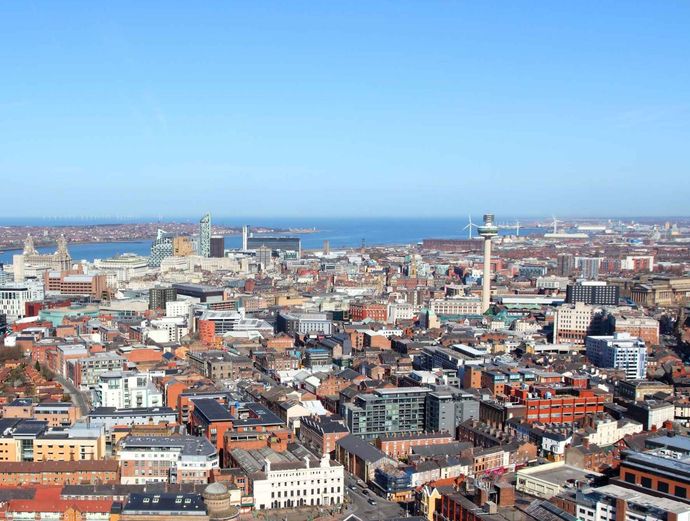
#15Liverpool Cathedral is the Anglican cathedral of the city, a vast red sandstone church on St James' Mount overlooking the city center and the River Mersey. It is the largest cathedral in Britain, and people visit for the scale of its soaring Gothic interior, its stained glass, its modern art and the view from the top of its tower.The cathedral was designed by Giles Gilbert Scott, who won the competition for it while still in his early twenties and spent the rest of his working life on the project. The foundation stone was laid by King Edward VII in the early 20th century, and building went on through two world wars, finally finishing in the late 20th century, long after Scott's death. The Lady Chapel was completed first and gives a sense of the detail he planned throughout. Scott, who also designed the classic red telephone box, is buried just outside the west end of the building.Inside, the sheer size is the first thing you notice, from the height of the vaulted arches to the long view down the nave. The organ is the largest in the country, and the tower holds one of the highest and heaviest rings of bells in the world. Modern art sits easily among the stone: a pink neon message by Tracey Emin glows at the west end, and Elisabeth Frink's sculpture of Christ greets visitors above the entrance. The great west window and the windows of the Lady Chapel fill the space with colored light.Below the cathedral, St James' Gardens fill a former quarry that once supplied stone for the city and later served as a cemetery. A guide can explain the cathedral's design, its builders and the many details hidden in the stonework.
MoreMost trips here balance city days on foot with a few long drives into the countryside. Guided outings cluster in the morning, and many walks last only a couple of hours, which frees the afternoon for a museum or a pot of tea.
Evenings bring pub suppers, theater and ghost walks, while full-day minivan trips carry you out to castles in Scotland, the Northern Ireland coast and the hills of Wales.
Private guides suit couples and families who want a flexible pace, and history lovers, hikers and film fans can fill a week or two with ease.
Late spring and early summer bring long daylight and green countryside across England, Scotland and Wales, the best weeks for long walks, castle visits and coastal drives.
July and August are the busiest months, with school holidays and festivals filling the capitals, so book popular tours well ahead. September is often settled and quieter, good for Scottish glens and the Northern Ireland coast.
Winter is cold and darkness falls by late afternoon, especially in Scotland, but museums, city walks and festive markets keep England lively.

The answers provided below are based on answers previously given to customers' questions.