Hungary attractions
More things to do in the country
 #106
Rathaus
The Rathaus is Vienna's City Hall, a grand neo-Gothic building on the Ringstrasse that houses the mayor, the city council and the parliament of the state of Vienna. Visitors come for its pointed arches and lofty central tower, and for the large square in front, which hosts some of the city's best loved festivals and markets.The building rose in the late 19th century, during the boom years when Vienna tore down its old fortifications and lined the new Ring boulevard with monumental public buildings. The architect Friedrich von Schmidt, known for his work on Cologne Cathedral, chose the Gothic style on purpose, as a nod to the free, self-governing medieval towns of Flanders and their great town halls. The site was a former military parade ground, given to the city on the condition that the space in front would stay open. Ever since, the building has been the seat of Vienna's government and a symbol of the city's civic pride.The central tower is crowned by the Rathausmann, a figure of a standard-bearer in armor made of iron. A popular story says the tower was kept a little lower than the spires of the nearby Votivkirche, and the iron knight on top lifts it just above them. Around the tower, the facade is busy with statues, balconies and tracery. Inside, the arcaded courtyards are used for summer concerts, a ceremonial staircase leads to the upper floors, and the Festsaal, a vast hall with chandeliers and stained glass, hosts balls and receptions. The council chamber has a coffered ceiling and a heavy chandelier. Outside, the park around Rathausplatz is filled with trees and statues of notable Viennese figures.A guide explains how the building works as a seat of government and what the carvings say about the city's history.
More #107
Rector's Palace (Knezev Dvor)
If you are looking for things to do in Hungary we have 71 Tours and Activities to Experience Rector's Palace (Knezev Dvor). Check out our verified traveler reviews and photos of Rector's Palace (Knezev Dvor) tours and other things to do in Hungary, and book securely when you find the perfect one. Learn the best ways to see famous Rector's Palace (Knezev Dvor) and explore the most popular things to do in Hungary.
More #108
Retro Design Center
If you are looking for things to do in Hungary we have 1 Tours and Activities to Experience Retro Design Center. Check out our verified traveler reviews and photos of Retro Design Center tours and other things to do in Hungary, and book securely when you find the perfect one. Learn the best ways to see famous Retro Design Center and explore the most popular things to do in Hungary.
More #109
Ringstrasse
The Ringstrasse is the grand boulevard that circles the old center of Vienna, lined with palaces, parks and some of the city's most important public buildings. Known simply as the Ring, it is the best place to take in the splendor of imperial Vienna at street level, and visitors come to see a whole age of architecture in one loop.Until the middle of the 19th century, Vienna was still enclosed by fortifications and a wide open belt kept free for defense. Emperor Franz Joseph ordered the walls torn down, and over the following decades the cleared ground became a showcase boulevard for an ambitious empire. The project also gave the rising middle class a stage: bankers, industrialists and many Jewish families built elegant apartment palaces along it, and the era became known as the Ringstrasse period.Each major building was given a historical style matched to its purpose. The Parliament looks like a Greek temple to honor the birthplace of democracy, the City Hall uses Gothic forms that recall the free medieval towns, and the University adopts Renaissance lines as a nod to learning. The State Opera, the first great building completed on the Ring, was criticized so harshly at first that its architects were deeply wounded by the response. Opposite each other stand the twin Art History and Natural History museums, with Maria Theresa between them, and the Burgtheater faces City Hall across a park.Green spaces break up the stone. The Volksgarten is known for its roses, the Burggarten has a palm house and a statue of Mozart, and the Stadtpark holds a gilded statue of the waltz king Johann Strauss. The Votive Church raises its twin spires near the university, and coffeehouses along the way have served writers and politicians for generations. A guide reveals the stories, rivalries and symbolism hidden in the facades.
More #110
Rumbach Street Synagogue (Rumbach Zsinagóga)
The Rumbach Street Synagogue is a Moorish Revival synagogue in Budapest's old Jewish Quarter, designed by the Viennese architect Otto Wagner for a congregation that stood between the city's Orthodox and liberal Jews. Restored after decades of decay, it draws visitors to its eight-sided, richly painted prayer hall and its program of concerts and exhibitions.The building went up in the second half of the 19th century, at the very moment Hungarian Jewry split into rival branches. Its congregation, known as Status Quo Ante, chose to stay outside both the reforming Neolog movement and the Orthodox camp, keeping to things as they had been. For their new home they turned to Otto Wagner, then a young architect from Vienna who would later become one of the great names of the Vienna Secession and modern architecture.Wagner's design pays homage to the Dome of the Rock in Jerusalem without copying it. The prayer hall is an octagon crowned by a dome, with balconies running around its sides, and its walls are covered in intricate patterns painted in the Islamic manner that many Central European synagogues of the period adopted. The building runs about 50 meters long and rises to nearly 30 meters at its highest point, so the interior feels lofty yet intimate.For around six decades, the building was left to decay. A major restoration finally brought it back to life, and it reopened as a working synagogue that also serves as a cultural venue and museum of Jewish life. The hall now hosts concerts, plays and photo exhibitions, so a visit can mean hearing music beneath the dome as well as admiring the architecture. A guide can unpack the religious divisions behind its founding and the meaning woven into Wagner's ornament.
More #111
Salzburg Old Town (Salzburger Altstadt)
Salzburg's Old Town is the historic core of the Austrian city, a compact web of squares, church domes and narrow lanes beside the Salzach River, watched over by a fortress on the hill above. Visitors come for its Baroque streetscapes, its music and its link to Mozart, who was born here, and the whole district is a World Heritage Site.The city's wealth came from salt, mined in the nearby hills and shipped down the river, and for centuries it was ruled not by dukes but by powerful prince-archbishops. In the late 16th and 17th centuries they remade the center in the Italian manner, clearing space for wide squares and bringing in architects from south of the Alps, which is why Salzburg is often called the Rome of the North. Mozart was born in the 18th century in a tall yellow house on Getreidegasse, which has become a museum of his early years.Getreidegasse itself is a narrow shopping street hung with wrought-iron guild signs, and its tall houses hide passageways that open onto quiet courtyards. The cathedral, with its twin towers and great dome, faces Domplatz, while the Residenz next door holds the state rooms where the archbishops received guests and the young Mozart performed. Nearby, Residenzplatz centers on a large Baroque fountain. St Peter's Abbey, one of the oldest monasteries in the German-speaking world, has a cemetery of iron grave crosses and catacombs cut into the cliff.High above everything, Hohensalzburg Fortress has guarded the city since the 11th century and ranks among the largest castles of its age in Europe. Film fans will also spot corners that appeared in The Sound of Music, which was shot in and around the city. A guide helps tie the squares, churches and music into one story of salt, faith and power.
More #112
Sanctuary of Divine Mercy
If you are looking for things to do in Hungary we have 16 Tours and Activities to Experience Sanctuary of Divine Mercy. Check out our verified traveler reviews and photos of Sanctuary of Divine Mercy tours and other things to do in Hungary, and book securely when you find the perfect one. Learn the best ways to see famous Sanctuary of Divine Mercy and explore the most popular things to do in Hungary.
More #113
Schlosspark Schönbrunn (Schönbrunn Palace Garden)
If you are looking for things to do in Hungary we have 28 Tours and Activities to Experience Schlosspark Schönbrunn (Schönbrunn Palace Garden). Check out our verified traveler reviews and photos of Schlosspark Schönbrunn (Schönbrunn Palace Garden) tours and other things to do in Hungary, and book securely when you find the perfect one. Learn the best ways to see famous Schlosspark Schönbrunn (Schönbrunn Palace Garden) and explore the most popular things to do in Hungary.
More #114
Schönbrunn Palace (Schloss Schönbrunn)
Schönbrunn Palace is the former summer residence of the Habsburg emperors, on the western side of Vienna. With more than 1,400 rooms, ornate state apartments, formal gardens and the hilltop Gloriette, it shows how one of Europe's most powerful dynasties lived, entertained and ruled.The estate began as a hunting ground. In the 16th century Emperor Maximilian II bought the land beside the river and stocked it with game, exotic birds and fishponds, and a palace followed in the next century. Its name comes from a spring on the grounds, the beautiful well that gave Schönbrunn its title. In the 18th century Empress Maria Theresa rebuilt the palace into the Baroque residence that stands there, and it became the center of court life through the warm months.History kept passing through its gates. Emperor Franz Joseph was born here and died here after a reign of almost seven decades, and the palace saw the end of the monarchy after the First World War, when it passed to the state and opened as a museum. Much later it hosted a Cold War meeting between John F. Kennedy and Nikita Khrushchev. UNESCO lists the palace and its gardens as a World Heritage Site.Inside, the state rooms move from gilded Rococo halls and the long Great Gallery, once lit for balls and banquets, to private apartments that reveal the daily habits of Franz Joseph and Empress Elisabeth. Outside, the park climbs a gentle slope to the Gloriette, a colonnaded structure with wide views over the city, passing fountains, statues, a mock Roman ruin and the glass Palm House along the way. The grounds also hold the Tiergarten, which claims to be the oldest zoo in the world. A guide helps connect the rooms to the people and court rituals that filled them.
More #115
Sea Organ (Morske Orgulje)
The Sea Organ is a musical instrument built into the waterfront of Zadar's Old Town in Croatia, where Adriatic waves play music through pipes hidden beneath a broad flight of white marble steps. People come to sit on the steps, look out over the sea and listen to chords that no composer wrote and no one can predict.The organ grew out of a plan to revive a neglected stretch of shore. Zadar was heavily damaged in the Second World War, and hasty rebuilding afterward left much of its newer waterfront as a dull concrete wall. Architect Nikola Bašić was asked to redesign it, and instead of hiding the sea behind a barrier, he carved wide steps down to the water and made the waves themselves the performer. The organ opened early in the 21st century and soon shared a European prize for urban public space.The mechanism is simple and clever. Beneath the steps run polyethylene tubes of different lengths, linked to a resonating cavity hidden inside the structure. As each wave rises and falls, it pushes air through the tubes and out through narrow slots in the stone, producing deep, breathy tones that sound somewhere between a church organ, a whale call and a distant ship's horn. Because the sea never moves the same way twice, the music never repeats itself exactly.Bašić also created the Greeting to the Sun beside it, a wide circle of glass panels set into the pavement that gathers solar energy by day and glows in shifting colors after dark. Together the two works have turned the tip of the peninsula into a favorite gathering place for locals and visitors, only a short stroll from Roman ruins and medieval churches. A guide can add the story of how a city scarred by war chose to reinvent its seafront with sound and light.
More #116
St. Charles's Church (Karlskirche)
If you are looking for things to do in Hungary we have 15 Tours and Activities to Experience St. Charles's Church (Karlskirche). Check out our verified traveler reviews and photos of St. Charles's Church (Karlskirche) tours and other things to do in Hungary, and book securely when you find the perfect one. Learn the best ways to see famous St. Charles's Church (Karlskirche) and explore the most popular things to do in Hungary.
More #117
St. Mark's Church (Crkva Svetog Marka)
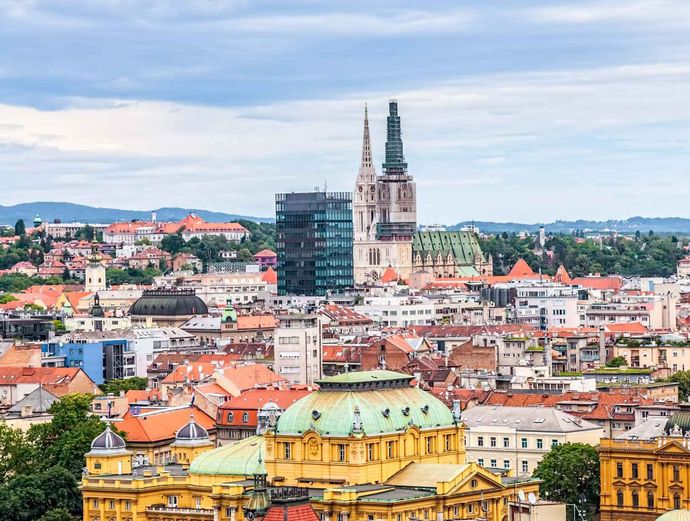
St. Mark's Church is the parish church of Zagreb's Upper Town, standing on the square at the heart of the old Gradec district between the parliament and the government palace. It is famous for its patterned tiled roof showing two coats of arms, and visitors come for that roof, the carved Gothic doorway and the art inside.The church dates back to the 13th century, when Gradec was a royal free town on its own hill, separate from the bishop's settlement of Kaptol across the stream. Parts of the Romanesque building survive, including a window in the south wall, but most of what stands is Gothic work from the following centuries, with later Baroque additions such as the bell tower. In the late 19th century the architect Hermann Bollé led a restoration that gave the church much of its present look.The roof is the part everyone photographs. Its glazed tiles form two large crests: on the left, the checkered shield and emblems of the old Triune Kingdom of Croatia, Slavonia and Dalmatia, and on the right, the white castle of Zagreb's own arms. On the south side, the Gothic portal is crowded with stone figures set in niches, among them Christ, Mary, Saint Mark with his lion and the apostles, carved in the 14th century.Inside, the mood moves forward to the 20th century. The sculptor Ivan Meštrović, Croatia's best-known modern artist, made the crucifix over the main altar, and the painter Jozo Kljaković covered the nave with large murals. The square around the church has long been the political center of the country: tradition holds that Matija Gubec, leader of a great peasant revolt in the 16th century, was executed here, and the parliament and the government sit facing it. A guide brings out those stories alongside the art.
More #118
St. Martin's Cathedral (Dom svateho Martina)
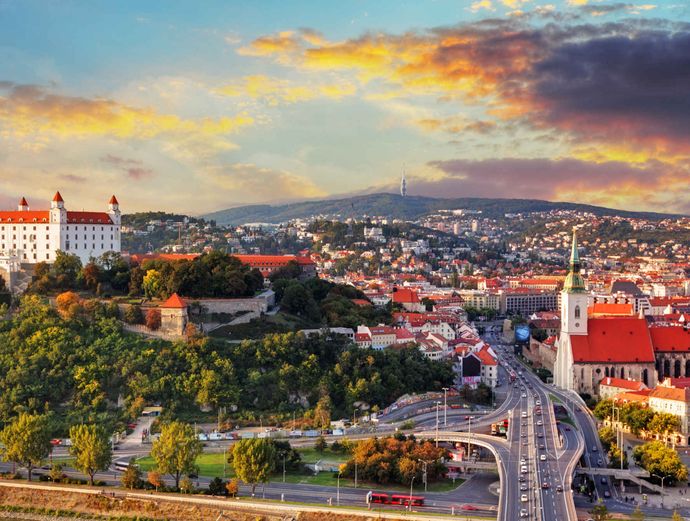
St. Martin's Cathedral is the great Gothic church of Bratislava, set where the Old Town meets the slope up to the castle. For close to three centuries the kings and queens of Hungary were crowned here, and visitors come for that royal past, the lofty nave and the gilded copy of the Hungarian crown on top of the spire.A Romanesque church stood on the site first, and the present building rose in stages through the 14th and 15th centuries, its tower doubling as a bastion in the town walls. After the Ottomans overran much of Hungary in the 16th century, the city, then known as Pressburg, became the kingdom's capital, and the cathedral took over as the place of coronation. A long line of Habsburg monarchs and their consorts were crowned beneath its vaults, Maria Theresa among them.Inside, three aisles of equal height give the church its open, airy feel, and the side chapels hold some of the finest Baroque art in Slovakia. The highlight is Georg Raphael Donner's lead statue of St. Martin on horseback, cutting his cloak to share with a beggar, with the saint dressed not as a Roman soldier but as a Hungarian hussar. Donner also designed the chapel of St. John the Almoner, a richly decorated space made to house the saint's relics.The tower rises well above the old rooftops, and the crown at its tip, set on a gilded cushion, announces the city's royal role from far away. Small brass crowns embedded in the pavement trace the route newly crowned monarchs took through the streets after the ceremony. In the 20th century a busy road to the New Bridge was cut right past the church's walls, sweeping away much of the old Jewish quarter that once stood below the castle.
More #119
St. Stephen's Cathedral (Stephansdom)
St. Stephen's Cathedral, or Stephansdom, is Vienna's great Gothic cathedral, standing on Stephansplatz in the heart of the old city. Its tall south spire and patterned tile roof make it the best known symbol of Vienna, and visitors come to see its soaring nave, carved treasures and views from the towers.A Romanesque church stood on the site from the 12th century, and its west front survives with the Giant's Door and two Heathen Towers. In the 14th century Duke Rudolf IV of the Habsburg family began rebuilding the church in the Gothic style, and work went on for well over a century. The south tower was finished, but the north tower was left incomplete and later capped with a small Renaissance top. At the end of the Second World War fires swept through the old city and the roof collapsed, destroying much of the interior. The cathedral was rebuilt with help from every Austrian province, and it remains a much loved national symbol. Mozart was married here, and his funeral service was held in one of its chapels.The roof is covered in thousands of glazed tiles laid in a zigzag pattern, with a double-headed eagle and coats of arms on one side. Inside, the long nave is lined with statues on its pillars, and the stone pulpit is carved with lively heads of the church fathers. At its base, a sculptor looks out from a window, a figure traditionally taken as a self-portrait. Other treasures include the tomb of Emperor Frederick III and a gilded winged altar. The north tower holds the Pummerin, one of the largest bells in Europe, first cast from cannons left by the Ottoman army. Below ground, the catacombs hold urns of Habsburg remains and the bones of plague victims.A guide can point out the hidden details and stories carved into the stone.
More #120
St. Vitus Cathedral (Katedrála Sv. Vita)
St. Vitus Cathedral is the great Gothic church inside Prague Castle, the seat of the Archbishop of Prague and the largest church in the Czech Republic. People come for its soaring nave and spires, the jeweled chapel of Saint Wenceslas and the tombs of Bohemian kings, all set at the heart of the castle complex above the city.Duke Wenceslas founded a rotunda on this spot in the 10th century, and a Romanesque basilica later replaced it. In the 14th century the future emperor Charles IV ordered a new cathedral in the French Gothic manner. Matthias of Arras began the work, and after his death the young Peter Parler took over, adding the bold net vaulting and much of the sculpture. Wars and lean centuries then halted construction for generations, leaving the building half finished. Only in the 19th century did a society of patrons revive the project, and the western nave and twin spires were completed in the early 20th century, almost six centuries after the first stone was laid.Inside, the Chapel of Saint Wenceslas is the treasure. Its lower walls are set with polished semiprecious stones and gilding, with painted scenes from the saint's life above, and a small door leads up to the chamber where the Bohemian crown jewels are kept. Nearby stands the silver tomb of Saint John of Nepomuk, a dazzling Baroque work, and the marble royal mausoleum where emperors and kings lie. Look for the stained glass window by Alphonse Mucha in a side chapel, its figures glowing in his flowing Art Nouveau style. Outside on the south side, the Golden Gate carries a medieval mosaic of the Last Judgment, and coronation processions once passed beneath it.Kings of Bohemia were crowned here for centuries, and the building carries that ceremonial weight. A guide can point out the portrait busts of royals and builders high in the triforium, Parler's own face among them.
More #121
Szentendre Main Square (Fo Tér)
If you are looking for things to do in Hungary we have 11 Tours and Activities to Experience Szentendre Main Square (Fo Tér). Check out our verified traveler reviews and photos of Szentendre Main Square (Fo Tér) tours and other things to do in Hungary, and book securely when you find the perfect one. Learn the best ways to see famous Szentendre Main Square (Fo Tér) and explore the most popular things to do in Hungary.
More #122
Tokaj
If you are looking for things to do in Hungary we have 2 Tours and Activities to Experience Tokaj. Check out our verified traveler reviews and photos of Tokaj tours and other things to do in Hungary, and book securely when you find the perfect one. Learn the best ways to see famous Tokaj and explore the most popular things to do in Hungary.
More #123
Trakoscan Castle
Trakošćan Castle is a white hilltop castle in the green hills of Hrvatsko Zagorje in northern Croatia, rising above a quiet lake and a wooded park. It is one of the best-preserved castles in the country, and people come to tour its furnished rooms, walk around the lake and enjoy the fairy-tale setting.A fort stood on this hill in the Middle Ages, and it passed through several noble hands before the Drašković family received it in the late 16th century. They held it for more than three centuries. In the 19th century, as Romantic tastes swept Europe, the family turned the old stronghold into an elegant neo-Gothic residence, dammed the stream below to create the lake and planted the surrounding park. After the Second World War the castle passed to the state and opened as a museum.Inside, the rooms are furnished in period style, running from Baroque to Biedermeier and historicist styles. Walls are hung with generations of Drašković portraits, and the knights' hall and armory display swords, pistols and suits of armor. Look for the paintings of Julijana Erdödy Drašković, a countess who was a gifted artist in her own right, and for tiled stoves and carved furniture that bring daily life in a noble house into focus.Outside, the castle's tower and walls make a striking picture from the far shore, especially when the lake holds a still reflection. Trails wind through the woods of the park, past old trees and quiet viewpoints, and the lake path leads all the way around the water. The region around it is a land of rolling vineyards, small churches and other castles, so Trakošćan sits naturally in a wider day in the Zagorje hills. A guide brings out the family stories behind the portraits and explains how a medieval fort became a Romantic dream of a castle.
More #124
Tsarevets Fortress
If you are looking for things to do in Hungary we have 34 Tours and Activities to Experience Tsarevets Fortress. Check out our verified traveler reviews and photos of Tsarevets Fortress tours and other things to do in Hungary, and book securely when you find the perfect one. Learn the best ways to see famous Tsarevets Fortress and explore the most popular things to do in Hungary.
More #125
Turda Salt Mine (Salina Turda)
Turda Salt Mine is a former salt mine in the town of Turda, in the Transylvania region of Romania, where centuries of digging left vast chambers deep underground. Visitors come to walk the old galleries, look down into caverns the size of cathedrals and see a lake shining far below the surface.Salt has been taken from these hills since antiquity, and the mine appears in written records from the 13th century. Mining grew in the 17th century, and for hundreds of years workers cut the salt by hand, leaving huge chambers shaped like bells and cones. Extraction ended in the early 20th century. During the Second World War the mine served as a bomb shelter, and afterward it was used to store cheese. It opened to visitors in the late 20th century, and a major redesign in the early 21st century added the lighting and lifts that give it its striking, almost futuristic look.The visit follows the Franz Josef Gallery, a long tunnel cut through the salt that once carried it out of the mine. Off it lie rooms full of the mine's history, including the Echo Room in Joseph Mine, a tall cone where your voice comes back to you again and again, and the Crivac Room, which holds an old horse-driven winch, the only one of its kind still in its original place in Romania.Rudolf Mine is the showpiece, a huge rectangular hall more than 40 meters deep, with salt stalactites hanging from the ceiling and walls streaked in bands of gray and white. Its floor holds a small underground park with a Ferris wheel, mini golf, a bowling alley and an amphitheater, which look tiny from the balconies above. Below lies Theresa Mine, a bell-shaped chamber about 90 meters high with a lake at its foot. A guide explains how the miners worked and how the chambers took shape over the centuries.
More #126
Varazdin
Varaždin is a Baroque town in northern Croatia, close to the Drava River and the Hungarian border, known for its elegant palaces, a moated castle and lively music festivals. Travelers come to stroll its pastel streets and squares, explore its museums and enjoy the calm pace of a small, handsome historic city.The town grew up around a medieval fortress and became a free royal town in the Middle Ages. Its golden era came in the 18th century, when noble families built grand townhouses and churches and Varaždin served for a time as the capital of Croatia. That role ended when a great fire swept through the town, and the government moved to Zagreb. The fire left much of the center to be rebuilt, yet many of the Baroque buildings survived or were restored, and the town has carefully kept its old look ever since.The heart of the town is the Old Town castle, a white fortress surrounded by grassy earth walls and a moat, which now houses the City Museum with its rooms of furniture, weapons and art. Around the main square stand the Town Hall, one of the oldest in Europe still in use, and a series of palaces with ornate facades, some now galleries. One of them holds a well-known collection of insects, and the cathedral and the Ursuline church have rich Baroque interiors. The town cemetery is laid out like a formal park, with tall clipped hedges and tree-lined avenues. Varaždin is also known for its music, with a festival of Baroque concerts in autumn and a lively street festival at the end of summer.A local guide brings the town's nobles, craftsmen and composers to life on a walk through its squares and lanes.
More #127
Vienna Musikverein (Wiener Musikverein)
The Musikverein is Vienna's most famous concert hall, a grand building beside Karlsplatz in the old city center and the home of the Vienna Philharmonic. People come to see, and above all to hear, its Golden Hall, a room whose sound is admired by musicians and listeners around the world.The building was commissioned by the Society of Friends of Music in Vienna, an association of music lovers founded in the early 19th century to promote concerts, teaching and the collecting of musical works. The emperor granted the society land near the new Ringstrasse, and the Danish architect Theophil Hansen designed a hall in the manner of a Greek temple, with columns, warm ochre and red tones and classical sculpture. It opened in the second half of the 19th century and became the center of the city's musical life almost at once.The Golden Hall is the heart of it all. Long and rectangular, lined with gilded caryatids and crowned by a painted ceiling of Apollo and the Muses, it seems built for ornament, yet its proportions, wooden surfaces and hollow spaces beneath the floor give it a warm, clear sound that later halls have tried to copy. Many people around the world know it from the New Year's Concert that the Vienna Philharmonic plays here and that is broadcast far beyond Austria.The smaller Brahms Hall, named for the composer who once led the society's concerts, offers a more intimate setting for chamber music and recitals, and newer halls set beneath the building host contemporary and experimental programs. The society also keeps an archive of manuscripts, letters and portraits connected with composers such as Beethoven and Brahms, a reminder of how closely the house is tied to the music it plays. A guide can explain the acoustics and the famous names linked to the house.
More #128
Vienna State Opera (Wiener Staatsoper)
The Vienna State Opera is the grand opera house on the Ringstrasse in the center of Vienna, and one of the most famous stages for opera and ballet in the world. Visitors come to see its marble staircase and gilded halls, and many return in the evening for a performance in the horseshoe-shaped auditorium.It was the first major public building to rise along the Ringstrasse, the boulevard laid out in the 19th century after the old city walls came down. The architects August Sicard von Sicardsburg and Eduard van der Nüll designed it in a Neo-Renaissance style, and it opened with Mozart's Don Giovanni. The Viennese were slow to warm to the building at first, and neither architect lived to see the opening night.Near the end of the Second World War, bombs set the opera house on fire, destroying the auditorium and the stage, while the main facade, the grand staircase, the Schwind Foyer and the tea salon survived. It was rebuilt over the following decade and reopened with Beethoven's Fidelio, an evening widely seen as a symbol of Austria's recovery after the war.The surviving rooms still show the imperial taste of the 19th century. The Schwind Foyer is lined with paintings of scenes from famous operas, and the tea salon was once the emperor's private lounge. The rebuilt auditorium is more restrained, with red velvet, gold trim and tiers of boxes facing a deep stage. The company works as a repertory house, staging a different work on most nights of a long season, and its orchestra supplies the players of the Vienna Philharmonic. Once a year the stalls are covered over and the whole house is turned into a ballroom for the Vienna Opera Ball, one of the high points of the city's winter social calendar.
More #129
Village Museum (Muzeul Satului)
The Village Museum in Bucharest is a large open-air museum where traditional farmhouses, churches, mills and inns from every corner of Romania have been rebuilt in a lakeside park. Walking its lanes feels like crossing the country's regions in one easy stroll, and visitors come to see how rural families lived, worked and worshipped.The museum was the work of Dimitrie Gusti, a sociologist who led teams of researchers into villages around Romania to document peasant life. Out of that research came the idea of bringing whole homesteads to the capital, so buildings were taken apart where they stood, carried to Bucharest and put back together. The layout was planned by Victor Ion Popa, a writer and theater director, with Henri H. Stahl, and the museum opened between the two world wars as one of the earliest open-air museums in Europe.The collection has grown to more than 300 monuments and tens of thousands of objects, dating from the 17th to the 20th century and drawn from Transylvania, Maramureș, Moldavia, Banat, Oltenia, Muntenia and Dobrogea. Its centerpiece is a wooden church from Dragomirești in Maramureș, whose steep shingled roof and slender tower show off the region's famous carpentry. Elsewhere stand a mud hut from Olt County, an old inn, windmills and a fishing household from Tulcea County, near the Danube Delta.The pleasure lies in the details: carved gates, wells, clay ovens, wine barrels, wayside shrines, summer kitchens and pigeon houses set beside the homes. Many interiors are furnished with the textiles, pottery and household tools of their regions, so you can compare a mountain cottage with a plains farmstead a few steps away. A guide can explain how each building reflects the climate, crafts and beliefs of its home region, turning a pleasant stroll into a lesson in rural Romania.
More #130
Visegrád
Visegrád is a small castle town on the Danube Bend, north of Budapest, where the river swings through wooded hills. Its hilltop Citadel, the remains of a great royal palace and the riverside Solomon's Tower draw visitors for medieval history and wide views over the river.People have guarded this bend in the river for many centuries. The Romans built a frontier fort on nearby Sibrik Hill in the 4th century, and the town's Slavic name is usually taken to mean upper castle. After the Mongol invasion of the 13th century, King Béla IV and his queen raised a new chain of defenses: the triangular Upper Castle on a steep hilltop, and a Lower Castle reaching down to the river, anchored by the hexagonal Solomon's Tower.In the 14th century Visegrád became a royal seat. King Charles I built a residence here, later enlarged into a vast palace by Louis I and Sigismund, and Charles hosted a celebrated congress of the kings of Hungary, Bohemia and Poland, a meeting recalled in the name of the modern Visegrád Group of Central European states. For about two centuries the Citadel also kept the royal insignia safe. Later, King Matthias Corvinus rebuilt the palace with Italian Renaissance decoration, thought to be the first use of that style anywhere outside Italy.An Ottoman siege in the 16th century left the palace in ruins, and by the 18th century earth had covered it completely. Excavations began in the 20th century and still continue, slowly bringing courtyards and carved stonework back to light. Climbing from the riverside tower to the Citadel traces the whole line of defenses the medieval kings relied on. A guide can bring the ruins to life with stories of the kings, queens and visiting rulers who made this quiet town one of the centers of medieval Europe.
More #131
Wawel Royal Castle (Zamek Wawelski)
Wawel Royal Castle is the former residence of Poland's kings, set on a limestone hill above the Vistula River at the southern edge of Krakow's Old Town. Travelers come for its Renaissance courtyard, its richly furnished royal rooms and the cathedral where Polish monarchs were crowned and buried.Wawel Hill was settled long before the castle, and it became the seat of power while Krakow was Poland's capital in the Middle Ages. A Gothic castle rose here in the 14th century, and in the early 16th century King Sigismund I the Old brought in Italian architects to rebuild it as a Renaissance palace around a great arcaded courtyard. When the court moved to Warsaw around the turn of the 17th century, Wawel slowly declined, and under Austrian rule it was used as barracks. Restoration began in the early 20th century, and the castle became a national museum.The tiers of open arcades around the courtyard are the castle's architectural showpiece. The State Rooms hold its greatest treasure, a set of Flemish tapestries commissioned by King Sigismund Augustus, woven with Bible scenes, landscapes and animals. In the Hall of Deputies, carved wooden heads gaze down from the coffered ceiling, each with its own expression. The Crown Treasury displays the coronation sword known as Szczerbiec, and the cathedral beside the castle holds royal tombs, the gold-domed Sigismund Chapel and the great Sigismund Bell, rung only on important occasions.Beneath the hill lies the Dragon's Den, a limestone cave tied to the legend of the Wawel Dragon, said to have terrorized the town until a clever shoemaker's apprentice tricked it with a sheep stuffed with sulfur. A metal dragon by the river outside the cave breathes real fire. A guide helps the many rooms and centuries fall into place.
More #132
Zadar City Gates
If you are looking for things to do in Hungary we have 16 Tours and Activities to Experience Zadar City Gates. Check out our verified traveler reviews and photos of Zadar City Gates tours and other things to do in Hungary, and book securely when you find the perfect one. Learn the best ways to see famous Zadar City Gates and explore the most popular things to do in Hungary.
More #133
Zagreb Cathedral of the Assumption of the Blessed Virgin Mary
If you are looking for things to do in Hungary we have 61 Tours and Activities to Experience Zagreb Cathedral of the Assumption of the Blessed Virgin Mary. Check out our verified traveler reviews and photos of Zagreb Cathedral of the Assumption of the Blessed Virgin Mary tours and other things to do in Hungary, and book securely when you find the perfect one. Learn the best ways to see famous Zagreb Cathedral of the Assumption of the Blessed Virgin Mary and explore the most popular things to do in Hungary.
More #134
Zugfozde Palinka Museum (Zugfozde Pálinkamúzeum)
If you are looking for things to do in Hungary we have 1 Tours and Activities to Experience Zugfozde Palinka Museum (Zugfozde Pálinkamúzeum). Check out our verified traveler reviews and photos of Zugfozde Palinka Museum (Zugfozde Pálinkamúzeum) tours and other things to do in Hungary, and book securely when you find the perfect one. Learn the best ways to see famous Zugfozde Palinka Museum (Zugfozde Pálinkamúzeum) and explore the most popular things to do in Hungary.
More #135
Zwack Museum and Visitors' Centre
If you are looking for things to do in Hungary we have 1 Tours and Activities to Experience Zwack Museum and Visitors' Centre. Check out our verified traveler reviews and photos of Zwack Museum and Visitors' Centre tours and other things to do in Hungary, and book securely when you find the perfect one. Learn the best ways to see famous Zwack Museum and Visitors' Centre and explore the most popular things to do in Hungary.
MoreDiscover Hungary
Luxury & Special Occasions
Prices from $3
Cultural & Theme Tours
Prices from $3
Walking & Biking Tours
Prices from $3
Tours & Sightseeing
Prices from $3
Food, Wine & Nightlife
Prices from $3
Cruises, Sailing & Water Tours
Prices from $10
Holiday & Seasonal Tours
Prices from $3
Sightseeing Tickets & Passes
Prices from $6
Shows, Concerts & Sports
Prices from $21
Private & Custom Tours
Prices from $3
Shopping & Fashion
Prices from $33
Shore Excursions
Prices from $3
Buda Castle (Budai Vár)
Prices from $3
Fisherman’s Bastion (Halaszbastya)
Prices from $3
House of Parliament (Országház)
Prices from $3
Chain Bridge (Széchenyi Lanchid)
Prices from $3
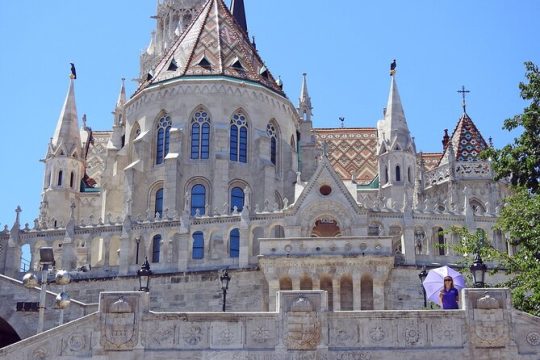
Matthias Church (Mátyás Templom)
Prices from $3
Budapest Danube River
Prices from $3
Danube Promenade
Prices from $3
Central Market Hall (Nagycsarnok)
Prices from $3
Gellért Thermal Bath and Spa
Prices from $12
Elisabeth Bridge (Erzsébet Híd)
Prices from $3
Gellért Hill (Gellert-Hegy)
Prices from $11
Dohány Street Synagogue
Prices from $3




Hungary Event Calendar
View all events
Christmas activities in Hungary
Fri, Dec 25, 2026
Hanukkah in Hungary
Dec 4–12, 2026
New Year’s Eve in Hungary
Thu, Dec 31, 2026
Christmas Eve in Hungary
Thu, Dec 24, 2026
New Year’s Day long weekend in Hungary
Jan 1–3, 2027
Valentine's Day in Hungary
Sun, Feb 14, 2027
Easter in Hungary
Sun, Mar 28, 2027
Good Friday in Hungary
Fri, Mar 26, 2027