Hungary attractions
More things to do in the country
 #76
Hungarian National Gallery (Magyar Nemzeti Galéria)
If you are looking for things to do in Hungary we have 4 Tours and Activities to Experience Hungarian National Gallery (Magyar Nemzeti Galéria). Check out our verified traveler reviews and photos of Hungarian National Gallery (Magyar Nemzeti Galéria) tours and other things to do in Hungary, and book securely when you find the perfect one. Learn the best ways to see famous Hungarian National Gallery (Magyar Nemzeti Galéria) and explore the most popular things to do in Hungary.
More #77
Kunsthalle Budapest
If you are looking for things to do in Hungary we have 2 Tours and Activities to Experience Kunsthalle Budapest. Check out our verified traveler reviews and photos of Kunsthalle Budapest tours and other things to do in Hungary, and book securely when you find the perfect one. Learn the best ways to see famous Kunsthalle Budapest and explore the most popular things to do in Hungary.
More #78
Lake Balaton
Lake Balaton is the largest lake in Central Europe, a long, shallow body of water in western Hungary that Hungarians fondly call their sea. A day trip from Budapest brings travelers to its beaches, spa towns, vineyards and the hilltop abbey of the Tihany peninsula.People have lived around the lake since prehistoric times, and the Romans built villas and roads along its shores. The Benedictine abbey at Tihany was founded by King Andrew I in the 11th century, and its founding charter is famous in Hungary as one of the oldest documents to include words in Hungarian. The king himself lies in the crypt below the church. Later, the lake marked a frontier during the Ottoman wars, with castles on the hills above the water. In the 19th century the arrival of railways and steamers turned it into the country's favorite holiday area, and spa towns such as Balatonfüred grew up around mineral springs.The north shore is hilly and green, shaped by old volcanoes whose basalt cones, like Badacsony, are covered in vineyards that produce well-known white wines. Tihany sits on a peninsula reaching far into the lake, with thatched cottages, lavender fields and a baroque abbey church looking over the water. Balatonfüred has a tree-lined lakeside promenade, elegant villas and a long tradition as a heart spa. On the western end, the town of Keszthely is home to the Festetics Palace, a grand aristocratic residence, and nearby Hévíz has a warm thermal lake where people bathe among water lilies. The south shore is flat with sandy beaches and gently shelving water, which warms up quickly and suits families. Sunsets over the lake are a favorite sight.A guide can link the abbey, the wine country and the lakeside towns into a single, unhurried story of the region.
More #79
Latin Bridge (Latinska Ćuprija)
The Latin Bridge is an Ottoman stone bridge over the Miljacka River in central Sarajevo and one of the oldest crossings in the city. It is known around the world for the assassination of Archduke Franz Ferdinand of Austria on the street corner at its northern end, the event that set off the First World War.A bridge has stood here since early Ottoman times, and the first was probably made of wood. A court record from the 16th century notes a stone bridge built by Ali Ajni-Beg, and when a great flood battered it late in the 18th century, the Sarajevo merchant Abdulah-aga Briga paid for the rebuilding. The name comes from the Catholic quarter it led to, which the Ottomans called Latinluk, the place of the Latins. Under Austro-Hungarian rule, walkways on brackets were added along its sides to handle heavy traffic.The bridge rests on four arches and three sturdy piers, and two round openings known as eyes pierce the stonework above them, lightening the load and giving the bridge a look so distinctive that the eyes appear on the seal of Sarajevo. On a summer morning early in the 20th century, the archduke and his wife Sophie were being driven along the riverbank after a failed bomb attack when their car turned into the side street by the bridge. A young Bosnian Serb, Gavrilo Princip, stepped forward and shot them both, and within weeks Europe was at war.How that day is remembered has shifted with the times. In the Yugoslav era the crossing was renamed Princip's Bridge, the assassin was celebrated as a hero, and footprints set into the pavement marked where he stood. After the Yugoslav Wars the old name returned, and a plaque near the corner now records the event in a cooler tone. A guide can explain how each generation has read Princip's act and what the bridge means to Sarajevo.
More #80
Liszt Ferenc Square (Liszt Ferenc Tér)
If you are looking for things to do in Hungary we have 2 Tours and Activities to Experience Liszt Ferenc Square (Liszt Ferenc Tér). Check out our verified traveler reviews and photos of Liszt Ferenc Square (Liszt Ferenc Tér) tours and other things to do in Hungary, and book securely when you find the perfect one. Learn the best ways to see famous Liszt Ferenc Square (Liszt Ferenc Tér) and explore the most popular things to do in Hungary.
More #81
Lukács Thermal Bath (Szent Lukács Gyógyfürdo)
If you are looking for things to do in Hungary we have 3 Tours and Activities to Experience Lukács Thermal Bath (Szent Lukács Gyógyfürdo). Check out our verified traveler reviews and photos of Lukács Thermal Bath (Szent Lukács Gyógyfürdo) tours and other things to do in Hungary, and book securely when you find the perfect one. Learn the best ways to see famous Lukács Thermal Bath (Szent Lukács Gyógyfürdo) and explore the most popular things to do in Hungary.
More #82
Medvedgrad Castle
If you are looking for things to do in Hungary we have 3 Tours and Activities to Experience Medvedgrad Castle. Check out our verified traveler reviews and photos of Medvedgrad Castle tours and other things to do in Hungary, and book securely when you find the perfect one. Learn the best ways to see famous Medvedgrad Castle and explore the most popular things to do in Hungary.
More #83
Melk Abbey (Stift Melk)
Melk Abbey is a Benedictine monastery perched on a rocky ridge above the Danube in the town of Melk, at the gateway to Austria's Wachau valley. Its golden yellow Baroque buildings and twin-towered church draw visitors for their lavish halls, painted ceilings and one of the most celebrated monastic libraries in Europe.The rock once held a castle of the Babenberg family, the first rulers of Austria, and in the late 11th century one of them handed it to Benedictine monks. The monks have lived and prayed here without a break ever since, running a school that still teaches children from the region. In the early 18th century Abbot Berthold Dietmayr set out to rebuild the abbey as a statement of faith and power, and the architect Jakob Prandtauer created the vast Baroque complex seen from the river. Napoleon later used the abbey as a headquarters during his campaigns, and the novelist Umberto Eco named one of his heroes, Adso of Melk, after the place.Inside, the Imperial Corridor stretches past portraits of Austria's rulers to rooms that now hold the abbey museum, with treasures such as an ornate medieval cross. The Marble Hall is painted with a ceiling fresco by Paul Troger, and a curving terrace links it to the library, where carved shelves hold rows of old leather-bound volumes and manuscripts beneath another Troger ceiling. The abbey church glows with gold, marble and frescoes by Johann Michael Rottmayr, crowned by a high dome.Below the abbey, a Baroque garden pavilion painted with exotic scenes sits among paths and old trees. From the terrace beside the church, the view stretches along the Danube and over the rooftops of the town. A guide can explain the meaning of the frescoes and the daily life of the monks who still call Melk home.
More #84
Memento Park
Memento Park is an open-air museum in Budapest that brings together the monumental statues of the Communist era, taken down from the city's squares and streets after the regime fell. Visitors come to walk among towering figures of Lenin, Marx and Engels, heroic soldiers and workers, and to reflect on four decades of dictatorship.When the Communist system collapsed, many of these monuments came down almost at once, and the city had to decide what to do with them. Instead of melting them down, Budapest held a design competition, won by the architect Ákos Eleőd, and the park opened on the second anniversary of the withdrawal of Soviet troops from Hungary. Eleőd said the park was about dictatorship, but because it could be talked about openly, it was also about democracy.In the main Statue Park, officially titled A Sentence About Tyranny, the works are set along looping oval paths. Lenin greets visitors near the entrance, joined by Marx and Engels, and other highlights include the charging sailor of the Republic of Councils monument, a Soviet soldier that once stood high on Gellért Hill, and a memorial to Béla Kun and other leaders of the short-lived Communist government that followed the First World War. Gathered together and cut off from the squares they once ruled, the figures look both imposing and oddly hollow.Beside the entrance, Witness Square holds a replica of Stalin's Boots, recalling the moment during the Hungarian Revolution when crowds toppled a huge statue of Stalin and left only his boots on the pedestal. Two plain timber buildings, styled on internment camp barracks, hold a photo exhibition on that uprising and the fall of Communism, along with a small cinema showing a documentary about secret police methods. A guide brings the bronze faces to life with stories of the people who raised them, toppled them and lived in their shadow.
More #85
Michael's Gate (Michalska Brana)
If you are looking for things to do in Hungary we have 10 Tours and Activities to Experience Michael's Gate (Michalska Brana). Check out our verified traveler reviews and photos of Michael's Gate (Michalska Brana) tours and other things to do in Hungary, and book securely when you find the perfect one. Learn the best ways to see famous Michael's Gate (Michalska Brana) and explore the most popular things to do in Hungary.
More #86
Michael’s Tower
If you are looking for things to do in Hungary we have 10 Tours and Activities to Experience Michael’s Tower. Check out our verified traveler reviews and photos of Michael’s Tower tours and other things to do in Hungary, and book securely when you find the perfect one. Learn the best ways to see famous Michael’s Tower and explore the most popular things to do in Hungary.
More #87
Mozarthaus Vienna
Mozarthaus Vienna is the only surviving apartment in Vienna where Wolfgang Amadeus Mozart lived, set in an old house on Domgasse just behind St. Stephen's Cathedral. Music lovers come to stand in the rooms where he wrote some of his best-loved works, and to learn about his life in the city where he spent his final decade.Mozart moved to Vienna as a young man after breaking with his employer, the Archbishop of Salzburg, and set out to make a living as a freelance composer, performer and teacher. At the peak of his success he rented this spacious apartment, the largest and most expensive home he ever had, and lived here for a few years with his wife Constanze and their small son. These were productive years. Here he composed The Marriage of Figaro, along with piano concertos and the string quartets he dedicated to Joseph Haydn, who visited and heard them played.The museum spreads over several floors of the house. You start at the top with Vienna in Mozart's time, from the court and the theaters to his circle of friends, patrons and fellow Freemasons, and his taste for fine clothes, billiards and card games. The middle floor turns to his music, with a focus on his operas and the singers and librettists who worked with him. The apartment itself comes last. Few of his belongings survive, so the rooms are kept spare, but original features such as a decorated stucco ceiling remain, and displays help you picture daily life in the household.Down in the cellars, a vaulted hall hosts chamber concerts, carrying his music back into the house where so much of it was written. The building sits among the narrow lanes of the old city, a few steps from the cathedral where Mozart married and where his funeral service was held. A guide can fill in the human story behind the famous name.
More #88
Mt. Etna (Monte Etna)
Mount Etna, the great volcano that rises above Catania on the east coast of Sicily, is the highest active volcano in Europe and one of the busiest anywhere. People go to stand on its black lava fields, walk among old craters and look out over the island and the sea from slopes that can still smoke and rumble.Etna has shaped Sicilian life and imagination for thousands of years. Ancient Greek writers placed the forge of the fire god beneath it and told of a giant pinned under the mountain, whose struggles shook the ground. Sicilians often call it Mongibello, a name that joins Latin and Arabic words for mountain, or simply the mountain. Its eruptions have buried villages, and in the 17th century a lava flow ran all the way to the walls of Catania and into the sea.On the southern slope, the Silvestri Craters are easy to explore, a cluster of extinct cones that formed in the late 19th century, with paths around their rims. Higher up, the landscape turns bare and lunar, with fields of rough lava, ash slopes and steaming vents, and the summit craters puffing on the skyline. To the east lies the Valle del Bove, a vast horseshoe-shaped basin where many lava flows have collected. In places you can enter lava tubes, caves formed when the outside of a flow cooled while molten rock drained away inside.Lower down, the volcano is green. Rich volcanic soil feeds vineyards, orchards, pistachio groves and chestnut woods, and the wines made on its flanks have earned a strong reputation. UNESCO lists Etna as a World Heritage Site for its long record of volcanic activity. A volcanologist or mountain guide can read the rocks and explain what each lava flow has left behind.
More #89
Museum of Applied Arts (Iparmuvészeti Múzeum)
If you are looking for things to do in Hungary we have 1 Tours and Activities to Experience Museum of Applied Arts (Iparmuvészeti Múzeum). Check out our verified traveler reviews and photos of Museum of Applied Arts (Iparmuvészeti Múzeum) tours and other things to do in Hungary, and book securely when you find the perfect one. Learn the best ways to see famous Museum of Applied Arts (Iparmuvészeti Múzeum) and explore the most popular things to do in Hungary.
More #90
Museum of Fine Arts Budapest (Szépmuvészeti Múzeum)
If you are looking for things to do in Hungary we have 2 Tours and Activities to Experience Museum of Fine Arts Budapest (Szépmuvészeti Múzeum). Check out our verified traveler reviews and photos of Museum of Fine Arts Budapest (Szépmuvészeti Múzeum) tours and other things to do in Hungary, and book securely when you find the perfect one. Learn the best ways to see famous Museum of Fine Arts Budapest (Szépmuvészeti Múzeum) and explore the most popular things to do in Hungary.
More #91
Museum of Military History (Hadtörténeti Múzeum)
If you are looking for things to do in Hungary we have 2 Tours and Activities to Experience Museum of Military History (Hadtörténeti Múzeum). Check out our verified traveler reviews and photos of Museum of Military History (Hadtörténeti Múzeum) tours and other things to do in Hungary, and book securely when you find the perfect one. Learn the best ways to see famous Museum of Military History (Hadtörténeti Múzeum) and explore the most popular things to do in Hungary.
More #92
Natural History Museum Vienna (Naturhistorisches Museum Wien)
The Natural History Museum Vienna is one of the great museums of its kind in Europe, housed in a palatial building on the Ringstrasse. Its halls cover the story of the Earth and of life on it, from meteorites and minerals to dinosaurs, early humans and animals from every continent, and it holds some of the most famous prehistoric finds anywhere.Its roots go back to the 18th century, when Francis Stephen of Lorraine, husband of Empress Maria Theresa, bought a large private collection of minerals, shells and fossils, then one of the biggest of its kind. The Habsburgs kept adding to it, and in the late 19th century Emperor Franz Joseph gave it a home worthy of an empire. The architects Gottfried Semper and Carl von Hasenauer designed it as a mirror image of the art museum across the square, the pair facing each other like twins, with a central dome, sculpted facades and figures of famous naturalists and explorers.Much of the interior keeps its 19th-century look, with wooden display cases, painted ceilings and wall paintings made for the rooms, so the building is part of the exhibit. Highlights begin with the small Venus of Willendorf, a limestone figure carved by Stone Age hunters and found in the Wachau valley, along with the even older Venus of Galgenberg. The meteorite hall is among the largest displays of its kind, and the gem room glitters with a bouquet of precious stones made for Maria Theresa.Elsewhere you can stand beneath dinosaur skeletons and a moving model of an Allosaurus, walk among mounted animals, some of them now extinct, and explore halls on human evolution and the living world. A digital planetarium projects the night sky, and special rooftop visits step out beneath the dome. A guide can bring the collectors and expeditions behind the specimens to life.
More #93
New Cathedral (Mariendom)
If you are looking for things to do in Hungary we have 2 Tours and Activities to Experience New Cathedral (Mariendom). Check out our verified traveler reviews and photos of New Cathedral (Mariendom) tours and other things to do in Hungary, and book securely when you find the perfect one. Learn the best ways to see famous New Cathedral (Mariendom) and explore the most popular things to do in Hungary.
More #94
Open-Air Mining Museum
If you are looking for things to do in Hungary we have 1 Tours and Activities to Experience Open-Air Mining Museum. Check out our verified traveler reviews and photos of Open-Air Mining Museum tours and other things to do in Hungary, and book securely when you find the perfect one. Learn the best ways to see famous Open-Air Mining Museum and explore the most popular things to do in Hungary.
More #95
Orthodox Metropolitan Cathedral
If you are looking for things to do in Hungary we have 7 Tours and Activities to Experience Orthodox Metropolitan Cathedral. Check out our verified traveler reviews and photos of Orthodox Metropolitan Cathedral tours and other things to do in Hungary, and book securely when you find the perfect one. Learn the best ways to see famous Orthodox Metropolitan Cathedral and explore the most popular things to do in Hungary.
More #96
Palace of Parliament (Palatul Parlamentului)
The Palace of Parliament in Bucharest is a colossal government building in the center of Romania's capital, and one of the largest administrative buildings in the world. It houses the country's parliament, and visitors come to see its enormous marble halls and to understand the dramatic, often painful story of how it came to be built.The palace was the most ambitious project of Nicolae Ceausescu, the communist leader who ruled Romania until a popular revolution toppled him late in the 20th century. He wanted a monumental seat of power, which he called the House of the People. To make room for it and the grand boulevard leading up to it, a large part of Bucharest's historic district was demolished, including homes, churches and monasteries, and thousands of residents were forced to move. A young architect, Anca Petrescu, led the design, and huge numbers of workers labored around the clock.The building was still unfinished when Ceausescu fell, and the new democratic state debated what to do with it before moving its parliament inside. It now holds both chambers of parliament, conference halls and a contemporary art museum. Much of the interior was made from Romanian materials, including marble, wood, crystal and textiles, and the scale of the rooms is hard to take in at first sight.Inside, marble staircases climb to vast reception halls with soaring ceilings, carved wood, gilded details and huge crystal chandeliers. Long corridors stretch away under heavy decoration, and thick carpets cover acres of floor. From the main balcony, the view runs straight down the wide boulevard toward the city, showing how the palace was meant to command the capital. A guide explains the politics and the human cost behind the grandeur, which gives the visit its real weight.
More #97
Palvolgyi Caves (Pálvölgyi Barlang)
If you are looking for things to do in Hungary we have 2 Tours and Activities to Experience Palvolgyi Caves (Pálvölgyi Barlang). Check out our verified traveler reviews and photos of Palvolgyi Caves (Pálvölgyi Barlang) tours and other things to do in Hungary, and book securely when you find the perfect one. Learn the best ways to see famous Palvolgyi Caves (Pálvölgyi Barlang) and explore the most popular things to do in Hungary.
More #98
Peles Castle (Castelul Peles)
Peles Castle is the former summer residence of Romania's kings, a turreted palace in the Carpathian Mountains just above the resort town of Sinaia. Its fairy-tale silhouette against dark forest and its lavishly decorated rooms make it one of the most popular historic houses in the country.The castle was commissioned by Carol I, the German-born prince who became Romania's first king, after he fell for this mountain valley in the second half of the 19th century. Work went on for years under German and Czech architects, and the palace was inaugurated in the late 19th century, then enlarged over the following decades. It was strikingly modern for its day, with its own power plant, central heating and even a central vacuum system. After the Second World War the communist regime forced the royal family into exile and seized the estate, which later opened as a museum.The style mixes German Neo-Renaissance with Gothic and alpine touches, so the outside is all half-timbering, towers and carved stone. Inside, each room takes a different theme. The Hall of Honor rises to a glass ceiling that can slide open to the sky, the armory displays rows of European and Oriental weapons and armor, the Moorish Hall gleams with intricate patterns and a marble fountain, and the Florentine room recalls an Italian Renaissance palazzo. Carved wood, stained glass, tooled leather walls and fine paintings fill the rest.Small surprises are everywhere, from a hidden door in the library to the private theater, where part of the decoration is credited to a young Gustav Klimt. The theater was also where some of the first films in Romania were shown. A guide brings out the stories of the royal family behind all that grandeur, from Carol I and his queen, the writer Elisabeth, to the later kings who spent their summers here.
More #99
Peristyle Square (Peristil)
If you are looking for things to do in Hungary we have 88 Tours and Activities to Experience Peristyle Square (Peristil). Check out our verified traveler reviews and photos of Peristyle Square (Peristil) tours and other things to do in Hungary, and book securely when you find the perfect one. Learn the best ways to see famous Peristyle Square (Peristil) and explore the most popular things to do in Hungary.
More #100
Plitvice Lakes National Park
Plitvice Lakes National Park is a chain of terraced lakes in the wooded hills of central Croatia, where water spills from one basin to the next over natural dams and through a long series of cascades. It is the country's oldest national park and its largest, and the whole area is listed as a UNESCO World Heritage Site for the way it shows water still shaping the land.Those natural dams are the heart of the story. Over thousands of years, mosses, algae and bacteria growing in the mineral-rich water have trapped calcium carbonate, building walls of travertine that hold the lakes back. The barriers keep growing, so waterfalls shift, new channels open and old ones dry up. The upper lakes sit on dolomite among forest, while the lower ones lie in a deep limestone canyon that ends at the Great Waterfall, the tallest in Croatia.What you notice first is the color. Depending on the minerals, the depth and the angle of the sun, the water turns turquoise, jade, blue or soft gray, and it is clear enough to watch trout drift over sunken logs. Wooden boardwalks run just above the surface and right past the falls, so you walk through the spray rather than look at it from a distance. Around the lakes, beech and fir forest shelters brown bears, wolves, lynx and many species of birds, though most visitors see little more than ducks, fish and dragonflies.The park has a darker chapter too. At the start of the Croatian War of Independence, one of the first armed clashes of the conflict took place here, and the site was placed on UNESCO's endangered list until it could be cared for again. A guide brings out the differences between the lakes and the plants and wildlife along the shore, details that are easy to miss when walking alone.
More #101
Prague Astronomical Clock (Prague Orloj)
The Prague Astronomical Clock, or Orloj, is the medieval clock on the tower of the Old Town Hall in Prague's Old Town Square, one of the oldest astronomical clocks still working anywhere. People gather beneath it for the little parade of moving figures that marks each hour, and to puzzle over its rings, hands and painted symbols.The clock was built in the early 15th century by the clockmaker Mikuláš of Kadaň together with Jan Šindel, an astronomer at the university. A favorite legend credits a later master named Hanuš and claims the city councilors had him blinded so he could never build a finer clock elsewhere, and that in revenge he reached into the works and stopped it. Over the following centuries the mechanism was repaired many times, and it survived serious fire damage at the end of the Second World War.The upper dial is a model of the medieval sky. Its blue and black background shows day, dawn, dusk and night, a golden sun and a turning moon that shows its phases move around the ring of the zodiac, and separate hands track Old Bohemian time and the hours of the day as they were once counted. Below it, a calendar dial painted with village scenes of the months and signs of the zodiac turns slowly through the year, and its original painting is kept in the city museum.On each side of the dials stand carved figures: a vain man admiring himself in a mirror, a miser clutching his purse, Death as a skeleton with an hourglass and a bell, and a Turk shaking his head. When the hour strikes, Death tolls the bell, the apostles pass through two small windows above, and a rooster crows to close the show. The apostles were added in the 19th century, along with much of the carved decoration around them. A guide unpacks the symbolism that most onlookers miss.
More #102
Prague Castle (Prazský Hrad)
Prague Castle is the vast fortified complex on the hill above the Vltava River, home to Bohemian rulers for more than a thousand years and the seat of the Czech president. Within its walls stand palaces, churches, gardens and the soaring St. Vitus Cathedral, and people come to see the heart of Czech history in one place.The castle was founded in the 9th century by Prince Bořivoj of the Přemyslid dynasty, and every age since has added to it: Romanesque churches, Gothic halls, Renaissance palaces and the uniform facades of an 18th-century rebuilding under Empress Maria Theresa. It is often described as the largest ancient castle complex in the world. Here Holy Roman Emperor Charles IV made Prague an imperial capital in the 14th century, Rudolf II gathered artists, astronomers and alchemists, and the Defenestration of Prague, when royal officials were thrown from a window, helped spark the Thirty Years' War.St. Vitus Cathedral dominates everything, a Gothic giant begun in the 14th century and completed only in the 20th, with a chapel lined in semiprecious stones, the silver tomb of St. John of Nepomuk and stained glass that includes a window by Alfons Mucha. The Old Royal Palace holds the vaulted Vladislav Hall, once wide enough for indoor jousting, and the Romanesque Basilica of St. George is the oldest surviving church in the castle.Golden Lane, a row of tiny painted houses built into the walls, once sheltered castle guards and craftsmen, and Franz Kafka wrote for a time in one of them. The castle gardens step down the slopes with views over the red roofs of the Lesser Town, and the Czech crown jewels are kept here, though they are shown only on rare occasions. A guide makes the centuries of kings, emperors and presidents easier to follow as you cross from courtyard to courtyard.
More #103
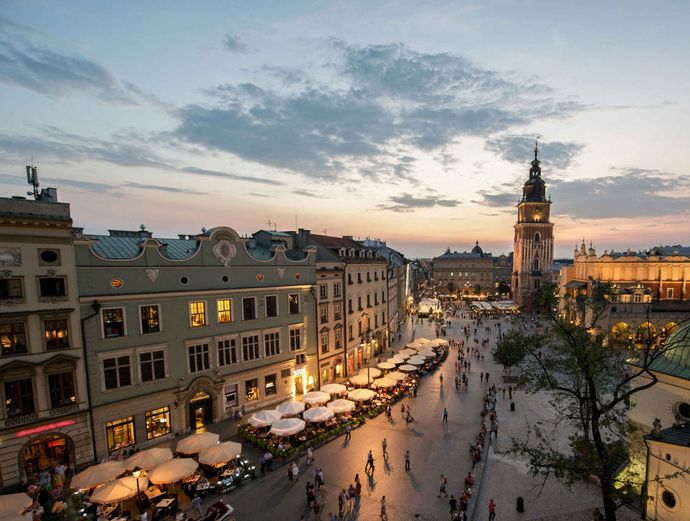
Prague Old Town Square (Staromestské Námestí)
The square is a pedestrian zone surrounded by historic buildings, and it suits all ages and every kind of traveler. Plan about an hour to look around, and more if you climb the Old Town Hall tower or go inside a church. The Astronomical Clock draws a crowd to the foot of the Old Town Hall at the top of each hour, so arrive a few minutes early. Kinský Palace on the square houses a Czech National Gallery art museum, and cafes and restaurants line the edges of the square.
More #104
Primate's Palace (Primaciálny Palác)
If you are looking for things to do in Hungary we have 11 Tours and Activities to Experience Primate's Palace (Primaciálny Palác). Check out our verified traveler reviews and photos of Primate's Palace (Primaciálny Palác) tours and other things to do in Hungary, and book securely when you find the perfect one. Learn the best ways to see famous Primate's Palace (Primaciálny Palác) and explore the most popular things to do in Hungary.
More #105
Pula Arena (Pula Amphitheatre)
The Pula Arena is a Roman amphitheater on the edge of the old town of Pula, in Croatia's Istria region, and one of the best-preserved arenas of the ancient world. Visitors come to walk its stone tiers and arches, picture the games once held there, and see an outer wall that still stands to nearly its full height.It was built in the 1st century, in the age of the emperors Augustus and Vespasian, when Pula was a prosperous Roman colony on the Adriatic. Gladiator fights and wild animal hunts drew crowds from across the region. Local legend links the building to Antonia Caenis, Vespasian's companion, who is said to have come from Pula, though historians treat that tale with caution.After the fall of Rome, the arena found other uses. It served as grazing land, hosted medieval fairs and knightly tournaments, and was quarried for stone by builders in the town. In the 16th century Venice even planned to dismantle it and rebuild it in the lagoon city, and a Venetian senator, Gabriele Emo, is honored with a plaque for blocking the scheme. Most of the stone seating was carried away over the centuries, which is why the inside now feels open and hollow, with grass and stage space where the lower tiers once rose.What survives is remarkable all the same. The outer ring is built of pale local limestone, with more stories of arches on the seaward side than on the uphill side, because the arena sits on a slope. It is unusual among Roman amphitheaters for keeping all of its square towers, which once held stairways and water tanks. In summer the arena comes alive again with a film festival, concerts and costumed gladiator shows, so the old stones still draw crowds.
MoreDiscover Hungary
Luxury & Special Occasions
Prices from $3
Cultural & Theme Tours
Prices from $3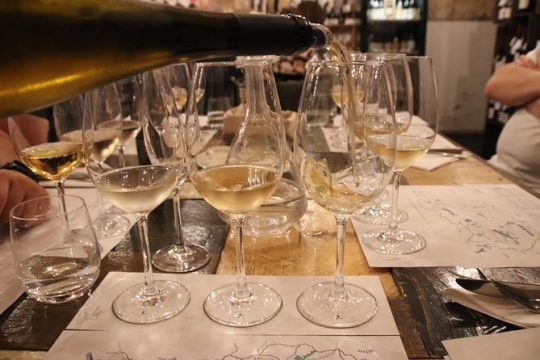
Walking & Biking Tours
Prices from $3
Tours & Sightseeing
Prices from $3
Food, Wine & Nightlife
Prices from $3
Cruises, Sailing & Water Tours
Prices from $10
Holiday & Seasonal Tours
Prices from $3
Sightseeing Tickets & Passes
Prices from $6
Shows, Concerts & Sports
Prices from $21
Private & Custom Tours
Prices from $3
Shopping & Fashion
Prices from $33
Shore Excursions
Prices from $3
Buda Castle (Budai Vár)
Prices from $3
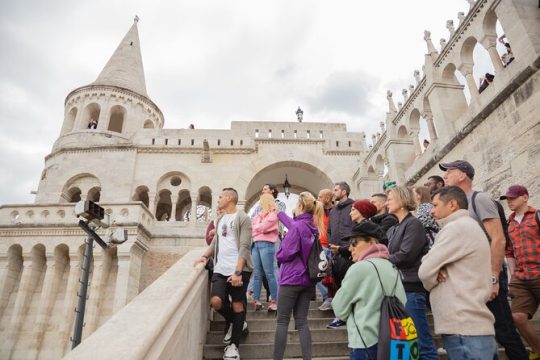
Fisherman’s Bastion (Halaszbastya)
Prices from $3
House of Parliament (Országház)
Prices from $3
Chain Bridge (Széchenyi Lanchid)
Prices from $3
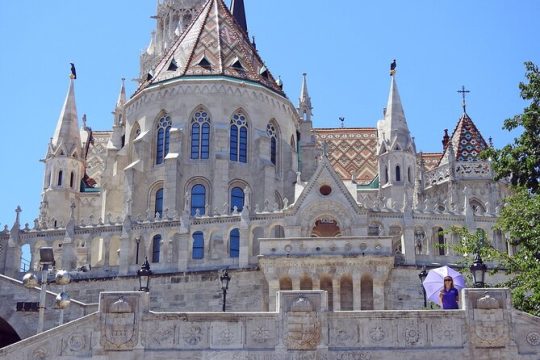
Matthias Church (Mátyás Templom)
Prices from $3
Budapest Danube River
Prices from $3
Danube Promenade
Prices from $3
Central Market Hall (Nagycsarnok)
Prices from $3
Gellért Thermal Bath and Spa
Prices from $12
Elisabeth Bridge (Erzsébet Híd)
Prices from $3
Gellért Hill (Gellert-Hegy)
Prices from $11
Dohány Street Synagogue
Prices from $3




Hungary Event Calendar
View all events
Christmas activities in Hungary
Fri, Dec 25, 2026
Hanukkah in Hungary
Dec 4–12, 2026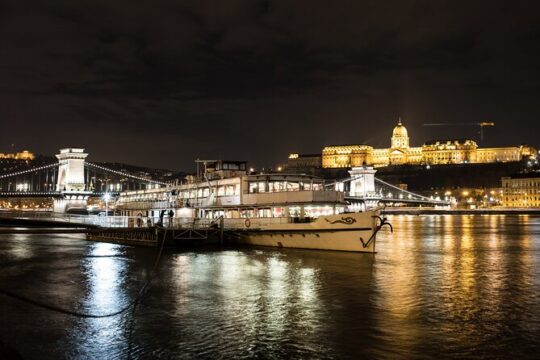
New Year’s Eve in Hungary
Thu, Dec 31, 2026
Christmas Eve in Hungary
Thu, Dec 24, 2026
New Year’s Day long weekend in Hungary
Jan 1–3, 2027
Valentine's Day in Hungary
Sun, Feb 14, 2027
Easter in Hungary
Sun, Mar 28, 2027
Good Friday in Hungary
Fri, Mar 26, 2027