Hungary attractions
More things to do in the country
 #16
Sándor Palace (Sándor Palota)
Sándor Palace is the pale neoclassical mansion on Castle Hill in Budapest that serves as the official seat of Hungary's president. It stands on the hilltop square beside the Royal Palace and the top of the funicular, and visitors come to admire its elegant facade, watch the ceremonial guard and, on rare open days, see its grand state rooms.Count Vincent Sándor had the palace built at the start of the 19th century as an aristocratic town house, and his son Móric became famous as the devil rider for his daring stunts on horseback. Later in the century the building became the home and office of Hungary's prime ministers, a role it kept until the Second World War. During the siege of Budapest at the end of the war it was shelled and burned, and the gutted shell stood empty for decades before a careful reconstruction restored it, after which the president moved in.The long facade is a model of early neoclassical restraint, with columns, a balcony and carved reliefs showing scenes from Greek mythology, crowned by a coat of arms. Inside, the reconstructed rooms recreate the palace's 19th-century splendor, with chandeliers, gilded details and richly furnished salons, where the president receives heads of state.Out front, soldiers of the presidential guard in dress uniform stand at the gate, and the changing of the guard, with its crisp drill, draws a crowd. The square around the palace sums up the many layers of Castle Hill: the domes of the Royal Palace, the old Carmelite monastery that now houses the prime minister's office, and the view across the Danube to Pest. A guide can explain how the palace rose from ruin and what its rooms reveal about Hungary's turbulent history.
More #17
Shoes on the Danube Bank
The Shoes on the Danube Bank is a Holocaust memorial on the Pest embankment in Budapest, a row of iron shoes left at the river's edge as if their owners had just stepped out of them. It remembers the Jews shot on the riverbank by fascist militiamen at the end of the Second World War, and people come to pause, reflect and pay their respects.In the final winter of the war, the Arrow Cross, Hungary's fascist party, held power in Budapest and turned on the city's remaining Jews. Militiamen marched groups of men, women and children to the Danube, ordered them to remove their shoes, which were valuable and could be sold or worn, and shot them at the water's edge so the current carried the bodies away. The killings went on until the Soviet army took Pest.The memorial was conceived by the film director Can Togay and created with the sculptor Gyula Pauer early in the 21st century. Dozens of pairs of shoes, cast in iron and modeled on the styles of the period, sit along the stone edge of the quay: work boots, high heels, sturdy lace-ups and small children's shoes, each pair different. Nearby, cast-iron plaques in Hungarian, English and Hebrew explain what happened here. The simplicity is the point: there are no figures or long texts, only empty shoes turned toward the water.Visitors often leave small tokens, and you will see candles, flowers, ribbons and stones placed in and around the shoes, the last a Jewish custom of remembrance. Across the river rise the Castle District and the hills of Buda, and the Parliament building stands a short way upstream, so the memorial sits within the capital's most famous view. A guide can set it within the wider story of the Holocaust in Hungary and of rescuers such as the Swedish diplomat Raoul Wallenberg, who saved thousands of lives in those same months.
More #18
Buda Castle Funicular (Budavári Sikló)
The Buda Castle Funicular is a short hillside railway that carries passengers between the Danube riverbank at Clark Ádám Square and the top of Castle Hill in Budapest. Visitors ride it for the climb past the old city walls and the widening view over the river, the Chain Bridge and Pest.Ödön Széchenyi, son of the statesman István Széchenyi who championed the Chain Bridge, built the funicular in the 19th century so that clerks working in the castle offices could reach the hilltop without a steep climb. It was among the first funiculars in Europe, and it was first driven by a steam engine. The line was destroyed during the Second World War and lay in ruins for decades before it was rebuilt in its original style and reopened late in the 20th century, now powered by electricity. It has since become a recognized part of the riverside World Heritage area.Two wooden cars run in balance on parallel tracks, one rising as the other descends, and they pass each other halfway up the slope. Each car has stepped compartments, so the seats stay level while the track climbs, and the large windows make every part of the ride a view. The cars are named after Gellért and Margit, two figures from Budapest history. Above the line, two small footbridges cross the track, and walkers often stop on them to watch the cars glide underneath.At the top, the upper station opens onto the Castle district, near the royal palace and the Sándor Palace, with terraces looking down over the river and the Parliament across the water. At the bottom, the tunnel through Castle Hill and the head of the Chain Bridge sit right beside the station. A guide can share the story of the Széchenyi family and the bridge and railway they left the city.
More #19
Citadella
The Citadella is a fortress from the mid-19th century on the summit of Gellért Hill in Budapest, looking down on the Danube from the Buda side. People climb up for sweeping views over the river and its bridges, for the Liberty Statue that towers over the hilltop and for the fortress's turbulent story.The fortress was built less to defend Budapest than to keep watch over it. After the Hungarian revolt against Habsburg rule was crushed in the mid-19th century, the Austrian commander Julius von Haynau ordered a citadel on the hill, and Hungarian forced laborers raised it within a few years. Its U-shaped walls, about 220 meters long, wrapped around a central courtyard and carried some sixty cannons trained on the city below, a blunt message to a defeated nation.Hungarians pressed for its removal once a compromise gave them self-rule within the empire. Late in the 19th century the garrison finally marched out, and the main gate was symbolically damaged to mark the moment. The city took over the site and knocked down parts of the walls. Its military story was not over, though: during the Hungarian uprising of the mid-20th century, Soviet troops occupied the hilltop and fired into the city.The Liberty Statue, a bronze woman lifting a palm leaf high above the river, went up after the Second World War to mark the Soviet liberation and now honors everyone who died for Hungary's freedom. After years of renewal, the grounds also hold a display of wartime Soviet artillery, and open terraces look across the water to Pest. A guide can untangle the hill's many layers, from the bishop Gellért, who gave it its name and is said to have been martyred here in the Middle Ages, to the empire and the Soviet years.
More #20
Gozsdu Courtyard (Gozsdu Udvar)
If you are looking for things to do in Hungary we have 13 Tours and Activities to Experience Gozsdu Courtyard (Gozsdu Udvar). Check out our verified traveler reviews and photos of Gozsdu Courtyard (Gozsdu Udvar) tours and other things to do in Hungary, and book securely when you find the perfect one. Learn the best ways to see famous Gozsdu Courtyard (Gozsdu Udvar) and explore the most popular things to do in Hungary.
More #21
Holy Trinity Column (Szentháromság-Szobor)
If you are looking for things to do in Hungary we have 9 Tours and Activities to Experience Holy Trinity Column (Szentháromság-Szobor). Check out our verified traveler reviews and photos of Holy Trinity Column (Szentháromság-Szobor) tours and other things to do in Hungary, and book securely when you find the perfect one. Learn the best ways to see famous Holy Trinity Column (Szentháromság-Szobor) and explore the most popular things to do in Hungary.
More #22
Hospital in the Rock Nuclear Bunker Museum (Sziklakórház Atombunker Múzeum)
The Hospital in the Rock Nuclear Bunker Museum, known in Hungarian as Sziklakórház, is a former secret hospital and Cold War bunker hidden in the caves beneath Castle Hill in Budapest. Visitors come to walk its narrow corridors and wards and to learn how doctors worked underground through war, revolution and the threat of nuclear attack.Castle Hill sits above a long network of natural caves and passages, and before the Second World War the city began turning part of it into an emergency hospital that would be safe from air raids. During the siege of Budapest near the end of the war, the hospital was packed far beyond its intended size with wounded soldiers and civilians, and the staff kept working under bombardment with scarce supplies. About a decade later, during the Hungarian Revolution against Soviet control, it again treated the wounded.In the Cold War the site was extended and sealed into a nuclear bunker with its own air filtration, power and water, designed to keep a medical team working through a chemical or nuclear attack. It was classified as top secret and held in reserve for decades, maintained but rarely used, before it finally opened as a museum.Inside, the wards, operating rooms and corridors are filled with original medical equipment and life-size wax figures of doctors, nurses and patients, arranged in scenes from the siege and the revolution. Deeper in, the machinery that kept the bunker alive tells the Cold War side of the story, with generators, ventilation plant and decontamination areas. Exhibits on the effects of nuclear weapons add a sobering note to the end of the visit. The guides' accounts of the staff and patients who lived through those years turn the rooms from a set of displays into a human story.
More #23
Hungarian Academy of Sciences
If you are looking for things to do in Hungary we have 11 Tours and Activities to Experience Hungarian Academy of Sciences. Check out our verified traveler reviews and photos of Hungarian Academy of Sciences tours and other things to do in Hungary, and book securely when you find the perfect one. Learn the best ways to see famous Hungarian Academy of Sciences and explore the most popular things to do in Hungary.
More #24
Hungarian State Opera House (Magyar Állami Operaház)
The Hungarian State Opera House is Budapest's grand neo-Renaissance opera theater on Andrássy Avenue, home of the Hungarian State Opera and its ballet company. Visitors come to see one of the most richly decorated opera houses in Europe, with gilded halls, painted ceilings and a horseshoe auditorium famed for its sound.The building was designed by Miklós Ybl, the leading Hungarian architect of his age, and opened in the late 19th century during the boom years of the Austro-Hungarian monarchy. Emperor Franz Joseph helped pay for it, reportedly on the condition that it be no larger than the opera in Vienna, so Ybl made up for size with splendor, using the finest Hungarian craftsmen and artists of the day. Ferenc Erkel, composer of the Hungarian national anthem, was its first music director, and Gustav Mahler later led the company for a few seasons before his fame spread across Europe.Outside, statues of Erkel and Franz Liszt sit in niches on either side of the entrance, and figures of the muses stand along the upper balustrade. Inside, a sweeping marble staircase rises beneath frescoes, and the foyers glitter with gold leaf, mirrors and chandeliers. The auditorium is the high point: tiers of red and gold boxes curve around the stalls, the royal box faces the stage, and a huge bronze chandelier hangs from a ceiling painted by Károly Lotz with the gods of Olympus. Look out for the small details too, such as the carved sphinxes by the carriage entrance and the smoking room once reserved for gentlemen.An evening performance shows the hall doing what it was built for, while a daytime guide explains the symbols, the craftsmen and the court politics hidden in the decoration, from the royal box to the grand staircase.
More #25
Kazinczy Street Synagogue
The Kazinczy Street Synagogue is the main house of worship of Budapest's Orthodox Jewish community, set in the heart of the old Jewish Quarter in Pest's District VII. Built in the years just before the First World War, it draws visitors for its rare Art Nouveau design, glowing stained glass and the living community that still gathers here.The brothers Béla and Sándor Löffler designed the synagogue for the Orthodox congregation, which had separated from the city's more liberal Neolog Jews in a split during the 19th century. Their plan blends the Hungarian Art Nouveau of Ödön Lechner with late Viennese influences, using brick above a ground floor faced in travertine, and it is often described as the only Art Nouveau synagogue in Hungary. A Hebrew verse from the Bible is set into the facade.Inside, the prayer hall is large enough for around 1,000 worshippers, with women's galleries above the main floor. Colored light falls through stained glass windows designed by Miksa Róth, the leading Hungarian master of the craft, and Zsolnay ceramic details add to the decoration. The synagogue sits within a whole Orthodox complex built around a courtyard, which includes a study house, the rabbi's residence, a school, offices, a kosher restaurant and a ritual bath that has been brought back into use.The building's story mirrors that of the city's Jews. During the Second World War it stood inside the Pest ghetto and suffered severe damage, and after the war it was repaired and returned to worship by a far smaller community. It remains the heart of Orthodox life in Budapest and is protected as a historic building. Its neighbors in the quarter include the grand Neolog synagogue on Dohány Street and the Moorish-style Rumbach Street Synagogue, each built for a different branch of the community. A guide can explain those differences and the customs that still shape life around the courtyard.
More #26
Széchenyi Thermal Baths (Széchenyi Gyógyfürdo)
The Széchenyi Thermal Baths in Budapest's City Park are one of the largest bath complexes in Europe, a yellow neo-Baroque palace wrapped around steaming indoor and outdoor pools. Locals and travelers come to soak in mineral-rich water drawn from deep underground, often in the open air while domes and statues rise around them.The baths take their name from Count István Széchenyi, the 19th-century reformer who championed bridges, steamships and public works across Hungary. Their water comes from a deep artesian well drilled in City Park in the 19th century by the engineer Vilmos Zsigmondy, whose find first made a bath here possible. The grand building that stands today opened in the early 20th century and was enlarged with outdoor pools in the decades that followed, turning a medicinal spa into a place where the whole city could swim and socialize.Inside, a maze of halls under painted ceilings and mosaics leads to thermal pools kept at different temperatures, along with saunas, steam rooms and cold plunge pools. The water carries calcium, magnesium and other minerals, and Hungarians have long used it to ease stiff joints and tired muscles. Massages and medical treatments remain part of the tradition, a link to the days when doctors sent patients here for a cure. Arched corridors and tiled walls give the indoor wing the feel of a grand old public institution.Outside, a courtyard of pools is framed by ochre wings, columns and green domes, and steam drifts across the water on cold days. The most famous scene is a group of older men playing chess on floating boards in the warm water, unbothered by the swimmers around them. A guided outing can add the story of the building and of the spa culture that has shaped daily life in Budapest for generations.
More #27
Váci Street (Váci Utca)
Váci Street, or Váci utca, is the best-known pedestrian street in central Budapest, running through the old Inner City of Pest from Vörösmarty Square toward the Great Market Hall. Visitors come to stroll, shop and stop for coffee on a lively route that links several of the city's busiest corners.The name points north. The street began as the road that left the walled medieval town of Pest and headed toward Vác, a cathedral town upriver on the Danube, and it kept that name as Pest grew beyond its old walls. Over the 18th and 19th centuries it turned into an elegant shopping street lined with town houses, fine shops and coffeehouses, where the city's well-to-do came to see and be seen. Even early in the 19th century, merchants were opening shops here, among them the first Alter és Kiss store.Walking it means looking up as well as at the shop windows. Above the chain stores, cafés and restaurants rise ornate facades from the late 19th century, and the Thonet House, designed by Ödön Lechner, shows off the colorful Zsolnay ceramic tiles that became one of the city's trademarks. The northern half, close to Vörösmarty Square, gathers the big fashion brands and the grand old cafés nearby, while the southern stretch, beyond the wide road leading to the Elisabeth Bridge, has a more local feel on its way to the market hall.The street is also a stage for everyday Budapest life: street musicians, souvenir stalls stacked with paprika and embroidered linen, and the steady flow of people heading between the river and the shops. At the southern end, the great iron and brick market hall makes a fine finale, with produce stalls below and food counters upstairs. A guide can tell you who lived and traded behind the facades.
More #28
Vörösmarty Square (Vörösmarty Tér)
Vörösmarty Square is one of the main public squares in central Pest, at the northern end of Váci utca, Budapest's best-known shopping street. Framed by elegant buildings and home to the famous Gerbeaud coffeehouse, it is a natural meeting point and a lively stop on a walk through the heart of the city.At its center stands a large white marble monument to Mihály Vörösmarty, the 19th-century poet whose Szózat, or Appeal, is sung in Hungary as a second national anthem. The seated poet is surrounded by figures representing the people who recite his verses, and the work was carved by the sculptors Ede Kallós and Ede Telcs. Behind it, a small fenced garden holds a fountain guarded by stone lions.The square has changed names many times, following the shifting history of the city. It was first named for a theater that stood here, later took names linked to a customs office, a promenade and a German-language theater, and was then called Gizella Square after an Austrian archduchess before it was dedicated to the poet in the 20th century. A column on the square lists all of these earlier names.On the north side, Gerbeaud has served coffee and cakes since the 19th century, taking its name from the Swiss confectioner who ran it, and its chandeliered salons are still one of the classic places in Budapest to linger over pastries. Beneath the square lies the terminus of the M1, the small yellow Millennium Underground, which was the first metro line on the European continent. Offices, shops and the British Embassy line the rest of the square, which is also home to one of the city's best-known Christmas markets. Taken together, the poet, the coffeehouse and the old metro give the square layers of history in a small space.
More #29
Andrássy Avenue (Andrássy Út)
It is a long public street, so it suits a relaxed walk for most ages and fitness levels. Allow one to two hours to walk it with a few stops, and longer if you go inside the Opera House or the House of Terror. Museums and the Opera House have their own hours and entry rules, so check them for the day you visit. Shops, cafes, and restaurants line the avenue, so food is easy to find.
More #30
Budapest Jewish Quarter (District VII)
The Budapest Jewish Quarter is the historic heart of Jewish life in the Hungarian capital, set in District VII, or Erzsébetváros, on the Pest side of the Danube. Visitors come for its great synagogues and memorials, and for streets and courtyards that now hum with cafes, restaurants and street art.Jewish families settled here in growing numbers from the late 18th century, when they were barred from living inside the old city walls of Pest. The area thrived through the 19th century, as Budapest became one of the great cities of Europe, and the community built schools, shops and three major synagogues. Theodor Herzl, the founder of modern Zionism, was born in a house beside the main synagogue. In the final months of the Second World War, the area was sealed off as a ghetto, and thousands died there from hunger, cold and violence before the city was liberated.The Dohány Street Synagogue is the centerpiece, the largest synagogue in Europe, built in the mid-19th century in a Moorish Revival style with twin onion-domed towers, brick stripes and a vast, richly decorated hall. Behind it, the Raoul Wallenberg Memorial Park honors the Swedish diplomat who saved many Budapest Jews, and holds a metal weeping willow, the Tree of Life, whose leaves carry the names of victims. Nearby stand the Rumbach Street Synagogue, with its colorful Moorish interior, and the Orthodox Kazinczy Street Synagogue, with its Art Nouveau facade.Away from the synagogues, the quarter has found a lively second life. Crumbling apartment buildings and empty courtyards became the city's famous ruin bars, filled with mismatched furniture and art, and the passage known as Gozsdu Courtyard links streets of bars and restaurants. Murals cover old walls, and kosher bakeries share streets with design shops. A guide helps you see the layers of loss and renewal in buildings you might otherwise pass by.
More #31
Budapest Liberty Square (Szabadság Tér)
Liberty Square, Szabadság tér in Hungarian, is a broad, tree-shaded square in Budapest's Lipótváros district, a short walk from Parliament. Lined with grand bank buildings and the American embassy and dotted with monuments, it draws visitors who want to read Hungary's turbulent 20th century in stone and bronze.The name was chosen with care. For much of the 19th century the site was occupied by a huge Habsburg barracks and prison, and it was there that Lajos Batthyány, Hungary's first prime minister, was executed after the failed revolution against Austrian rule. When the hated building was torn down at the end of the century, the city laid out an elegant square in its place and named it for liberty. An eternal flame honoring Batthyány burns on a nearby street corner.Around the edges stand some of the city's most ambitious buildings from the turn of the 20th century, including the Hungarian National Bank and the vast former Stock Exchange Palace, both designed by Ignác Alpár, with the United States Embassy alongside. In the center rises an obelisk put up by the Soviet Union after the Second World War to honor the Red Army soldiers who died taking the city.Facing it, almost in conversation, is a bronze statue of Ronald Reagan striding across the square, and nearby stands the American general Harry Hill Bandholtz, remembered for protecting the treasures of the National Museum from looting troops after the First World War. At the southern end, the memorial to the victims of the German occupation, showing an eagle attacking an angel, drew protest for blurring Hungary's own role in the Holocaust, and residents answered with a counter-memorial of photographs, letters and personal objects laid out in front of it. A guide helps untangle these competing memories.
More #32
Budapest Zoo & Botanical Garden (Fővárosi Állat és Növénykert)
Budapest Zoo and Botanical Garden is one of the oldest zoos in the world, set in City Park in the Hungarian capital, beside the Széchenyi thermal baths. Families come for the animals, but the zoo is just as admired for its early 20th-century Art Nouveau animal houses and for the plant collections that grow among them.The zoo opened in the 19th century, founded by Hungarian naturalists who wanted the capital to have a public collection of living animals, and it has stayed on the same site ever since. Its first director was the naturalist and explorer János Xántus. Early in the 20th century it was rebuilt on a grand scale, and the architects of the day gave it buildings that are treated as monuments in their own right: the main gate guarded by carved elephants, and the domed Elephant House with its tiled, Eastern-inspired decoration.Other landmarks from that era include the Palm House, a glass and iron conservatory filled with tropical plants, and the Great Rock, an artificial mountain that rises above the grounds. Inside the rock, the Magic Mountain is an interactive learning center about evolution and the diversity of life. The botanical side of the zoo is easy to miss but rewarding, with a Japanese garden, old trees and greenhouse collections woven between the enclosures.The animal collection spans the continents, from big cats, apes and elephants to reptiles, birds and the insects and fish of the indoor houses. Several walk-through areas let visitors share space with the animals, and petting zoos and playgrounds keep younger children busy. The zoo also takes part in international breeding programs for endangered species. A guide can point out the details of the historic pavilions, which many visitors pass without a second look.
More #33
Castle Hill (Várhegy)
If you are looking for things to do in Hungary we have 15 Tours and Activities to Experience Castle Hill (Várhegy). Check out our verified traveler reviews and photos of Castle Hill (Várhegy) tours and other things to do in Hungary, and book securely when you find the perfect one. Learn the best ways to see famous Castle Hill (Várhegy) and explore the most popular things to do in Hungary.
More #34
Heroes' Square (Hosök Tere)
Heroes' Square is an open public space at the end of Andrássy Avenue beside City Park, and a quick visit takes about 20 to 30 minutes. The monument shows seven chieftains at the base of a central column, with colonnades of Hungarian rulers and national leaders behind. The large memorial stone in front is a cenotaph that visitors cannot enter, and it is often mistaken for a tomb. The Museum of Fine Arts and the Kunsthalle face each other across the square, each with its own hours, and Vajdahunyad Castle and City Park lie just behind.
More #35
Hungarian National Museum (Magyar Nemzeti Múzeum)
The Hungarian National Museum (Magyar Nemzeti Múzeum) is Hungary's main museum of national history, set in a grand neoclassical building with a columned portico in central Pest. People come to trace the nation's story across the centuries, to see the medieval Coronation Mantle and to stand on the steps where a revolution was launched.Count Ferenc Széchényi founded it at the start of the 19th century, when he gave the nation his library, and a gift of minerals from his wife soon widened it into a museum of history and natural science. The present building, designed by Mihály Pollack, was finished in the middle of the century. Its great moment came soon after, when the poet Sándor Petőfi's National Song and a list of 12 demands were read out on the front steps as revolution against Habsburg rule broke out. The painted ceilings above its grand staircase, by Károly Lotz and Mór Than, were added a few decades later.The exhibitions move from the first peoples of the Carpathian Basin through the Middle Ages, Ottoman occupation and Habsburg rule into the 20th century. The star piece is the Coronation Mantle, a silk vestment embroidered in the 11th century under King Stephen and later worn at the crowning of Hungary's kings. Other treasures include Byzantine enamel plaques from the Monomachus Crown, a golden Scythian stag, ornate plates from the satchels of the conquering Magyar horsemen and the chain mail of the commander Pál Kinizsi.The garden around the building has its own history of music, with Franz Liszt among those who once performed there, and it now hosts the yearly Museum Festival. Statues of writers and scholars stand among the trees, led by a seated figure of the poet János Arany before the entrance. A guide can thread the objects into one story and explain why these steps still matter so much to Hungarians.
More #36
Margaret Island (Margit-Sziget)
Margaret Island is a long, leafy island in the middle of the Danube in Budapest, between the Buda and Pest banks, given over almost entirely to a public park. Locals and visitors come to stroll its shaded paths, jog its riverside running track, swim in its open-air pools and explore medieval ruins and gardens away from the noise of the city.In the Middle Ages it was known as the Island of Rabbits and was home to several religious houses. Its present name honors Saint Margaret, a daughter of King Béla IV, who spent almost her whole life in the Dominican convent her father founded here, and the ruins of that convent still stand among the trees, near the remains of a Franciscan church. A small Premonstratensian chapel, rebuilt from its medieval stones, holds one of the oldest church bells in Hungary.After centuries of neglect, a Habsburg archduke turned the island into a landscaped garden in the 19th century, and it opened to everyone as a public park early in the 20th. Thermal springs rise here too, feeding the Palatinus baths with their open-air pools and a historic spa hotel near the northern tip, while the Alfréd Hajós swimming complex, named after Hungary's first Olympic champion, hosts swimming and water polo competitions.Other landmarks punctuate a walk from end to end. Near the southern tip, the Musical Fountain sends jets dancing to recorded music, and the Centennial Monument recalls the union of Buda, Pest and Óbuda into a single city. Farther north rise the Art Nouveau Water Tower, a listed monument, and an open-air stage beside it, while the Japanese Garden hides a pond fed by warm spring water, with lilies, rocks and a little waterfall. A small wildlife park cares for birds and farm animals. A guide can connect these scattered sights and explain how an island of medieval convents became the city's favorite playground.
More #37
Szimpla Kert
If you are looking for things to do in Hungary we have 15 Tours and Activities to Experience Szimpla Kert. Check out our verified traveler reviews and photos of Szimpla Kert tours and other things to do in Hungary, and book securely when you find the perfect one. Learn the best ways to see famous Szimpla Kert and explore the most popular things to do in Hungary.
More #38
Vajdahunyad Castle (Vajdahunyadvár)
Vajdahunyad Castle is a romantic, storybook castle on an island in the lake of City Park in Budapest, just behind Heroes' Square. It looks like a fortress that grew over many centuries, but it was built as a showcase of Hungarian architecture, and visitors come to explore its courtyards, towers and gateways and the agriculture museum inside.The castle was created for the great national exhibition that marked a thousand years since the Magyar tribes settled in the Carpathian Basin. The architect Ignác Alpár designed a group of buildings that copied famous structures from across the old Kingdom of Hungary, placing them side by side so visitors could tour the nation's history in a single walk. The first version was made of wood and cardboard and meant to be temporary, but it proved so popular that it was rebuilt in stone and brick in the early 20th century.Each wing follows a different period. The Romanesque section includes a chapel whose carved doorway reproduces the abbey church at Ják, the Gothic part borrows towers and halls from Hunyadi Castle in Transylvania, which gives the whole complex its name, and the Renaissance and Baroque wings recall palaces and mansions from elsewhere in the kingdom. The Baroque building houses the Museum of Hungarian Agriculture, one of the largest of its kind in Europe, with displays on farming, hunting, fishing, wine and horse breeding. In the courtyard sits the hooded bronze figure of Anonymus, the unnamed medieval chronicler of the Hungarians, and visitors touch his pen in the hope of writing better.The setting adds to the charm. The castle rises from the water across a bridge, its towers reflected in the lake, which turns into a large open-air ice rink in winter, and the surrounding park is full of shaded walks. A guide can point out which building inspired each wall and tower.
More #39
Vigadó Concert Hall (Pesti Vigadó)
The Pesti Vigadó is a grand concert hall on the Pest bank of the Danube in Budapest, looking across the river toward Castle Hill. Its name suggests a place for merriment, a fitting title for a building that has hosted balls as well as concerts, and visitors come to admire its ornate facade, hear live music and explore the halls and stairways inside.The architect Frigyes Feszl designed the building to replace an earlier concert hall lost to fire, and it opened in the 19th century as a showpiece of fast-growing Pest. Feszl gave it a romantic design that blends many influences into a style often seen as distinctly Hungarian, with a facade of arches and finely carved detail. The hall soon became a center of the city's musical life, and both Franz Liszt and Gustav Mahler presented major new works on its stage.The Second World War left the Vigadó badly damaged, and bringing it back took many years. The long reconstruction followed Feszl's original plans, restoring the facade and the grand interiors, and the building reopened as a concert hall and cultural center. Today it is the second largest concert hall in the city, and its stage draws noted conductors and soloists from around the world.Beyond the music, the building itself rewards a slow look. Its upper levels offer wide views over the Danube toward the Royal Palace, and its stairways and foyers carry the same love of ornament as the facade. Just outside, on the railings of the riverside promenade, sits the Little Princess, a much-loved bronze of a small girl in a paper crown. A guide can explain the symbols woven into the decoration and tell the stories of the composers and performers who made its name.
More #40
Adam Clark Square (Clark Ádám Tér)
If you are looking for things to do in Hungary we have 15 Tours and Activities to Experience Adam Clark Square (Clark Ádám Tér). Check out our verified traveler reviews and photos of Adam Clark Square (Clark Ádám Tér) tours and other things to do in Hungary, and book securely when you find the perfect one. Learn the best ways to see famous Adam Clark Square (Clark Ádám Tér) and explore the most popular things to do in Hungary.
More #41
Aeropark Budapest
If you are looking for things to do in Hungary we have 1 Tours and Activities to Experience Aeropark Budapest. Check out our verified traveler reviews and photos of Aeropark Budapest tours and other things to do in Hungary, and book securely when you find the perfect one. Learn the best ways to see famous Aeropark Budapest and explore the most popular things to do in Hungary.
More #42
Aquincum Museum (Aquincumi Múzeum)
If you are looking for things to do in Hungary we have 2 Tours and Activities to Experience Aquincum Museum (Aquincumi Múzeum). Check out our verified traveler reviews and photos of Aquincum Museum (Aquincumi Múzeum) tours and other things to do in Hungary, and book securely when you find the perfect one. Learn the best ways to see famous Aquincum Museum (Aquincumi Múzeum) and explore the most popular things to do in Hungary.
More #43
Auschwitz Jewish Center
The Auschwitz Jewish Center in Oswiecim, in southern Poland, is a museum and synagogue complex that remembers the Jewish town that thrived here long before its German name, Auschwitz, became a symbol of the Holocaust. Visitors come to learn about the people of Oswiecim, called Oshpitzin in Yiddish, and the community the war destroyed.Jews lived in Oswiecim from the early 16th century, and before the Second World War most of the town's residents were Jewish, active in trade, crafts and every part of local life. Close to twenty houses of prayer served the town and its surroundings. The German occupation ended all of it. Only a few survivors came back, and over the following decades the community faded until a single man remained. Shimson Kleuger, a survivor, lived in his family home behind the synagogue until his death, the last Jewish resident of the town.The center grew out of a foundation formed in New York, working with a partner organization in Oswiecim, to keep that memory alive and to teach about antisemitism and prejudice. Its heart is the Chevra Lomdei Mishnayot synagogue, the town's only surviving Jewish house of prayer. Built shortly before the First World War, it was gutted by the occupiers and used to store ammunition, later served as a carpet warehouse, and reopened after restoration at the turn of the 21st century. His long campaign for its renewal helped make that happen. His house became Cafe Bergson, a café with space for exhibitions and learning.The Oshpitzin museum traces more than four centuries of Jewish life through photographs, documents, objects and recorded memories of former residents. Among its pieces are items recovered from excavations of the destroyed Great Synagogue, including an eternal lamp. A guide can connect these rooms to the streets of the old town around them.
More #44
Auschwitz-Birkenau Memorial and Museum
The Auschwitz-Birkenau Memorial and Museum preserves the largest of the camps Nazi Germany built to imprison and murder people during the Second World War, on the edge of the Polish town of Oświęcim. People come to remember the victims of the Holocaust and to understand, at the place itself, how the killing was organized.German forces occupied this part of Poland early in the war and turned former Polish army barracks into a camp for political prisoners. It grew into a vast complex. Next to the village of Brzezinka, which the Germans called Birkenau, they built a second, much larger camp where trains brought deportees from across occupied Europe. Most of the people murdered here were Jews, killed in gas chambers soon after arrival, and the dead also included Polish prisoners, Roma and Sinti, and Soviet prisoners of war. As the Soviet army approached in the final months of the war, the SS blew up the crematoria and marched most remaining prisoners west. Survivors and the Polish state founded the museum on the site shortly after the war, and it is now a World Heritage Site.At Auschwitz I, the gate with its cynical motto leads into rows of brick blocks. Exhibitions inside show photographs, documents and the belongings taken from deportees, including heaps of shoes, suitcases and spectacles. The camp prison block faces the execution wall, and the only surviving gas chamber and crematorium stands at the edge of the camp. Birkenau feels very different: a huge open field with the railway line running through the gatehouse to the unloading ramp, long lines of wooden and brick barracks, and the ruins of the gas chambers. The International Monument stands at the far end of the tracks.An educator from the memorial explains what each building was used for and carries the voices of survivors through the site.
More #45
Austrian Parliament Building
If you are looking for things to do in Hungary we have 15 Tours and Activities to Experience Austrian Parliament Building. Check out our verified traveler reviews and photos of Austrian Parliament Building tours and other things to do in Hungary, and book securely when you find the perfect one. Learn the best ways to see famous Austrian Parliament Building and explore the most popular things to do in Hungary.
MoreDiscover Hungary
Luxury & Special Occasions
Prices from $3
Cultural & Theme Tours
Prices from $3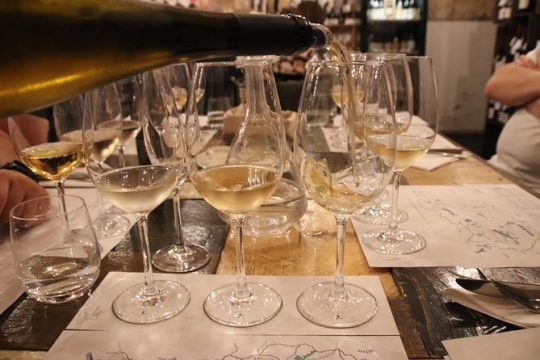
Walking & Biking Tours
Prices from $3
Tours & Sightseeing
Prices from $3
Food, Wine & Nightlife
Prices from $3
Cruises, Sailing & Water Tours
Prices from $10
Holiday & Seasonal Tours
Prices from $3
Sightseeing Tickets & Passes
Prices from $6
Shows, Concerts & Sports
Prices from $21
Private & Custom Tours
Prices from $3
Shopping & Fashion
Prices from $33
Shore Excursions
Prices from $3
Buda Castle (Budai Vár)
Prices from $3
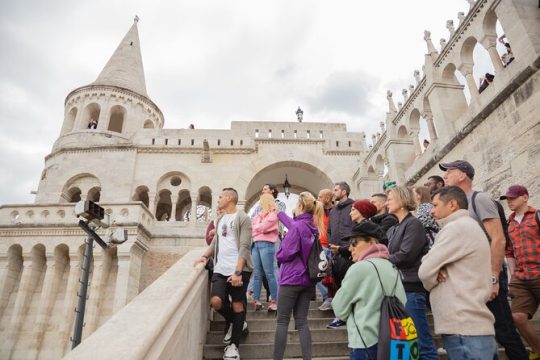
Fisherman’s Bastion (Halaszbastya)
Prices from $3
House of Parliament (Országház)
Prices from $3
Chain Bridge (Széchenyi Lanchid)
Prices from $3
Matthias Church (Mátyás Templom)
Prices from $3
Budapest Danube River
Prices from $3
Danube Promenade
Prices from $3
Central Market Hall (Nagycsarnok)
Prices from $3
Gellért Thermal Bath and Spa
Prices from $12
Elisabeth Bridge (Erzsébet Híd)
Prices from $3
Gellért Hill (Gellert-Hegy)
Prices from $11
Dohány Street Synagogue
Prices from $3




Hungary Event Calendar
View all events
Christmas activities in Hungary
Fri, Dec 25, 2026
Hanukkah in Hungary
Dec 4–12, 2026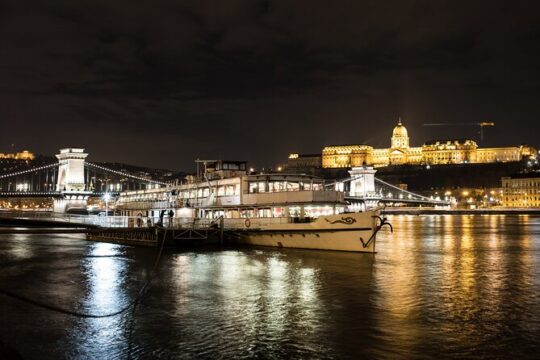
New Year’s Eve in Hungary
Thu, Dec 31, 2026
Christmas Eve in Hungary
Thu, Dec 24, 2026
New Year’s Day long weekend in Hungary
Jan 1–3, 2027
Valentine's Day in Hungary
Sun, Feb 14, 2027
Easter in Hungary
Sun, Mar 28, 2027
Good Friday in Hungary
Fri, Mar 26, 2027