Germany attractions
More things to do in the country
 #136
Budapest Danube River
The Danube in Budapest is the great river that runs through the center of Hungary's capital, with the green hills of Buda rising on one side and the flat, busy streets of Pest spreading out on the other. Its banks, lined with grand buildings and linked by graceful bridges, form one of the most admired city riverfronts in Europe and are part of a World Heritage listing.Buda and Pest grew up as separate towns facing each other across the water, and for centuries crossing between them meant boats, a floating pontoon bridge or, in hard winters, the ice. The Chain Bridge, the first permanent crossing, opened in the mid-19th century, designed by the English engineer William Tierney Clark and built under the Scottish engineer Adam Clark. About a generation later, Buda, Pest and Obuda were joined into a single city. During the Second World War, retreating German forces blew up every bridge across the river, and all were later rebuilt.Along the Pest bank stands the Hungarian Parliament, a long Neo-Gothic building with a central dome and spires that seem to rise straight out of the water. Across the river, Castle Hill holds the Royal Palace and the white towers of Fisherman's Bastion, while Gellert Hill to the south is topped by the Liberty Statue. Each bridge has its own character, from the stone lions guarding the Chain Bridge to the green ironwork of Liberty Bridge and the white suspension cables of Elisabeth Bridge.On the Pest embankment, the Shoes on the Danube Bank memorial, rows of iron shoes at the water's edge, honors Jews who were shot into the river during the Second World War. Upstream, Margaret Island offers gardens and shaded paths in the middle of the stream. A guide connects the buildings along the banks with the city's turbulent past.
More #137
Budapest History Museum (Castle Museum)
If you are looking for things to do in Germany we have 3 Tours and Activities to Experience Budapest History Museum (Castle Museum). Check out our verified traveler reviews and photos of Budapest History Museum (Castle Museum) tours and other things to do in Germany, and book securely when you find the perfect one. Learn the best ways to see famous Budapest History Museum (Castle Museum) and explore the most popular things to do in Germany.
More #138
Bundeswehr Museum of Military History (Militärhistorisches Museum)
If you are looking for things to do in Germany we have 1 Tours and Activities to Experience Bundeswehr Museum of Military History (Militärhistorisches Museum). Check out our verified traveler reviews and photos of Bundeswehr Museum of Military History (Militärhistorisches Museum) tours and other things to do in Germany, and book securely when you find the perfect one. Learn the best ways to see famous Bundeswehr Museum of Military History (Militärhistorisches Museum) and explore the most popular things to do in Germany.
More #139
Burggarten
If you are looking for things to do in Germany we have 14 Tours and Activities to Experience Burggarten. Check out our verified traveler reviews and photos of Burggarten tours and other things to do in Germany, and book securely when you find the perfect one. Learn the best ways to see famous Burggarten and explore the most popular things to do in Germany.
More #140
Casino Baden-Baden
Casino Baden-Baden is the historic gaming house inside the Kurhaus, the grand neoclassical spa house at the heart of this Black Forest resort town. Visitors come to play roulette and cards beneath chandeliers, or simply to see its lavish gaming halls, styled after French royal palaces.The Kurhaus was designed early in the 19th century by the architect Friedrich Weinbrenner as a place where spa guests could meet, dine and dance. Gambling soon became its main draw, especially after France banned games of chance and French casino managers, led by Jacques Bénazet and then his son Édouard, moved their business across the Rhine. The Bénazets hired Parisian stage designers to decorate new halls in the styles of the French court, and Baden-Baden became the summer capital of Europe, drawing royalty, aristocrats, composers and writers. Fyodor Dostoevsky lost heavily at the tables here, an experience that fed into his novel The Gambler.The gaming rooms are a sequence of gilded salons, each in its own style. The Red Hall, inspired by the palace at Versailles, glows with crimson silk and gold, while the Pompadour Hall recalls the taste of Louis XV's famous favorite. There is a Florentine Hall hung with huge chandeliers and a winter garden whose glass roof and Chinese vases give it a lighter, airier feel. Marlene Dietrich is said to have called it the most beautiful casino in the world, and even guests who never place a bet linger over the painted ceilings, mirrors and rich fabrics.The Kurhaus itself fronts a colonnade of small shops and the lawns of the Kurpark, which slope toward the Lichtentaler Allee and the little Oos river. Concerts, balls and galas still fill its other halls through the year. A guide can explain how the casino's profits helped build the theater, racecourse and promenades that made the town famous.
More #141
Cecilienhof Palace (Schloss Cecilienhof)
If you are looking for things to do in Germany we have 20 Tours and Activities to Experience Cecilienhof Palace (Schloss Cecilienhof). Check out our verified traveler reviews and photos of Cecilienhof Palace (Schloss Cecilienhof) tours and other things to do in Germany, and book securely when you find the perfect one. Learn the best ways to see famous Cecilienhof Palace (Schloss Cecilienhof) and explore the most popular things to do in Germany.
More #142
Cesky Krumlov State Castle
Cesky Krumlov State Castle is a vast castle and chateau complex on a rocky rise above the Vltava River in the town of Český Krumlov, in southern Bohemia, second in size among Czech castles only to Prague Castle. Visitors come for its painted tower, its richly furnished state rooms, a sprawling Baroque garden and a rare Baroque theater that keeps its original stage machinery.The castle began as a Gothic fortress built in the 13th century by the lords of Krumlov. Early in the 14th century it passed to the powerful Rosenberg family, who spent nearly three centuries turning it into a lavish Renaissance residence, and their emblem, a red five-petaled rose, still appears across the town. The Eggenbergs and then the Schwarzenbergs followed, adding Baroque grandeur, and the Schwarzenbergs held the estate until the middle of the 20th century, when it passed to the state.The round castle tower, painted in Renaissance style with colorful murals and mock marbling, is the symbol of the town. Bears live in the old moat near the entrance, a tradition reaching back to the 16th century and linked to the Rosenbergs' claim of kinship with the Orsini family of Rome, whose name recalls the Italian word for bear. A dramatic bridge of stacked arches, the Cloak Bridge, spans a deep ravine to join the castle to its garden, and inside, the Masquerade Hall is painted with a lively carnival crowd.The Baroque theater, built in the 17th century and refurbished by the Schwarzenbergs in the 18th, is among the best preserved of its kind anywhere, with its painted scenery, costumes and wooden stage machinery still intact. Out in the garden, the elegant Bellarie summer house and an open-air theater with a revolving auditorium add further surprises. A guide brings the ambitions and rivalries of the great families to life, room by room.
More #143
Chapel Bridge (Kapellbrucke)
Chapel Bridge, the Kapellbrücke, is a covered wooden footbridge that angles across the Reuss River in the heart of Lucerne. Dating from the 14th century, it ranks among the oldest covered bridges in Europe, and visitors come for its painted panels, its flower-lined sides and the stone Water Tower rising beside it.It was built as part of the town's defenses, closing off the river side of Lucerne against attack from the lake, and takes its name from St. Peter's Chapel on the old town bank. The octagonal Water Tower is even older, named for the river it stands in rather than any water it stored, and over the centuries it served as a prison, a torture chamber, a treasury and an archive.In the 17th century, triangular paintings were fitted beneath the roof beams, showing episodes from Swiss history and the lives of Lucerne's patron saints, Leodegar and Maurice. Placed where every passerby would see them, they served as a public lesson in civic pride and Catholic faith. Late in the 20th century a fire tore through much of the structure and destroyed most of the panels. The bridge was rebuilt within months, and the surviving pictures went back up alongside restored ones, with a few charred frames left in place as a reminder.Crossing the bridge leads from the theater and riverside promenade to the painted houses of the old town, with swans gliding on the green water of the Reuss below. From the walkway you can pick out the twin towers of the Jesuit Church along the river and, on clear days, the jagged ridge of Mount Pilatus beyond the rooftops. With a guide, the panels start to make sense, from the battles and saints to the miracles in scenes most people walk straight past.
More #144
Charles Bridge (Karluv Most)
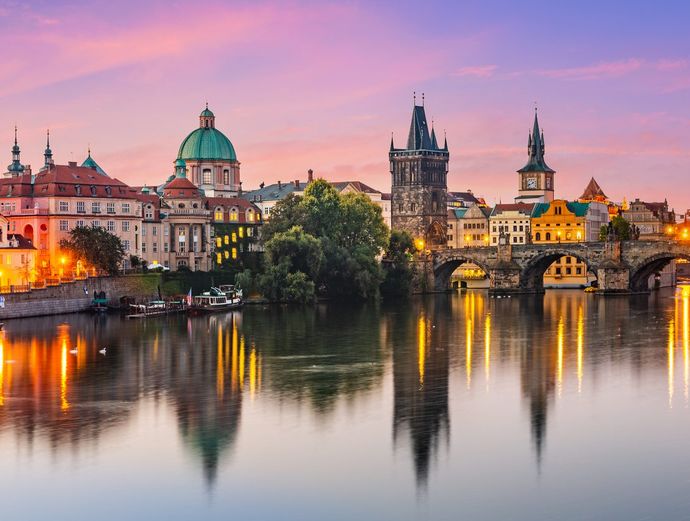
The bridge is pedestrian only, so you cross entirely on foot over a cobbled surface. Allow 30 to 45 minutes to cross and look at the statues, and longer if you climb a bridge tower for the view. The Old Town Bridge Tower has a viewing platform about 47 meters up that looks over the historic center. The cobbles are uneven, which makes strollers and wheelchairs harder to push. It gets crowded, so keep bags closed and stay aware of your belongings while you walk.
More #145
Charlottenburg Palace (Schloss Charlottenburg)
Charlottenburg Palace is the largest surviving royal palace in Berlin, a Baroque and Rococo residence in the western district of Charlottenburg, set before formal gardens and a wooded park along the Spree. Visitors come for its richly decorated royal apartments, its porcelain and paintings, and a glimpse of the Prussian court at its most splendid.The palace began at the end of the 17th century as a modest summer retreat called Lietzenburg, built for Sophie Charlotte, the clever and cultured wife of Elector Frederick III, who soon crowned himself Frederick I, the first King in Prussia. She filled it with music and philosophy, welcoming thinkers such as Leibniz. After her early death the king renamed the palace and the surrounding town in her honor and enlarged it with a tall domed tower and long wings, designed by Johann Friedrich Eosander.Later rulers kept adding to it. Frederick the Great commissioned the New Wing, where Georg Wenzeslaus von Knobelsdorff created the Golden Gallery, a long ballroom of gilded Rococo ornament on a pale green ground, and the king's beloved paintings by Antoine Watteau hang nearby. In the Old Palace, the Porcelain Cabinet covers its walls from floor to ceiling with Chinese and Japanese porcelain set against mirrors. The palace was badly damaged by bombing in the Second World War and painstakingly rebuilt in the decades that followed.In the courtyard stands Andreas Schlüter's bronze equestrian statue of the Great Elector, a celebrated work of Baroque sculpture. Behind the palace, a formal Baroque garden gives way to an English-style landscape park with a carp pond, the Belvedere tea house with its displays of Berlin porcelain, and the tomb of the much-loved Queen Louise, who famously pleaded with Napoleon on Prussia's behalf. A guide brings the personalities of the Prussian court to life.
More #146
Classic Remise Berlin
If you are looking for things to do in Germany we have 2 Tours and Activities to Experience Classic Remise Berlin. Check out our verified traveler reviews and photos of Classic Remise Berlin tours and other things to do in Germany, and book securely when you find the perfect one. Learn the best ways to see famous Classic Remise Berlin and explore the most popular things to do in Germany.
More #147
Cochem Castle
If you are looking for things to do in Germany we have 1 Tours and Activities to Experience Cochem Castle. Check out our verified traveler reviews and photos of Cochem Castle tours and other things to do in Germany, and book securely when you find the perfect one. Learn the best ways to see famous Cochem Castle and explore the most popular things to do in Germany.
More #148
Cologne Chocolate Museum (Schokoladenmuseum)
The Chocolate Museum in Cologne is a museum devoted to chocolate, set on a peninsula in the Rheinauhafen harbor beside the Rhine, close to the Old Town. It follows cacao from tropical farm to finished bar, and visitors come for the mix of history, live production and, of course, tastes along the way.The museum was founded in the late 20th century by Hans Imhoff, a Cologne chocolate manufacturer who wanted to share the story of the treat that had made his fortune. He chose a striking site at the tip of the harbor and a modern building of glass and metal whose shape is often compared to a ship moored on the river. His company had taken over Stollwerck, one of Germany's great chocolate makers, and that firm's long history in Cologne runs through the collection, from early factory machinery to colorful vending machines and advertising posters.The tour begins with the origins of cacao in Central and South America, where the Maya and the Aztecs prized the beans as a drink of rulers and even used them as currency. A warm, humid glasshouse lets you stand among real cacao trees with their pods growing straight from the trunk. From there the story moves to Europe, where hot chocolate became a fashion at royal courts, shown through elegant porcelain cups and silver pots. Next comes the industrial age, and a compact production line behind glass where you watch chocolate being tempered, molded and wrapped. The famous chocolate fountain, where staff dip wafers into the flowing chocolate for visitors, is a favorite stop. Later rooms explore packaging, marketing and how chocolate became an everyday pleasure around the world.On a guided visit, the stories behind each stage come alive, and a tasting helps you notice the differences between cacao varieties and styles of chocolate.
More #149
Colosseum
The Colosseum is the great oval amphitheater at the heart of ancient Rome, standing beside the Roman Forum and Palatine Hill. Begun under the Flavian emperors in the 1st century AD, it hosted gladiator fights and public spectacles for centuries, and it remains the largest amphitheater the Romans ever built and the best-known symbol of the city.Emperor Vespasian began the project on land where Nero's private palace, the Golden House, had included an ornamental lake, a gesture that handed the ground back to the people of Rome. His son Titus opened it with lavish games, and his younger son Domitian finished the work. Its proper name is the Flavian Amphitheater. The nickname Colosseum probably came from a colossal bronze statue of Nero that stood nearby. Crowds came to watch gladiators, wild animal hunts and executions, seated strictly by rank, with senators near the arena and ordinary people high above.When the games ended in late antiquity, the building began a long second life. Earthquakes brought down part of the outer wall, and for centuries its stone was carted off to build palaces and churches across the city. It held workshops and homes, served as a stronghold for a noble family, and was later honored by the popes as a place of remembrance for early Christian martyrs. The holes that pit its walls mark where iron clamps were pried out and melted down.Inside, you look down into the arena, where part of the floor has been rebuilt, and into the hypogeum below, a maze of passages, cages and lifts that raised animals and scenery up into view. The tiers of seating, the arched corridors and the tall travertine outer ring, still complete on its northern side, show how Roman builders moved huge crowds in and out with ease. A guide can bring the tunnels and arches to life with the stories of the people who fought, worked and watched here.
More #150
Court Church (Hofkirche)
The Court Church, or Hofkirche, is a 16th-century church in Innsbruck's Old Town, built beside the Hofburg as a memorial to Emperor Maximilian I. Visitors come to see the emperor's grand tomb, guarded by a procession of larger-than-life bronze figures, along with the jewel-like Silver Chapel and a rare Renaissance organ.Maximilian, one of the most ambitious Habsburg rulers, planned his own monument on a grand scale, commissioning bronze statues of ancestors, relatives and legendary heroes to stand watch over his tomb. He died before it was finished and was buried in Wiener Neustadt, so the tomb here is empty. His grandson, Emperor Ferdinand I, built this church in the middle of the 16th century to house the monument, which took decades and many artists to complete.The bronzes, known locally as the Black Men, line both sides of the nave. Among them are Habsburg forebears, Maximilian's wives and children, and figures he claimed as kin, including the legendary King Arthur of Britain, one of the finest statues, cast to a design attributed to Albrecht Dürer. At the center, the marble tomb is ringed by carved reliefs showing scenes from the emperor's life, with a bronze figure of Maximilian kneeling in prayer on top. Close by lies Andreas Hofer, the leader of Tyrol's uprising against Bavarian and French rule.The Silver Chapel was added later in the 16th century by Archduke Ferdinand II as a resting place for himself and his wife, Philippine Welser, a merchant's daughter whose marriage to a prince caused a scandal. It takes its name from a silver image of the Virgin on the altar. The church's Renaissance organ, a rare survivor from the 16th century that can still be played, completes the picture, and a guide can unravel the family politics behind every figure.
More #151
Dam Square
Dam Square is the historic heart of Amsterdam, a wide open plaza in the old center where the city was born beside a dam on the river Amstel. It is framed by the Royal Palace, the Nieuwe Kerk and the National Monument, and people come to see these landmarks and feel the bustle of the city's main meeting place.In the 13th century fishermen and traders built a dam across the Amstel to control the water, and the settlement that grew around it took its name from the river and the barrier: Amstelredam. The dam became a marketplace where ships unloaded goods, and for centuries the square was the city's commercial and civic center, with a weigh house where cargo was checked. As Amsterdam grew rich in the Dutch Golden Age, the square gained the buildings that still define it.The grandest is the Royal Palace, built in the 17th century as the town hall, a massive classical building meant to show off the confidence of the world's leading trading city. It became a royal residence when Napoleon's brother Louis was made king of Holland, and it is still used by the Dutch royal family for state occasions. Beside it rises the Nieuwe Kerk, a late Gothic church where Dutch monarchs are inaugurated. On the opposite side stands the National Monument, a tall white stone pillar raised after the Second World War to honor those who died in the conflict.Look closely at the monument for its carved figures of chained men, a mother and child, and howling dogs, sculpted as symbols of suffering and resistance. Urns set into the wall behind it hold soil from the Dutch provinces and the former East Indies. The square itself is rarely still, with pigeons, street performers and the occasional funfair. A guide can bring out the stories behind the facades.
More #152
DB Museum (German Railway Museum)
The DB Museum is the railway museum of Deutsche Bahn, Germany's national rail company, in Nuremberg, the birthplace of German rail travel. Described as the oldest railway museum in Germany, it draws families and rail fans with historic locomotives and carriages, royal saloon cars, a huge model railway and an outdoor platform lined with vintage trains.The museum grew out of a royal Bavarian railway museum founded in the 19th century, when trains were still a source of pride and wonder. Its home city is a fitting choice, since Germany's first steam railway ran between Nuremberg and neighboring Furth, pulled by a locomotive named the Adler, or Eagle. The museum shares its building with the Museum of Communications, and together they show how trains, mail and telecommunications changed the way people traveled and stayed in touch.Among the star exhibits are parts of King Ludwig II's royal train, the lavish carriages of the Bavarian king famous for his fairy-tale castles, with gilded decoration and plush furnishings fit for a palace on wheels. Nearby stands a replica of the Adler, which shows how small and simple the first German locomotives were. Other halls follow rail travel from early steam into the modern era, showing how trains reshaped cities, industry and daily life.A large model railway shows how a real network operates, with trains moving through stations and landscapes while signals and points keep traffic flowing safely. Outdoors, a historic platform with old signal boxes and authentic vehicles gives a feel for the railway as its staff once knew it, and a dedicated children's area turns the whole subject into play. The mix of royal splendor, engineering history and hands-on discovery makes the museum rewarding even for those with only a passing interest in trains.
More #153
DDR Museum
The DDR Museum is a hands-on museum in central Berlin about everyday life in the former East Germany, set on the Spree River opposite Berlin Cathedral. Visitors open drawers and cupboards, sit in a Trabant car and wander a recreated tower-block flat to see how ordinary people lived under the socialist state.DDR stands for Deutsche Demokratische Republik, the German Democratic Republic, the socialist state that ruled East Germany from the years after the Second World War until German reunification. The museum was started by an ethnologist from Freiburg who found that Berlin had no museum devoted to the subject. Unusually for a German museum, it is privately funded, and it tells the story of the GDR through the objects and routines of ordinary households as well as through politics.Touch is the key to the exhibition. Rather than keeping everything behind glass, displays invite you to open drawers, doors and hatches to find everyday objects and documents from the era. The recreated prefabricated flat, with its compact kitchen and children's room, shows the kind of standard housing many East Germans called home. The best-known exhibit is a Trabant, the small, plain car that became a symbol of the East, fitted with a driving simulator for a virtual spin through a housing estate.The lighter moments sit beside darker themes. Sections on work, school, holidays and shopping show how people built normal lives within the limits of the state, from youth organizations to the hunt for scarce goods. Other rooms turn to Stasi surveillance, revealing how closely the secret police watched citizens and how that eroded everyday trust. The balance between nostalgia and repression is what makes the museum thought-provoking rather than simply fun. A guide can help untangle what life was really like for people on the other side of the Wall.
More #154
Deichstrasse
If you are looking for things to do in Germany we have 16 Tours and Activities to Experience Deichstrasse. Check out our verified traveler reviews and photos of Deichstrasse tours and other things to do in Germany, and book securely when you find the perfect one. Learn the best ways to see famous Deichstrasse and explore the most popular things to do in Germany.
More #155
Deutscher Dom
The Deutscher Dom is a domed church building on the Gendarmenmarkt in central Berlin, one of the city's most elegant squares. Rebuilt after the Second World War, it now houses an exhibition on the history of parliamentary democracy in Germany, and visitors come for its architecture, its setting and its account of the country's political past.Despite its name, the Deutscher Dom was never a cathedral. The word Dom here comes from the French word for a dome. The original church was built in the early 18th century for a German Lutheran and Reformed congregation, facing a matching church for the French Huguenot community across the square. Later in the 18th century, King Frederick the Great had tall domed towers added to both churches to give the square a grander look, and these towers are what give the buildings their famous profile. A gilded figure representing virtue stands at the top of the German church's dome.During the Second World War the building burned out, and for decades it stood as a ruin in East Berlin. Reconstruction began in the late 20th century, and the building reopened after German reunification. Rather than restoring it as a church, the German parliament chose to use it for an exhibition on the long road to democracy, from the revolutions of the 19th century through the empire, the Weimar Republic, the Nazi dictatorship and the division and reunification of Germany.The exhibition fills the floors under the dome with documents, photographs and films, and the inside of the dome itself can be seen from upper levels. Outside, the Gendarmenmarkt is framed by the twin towers of the French and German churches and by Karl Friedrich Schinkel's concert hall, with a statue of the poet Friedrich Schiller in front. A guide helps tie the building's story to the history of the city around it.
More #156
Deutsches Eck (German Corner)
The Deutsches Eck, or German Corner, is the pointed headland in Koblenz where the Moselle flows into the Rhine, crowned by a huge equestrian monument to Emperor Wilhelm I. It is one of the best-known landmarks of the Rhine valley, visited for the meeting of the two rivers, the monument's dramatic story and the flags and memorials that make it a symbol of German unity.The name is far older than the monument. In the 13th century the Teutonic Order, a religious order of knights, was given land at the confluence and built a commandery there, and the corner came to be known after the order. Koblenz itself goes back to Roman times, when the settlement where the rivers meet was called Confluentes, a name that lives on in the modern city's.The monument arrived in the late 19th century, when the point was built out into the water to carry a colossal statue of the first emperor of the new German Empire on horseback. Artillery fire toppled the figure at the end of the Second World War, and for decades the empty pedestal stood as a memorial to German unity while the country was divided. After reunification, a replica was made and lifted back into place, and the whole monument now rises about 37 meters.Much of the pleasure lies in the setting. From the tip of the headland you can watch the Moselle merge with the broad Rhine, often in two slightly different shades, while barges glide past and Ehrenbreitstein Fortress looks down from the heights on the opposite bank. Climbing the steps of the monument opens a wider view of the rooftops, the bridges and the hills along both rivers. A guide can tie these layers together, from medieval knights to the end of the Cold War.
More #157
Doge's Palace (Palazzo Ducale)
The Doge's Palace, or Palazzo Ducale, is the grand Gothic palace beside St. Mark's Basilica in Venice, facing the lagoon. For centuries it was the home of the doge and the seat of the Venetian Republic's government and courts, and people visit for its painted council halls, gilded staircases and the prisons reached across the Bridge of Sighs.Most of what you see took shape in the 14th and 15th centuries, when Venice was one of the richest powers in the Mediterranean. Its builders turned the usual idea of a fortress upside down: the heavy upper walls of pale pink and white marble seem to float on two light stories of arcades. The ceremonial Porta della Carta joins the palace to the basilica, and in the courtyard the Giants' Staircase, guarded by statues of Mars and Neptune, was where new doges were crowned.Upstairs, the rooms show how the republic ruled. After fires in the 16th century, leading Venetian painters including Tintoretto and Veronese covered the walls and ceilings with scenes celebrating the city. The Great Council Hall, one of the largest rooms in Europe, holds a vast canvas by Tintoretto and a frieze of doges' portraits, in which one space is painted with a black shroud for Marino Faliero, beheaded for plotting against the state. Stone letterboxes shaped like lion mouths once received secret accusations.From the chambers of the Council of Ten, an enclosed bridge crosses a narrow canal to the New Prisons. Tradition says the Bridge of Sighs takes its name from prisoners glimpsing the lagoon for the last time through its small stone windows. Casanova famously escaped from the cells under the palace's lead roof. After the republic fell, the building served various offices before opening as a museum.
More #158
Dresden Castle (Residenzschloss)
Dresden Castle, or the Residenzschloss, is the former royal palace of the rulers of Saxony in the heart of the old town of Dresden, in eastern Germany. Rebuilt after near-total destruction in the Second World War, it houses some of Europe's most dazzling treasure collections, and visitors come to see jewels, armor and art gathered by the Saxon electors and kings.For more than four centuries the castle was the seat of the Wettin dynasty, who ruled Saxony first as dukes, then as electors and finally as kings. It grew from a medieval fortress into a sprawling Renaissance palace in the 16th century, with a tall tower, the Hausmannsturm, and courtyards decorated with sgraffito. The most famous of its rulers, Augustus the Strong, who was also king of Poland, made Dresden one of the most splendid courts in Europe in the early 18th century and created the Green Vault to show off his treasures.The Historic Green Vault recreates his baroque treasure chambers, with mirrored walls and gilded shelves crowded with objects of gold, silver, ivory, amber and precious stones. The New Green Vault displays individual masterpieces, such as a miniature Mughal court in Delhi crafted from gold and jewels and a large green diamond. Elsewhere, the Armory shows ceremonial weapons and parade armor, the Turkish Chamber holds a magnificent Ottoman tent and treasures collected by the Saxon rulers, and the coin and print collections add further rooms of rarities.After the firebombing of the city near the end of the Second World War, the castle stood as a burned-out shell for decades, and its rebuilding stretched into the 21st century. On the outer wall of the Stallhof, the old stable courtyard, runs the Procession of Princes, a long mural of Saxon rulers on horseback made from thousands of Meissen porcelain tiles. A guide can match the faces in the mural to the rulers who shaped the palace.
More #159
Dresden Christmas Market (Dresdner Striezelmarkt)
The Dresden Christmas Market (Dresdner Striezelmarkt) is one of Germany's oldest Christmas markets, set up each Advent on the Altmarkt, the historic market square at the center of Dresden. Visitors come for handmade wooden crafts from the nearby Ore Mountains, the city's famous Stollen fruit loaf and the glow of a giant Christmas pyramid against the winter dark.The market was first recorded in the 15th century, when it lasted a single day and townspeople came to buy meat for their Christmas feast. Over the centuries it grew into a festival spanning Advent, and it takes its name from Striezel, an old word for the Stollen that Dresden's bakers made famous. That bread is celebrated at a Stollen festival during the market, when an enormous loaf is paraded through the streets and sliced with an outsized knife.The stalls showcase the folk art of the Ore Mountains: nutcrackers, smoking figures that puff incense, carved angels, candle arches and wooden pyramids that spin in the heat of their candles. At the center stands a towering version of such a pyramid, its tiers of figures turning slowly above the crowd. Look out too for Pflaumentoffel, little chimney sweep figures made from dried prunes and said to bring good luck. Herrnhut stars, many-pointed lanterns that are a Saxon Christmas tradition, glow above many of the stalls.The setting adds to the mood, with the domes and spires of the restored old town close by and the Kreuzkirche, home of a famous boys' choir, standing beside the square. The smell of roasting almonds and spiced wine drifts between the stalls as lights come on across the market. A guide can explain how Dresden, rebuilt after the Second World War, kept this centuries-old custom alive.
More #160
Dresden Frauenkirche
The Dresden Frauenkirche is a Lutheran church on the Neumarkt in the heart of Dresden's Old Town, crowned by a great stone dome. Destroyed in the Second World War and rebuilt after German reunification, it draws visitors as a symbol of peace and reconciliation, and for its bright, galleried interior and the view from its dome.George Bähr, the city's master carpenter, designed the church in the 18th century and gave it a bold, bell-shaped dome built entirely of sandstone, which locals nicknamed the stone bell. For two centuries it crowned the skyline captured in the paintings of Bernardo Bellotto. Then, in the final months of the Second World War, Allied bombing set Dresden ablaze, and the burned-out church soon collapsed into a mountain of rubble. Under East German rule the ruins were left as a memorial, and they later became a gathering place for peaceful protest.After reunification, a citizens' campaign won support across Germany and abroad, and donations paid for much of a painstaking reconstruction. Using old plans, photographs and computer models, builders returned thousands of salvaged stones to their original places, and the darkened old blocks still stand out against the pale new sandstone. The gilded orb and cross on the dome were made by a British goldsmith whose father had flown in the bombing raids, a gesture of reconciliation that moves many visitors.Inside, curved tiers of galleries rise toward the painted dome in soft pastel shades, filling the nave with light. The twisted cross that once topped the dome, recovered from the rubble, is kept in the church, and a Cross of Nails from Coventry Cathedral recalls the bond between two cities scarred by bombing. A guide can trace the church's journey from ruin to rebirth and show where old stones and new meet.
More #161
Dusseldorf Old Town (Altstadt)
The Altstadt is Düsseldorf's old town, a compact quarter of narrow lanes on the east bank of the Rhine in the heart of the city. Visitors come for its historic churches and squares, its riverside setting and above all its lively pubs, where the local Altbier flows so freely that the district is nicknamed the longest bar in the world.Düsseldorf grew from a small settlement on the Düssel stream, which gives the city its name, into the seat of the dukes of Berg, and the old town holds many reminders of that past. On the Market Square stands the Old Town Hall, with the bronze equestrian statue of Elector Jan Wellem, a ruler remembered for his patronage of the arts, out in front. Nearby, the Castle Tower is the last surviving part of the ducal palace and houses a maritime museum, and the Basilica of St. Lambertus is known for its curiously twisted spire.The poet Heinrich Heine was born in a house on Bolkerstrasse, one of the old town's busiest lanes, and the district's museums and galleries reflect Düsseldorf's long standing as a city of art, with the K20 collection of modern art and the Kunsthalle close by. Look out, too, for images of the Radschläger, the cartwheeling boys who are a beloved symbol of the city, including a fountain dedicated to them.The heart of the Altstadt's social life lies in its traditional brewery taverns, where Altbier, a dark, top-fermented beer, is brewed on site or nearby and served in small glasses by waiters known as Köbes, who keep refilling until you place a beer mat over your glass. Wood-paneled rooms fill with conversation, hearty Rhineland dishes come out of the kitchens, and on fine days drinkers spill onto the lanes outside. A guide can explain the etiquette of these taverns along with the history of the streets around them.
More #162
Dusseldorf Old Town Hall (Rathaus Dusseldorf)
If you are looking for things to do in Germany we have 6 Tours and Activities to Experience Dusseldorf Old Town Hall (Rathaus Dusseldorf). Check out our verified traveler reviews and photos of Dusseldorf Old Town Hall (Rathaus Dusseldorf) tours and other things to do in Germany, and book securely when you find the perfect one. Learn the best ways to see famous Dusseldorf Old Town Hall (Rathaus Dusseldorf) and explore the most popular things to do in Germany.
More #163
Dürnstein
Dürnstein is a small wine town on the Danube in Austria's Wachau valley, known for its blue and white abbey tower and the ruined castle on the rock above it. People come to walk its old lanes, climb to the ruin where an English king was once held prisoner, and taste the wines of the surrounding terraces.The town is named for that castle, whose name joins old German words for dry and stone. Its most famous guest came against his will in the late 12th century. Richard the Lionheart, heading home from the Third Crusade, was seized by Duke Leopold V of Austria, whom he had insulted at Acre by throwing down the duke's banner. Richard was held here before being handed over to Emperor Henry VI, and a later legend tells of his minstrel Blondel singing outside castle after castle until the king sang back. Swedish troops wrecked the fortress in the middle of the 17th century, and it has stood as a ruin ever since.Down by the water, the abbey tells a gentler story. Canons Regular founded it in the early 15th century, and in the 18th century it was remade in full Baroque style to plans by Joseph Munggenast, Jakob Prandtauer and Matthias Steinl. Its slender blue and white tower became the emblem of the whole valley, and the church beneath it is richly decorated in the same style. Emperor Joseph II dissolved the community, and the abbey passed to the canons of Herzogenburg.Around the town, terraced vineyards climb the slopes of the Wachau, a stretch of the Danube listed by UNESCO for its landscape of vines, villages and river. Growers here are known for dry Grüner Veltliner and Riesling, and the local apricots turn up in jams, brandies and pastries along the main street. A guide brings the lanes and the hill to life, linking the captive king to the stones that remain.
More #164
Ehrenbreitstein Fortress (Festung Ehrenbreitstein)
If you are looking for things to do in Germany we have 2 Tours and Activities to Experience Ehrenbreitstein Fortress (Festung Ehrenbreitstein). Check out our verified traveler reviews and photos of Ehrenbreitstein Fortress (Festung Ehrenbreitstein) tours and other things to do in Germany, and book securely when you find the perfect one. Learn the best ways to see famous Ehrenbreitstein Fortress (Festung Ehrenbreitstein) and explore the most popular things to do in Germany.
More #165
EL-DE Haus
The EL-DE Haus is a building in central Cologne that served as the city's Gestapo headquarters during the Nazi era and now holds the NS Documentation Centre. Visitors come to see the preserved basement cells, whose walls still carry messages scratched and written by prisoners, and to understand how ordinary life in Cologne became bound up with persecution.The house takes its unusual name from its builder, Leopold Dahmen, whose initials, spoken aloud in German, sound like EL-DE. He planned it as a commercial and residential building, but before it was finished the Gestapo rented it and fitted out the basement as a prison. From here the secret police directed surveillance, arrests and deportations across the city, and in the last months of the war prisoners were executed in the courtyard.Unlike much of Cologne, the building came through the war largely intact. Afterward it housed city offices, and only civic protests pushed the authorities to turn it into a place of remembrance. The basement is the most moving part of a visit. On the walls of its cells, prisoners left some 1,800 inscriptions and drawings, from names and makeshift calendars to pleas and messages for family, written in several languages. Reading them, many visitors find the history suddenly personal, since each mark was left by someone who did not know what would happen next.Upstairs, the permanent exhibition, Cologne under National Socialism, traces how the regime took hold in the city and reached into schools, workplaces, churches and family life. It covers the persecution of Jews, Sinti and Roma and political opponents, the fate of forced laborers and the people who resisted, often through photographs, documents and personal stories. Several temporary exhibitions each year widen the view, and the center ranks among the largest municipal memorial sites for victims of National Socialism in Germany.
MoreDiscover Germany

Luxury & Special Occasions
Prices from $3
Tours & Sightseeing
Prices from $3
Cultural & Theme Tours
Prices from $3
Walking & Biking Tours
Prices from $3
Private & Custom Tours
Prices from $3
Food, Wine & Nightlife
Prices from $7
Day Trips & Excursions
Prices from $3
Holiday & Seasonal Tours
Prices from $3
Outdoor Activities
Prices from $3
Cruises, Sailing & Water Tours
Prices from $22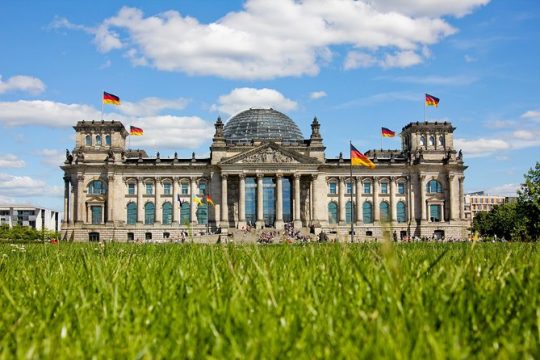
Shore Excursions
Prices from $26
Sightseeing Tickets & Passes
Prices from $5
Marienplatz
Prices from $3
Cologne Cathedral (Kölner Dom)
Prices from $3
Reichstag
Prices from $3
Odeonsplatz
Prices from $3
Brandenburg Gate (Brandenburger Tor)
Prices from $3
Memorial to the Murdered Jews of Europe (Holocaust Memorial)
Prices from $3
Dachau Concentration Camp Memorial Site
Prices from $44
Führerbunker
Prices from $4
Soviet War Memorial Tiergarten
Prices from $4
Topography of Terror
Prices from $4
Victuals Market (Viktualienmarkt)
Prices from $3
Cathedral of Our Blessed Lady (Frauenkirche)
Prices from $3


Germany Event Calendar
View all events
Christmas activities in Germany
Fri, Dec 25, 2026
Hanukkah in Germany
Dec 4–12, 2026
New Year’s Eve in Germany
Thu, Dec 31, 2026
Christmas Eve in Germany
Thu, Dec 24, 2026
New Year’s Day long weekend in Germany
Jan 1–3, 2027
Valentine's Day in Germany
Sun, Feb 14, 2027
Easter in Germany
Sun, Mar 28, 2027
Good Friday in Germany
Fri, Mar 26, 2027