Germany attractions
More things to do in the country
 #106
Akershus Castle (Akershus Slott)
Akershus Castle (Akershus Slott) is a medieval stronghold rebuilt as a Renaissance palace, standing within Akershus Fortress on a rocky point above the Oslofjord in central Oslo. Visitors come for its state halls, the royal mausoleum, views from the ramparts and some seven centuries of Norwegian history gathered in one place.King Haakon V began the castle in the late 13th century, after a raid on Oslo by a Norwegian earl showed how exposed the town was. It appears in written records by the start of the 14th century. Over the centuries it held out against a string of sieges, most of them Swedish, and no foreign army has ever captured it by force. In the 17th century King Christian IV, who rebuilt the fire-ravaged city beside it as Christiania, turned the old fortress into a Renaissance palace guarded by Italian-style bastions.Its later history is darker. In the 19th century a prison known as the Slaveriet held convicts and political rebels here, and during the German occupation in the Second World War Norwegian resistance fighters were shot within its walls. After liberation the wartime collaborator Vidkun Quisling met the same fate on these grounds. Inside the castle you pass through the Hall of Christian IV and Olav V's Hall, where the state still entertains visiting dignitaries, and into the castle church. Below lies the Royal Mausoleum, resting place of King Haakon VII, King Olav V and other members of the royal family.Outside, the grassy ramparts look across the harbor to the city hall and the islands of the inner fjord, and uniformed guards on duty are a reminder that this is still a military site. Norway's Resistance Museum, also on the grounds, follows the occupation from the invasion to liberation. A guide helps connect these layers, from royal ceremony to prison cells.
More #107
Albertinum
The Albertinum is one of Dresden's great art museums, set in a sandstone Renaissance Revival building at the east end of Brühl's Terrace above the Elbe. Art lovers come for its paintings from Romanticism to the present, led by Caspar David Friedrich, and for a sculpture collection that runs from Rodin to contemporary work.The building began as an armory. In the 19th century it was extended and remodeled to display the royal sculpture collection, and it was named after King Albert of Saxony, who reigned at the time. The weapons once stored here gave way to marble and bronze, a striking change of purpose. Like much of Dresden, it was badly damaged in the bombing of the city near the end of the Second World War, and it was later restored to house the collections again.Its two main collections belong to the Dresden State Art Collections. The New Masters Gallery covers about two centuries of painting, from Friedrich's brooding, spiritual landscapes through the Impressionists and the German Expressionists to postwar and contemporary art. Works by Gerhard Richter, who was born in Dresden, are a particular strength. The Sculpture Collection sets Rodin's expressive figures alongside later movements, so the two collections tell parallel stories of how artists saw the world.The building has had a second rebirth. After a flood damaged it, a major renovation followed, and the inner courtyard was roofed over to form a bright atrium that links the galleries and gives the museum a modern heart. The setting adds to the visit too, since Brühl's Terrace, once known as the Balcony of Europe, runs above the river beside the city's baroque landmarks. A guide can trace the threads between the works, from Romantic longing to modern experiment, and explain how each era reshaped the one that followed.
More #108
Alpseebad
If you are looking for things to do in Germany we have 1 Tours and Activities to Experience Alpseebad. Check out our verified traveler reviews and photos of Alpseebad tours and other things to do in Germany, and book securely when you find the perfect one. Learn the best ways to see famous Alpseebad and explore the most popular things to do in Germany.
More #109
Alster Lakes
The Alster Lakes are two linked lakes in the heart of Hamburg, created by damming the Alster River shortly before it joins the Elbe. The smaller Binnenalster is framed by the grand facades of the city center, while the far larger Außenalster opens out among parks and villas, and people come to stroll, sail and watch the city from the water.The lakes are man-made. In the Middle Ages the river was dammed to power a water mill, and the water backed up behind the barrier into a broad lake. In the 17th century new city fortifications cut it in two, and the bridges that now separate the inner lake from the outer one follow the line of those old defenses. From the inner lake, canals carry the water on through the old town toward the Elbe and the port.The Binnenalster is Hamburg's elegant front room. The Jungfernstieg promenade runs along its southern edge, the arcades and stately buildings around it are mirrored in the water, and in the warmer months a tall fountain shoots up from the middle. White passenger boats known as Alster steamers have crossed these waters for generations, and the lakes' swans are so cherished that a city swan keeper, the Schwanenvater, watches over them and moves them to sheltered winter quarters every year.The Außenalster feels quite different, a wide sheet of open water where sailing dinghies, rowers and paddlers share the space while the church spires of the old city rise beyond the southern shore. Sailing clubs have kept boathouses along this water since the 19th century. Its banks are lined with lawns, mature trees and the white villas of districts such as Harvestehude and Uhlenhorst, some of them now consulates. On fine days half the city seems to be out along its shores.
More #110
Amalienborg Palace
If you are looking for things to do in Germany we have 73 Tours and Activities to Experience Amalienborg Palace. Check out our verified traveler reviews and photos of Amalienborg Palace tours and other things to do in Germany, and book securely when you find the perfect one. Learn the best ways to see famous Amalienborg Palace and explore the most popular things to do in Germany.
More #111
Amsterdam Canal Ring (Grachtengordel)
The Amsterdam Canal Ring, or Grachtengordel, is the crescent of 17th-century canals that wraps around the old center of the Dutch capital, lined with tall gabled merchant houses and crossed by humpbacked bridges. People come to stroll its quays, see it from the water and admire a masterpiece of town planning from the Dutch Golden Age.As Amsterdam grew rich on trade late in the 16th century, its population swelled and the city needed room. Planners laid out new districts in stages, digging the Herengracht, Keizersgracht and Prinsengracht early in the 17th century as three parallel rings beyond the old Singel, then extending them to the Amstel to complete the half-moon shape. The canals drained marshy ground, carried goods to merchants' doors and framed building plots sold to wealthy families, who often stored their wares in the attics of their homes.Those homes give the district its character. Built on narrow, deep plots, many rise several stories to decorative gables shaped like steps, bells or necks, and a beam with a hook juts from the top of many facades for hoisting goods and furniture past the steep stairs inside. The grandest stretch, the Golden Bend of the Herengracht, is lined with double-width mansions built for the wealthiest families. The canal ring's planning and architecture earned it a place on UNESCO's World Heritage List early in the 21st century.Several canal houses open their rooms as museums, among them Museum Van Loon and Museum Willet-Holthuysen, where period interiors show how merchant families lived. On the Prinsengracht, the Anne Frank House preserves the hidden rooms where Anne and her family sheltered during the Second World War. Houseboats line many quays, and after dark strings of lights trace the arches of the bridges. A guide can read the facades, explaining what each gable, carved stone and family crest reveals about those who built them.
More #112
Andechs Monastery
If you are looking for things to do in Germany we have 4 Tours and Activities to Experience Andechs Monastery. Check out our verified traveler reviews and photos of Andechs Monastery tours and other things to do in Germany, and book securely when you find the perfect one. Learn the best ways to see famous Andechs Monastery and explore the most popular things to do in Germany.
More #113
Appenzell
Appenzell is a small town in northeastern Switzerland, capital of the canton of Appenzell Innerrhoden, set among green hills below the Alpstein mountains. It is a favorite excursion from Zurich, loved for its brightly painted houses, its living folk traditions and its famous cheese.The name comes from the Latin abbatis cella, the abbot's cell, a reminder that the area once belonged to the powerful abbey of St. Gallen. Its farmers won their freedom from the abbots in a series of wars in the early 15th century and joined the Swiss Confederation about a hundred years later. After the Reformation the region divided along religious lines, and Catholic Innerrhoden, with Appenzell as its seat, became one of the smallest and most traditional cantons in the country. Citizens still govern the canton at the Landsgemeinde, an open-air assembly where laws are passed by a show of hands, and many men arrive carrying a sword as proof of their right to vote.Along the Hauptgasse, the main street, narrow wooden houses wear facades painted with flowers, animals and rural scenes, and wrought-iron shop signs hang above the doors. The parish church of St. Mauritius, with its richly decorated interior, rises above the rooftops. Old customs run deep here, from herders in red vests and yellow breeches leading their cattle to the high pastures to string music and a slow, wordless yodel called the Zäuerli. Appenzeller cheese, rubbed with a closely guarded herbal brine, and a bitter herb liqueur are the best-known local flavors.Behind the town the limestone ridges of the Alpstein climb to the Säntis, and in the Wildkirchli caves high in the range archaeologists found traces of Stone Age hunters and cave bears. The surrounding countryside of scattered farmhouses and rolling meadows looks almost as neat as the painted facades. Few places in Switzerland wear their identity so openly.
More #114
Arc de Triomphe
The Arc de Triomphe is the great triumphal arch at the top of the Champs-Élysées in Paris, standing in the middle of the circle where twelve avenues meet. It honors those who fought for France, and people come for its sculpture, its national memorial and the sweeping view from its roof.Napoleon ordered the arch in the early 19th century, after his victory at Austerlitz, to celebrate the achievements of his armies. Its design, by the architect Jean Chalgrin, drew on the triumphal arches of ancient Rome but on a far grander scale. Work slowed and stopped as Napoleon's fortunes fell, and the monument was only finished under King Louis-Philippe, who dedicated it to all the armies of the Revolution and the Empire. Napoleon himself passed beneath it only in death, when his remains returned to Paris.The arch has framed many of the defining moments of French history since. The writer Victor Hugo lay in state beneath it, victory parades marched through it at the end of both world wars, and the national day parade still sets off from here. Beneath the vault lies the Tomb of the Unknown Soldier, a French soldier of the First World War, and its eternal flame is rekindled each evening in a short ceremony attended by veterans' groups.Look closely and the arch is covered in detail. Large sculpture groups adorn the pillars, the best known being François Rude's Departure of the Volunteers, often called La Marseillaise, with a winged figure of Liberty urging soldiers forward. The inner walls are carved with the names of battles and of hundreds of generals, and a small museum inside the attic tells the monument's story. From the terrace on top, the avenues fan out in a star toward the city's landmarks. A guide can decode the reliefs and the stories hidden in the names.
More #115
Arch of Constantine (Arco di Costantino)
The arch stands on a public road between the Colosseum and the Palatine Hill, so most people see it as part of a wider Colosseum visit. Plan a short stop here, since the monument is viewed from outside and the reliefs are best seen from a little distance. The area around the Colosseum is busy with traffic and crowds, so watch your step at crossings and keep bags closed.
More #116
Army Museum (Musee de l'Armee)
The Army Museum, or Musée de l'Armée, occupies the Hôtel des Invalides in Paris, a vast complex built for wounded and aging soldiers beneath a golden dome. It is one of the largest military history museums in the world, and visitors come for its armor and weapons, its Napoleonic collections and the tomb of Napoleon in the Dôme church.The Invalides was founded in the 17th century by Louis XIV, who wanted a dignified home for the veterans of his many wars. Its long facade and great courtyard were designed to impress, and the Dôme church, designed by Jules Hardouin-Mansart, became one of the masterpieces of French Baroque architecture. In the 19th century Napoleon's remains were brought back from Saint Helena and placed beneath the dome. The museum itself was formed in the early 20th century by bringing together two older collections of artillery and military history.The galleries trace French military history from the Middle Ages to the world wars. In the armor rooms, suits made for knights and kings stand in rows, some richly engraved and gilded, alongside swords, helmets and early firearms. The Napoleonic galleries display the emperor's famous hat and gray coat, his camp equipment and his preserved horse, while later rooms cover the two world wars with uniforms, weapons, posters and personal letters, and an interactive area tells the story of Charles de Gaulle. Rows of old bronze cannons line the main courtyard.Under the Dôme, Napoleon's massive red sarcophagus rests in an open crypt, so visitors look down on it from a circular balustrade, surrounded by statues representing his victories. Other marshals and members of his family are buried nearby. A guide can make sense of the collections and tell the story of the Invalides itself.
More #117
Aschaffenburg
If you are looking for things to do in Germany we have 1 Tours and Activities to Experience Aschaffenburg. Check out our verified traveler reviews and photos of Aschaffenburg tours and other things to do in Germany, and book securely when you find the perfect one. Learn the best ways to see famous Aschaffenburg and explore the most popular things to do in Germany.
More #118
Atomium
The Atomium is a giant steel structure in the shape of an iron crystal, magnified billions of times, standing in the Heysel area in the north of Brussels, Belgium. Built for a world's fair, it became the city's most recognizable landmark, and visitors come to explore its spheres, exhibitions and views over the city.The engineer André Waterkeyn designed the Atomium for the Brussels world's fair in the middle of the 20th century, with the architects André and Jean Polak. The fair celebrated science, progress and peaceful uses of atomic energy in the years after the Second World War, and the Atomium was its centerpiece, a symbol of faith in the future. It was meant to stand only for the duration of the fair, but it proved so popular that it stayed. Early in the 21st century it was thoroughly renovated, and the original aluminum cladding was replaced with stainless steel that gleams in the sun.The spheres are linked by tubes that hold escalators, stairs and one of the fastest lifts of its time, which carries visitors straight up the central column. Inside, a permanent exhibition tells the story of the world's fair and the building itself, with photographs, models and objects from the period. Other spheres host temporary exhibitions on design, art, architecture and science. Riding the long escalators through the tubes, under shifting lights, is part of the fun.The top sphere offers a wide view over Brussels, the green spaces of the Heysel plateau and the miniature models of Mini-Europe below. After dark, rows of small lights make the spheres sparkle against the sky. A guide helps explain the science behind the shape and the optimism of the era that produced it.
More #119
Augsburg Town Hall
If you are looking for things to do in Germany we have 2 Tours and Activities to Experience Augsburg Town Hall. Check out our verified traveler reviews and photos of Augsburg Town Hall tours and other things to do in Germany, and book securely when you find the perfect one. Learn the best ways to see famous Augsburg Town Hall and explore the most popular things to do in Germany.
More #120
Avenue des Champs-Élysées
The avenue is about 2 kilometers long and runs from Place de la Concorde to the Arc de Triomphe. Walking its full length takes roughly 30 minutes without stops, and metro line 1 runs underneath if you want to ride back. Most shops are international brands and flagship stores, with cafes, cinemas and car showrooms mixed in. The road has eight lanes of traffic, so cross only at the lights. The gardens at the lower end, near the Grand Palais and Petit Palais, make a quiet place for a break.
More #121
Baden-Baden
Baden-Baden is an elegant spa town on the northern edge of the Black Forest in southwest Germany, within reach of Frankfurt. People come to soak in its hot springs, stroll its riverside parkland, admire the grand Kurhaus and casino and enjoy the museums and concerts of a town that was once a summer playground for Europe's elite.Bathers have come for the springs for nearly two thousand years. The Romans built baths here and called the settlement Aquae, and the ruins of their bathing halls, complete with underfloor heating, survive beneath the old town. For centuries afterward it was the seat of the margraves of Baden, whose castle still looks down from the hillside. In the 19th century a casino, grand hotels and a fashionable bathing culture made Baden-Baden the summer capital of Europe, where royalty, Russian nobles, writers and composers came to take the waters, gamble and be seen.The town's centerpiece is the Kurhaus, a white-columned assembly hall whose gilded casino rooms are often ranked among the most beautiful in the world. Nearby, the long colonnade of the Trinkhalle, the old pump room, is lined with murals of Black Forest legends. Beside the little Oos River, the Lichtentaler Allee leads through parkland of old trees and flower beds toward a medieval convent, passing the Museum Frieder Burda and its modern art. Ivan Turgenev made his home here, Fyodor Dostoevsky lost heavily at its roulette tables, and Johannes Brahms spent summers composing nearby.The bathing tradition carries on. The Friedrichsbad, a palatial 19th-century bathhouse, guides bathers through a long sequence of hot rooms, steam baths and pools that blends Roman and Irish traditions. The town is also part of the Great Spa Towns of Europe, a group of resorts listed together by UNESCO. A guide fills in the glamour of the golden age, from the famous guests to the fortunes won and lost at the tables.
More #122
Beatles-Platz
If you are looking for things to do in Germany we have 13 Tours and Activities to Experience Beatles-Platz. Check out our verified traveler reviews and photos of Beatles-Platz tours and other things to do in Germany, and book securely when you find the perfect one. Learn the best ways to see famous Beatles-Platz and explore the most popular things to do in Germany.
More #123
Beer and Oktoberfest Museum
The Beer and Oktoberfest Museum is a small museum in Munich's Old Town that tells the story of Bavarian brewing and of the city's famous autumn festival. It fills a medieval townhouse near the Isartor and appeals to anyone curious about how beer shaped Munich's food, customs and celebrations, from the monastery cellar to the festival tent.The building is part of the attraction. It dates from the 14th century and ranks among the oldest surviving houses in the city, with thick walls, timber ceilings and a steep wooden staircase nicknamed the stairway to heaven. Few buildings in the Old Town give such a clear sense of how Munich's townspeople lived in the late Middle Ages. Its low rooms and worn floorboards give the exhibits an old Munich setting that a modern gallery could not match.The displays climb through the house floor by floor. Early rooms explain how beer was brewed in monasteries and town breweries, and how the Bavarian purity law of the early 16th century limited ingredients to water, barley and hops. Further up, the focus turns to the Oktoberfest, which began as a horse race celebrating a royal wedding in the early 19th century and grew into a vast fair with beer tents, rides and costumed parades. Old photographs, posters, stoneware mugs and festival souvenirs show how the event changed over two centuries.Details reward a slow look, from the brewers' tools and the history of the Munich beer garden to the story of the Wiesn, the meadow west of the old center where the festival is held. The museum's own tavern keeps the theme going with Bavarian dishes and beer served under old beams. A guide can add the local anecdotes and brewery rivalries that bring the displays to life.
More #124
Belvedere Palace (Schloss Belvedere)
Belvedere Palace in Vienna is really two Baroque palaces facing each other across a long, sloping garden, with the Upper Belvedere at the top looking back toward the city's spires. Built as a showpiece for one of the most celebrated generals of his age, it now houses Austria's best-known collection of art, from medieval altarpieces to the golden canvases of Gustav Klimt.That general was Prince Eugene of Savoy, who won fame fighting the Ottoman armies and had the court architect Johann Lukas von Hildebrandt design the complex in the early 18th century. The lower palace came first as his living quarters, and the grander upper palace followed as a setting for receptions and celebrations. After the prince died, the Habsburgs bought the estate, and the imperial picture collection was moved here and opened to visitors, making the Belvedere one of the earliest public museums in the world. Much later, its Marble Hall was where the treaty restoring Austria's independence after the Second World War was signed.Inside the Upper Belvedere, the star is Klimt's The Kiss, the shimmering portrait of two lovers wrapped in gold, hung alongside his Judith and works by Egon Schiele and Oskar Kokoschka. The galleries also hold Biedermeier scenes of Viennese life, French Impressionist paintings and Jacques-Louis David's heroic portrait of Napoleon crossing the Alps. Look out for the strange, grimacing character heads carved by the sculptor Franz Xaver Messerschmidt.The setting is as much a part of the visit as the paintings. The garden steps down in terraces of clipped hedges, fountains, cascades and stone sphinxes, and from the top the view takes in the rooftops of central Vienna. In the lower palace, the mirrored, gilded Golden Cabinet and the frescoed state rooms show how the prince lived. A guide can link the art, the architecture and the people who shaped them into one story.
More #125
Berchtesgaden Salt Mine (Salzbergwerk Berchtesgaden)
The Berchtesgaden Salt Mine, or Salzbergwerk Berchtesgaden, is a working salt mine on the edge of the Bavarian market town of Berchtesgaden that has opened part of its tunnels to visitors. People come to ride a miners' train deep into the mountain, slide down wooden chutes and learn how salt shaped this corner of the Alps.Miners have taken salt from this mountain since the early 16th century, and it is the oldest salt mine in Germany still in operation. For centuries, the salt trade paid for the independence of Berchtesgaden, which was ruled by prince-provosts, church leaders who governed a small state of their own. Salt was valuable enough to be called white gold, and its wealth paid for much of the old town. Rather than cutting the salt out in blocks, miners here dissolve it from the rock with fresh water and pump the brine away for boiling, a method refined over generations. A historic brine pipeline once carried the salty water across the hills to the saltworks at Bad Reichenhall.The visit is designed as a journey underground. After a train ride into the tunnels, you slip down long, polished wooden slides that miners once used to move quickly between levels. Deeper inside, a raft carries you across a still salt lake lit with colored light and music, and a vast cavern known as the salt cathedral shows the scale of the workings. Displays and short films explain how the deposits formed when an ancient sea dried up millions of years ago.Along the way, you hear about the miners who worked these tunnels by lamplight, their traditions and the patron saint they trusted for protection underground. The ride back out on the train brings you up into daylight, with the peaks of the Berchtesgaden Alps rising around the entrance.
More #126
Berghain
If you are looking for things to do in Germany we have 1 Tours and Activities to Experience Berghain. Check out our verified traveler reviews and photos of Berghain tours and other things to do in Germany, and book securely when you find the perfect one. Learn the best ways to see famous Berghain and explore the most popular things to do in Germany.
More #127
Bergisel Ski Jump
The Bergisel Ski Jump is a modern ski jump on a wooded hill above Innsbruck, crowned by a sleek tower designed by the architect Zaha Hadid. Visitors come to ride to the top of the tower, look down the steep in-run into the stadium, and take in a sweeping view over the city to the peaks of the Nordkette.Ski jumping has taken place on Bergisel since the early 20th century, and the hill hosted jumping at both Winter Olympic Games held in Innsbruck in the second half of the 20th century, when the opening ceremonies also took place in the stadium. The old jump was replaced at the start of the 21st century by Hadid's design, a concrete tower topped by a curving head of glass and steel that holds a restaurant and a viewing terrace. The hill is also a place of Tyrolean memory, as the site of battles in the early 19th century when local fighters led by Andreas Hofer rose against Bavarian and French troops.From the terrace, the view takes in the old town, the Inn valley and the mountains on every side, while below you the jump drops away so steeply that it is hard to imagine skiing down it. Each winter the stadium fills for the Innsbruck stage of the Four Hills Tournament, one of the most important events in the sport, held in the first days of the new year.Close by, the Tirol Panorama museum displays a huge circular painting of the Bergisel battles, which pairs well with the jump for anyone curious about the hill's past. If athletes happen to be training during your visit, you can watch them fly off the end of the jump and land far down the slope. A guide adds the stories of the champions and record jumps this hill has seen.
More #128
Berlin City Hall (Rotes Rathaus)
If you are looking for things to do in Germany we have 28 Tours and Activities to Experience Berlin City Hall (Rotes Rathaus). Check out our verified traveler reviews and photos of Berlin City Hall (Rotes Rathaus) tours and other things to do in Germany, and book securely when you find the perfect one. Learn the best ways to see famous Berlin City Hall (Rotes Rathaus) and explore the most popular things to do in Germany.
More #129
Berlin Jewish Museum (Jüdisches Museum)
If you are looking for things to do in Germany we have 3 Tours and Activities to Experience Berlin Jewish Museum (Jüdisches Museum). Check out our verified traveler reviews and photos of Berlin Jewish Museum (Jüdisches Museum) tours and other things to do in Germany, and book securely when you find the perfect one. Learn the best ways to see famous Berlin Jewish Museum (Jüdisches Museum) and explore the most popular things to do in Germany.
More #130
Berlin Philharmonic Hall (Berliner Philharmonie)
If you are looking for things to do in Germany we have 2 Tours and Activities to Experience Berlin Philharmonic Hall (Berliner Philharmonie). Check out our verified traveler reviews and photos of Berlin Philharmonic Hall (Berliner Philharmonie) tours and other things to do in Germany, and book securely when you find the perfect one. Learn the best ways to see famous Berlin Philharmonic Hall (Berliner Philharmonie) and explore the most popular things to do in Germany.
More #131
Berlin Zoo and Aquarium
If you are looking for things to do in Germany we have 4 Tours and Activities to Experience Berlin Zoo and Aquarium. Check out our verified traveler reviews and photos of Berlin Zoo and Aquarium tours and other things to do in Germany, and book securely when you find the perfect one. Learn the best ways to see famous Berlin Zoo and Aquarium and explore the most popular things to do in Germany.
More #132
Black Forest
If you are looking for things to do in Germany we have 12 Tours and Activities to Experience Black Forest. Check out our verified traveler reviews and photos of Black Forest tours and other things to do in Germany, and book securely when you find the perfect one. Learn the best ways to see famous Black Forest and explore the most popular things to do in Germany.
More #133
Bode Museum
The Bode Museum is the domed, neo-Baroque palace of art at the northern tip of Berlin's Museum Island, rising straight from the water where the Spree divides. Visitors come for its sculpture from the Middle Ages to the 18th century, its Byzantine art and one of the world's great coin collections, all set in grand, light-filled halls.The museum opened in the early 20th century as the Kaiser Friedrich Museum, designed by the court architect Ernst von Ihne to fill the narrow, wedge-shaped site. Its guiding spirit was the art historian Wilhelm von Bode, who displayed sculpture, paintings and furniture side by side so that each room evoked its era instead of feeling like a storeroom. The building was badly damaged in the Second World War and ended up in East Berlin, where it was renamed in Bode's honor. After reunification it was restored from top to bottom and reopened in the early 21st century, and Museum Island as a whole is a UNESCO World Heritage Site.The entrance opens into the Great Dome, where a cast of Andreas Schlüter's statue of the Great Elector on horseback greets you, and beyond lies a hall styled like a Renaissance basilica, lined with Italian altarpieces. The sculpture collection runs from medieval carvings to works by Donatello, Tilman Riemenschneider and Antonio Canova. The Museum of Byzantine Art shows icons, mosaics and carved sarcophagi from the late Roman and Byzantine world, while the Coin Cabinet follows money from the earliest ancient coins to modern medals.The building itself is part of the draw, its rounded dome rising from the water to create one of Berlin's best-loved river views. A guide can steer you to the masterpieces and explain how Bode's way of mixing art forms influenced the way museums show their treasures.
More #134
Botanical Garden Frankfurt (Palmengarten)
The Palmengarten is Frankfurt's historic botanical garden, a green retreat in the Westend district close to the city center. Visitors come to wander through glasshouses full of palms, tropical flowers and alpine plants, stroll themed outdoor gardens and see plants gathered from climates around the world.Its story began with a purchase, when Frankfurt citizens bought the plant collection of the Duke of Nassau, who had lost his duchy, and built a garden to display it. The palms had filled the winter garden of the duke's palace at Biebrich, near Wiesbaden. The garden designer Heinrich Siesmayer laid out the grounds, which opened to the public in the 19th century. The historic Palmenhaus still forms the heart of the garden, sheltering palms, tree ferns and pools of tropical fish beneath its glass roof.Around it, other glasshouses take visitors through the world's climate zones. The Tropicarium pairs humid and arid tropical houses, moving from steamy rainforest plants to cacti and succulents, while a flower house shows off blooms that change with the seasons. An alpine house and a subantarctic house gather tough little plants from cold, windswept places, an unusual sight in any botanical garden. Walking from one house to the next feels like a quick trip from the equator to the edge of Antarctica.Outside, about 22 hectares of grounds unfold into a rose garden, a rhododendron garden and a rockery where a waterfall tumbles over the stones. A boat pond, open lawns and shady paths make the park as much a place to unwind as a place to learn. Beyond its fence lies the Grüneburgpark, so the green space runs on well past the garden's edge. A guide can share the stories of the plant hunters behind the collections and the gardeners who keep such fragile species thriving so far from home.
More #135
Botanical Garden Münster
If you are looking for things to do in Germany we have 1 Tours and Activities to Experience Botanical Garden Münster. Check out our verified traveler reviews and photos of Botanical Garden Münster tours and other things to do in Germany, and book securely when you find the perfect one. Learn the best ways to see famous Botanical Garden Münster and explore the most popular things to do in Germany.
MoreDiscover Germany

Luxury & Special Occasions
Prices from $3
Tours & Sightseeing
Prices from $3
Cultural & Theme Tours
Prices from $3
Walking & Biking Tours
Prices from $3
Private & Custom Tours
Prices from $3
Food, Wine & Nightlife
Prices from $7
Day Trips & Excursions
Prices from $3
Holiday & Seasonal Tours
Prices from $3
Outdoor Activities
Prices from $3
Cruises, Sailing & Water Tours
Prices from $22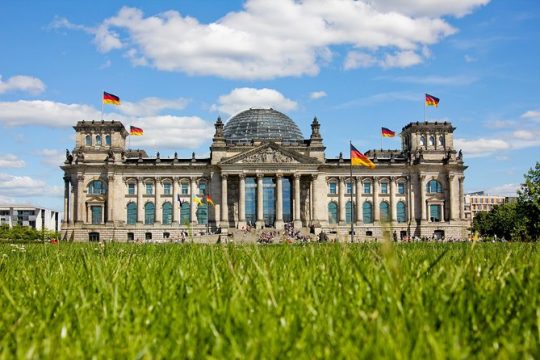
Shore Excursions
Prices from $26
Sightseeing Tickets & Passes
Prices from $5
Marienplatz
Prices from $3
Cologne Cathedral (Kölner Dom)
Prices from $3
Reichstag
Prices from $3
Odeonsplatz
Prices from $3
Brandenburg Gate (Brandenburger Tor)
Prices from $3
Memorial to the Murdered Jews of Europe (Holocaust Memorial)
Prices from $3
Dachau Concentration Camp Memorial Site
Prices from $44
Führerbunker
Prices from $4
Soviet War Memorial Tiergarten
Prices from $4
Topography of Terror
Prices from $4
Victuals Market (Viktualienmarkt)
Prices from $3
Cathedral of Our Blessed Lady (Frauenkirche)
Prices from $3


Germany Event Calendar
View all events
Christmas activities in Germany
Fri, Dec 25, 2026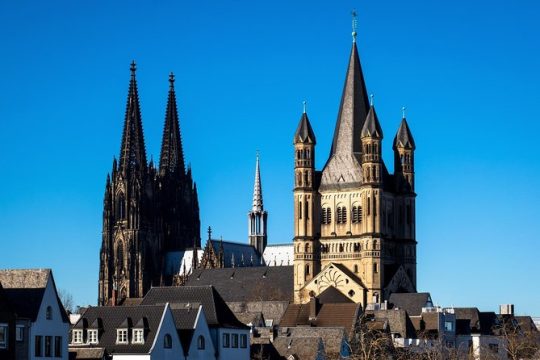
Hanukkah in Germany
Dec 4–12, 2026
New Year’s Eve in Germany
Thu, Dec 31, 2026
Christmas Eve in Germany
Thu, Dec 24, 2026
New Year’s Day long weekend in Germany
Jan 1–3, 2027
Valentine's Day in Germany
Sun, Feb 14, 2027
Easter in Germany
Sun, Mar 28, 2027
Good Friday in Germany
Fri, Mar 26, 2027