Germany attractions
More things to do in the country
 #406
Wieliczka Salt Mine
The Wieliczka Salt Mine, just outside Kraków, is an underground world of chambers, chapels and lakes carved by generations of miners out of a vast bed of rock salt. For centuries it was one of the richest enterprises in the Kingdom of Poland, and it was among the very first places named a UNESCO World Heritage Site.Salt was dug here from the Middle Ages until the late 20th century, and its trade helped fill the royal treasury in Kraków. A local legend credits the find to Princess Kinga, a Hungarian king's daughter who threw her engagement ring into a salt shaft back home and saw it reappear in the first lump of salt raised at Wieliczka. Over hundreds of years the miners cut a maze of shafts, passages and halls on many levels, bracing them with massive timber frames that still support the ceilings.The highlight is the Chapel of St. Kinga, a great underground church in which almost everything, from the floor tiles to the altar and the chandeliers, is made of salt. Miner-sculptors spent decades carving its reliefs, including a detailed version of the Last Supper, and the walls glow softly under the crystal lights. Elsewhere you pass brine lakes with still green water, statues of kings, saints and dwarfs, and a figure of the astronomer Nicolaus Copernicus, who is said to have visited.The mine has drawn travelers for centuries, among them writers, composers and royalty, and part of the pleasure is seeing how the miners turned a hard, demanding workplace into a setting for faith and art. Touch a wall and taste your fingertip, and the salt is unmistakable. A guide shares the miners' customs and humor, which turn the passages into a living story.
More #407
Wiesbaden
If you are looking for things to do in Germany we have 4 Tours and Activities to Experience Wiesbaden. Check out our verified traveler reviews and photos of Wiesbaden tours and other things to do in Germany, and book securely when you find the perfect one. Learn the best ways to see famous Wiesbaden and explore the most popular things to do in Germany.
More #408
Zaanse Schans
Zaanse Schans is a riverside neighborhood of Zaandam, just north of Amsterdam, where historic wooden windmills and green-painted houses line the banks of the Zaan. It works as an open-air showcase of the region's past, and visitors come to see the mills turning, step inside old workshops and learn how this stretch of river helped power Dutch trade.The Zaan region was one of the earliest industrial areas in Europe. In the 17th and 18th centuries, hundreds of windmills along the river cut planks for the shipyards, crushed seeds into oil, milled spices and made pigments for paint. As steam and later electricity took over, most of the mills disappeared. To save what remained, preservationists began moving historic mills, houses and barns here from across the region in the second half of the 20th century, setting them on the site of an old earthwork fort, or schans, built against Spanish troops.Several working mills stand along the dike, among them De Kat, which grinds raw materials into pigments for artists, De Zoeker and De Bonte Hen, which press oil, and De Huisman, a mustard mill. Some let you climb to the outer gallery and feel the whole wooden structure tremble with the turning sails. The houses, built in the traditional Zaan style of timber with painted gables, show how merchants and craftspeople lived. The painter Claude Monet stayed in Zaandam in the 19th century and painted the river, its mills and its wooden houses many times.Between the mills sit smaller workshops and museums: a cheese farm, a clog maker, a pewter foundry and a bakery museum, while the Zaans Museum close by tells the story of the region's trade and industry. A guide ties the mills to the merchants and shipbuilders who depended on them.
More #409
Zugspitze
The Zugspitze is Germany's highest mountain, rising to almost 3,000 meters on the border with Austria above Garmisch-Partenkirchen in the Bavarian Alps. A cogwheel railway and cable cars carry visitors to the summit, where clear days open a view over more than 400 peaks in four countries.The mountain belongs to the Wetterstein range, a wall of pale limestone that rises steeply from the valley and the green waters of the Eibsee. A Bavarian army surveyor, Josef Naus, made the first recorded climb to the summit in the early 19th century, and a gilded cross was later raised on the top, where it still catches the light. A mountain hut and a weather station followed just below the peak, and the Münchner Haus has sheltered climbers and observers for generations.Getting people up became an engineering project of its own. Between the world wars a cogwheel railway was driven through the mountain in a long tunnel to the high plateau of the Zugspitzplatt, and cable cars followed, including a newer one that swings straight up from the shore of the Eibsee in one dizzying ride. On the plateau lies the Schneeferner, one of the few glaciers left in Germany, along with a small chapel, the highest in the country.At the top, terraces look out across the Alps toward Austria, Italy and Switzerland, and down onto the lakes and valleys of Bavaria. In winter the plateau becomes Germany's highest ski area, and in summer hikers and climbers cross rock and scree on routes that lead up from the valley floor. A guide can name the peaks on the horizon and explain how the mountain shaped Garmisch's growth as an Alpine resort. On the summit itself the border between Bavaria and Tyrol runs across the terraces, so you can stand in two countries at once.
More #410
Zwinger and Semperbau
The Zwinger is Dresden's great Baroque palace complex, a set of ornate pavilions and galleries around a garden courtyard at the edge of the Old Town, closed on one side by the Semperbau. Visitors come for its sculpted architecture and for the museums inside, above all the Old Masters Picture Gallery with Raphael's Sistine Madonna.Augustus the Strong, Elector of Saxony and King of Poland, commissioned the Zwinger in the early 18th century as a showplace for court festivities. The architect Matthäus Daniel Pöppelmann and the sculptor Balthasar Permoser created a joyful riot of stone, with satyrs, nymphs and gods crowding every cornice. The name recalls its site, the strip of ground between the inner and outer walls of the old fortifications. For more than a century the courtyard stood open toward the river, until the architect Gottfried Semper closed it in the 19th century with the gallery wing that bears his name. Bombing in the Second World War left the complex in ruins, and it was painstakingly rebuilt afterward.Walk through the Crown Gate, topped by a golden Polish crown, and look for the Nymphs' Bath, a hidden grotto of cascades and statues, and the Glockenspiel Pavilion, whose bells are made of Meissen porcelain. In the Semperbau, the Old Masters Picture Gallery holds Raphael's Sistine Madonna, with its two famous daydreaming cherubs, along with Giorgione's Sleeping Venus, Vermeer's Girl Reading a Letter at an Open Window and works by Rembrandt, Titian and Rubens. Other pavilions house one of the world's great porcelain collections, from Chinese and Japanese pieces to early Meissen, and the Mathematics and Physics Salon, with clocks, globes and scientific instruments.Even without entering a museum, the courtyard rewards a slow circuit, and the terraces on the galleries look down over fountains and lawns. A guide can decode the sculpted allegories and tell the story of the Saxon court that built this pleasure ground.
MoreDiscover Germany

Luxury & Special Occasions
Prices from $3
Tours & Sightseeing
Prices from $3
Cultural & Theme Tours
Prices from $3
Walking & Biking Tours
Prices from $3
Private & Custom Tours
Prices from $3
Food, Wine & Nightlife
Prices from $7
Day Trips & Excursions
Prices from $3
Holiday & Seasonal Tours
Prices from $3
Outdoor Activities
Prices from $3
Cruises, Sailing & Water Tours
Prices from $22
Shore Excursions
Prices from $26
Sightseeing Tickets & Passes
Prices from $5
Marienplatz
Prices from $3
Cologne Cathedral (Kölner Dom)
Prices from $3
Reichstag
Prices from $3
Odeonsplatz
Prices from $3
Brandenburg Gate (Brandenburger Tor)
Prices from $3
Memorial to the Murdered Jews of Europe (Holocaust Memorial)
Prices from $3
Dachau Concentration Camp Memorial Site
Prices from $44
Führerbunker
Prices from $4
Soviet War Memorial Tiergarten
Prices from $4
Topography of Terror
Prices from $4
Victuals Market (Viktualienmarkt)
Prices from $3
Cathedral of Our Blessed Lady (Frauenkirche)
Prices from $3


Germany Event Calendar
View all events
Christmas activities in Germany
Fri, Dec 25, 2026
Hanukkah in Germany
Dec 4–12, 2026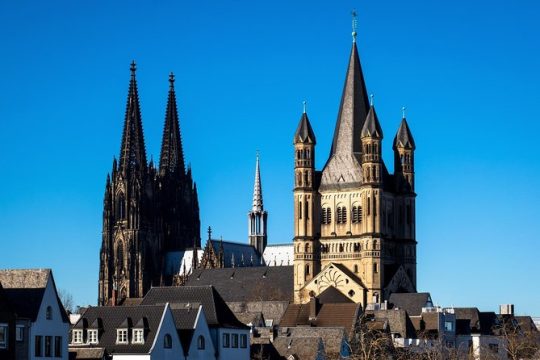
New Year’s Eve in Germany
Thu, Dec 31, 2026
Christmas Eve in Germany
Thu, Dec 24, 2026
New Year’s Day long weekend in Germany
Jan 1–3, 2027
Valentine's Day in Germany
Sun, Feb 14, 2027
Easter in Germany
Sun, Mar 28, 2027
Good Friday in Germany
Fri, Mar 26, 2027