Germany attractions
More things to do in the country
 #46
Neuschwanstein Castle
Neuschwanstein Castle is the fairy-tale palace built by King Ludwig II of Bavaria on a rugged crag in the foothills of the Alps, close to Füssen in southern Germany. Travelers come for its white towers against the Alps, its lavish, theatrical interiors and the story of the dreamy king who created it.Ludwig grew up in the yellow castle of Hohenschwangau in the valley below, and as king he began building his own castle on the ruins of two medieval fortresses on the ridge. He wanted an idealized knight's castle that would honor the stage works of his friend Richard Wagner, and the first designs came from a theater set painter rather than an architect. The building swallowed huge sums of the king's personal fortune, and he lived in it only a short time. Declared unfit to rule, Ludwig was removed from power in the late 19th century and died days later in a lake near Munich in circumstances that are still debated. The castle, never finished, opened to visitors soon after his death.Inside, the rooms are a stage set for legends. The Throne Hall, modeled on a Byzantine church, has a mosaic floor, a gilded apse and a huge chandelier, though no throne was ever installed. The Singers' Hall, inspired by the Wartburg castle, is painted with scenes from the tale of Parsifal, and the king's bedroom is covered in carved Gothic woodwork. Ludwig also added an artificial grotto and modern comforts such as heating, running water and electric bells. Outside, the walls and towers look down on the Alpsee and Schwansee lakes, the Pöllat gorge and the Bavarian plain, and the castle went on to inspire Walt Disney's Sleeping Beauty castle.A guide helps untangle the legends from the facts of Ludwig's life and the castle's design.
More #47
Nikolaiviertel (Nicholas Quarter)
The Nikolaiviertel (Nicholas Quarter) is the small riverside district in the center of Berlin where the city began, a cluster of cobbled lanes, gabled houses and traditional taverns around Berlin's oldest church. Visitors come for a feel of the medieval town that once stood here, recreated after the war, and for its museums, restaurants and quiet corners beside the Spree.A settlement grew up here around the start of the 13th century at a ford on the Spree, where a trade route crossed the river, and together with Cölln across the water it formed the core of early Berlin. The Nikolaikirche, begun as a late Romanesque basilica a few decades later, gave the quarter its name, and its twin spires still mark the center. For centuries the narrow streets survived, until air raids and the battle for Berlin at the end of the Second World War left them in ruins.The quarter you walk through is largely a creation of East Germany, rebuilt for Berlin's 750th anniversary. Planners mixed careful reconstructions of historic houses with prefabricated concrete blocks dressed up with gables and old-style details, so the lanes look older than most of their buildings are. Among the true survivors is the Knoblauchhaus, an 18th-century family home now furnished as a museum of Biedermeier life, while the Ephraim-Palais, a Rococo mansion built for Frederick the Great's financier, was rebuilt close to its first site using pieces of its original facade.Look out too for the red sandstone Kurfürstenhaus, built on the site of an older house where, so the story goes, an elector of Brandenburg died after fleeing a ghostly White Lady said to haunt the city palace. Between the sights, old-style taverns and cafes spill onto the little squares around the church. A guide can separate the genuine old stones from the clever copies and explain what the rebuilding meant in divided Berlin.
More #48
Oberbaum Bridge (Oberbaumbrücke)
The Oberbaum Bridge is a double-deck brick bridge over the River Spree in Berlin, linking the lively districts of Kreuzberg and Friedrichshain. Travelers come for its turreted towers and Gothic arches, its views along the river and its past as a crossing point on the Cold War border between East and West Berlin.The name recalls the city's old customs barrier, a boom of tree trunks laid across the river here to stop boats from entering Berlin without paying duty. A wooden bridge was built here in the 18th century, and at the end of the 19th century the city built the present structure in the North German Brick Gothic style, with a lower deck for road traffic and an upper deck for Berlin's first elevated railway. Its two towers, modeled on a medieval city gate, made it look less like an engineering project and more like an entrance to the city.War and division changed its fate. In the last days of the Second World War, German troops blew up the central span to slow the Soviet advance, and when the city was divided the bridge became part of the border, with the river itself belonging to the East. The Berlin Wall ran along the Friedrichshain bank, and for years the bridge served only as a pedestrian checkpoint, mainly for West Berliners visiting the East. After reunification it was restored, and the Spanish architect Santiago Calatrava designed a new steel middle section that allowed trains to cross again.At the heart of the bridge, a neon light installation shows two hands playing rock, paper, scissors, an artist's wry comment on how arbitrary the old division was. Residents of the districts on either bank have even staged mock battles on the bridge, pelting each other with water and overripe vegetables in a good-humored rivalry. A guide can share the stories of people who crossed here when the river marked a frontier.
More #49
Sanssouci Palace
Sanssouci Palace is the summer palace of Frederick the Great, king of Prussia, set at the top of a terraced vineyard in Sanssouci Park in Potsdam, just outside Berlin. People come for its playful rococo rooms, the sweeping garden terraces below it and the personal story of the king who built it as his private retreat.Frederick had the palace built in the 18th century from his own sketches, working with the architect Georg Wenzeslaus von Knobelsdorff. He wanted a place to escape court life and the burdens of rule, and the name, French for "without worries," says as much. Unlike the vast palaces of other European monarchs, it is a single story long, low and intimate, meant for the king, a few friends and evenings of music and conversation. The French philosopher Voltaire stayed here as his guest, and the king played the flute at concerts in his own music room.Inside, the rooms show the lighthearted style now called Frederician Rococo. The domed Marble Hall at the center was the setting for dinners with the king's circle of thinkers. The concert room glitters with gilded ornament, mirrors and painted panels, and the round library holds Frederick's books in cedar wood cases. Guest rooms, including one tied to Voltaire, are decorated with carved flowers, fruit and birds. Outside, the sweeping terraces descend toward a great fountain, lined with glass fronted niches where vines and figs are grown.Frederick asked to be buried on the upper terrace beside his beloved greyhounds, a wish that was finally honored only in the late 20th century. His simple grave slab sits there now, and visitors often leave potatoes on it in thanks for his role in spreading the crop across Prussia. The park beyond holds further palaces, temples and gardens. A guide adds the human stories behind the gilded rooms.
More #50
Schwabing
Schwabing is the lively northern district of Munich that grew famous around the turn of the 20th century as the city's bohemian quarter, home to painters, poets and revolutionaries. Visitors come to walk its broad Leopoldstraße, admire elegant Art Nouveau facades, sit in its cafes and beer gardens, and reach the green expanse of the Englischer Garten on its eastern side.Schwabing began as a village outside the city, with a parish church recorded as early as the 14th century, and it was absorbed into Munich as the city spread north in the 19th century. The nearby university and art academy drew young artists and writers, and by the reign of Prince Regent Luitpold the district had become a byword for creative freedom. Thomas and Heinrich Mann, Rainer Maria Rilke and Frank Wedekind all lived or worked here, Wassily Kandinsky and his circle developed the ideas behind the Blue Rider group, and Lenin lived here for a time in exile.That rebellious spirit lasted. The writer Franziska zu Reventlow, known as the bohemian countess of Schwabing, became a symbol of its free-living circles, and after the Second World War the district turned into a hub of clubs, student life and protest. Clashes between young people and police on its streets, remembered as the Schwabinger Krawalle, foreshadowed the wider student movement that followed, and its nightspots made Schwabing a legend of Munich nightlife.Walking the district means reading those layers in the streets. The triumphal Siegestor marks its southern edge, Jonathan Borofsky's towering Walking Man strides along Leopoldstraße, and side streets such as Ainmillerstraße show off richly decorated Art Nouveau buildings. At Münchner Freiheit, the busy square at the center of it all, cafes spill onto the pavement, while the Englischer Garten's meadows, streams and Chinese Tower beer garden lie just to the east. A guide can point out the doorways where famous residents once lived and tell the stories behind them.
More #51
SEA LIFE® Oberhausen
If you are looking for things to do in Germany we have 1 Tours and Activities to Experience SEA LIFE® Oberhausen. Check out our verified traveler reviews and photos of SEA LIFE® Oberhausen tours and other things to do in Germany, and book securely when you find the perfect one. Learn the best ways to see famous SEA LIFE® Oberhausen and explore the most popular things to do in Germany.
More #52
Allianz Arena
The Allianz Arena is the football stadium of FC Bayern Munich on the northern edge of Munich, famous for an outer shell that glows in color after dark. Fans and design lovers come to see the building up close, visit the club museum and go behind the scenes at the home of Germany's most successful club.The stadium was designed by the Swiss architects Herzog & de Meuron and opened in the early 21st century, in time to host the opening match of the World Cup that Germany held soon after. Its shell is made of more than 2,700 inflated, diamond-shaped panels of a light plastic film, and each one can be lit white, red or blue. The rounded, puffed-up shape earned it the local nickname Schlauchboot, the inflatable dinghy.For its first years the arena was shared by two Munich clubs, and the lighting changed to match whichever team was playing, red for Bayern and blue for its city rival. Bayern has played there alone since the other club moved out. The stadium holds about 75,000 spectators in three steep tiers that keep the stands close to the pitch, which helps explain the noise on big nights.Those big nights have come often, with matches at the World Cup and the European Championship and several Champions League finals, among them a final in which Bayern lost to Chelsea on penalties in its own stadium. Inside, the FC Bayern Museum traces the club's story through trophies, shirts, film and the careers of famous players and coaches. Even on a quiet day, standing in the empty bowl and looking up at the tiers gives a real sense of the scale and the atmosphere that make this one of the best-known stadiums in Europe.
More #53
Bavarian State Opera (Bayerische Staatsoper)
If you are looking for things to do in Germany we have 2 Tours and Activities to Experience Bavarian State Opera (Bayerische Staatsoper). Check out our verified traveler reviews and photos of Bavarian State Opera (Bayerische Staatsoper) tours and other things to do in Germany, and book securely when you find the perfect one. Learn the best ways to see famous Bavarian State Opera (Bayerische Staatsoper) and explore the most popular things to do in Germany.
More #54
Bebelplatz
Bebelplatz is a broad square off Unter den Linden in central Berlin, framed by some of the finest buildings of 18th-century Prussia. It is best known as the place where Nazi students staged a mass burning of books, an event recalled by a quietly powerful memorial set into the paving, and visitors come both to reflect and to admire the architecture.Frederick the Great laid out the square in the 18th century as the centerpiece of his Forum Fridericianum, a showcase of royal culture. The opera house rose on one side, St. Hedwig's, a domed Catholic church modeled on the Pantheon in Rome, filled a corner, and the royal library, whose curved facade earned it the nickname Kommode, or chest of drawers, closed the western side. In the first months of Nazi rule, students and party members gathered here to hurl books by Jewish, liberal and left-wing writers onto a bonfire, including works by Heinrich Heine, Sigmund Freud and Erich Kästner, who watched from the crowd. After the Second World War the square was renamed for August Bebel, a founder of German Social Democracy.The memorial, The Empty Library by the Israeli artist Micha Ullman, is easy to walk past. Beneath the cobbles lies a stark white room lined with bare shelves, with space for about as many volumes as were burned that night, and no way in. A nearby plaque carries a line Heine wrote more than a century earlier, warning that those who burn books will end by burning people. Around the edges, the opera house, the cathedral's green dome and the old library, which now houses part of Humboldt University, stand in sharp contrast to the emptiness below.In a square built to celebrate learning, the memory of that night feels all the more sobering. A guide can explain why the artist chose to mark this event with absence rather than a towering monument.
More #55
Berlin Victory Column (Siegessäule)
The Victory Column, or Siegessäule, is a towering monument crowned by a gilded statue of the goddess Victoria, rising from the Grosser Stern roundabout in the middle of Berlin's Tiergarten park. People come to see its golden figure and carved reliefs up close, climb to the viewing platform and take in one of the city's best panoramas.The column was designed by the architect Heinrich Strack to celebrate Prussia's victories in three short wars against Denmark, Austria and France, the campaigns that led to the founding of the German Empire. By the time it was unveiled in the late 19th century, the third victory had been won, and the bronze Victoria by sculptor Friedrich Drake was added to crown it. Berliners quickly nicknamed her Goldelse, or Golden Elsie, and the name has stuck.It did not always stand here. The column was first raised in front of the Reichstag, on what is now the Square of the Republic. Shortly before the Second World War, as part of their plans to remake Berlin as a monumental capital, the Nazis moved it to the Grosser Stern and added an extra drum to make it taller. Look closely at the fluted shaft and you can see gilded cannon barrels captured in the wars it honors, while bronze reliefs around the base and a glass mosaic in the colonnaded hall above show scenes of battle and unification.From the platform beneath Victoria's wings, the view sweeps over the treetops of the Tiergarten toward the Brandenburg Gate, the Reichstag dome and the towers of Potsdamer Platz. The column has its own place in popular culture, too: angels perch on it in the film Wings of Desire, and it has served as a stage for huge open-air celebrations. A guide can explain how one monument came to reflect so many chapters of German history.
More #56
Berlin Wall
The Berlin Wall's best-known surviving stretch runs along Mühlenstraße beside the Spree River in Friedrichshain, where the old concrete barrier became the East Side Gallery, often described as the longest open-air gallery in the world. People come to see the wall that split Berlin in two and the vivid murals that artists painted on it once it fell.East Germany's communist government put up the wall almost overnight in the middle of the 20th century to stop its citizens fleeing to the West, cutting streets, families and train lines in two. Over nearly three decades it grew into a deadly system of concrete walls, watchtowers and a guarded strip of open ground, and many people died trying to cross it. Then, in the autumn when the Cold War order cracked, crowds pushed through the checkpoints and the border opened. Most of the wall was soon torn down and broken up for souvenirs.This stretch survived because artists claimed it. In the months after the border opened, painters from around the world covered the grey slabs with more than a hundred works about freedom, division and hope. Some became famous across the globe, such as the fraternal kiss between the Soviet leader Leonid Brezhnev and the East German leader Erich Honecker, and a small Trabant car bursting through the concrete. Weather, graffiti and time wore the paintings down, and many of the original artists later returned to repaint their work.Walking the length of it, you pass political cartoons, bright abstract panels and quiet tributes to those killed at the border, with the river and its old warehouses on the other side. Breaks in the wall show how thin a line once separated two worlds. A guide can add the human stories of the divided city that the paintings only hint at.
More #57
BMW Museum
The BMW Museum in Munich tells the story of the Bavarian carmaker through its cars, motorcycles and engines, in a striking round building beside the Olympic Park. Car lovers come to see famous models up close, and design fans come for the architecture and the long story of German engineering it tells.BMW began in Munich in the early 20th century as a maker of aircraft engines, and its blue and white roundel recalls the colors of Bavaria. After the First World War the company turned to motorcycles and then to cars. Its first motorcycle introduced the flat twin boxer engine that is still linked with the brand's bikes. The museum opened in the 20th century in a bowl-shaped building, nicknamed the salad bowl, designed by the Austrian architect Karl Schwanzer together with the company's headquarters next door, a tower whose rounded sections recall the cylinders of an engine.Much later the museum was expanded and redesigned, linking the bowl to a neighboring low building through ramps and walkways so the exhibition flows from one space to the next. Inside, themed areas cover design, engineering, motor sport, motorcycles and the different model series, while the bowl itself hosts changing displays. Look out for the tiny Isetta bubble car, elegant sports cars such as the 328 and the 507, powerful racing machines and early motorcycles with their engines on show.The company's art cars, racing cars painted by artists such as Andy Warhol and Roy Lichtenstein, are among its best-known pieces, turning machines built for speed into works of art. A guide fills in the stories behind the models and the people who designed and raced them. Throughout, the exhibition uses light, sound and moving images, which suits a museum about motion.
More #58
Cathedral of St. Peter (Trier Cathedral)
Trier Cathedral, the Cathedral of St. Peter, is the oldest cathedral in Germany, rising over the old town of Trier in the Moselle Valley. Its massive walls combine Roman, Romanesque, Gothic and Baroque work, and visitors come to see its layered architecture and the relics that have drawn pilgrims for centuries.Trier was one of the great cities of the late Roman Empire and for a time a residence of emperors. In the 4th century, under Constantine the Great, a large church complex rose here, and tradition says his mother, Saint Helena, gave part of her palace for it. Over the following centuries the building was damaged, rebuilt and enlarged, and its Roman core was wrapped in new construction. In the 11th century the striking Romanesque west front was added, with its towers and rounded arches, and later ages added Gothic vaults and Baroque chapels.The cathedral's most famous treasure is the Holy Robe, a relic believed by tradition to be the seamless tunic worn by Christ, which Helena is said to have brought to Trier. It is kept in a richly decorated Baroque chapel behind the high altar and is displayed only during special pilgrimages. Together with the Roman monuments of the city and the neighboring Church of Our Lady, the cathedral forms part of a World Heritage site.Inside, the vast nave feels solemn and powerful. Elaborate tombs and altars of archbishops line the walls, many carved with fine Renaissance and Baroque detail. High on a wall, a modern organ hangs like a swallow's nest above the nave. The cloister links the cathedral with the Church of Our Lady, one of the earliest Gothic churches in Germany, creating a double church unusual in Europe. A guide helps you read the building's many layers, from Roman foundations to later additions.
More #59
Checkpoint Charlie
The Wall Museum stands at the former crossing and covers the Cold War and the building of the Berlin Wall. Its exhibition space is spread across three buildings, so allow plenty of time to go through it. Displays include a homemade hot air balloon, an armored getaway car and a small submarine driven by a bicycle motor. The museum is open every day of the year.
More #60
Cologne Old Town (Altstadt)
If you are looking for things to do in Germany we have 9 Tours and Activities to Experience Cologne Old Town (Altstadt). Check out our verified traveler reviews and photos of Cologne Old Town (Altstadt) tours and other things to do in Germany, and book securely when you find the perfect one. Learn the best ways to see famous Cologne Old Town (Altstadt) and explore the most popular things to do in Germany.
More #61
Dokumentationszentrum Obersalzberg
The Obersalzberg Documentation Center (Dokumentationszentrum Obersalzberg) is a museum on the mountainside above Berchtesgaden, in the Bavarian Alps, on the site where Hitler kept his mountain home and the Nazi leadership built a second seat of power. Visitors come to understand how this alpine retreat served the regime and to walk through part of the bunker system dug beneath it.Until the early 20th century the Obersalzberg was a quiet mountain community of farms, guesthouses and summer homes. Hitler began visiting in the years after the First World War, later bought a chalet and enlarged it into the Berghof, and once the Nazis took power the area was sealed off. Residents were pressured to sell or forced out, and leaders such as Göring and Bormann built houses among new barracks, a guesthouse and offices, while foreign statesmen were received and wartime decisions taken at the Berghof.Allied bombers struck the Obersalzberg in the last weeks of the Second World War, and the ruins of the Berghof were later blown up to stop them from becoming a shrine. For decades afterward the American military used the area as a recreation center for its troops. The documentation center opened at the end of the 20th century, created by Munich's Institute for Contemporary History on behalf of the Bavarian state, and a larger building with an expanded exhibition has since been added.The exhibition does not romanticize the place. It sets the Obersalzberg within the wider history of the Nazi state, from propaganda images of Hitler as a friendly neighbor in the mountains to the persecution, war and genocide carried out by the regime whose leaders gathered here. Photographs, documents and personal testimonies carry the story, and a passage leads down into the bunkers, where bare concrete corridors and empty rooms make that history feel uncomfortably close.
More #62
Eagle's Nest (Kehlsteinhaus)
The Eagle's Nest, or Kehlsteinhaus, is a stone house on a mountain summit above the Obersalzberg near Berchtesgaden, in the Bavarian Alps of southern Germany, close to the Austrian border. Planned as a retreat for Hitler, it draws visitors for its dark history, the road and elevator built to reach it, and wide views across the Alps.The Nazi Party commissioned the house, with Hitler's powerful secretary Martin Bormann driving the project, as a birthday gift for the dictator. It was meant as a place for meetings and receptions, set apart from the military headquarters on the slopes below. Building it was a feat of engineering: workers cut a narrow road into the mountainside and drove a tunnel deep into the rock to a shaft, where a brass-lined elevator rises through the mountain to the house. For all that effort, Hitler went up only about fourteen times, usually for a short stay.The rooms were furnished for entertaining. The main dining hall has a heavy timber ceiling, and the reception room is known for a red marble fireplace that is said to have been a gift from Mussolini. Smaller rooms surround them, including a study that was never used, and the wedding party for Eva Braun's sister was held here. After the war, Allied troops took over the Obersalzberg. Much of the area was destroyed, but the Kehlsteinhaus was spared and went on to serve as a mountain restaurant.The setting is the other reason to come. From the summit the views sweep across the Bavarian and Austrian Alps, over the Watzmann massif and down toward the Königssee, and on clear days as far as Salzburg. The nearby Documentation Center on the Obersalzberg explains the history of the area in depth. A guide helps make sense of a beautiful place with a troubling past, setting the house in the wider story of the regime.
More #63
Eisbach Wave (Eisbachwelle)
If you are looking for things to do in Germany we have 11 Tours and Activities to Experience Eisbach Wave (Eisbachwelle). Check out our verified traveler reviews and photos of Eisbach Wave (Eisbachwelle) tours and other things to do in Germany, and book securely when you find the perfect one. Learn the best ways to see famous Eisbach Wave (Eisbachwelle) and explore the most popular things to do in Germany.
More #64
Field Marshals' Hall (Feldherrnhalle)
If you are looking for things to do in Germany we have 10 Tours and Activities to Experience Field Marshals' Hall (Feldherrnhalle). Check out our verified traveler reviews and photos of Field Marshals' Hall (Feldherrnhalle) tours and other things to do in Germany, and book securely when you find the perfect one. Learn the best ways to see famous Field Marshals' Hall (Feldherrnhalle) and explore the most popular things to do in Germany.
More #65
Friedrichshain
If you are looking for things to do in Germany we have 10 Tours and Activities to Experience Friedrichshain. Check out our verified traveler reviews and photos of Friedrichshain tours and other things to do in Germany, and book securely when you find the perfect one. Learn the best ways to see famous Friedrichshain and explore the most popular things to do in Germany.
More #66
HafenCity
HafenCity is Hamburg's newest waterfront quarter, raised on former port land along the Elbe just south of the city center. People come for its bold modern architecture, above all the Elbphilharmonie concert hall, for promenades and squares beside the water, and for museums in and around the old Speicherstadt warehouse district.For generations this was a working harbor of quays, sheds and cranes, where ships unloaded coffee, spices and other goods from around the world. As container shipping moved to bigger terminals across the river, the old docks fell quiet, and around the turn of the 21st century the city set out to transform them in one of Europe's largest inner-city development projects. Homes, offices, schools, a university and parks now stand where cargo once piled up.The district lies outside the city's main dikes, so its buildings stand on raised bases that keep them dry during storm surges, while some lower promenades are built to let the water wash over them. The showpiece is the Elbphilharmonie, where a shimmering glass hall with a roofline like cresting waves sits on top of an old brick warehouse at the tip of a quay. Between the two runs a public viewing plaza that wraps around the building, looking out over the river, the cranes and the rooftops of the city.Along its northern edge, the Speicherstadt is a maze of tall red-brick warehouses with turrets and gables, built on oak piles in the late 19th century and laced with canals, and UNESCO lists it as a World Heritage Site together with the neighboring Kontorhaus district. Its old storerooms now hold Miniatur Wunderland, one of the largest model railways in the world, while the International Maritime Museum fills a converted warehouse in HafenCity. A guide can point out what survives of the old port among the new towers, from old quay walls to the historic ships moored in the Sandtorhafen.
More #67
Hamburg Dungeon
The Hamburg Dungeon is a walk-through show in the Speicherstadt warehouse district where actors, sets and special effects bring out the darker side of the city's past. Groups face an inquisition court, a pirate trial and a city struck by plague, so it suits travelers who like their history served with a scare and a laugh.The Dungeon belongs to a family of similar attractions in several European cities, each built around local history, and Hamburg's was the first to open on the European mainland. Its setting fits the theme. The Speicherstadt was built as a customs-free warehouse quarter for the port, and the tales inside come from the same seafaring city: floods that swept through low streets, a fire that leveled much of the old town and outlaws who raided ships at sea.The scenes run like chapters. In the torture chamber and the inquisition court, actors often pull people from the group into the action and play the cruelty for dark comedy. A plague street shows what an epidemic did to the city, and a mirror maze called the Labyrinth of the Lost leaves visitors bumping into their own reflections. A boat ride carries the group through a great flood, and another show recalls the Great Fire that tore through Hamburg in the 19th century.Hamburg's most famous outlaw, Klaus Störtebeker, gets a scene of his own. He led pirate raids on the trade routes of the North Sea and the Baltic until he was caught and beheaded in Hamburg in the early 15th century, and legend says he asked that every crewman he walked past after losing his head be spared. Because actors lead the group through every room, the experience feels closer to street theater than to a museum, with history told through shocks, jokes and banter.
More #68
Heidelberg Old Town (Altstadt)
If you are looking for things to do in Germany we have 23 Tours and Activities to Experience Heidelberg Old Town (Altstadt). Check out our verified traveler reviews and photos of Heidelberg Old Town (Altstadt) tours and other things to do in Germany, and book securely when you find the perfect one. Learn the best ways to see famous Heidelberg Old Town (Altstadt) and explore the most popular things to do in Germany.
More #69
Hellbrunn Palace (Schloss Hellbrunn)
Hellbrunn Palace is an early baroque pleasure palace on the southern edge of Salzburg, built by a prince-archbishop for summer days of feasting and amusement. It is best known for its trick fountains, a playful garden of hidden water jets and grottoes, and visitors also come for the state rooms, the broad park and a glass pavilion made famous by The Sound of Music.Prince-Archbishop Markus Sittikus von Hohenems had the palace built in the early 17th century, and his architect, Santino Solari, gave it the look of an Italian country villa. It was meant only for daytime pleasure, so it was planned without bedrooms: the archbishop rode out from the city, entertained his guests and returned to his residence at night. The name itself comes from the clear springs that feed the estate's water games.Those water games were the archbishop's favorite joke. Guests sat around a long stone table in the garden, and at his signal, jets hidden in their seats soaked them while the host stayed dry. Grottoes hide water-driven birdsong and spouting figures, a crown bobs on a jet of water, and a mechanical theater added in the 18th century sets a whole miniature town of craftsmen, traders and soldiers moving to the music of a water-powered organ.Inside the palace, frescoed rooms include an octagonal music room and a festive hall painted with illusionistic architecture. Beyond the formal gardens, the park climbs the Hellbrunn hill, where a stone theater carved from an old quarry is said to have staged one of the first operas performed north of the Alps, and the little Monatsschlössl, reportedly built in a single month, crowns the summit. The Sound of Music pavilion, moved here from the estate where it was built for the film, stands in the park.
More #70
Hohenschwangau Castle
Hohenschwangau Castle is a yellow hilltop palace near Füssen in southern Bavaria, Germany, overlooking the village of Hohenschwangau. It was the childhood summer home of King Ludwig II, and visitors come for its richly painted royal rooms, its lake and mountain setting, and its view across the valley to Neuschwanstein, the fairy-tale castle Ludwig later built.The castle stands on the site of Schwanstein, a medieval fortress of the knights of Schwangau that had fallen into ruin by the early 19th century. Crown Prince Maximilian of Bavaria, later King Maximilian II, came upon the crumbling walls, bought them and had them rebuilt in the romantic Gothic Revival style that was then in fashion. The castle became the royal family's summer retreat, where Queen Marie roamed the mountain trails and her sons, Ludwig and Otto, spent their boyhood holidays.Inside, room after room is painted with scenes from German legend and history, and the swan, emblem of the Swan Knight Lohengrin and of the castle itself, appears again and again in murals, carvings and ornaments. These stories fired the imagination of the young Ludwig, who grew into a devoted admirer of Richard Wagner. The composer stayed here as the king's guest, and a piano he played still stands in one of the rooms. Original furnishings from the royal era fill the living quarters, which feel more like a family home than a state palace.The setting is half the appeal. The clear waters of the Alpsee lie just below the castle, the smaller Schwansee sits a little to the side, and Alpine peaks rise all around, while Neuschwanstein perches on its crag across the valley. From the windows, it is easy to see why a boy raised here went on to build castles of his own. A guide brings out the family stories behind the murals and the bond between the dreamy young king and the composer he championed.
More #71
King's Square (Königsplatz)
If you are looking for things to do in Germany we have 15 Tours and Activities to Experience King's Square (Königsplatz). Check out our verified traveler reviews and photos of King's Square (Königsplatz) tours and other things to do in Germany, and book securely when you find the perfect one. Learn the best ways to see famous King's Square (Königsplatz) and explore the most popular things to do in Germany.
More #72
Laboe Naval Memorial
If you are looking for things to do in Germany we have 1 Tours and Activities to Experience Laboe Naval Memorial. Check out our verified traveler reviews and photos of Laboe Naval Memorial tours and other things to do in Germany, and book securely when you find the perfect one. Learn the best ways to see famous Laboe Naval Memorial and explore the most popular things to do in Germany.
More #73
Linderhof Castle
Linderhof Castle is a small, ornate royal palace in the Graswang valley of the Bavarian Alps, near the village of Ettal and a comfortable day trip from Munich. It was built for King Ludwig II, the dreamy monarch behind Neuschwanstein, and visitors come for its glittering rooms, formal gardens and the fantasy buildings scattered across its park.Of the three palaces Ludwig commissioned, Linderhof is the smallest and the only one he saw finished. It grew from a hunting lodge his father had owned here, which the king gradually rebuilt into a private retreat in the late 19th century. Ludwig admired the French kings, above all Louis XIV, and wanted a little Versailles of his own where he could live apart from the court. He spent long periods here, often staying awake through the night and sleeping by day.The interior is dense with gold, mirrors and silk. The Hall of Mirrors multiplies candlelight into endless reflections, and the king's bedroom, the largest room, is filled with a vast bed and a heavy crystal chandelier. In the dining room stands a famous table that could be lowered to the kitchen below and raised again fully laid, so the king could eat without servants in the room. Ludwig was a passionate admirer of Richard Wagner, and much of the decoration reflects that devotion.Outside, terraced gardens with clipped hedges, statues and a cascade climb the slopes, and a fountain in front of the palace throws a tall jet of water into the air. In the woods, the Venus Grotto is an artificial cave with a lake, a shell-shaped boat and colored lighting powered by one of the first electric generators in Bavaria, inspired by a scene from Wagner's Tannhäuser. A Moorish Kiosk bought from a world's fair and a Moroccan House add more exotic touches. A guide reveals the personality behind all this extravagance.
More #74
Main Market Trier (Hauptmarkt Trier)
The Hauptmarkt is the main market square of Trier, the old Moselle Valley city in western Germany. Ringed by gabled and painted house fronts, it is where the city's pedestrian streets meet, and people come to see its ornate fountain, its old market cross and the lively market stalls that still trade in the middle of town.Trier is one of Germany's oldest cities, and its square has been a place of trade for more than a thousand years. At its center stands the Market Cross, described as the oldest of its kind in the country, a stone cross on a column that marked the town's right to hold a market. Nearby, the Petrusbrunnen, or St. Peter's Fountain, honors the city's patron saint. Peter stands at the top, while below him four female figures represent justice, fortitude, temperance and prudence. Look closely and you will find carved monkeys among them, a playful touch from the Renaissance sculptor.The buildings around the edge are worth as much attention as the monuments. The Steipe, a former meeting house of the city council, stands out with its pointed-arch arcade at street level and statues of knights on its facade. Other house fronts carry Madonnas, gold stars and oxen, old emblems that make the square read like a picture book of the town's past. On market days the cobbles fill with flower and produce stalls, and in winter a Christmas market takes over the square.The Hauptmarkt also works as a hinge between Trier's eras. Short pedestrian streets lead from it to the Porta Nigra, the great Roman city gate, and to the cathedral, so the medieval square sits between monuments built many centuries apart. A guide can point out the details on each facade and explain how the market grew up between the Roman town and the bishop's church.
More #75
Memorial and Museum Sachsenhausen
If you are looking for things to do in Germany we have 29 Tours and Activities to Experience Memorial and Museum Sachsenhausen. Check out our verified traveler reviews and photos of Memorial and Museum Sachsenhausen tours and other things to do in Germany, and book securely when you find the perfect one. Learn the best ways to see famous Memorial and Museum Sachsenhausen and explore the most popular things to do in Germany.
MoreDiscover Germany

Luxury & Special Occasions
Prices from $3
Tours & Sightseeing
Prices from $3
Cultural & Theme Tours
Prices from $3
Walking & Biking Tours
Prices from $3
Private & Custom Tours
Prices from $3
Food, Wine & Nightlife
Prices from $7
Day Trips & Excursions
Prices from $3
Holiday & Seasonal Tours
Prices from $3
Outdoor Activities
Prices from $3
Cruises, Sailing & Water Tours
Prices from $22
Shore Excursions
Prices from $26
Sightseeing Tickets & Passes
Prices from $5
Marienplatz
Prices from $3
Cologne Cathedral (Kölner Dom)
Prices from $3
Reichstag
Prices from $3
Odeonsplatz
Prices from $3
Brandenburg Gate (Brandenburger Tor)
Prices from $3
Memorial to the Murdered Jews of Europe (Holocaust Memorial)
Prices from $3
Dachau Concentration Camp Memorial Site
Prices from $44
Führerbunker
Prices from $4
Soviet War Memorial Tiergarten
Prices from $4
Topography of Terror
Prices from $4
Victuals Market (Viktualienmarkt)
Prices from $3
Cathedral of Our Blessed Lady (Frauenkirche)
Prices from $3


Germany Event Calendar
View all events
Christmas activities in Germany
Fri, Dec 25, 2026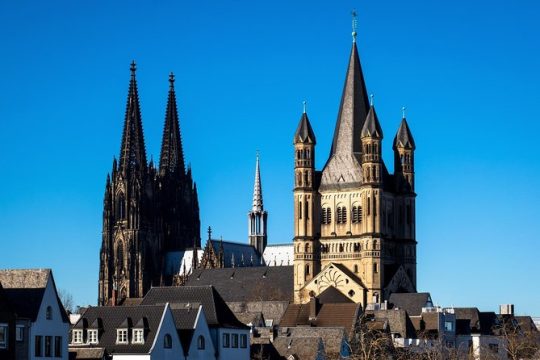
Hanukkah in Germany
Dec 4–12, 2026
New Year’s Eve in Germany
Thu, Dec 31, 2026
Christmas Eve in Germany
Thu, Dec 24, 2026
New Year’s Day long weekend in Germany
Jan 1–3, 2027
Valentine's Day in Germany
Sun, Feb 14, 2027
Easter in Germany
Sun, Mar 28, 2027
Good Friday in Germany
Fri, Mar 26, 2027