Germany attractions
More things to do in the country
 #16
Berlin TV Tower (Berliner Fernsehturm)
The Berlin TV Tower, or Berliner Fernsehturm, is a tall broadcasting tower beside Alexanderplatz in the center of Berlin, Germany, and the tallest structure in the country. Its slender concrete shaft and silver sphere can be seen from almost anywhere in the city, and people come for the view from the top and the revolving restaurant.The tower was built by the East German government during the Cold War, in the heart of what was then East Berlin. It was meant to improve television and radio coverage, but it was also a statement of the country's technical skill and ambition, visible from both sides of the divided city. Its design, a tall needle with a sphere near the top, drew on the space age and the satellites of the era. After German reunification the tower became a symbol not of one side but of Berlin as a whole, and it often appears on postcards and souvenirs.The sphere has a famous quirk. When sunlight strikes its stainless steel panels, the reflection forms the shape of a bright cross, an awkward sight for an officially atheist state. Berliners nicknamed it the Pope's revenge, and the story is still told with a smile by guides and locals alike.Inside the sphere, the viewing level offers a sweeping panorama of the whole city. Look for the Brandenburg Gate, the Reichstag dome, Museum Island and Berlin Cathedral, the River Spree and the green expanse of the Tiergarten, with the suburbs and lakes beyond. One level higher, the restaurant slowly turns so diners can see the whole city during a meal. A guide on a wider walk through Mitte can explain how East and West grew back together around the tower.
More #17
English Garden (Englischer Garten)
The English Garden, or Englischer Garten, is Munich's great public park, stretching from the edge of the old town north along the Isar River. One of the largest city parks in the world, it draws locals and visitors to stroll its meadows and woods, watch surfers ride the Eisbach wave, linger in beer gardens and climb to the Greek-style temple of the Monopteros.The park was created near the end of the 18th century under Elector Karl Theodor as a people's park open to all, at a time when royal gardens were usually closed to commoners. The idea came from Benjamin Thompson, an American-born soldier and scientist in Bavarian service later known as Count Rumford, and the garden designer Friedrich Ludwig von Sckell shaped it in the informal English landscape style, with winding paths, streams, open lawns and clumps of trees instead of formal hedges and geometry. Over time it grew and changed, but it kept that spirit of a natural landscape in the middle of the city.Its landmarks are scattered across the green. The Monopteros, a round temple on an artificial hill, looks out over the rooftops and spires of the old town. The Chinese Tower, a wooden pagoda, rises over one of the city's best-loved beer gardens, where brass bands play and long tables fill with families and friends. The Japanese Teahouse sits on an island in a pond, and the Kleinhesseloher See is a lake with rowboats and another beer garden on its shore. At the southern tip, by the Haus der Kunst, surfers in wetsuits ride a standing wave on the Eisbach stream all year, watched by crowds on the bridge.On fine days the meadows fill with sunbathers, cyclists, joggers and picnickers, while paths farther north lead through woods and fields where the city seems to disappear. A guide can tell how a former hunting ground of the electors became Munich's favorite backyard.
More #18
Hackescher Markt
Hackescher Markt is a lively square in Berlin's Mitte district, set beside the red brick arches of an elevated railway and ringed by cafés, shops and galleries. Just off it lie the Hackesche Höfe, a famous chain of linked Art Nouveau courtyards, and together they make one of the city's most appealing places to browse, eat and soak up the feel of old Berlin.The square dates from the middle of the 18th century, when King Frederick II of Prussia had Berlin's city commandant, Count von Hacke, lay out a market where the old Spandau gate had stood. For decades it held little more than makeshift buildings and wooden stalls. Late in the 19th century the city railway was carried over the old fortress moat on a viaduct of brick arches, and the station that opened here was first named after the nearby stock exchange.The Hackesche Höfe followed at the start of the 20th century. The architect Kurt Berndt planned a run of interlinked courtyards mixing apartments, workshops, offices, shops and banquet halls, while the designer August Endell gave the first courtyard its swirling facades of colored glazed brick. The apartments were unusually modern for their day, with indoor bathrooms, central heating and balconies, and a cinema later moved into a former ballroom.The neighborhood around it was long a center of Jewish life in Berlin, and the gilded dome of the New Synagogue rises nearby on Oranienburger Straße, a building saved from Nazi arsonists by a local police officer before wartime bombing badly damaged it. After the war the area slipped into decline under East Germany, and the courtyards were restored only after reunification, reopening late in the 20th century. Today they hold boutiques, cafés, a cinema and the Chamäleon theater, which carries on the circus traditions of the district.
More #19
Mercedes-Benz Museum
The Mercedes-Benz Museum in Stuttgart tells the story of the automobile through one of its oldest makers, from the very first motorcar to modern racing and design. It stands at the gates of the brand's main factory in the Untertürkheim district, and visitors come for the cars, the striking building and the way the history unfolds level by level.The museum opened early in the 21st century in a building by the Dutch architects UNStudio that has no ordinary floors at all. Its shape is modeled on a DNA spiral, a twisting structure of metal and glass where ramps curl around a tall central atrium. Visitors ride an elevator to the top, to the dawn of motoring, and then work their way back down through more than a century of engineering.Two routes wind down through nine levels. One follows the history of the brand through seven myth rooms, each tied to an era and set against the events of its time. The other passes through five collection rooms that group vehicles by theme, such as travel, freight, rescue work and famous owners. Together they hold about 160 vehicles and more than 1,500 exhibits, and the two paths cross often enough that you can switch between them as you go. The building is meant to be seen from outside as well as within, and its silver curves have become a landmark of the Neckar valley.The most treasured piece is the Benz Patent Motor Car, built by Carl Benz and regarded as the first automobile powered by an internal combustion engine. Elsewhere you meet the Silver Arrows racing cars, a Popemobile used by John Paul II, and stately cars made for Emperor Wilhelm II and Emperor Hirohito. A guide can bring out the engineering and the personalities behind each machine, which helps the details stay with you long after the visit.
More #20
Museum Island (Museumsinsel)
Museum Island is the northern tip of an island in the River Spree in central Berlin, given over almost entirely to five great museums. Travelers go for collections that span thousands of years, from ancient Egypt and the Near East to European paintings and sculpture, all within a short walk of one another.The idea came from the Prussian royal family, who wanted to open their art collections to the public. Karl Friedrich Schinkel's Altes Museum, with its long row of columns facing the Lustgarten, opened first in the early 19th century. Over the following century the Neues Museum, the Alte Nationalgalerie, the Bode Museum and finally the Pergamon Museum followed, as King Frederick William IV's dream of a sanctuary for art and science took shape. Bombing in the Second World War left the buildings badly damaged, and the island spent the Cold War in East Berlin. After reunification, a long restoration began, and the whole ensemble is now a World Heritage Site.Each museum has its own character. The Neues Museum keeps the painted bust of Nefertiti, and David Chipperfield's rebuilding left scars of the war visible beside fresh brick and plaster. The Altes Museum shows Greek and Roman antiquities under a domed rotunda. The Alte Nationalgalerie, raised like a temple on a high base, holds 19th-century painting, with romantic landscapes by Caspar David Friedrich. The Bode Museum, rising from the water at the northern point, is filled with sculpture, Byzantine art and coins. The Pergamon Museum is famous for monumental architecture rebuilt indoors, including the Pergamon Altar and the blue-glazed Ishtar Gate of Babylon.The newer James Simon Gallery serves as a shared entrance, its slim colonnade echoing the older buildings. A guide who knows the collections can tell how each one was gathered and lead you straight to the objects that matter most.
More #21
Nymphenburg Palace (Schloss Nymphenburg)
If you are looking for things to do in Germany we have 17 Tours and Activities to Experience Nymphenburg Palace (Schloss Nymphenburg). Check out our verified traveler reviews and photos of Nymphenburg Palace (Schloss Nymphenburg) tours and other things to do in Germany, and book securely when you find the perfect one. Learn the best ways to see famous Nymphenburg Palace (Schloss Nymphenburg) and explore the most popular things to do in Germany.
More #22
Olympiapark
If you are looking for things to do in Germany we have 11 Tours and Activities to Experience Olympiapark. Check out our verified traveler reviews and photos of Olympiapark tours and other things to do in Germany, and book securely when you find the perfect one. Learn the best ways to see famous Olympiapark and explore the most popular things to do in Germany.
More #23
Panik City
Panik City is an interactive multimedia experience beside the Reeperbahn in Hamburg's St. Pauli district, devoted to Udo Lindenberg, one of Germany's most enduring rock stars. It leads visitors through his life with music, art and virtual reality, and it draws longtime fans as well as travelers curious about German pop culture.Lindenberg grew up in a small Westphalian town, began as a drummer and made his name in Hamburg, helping prove that rock could be sung in German when most local bands still sang in English. With his Panikorchester, his trademark hat and sunglasses and his laconic, half-mumbled delivery, he became a fixture of German music. His songs poked at politics too, and a cheeky number aimed at the East German leader Erich Honecker eventually led to a rare concert in East Berlin during the Cold War. He has lived for years in a grand Hamburg hotel, and the city treats him as one of its own.The tour moves through seven stations that trace his career from small-town beginnings to sold-out stadiums. Touch tables let you browse photos and stories, a virtual reality show plunges you into his world, and a recording studio invites you to step up to the microphone. Along the way you meet his Likörelle, colorful pictures he paints with liqueurs instead of water, and the visit closes with a small glass of egg liqueur.Panik City occupies part of the Klubhaus St. Pauli on Spielbudenplatz, in the heart of the nightlife quarter where the Beatles once sharpened their act in smoky clubs, a fitting home for a rocker who even sang an ode to the Reeperbahn itself. Even visitors who know little of his music leave understanding why several generations of Germans sing along to his songs.
More #24
Schwetzingen Castle (Schloss Schwetzingen)
If you are looking for things to do in Germany we have 4 Tours and Activities to Experience Schwetzingen Castle (Schloss Schwetzingen). Check out our verified traveler reviews and photos of Schwetzingen Castle (Schloss Schwetzingen) tours and other things to do in Germany, and book securely when you find the perfect one. Learn the best ways to see famous Schwetzingen Castle (Schloss Schwetzingen) and explore the most popular things to do in Germany.
More #25
Albrecht Dürer's House
If you are looking for things to do in Germany we have 16 Tours and Activities to Experience Albrecht Dürer's House. Check out our verified traveler reviews and photos of Albrecht Dürer's House tours and other things to do in Germany, and book securely when you find the perfect one. Learn the best ways to see famous Albrecht Dürer's House and explore the most popular things to do in Germany.
More #26
Alexanderplatz
Alexanderplatz is a vast public square at the center of Berlin, overlooked by the soaring TV Tower. Once the heart of East Berlin, it draws visitors for its Cold War architecture, its famous clock and fountain, and the sense of a city that has rebuilt itself many times over.The square began as a cattle market outside the old city gates and was renamed in honor of Tsar Alexander I of Russia after his visit to Berlin in the early 19th century. By the early 20th century it had become a crowded traffic and shopping hub, the setting for Alfred Döblin's novel Berlin Alexanderplatz. Bombing and street fighting in the Second World War left it in ruins. The East German state then cleared the site and rebuilt it as a broad, wind-swept showcase of socialist modernism, with wide pavements, high-rise blocks and the tower rising nearby. Weeks before the Berlin Wall fell, a huge crowd gathered here to demand free speech and reform, in the largest protest the country had seen.Around the edges of the plaza stand landmarks of that era. The House of the Teacher wears a colorful frieze of everyday life wrapped around its upper floors, and the House of Travel nearby carries a copper relief. On the square itself, the Urania World Clock shows the time in cities across the globe beneath a revolving model of the solar system, while the Fountain of International Friendship sprays water over a ring of enamel and copper. Newer department stores and offices fill the gaps, mixing glass with East German concrete.Standing in the open space, you can trace the shift from imperial city to socialist capital to reunited metropolis. A guide can bring out the stories behind the buildings and the protest that helped change Germany.
More #27
Deutsches Museum
The Deutsches Museum in Munich is one of the largest museums of science and technology in the world, set on an island in the Isar river a short walk from the old town. People come to see real aircraft, boats, engines and scientific instruments, and to try hands-on experiments that show how nature and machines work.The museum was the life's work of Oskar von Miller, a Munich engineer who believed ordinary people, not only specialists, should understand the inventions reshaping their lives. In the early 20th century he gathered a circle of engineers and scientists to build a collection, and it grew steadily even as the First World War held up the opening of its permanent home for years. The building was a pioneer in its own right, one of the first in Germany made of reinforced concrete, resting on more than 1,500 piles driven deep into the soft ground of the island.The exhibitions range across almost every branch of science and engineering. Among the highlights are the first diesel engine ever built, a historic tractor, a health exhibition centered on a giant walk-through model of a human heart, and a striking sculpture in the electronics hall known as the Scrap Tornado. Other galleries cover atomic physics, robotics, chemistry, mathematics, farming and food, aviation, seafaring and musical instruments, and many displays invite visitors to press buttons, turn handles and run small experiments of their own.Live demonstrations bring the more dramatic corners of physics to life, while a play area for children aged three to eight lets the youngest visitors build, splash and explore at their own level. Scholars and the curious can also browse a large research library devoted to the history of science and technology. A guide helps make sense of a collection this vast, picking out the objects that changed how people live and work.
More #28
Documentation Center Nazi Party Rally Grounds
If you are looking for things to do in Germany we have 24 Tours and Activities to Experience Documentation Center Nazi Party Rally Grounds. Check out our verified traveler reviews and photos of Documentation Center Nazi Party Rally Grounds tours and other things to do in Germany, and book securely when you find the perfect one. Learn the best ways to see famous Documentation Center Nazi Party Rally Grounds and explore the most popular things to do in Germany.
More #29
East Side Gallery
If you are looking for things to do in Germany we have 48 Tours and Activities to Experience East Side Gallery. Check out our verified traveler reviews and photos of East Side Gallery tours and other things to do in Germany, and book securely when you find the perfect one. Learn the best ways to see famous East Side Gallery and explore the most popular things to do in Germany.
More #30
Gendarmenmarkt
Gendarmenmarkt is a grand square in Berlin's Mitte district, often called the most beautiful square in the city. Two matching domed churches face each other across it, with the Konzerthaus concert hall between them, and people come to admire the architecture, climb for views, catch a concert or simply stroll across the open plaza.The square was laid out at the end of the 17th century as part of the Friedrichstadt, a planned new quarter of Berlin. Its name comes from the Gens d'armes, a cavalry regiment whose stables stood here in the 18th century. Early on, two congregations built churches facing each other: the French Church for the Huguenots, Protestant refugees from France who had found a welcome in Brandenburg-Prussia, and the German Church for a German-speaking congregation.The square's famous look came later. In the late 18th century, Frederick the Great had the architect Carl von Gontard add a tall domed tower beside each church, purely for show, which is why the two buildings look like twins although the churches behind them differ. The word Dom here refers to the domes, not to cathedrals. Between them, Karl Friedrich Schinkel designed a theater in the early 19th century, a masterpiece of Neoclassical architecture that is now the Konzerthaus, home to one of Berlin's leading orchestras, and a statue of the poet Friedrich Schiller stands in front.The Second World War left the square in ruins, and all three buildings were painstakingly rebuilt in the decades that followed. Inside the French Church, a museum tells the story of the Huguenots and their influence on Berlin, while the German Church holds an exhibition on the history of parliamentary democracy in Germany. Standing in the middle of the square, with the domes rising on either side and the columned theater ahead, you see one of the most harmonious ensembles in the city.
More #31
Hauptmarkt
If you are looking for things to do in Germany we have 22 Tours and Activities to Experience Hauptmarkt. Check out our verified traveler reviews and photos of Hauptmarkt tours and other things to do in Germany, and book securely when you find the perfect one. Learn the best ways to see famous Hauptmarkt and explore the most popular things to do in Germany.
More #32
Hofgarten
If you are looking for things to do in Germany we have 17 Tours and Activities to Experience Hofgarten. Check out our verified traveler reviews and photos of Hofgarten tours and other things to do in Germany, and book securely when you find the perfect one. Learn the best ways to see famous Hofgarten and explore the most popular things to do in Germany.
More #33
House of the Arts (Haus der Kunst)
Haus der Kunst is a major contemporary art museum in Munich, set in a long colonnaded building on Prinzregentenstraße at the edge of the English Garden. It has no permanent collection, and visitors come for its changing exhibitions of international modern and contemporary art, and for a building whose own history is as striking as anything on its walls.The museum was built in the years before the Second World War on Hitler's orders, designed by the architect Paul Ludwig Troost as a temple for officially approved German art. Its stark row of stone columns was meant to project power, and it opened with an exhibition celebrating the regime's taste while modern artists were being banned and their works seized. After the war, the American army used part of the building as an officers' club, and lines from a basketball court once marked the floor of the central hall. In the following years the museum set out to rehabilitate the very art the Nazis had rejected, and it famously showed Picasso's Guernica in its halls.Since then, Haus der Kunst has become a stage for leading artists from around the world, with large shows of painting, sculpture, installation, photography and performance. The vast central hall and the high-ceilinged galleries give room for monumental works, and the museum has chosen to keep the building's past in plain view rather than hide it. A permanent display in the archive gallery traces that history through documents and photographs, so a visit can move between the art of the moment and the story of the walls around it.Details reward a closer look. The Golden Bar, with its gilded wall panels showing the wines and spirits of distant lands, survives from the original design, and the terrace looks onto the trees of the English Garden. A guided visit adds context on both the exhibitions and the building's difficult past.
More #34
Imperial Castle of Nuremberg (Kaiserburg)
The Imperial Castle of Nuremberg, the Kaiserburg, is a medieval fortress on a sandstone ridge above Nuremberg's old town in Bavaria. For centuries it hosted the Holy Roman emperors on their travels, and visitors come for its imperial halls, its towers and wells, and wide views over the red roofs of the city.Medieval emperors had no fixed capital and moved between residences, and Nuremberg became one of the most important. Almost every German king and emperor of the High and late Middle Ages stayed here, and a famous imperial decree in the 14th century required each newly elected king to hold his first imperial assembly in the city. Beside the imperial castle stood the castle of the burgraves, who guarded it on the emperor's behalf, a post held for generations by the Hohenzollern family before they rose to rule Brandenburg and later Prussia. The castle was badly damaged in the Second World War and carefully rebuilt.The Palas, the main residential hall, holds the Imperial Hall and the Knights' Hall, with heavy timber ceilings and period furnishings. The Romanesque double chapel is a rare survival, built on two levels so that the emperor could worship above while his household gathered below. A museum covers the castle's history and the imperial era, with displays of medieval weapons and armor.Out in the courtyards, the Deep Well was cut through solid rock to keep the castle supplied during a siege, and a demonstration shows just how far down the water lies. The round Sinwell Tower rewards a climb with a panorama of the old town, and the older Pentagonal Tower and the carved Heathen Tower recall the earliest stages of the fortress. A guide brings the emperors, burgraves and court ceremonies back to life.
More #35
Lenbachhaus
The Lenbachhaus is an art museum in central Munich, housed in a golden-yellow Italianate villa beside Königsplatz. It holds the world's largest collection of paintings by the Blue Rider circle, the group of artists who helped launch modern abstract art, and people come to see those vivid canvases alongside striking contemporary work.The villa was built in the late 19th century for Franz von Lenbach, one of the most celebrated portrait painters of his day, who wanted a home and studio that looked like a Renaissance palazzo. After his death, the city bought the property and opened it as a municipal gallery. Its fortunes changed after the Second World War, when the painter Gabriele Münter gave the museum an extraordinary gift: a large hoard of works by Wassily Kandinsky and other Blue Rider artists that she had hidden from the Nazis in her house in the Bavarian countryside. That donation turned a local gallery into a museum of international importance.The Blue Rider rooms are the heart of a visit. Here you can follow Kandinsky's leap from colorful landscapes toward pure abstraction, see Franz Marc's blue and yellow horses, and compare the bright work of August Macke, Paul Klee, Alexej von Jawlensky, Marianne von Werefkin and Münter herself. Other galleries cover Munich painting of the 19th century, and some of Lenbach's own rooms have been restored with their rich original decoration.A modern extension by the architects Foster and Partners added a gleaming metallic facade and a bright atrium, where a huge sculpture of colored glass and steel rings by Olafur Eliasson hangs overhead. The contemporary collection includes major installations by Joseph Beuys, and the museum also runs a long exhibition space inside a nearby subway station. A guided tour helps link the artists, their friendships and the ideas that bound the group together.
More #36
Munich Old Town Hall (Altes Rathaus)
The Munich Old Town Hall (Altes Rathaus) is the late-Gothic building with a slender spired tower at the eastern end of Marienplatz, the heart of the old city. For centuries the seat of Munich's government, it still hosts formal city occasions, and its tower holds a charming toy museum that delights children and collectors alike.The building is first recorded in the early 14th century, and its great hall was added at the end of that century. In the late 15th century the master builder Jörg von Halsbach, who also built the Frauenkirche, remodeled it in the late Gothic style that still defines it. The tower began life as the Talburg Gate, part of Munich's first city wall, and passages cut through its base still carry traffic and people between Marienplatz and the streets beyond. The town council met here until the late 19th century, when it moved into the grand New Town Hall on the same square.Inside, the great hall is the building's treasure, with a wooden barrel-vaulted ceiling and copies of the famous Morris dancers carved by Erasmus Grasser, lively figures caught mid-leap. The hall also has a darker past: in the run-up to the Second World War, Joseph Goebbels gave a speech here that launched the Kristallnacht pogrom against Germany's Jews. Bombing later left the building badly damaged, and it was rebuilt in its late-Gothic form, the tower following in the later 20th century.The rebuilt tower became home to the Toy Museum, founded by the Czech-born cartoonist Ivan Steiger, who filled its narrow floors with pieces from his own collection, from tin toys and model trains to dolls and teddy bears. Just outside stands a bronze statue of Shakespeare's Juliet, a gift from Verona, Munich's twin city, adding a romantic touch at the edge of the busy square.
More #37
New Pinakothek (Neue Pinakothek)
If you are looking for things to do in Germany we have 5 Tours and Activities to Experience New Pinakothek (Neue Pinakothek). Check out our verified traveler reviews and photos of New Pinakothek (Neue Pinakothek) tours and other things to do in Germany, and book securely when you find the perfect one. Learn the best ways to see famous New Pinakothek (Neue Pinakothek) and explore the most popular things to do in Germany.
More #38
Old Pinakothek (Alte Pinakothek)
If you are looking for things to do in Germany we have 5 Tours and Activities to Experience Old Pinakothek (Alte Pinakothek). Check out our verified traveler reviews and photos of Old Pinakothek (Alte Pinakothek) tours and other things to do in Germany, and book securely when you find the perfect one. Learn the best ways to see famous Old Pinakothek (Alte Pinakothek) and explore the most popular things to do in Germany.
More #39
Palace of Tears (Tränenpalast)
If you are looking for things to do in Germany we have 19 Tours and Activities to Experience Palace of Tears (Tränenpalast). Check out our verified traveler reviews and photos of Palace of Tears (Tränenpalast) tours and other things to do in Germany, and book securely when you find the perfect one. Learn the best ways to see famous Palace of Tears (Tränenpalast) and explore the most popular things to do in Germany.
More #40
Schöner Brunnen
If you are looking for things to do in Germany we have 13 Tours and Activities to Experience Schöner Brunnen. Check out our verified traveler reviews and photos of Schöner Brunnen tours and other things to do in Germany, and book securely when you find the perfect one. Learn the best ways to see famous Schöner Brunnen and explore the most popular things to do in Germany.
More #41
SEA LIFE® Munich
If you are looking for things to do in Germany we have 5 Tours and Activities to Experience SEA LIFE® Munich. Check out our verified traveler reviews and photos of SEA LIFE® Munich tours and other things to do in Germany, and book securely when you find the perfect one. Learn the best ways to see famous SEA LIFE® Munich and explore the most popular things to do in Germany.
More #42
Amalienburg
The Amalienburg is a small Rococo hunting lodge in the gardens of Nymphenburg Palace in Munich, and it is often counted among the finest Rococo interiors in Europe. Visitors come for its round Hall of Mirrors, a dazzle of silver and pale blue, and for the playful rooms built around a princely passion for the hunt.The court architect François de Cuvilliés designed the lodge in the 18th century for Elector Karl Albrecht of Bavaria, who later became Holy Roman Emperor, and it was named for his wife, Maria Amalia of Austria, a keen huntress. Pheasants were driven toward the building, and the electress and her guests could shoot from a latticed platform hidden on the roof. It had no farm buildings of its own, since the main palace supplied its needs.The Hall of Mirrors sits at the center, a circular room where tall mirrors alternate with windows onto the park, all framed by silver stucco on a pale blue ground, the colors of Bavaria. Johann Baptist Zimmermann and the carver Joachim Dietrich filled it with garlands, musical instruments, birds and hunting motifs that seem to tumble across the walls and ceiling. Outside, Zimmermann's stucco Diana, goddess of the hunt, presides over the eastern front.The smaller rooms carry the theme further. Beside the Blue Cabinet, little niches once housed the hunting dogs, and a gun room kept the weapons close at hand, while the electress's resting room and the hunting and pheasant rooms lead around to the kitchen. There, Chinese-style flowers and birds on blue-and-white Delft tiles cover the walls, though the tiles were reportedly set in the wrong order, and an early stove is among the first designs to fully enclose its fire. A guide brings out the court life behind each room.
More #43
Berlin Hauptbahnhof
Berlin Hauptbahnhof is the German capital's main railway station, a vast hall of glass and steel where long-distance, regional and city trains meet on two crossing levels. Even travelers not catching a train come to see its striking architecture, a symbol of reunified Berlin, set beside the Spree a short way from the government quarter.The site has a long railway history. In the 19th century the grand Lehrter Bahnhof stood here, a terminus for trains to Hamburg and Scandinavia so lavish it was nicknamed a palace among stations, with a smaller station for the city's elevated railway beside it. War damage and the division of Berlin left the area stranded on the edge of West Berlin, and the old terminus was torn down after the Second World War. After reunification, the federal government chose this spot for a new central station that would finally link the city's lines from all four directions.The Hamburg firm of Gerkan, Marg and Partners, led by Meinhard von Gerkan, won the design competition, and building work took most of a decade, including tunnels dug beneath the Tiergarten and a temporary diversion of the river. The result opened early in the 21st century. East-west trains run high up on bridges under a curved glass roof more than 300 meters long, while north-south trains stop deep underground, and daylight falls through the open levels between them. Two office blocks arch over the main hall like bridges, giving the building its unmistakable profile.Part of the glass roof doubles as a solar power plant, and a sculpture called Rolling Horse by Jürgen Goertz, placed on one of the terraces, nods to the earlier stations on the site. From the forecourt you look south across the river toward the government quarter and the Chancellery. A guide can explain how the station stitched together a city once split in two, a story written into its crossing tracks.
More #44
Elbphilharmonie
The Elbphilharmonie is Hamburg's great concert hall, rising above the River Elbe at the tip of the HafenCity district in northern Germany. A shimmering glass structure sits on top of an old brick warehouse, and visitors come for the building's bold design, its public viewing deck and some of the finest acoustics in Europe.The base of the building is the Kaispeicher A, a massive brick warehouse from the mid 20th century once used to store cocoa, tea and tobacco. The Swiss architects Herzog and de Meuron kept its shell and placed a new glass building on top, with a roof that rises and falls in curves like waves or tents. Construction took far longer than planned and became the subject of fierce public debate, but when the hall opened, it quickly became a symbol of the city. Hamburg residents often call it the Elphi.Between the old warehouse and the glass top lies the Plaza, a public terrace that wraps around the whole building and looks out over the harbor cranes, the river and the rooftops of the old town. A long curved escalator carries visitors up through the warehouse to reach it. Above the Plaza sits the Grand Hall, built in a vineyard style, with seats rising in terraces around the stage so no one sits far from the musicians. Its walls are lined with thousands of gypsum panels, each with a unique pattern of small hollows that scatter the sound evenly. A smaller Recital Hall serves chamber music, and a large organ fills one wall of the main space. The building also holds a hotel and apartments.The curved glass panels outside reflect the sky and water, changing color through the day. A guide shares how the building was made and how the halls are tuned for sound.
More #45
Jewish Museum (Jüdisches Museum)
The Jewish Museum Munich is a city-run museum devoted to Jewish history and life in Munich, set on Sankt-Jakobs-Platz in the heart of the old town. Part of a Jewish center beside the city's main synagogue, it draws visitors interested in faith, culture and memory, with a permanent exhibition and changing shows on Jewish life past and present.The museum belongs to a group of buildings that returned Jewish life to the center of Munich, alongside the Ohel Jakob synagogue and the community center. The city built it as a freestanding cube with a transparent ground-floor lobby, a design that lets passersby see inside and signals openness to the city around it. Its story reaches across centuries, through persecution under the Nazis to the revival of Jewish life after the Second World War.The permanent exhibition on the lower level introduces Jewish religion, festivals and rites of passage, from birth and coming of age to marriage and mourning, through ritual objects and documents. It reveals both the rhythm of the Jewish year and the ways in which individual lives were bound up with the city. The upper floors hold changing exhibitions on a wide range of themes, along with a learning center and a library.Memory runs through the building. The museum includes a memorial to the victims of the attack on the Israeli team at the Munich Olympic Games, honoring athletes and coaches whose deaths shocked the world. Beyond the galleries, the museum keeps an archive and an online collection of objects, so the work of recording Jewish life in Munich reaches far past its walls. Standing on an open square in the old town rather than on the margins, the museum places this history at the center of the city's life, where locals and visitors cross paths every day.
MoreDiscover Germany

Luxury & Special Occasions
Prices from $3
Tours & Sightseeing
Prices from $3
Cultural & Theme Tours
Prices from $3
Walking & Biking Tours
Prices from $3
Private & Custom Tours
Prices from $3
Food, Wine & Nightlife
Prices from $7
Day Trips & Excursions
Prices from $3
Holiday & Seasonal Tours
Prices from $3
Outdoor Activities
Prices from $3
Cruises, Sailing & Water Tours
Prices from $22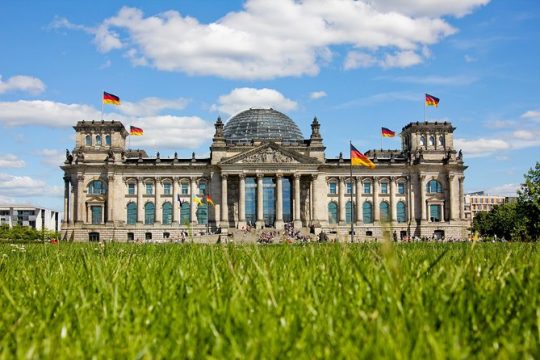
Shore Excursions
Prices from $26
Sightseeing Tickets & Passes
Prices from $5
Marienplatz
Prices from $3
Cologne Cathedral (Kölner Dom)
Prices from $3
Reichstag
Prices from $3
Odeonsplatz
Prices from $3
Brandenburg Gate (Brandenburger Tor)
Prices from $3
Memorial to the Murdered Jews of Europe (Holocaust Memorial)
Prices from $3
Dachau Concentration Camp Memorial Site
Prices from $44
Führerbunker
Prices from $4
Soviet War Memorial Tiergarten
Prices from $4
Topography of Terror
Prices from $4
Victuals Market (Viktualienmarkt)
Prices from $3
Cathedral of Our Blessed Lady (Frauenkirche)
Prices from $3


Germany Event Calendar
View all events
Christmas activities in Germany
Fri, Dec 25, 2026
Hanukkah in Germany
Dec 4–12, 2026
New Year’s Eve in Germany
Thu, Dec 31, 2026
Christmas Eve in Germany
Thu, Dec 24, 2026
New Year’s Day long weekend in Germany
Jan 1–3, 2027
Valentine's Day in Germany
Sun, Feb 14, 2027
Easter in Germany
Sun, Mar 28, 2027
Good Friday in Germany
Fri, Mar 26, 2027