


Asia attractions
More things to do across the continent
 #106
Marble Mountains
You can explore on your own by following the stone stairways between the caves, pagodas and viewpoints. A guide helps explain the Buddhist and Hindu shrines in Huyen Khong cave and the stories behind the carvings. Half day tours often add Linh Ung Pagoda at the foot of the hills and the nearby stone carving village, and some link the stop with Hoi An or Da Nang beaches. The Marble Mountains are five limestone and marble hills, and Water Mountain is the one most visitors climb. Allow at least two hours, longer if you explore several caves and pagodas. Dress modestly, and remove shoes and hats before entering pagodas and cave shrines. The routes involve many stone steps, so wear sturdy shoes, and bring a hat and water. An elevator takes you part of the way up Water Mountain, but the caves and viewpoints still require stairs.
More #107
Marina Bay
If you are looking for things to do in Asia we have 3 Tours and Activities to Experience Marina Bay. Check out our verified traveler reviews and photos of Marina Bay tours and other things to do in Asia, and book securely when you find the perfect one. Learn the best ways to see famous Marina Bay and explore the most popular things to do in Asia.
More #108
Merlion Park
Most people visit on their own, but the park works well as one stop on a guided walking tour of the Marina Bay and Singapore River area, where a guide adds the story behind the statue and its move to the bay. A bumboat ride on the river or an evening cruise gives a different view of the skyline, and many itineraries link the park with the Esplanade and nearby heritage buildings. The Merlion statue stands about 8.6 meters tall and spouts water from its mouth, and a smaller Merlion cub stands close by. Most visitors need under an hour here, mainly for photos and a walk along the water. The park is open-air with limited shade, so bring sun protection and water for the hotter hours. It sits beside The Fullerton Hotel on the Marina Bay waterfront, which makes it easy to pair with a longer walk around the bay.
More #109
Miyajima Island (Itsukushima)
If you are looking for things to do in Asia we have 3 Tours and Activities to Experience Miyajima Island (Itsukushima). Check out our verified traveler reviews and photos of Miyajima Island (Itsukushima) tours and other things to do in Asia, and book securely when you find the perfect one. Learn the best ways to see famous Miyajima Island (Itsukushima) and explore the most popular things to do in Asia.
More #110
Mt. Fuji (Fuji-san)
Mount Fuji, or Fuji-san, is Japan's highest mountain, an active volcano with a near-perfect cone rising on the island of Honshu southwest of Tokyo, on the border of Shizuoka and Yamanashi. Climbers come to hike to the summit for sunrise, while others admire the peak from its lakes and foothills and visit the shrines at its base.Fuji rises nearly 3,800 meters above sea level, and its symmetrical shape is the work of repeated eruptions over many thousands of years. It last erupted in the early 18th century, spreading ash as far as Edo, the old name for Tokyo, and it is still classed as active. The mountain sits within Fuji-Hakone-Izu National Park, and on its northern side five lakes formed by ancient lava flows mirror the cone on calm days.For centuries Fuji has been a sacred mountain. Pilgrims climbed it as an act of worship, and Sengen shrines dedicated to the mountain's goddess ring its base, the most important being the grand shrine at Fujinomiya, whose grounds include a spring-fed pond of clear meltwater. The mountain also inspired generations of artists, above all Katsushika Hokusai, whose woodblock prints showed it from dozens of angles. This blend of worship and art is why UNESCO listed Fuji as a cultural World Heritage Site rather than a natural one.Above the tree line the landscape turns stark, with slopes of dark cinder and ash, zigzag paths and mountain huts clinging to the mountainside. The sunrise seen from the summit, high above a sea of clouds, has a name of its own, goraiko, and some climbers then walk the circuit around the crater rim. A guide can share the mountain's legends and explain the volcanic forces that built it.
More #111
Mt. Fuji 5th Station
If you are looking for things to do in Asia we have 4 Tours and Activities to Experience Mt. Fuji 5th Station. Check out our verified traveler reviews and photos of Mt. Fuji 5th Station tours and other things to do in Asia, and book securely when you find the perfect one. Learn the best ways to see famous Mt. Fuji 5th Station and explore the most popular things to do in Asia.
More #112
Na Muang Waterfall
If you are looking for things to do in Asia we have 2 Tours and Activities to Experience Na Muang Waterfall. Check out our verified traveler reviews and photos of Na Muang Waterfall tours and other things to do in Asia, and book securely when you find the perfect one. Learn the best ways to see famous Na Muang Waterfall and explore the most popular things to do in Asia.
More #113
Namdaemun Market
If you are looking for things to do in Asia we have 1 Tours and Activities to Experience Namdaemun Market. Check out our verified traveler reviews and photos of Namdaemun Market tours and other things to do in Asia, and book securely when you find the perfect one. Learn the best ways to see famous Namdaemun Market and explore the most popular things to do in Asia.
More #114
Namsan Tower (N Seoul Tower)
If you are looking for things to do in Asia we have 3 Tours and Activities to Experience Namsan Tower (N Seoul Tower). Check out our verified traveler reviews and photos of Namsan Tower (N Seoul Tower) tours and other things to do in Asia, and book securely when you find the perfect one. Learn the best ways to see famous Namsan Tower (N Seoul Tower) and explore the most popular things to do in Asia.
More #115
Namsangol Hanok Village
If you are looking for things to do in Asia we have 1 Tours and Activities to Experience Namsangol Hanok Village. Check out our verified traveler reviews and photos of Namsangol Hanok Village tours and other things to do in Asia, and book securely when you find the perfect one. Learn the best ways to see famous Namsangol Hanok Village and explore the most popular things to do in Asia.
More #116
National Museum of Singapore
The National Museum of Singapore is the country's oldest museum, set on Stamford Road in the Civic District beside Fort Canning Park. It covers Singapore's history, art and culture, and visitors come to learn how a small island became a modern city-state.Its story starts with books. The museum began as part of a library in the colonial era, grew into the Raffles Library and Museum, and moved to Stamford Road in the 19th century. The grand neoclassical building, now a national monument, is crowned by a dome covered in about 3,000 zinc tiles, with stained glass panels that color the light in the rotunda.A later redevelopment added modern galleries behind the old building, linked by glass and steel, so a visit moves easily between heritage architecture and contemporary design. The Singapore History Gallery follows the island from its early days as a trading port through colonial rule, the Japanese occupation in the Second World War and the road to independence, told through objects, film and personal accounts. During the occupation the island was renamed Syonan-to, and the gallery does not shy away from the hardship of those years. Other galleries explore food, fashion, film and daily life.Among its best-known treasures is the Singapore Stone, a fragment of a large inscribed boulder that once stood at the mouth of the Singapore River, its script still not fully deciphered. The boulder was blown apart in the 19th century to widen the river mouth, and only a few fragments survived. Other pieces bring the story closer to everyday life, such as airline seats and an old departures board that recall how people here traveled and lived. The museum also stages changing exhibitions and festivals, and a heritage guide can link the galleries to the colonial buildings outside.
More #117
Ninh Binh
Ninh Binh is a region of northern Vietnam, south of Hanoi, known for limestone peaks that rise sheer from rice paddies and slow, winding rivers. Travelers come to be rowed through flooded caves, climb to hilltop viewpoints and explore temples from the time when this was the seat of an early Vietnamese kingdom.In the 10th century Hoa Lu, guarded by a ring of mountains, was the capital of Dai Co Viet, one of the first independent Vietnamese states, under the Dinh and Early Le dynasties. The court later moved north to the site of present-day Hanoi, but temples honoring the Dinh and Le kings still stand among the peaks. The surrounding Trang An landscape is listed by UNESCO for both its natural beauty and its archaeology, since its caves hold traces of prehistoric people who lived among these hills.The classic outing is a slow boat ride, with local rowers, some of them pulling the oars with their feet, guiding small sampans along rivers and through low caves where you duck beneath dripping stone. Tam Coc, whose name means three caves, winds past fields of rice that turn from green to gold before harvest, while Trang An's longer routes link caves with riverside temples, and its cliffs served as a backdrop for the film Kong: Skull Island. At Mua Cave, a long stone staircase climbs to a summit crowned by a dragon sculpture and wide views over the valley. The vast Bai Dinh Pagoda and the cliffside Bich Dong Pagoda add a spiritual dimension.Beyond the main boat landings, quiet lanes thread between village homes, lotus ponds and farmland, and the Van Long wetland reserve shelters rare Delacour's langurs along with herons and other water birds. Local cooking adds another reason to linger, with mountain goat a regional specialty. A guide can share the legends and history tied to each cave and temple.
More #118
Owakudani
If you are looking for things to do in Asia we have 1 Tours and Activities to Experience Owakudani. Check out our verified traveler reviews and photos of Owakudani tours and other things to do in Asia, and book securely when you find the perfect one. Learn the best ways to see famous Owakudani and explore the most popular things to do in Asia.
More #119
Pak Klong Talad Flower Market (Pak Khlong Talat)
Walk the market on your own at any hour, or go in the hours before dawn when boats and trucks bring in the flowers and the trade is at its busiest. A guided walking tour can pair the market with nearby riverside sights such as Wat Pho and Wat Arun, and adds context on where the flowers come from and how they are used. This is a working wholesale market for flowers, fruit and vegetables, so expect narrow aisles, carts and a lot of activity. The market is open around the clock, and the busiest trade happens before dawn. Wear comfortable closed shoes, since the aisles are busy with carts, baskets and deliveries. Garland makers buy jasmine and marigold blossoms here, so you will see flowers sold in large bundles as well as small ones. Yodpiman River Walk sits directly behind the market if you want to continue by the river afterward.
More #120
Parliament House
If you are looking for things to do in Asia we have 4 Tours and Activities to Experience Parliament House. Check out our verified traveler reviews and photos of Parliament House tours and other things to do in Asia, and book securely when you find the perfect one. Learn the best ways to see famous Parliament House and explore the most popular things to do in Asia.
More #121
Phang Nga Bay (Ao Phang Nga)
Phang Nga Bay is a broad, sheltered bay northeast of Phuket where dozens of sheer limestone islands rise straight out of calm green water. Much of it is protected as a national park, and people come by boat to see its towering karst cliffs, sea caves, hidden lagoons and mangrove forests.The islands are the worn remains of an ancient limestone reef, shaped over a very long time by rain, rising seas and waves into steep towers, arches and hollow shells of rock. Some of the caves hold prehistoric paintings of people and animals, and the bay's sheltered waters have long supported fishing communities. The best known is Ko Panyi, a village built on stilts against a huge rock, founded by Muslim fishing families from Java who settled here generations ago, and famous for a floating soccer field made by local boys.The bay's most photographed sight is Khao Phing Kan, better known as James Bond Island since it appeared in The Man with the Golden Gun, and just offshore the slender pillar of Ko Tapu stands alone in the water like a nail. Elsewhere, boats slip past mangrove channels where monkeys and kingfishers live, and paddlers in sea canoes duck through low tunnels in the cliffs into hongs, roofless lagoons hidden inside the islands and ringed by jungle-covered walls.Light changes the scene through the day, with morning haze softening the outlines of the islands and the low afternoon sun picking out the streaks of orange and gray on the cliffs. Many trips also pass Tham Lot, a cave arch that boats can glide right through, and the bay's quieter corners still feel remote despite the busy boat traffic. A guide or boat crew explains how the islands formed, what the old cave paintings show and how the village families make a living from the sea.
More #122
Pontocho Alley
You can walk the alley on your own in the early evening and choose a restaurant or bar as you go. A guided evening food walk is a good way to reach places that are hard to enter without a booking, and a local guide can explain the geisha district's customs. Many walks link Pontocho with nearby Gion and Kiyamachi. In warm months, riverside terrace dinners are best reserved ahead. The alley is about 500 meters long and only 3 to 4 meters wide, so leave large luggage at your hotel or in a station locker. Most restaurants and bars open in the evening, so daytime visits are quiet and many places are closed. Photographing geisha or maiko in the district is considered very rude, so keep your camera down when you see one. About half of the restaurants take walk-ins, while others work by reservation or introduction. The buildings are old and wooden with steep stairs and small restrooms, so step-free dining is limited.
More #123
Presidential Palace (Rashtrapati Bhavan)
Rashtrapati Bhavan is the official residence of the President of India, a vast sandstone palace on Raisina Hill at the head of New Delhi's ceremonial avenue. Built as the home of the British viceroys, it is among the largest residences of any head of state, and visitors come for its grand state rooms, its museum and its famous formal gardens.The palace was born of a political decision. Early in the 20th century the British moved the capital of India from Calcutta to Delhi, and the architect Edwin Lutyens was asked to design a seat of power to crown the new city. Known as Viceroy's House, it took many years to build and was completed between the two World Wars. C. Rajagopalachari, the last Governor-General, became its first Indian occupant, and when India became a republic the building took its present name as the home of the President.Lutyens blended European classical design with Indian forms. The great dome echoes the ancient Buddhist stupa at Sanchi, while carved stone screens, small domed pavilions and water features draw on Mughal and Rajput traditions, and red and cream sandstone gives the walls their warm color. Inside, the grand domed hall at the heart of the building hosts the ceremonies where national honors are presented, another state room is known for its painted ceiling, and the museum shows gifts to presidents and the story of the estate.The gardens behind the palace, laid out in the Mughal style with water channels and fountains, are among the most celebrated in India, planted with roses, tulips and seasonal flowers. In front, the Jaipur Column rises from the forecourt, and the view east along the avenue toward India Gate shows how the whole capital was planned around this hill. A guide can explain the symbolism Lutyens wove into the stonework, from carved bells to elephants.
More #124
Puerto Princesa Subterranean River National Park
If you are looking for things to do in Asia we have 2 Tours and Activities to Experience Puerto Princesa Subterranean River National Park. Check out our verified traveler reviews and photos of Puerto Princesa Subterranean River National Park tours and other things to do in Asia, and book securely when you find the perfect one. Learn the best ways to see famous Puerto Princesa Subterranean River National Park and explore the most popular things to do in Asia.
More #125
Qutub Minar
Qutub Minar is a soaring brick-and-sandstone minaret in Mehrauli, South Delhi, and the centerpiece of a UNESCO World Heritage complex. Visitors come to admire the tower's fluted shaft and carved inscriptions, and to explore the mosque ruins, the Iron Pillar and the tombs and gateways around it.Construction began under Qutb-ud-din Aibak, founder of the Delhi Sultanate, at the end of the 12th century, and his successor Iltutmish completed more stories. Raised as a victory tower as well as a minaret, it announced the arrival of a new power in northern India. In the centuries that followed, later rulers repaired damage from lightning and an earthquake, and their work left its mark on the upper levels. The finished tower rises more than 70 meters, tapering from a broad base to a slender top.Up close, the craftsmanship holds the eye. The fluted shaft catches the light along its ribs, and balconies circle the tower on brackets carved in a stalactite pattern. Bands of inscriptions wrap around the stone in flowing calligraphy, turning the surface into a kind of carved text. Nearby on the ground sits Smith's Folly, a cupola that once crowned the tower before it was taken down, an odd footnote to the monument's long life.The rest of the complex is just as rewarding. The Quwwat-ul-Islam Mosque, among the earliest mosques in India, stands in ruins beside the tower, its colonnades built from the carved columns of older temples. In its courtyard rises the Iron Pillar, a metal column that has resisted rust for many centuries and still puzzles visitors. The Alai Darwaza, a graceful domed gateway in red sandstone and white marble, and a cluster of tombs complete the scene. A guide can untangle the layers of reuse, conquest and craftsmanship written into the stones.
More #126
Red Fort (Lal Qila)
The Red Fort, or Lal Qila, is the great Mughal palace fortress in Old Delhi, India, built from red sandstone at the edge of the Chandni Chowk district. It was home to the Mughal emperors for generations and is now a UNESCO World Heritage Site, and people come for its massive walls, marble halls and national history.The emperor Shah Jahan, who also built the Taj Mahal, ordered the fort in the 17th century as the palace of his new capital, Shahjahanabad. It took about a decade to complete. For roughly two centuries it was the seat of Mughal power, filled with courtiers, gardens and treasures, including the famous Peacock Throne, which was carried off by a Persian invader. After the uprising against British rule in the 19th century, the last Mughal emperor was tried here and exiled, and the British turned much of the palace into barracks. Since India's independence, the Prime Minister has raised the national flag over the main gate each year on Independence Day.The walls stretch along the old riverbank, broken by the Lahori and Delhi Gates. Inside, the Diwan-i-Am, the hall of public audience, is a long arcade of red stone columns where the emperor heard ordinary petitions from a marble throne canopy inlaid with stone flowers and birds. The Diwan-i-Khas, the hall of private audience, is built of white marble with gilded ceilings and delicate inlay. Nearby stand the Rang Mahal, once the palace of the royal women, and the small, white Pearl Mosque. A channel of water once flowed through the pavilions to cool them, and traces of it remain in the marble floors.Gardens, pavilions and old British barracks fill the spaces between. A guide helps you picture the court in its full glory and read the details carved into the stone.
More #127
Sabang Beach
If you are looking for things to do in Asia we have 1 Tours and Activities to Experience Sabang Beach. Check out our verified traveler reviews and photos of Sabang Beach tours and other things to do in Asia, and book securely when you find the perfect one. Learn the best ways to see famous Sabang Beach and explore the most popular things to do in Asia.
More #128
Saigon Notre Dame Cathedral (Cathédrale Notre-Dame de Saïgon)
If you are looking for things to do in Asia we have 3 Tours and Activities to Experience Saigon Notre Dame Cathedral (Cathédrale Notre-Dame de Saïgon). Check out our verified traveler reviews and photos of Saigon Notre Dame Cathedral (Cathédrale Notre-Dame de Saïgon) tours and other things to do in Asia, and book securely when you find the perfect one. Learn the best ways to see famous Saigon Notre Dame Cathedral (Cathédrale Notre-Dame de Saïgon) and explore the most popular things to do in Asia.
More #129
Saiko Iyashi-no-Sato Nenba
If you are looking for things to do in Asia we have 1 Tours and Activities to Experience Saiko Iyashi-no-Sato Nenba. Check out our verified traveler reviews and photos of Saiko Iyashi-no-Sato Nenba tours and other things to do in Asia, and book securely when you find the perfect one. Learn the best ways to see famous Saiko Iyashi-no-Sato Nenba and explore the most popular things to do in Asia.
More #130
Sannenzaka Ninenzaka
If you are looking for things to do in Asia we have 2 Tours and Activities to Experience Sannenzaka Ninenzaka. Check out our verified traveler reviews and photos of Sannenzaka Ninenzaka tours and other things to do in Asia, and book securely when you find the perfect one. Learn the best ways to see famous Sannenzaka Ninenzaka and explore the most popular things to do in Asia.
More #131
Sarangkot
Sarangkot is a hill on the western edge of Pokhara, Nepal, that rises to about 1,600 meters and looks down on the city and Phewa Lake. People climb it for one of the widest Himalayan panoramas within easy reach of town, with Dhaulagiri, Annapurna and Manaslu spread across the northern skyline, and to watch paragliders lift off from its slopes.Beyond its role as a viewpoint, Sarangkot is a ward of Pokhara in Kaski District, and its slopes are home to villagers as well as a handful of guesthouses. A view tower crowns the summit, and it is where most people gather to watch the first light reach the snow. On a clear dawn the high peaks catch the sun one after another while the valley and the lake below are still in shadow.The view works in two directions. Face north and the Annapurna range fills the horizon, with Dhaulagiri off to one side and Manaslu far to the other. Turn around and Pokhara opens up below, its rooftops spreading out from the shore of Phewa Lake. Few places let you take in a city and the mountains that frame it from one spot, and that pairing is the real reward of the climb.Sarangkot is just as well known for what happens in the air. The hill is regarded as one of the finest paragliding spots anywhere, and on good days bright canopies drift out from its slopes and circle slowly over the valley toward the lake. Watching them launch, one after another, is a pleasure even for those who stay on solid ground. A guide adds the stories of the community on the hill and the mountains behind it, turning a viewpoint into a clearer sense of where you are.
More #132
Secret Lagoon
If you are looking for things to do in Asia we have 1 Tours and Activities to Experience Secret Lagoon. Check out our verified traveler reviews and photos of Secret Lagoon tours and other things to do in Asia, and book securely when you find the perfect one. Learn the best ways to see famous Secret Lagoon and explore the most popular things to do in Asia.
More #133
Seoul City Hall
Seoul City Hall is the seat of the Seoul Metropolitan Government, facing Seoul Plaza in the center of the South Korean capital. It is really two buildings, an old colonial-era hall and a striking glass structure that curves above it, and visitors come for the architecture, a huge indoor vertical garden and the lively plaza in front.The older building was put up during Japanese rule in what is called the Imperial Crown style, and for decades it served as the city's administrative center. When a new hall was needed, the old one was kept rather than torn down and turned into the Seoul Metropolitan Library, so its stone front still faces the plaza. Its survival reflects a wider debate in Korea about what to do with buildings from the colonial period.Behind it rises the new City Hall, designed by architect Yoo Kerl. Its glass front leans forward in a great wave, a shape inspired by the deep eaves of traditional Korean roofs. The building was planned with the environment in mind, using a double-skin facade and drawing energy from the sun and the ground. Inside, the Green Wall climbs several stories, a vertical garden of tens of thousands of plants that brings a burst of green into the lobby.Art has a place here too. A large installation of balloon-like forms hangs in the building as a tribute to Seoul's long history as a capital, a role the city has held for more than six centuries. Outside, Seoul Plaza spreads its lawn between the old hall and the new, serving as the city's main stage for festivals, concerts and public gatherings, with an ice rink in some winters. A guide can explain how the two buildings tell the story of modern Seoul, from colonial rule to a confident, green-minded city.
More #134
Seven Commandos Beach
If you are looking for things to do in Asia we have 1 Tours and Activities to Experience Seven Commandos Beach. Check out our verified traveler reviews and photos of Seven Commandos Beach tours and other things to do in Asia, and book securely when you find the perfect one. Learn the best ways to see famous Seven Commandos Beach and explore the most popular things to do in Asia.
More #135
Shoren-in Temple
Shoren-in is a Tendai Buddhist temple in Kyoto's Higashiyama ward, one of the monzeki temples whose head priests traditionally came from the imperial family. Visitors come for its quiet tatami halls, painted sliding doors and gardens, and for a gentler mood than many of the grand temples nearby.The temple began as a small priests' residence on Mount Hiei, the mountain home of the Tendai school, and later moved to its present site on higher ground in the city. Its imperial ties shaped its character, and after a great fire in Kyoto it served as a temporary palace for an empress, which is why it is also called the Awata Palace. The refined rooms still feel more like a noble residence than a monastery.The gardens are the heart of a visit. A pond-stroll garden attributed to the artist Soami curves around a pond framed by rocks and moss, while a second garden linked to the designer Kobori Enshu rises up a slope of clipped azaleas. Inside, sliding doors painted with blue lotus flowers give the rooms a cool, dreamlike feel, and the open verandas invite you to sit and take in the view. A small bamboo grove and mossy paths add to the feeling of a private retreat within the city.Outside the temple on its west side stand four huge camphor trees, said to be about 800 years old and protected as a natural monument, their twisting limbs spreading over the wall. The temple also owns a Heian-period scroll of the Blue Fudo, a fierce guardian deity, which is a National Treasure, and shows a replica to visitors. A guide can explain the Tendai beliefs behind the images and how a temple led by princes differed from its neighbors.
MoreDiscover Asia
Tours & Sightseeing
Prices from $5
Luxury & Special Occasions
Prices from $5
Cultural & Theme Tours
Prices from $5
Walking & Biking Tours
Prices from $5
Private & Custom Tours
Prices from $5
Day Trips & Excursions
Prices from $5
Food, Wine & Nightlife
Prices from $14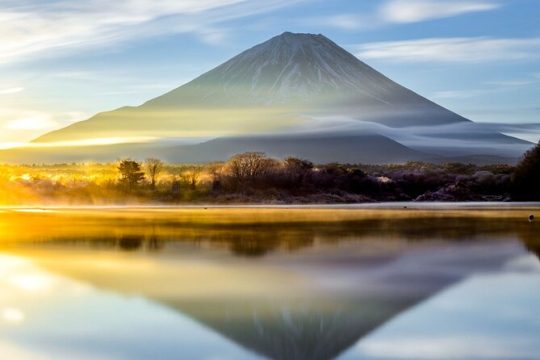
Shore Excursions
Prices from $5
Outdoor Activities
Prices from $7
Cruises, Sailing & Water Tours
Prices from $7
Water Sports
Prices from $12
Shows, Concerts & Sports
Prices from $9


Tegenungan Waterfall (Air Terjun Tegenungan)
Prices from $8
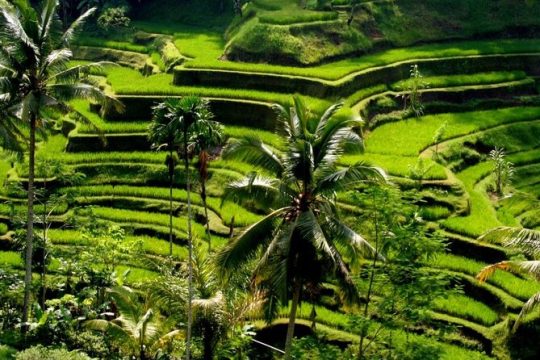
Tegalalang Rice Terrace (Sawah Terasering Tegalalang)
Prices from $8
Nishiki Market
Prices from $53
Uluwatu Temple (Pura Luhur Uluwatu)
Prices from $11
Bangkok Chinatown (Yaowarat)
Prices from $36
Cu Chi Tunnels
Prices from $14
Gion Corner
Prices from $53
Kamogawa River (Kamo River)
Prices from $53
Karangasem
Prices from $12
Mt. Batur (Gunung Batur)
Prices from $8
My Son Sanctuary
Prices from $19
Padangbai (Padang Bai)
Prices from $30
Hanukkah in Asia
Dec 4–12, 2026
New Year’s Eve in Asia
Thu, Dec 31, 2026
New Year’s Day long weekend in Asia
Jan 1–3, 2027
Rainy day activities in Asia
10 tours & activities
Senior-friendly tours Asia
337 tours & activities
Asia Foodie Tours
222 tours & activities
Family-friendly Asia Tours
787 tours & activities
The best tours and activities for culture lovers in Asia
580 tours & activities
Top 10 Asia 2026
10 tours & activities
Top Day Trips from Asia
352 tours & activities
Things to do in Asia this summer
1,000 tours & activities


