Frequently Asked Questions
The answers provided below are based on answers previously given to customers' questions.
Asia is the largest continent on Earth, and no single trip can take it all in. It holds ancient empires and futuristic skylines, rice terraces and coral islands, Hindu temples, Buddhist monasteries, mosques and Shinto shrines, often within a short flight of each other. Most travelers focus on one corner at a time: the mainland of Southeast Asia, with Vietnam, Thailand, Cambodia and Malaysia; the great civilizations of India and China; the refined culture of Japan; or the islands of Indonesia. Full-day outings by minivan or coach are the most common way people see the highlights, alongside cultural and heritage tours, private guides, walking and biking routes, and boat trips. A large share include hotel pickup, which takes the stress out of busy, unfamiliar streets, and families will find many options built with children in mind.
Long and narrow, Vietnam stretches from misty northern mountains to the tropical delta in the south, and each region has its own food, history and pace. In the south, the Cu Chi Tunnels show how a vast network of underground passages shaped a war, and guides walk you through the cramped chambers and the stories behind them. Up north, the karst country of Ninh Binh is often called an inland version of the famous limestone bays, with rowboats gliding through caves and rice paddies at Tam Coc. Nearby, the old royal capital of Hoa Lu adds temples and a sense of deep history. Full-day minivan tours, bike rides through villages and outdoor adventures are what most visitors book, and street food tours are hard to resist.
No country on the continent asks more of your senses. Color, sound, spice and devotion fill every street, and the history runs back thousands of years across dozens of kingdoms and empires. For first-time visitors, the Taj Mahal is the obvious draw, a white marble mausoleum that looks different at every hour of the day, and the smaller Tomb of Itimad-ud-Daulah, sometimes called the Baby Taj, shows the same craft in finer detail. The crowded lanes of Chandni Chowk offer a vivid taste of old bazaar life, while the pink facade of the Palace of Wind (Hawa Mahal) is one of the most photographed buildings in the country. Private drivers and guides are the most popular way to travel here, along with heritage and cultural tours that connect the great sights on one route.
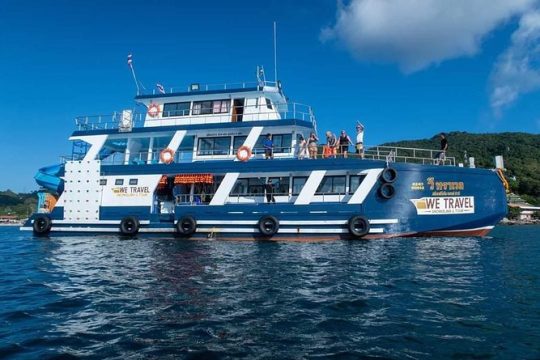
Warm water, spicy food and gilded temples have made Thailand one of the most visited countries in Asia. Island hopping by speedboat or longtail is the classic day out, and the Phi Phi Islands (Koh Phi Phi) are the headline, with tall limestone cliffs and clear lagoons. Maya Bay (Maya Beach), made famous on screen, is now carefully managed to protect its reef, and nearby stops include the swallow nests of Viking Cave and the playful residents of Monkey Beach. On the mainland, cultural tours visit temples, markets and royal palaces, while day trips by minivan reach floating markets and national parks. Pack reef-safe sunscreen and a dry bag for boat days.
China is among the oldest continuous civilizations in the world and one of its largest countries, so most visitors focus on a few landmark sites on a first trip. Many start with the Mutianyu Great Wall, a restored section with watchtowers strung along forested ridges, and pair it with the Forbidden City (Palace Museum), the vast imperial palace complex, and the open expanse of Tiananmen Square (Tiananmen Guangchang). Further west, the Terracotta Warriors and Horses Museum holds an army of clay soldiers built to guard an emperor in the afterlife, each figure with its own face. Private guides and coach tours are especially helpful here, since signs and menus can be hard to read and distances are long. Heritage tours explain dynasties, philosophy and craft in a way that brings the sites to life.
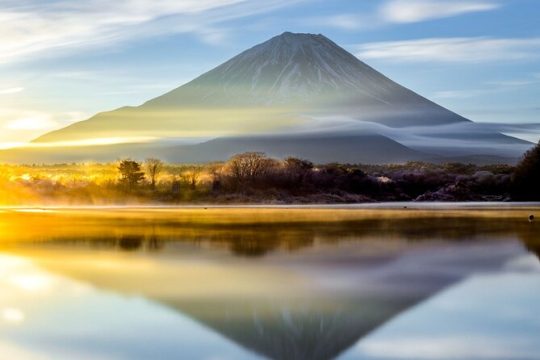
Order, courtesy and craft shape the travel experience in Japan, where ancient temples sit beside neon streets and bullet trains run to the minute. Walking tours are the favorite way to explore, and the old capital's temples are the heart of many itineraries. The red torii gates of Fushimi Inari Shrine (Fushimi Inari Taisha) climb a forested mountain in long tunnels, the gold-leafed Kinkaku-ji (Golden Pavilion) reflects in its pond, and the wooden stage of Kiyomizu-dera Temple looks out over the rooftops. In the evening, Gion Corner presents short performances of traditional arts. Food tours are a highlight too, from sushi counters to izakaya bars, and half-day outings make it easy to fit several neighborhoods into one stay.
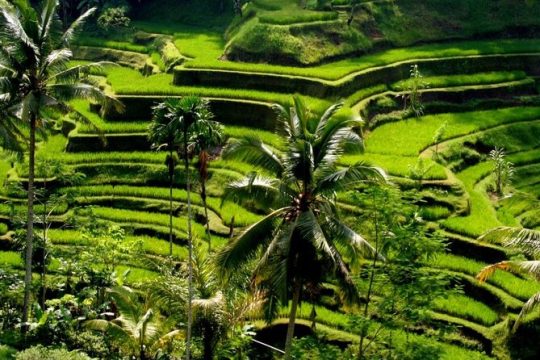
Spread across thousands of islands, Indonesia ranges from active volcanoes and jungles to surf beaches and Hindu temple towns. Most visitors arrive with one island in mind, and the sights listed here belong to its lush, temple-filled interior. Tegalalang Rice Terrace (Sawah Terasering Tegalalang) spills down a valley in green steps, Tegenungan Waterfall (Air Terjun Tegenungan) drops into a jungle pool, and Tirta Empul Temple (Pura Tirta Empul) draws pilgrims who bathe in its holy springs. Early risers hike Mt. Batur (Gunung Batur) in the dark to watch dawn break over the crater lake. Full-day private drivers are the easiest way to link these places, and cruise passengers will find port transfers and shore outings ready to go.
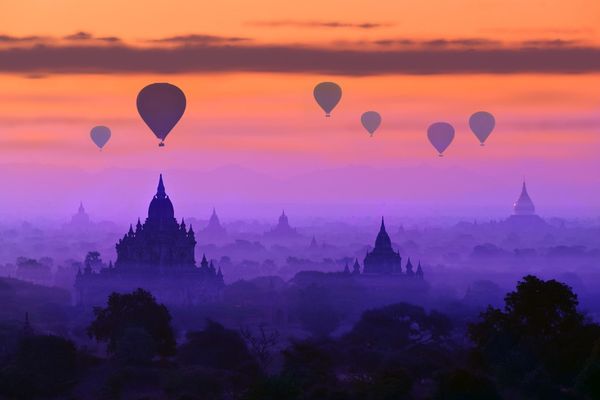
Cambodia is a small country with one of the greatest archaeological sites anywhere. The temples of the Khmer Empire spread over a huge area of forest, and Angkor Wat, the largest religious monument in the world, is where most visits begin, ideally at sunrise. Inside the walled city of Angkor Thom, the Bayon is covered in serene stone faces, and the reservoir at Srah Srang makes a peaceful stop. Guided heritage tours, by minivan, tuk-tuk or bicycle, explain the carvings and the rise and fall of the empire. Half-day and full-day options let you pace the temples, and cultural outings to villages and floating communities show a gentler side of modern Cambodia. Cover shoulders and knees for temple visits.
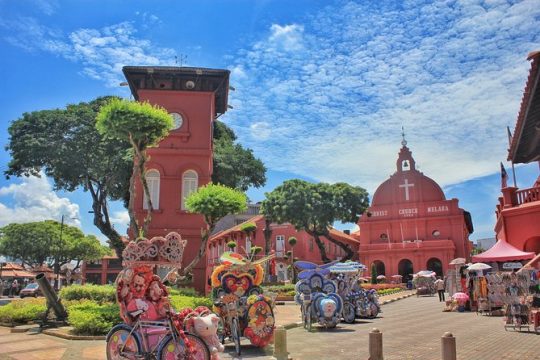
Malay, Chinese and Indian traditions blend in Malaysia, and you taste that mix in every meal. The capital's skyline is dominated by the Petronas Twin Towers (Petronas Towers), whose skybridge gives a high view over the city, and the modern lines of the National Mosque of Malaysia (Masjid Negara) welcome respectful visitors outside prayer times. A short drive north, the Batu Caves hold Hindu shrines at the top of a steep, brightly painted staircase guarded by monkeys, and the Thean Hou Temple rises in tiers of red and gold. Half-day city and cultural tours cover these easily, and private guides can add markets and food stalls to the route.
Beyond the busiest countries, the continent has many more destinations that reward a closer look.
#1Tegenungan Waterfall is a broad, powerful cascade on the Petanu River in Kemenuh village, south of Ubud in Bali's Gianyar Regency. Unlike most of Bali's waterfalls, which lie up in the mountains, it sits in the lowlands close to the island's cultural heartland, and people come to see it thunder into a jungle-fringed pool and to cool off near its foot.The Petanu is one of Bali's longest rivers, rising in the highlands around Mount Batur and running south through Tampaksiring and Ubud before it reaches the falls. Balinese tradition treats the river with special reverence, and local people come to its banks to pray and meditate. An old legend even says its waters first flowed from the blood of a defeated demon king, which is why the river was long thought to carry a curse.For a long time the falls were hidden away and seldom visited, but as nearby Ubud grew into a center for travelers, Tegenungan became one of the island's most popular natural sights. A viewpoint near the entrance looks down over the jungle to the white curtain of water, and a long stairway descends through the greenery to the riverbed, where spray drifts over the rocks and the roar fills the gorge. Visitors can also climb between rocky levels beside the cascade, which reveal it from different angles.The waterfall lies in Sukawati district, one of Bali's great craft areas, where the stone carvers of Batubulan, the silversmiths of Celuk and a lively art market keep old skills alive. Seeing the falls alongside these villages shows how closely nature, faith and art are bound together in this part of the island. A guide can explain the river's place in Balinese belief and the rituals still performed along its banks.
More
#2If you are looking for things to do in Asia we have 33 Tours and Activities to Experience Tegalalang Rice Terrace (Sawah Terasering Tegalalang). Check out our verified traveler reviews and photos of Tegalalang Rice Terrace (Sawah Terasering Tegalalang) tours and other things to do in Asia, and book securely when you find the perfect one. Learn the best ways to see famous Tegalalang Rice Terrace (Sawah Terasering Tegalalang) and explore the most popular things to do in Asia.
More
#3Nishiki Market is a narrow covered shopping street in central Kyoto, lined with small food shops and stalls and often called the Kitchen of Kyoto. Food lovers come to browse fresh fish, pickles, tofu skin, sweets and local vegetables, and to sample bites at the counters of a lane that has fed the city for centuries.The market runs for about 400 meters between Teramachi and Takakura streets, and its traders' association traces some 400 years of history here. Its roots lie in the fish trade, which thrived here thanks to cold well water that kept the catch fresh. Over time the lane filled with sellers of every kind of Kyoto food, and many shops have passed down through the same families for generations.Walking the lane is a lesson in Kyoto cooking. Counters display glistening fish, tubs of brightly colored pickles, sheets of yuba tofu skin, dried foods and the prized vegetables of the region. Seasonal produce changes the look of the stalls through the year. Other shops sell kitchen knives, sweets and side dishes ready to take home, so the street serves home cooks as well as hungry visitors. Many stalls sell small bites to eat at the counter, from grilled seafood to sweets, and a few have tiny seating areas tucked inside.The colorful roof and the signs hanging over each stall give the street a cheerful energy, and the mix of locals shopping for dinner and travelers sampling at the counters is part of the show. At its eastern end the market meets the Teramachi arcade beside Nishiki Tenmangu, a small shrine where people pause to pray amid the bustle. With a guide, the rows of mysterious jars and packets start to make sense, and each taste comes with a bit of its story.
More
#4If you are looking for things to do in Asia we have 9 Tours and Activities to Experience Uluwatu Temple (Pura Luhur Uluwatu). Check out our verified traveler reviews and photos of Uluwatu Temple (Pura Luhur Uluwatu) tours and other things to do in Asia, and book securely when you find the perfect one. Learn the best ways to see famous Uluwatu Temple (Pura Luhur Uluwatu) and explore the most popular things to do in Asia.
More
#5If you are looking for things to do in Asia we have 8 Tours and Activities to Experience Bangkok Chinatown (Yaowarat). Check out our verified traveler reviews and photos of Bangkok Chinatown (Yaowarat) tours and other things to do in Asia, and book securely when you find the perfect one. Learn the best ways to see famous Bangkok Chinatown (Yaowarat) and explore the most popular things to do in Asia.
More
#6The Cu Chi Tunnels are a vast network of underground passages in Cu Chi District, northwest of Ho Chi Minh City, dug by Vietnamese fighters through decades of war. Travelers come to see how people lived, hid and fought beneath the ground, and to crawl through a section of the tunnels themselves.Digging began after the Second World War, during the struggle against French colonial rule, and the network kept growing over the following years into a web of passages that connected villages, riverbanks and hidden bases. During the Vietnam War, the Viet Cong used the area as a base for operations around Saigon, including the planning of the Tet Offensive. American and South Vietnamese forces bombed and searched the district again and again, sending soldiers known as tunnel rats into the passages, yet the tunnels stayed in use until the war ended.Life underground was hard. The tunnels held sleeping quarters, kitchens, meeting rooms, field hospitals and stores, linked by passages built for slight bodies and stooped movement. Smoke from cooking fires was led away through long channels so that it would surface far from the kitchen and give nothing away. Fighters spent long stretches below ground, sharing the dark with insects, scarce air and short rations, and coming up mostly at night to tend crops and fight.The memorial area is divided between Ben Dinh and Ben Duoc. Besides the tunnels themselves, visitors see reconstructed shelters and workshops, along with exhibits on how fighters made weapons, tools and sandals from whatever they could salvage, including old tire rubber. At Ben Duoc, a memorial temple honors those who died in the fighting, a quiet counterpoint to the displays of war. A guide gives the human story behind the trapdoors and passages, and helps visitors understand what the tunnels meant to the people who built them.
More
#7If you are looking for things to do in Asia we have 9 Tours and Activities to Experience Gion Corner. Check out our verified traveler reviews and photos of Gion Corner tours and other things to do in Asia, and book securely when you find the perfect one. Learn the best ways to see famous Gion Corner and explore the most popular things to do in Asia.
More
#8The Kamo River, or Kamogawa, flows through the heart of Kyoto, running south from the mountains north of the city past some of its liveliest districts. Its wide, grassy banks are where residents come to stroll, sit by the water and watch the herons, and a walk along it is one of the simplest pleasures of a visit to the old capital.The river has shaped Kyoto since the city was founded as the imperial capital more than a thousand years ago. Its floods were so hard to tame that a retired emperor of the Heian era is said to have named its waters among the few things he could not control. The dry riverbed near Shijo later became a stage for street performers, and kabuki theater is traced to dances held there in the early 17th century. Over the centuries, stone embankments and riverside paths turned a once-unruly river into the city's favorite open space.Upstream at Demachiyanagi, the Kamo and Takano rivers meet in a Y-shaped delta, where stepping stones shaped like turtles lead across the shallows. Just north of the meeting point, the ancient forest of Shimogamo Shrine fills the wedge of land between the two streams. Downstream, the banks grow busier, with cherry trees along the paths, mallards and cormorants working the water, and couples sitting at such neat intervals that the spacing has become a local joke. Near Pontocho, restaurants on the west bank build wooden platforms above the river for summer dining, a custom known as kawayuka.On the east bank by Shijo Bridge, the Minamiza theater keeps the river's link to kabuki alive, with the lanes of Gion spreading out behind it. A guide can add the stories of the bridges, shrines and old entertainment quarters that grew up along its banks.
More
#9Karangasem is the regency covering the eastern tip of Bali, a land of volcanic slopes, rice terraces and quiet coast beneath Mount Agung, the island's highest peak. Travelers come for its great temples and royal water palaces, and for a slower, more traditional Bali than the crowded south.Karangasem was once a powerful kingdom. Its rulers rose to power after the decline of the older Gelgel court, and at its height the kingdom reached across the strait to western Lombok. Dutch forces ended that reach late in the 19th century, but the royal family left a graceful legacy of palaces and gardens. The royal water palaces of Ujung and Tirta Gangga, with their pools, fountains and carved guardians, were created for the Karangasem kings in the 20th century. Mount Agung is the spiritual center of Balinese Hinduism, and its deadly eruption in the 20th century is still remembered across the island.High on its slopes stands Besakih, the mother temple of Bali, a great stepped complex of shrines and pagoda-like towers. Farther east, the Lempuyang temples climb a mountain of their own, and a split gateway there frames Agung in one of the most photographed views on the island. In the walled village of Tenganan, the Bali Aga people keep ancient customs alive, including a ritual battle fought with thorny pandan leaves. Along the coast, fishing villages such as Amed and Tulamben look out on clear water, and at Tulamben the wreck of a Second World War ship lies close to shore.Life here still follows the rhythm of temple festivals and village duties, and offerings appear on doorsteps every morning. A local guide can explain the meaning of the shrines, ceremonies and royal stories you meet along the way.
More
#10Mount Batur, or Gunung Batur, is an active volcano in the highlands of Bali, rising from the floor of a huge caldera beside Lake Batur in the Kintamani area. Most people come to climb it in the dark and watch the sun rise over the lake, the surrounding crater walls and the distant peaks of the island.Batur sits inside two calderas, one nested within the other, left behind when ancient eruptions emptied the magma chamber below and the ground collapsed. The younger cone grew in the middle, and a crescent-shaped lake fills the southeastern part of the outer basin. The whole caldera is part of a UNESCO Global Geopark, valued for how clearly it shows the workings of a volcano.The mountain has reshaped itself many times since its first written record at the start of the 19th century. Black lava fields from a major eruption in the 20th century still spread across the slopes below the summit, raw and barely softened by plants, and they are easy to see from the caldera rim at Kintamani. Near the top, steam drifts from vents in the warm ground, and guides sometimes cook eggs and bananas in the natural heat for a summit breakfast.Batur is woven into Balinese life. Villages such as Kedisan, Songan, Toya Bungkah and Trunyan sit on the caldera floor and the lakeshore, where farmers grow vegetables in the dark volcanic soil. The lake is held sacred as a source of water for the island's rice terraces, and the temple of Pura Ulun Danu Batur, on the rim, honors the goddess of the lake. Trunyan is known for unusual burial customs kept by its Bali Aga people, who trace their ways to the island's older traditions. A guide shares the stories of the mountain while leading the way.
More
#11My Son Sanctuary is a valley of ruined brick temples in central Vietnam, built over many centuries by the kings of Champa as their main religious sanctuary. Set among jungle-covered hills within reach of Hoi An, it is a UNESCO World Heritage site and one of the great surviving monuments of Cham civilization.The Cham were a seafaring kingdom that ruled much of central Vietnam, and from the 4th to the 13th centuries their kings built and rebuilt temples here to honor the Hindu god Shiva, worshipped locally as Bhadreshvara. The valley was a setting for royal ceremonies and a burial place for kings and heroes. An early temple was lost to fire and replaced, and most of the towers that survive went up in the 10th and 11th centuries. In all, more than 70 temples and tombs have been recorded here.The temples are built of red brick, with carvings of deities, mythical creatures and leafy patterns cut straight into the brickwork. Exactly how the Cham fired their bricks and bonded them so tightly is still debated. French researchers rediscovered the site at the end of the 19th century and sorted the ruins into lettered groups, a system still in use. The 20th century was cruel to the site: American bombing during the Vietnam War destroyed much of the complex, including the tower known as A1, once considered its finest, which is now a mound of rubble.Teams from Poland and India, among others, have since restored and stabilized several groups, and many of the finest carvings now sit in the Museum of Cham Sculpture in Da Nang. Walking between the surviving towers, with green hills closing in on every side, you get a sense of how sacred this enclosed valley once felt to the Cham.
More
#12If you are looking for things to do in Asia we have 2 Tours and Activities to Experience Padangbai (Padang Bai). Check out our verified traveler reviews and photos of Padangbai (Padang Bai) tours and other things to do in Asia, and book securely when you find the perfect one. Learn the best ways to see famous Padangbai (Padang Bai) and explore the most popular things to do in Asia.
More
#13If you are looking for things to do in Asia we have 6 Tours and Activities to Experience Reunification Palace (Independence Palace). Check out our verified traveler reviews and photos of Reunification Palace (Independence Palace) tours and other things to do in Asia, and book securely when you find the perfect one. Learn the best ways to see famous Reunification Palace (Independence Palace) and explore the most popular things to do in Asia.
More
#14Saigon Central Post Office is a grand French colonial building on Paris Commune Square in central Ho Chi Minh City, right beside the Notre-Dame Basilica. Still a working post office, it draws travelers with its arched hall, ornate facade and old painted maps, and with the simple pleasure of mailing a postcard from one of the city's best-loved landmarks.The building went up in the late 19th century, when Saigon was the capital of French Cochinchina, replacing an earlier post office on the site. It is often said to be the work of Gustave Eiffel, the engineer behind the Paris tower, but the design is credited to the French architect Alfred Foulhoux. Its style blends Gothic, Renaissance and French influences, and plaques on the outer walls honor scientists and inventors such as Morse, Ampère, Volta and Faraday.Inside, the long main hall rises to a curved ceiling carried on a framework of iron, with tall arched windows, patterned floors and rows of wooden counters below. Two large painted maps, made soon after the building opened, hang high on the walls, one showing Saigon and its surroundings and the other the telegraph lines of southern Vietnam and Cambodia. A portrait of Ho Chi Minh looks down from the far wall, a reminder of how far the country has traveled since colonial times.For about three decades the hall was also the workplace of Dương Văn Ngộ, known as the last public letter writer in Vietnam, who sat at a small desk writing and translating letters for people who needed help with them. His patient service became one of the building's best-loved stories. Visitors still buy stamps and send cards home from the counters, and that everyday use keeps the post office feeling alive rather than preserved. A guide can bring out the colonial history of the surrounding square and point out the details of the maps.
More
#15The Saigon Opera House is the municipal theater of Ho Chi Minh City, a cream-colored landmark on Lam Son Square in the heart of District 1. People come to admire its ornate French colonial facade, one of the finest in Vietnam, and to see dance, music and ballet performed in its intimate hall.French architects designed the theater in the late 19th century, when Saigon was the capital of the French colony of Cochinchina, to bring European opera and drama to the colonial city. They built it in the flamboyant style of the French Third Republic and modeled the facade on the Petit Palais in Paris. Statues, carved reliefs and a great arched entrance gave the city a showpiece meant to stand comparison with the theaters of France.The building's role has shifted with the country's history. It was first designed to hold up to 1,800 people, and for some years in the 20th century it housed a national assembly instead of performances. Later it returned to its first purpose as a theater, and renovations reshaped the auditorium into a far smaller, more intimate hall. The ornate front, with its arches, sculpted figures and decorative details, survived these changes as the face of the building.Today the stage hosts dance, music and ballet, and an evening show is a chance to see the foyer, the staircase and the hall at their liveliest. The setting adds to the appeal. Lam Son Square links the opera house with the Hotel Continental and City Hall, and the red brick Notre-Dame Cathedral stands a short distance away, so together they form a compact picture of colonial Saigon set amid the energy of the modern city. A guide can tell the stories behind the colonial buildings around the square and the changes they have seen.
MoreDays in Asia often start before breakfast, with hotel pickup timed to beat the heat and the crowds. Most travelers book full-day minivan outings, guided temple visits or island boat trips, then slow down after lunch.
Evenings bring street food walks and night markets in Vietnam, Thailand and Malaysia, or a quiet dinner in Japan. Most people pick one or two countries per trip and go deeper.
It suits first-timers glad to let a guide handle the details, families, food lovers and seasoned independent travelers alike.
In Thailand, Cambodia and much of Vietnam, the dry, cooler months from November to March are the easiest for touring. Monsoon rains shape much of the rest of the year in South and Southeast Asia.
Japan is loveliest in spring for cherry blossoms and in fall for red leaves. China and northern India are pleasant in the same seasons, with hot summers and cold winters.
Indonesia and Malaysia are warm all year, with the drier months roughly from May to September. Book ahead around major local holidays, when trains and flights fill up.

The answers provided below are based on answers previously given to customers' questions.