About Archaeology Tours in Spain
Spain is layered like few countries in Europe. Iberians, Phoenicians, Romans, Visigoths, Moors and medieval Christian kingdoms all built here, and archaeology tours let you read those layers in the stones, the street plans and the ruins that still stand in open fields. Across its regions you can walk the streets of a Roman city, explore the remains of a caliph's palace, climb into prehistoric caves and trace old walls around medieval quarters. Most of these outings start in the morning, about half last two to four hours, and a good share are private, so you can set the pace and ask as many questions as you like. Nearly all can be cancelled for free, and most welcome children, which makes them an easy way to bring history to life for the whole family. Travelers rate them highly, and a knowledgeable guide is what turns a pile of stones into a story.
The south is where Roman Hispania and Moorish al-Andalus left their richest traces, and archaeology here feels close at hand. Itálica, founded by Roman soldiers and later the birthplace of two emperors, still has mosaic floors, broad streets and one of the largest amphitheaters of the Roman world, all set among olive groves and wild grass. Walking its grid with a guide, you get a vivid sense of daily life in a provincial city at the height of the empire.
Medina Azahara tells a very different story. Built as a palace-city for the caliphs of the tenth century and destroyed within a few generations, it was buried for centuries before excavations revealed its arches, gardens and reception halls. Tours here explain how archaeologists are still piecing the city back together, and book a guided visit so the scattered stones make sense.
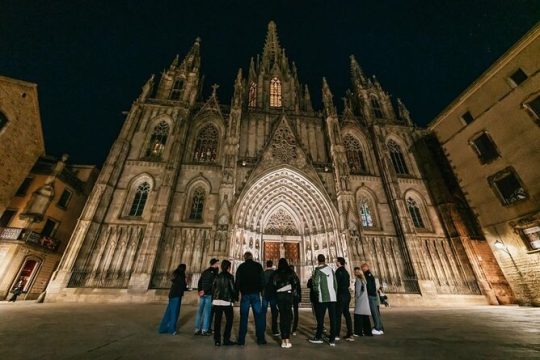
Under the busy streets of the northeast, an ancient Roman colony survives in fragments, and history walks bring it back into view. The Gothic Quarter (Barri Gotic) is the best place to start, with stretches of Roman wall built into later houses, the columns of an old temple tucked inside a courtyard, and an underground museum where you walk above excavated streets, workshops and a winery. Small groups and private guides work well in these narrow lanes.
Down at Port Vell, the old harbor, the story turns to trade and the sea, linking the city's Roman origins to its later life as a Mediterranean power. Elsewhere in the region, Greek and Roman ruins along the coast make longer day trips worth the drive.
Valencia began as a Roman settlement on a river island, and its old center still sits on top of those beginnings. Beneath a modern plaza near the cathedral, an archaeological crypt reveals Roman baths, a Visigothic burial and traces of the Moorish city, all in one walk. The medieval Serranos Towers (Torres de Serranos), once the main gate in the city walls, give you a sense of how the place was defended in later centuries.
Tours often finish in the wide Plaza Ayuntamiento or follow the Turia Riverbed Gardens, a green ribbon laid out in the old course of the river, which makes a pleasant break between sites. Mornings are the best time for these mostly short, easy walks.
Long before the Romans landed, the islands had their own Bronze Age culture, known for massive stone towers and burial sites called talayots and navetas. Archaeology tours visit those ancient villages, which stand in fields and woods across the countryside, and explain how island people lived thousands of years ago.
Caves are a big part of the story too. The Caves of Drach (Cuevas del Drach) and the Can Marca Caves (Cueva de Can Marcà) combine dramatic underground lakes and formations with tales of smugglers and early explorers. Back on the surface, the Almudaina Palace, a Moorish fortress turned royal residence, shows how each new ruler built on the last.
Madrid's national archaeology museum holds treasures from every era of Iberian history, and it makes a smart first stop before you head into the field. Beyond the capital region, day trips run out to some of the best-preserved Roman engineering anywhere: the Roman Aqueduct of Segovia, a towering line of granite arches built without mortar, still strides across a town square.
The same excursions usually include the Alcazar of Segovia (Alcázar de Segovia), a fortress on a rocky spur whose origins go back to Roman and Moorish times, and Segovia Cathedral, one of the last great Gothic churches in Spain. These are full days, so start early and wear sturdy shoes.
Perched on a hill inside a loop of the Tagus, Toledo has been fought over and rebuilt by almost every culture that passed through Spain. Christian, Muslim and Jewish communities lived side by side here for centuries, and guided walks focus on that shared heritage. Santa María la Blanca Synagogue, with its white horseshoe arches, looks more like a mosque than a synagogue, a perfect example of how styles mixed.
Nearby, the Monastery of San Juan de los Reyes shows off the late Gothic style favored by the Catholic Monarchs, and the church of Santo Tomé guards a celebrated painting by El Greco. Most visits here are half-day walks, easy to combine with lunch in the old town.
On the sunny southeast coast, Alicante has Iberian, Roman and Moorish roots, with the remains of an ancient Roman town on its outskirts and a hilltop castle above the sea. History walks here are relaxed and short, often ending near the beach. One quirky stop is Calle de Las Setas (The Mushroom Street), where giant colorful mushroom sculptures line a pedestrian lane, a fun break for children between ruins.
The green north offers a different kind of past. Prehistoric caves in the Basque hills hold some of the oldest art in Europe, and guides explain how early hunters lived in these valleys. More recent history matters here too: the Vizcaya Bridge (Puente de Vizcaya), the world's oldest transporter bridge, still carries people across the river in a hanging gondola, and the Guggenheim Museum shows how the region turned its industrial past into a modern landmark.
More regions to explore
Every part of Spain has its own chapter of the story, and these regions are worth a look for history lovers.
- Canary Islands: Guanche heritage, cave dwellings and volcanic landscapes.
- Region of Murcia: a Roman theater and Carthaginian roots by the sea.
- Extremadura: some of the best-preserved Roman monuments in Spain.
- Santander: a gateway to famous prehistoric cave paintings.
- Aragón: Roman walls, Moorish palaces and Mudéjar towers.
- Costa del Sol: Phoenician, Roman and Moorish traces along the coast.
- Galicia: Iron Age hillforts and intact Roman city walls.
- Asturias: pre-Romanesque churches and Stone Age caves.
- Castile and León: early human sites and walled medieval towns.
- Castilla-La Mancha: Roman ruins, castles and windmills on the plains.