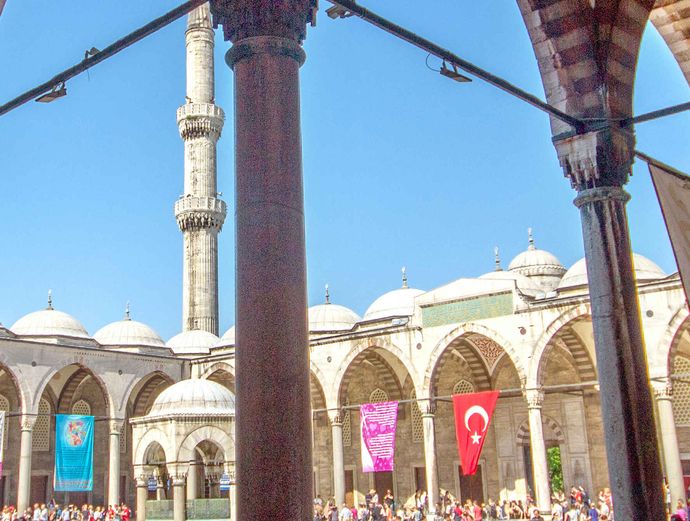
Wallachia attractions
More things to do in the region
 #46
Plovdiv Old Town (Stari Grad)
If you are looking for things to do in Wallachia we have 53 Tours and Activities to Experience Plovdiv Old Town (Stari Grad). Check out our verified traveler reviews and photos of Plovdiv Old Town (Stari Grad) tours and other things to do in Wallachia, and book securely when you find the perfect one. Learn the best ways to see famous Plovdiv Old Town (Stari Grad) and explore the most popular things to do in Wallachia.
More #47
Postojna Cave
Postojna Cave is a vast limestone cave system in the karst country of southwestern Slovenia, just outside the town of Postojna. It is one of Europe's most famous show caves, and people come to ride its underground train and walk through great halls full of stalactites, stalagmites and pale stone curtains shaped over unimaginable spans of time.The Pivka River carved the cave, and it still flows through the lower passages. Graffiti in the old entrance halls shows that people wandered in during the Middle Ages, and the scholar Johann Weikhard von Valvasor described the cave in the 17th century. Its fame began in the early 19th century, when a local lamplighter named Luka Čeč found the way into a vast new section, and visitors soon followed. A cave railway, at first pushed by guides, was laid in the 19th century, and electric light arrived here before it reached Slovenia's capital.The full system runs for more than 24 kilometers, and the public route covers the most spectacular stretch. The train rattles past glittering formations before a walk leads through chambers known for their color and shape. Look for the Brilliant, a gleaming white stalagmite that has become the cave's symbol, and a bridge over a deep chasm that Russian prisoners of war built during the First World War. The route ends in the Concert Hall, a chamber so large and resonant that it has hosted performances.Postojna is also known for the olm, a blind, pale, salamander-like amphibian that lives only in the underground waters of this region and can go for years without food. Locals once took them for baby dragons washed out of the depths. An aquarium on the route lets you watch them up close. A guide helps you read the formations and the long story of how the cave was explored.
More #48
Prejmer Fortified Church (Cetatea Prejmer)
Prejmer Fortified Church is a medieval church enclosed by massive defensive walls in the village of Prejmer, just outside Brasov in Transylvania. It is one of the largest and best-preserved fortified churches in Southeastern Europe, and visitors come to see how an entire village could shelter behind its ring of walls.The church was begun in the 13th century by the Teutonic Knights, who had been invited to guard this corner of the Hungarian kingdom's frontier, and it was finished by the Saxon settlers who followed them. Its Gothic design, laid out in the shape of a Greek cross, is unusual for the region and shows the hand of builders from farther west. As raids by Ottoman and Tatar forces grew more frequent in the late Middle Ages, the villagers raised high walls around the church and lined them with rooms. The fortress fell only once, in the early 17th century.Inside the walls, the rooms rise in tiers on four levels, reached by wooden stairs and galleries, and each family kept its own cell for grain, belongings and shelter during a siege. Along the walkway on top, loopholes and openings let defenders fire on attackers, and the site is remembered for a device known as the death organ, a row of linked guns that fired together. The church itself holds a carved and painted winged altarpiece from the late Middle Ages, one of the oldest in Transylvania.The courtyard between church and wall is calm and green, which makes the scale of the defenses all the more striking when you look up. A small museum in some of the rooms shows village life and the tools of the Saxon community. A guide can tell the stories of the Saxon families who kept this place running for centuries.
More #49
Princely Church
The Princely Church of Saint Nicholas is a small Orthodox church in Curtea de Arges, in southern Romania, and the oldest religious monument in Wallachia known to have been funded by a ruler. Travelers come for the medieval frescoes that still cover much of its interior and for the story of the first Wallachian princes who prayed here.Basarab I, the prince who won Wallachia its independence in the 14th century, began the church within the grounds of his court, in the years when Curtea de Arges was the capital of the principality. Later rulers carried on the building and the painting, so the church grew over more than one reign. Ruins of the old palace still lie around it, giving a sense of the court that once filled this ground. The building follows the Byzantine pattern, with a cross-in-square plan, three apses and a central tower, and its brick and stone bands give the outside a striped look.Inside, the walls and vaults are covered with medieval murals that have survived in remarkably good condition. Scenes from the Bible unfold in rows, from the life of Christ to saints and prophets, and scholars have linked their style to the painting workshops of Constantinople, the great center of Byzantine art. Look closely at the faces and the folds of the robes, which show how firmly the young principality tied itself to the Byzantine world.The church makes a fine starting point for understanding Curtea de Arges, a town that later gained a grand monastery cathedral where Romania's kings are buried. Seen together, the two buildings trace a long line from the first princes of Wallachia to the modern Romanian monarchy. A guide who knows the iconography can name the figures on the walls and explain what each scene meant to the people who stood beneath them.
More #50
Rasnov Fortress (Cetatea Rasnov)
If you are looking for things to do in Wallachia we have 52 Tours and Activities to Experience Rasnov Fortress (Cetatea Rasnov). Check out our verified traveler reviews and photos of Rasnov Fortress (Cetatea Rasnov) tours and other things to do in Wallachia, and book securely when you find the perfect one. Learn the best ways to see famous Rasnov Fortress (Cetatea Rasnov) and explore the most popular things to do in Wallachia.
More #51
Revolution Square (Piata Revolutiei)
Revolution Square, Piața Revoluției, is a broad public square on Calea Victoriei in central Bucharest, ringed by a former royal palace and the old Communist Party headquarters. It is where Romania's revolution against communism came to a head, and people come to see the balcony of Nicolae Ceaușescu's final speech, the memorials to the fallen and some of the city's grandest architecture.Before the revolution the space was known as Palace Square, after the royal palace on its western side. Facing it stands the former Central Committee building, from whose balcony Ceaușescu addressed a crowd he had summoned to show support late in the 20th century. Instead the crowd began to jeer, the speech broke off, and the next day he fled from the roof by helicopter as his regime collapsed. Fighting in the days that followed left scars on the surrounding buildings, and the Central University Library across the square burned and had to be rebuilt.At the center rises the Memorial of Rebirth, a tall white marble spike piercing a dark metal shape that locals have given some less respectful nicknames. Nearby stand an equestrian statue of King Carol I and a monument to the interwar statesman Iuliu Maniu. The old royal palace now holds the National Museum of Art of Romania, while the domed Romanian Athenaeum, the city's beloved concert hall, the grand Athénée Palace hotel and the small brick Kretzulescu Church complete the scene.Few places in Bucharest show the country's modern history so clearly, with royal splendor, communist power and the uprising that ended it all within a few steps of one another. A guide who remembers those days, or grew up hearing about them, can bring the events of that winter to life on the spot.
More #52
Rila Monastery
Rila Monastery is Bulgaria's largest and most revered Orthodox monastery, set deep in a forested valley of the Rila Mountains south of Sofia. Travelers come for its striped arcades and frescoed church, the tall walls that close around its courtyard like a fortress, and the chance to see a place that has stood at the center of Bulgarian faith for more than a thousand years.The monastery traces its origins to Ivan of Rila, a hermit who withdrew to a cave in these mountains in the 10th century and drew followers who built a community near his retreat. He became Bulgaria's patron saint, and his relics are kept in the monastery. Through the long centuries of Ottoman rule it served as a guardian of Bulgarian language, learning and identity, and its library preserved old manuscripts. The oldest surviving structure is the stone tower raised by a local lord named Hrelyo in the 14th century, which still rises above the courtyard.Most of what stands now dates from the 19th century, when the complex was rebuilt after a devastating fire in the spirit of the Bulgarian National Revival. Wooden balconies and monks' cells climb several stories around the courtyard, framing the five-domed Church of the Nativity of the Virgin. Its porch and interior walls are covered in vivid frescoes of saints, angels and sinners, some painted by Zahari Zograf, the best-known artist of the age. Inside, a carved and gilded iconostasis glows in the candlelight.The monastery museum keeps one of its most remarkable treasures, Rafail's Cross, carved from a single piece of wood by a monk named Rafail and crowded with tiny biblical scenes and figures, work so fine that he is said to have lost his sight finishing it. The whole complex is a UNESCO World Heritage Site, yet it remains a working monastery where monks keep up a daily round of services.
More #53
Romanian Athenaeum
The Romanian Athenaeum is Bucharest's grand concert hall, a domed neoclassical landmark in the center of the city and the home of the George Enescu Philharmonic. Visitors come for its elegant architecture, a circular hall wrapped in a sweeping painted history of Romania, and the chance to hear classical music in one of the most beautiful venues in Eastern Europe.The idea came from a group of Romanian intellectuals, the Romanian Athenaeum Society, who wanted a home for culture, lectures and music in the young nation's capital. When funds ran short in the late 19th century, they launched a public appeal, and ordinary Romanians gave small donations to finish the building. The French architect Albert Galleron designed it, on land that had once belonged to a noble family. The Athenaeum has been the center of Romanian musical life ever since, and it suffered damage in the Second World War before being restored. Today it hosts the George Enescu Festival, named after the country's greatest composer.The facade resembles a Greek temple, with a portico of tall Ionic columns beneath a broad dome, and medallions of famous Romanian figures above. Inside, the round entrance hall is lined with pink marble columns, and curving staircases rise to the concert hall above. The hall itself sits beneath the dome, with deep red velvet seats, gilded details and a ceiling decorated with lyres. Around its walls runs a huge painted fresco by Costin Petrescu, telling the story of the Romanian people from Roman times to the creation of the modern state in a series of vivid scenes. Outside, a little garden where the poet Mihai Eminescu stands in bronze sets the building apart from the busy streets.A guided visit or an evening concert reveals the Athenaeum's stories, its art and the music that fills it.
More #54
Romanian Peasant Museum (Muzeul National al Taranului Roman)
The Romanian Peasant Museum (Muzeul National al Taranului Roman) is Bucharest's national museum of village life, set in a striking red-brick building on Kiseleff Road. Its galleries of embroidered costumes, woven carpets, painted icons and pottery are arranged in a personal, almost poetic style, giving travelers a vivid way into the culture of rural Romania.The museum was founded in the early 20th century to collect and protect the art of the Romanian countryside. Its home was designed by Nicolae Ghica-Budesti in the Neo-Romanian style, which borrows arches, towers and carved details from old monasteries and manor houses, and it rose on the site of the former State Mint. Under the Communist regime the peasant collections were pushed aside and the building was turned into a museum of the Communist party. Only after the regime fell did the peasant museum return, and its new displays went on to win the European Museum of the Year award.The collections run to more than 100,000 objects, from festive blouses stitched with symbolic patterns to ceramics, wooden tools, glass icons and richly colored carpets. Rather than lining things up in neat cases, the rooms group them by theme, with handwritten notes and quiet corners that invite you to slow down. One of the best-loved displays is a whole peasant house brought from a village in Gorj County and rebuilt indoors, its timber walls and furnishings giving a sense of how a family once lived.Religious life gets as much space as daily work, with rooms given to crosses, icons and the customs that marked births, weddings and funerals through the village year. The museum also hosts fairs where craftspeople from across the country sell pottery, textiles and carvings. Time with a guide helps place these objects in the wider story of how Romanian village life changed over the past century.
More #55
Rope Street (Strada Sforii)
If you are looking for things to do in Wallachia we have 11 Tours and Activities to Experience Rope Street (Strada Sforii). Check out our verified traveler reviews and photos of Rope Street (Strada Sforii) tours and other things to do in Wallachia, and book securely when you find the perfect one. Learn the best ways to see famous Rope Street (Strada Sforii) and explore the most popular things to do in Wallachia.
More #56
Royal Court of Targoviste
The Royal Court of Târgoviște, known in Romanian as the Curtea Domnească, is the old princely residence of Wallachia in the heart of Târgoviște, northwest of Bucharest. Visitors come to explore the palace ruins and painted church and to climb the Chindia Tower, a stone lookout tied to Vlad the Impaler.Târgoviște was the capital of Wallachia for much of the 15th to 17th centuries, and generations of princes ruled from this walled court. The earliest records of the court date from the reign of Mircea the Elder, and its defenses grew into the largest in the country, possibly under Vlad Dracul or his son Vlad the Impaler. Later rulers thickened the walls and added bastions, and Constantin Brâncoveanu rebuilt the palace and its churches near the end of the 17th century. Once the capital moved to Bucharest, fire, war and earthquakes took their toll, and the court slid into ruin until restoration opened its remains to visitors in the 20th century.The Chindia Tower is the symbol of the complex, an eight-sided stone tower attributed to Vlad the Impaler that served both for defense and as a show of princely power. From its upper levels you look out over the old walls, the gardens and the town's rooftops. Nearby, the great princely church keeps its frescoed walls and carved iconostasis, while the palace ruins still show arched doorways, carved stone and the outlines of rooms and a chapel. A stone garden pavilion and a restored gate in the old walls round out the grounds.The Dracula legend draws many people here, but the court tells a broader story of Wallachian princes, their struggles with powerful neighbors and the churches they built. A guide helps separate the real Vlad from the vampire of fiction and shows which stones belong to which reign.
More #57
Sibiu Lutheran Cathedral (St. Mary's Evangelical Church)
The Lutheran Cathedral of St. Mary is the great Gothic church of Sibiu, rising over Huet Square in the historic upper town of this Transylvanian city. Visitors come for its soaring tower, a remarkable medieval fresco, carved tombstones and one of the largest organs in Transylvania.The Transylvanian Saxons, German-speaking settlers who built Sibiu in the Middle Ages, began the church in the 14th century on the site of an older Romanesque basilica and completed it early in the 16th. It began as a Catholic parish church, but the Saxons embraced the Reformation in the 16th century and it has been Lutheran ever since. Its tall tower, a landmark across the old town, carries four small corner turrets, said to show that the city had the right to pass death sentences.Inside, a large fresco painted by Johannes of Rosenau in the 15th century shows scenes from the life and Passion of Christ, centered on the Crucifixion. For about three centuries the church served as a burial place for mayors, nobles and other leading citizens, and their carved tombstones and epitaphs line the walls. Among those laid to rest here are Mihnea the Bad, a prince of Wallachia and son of Vlad the Impaler, and Baron Samuel von Brukenthal, founder of the city's great museum. The Sauer organ, built early in the 20th century, is said to be the largest in Transylvania, and the bronze baptismal font is reputedly cast from a melted Ottoman cannon.The tower also looks out over Sibiu's steep roofs and their eyelid-shaped dormer windows, known locally as the eyes of the city. A major renovation completed in the 21st century restored the building inside and out. A guide can decode the Latin and German inscriptions on the tombstones and the many figures crowded into the fresco.
More #58
Sibiu Orthodox Cathedral (Holy Trinity Cathedral)
Sibiu's Holy Trinity Cathedral is the city's great Orthodox church, a domed brick basilica in Byzantine style near the historic center of the old Transylvanian town. Visitors step inside for its gleaming gold iconostasis and painted dome, and to see a church modeled on one of the most famous buildings of the Byzantine world.The idea came from Metropolitan Andrei Șaguna, the 19th-century leader of Transylvania's Orthodox Romanians, who won permission from Emperor Franz Joseph to collect donations for a cathedral in Sibiu, a city long dominated by its German-speaking Saxons. Gifts kept arriving long after his death, and at the start of the 20th century a row of houses and a small Greek church that had served as the cathedral were cleared to make room. Construction took only a few years, and the new cathedral was consecrated soon after.The design, chosen from dozens of entries, came from the Budapest architects Virgil Nagy and Iosif Kamner, who took Hagia Sophia in Istanbul as their model. A broad central dome crowns the building, while the tall towers on its front borrow from Transylvanian church tradition and Baroque design, and bands of red and yellow brick give the walls their warm striped look. Its spires rise more than 40 meters, making the cathedral easy to pick out among Sibiu's rooftops.Inside, the painter Octavian Smigelschi created the image of Christ Pantocrator amid angels in the dome and painted the gilded, carved-wood iconostasis that screens the altar, while other artists covered the walls in neo-Byzantine scenes. As the seat of the Orthodox Metropolitan of Transylvania, the cathedral hosts services filled with chant, candlelight and incense. A guide helps you read the icons, from the order of saints on the iconostasis to the symbolism of the dome.
More #59
Sinaia Monastery
Sinaia Monastery is a Romanian Orthodox monastery in the mountain resort of Sinaia, in the Prahova Valley of the Carpathians, within easy reach of Brașov and southern Transylvania. It gave the town its name, and visitors come for its two painted churches, its royal connections and its peaceful courtyards beneath the Bucegi peaks.Its founder was the nobleman Mihail Cantacuzino, who came home from a pilgrimage to Mount Sinai and named his monastery after Saint Catherine's Monastery there. He designed it to serve as a fortress as well as a place of prayer, guarding the mountain road that linked Brașov with Bucharest, and planned it for twelve monks in honor of the apostles. For generations the only buildings here were the monastery and a handful of huts, until mineral springs, a hospital and later a royal summer residence turned Sinaia into a fashionable mountain resort.The monastery is arranged around two courtyards. The Old Church, the small original church from Cantacuzino's time, was first painted by Pârvu Mutu. The Great Church, raised in the 19th century in a blend of Moldavian and Brâncovenesc styles, is wrapped in three green enamel bands said to stand for the Holy Trinity. Inside, gold mosaics by the Danish artist Aage Exner portray King Carol I, Queen Elisabeth and the founder, with Carol resting his hand on a broken pillar that stands for Romanian lands then under foreign rule.The monastery has also weathered hard times. During an 18th-century war between Russia and the Ottomans, the monks hid their valuables inside a bell before fleeing, and Turkish troops burned the area and broke through the walls. A small museum, the country's earliest display of church treasures, keeps old icons and crosses along with the first Bible printed in the Romanian language. A guide can explain how faith, monarchy and mountain tourism together shaped this corner of the Carpathians.
More #60
Skanderbeg Square
Skanderbeg Square is the great central plaza of Tirana, the Albanian capital, named after the national hero Skanderbeg, whose statue on horseback dominates it. Around its edges stand the National History Museum, the Palace of Culture, the slender Clock Tower and the Et'hem Bey Mosque, so a short walk across it takes in centuries of the country's story.Skanderbeg was a 15th-century nobleman who led a long revolt against the Ottoman Empire and became the enduring symbol of Albanian resistance. From his mountain stronghold at Krujë he held off Ottoman armies for decades. His bronze monument went up in the second half of the 20th century on the spot where a statue of Stalin had stood under the communist regime. A statue of the dictator Enver Hoxha also rose beside the square until crowds brought it down during the student-led protests of the late 20th century as communism collapsed.The square itself records a century of changing regimes. Austrian forces laid out the first public space here during the First World War, Italian architects gave it a formal plan and the stately ministry buildings that still frame one side, and the communist era added the National History Museum, with its huge mosaic of Albanians through the ages above the entrance, and the Palace of Culture, home of the National Opera. The small Et'hem Bey Mosque, older than all of them, survived the years when religion was banned.A major redesign early in the 21st century turned the old traffic circle into a broad pedestrian space, gently raised toward the middle and paved with stone gathered from across Albania and the neighboring lands where Albanians live. Gardens of native plants and fountains soften the edges, and the project won the European Prize for Urban Public Space.
More #61
Skopje Kale Fortress
Skopje Kale Fortress is the old stronghold on the highest point of Skopje's old town, overlooking the Vardar River and the city center. People climb up to walk along its walls and towers, see the remains of many centuries of settlement and look out over the rooftops, minarets and mountains around the capital of North Macedonia.The hill has drawn settlers since prehistoric times, and archaeologists have found traces of Neolithic and Bronze Age life beneath the later walls. The fortress itself was raised in the early Byzantine period, after an earthquake destroyed the Roman city of Scupi nearby, and over the centuries it changed hands many times as empires and kingdoms fought over the valley. For most of its life it was the military heart of the city, guarding the river crossing below.In the 20th century, the great earthquake that struck Skopje damaged much of what still stood, and parts of the walls have since been restored. Excavations in the grounds have turned up foundations, coins, pottery and other finds from many periods, showing how long people have lived on this spot and how much of the city's story is layered here.Inside the walls, the ground opens into a broad space where the outlines of old buildings are marked in stone, and the restored towers and battlements give a sense of how the fortress once worked. From the ramparts, the view takes in the Stone Bridge, the domes and minarets of the Old Bazaar below, the new buildings of the center and the cross on Mount Vodno beyond the city. It is a calm place compared with the busy streets beneath it, and a good spot to understand how Skopje fits into its valley. A guide can bring out the layers of history hidden in the stones.
More #62
Skopje Old Bazaar
Skopje's Old Bazaar, the Stara Čaršija, is the historic market quarter of North Macedonia's capital, spread along the east bank of the Vardar River across the Stone Bridge from the city center. One of the oldest and largest bazaars in the Balkans, it draws visitors for its Ottoman mosques, inns and bathhouses and its lanes of small workshops.Trade has centered here since at least the 12th century, but the quarter took its lasting shape after the Ottoman conquest in the late 14th century. In the 15th century the local governors Ishak Bey and his son Isa Bey paid for mosques, inns and markets, and by the 16th and 17th centuries the bazaar was at its height, with merchants from Dubrovnik and Venice and a sizable Jewish trading community. A great fire in the late 17th century burned much of the city, and earthquakes struck more than once, yet the quarter was rebuilt each time.Many of its landmarks survive. The Mustafa Pasha Mosque, close to the fortress, has a tall, slender minaret and a broad dome, while the Ishak Bey Mosque is known locally as the Decorated Mosque. Travelers once rested in caravanserais such as the large Kuršumli Han, named for its lead-covered roof, and Suli Han, which now houses an art academy and a museum of the bazaar. Two old bathhouses, Daut Pasha Hamam and Čifte Hamam, have become art galleries, their domed rooms a fine setting for paintings.Not every building is Ottoman. The Church of the Holy Salvation was built partly below ground, since rules of the time limited how tall churches could be, and inside hides a richly carved wooden iconostasis. A stone clock tower, the covered Bezisten market and rows of jewelers' shops complete the picture. A guide helps read this layered quarter, where Muslim and Christian heritage sit side by side.
More #63
Snagov Monastery
If you are looking for things to do in Wallachia we have 70 Tours and Activities to Experience Snagov Monastery. Check out our verified traveler reviews and photos of Snagov Monastery tours and other things to do in Wallachia, and book securely when you find the perfect one. Learn the best ways to see famous Snagov Monastery and explore the most popular things to do in Wallachia.
More #64
St. Sofia Church
If you are looking for things to do in Wallachia we have 12 Tours and Activities to Experience St. Sofia Church. Check out our verified traveler reviews and photos of St. Sofia Church tours and other things to do in Wallachia, and book securely when you find the perfect one. Learn the best ways to see famous St. Sofia Church and explore the most popular things to do in Wallachia.
More #65
Stavropoleos Church (Biserica Stravrapoleos)
If you are looking for things to do in Wallachia we have 26 Tours and Activities to Experience Stavropoleos Church (Biserica Stravrapoleos). Check out our verified traveler reviews and photos of Stavropoleos Church (Biserica Stravrapoleos) tours and other things to do in Wallachia, and book securely when you find the perfect one. Learn the best ways to see famous Stavropoleos Church (Biserica Stravrapoleos) and explore the most popular things to do in Wallachia.
More #66
Tsarevets Fortress
If you are looking for things to do in Wallachia we have 34 Tours and Activities to Experience Tsarevets Fortress. Check out our verified traveler reviews and photos of Tsarevets Fortress tours and other things to do in Wallachia, and book securely when you find the perfect one. Learn the best ways to see famous Tsarevets Fortress and explore the most popular things to do in Wallachia.
More #67
Turda Gorge (Cheile Turzii)
Turda Gorge, or Cheile Turzii, is a narrow limestone canyon in Transylvania, west of the town of Turda and south of Cluj-Napoca. A path follows the Hășdate River between sheer cliffs, and people come to hike it, spot caves and wildflowers and enjoy one of Romania's best-known natural reserves.The gorge was carved over a very long span of time as the small river cut down through thick beds of limestone laid down in an ancient sea. Local legend offers a faster explanation. In the Hungarian telling, King Ladislaus, fleeing raiders, prayed for help and the mountain split open behind him, leaving a chasm his pursuers could not cross. The tale is one of several stories that link the gorge to the region's medieval past. Protected as a reserve since the first half of the 20th century, it shelters a surprising variety of life.Sun-baked rock faces and shady corners create very different habitats within a short distance, so rare plants thrive here that grow in few other places in Romania, and the slopes bloom with color in spring. Birds of prey nest on the ledges, and the walls are riddled with dozens of caves. Some gave villagers shelter during invasions in the Middle Ages, and one is tied to Bălică, a local outlaw remembered as a Robin Hood figure.Inside the gorge, the walls tower over the river in shades of gray and ochre, and the narrowest stretches open suddenly into sunny clearings. The cliffs are a favorite with Romanian climbers, and the meadows at either end make natural places to rest. A guide can name the plants and birds, point out cave entrances and share the legends that cling to the rocks.
More #68
Turda Salt Mine (Salina Turda)
Turda Salt Mine is a former salt mine in the town of Turda, in the Transylvania region of Romania, where centuries of digging left vast chambers deep underground. Visitors come to walk the old galleries, look down into caverns the size of cathedrals and see a lake shining far below the surface.Salt has been taken from these hills since antiquity, and the mine appears in written records from the 13th century. Mining grew in the 17th century, and for hundreds of years workers cut the salt by hand, leaving huge chambers shaped like bells and cones. Extraction ended in the early 20th century. During the Second World War the mine served as a bomb shelter, and afterward it was used to store cheese. It opened to visitors in the late 20th century, and a major redesign in the early 21st century added the lighting and lifts that give it its striking, almost futuristic look.The visit follows the Franz Josef Gallery, a long tunnel cut through the salt that once carried it out of the mine. Off it lie rooms full of the mine's history, including the Echo Room in Joseph Mine, a tall cone where your voice comes back to you again and again, and the Crivac Room, which holds an old horse-driven winch, the only one of its kind still in its original place in Romania.Rudolf Mine is the showpiece, a huge rectangular hall more than 40 meters deep, with salt stalactites hanging from the ceiling and walls streaked in bands of gray and white. Its floor holds a small underground park with a Ferris wheel, mini golf, a bowling alley and an amphitheater, which look tiny from the balconies above. Below lies Theresa Mine, a bell-shaped chamber about 90 meters high with a lake at its foot. A guide explains how the miners worked and how the chambers took shape over the centuries.
More #69
University Palace
If you are looking for things to do in Wallachia we have 38 Tours and Activities to Experience University Palace. Check out our verified traveler reviews and photos of University Palace tours and other things to do in Wallachia, and book securely when you find the perfect one. Learn the best ways to see famous University Palace and explore the most popular things to do in Wallachia.
More #70
White Tower (Turnul Alb)
If you are looking for things to do in Wallachia we have 7 Tours and Activities to Experience White Tower (Turnul Alb). Check out our verified traveler reviews and photos of White Tower (Turnul Alb) tours and other things to do in Wallachia, and book securely when you find the perfect one. Learn the best ways to see famous White Tower (Turnul Alb) and explore the most popular things to do in Wallachia.
MoreDiscover Wallachia

Cultural & Theme Tours
Prices from $3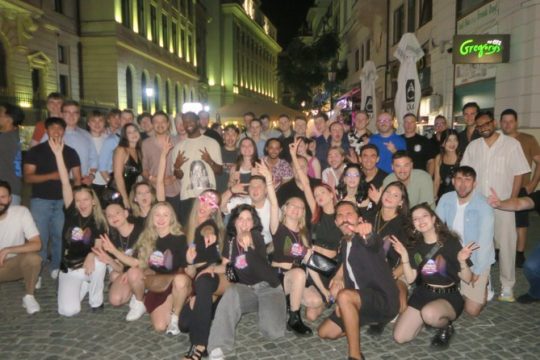
Luxury & Special Occasions
Prices from $5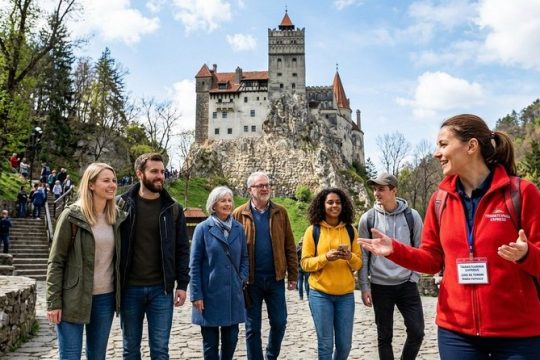
Tours & Sightseeing
Prices from $3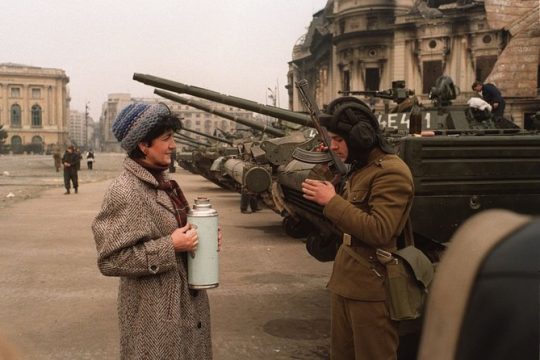
Walking & Biking Tours
Prices from $3
Food, Wine & Nightlife
Prices from $21
Private & Custom Tours
Prices from $5
Sightseeing Tickets & Passes
Prices from $17
Weddings & Honeymoons
Prices from $21
Classes & Workshops
Prices from $103
Cruises, Sailing & Water Tours
Prices from $104
Day Trips & Excursions
Prices from $28
Holiday & Seasonal Tours
Prices from $21
Arcul de Triumf (Arch of Triumph)
Prices from $9
Palace of Parliament (Palatul Parlamentului)
Prices from $5
Black Church (Biserica Neagra)
Prices from $28
Bran Castle (Dracula's Castle)
Prices from $28
Council Square (Piata Sfatului)
Prices from $66
Peles Castle (Castelul Peles)
Prices from $28
Victoriei Street
Prices from $8
Village Museum (Muzeul Satului)
Prices from $9
Balchik Palace (Dvoreca)
Prices from $2,558
Balea Lake (Lacul Balea)
Prices from $55
Bay of Kotor
Prices from $3,020
Bridge of Lies (Podul Minciunilor)
Prices from $163




Wallachia Event Calendar
View all events
Christmas activities in Wallachia
Fri, Dec 25, 2026
Hanukkah in Wallachia
Dec 4–12, 2026
New Year’s Eve in Wallachia
Thu, Dec 31, 2026
Christmas Eve in Wallachia
Thu, Dec 24, 2026
New Year’s Day long weekend in Wallachia
Jan 1–3, 2027
Valentine's Day in Wallachia
Sun, Feb 14, 2027
Easter in Wallachia
Sun, May 2, 2027
Good Friday in Wallachia
Fri, Apr 30, 2027