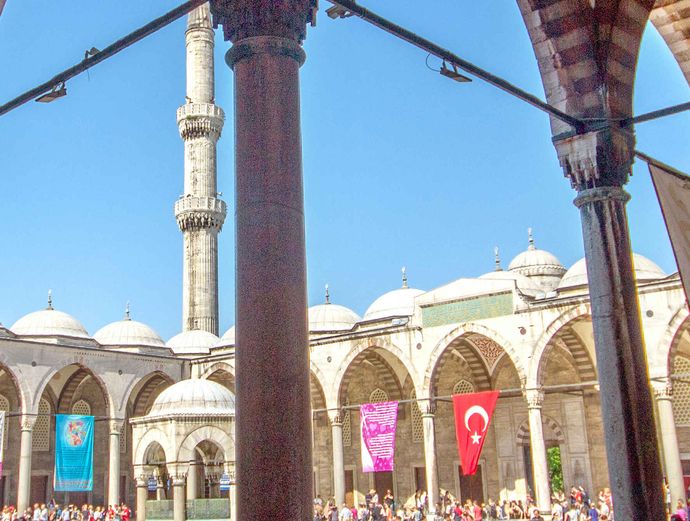
Wallachia attractions
More things to do in the region
 #16
Cantacuzino Castle (Castelul Cantacuzino)
Cantacuzino Castle is a grand Neo-Romanian mansion in Busteni, a mountain town in Romania's Prahova Valley, built for one of the country's richest aristocrats. Visitors come for its carved and painted interiors, its leafy grounds and the sweeping view from its terrace across to the Bucegi Mountains.The castle was commissioned by Prince Gheorghe Grigore Cantacuzino, a statesman so wealthy he was nicknamed the Nabob. It replaced an old hunting lodge the family used on the road to Brasov, and an inscription in the courtyard explains that he built it to honor his ancestors and shelter his descendants. The architect Grigore Cerchez, a leading figure of the Neo-Romanian style, blended local traditions with European grandeur. In the communist era the castle was nationalized and used as a sanatorium, and its walls were painted over. After it was returned to the family, restoration uncovered the original decoration, and the house opened to the public as private property. It has since appeared as a filming location for the Netflix series Wednesday.Inside, the rooms show a mix of materials gathered from across Europe: Venetian murals, stained glass made with Murano glass, Italian glazed pottery, carved oak doors and coffered oak ceilings. A staircase rises without visible support, held only by the walls, and marble stairs lead to the upper levels. A gallery of murals painted on Cordoba leather shows life-size portraits of the Wallachian branch of the Cantacuzino family, and the ballroom displays the coats of arms of related noble families. Outside, the courtyard holds fountains, sculptures, a hunting tower and a small wooden church, while an art gallery upstairs hosts changing exhibitions.The castle offers a window into aristocratic life in the Carpathians. A guide brings the family history and the meaning of the heraldry to life.
More #17
Carol Park (Parcul Carol)
Carol Park (Parcul Carol) is a grand historic park south of central Bucharest, laid out as a formal French-style garden and named after Romania's first king, Carol I. With fountains, a lake, shaded alleys and monuments rising on Filaret Hill, it is one of the city's most elegant green spaces and a quiet window onto its history.The park was designed by the French landscape artist Édouard Redont and opened in the early 20th century on the anniversary of Carol I's coronation. It was created to host the great Bucharest Exhibition, a showcase of the young kingdom's progress, and pavilions filled the grounds for the occasion. Of all those buildings, only two survive: the Roman Arenas, an open-air amphitheater still used for concerts, and the building that now houses the Dimitrie Leonida Technical Museum.The Technical Museum gathers engines, machines and inventions that trace the story of engineering in Romania, and it is named after the engineer who founded it. Elsewhere in the park, the fountains draw the eye: the Zodiac Fountain carries the signs of the zodiac, and the Cantacuzino Fountain is an elegant older piece. Paths lead down to Lake Filaret, which adds open water and reflections to the formal layout. Along the alleys, mature trees shade the walks between these landmarks, giving the park its calm, old-fashioned feel.The most striking monument stands at the top of the main alley. Built in the communist era as a mausoleum for party leaders, the domed structure on the hill was later rededicated, and it now holds the Tomb of the Unknown Soldier, which had stood in the park before. The shift captures how Bucharest has reworked its past, and the whole park, a listed historical monument, reads like a layered record of Romania's modern story, from royal celebration to communist ambition and beyond.
More #18
Catherine’s Gate (Poarta Ecaterinei)
Catherine's Gate, or Poarta Ecaterinei, is a 16th-century gate tower on the southwest side of Brașov's old city walls in Transylvania, topped by a slender spire and four small corner turrets. Visitors come to see this storybook piece of Saxon defense and to learn how it once controlled who could enter the walled city.The Tailors' Guild built the gate in the middle of the 16th century to replace an older entrance destroyed by a flood. It takes its name from St. Catherine's Monastery, which once stood on the site. The tower you see is only part of the original gateway, since a wooden section was pulled down in the 19th century. Above the entrance is the city's coat of arms, a crown resting on an oak trunk with its roots.The four turrets were more than decoration. They announced that Brașov held the right of the sword, the power to pass death sentences, a mark of the town's legal independence. The gate also sat on an old social divide. Under Saxon rule, Romanians could not own property inside the walls and lived in the Șchei district beyond them, and old records call this the Wallachian Gate, the entrance set aside for them, which they could pass only at fixed hours, paying a toll on goods for market.Inside, a small museum explains the history of the gate and of the fortified town, while outside the tower makes a fine picture against the wooded hills that ring the old center. The walls and bastions nearby show how the craft guilds each took charge of defending a stretch of the city. A guide can connect the gate to the wider story of the Saxon merchants and the Romanian community of Șchei.
More #19
CEC Palace (Palatul CEC)
CEC Palace, or Palatul CEC, is a grand domed bank headquarters on Calea Victoriei in the historic center of Bucharest, facing the National Museum of Romanian History. Built at the end of the 19th century for Romania's oldest bank, a public savings institution, it ranks among the city's finest landmarks, admired for its glass and metal dome and richly decorated facade.The palace was designed by the French architect Paul Gottereau, while Ion Socolescu supervised the building work. It stands on ground with a long past, once occupied by the Saint John the Great monastery and its inn, whose church, restored by Prince Constantin Brâncoveanu in the early 18th century, later fell into ruin and was pulled down in the 19th century. The new palace captured the spirit of a capital eager to rival the great cities of Western Europe, an era when Bucharest earned the nickname Little Paris.Its style is usually called eclectic or Beaux-Arts, mixing French classical grandeur with Renaissance touches. The entrance sits beneath a tall arch carried on two pairs of composite columns, and each of the four corners rises to a gable bearing a coat of arms, topped by a smaller Renaissance-style dome. Over the center floats the great glass and metal dome, which gives the palace its unmistakable outline along the avenue.More than a century after it opened, the palace still serves its original purpose as the headquarters of CEC Bank. Its setting adds to the effect, since Calea Victoriei, the capital's best-known avenue, is lined with palaces, churches and mansions, and the narrow lanes of the old town begin just behind it. A guide can point out the carved emblems and other details on the facade that are easy to miss from across the street.
More #20
Choral Temple (Templul Coral)
The Choral Temple is Bucharest's grand 19th-century synagogue, on Strada Sfânta Vineri in the city's old Jewish quarter. With its onion-domed towers and Moorish Revival decoration, it is one of the few active synagogues left in Romania, and visitors come to see its ornate interior and learn about the country's Jewish community.The synagogue was built in the middle of the 19th century, when many in Bucharest's Jewish community wanted a modern house of worship with a trained choir, the feature that gave it its name. Its designers modeled it very closely on the Leopoldstadt Temple in Vienna, one of the great synagogues of the Habsburg capital, and the brick building took on the same Moorish Revival style, with horseshoe arches and a richly painted interior. The Vienna original was destroyed in the Nazi era, so the Bucharest copy now preserves a lost design.The building has survived hard times. Far-right vandals attacked it in the years before the Second World War, and during the Legionnaire rebellion early in the war it was devastated along with other Jewish sites in the city. It was restored after the war and became a center of Jewish life again, though the community shrank sharply as most Romanian Jews emigrated in the following decades. A later refurbishment of the main hall brought back its colors and decoration, and daily services still take place in a smaller hall.Inside, the main hall is a blaze of color, with gilded details, painted ornament and arches that frame the ark, while upper galleries look down on the benches below. The hall's beauty is all the more striking given everything the building has been through. A guide can explain the symbols in the decoration and the story of the families who once filled this neighborhood.
More #21
Church on the Hill (Biserica din Deal)
If you are looking for things to do in Wallachia we have 10 Tours and Activities to Experience Church on the Hill (Biserica din Deal). Check out our verified traveler reviews and photos of Church on the Hill (Biserica din Deal) tours and other things to do in Wallachia, and book securely when you find the perfect one. Learn the best ways to see famous Church on the Hill (Biserica din Deal) and explore the most popular things to do in Wallachia.
More #22
Clock Tower
If you are looking for things to do in Wallachia we have 45 Tours and Activities to Experience Clock Tower. Check out our verified traveler reviews and photos of Clock Tower tours and other things to do in Wallachia, and book securely when you find the perfect one. Learn the best ways to see famous Clock Tower and explore the most popular things to do in Wallachia.
More #23
Cotroceni Palace (Palatul Cotroceni)
Cotroceni Palace is the official residence of the President of Romania, set on a hill in western Bucharest, and it also houses the National Cotroceni Museum. Visitors come to see its royal reception rooms, rich furnishings and art collections, and to learn how a monastery site became the home of royalty and presidents.The story begins in the late 17th century, when Serban Cantacuzino, prince of Wallachia, built a monastery on Cotroceni Hill. Two centuries later, King Carol I commissioned a royal palace on the site, designed by the French architect Paul Gottereau. The building follows the Brancovenesc style, a Romanian tradition that blends Byzantine, Renaissance and Ottoman influences into something distinctly local, with carved stone details and graceful arcades.Queen Marie, one of the best-loved figures of Romania's royal past, lived here and shaped many of the interiors, and her taste lives on in the rooms the museum preserves. The collection holds some 20,000 objects, including paintings, icons, ceramics, carpets and furniture, displayed in settings that recall the life of the royal court. Highlights include the Hall of Honour, the German Living Room and the Hunting Room, each with a character of its own, from formal grandeur to a more private feel.What sets the palace apart is that it remains a working seat of state. The museum's royal rooms sit within the same complex as the presidency, so a visit offers a rare look inside a building that has carried Romania's story from monastery to monarchy to republic. Few places in Bucharest show so clearly how the country's rulers wished to present themselves, through architecture, art and ceremony. A guide can untangle the many lives of the hill, from its monks and princes to a queen with a strong artistic eye.
More #24
Dubrovnik Old Town
Dubrovnik Old Town is the walled medieval city on the Adriatic coast of southern Croatia, a UNESCO World Heritage Site ringed by massive stone ramparts. People come to walk its polished limestone streets, circle the walls above red-tiled roofs and see the churches, palaces and squares of a former maritime republic.For centuries this was the Republic of Ragusa, a small but wealthy city-state that lived by trade and diplomacy. Its ships sailed across the Mediterranean, and its leaders kept their freedom by balancing the great powers around them, from Venice to the Ottoman Empire. The republic was known for forward-looking public institutions, including a quarantine system, an orphanage and an early ban on the slave trade. A devastating earthquake in the 17th century destroyed much of the city, which was rebuilt in the more uniform Baroque style seen along the main street. The republic finally came to an end under Napoleon in the early 19th century.In the late 20th century the Old Town was shelled during the Croatian War of Independence, and careful restoration has since repaired the damage. Stradun, the main street, runs between the city gates, its paving worn smooth by countless feet. Along the way you pass Onofrio's Fountain, the Franciscan Monastery with one of the oldest working pharmacies in Europe, the Rector's Palace where the republic's elected leader lived during his short term, and the Sponza Palace, once the customs house.Above it all, the walls wrap around the city with towers and forts, including the round Minčeta Tower at the highest point. Their views take in the old harbor, the green island of Lokrum and the steep hills behind. Many corners will look familiar to fans of television fantasy. A guide explains how the republic thrived and how the city rose again.
More #25
First Romanian School (Prima Scoala Romaneasca)
If you are looking for things to do in Wallachia we have 3 Tours and Activities to Experience First Romanian School (Prima Scoala Romaneasca). Check out our verified traveler reviews and photos of First Romanian School (Prima Scoala Romaneasca) tours and other things to do in Wallachia, and book securely when you find the perfect one. Learn the best ways to see famous First Romanian School (Prima Scoala Romaneasca) and explore the most popular things to do in Wallachia.
More #26
George Enescu National Museum (Cantacuzino Palace)
If you are looking for things to do in Wallachia we have 4 Tours and Activities to Experience George Enescu National Museum (Cantacuzino Palace). Check out our verified traveler reviews and photos of George Enescu National Museum (Cantacuzino Palace) tours and other things to do in Wallachia, and book securely when you find the perfect one. Learn the best ways to see famous George Enescu National Museum (Cantacuzino Palace) and explore the most popular things to do in Wallachia.
More #27
Great Synagogue (Sinagoga Mare)
The Great Synagogue, also called the Great Polish Synagogue, is a historic Jewish house of worship in Bucharest's old Jewish quarter, built by a congregation with roots in Poland. Visitors come for its ornate, richly painted interior and for a memorial exhibition honoring Romanian Jews who suffered and died in the Holocaust.Ashkenazi Jews who had come to Bucharest from Poland built the synagogue in the 19th century, and for a long time it was the largest prayer house of the city's Jews, which is how it came to be called Great. Early in the 20th century the building was redesigned and its interior repainted in the rococo style, giving it the decorative look it still has.The synagogue lived through the darkest chapter in the story of Romania's Jews. During the Second World War it was ransacked in the violence unleashed by the fascist Iron Guard, and it was repaired after the war ended. Alongside its role as a working synagogue, it now houses an exhibition in memory of the Jewish martyrs of that era, recalling the persecution, deportations and killings that tore apart Jewish communities across the country. For many visitors it is the most moving part of the visit, a reminder that Romania was once home to one of the largest Jewish populations in Europe.The interior is the heart of the building. A wooden barrel vault curves over the prayer hall, a large chandelier hangs beneath it, and painted decoration spreads across the walls, blending baroque and rococo flourishes. From the street the synagogue is easy to miss, hidden by tall apartment blocks built around it in later years, which makes the ornate interior all the more striking. A guide who knows the old Jewish quarter can connect the building to the streets, families and institutions that once filled this part of the city.
More #28
Holocaust Memorial
If you are looking for things to do in Wallachia we have 5 Tours and Activities to Experience Holocaust Memorial. Check out our verified traveler reviews and photos of Holocaust Memorial tours and other things to do in Wallachia, and book securely when you find the perfect one. Learn the best ways to see famous Holocaust Memorial and explore the most popular things to do in Wallachia.
More #29
Iasi
Iasi is a historic university city in northeastern Romania and the former capital of the principality of Moldavia, often called the country's cultural capital. Travelers come for its grand neo-Gothic Palace of Culture, richly carved monasteries and churches, leafy parks and a lively student scene that keeps the old streets busy.From the 16th to the 19th century, Iasi was the seat of the princes of Moldavia, and it played a leading role in the union of Moldavia and Wallachia that laid the foundations of modern Romania. During the First World War it briefly served as the capital of the whole country while Bucharest was occupied. The city also became a center of learning and letters: it is home to Romania's oldest university, and in the 19th century it nurtured the Junimea literary society and the national poet Mihai Eminescu.The Palace of Culture dominates the center, a fairy-tale neo-Gothic building with a tall clock tower, built in the early 20th century on the site of the old princely court. Its museums cover the history of Moldavia, art, folk traditions and science and technology. Nearby, the Trei Ierarhi Monastery is one of the jewels of Romanian architecture, its outer walls covered from top to bottom in intricate carved stone patterns that were once gilded. The vast Metropolitan Cathedral holds the relics of Saint Paraskeva, a focus of devotion for Orthodox believers across Romania.Iasi is also a city of green spaces and quiet corners. Copou Park, laid out in the 19th century, shelters the Obelisk of Lions and the old linden tree under which Eminescu is said to have written, and the nearby botanical garden is the oldest in the country. Other sights include the Golia Monastery with its fortified walls and tower, the Great Synagogue, among the oldest surviving in Romania, and the ornate National Theater. A guide can connect these places to the princes, poets and scholars who shaped Romanian identity.
More #30
Konstantsalieva House
If you are looking for things to do in Wallachia we have 7 Tours and Activities to Experience Konstantsalieva House. Check out our verified traveler reviews and photos of Konstantsalieva House tours and other things to do in Wallachia, and book securely when you find the perfect one. Learn the best ways to see famous Konstantsalieva House and explore the most popular things to do in Wallachia.
More #31
Kotor Old Town
Kotor Old Town is the walled medieval heart of Kotor, a port at the inner end of the Bay of Kotor on Montenegro's Adriatic coast. Its marble-paved lanes, churches and palaces sit at the foot of a steep mountain, and visitors come for the architecture, the long Venetian history and the views from the fortress walls high above.People have lived on this sheltered shore since ancient times, and the town passed through the hands of Romans, Byzantines and medieval Serbian rulers before Venice took control in the 15th century. Under Venetian rule, which lasted for centuries, Kotor became a fortified trading port and grew the stone houses and defenses that shape it now. Later it came under Austrian rule, and after a damaging earthquake in the 20th century much of the town was carefully restored. UNESCO lists the old town and its bay as a World Heritage Site.The town is a tangle of narrow streets that open into small squares, each with its own church or palace. The Cathedral of Saint Tryphon, a Romanesque church with twin bell towers, is the town's spiritual center and holds relics and frescoes. Nearby, the little Church of Saint Luke once served both Catholic and Orthodox worshippers, while the Orthodox Church of Saint Nicholas stands on its own square. Grand family palaces, a clock tower and a maritime museum recall the wealth of local sea captains. Above it all, the defensive walls zigzag up the mountainside to the fortress of San Giovanni, passing the small Church of Our Lady of Remedy along the way. Kotor is also known for its many cats, which roam the lanes and have become a local symbol.A guide can bring out the stories of the sailors, merchants and saints who built this compact town.
More #32
Kruja Castle
If you are looking for things to do in Wallachia we have 56 Tours and Activities to Experience Kruja Castle. Check out our verified traveler reviews and photos of Kruja Castle tours and other things to do in Wallachia, and book securely when you find the perfect one. Learn the best ways to see famous Kruja Castle and explore the most popular things to do in Wallachia.
More #33
Lake Ohrid
Lake Ohrid is a deep, clear mountain lake on the border of North Macedonia and Albania, with the old town of Ohrid climbing a hill on its northeastern shore. People come for the blue water and the beaches, and for the Byzantine churches, monasteries and ruins that have earned the lake and town a place on the UNESCO World Heritage list.The lake is among the oldest in Europe, formed by movements of the earth long before the last ice ages, and much of its water rises from underground springs fed through limestone from Lake Prespa in the mountains nearby. That long isolation produced a world of its own: a long list of plants and animals here live nowhere else, including the Ohrid trout, unusual sponges and many kinds of tiny snails.People have lived on these shores since prehistory. At the Bay of Bones, a village of wooden houses on stilts has been rebuilt over the water where an ancient lakeside settlement once stood. The Greeks and Romans knew the town as Lychnidos, and its ancient theater still sits on the hill. In the late 9th century the scholars Clement and Naum founded a center of learning here that spread Slavic writing and the Christian faith across the Balkans, and the town later served as the capital of Tsar Samuel, whose fortress walls crown the hilltop.Ohrid was once said to have a church for every day of the year. The most photographed is the small Church of St. John at Kaneo, perched on a rocky point above the water, while St. Sophia and St. Clement hold some of the finest medieval frescoes in the region. Farther south along the shore, the Monastery of St. Naum stands beside the springs, where peacocks strut through the courtyard.
More #34
Lipscani
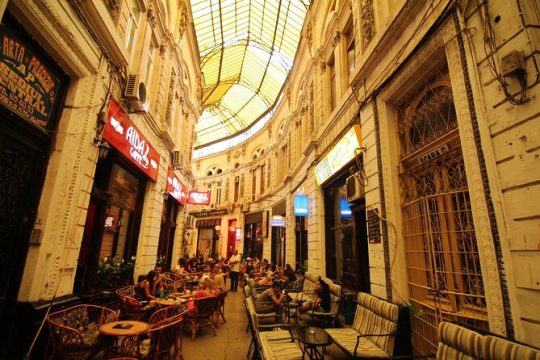
Lipscani is the old merchant quarter at the heart of Bucharest's historic center, a web of narrow lanes named after the trades that once filled them. People come to wander past old churches, grand bank palaces and restored caravan inns, and to linger in the cafes and bars that spill onto the streets.The district grew around the princely court that Wallachian rulers built here in the late Middle Ages, and the earliest known document to mention Bucharest by name was issued by Vlad the Impaler, who fortified the residence. Merchants and craftsmen settled around the court, and the main street took its name from traders who brought goods from Leipzig, known in old Romanian as Lipsca. Nearby lanes still carry the names of the saddlers, furriers and blacksmiths who once worked there. The ruins of the Old Princely Court survive beside the small church that served it, counted among the oldest in the city.Later centuries added more layers. Stavropoleos Church, built in the early 18th century, is a jewel of the Brâncovenesc style, with carved stone columns, painted walls and a small courtyard lined with old gravestones. Manuc's Inn, a caravanserai built by an Armenian merchant in the early 19th century, keeps its wooden galleries around a broad courtyard. Toward the end of the 19th century the banks arrived, leaving landmarks such as the domed CEC Palace and the National Bank, while glass-roofed arcades like the Macca-Villacrosse Passage linked the streets. Under communism the quarter was neglected and left to decay, and its revival as a pedestrian area for dining and nightlife came only after the regime fell.Lipscani rewards a slow pace, with eyes raised to the stucco and ironwork of the facades above the busy terraces. A guide brings out the stories of princes, merchants and bankers in streets that many visitors only see after dark.
More #35
Ljubljana Old Town
Ljubljana Old Town is the historic heart of Slovenia's capital, a compact quarter of Baroque churches, pastel townhouses and riverside cafes along both banks of the Ljubljanica River, below the castle hill. People come to wander its bridges and squares, eat at the market and enjoy one of the most relaxed city centers in Europe.The town grew up in the Middle Ages on a narrow strip between the castle hill and the river, near the site of the Roman town of Emona. For centuries it was ruled by the Habsburgs as the capital of the province of Carniola. A powerful earthquake at the end of the 19th century damaged much of the city, and the rebuilding left many of the Vienna Secession facades seen around Prešeren Square and the main streets. In the 20th century, the architect Jože Plečnik reshaped the riverbanks with terraces, colonnades and bridges, giving Ljubljana the elegant, human-scaled look it keeps.Prešeren Square, named for the national poet whose statue faces the window of his beloved, is the meeting point, overlooked by the pink Franciscan Church of the Annunciation. From there Plečnik's Triple Bridge fans across the water into the old streets. Nearby stand his long colonnaded market along the river, the Dragon Bridge with its green copper dragons, the Town Hall and the Robba Fountain of the three Carniolan rivers, and St. Nicholas Cathedral with its bronze doors.Narrow streets such as Mestni trg, Stari trg and Gornji trg wind beneath the castle, full of small shops, galleries and wine bars, while the riverside terraces fill with tables under the willows. The castle above gives a view over the red roofs to the Alps on clear days. A local guide brings out the stories in the details, from the dragon legend to Plečnik's quiet touches that are easy to walk past.
More #36
Mogosoaia Palace
If you are looking for things to do in Wallachia we have 15 Tours and Activities to Experience Mogosoaia Palace. Check out our verified traveler reviews and photos of Mogosoaia Palace tours and other things to do in Wallachia, and book securely when you find the perfect one. Learn the best ways to see famous Mogosoaia Palace and explore the most popular things to do in Wallachia.
More #37
Museum of Senses Bucharest
The Museum of Senses is an interactive museum of optical illusions and perception tricks in Bucharest, set on the first floor of the AFI Cotroceni shopping mall. It suits visitors of every age, and people come to test their eyes, balance and sense of direction in more than 40 rooms and installations, and to leave with a camera full of puzzling photos.The museum treats perception as a playground. Each room is a small experiment in how the brain builds a picture of the world from what the senses report, and how readily that picture can be bent. Some rooms target sight, while others work on balance and the sense of where your body is. The aim is to be fooled and then to notice how easily it happened.The Ames Room is a favorite: its walls and floor are built at hidden angles, so two people standing in opposite corners seem to swap size as they cross the room. In the Infinity Room, mirrors multiply your reflection into what looks like a space without end. The Vortex Tunnel spins a painted cylinder around a steady walkway, and although the floor never moves, your body is sure that it does. An inverted room fixes the furniture to the ceiling, so photos show you apparently standing on your head.One of the most photographed corners is the 2D Cafe, painted with heavy black outlines so that real tables, chairs and cups look like a cartoon sketch. Sitting there feels like stepping into a drawing. The mix of puzzles and photo spots makes it popular with families and groups, and it offers a lighthearted contrast to the palaces and churches of the city. A guide on a wider city tour can fit it in as a playful break between historic sights.
More #38
National Museum of Art of Romania (Muzeul National de Arta al Romaniei)
If you are looking for things to do in Wallachia we have 10 Tours and Activities to Experience National Museum of Art of Romania (Muzeul National de Arta al Romaniei). Check out our verified traveler reviews and photos of National Museum of Art of Romania (Muzeul National de Arta al Romaniei) tours and other things to do in Wallachia, and book securely when you find the perfect one. Learn the best ways to see famous National Museum of Art of Romania (Muzeul National de Arta al Romaniei) and explore the most popular things to do in Wallachia.
More #39
National Museum of Romanian History (Muzeul National de Istorie a Romaniei)
The National Museum of Romanian History (Muzeul National de Istorie a Romaniei) traces the story of Romania from prehistory to modern times inside a grand former post office on Calea Victoriei in Bucharest. Visitors come above all for its glittering treasury and for a complete cast of Trajan's Column, which shows the Roman conquest of Dacia scene by scene.The building was designed by Alexandru Savulescu as the Postal Palace at the end of the 19th century, after he toured post offices around Europe for ideas. Its stone front, with a portico of ten Doric columns above a wide flight of steps, lends the avenue a stately air. The museum moved in during the second half of the 20th century, and the palace has room for about 60 exhibition halls.The treasury is the highlight for most visitors. It holds the Pietroasele Treasure, a hoard of Gothic gold from the 4th century that Romanians call the Hen with the Golden Chicks, along with heavy spiral bracelets of Dacian gold. The royal regalia are here too, among them the Steel Crown of King Carol I, forged from a cannon captured at Plevna, and the gold crown of Queen Elisabeth.Elsewhere, the cast of Trajan's Column is displayed in sections at eye level, so you can follow Roman soldiers as they build camps, cross the Danube and battle the Dacian king Decebalus, scenes that are hard to make out on the original in Rome. The wars it records made Dacia a Roman province and helped give Romanian its Latin roots. Out front, a modern bronze of the emperor Trajan holding a wolf, an emblem of the Dacians, has long divided opinion in the city. A guide can tie the treasures to the people and battles behind them.
More #40
Old Bridge (Stari Most)
The Old Bridge, or Stari Most, is the single stone arch that leaps across the Neretva River in the heart of Mostar's old town in Bosnia and Herzegovina. It is the city's symbol, and most visitors come to cross its steep, worn back, watch divers plunge into the green river and take in the view from the banks.The Ottomans built the bridge in the 16th century on the orders of Sultan Suleiman the Magnificent, replacing an older wooden crossing with a graceful stone arch designed by the architect Mimar Hayruddin. Its span was so bold for its day that, according to local legend, the builder prepared his own funeral in case it collapsed when the scaffolding came down. The town took its name from the bridge keepers, the mostari, who guarded it, and a market quarter of workshops and mosques grew up on both banks.For more than four centuries the arch survived floods, earthquakes and wars, until artillery fire brought it crashing into the river during the war that followed the breakup of Yugoslavia. Its loss became a symbol of the destruction of shared heritage. After the war, engineers and craftsmen rebuilt it with the methods of the original builders, raising fragments from the riverbed and cutting new blocks of the same local limestone, and the restored bridge and old town were added to the UNESCO World Heritage list.Up close, the bridge is steeper and narrower than photos suggest, with ridges set into the stone to keep feet from slipping and a fortified tower at each end. Divers from the local club still leap from the parapet in a tradition that goes back centuries, waiting until onlookers have gathered. On the east bank, Kujundžiluk, the old coppersmiths' street, climbs toward it between stalls of hammered copper and carpets. A guide adds the human stories of the war and the rebuilding, which give the crossing its weight.
More #41
Pasajul Macca-Vilacrosse (Macca-Villacrosse Passage)
If you are looking for things to do in Wallachia we have 19 Tours and Activities to Experience Pasajul Macca-Vilacrosse (Macca-Villacrosse Passage). Check out our verified traveler reviews and photos of Pasajul Macca-Vilacrosse (Macca-Villacrosse Passage) tours and other things to do in Wallachia, and book securely when you find the perfect one. Learn the best ways to see famous Pasajul Macca-Vilacrosse (Macca-Villacrosse Passage) and explore the most popular things to do in Wallachia.
More #42
Patriarchal Cathedral (Metropolitan Church)
If you are looking for things to do in Wallachia we have 7 Tours and Activities to Experience Patriarchal Cathedral (Metropolitan Church). Check out our verified traveler reviews and photos of Patriarchal Cathedral (Metropolitan Church) tours and other things to do in Wallachia, and book securely when you find the perfect one. Learn the best ways to see famous Patriarchal Cathedral (Metropolitan Church) and explore the most popular things to do in Wallachia.
More #43
Pelisor Castle (Castelul Pelișor)
If you are looking for things to do in Wallachia we have 3 Tours and Activities to Experience Pelisor Castle (Castelul Pelișor). Check out our verified traveler reviews and photos of Pelisor Castle (Castelul Pelișor) tours and other things to do in Wallachia, and book securely when you find the perfect one. Learn the best ways to see famous Pelisor Castle (Castelul Pelișor) and explore the most popular things to do in Wallachia.
More #44
Peristyle Square (Peristil)
If you are looking for things to do in Wallachia we have 88 Tours and Activities to Experience Peristyle Square (Peristil). Check out our verified traveler reviews and photos of Peristyle Square (Peristil) tours and other things to do in Wallachia, and book securely when you find the perfect one. Learn the best ways to see famous Peristyle Square (Peristil) and explore the most popular things to do in Wallachia.
More #45
Piata Mare (Great Square)
If you are looking for things to do in Wallachia we have 60 Tours and Activities to Experience Piata Mare (Great Square). Check out our verified traveler reviews and photos of Piata Mare (Great Square) tours and other things to do in Wallachia, and book securely when you find the perfect one. Learn the best ways to see famous Piata Mare (Great Square) and explore the most popular things to do in Wallachia.
MoreDiscover Wallachia

Cultural & Theme Tours
Prices from $3
Luxury & Special Occasions
Prices from $5
Tours & Sightseeing
Prices from $3
Walking & Biking Tours
Prices from $3
Food, Wine & Nightlife
Prices from $21
Private & Custom Tours
Prices from $5
Sightseeing Tickets & Passes
Prices from $17
Weddings & Honeymoons
Prices from $21
Classes & Workshops
Prices from $103
Cruises, Sailing & Water Tours
Prices from $104
Day Trips & Excursions
Prices from $28
Holiday & Seasonal Tours
Prices from $21
Arcul de Triumf (Arch of Triumph)
Prices from $9
Palace of Parliament (Palatul Parlamentului)
Prices from $5
Black Church (Biserica Neagra)
Prices from $28
Bran Castle (Dracula's Castle)
Prices from $28
Council Square (Piata Sfatului)
Prices from $59
Peles Castle (Castelul Peles)
Prices from $28
Victoriei Street
Prices from $8
Village Museum (Muzeul Satului)
Prices from $9
Balchik Palace (Dvoreca)
Prices from $2,545
Balea Lake (Lacul Balea)
Prices from $55
Bay of Kotor
Prices from $3,020
Bridge of Lies (Podul Minciunilor)
Prices from $163




Wallachia Event Calendar
View all events
Christmas activities in Wallachia
Fri, Dec 25, 2026
Hanukkah in Wallachia
Dec 4–12, 2026
New Year’s Eve in Wallachia
Thu, Dec 31, 2026
Christmas Eve in Wallachia
Thu, Dec 24, 2026
New Year’s Day long weekend in Wallachia
Jan 1–3, 2027
Valentine's Day in Wallachia
Sun, Feb 14, 2027
Easter in Wallachia
Sun, May 2, 2027
Good Friday in Wallachia
Fri, Apr 30, 2027