Lazio attractions
More things to do in the region
 #46
Pienza
Pienza is a little town on a hill above the Val d'Orcia in southern Tuscany, famous as the first town reshaped around Renaissance ideas of the ideal city. Visitors come to stroll its harmonious main square and lanes, taste the local pecorino cheese, and look out from its walls over one of the most celebrated rural landscapes in Italy.Until the 15th century this was a modest village called Corsignano. One of its sons, the humanist scholar Enea Silvio Piccolomini, rose to become Pope Pius II and decided to transform his birthplace into a model town. He hired the Florentine architect Bernardo Rossellino, who in only a few years rebuilt the center around a new square with a cathedral, a papal palace, a bishop's palace and a town hall, and the village was renamed Pienza in the pope's honor. The plan was cut short when Pius died, so the town stayed small, preserving the scheme almost untouched.Piazza Pio II is the heart of the plan. The cathedral's pale stone front fills one side, and inside, a bright hall design inspired by churches the pope had seen north of the Alps frames altarpieces by leading Sienese painters. Next door, Palazzo Piccolomini borrows its elegant facade from a Florentine palace designed by Leon Battista Alberti, and its hanging garden opens toward Monte Amiata across the valley. The square's trapezoid shape, careful proportions and patterned paving reward a slow look.Beyond the square, lanes with playful names such as Via dell'Amore and Via del Bacio lead to a walkway along the town walls, where the view drops over rolling wheat fields, cypress-lined roads and farmhouses that have drawn painters since the Renaissance and film crews in modern times. Cheese shops line the main street, filling the air with the scent of aged pecorino. A guide can point out how the pope's architect used the angles of the square to make a small space feel grand.
More #47
Ponte Vecchio
You can cross the bridge on your own in minutes, but a guided walking tour explains the goldsmith shops, the Medici history and the walkway above them. Many guided walks link the bridge with Piazza della Signoria, the Uffizi area and the Duomo. Others continue across the river to Palazzo Pitti and the Santo Spirito neighborhood, which makes a full half day. Vehicles are barred from the bridge, so you cross on foot, and the middle of the span is often crowded. Crossing takes only a few minutes, but allow about half an hour to browse the shops and look at the river. The shops are mostly jewelers and gold sellers, so the bridge suits window shopping more than a long stop. It links the Piazza della Signoria side with the Palazzo Pitti side, so it fits easily into a walk between the two.
More #48
Pyramid of Caius Cestius
Most visitors admire the pyramid from the street, since it stands beside a busy junction at Porta San Paolo. Going inside means joining an arranged visit on a day the heritage authority opens it, and booking ahead is required. A guided walk through the Ostiense and Testaccio area makes a good half day, linking the pyramid with the city gate, the old walls and the cemetery. The pyramid is an ancient tomb built into the Aurelian Walls, and you can see it from the street outside. The burial chamber inside is small, so interior visits are arranged in advance and are not walk-in. A look at the outside takes only a few minutes, so most people combine it with nearby sights. The Protestant Cemetery sits right next to the pyramid.
More #49
Quirinale Palace (Palazzo del Quirinale)
The Quirinale is visited on a guided route, so the main choice is how you fit it into your day. You can pair it with a walking tour of central Rome, since the Trevi Fountain, Sant'Andrea al Quirinale and San Carlo alle Quattro Fontane are all close by. A guide also helps explain the palace's history as a papal, royal and presidential residence. The palace opens to the public through guided tours only, so you cannot walk in and explore on your own. Tours cover the historic apartments, the art collections, the gardens and the Corazzieri barracks. Reserve your visit in advance through the palace's official channels, since groups are small. Bring a valid identification document and plan to arrive about half an hour before your start time.
More #50
Roman Forum (Foro Romano)
The Roman Forum is the ruined heart of ancient Rome, a low valley of temples, basilicas, arches and columns below the Palatine and Capitoline hills. For centuries this was where Romans voted, traded, prayed and heard speeches, and walking its old paving stones brings you as close as anywhere to public life in the ancient city.The valley began as a marshy hollow that early Romans drained, and over the following centuries it became the center of politics, religion and commerce for the republic and then the empire. The Senate met in the Curia, orators addressed crowds from the Rostra, and triumphal processions wound along the Via Sacra toward the Capitoline. Julius Caesar's body was cremated here, and a temple to him rose on the spot. As Rome grew, the emperors built a series of larger forums next door, but this one remained the symbolic center of the city.After the empire fell, the monuments were stripped for stone, and the area silted up so deeply that it became a cattle pasture known as the Campo Vaccino, until excavations from the 18th century onward brought it back to light. The Arch of Septimius Severus and the tall columns of the Temple of Saturn frame the western end, while the round Temple of Vesta and the House of the Vestal Virgins recall the priestesses who kept the sacred flame alive.The Temple of Antoninus and Faustina survived because it was turned into a church, and at the eastern end the Arch of Titus shows Roman soldiers carrying treasures from the Temple in Jerusalem. Nearby, the giant vaults of the Basilica of Maxentius hint at the scale of the late imperial buildings. A guide helps put the fallen pieces back together in the mind, turning a field of ruins into streets, courts and shrines full of people.
More #51
Rome Jewish Ghetto (Ghetto Ebraico di Roma)
You can wander the Jewish Ghetto on your own, passing the Portico d'Ottavia and the small squares. The Jewish Museum visit adds an immersive reconstruction of the old ghetto, with guidance in Italian and English. A local guide on a walking tour brings the history, traditions and food of the quarter to life, and many tours continue to Campo de' Fiori, Tiber Island or Trastevere. The neighborhood is an open area of cobbled lanes you can walk freely, and a visit with the museum usually takes one to two hours. The Great Synagogue can be visited together with the Jewish Museum, and guided tours are offered in several languages. The synagogue and museum are closed on Saturday, which is devoted to worship, and on Jewish holidays. The Jewish Museum is listed as accessible to visitors with disabilities. Friday hours at the museum end in the early afternoon, so plan that visit for the morning.
More #52
Rome Via del Corso
Walking the full length from Piazza del Popolo to Piazza Venezia is easy on your own, with cafes and shops for stops. A guided walking tour of the historic center adds the stories behind the palaces, churches and the Column of Marcus Aurelius on Piazza Colonna. The street also links well with Via dei Condotti and the Trident area, so a combined walking itinerary covers a lot of ground. Via del Corso is a straight street about 1.5 kilometers long, so allow time for a relaxed walk between Piazza del Popolo and Piazza Venezia. It suits shoppers and sightseers, with major brands, historic palaces and churches along the way. Sidewalks are narrow in places and traffic shares part of the street, so watch your step. Galleria Alberto Sordi, about halfway along, is an Art Nouveau arcade with cafes and shops. Casa di Goethe, Palazzo Bonaparte and the Doria Pamphilj gallery are all on or just off the street.
More #53
Serapo Beach (Spiaggia di Serapo)
Most people spend the day on the sand with a sunbed and umbrella from a beach club, or with their own towel on a free stretch. Sailing and windsurfing are popular in the sheltered water, and local dive schools run courses. Guided boat trips along the Gaeta coast and walking tours of the old town and Monte Orlando pair well with a beach day and show you more of the area. Serapo is a long, wide sandy beach, so it suits families, swimmers and anyone who wants a relaxed day by calm water. The beach is split between paid beach clubs with sunbeds, umbrellas, showers and toilets and open areas where you can lay your own towel. There is a ramp for disabled access to the sea, which helps visitors with reduced mobility. Restaurants and bars line the seafront, so you can eat and drink without leaving the beach. Summer weekends are very busy and parking fills up early, so arrive in the morning.
More #54
Sistine Chapel (Cappella Sistina)
The Sistine Chapel is the papal chapel inside the Apostolic Palace in Vatican City, famous for the ceiling and altar wall that Michelangelo covered with frescoes. Visitors come to stand beneath some of the most celebrated paintings in Western art, in the room where cardinals still gather to elect a new pope.The chapel was built in the late 15th century for Pope Sixtus IV, whose name it carries. He brought in leading painters of the day, among them Botticelli, Perugino and Ghirlandaio, to decorate the side walls with scenes from the lives of Moses and Christ, which still run in two facing cycles. Early in the 16th century, Pope Julius II persuaded Michelangelo, who saw himself first as a sculptor, to repaint the ceiling. Working on scaffolding high above the floor, he filled the vault with scenes from Genesis, from the separation of light and darkness to the story of Noah, surrounded by prophets, sibyls and muscular nude figures.Decades later Michelangelo returned to paint the Last Judgment across the whole altar wall. Christ stands at the center raising the saved and casting down the damned, amid a swirl of bodies rising from their graves or tumbling toward the underworld. Its many nudes shocked some churchmen, and after his death another painter was hired to cover parts of them with draperies. Look for Saint Bartholomew holding his own flayed skin, whose sagging face is widely read as a self-portrait of the artist.The most famous image of all is the Creation of Adam, where the fingers of God and the first man almost touch. A major cleaning late in the 20th century stripped away centuries of candle soot and revealed the bright colors Michelangelo actually used. When a new pope must be chosen, the chapel closes for the conclave, and the world watches its chimney for white smoke. A guide can help you read the crowded ceiling and point out details before you enter.
More #55
Spanish Steps (Piazza di Spagna)
The Spanish Steps are the broad Baroque stairway that climbs from Piazza di Spagna to the church of Trinità dei Monti in the heart of Rome. People come to admire the sweeping curves of the stairs, the boat-shaped fountain at their foot and the view down Via dei Condotti from the top, in one of the city's most elegant squares.The stairs solved an old problem, linking the square below, home to the Spanish embassy to the Holy See, with the French church on the hill above. A French diplomat, Étienne Gueffier, left money for the project in the 17th century, but a challenge to his will and diplomatic maneuvering kept it on hold for decades. A competition was eventually won by Francesco de Sanctis, and the steps went up in just a few years early in the 18th century. The name comes from the embassy, while the church at the top stood under the patronage of the French kings.At the bottom, the Barcaccia fountain, often credited to Pietro Bernini with help from his famous son Gian Lorenzo, takes the form of a half-sunken boat, and legend says it recalls a boat stranded here by a Tiber flood. In the 18th and 19th centuries the square was the hub of Rome's foreign colony, and the house beside the steps where the poet John Keats died is now a museum devoted to him and the other English Romantic poets. At the top, an ancient Roman obelisk stands before the twin-towered church, and the terrace looks across the rooftops toward the dome of St. Peter's.The steps found a new audience in Roman Holiday, where Audrey Hepburn's runaway princess eats a gelato on them, and fashion houses line the streets that fan out from the square. A guide can point out the clever details of the design, from the curved landings to the way the flights divide and meet again.
More #56
St. Nicholas Basilica in Carcere (Basilica San Nicola)
If you are looking for things to do in Lazio we have 1 Tours and Activities to Experience St. Nicholas Basilica in Carcere (Basilica San Nicola). Check out our verified traveler reviews and photos of St. Nicholas Basilica in Carcere (Basilica San Nicola) tours and other things to do in Lazio, and book securely when you find the perfect one. Learn the best ways to see famous St. Nicholas Basilica in Carcere (Basilica San Nicola) and explore the most popular things to do in Lazio.
More #57
St. Patrick’s Well (Pozzo di San Patrizio)
You can visit the well on your own and take the stairs at your own pace. A guided walking tour of Orvieto often includes the well along with the cathedral and the old town, adding the story of why it was built. The well sits near the Albornoz Fortress, so you can combine the two, and the funicular ride up from the station makes a good start to the day. The well is 54 meters deep with 248 steps, so expect a steady walk down and back up. Two separate spiral staircases keep the descent and the climb apart, and windows light the way. Allow about 30 to 45 minutes for the full visit. The steps make it unsuitable for wheelchair users. Wear comfortable shoes with good grip for the stairs.
More #58
St. Peter's Basilica (Basilica di San Pietro)
St. Peter's Basilica is the great Renaissance church at the heart of Vatican City, built over the traditional burial place of the apostle Peter. It is one of the holiest sites in the Catholic world and among the largest churches ever built, and visitors come for its soaring dome, its art by Michelangelo and Bernini and its sheer size.The first basilica here was raised by the emperor Constantine in the 4th century. By the Renaissance it was crumbling, and the popes chose to replace it with something grander. Construction stretched across more than a century and passed through the hands of the leading architects of the age: Bramante drew the first plan, Michelangelo designed the dome, Carlo Maderno lengthened the nave and built the facade, and Bernini shaped the interior and the colonnaded square outside.Just inside on the right, Michelangelo's Pietà shows Mary holding the body of Christ, carved when the sculptor was still in his twenties. Bernini's twisting bronze canopy rises over the papal altar beneath the dome, above the spot where Peter is believed to lie. In the apse, Bernini's gilded Chair of Saint Peter glows beneath a window of golden glass showing the dove of the Holy Spirit. Pilgrims touch the foot of a medieval bronze statue of Peter, worn smooth by centuries of hands.Mosaic copies of great paintings line the altars, chosen because they would not fade in the damp, and popes rest in tombs and monuments along the nave and in the grottoes below. From the top of the dome, the view takes in the oval square, the Vatican Gardens and the rooftops of Rome. A guide helps sort out the layers of art and faith that are easy to miss in such a vast interior.
More #59
St. Peter's Dome (Cupola di San Pietro)
St. Peter's Dome is the great cupola that crowns St. Peter's Basilica in Vatican City, designed by Michelangelo and finished after his death. Climbing it takes you first to a gallery inside the dome, high above the main altar, and then out onto the open terrace around the lantern for a sweeping view over Rome.The basilica stands over the traditional burial place of Saint Peter, replacing an older church built under the emperor Constantine. Several architects shaped the new building, but the dome is Michelangelo's vision: he took charge of the project late in life and planned a double-shelled cupola resting on a tall drum ringed with paired columns. He died with the drum nearly complete, and Giacomo della Porta and Domenico Fontana raised the dome itself near the end of the 16th century, giving it a slightly taller, more pointed profile. Its shape went on to inspire many later domes across Europe and the Americas.The first stop is a walkway that circles the inside of the dome at the top of the drum. From the railing you look straight down past Bernini's bronze canopy to the basilica floor, where people appear tiny, and the mosaics above turn out, up close, to be built from countless pieces of colored glass. Giant Latin letters running around the frieze quote Christ's words naming Peter the rock on which he would build his church. From there the route squeezes between the dome's two shells, where the walls tilt inward as the passage curves upward.At the top, the outdoor terrace looks down on Bernini's curving colonnade wrapping around St. Peter's Square, then out across the domes and rooftops of Rome toward the hills. Behind the basilica spread the Vatican Gardens and the palaces of the papal state. A guide can explain the engineering that has kept this vast masonry shell standing for more than four centuries and point out landmarks on the skyline.
More #60
St. Peter's Square (Piazza San Pietro)
St. Peter's Square is the vast oval plaza in front of St. Peter's Basilica in Vatican City, enclosed by sweeping colonnades designed by Gian Lorenzo Bernini. Pilgrims and travelers come to stand at the heart of the Catholic world, take in its Baroque grandeur and see the window and balcony from which popes greet the crowds.Bernini laid out the square in the 17th century for Pope Alexander VII, giving the basilica a setting large enough for the great crowds that gather for papal blessings. He described the two curving colonnades as the motherly arms of the Church reaching out to embrace the faithful. Each colonnade is four columns deep, and a long parade of carved saints stands along the roofline above. At the center rises an ancient Egyptian obelisk that the emperor Caligula brought to Rome, moved to this spot in the late 16th century with a famous feat of engineering.Two fountains flank the obelisk, and round stones set into the paving between them mark the focal points of the colonnades. Stand on one and the four rows of columns line up so neatly that they seem to become one, a trick of perspective that still surprises visitors. The paving also holds a compass rose of the winds, and the obelisk doubles as the pointer of a giant sundial. Behind it all, Michelangelo's dome rises over the basilica's broad facade, whose central balcony is where each new pope is first presented to the world.The square has hosted canonizations, papal funerals and the anxious crowds that watch the Sistine Chapel chimney for white smoke after a conclave. A guide brings out the symbolism in Bernini's design and the story of the basilica beyond, built over the place where Saint Peter is believed to be buried.
More #61
Theater of Marcellus (Teatro di Marcello)
The Theater of Marcellus is an ancient Roman theater on the edge of the old Jewish Ghetto in Rome, close to the Tiber and the Capitoline Hill. Travelers stop to admire its curving tiers of stone arches, which look like a smaller Colosseum, and the Renaissance palace built right on top of the ancient walls.Julius Caesar planned the theater, and after his assassination Augustus completed it near the end of the first century BC, dedicating it to his nephew and intended heir Marcellus, who had died young. It was the largest theater in ancient Rome, a vast semicircle of seats facing a stage where crowds watched plays, music and other performances. Its design, with stacked arcades framed by columns in different classical orders, is thought to have influenced the builders of the Colosseum less than a century later.When the empire faded, the theater fell out of use and some of its stones were carried off for other buildings. Its sturdy shell survived because people kept finding new uses for it. In the Middle Ages powerful Roman families turned it into a fortress, and in the 16th century the architect Baldassare Peruzzi designed a palace for the Savelli family on top of the ancient arches. Later owners included the Orsini, and the upper floors became private apartments, so the building is still lived in more than two thousand years after it opened.From the street you can see the two surviving tiers of arches, the lower framed by Doric columns and the upper by Ionic ones, built of travertine and darkened with age. The ancient top tier is gone, replaced by the windows and roofline of the palace, which makes the layering of ancient and Renaissance Rome unusually easy to read. Beside the theater, three tall marble columns rise from the ruins of the Temple of Apollo, and the remains of the Portico of Octavia stand nearby.
More #62
Tiber Island (Isola Tiberina)
You can cross the island on your own in minutes, but its story of a healing god, a sacred snake and a ship-shaped island is easy to miss without context. A guided walking tour through the Jewish Ghetto, the island and Trastevere ties the neighborhoods together. A food or evening walking tour adds dinner stops and river views after dark. The island is only a few hundred meters long, so a walk across takes just a few minutes and a visit suits almost anyone. Part of the island is a working hospital, so keep noise down near its entrances. The church of San Bartolomeo all'Isola stands on the island, built on the remains of an ancient temple. Ponte Fabricio, on the Jewish Ghetto side, is pedestrian only, while Ponte Cestio links the island to Trastevere. In summer the island hosts an open-air film festival, which can make evenings lively.
More #63
Trajan's Column
You can see the column in a few minutes on your own, but the carved spiral is far easier to follow with a guide who points out key scenes such as the Danube crossing and the surrender of the Dacians. Many walking tours link it with Trajan's Market, the Roman Forum and the Colosseum along Via dei Fori Imperiali. A museum stop next door adds the story of the imperial forums. The column is an outdoor monument viewed from ground level, so the stop itself is short. The carved spiral tells the story of the Dacian wars in about 155 scenes, so a zoom lens or binoculars help. Plan about 20 to 40 minutes at the column, and more if you add the museum in Trajan's Market next door. Wear comfortable shoes, because the area is best explored on foot along the ancient forums.
More #64
Trajan's Market (Mercati di Traiano)
You can walk through the museum route on your own with an audioguide, but a guided visit adds context to the ruins and fragments. Guided tours often combine the market with Trajan's Column, the Imperial Fora and the Roman Forum, which helps you see how these spaces fit together. Reserved or timed entry saves time in busy periods, and tactile tours exist for blind and partially sighted visitors. The market houses the Museum of the Imperial Fora, so expect displays of carved fragments and architectural reconstructions. Plan on about one to two hours inside, with last admission one hour before closing. The site has a ramp entrance, a wheelchair route, accessible restrooms and wheelchairs for visitors with reduced mobility. Audioguides in several languages, a cloakroom and a bookshop are available on site. There are stairs and uneven ancient floors in places, so wear comfortable shoes.
More #65
Trastevere
Wandering the lanes on your own is the classic way to see Trastevere, with stops at the piazza, the churches and a trattoria. A guided walking tour adds the medieval and Roman history behind the streets, and food tours take you through local specialties. Many visitors pair it with the Janiculum Hill viewpoint, Tiber Island and the Jewish Ghetto on a longer walking itinerary through Rome. Trastevere is an open neighborhood with no gate or entry point, so you can wander it at any hour of the day or evening. Streets are narrow and cobbled, so wear comfortable shoes, and expect bumpy going for strollers and wheelchairs. The area around Santa Maria in Trastevere is the liveliest, while the side near Santa Cecilia is quieter, especially at night. Churches keep their own opening hours and many close in the middle of the day, so check before you plan a stop. Popular pizzerias and restaurants fill early in the evening, so arrive early or book ahead.
More #66
Trevi Fountain (Fontana di Trevi)
The Trevi Fountain, or Fontana di Trevi, is a monumental fountain in central Rome, its sculptures and cascades built against the back of a palace in a square hemmed in by narrow streets. Often called the largest Baroque fountain in the world, it draws visitors to admire its marble figures and to toss a coin into its basin.The fountain marks the end of the Aqua Virgo, an aqueduct built in ancient Roman times and revived centuries later as the Acqua Vergine. According to legend, a young woman led Roman engineers to its pure spring, a scene carved in relief on the facade. In the 18th century the architect Nicola Salvi won the commission to give the aqueduct a grand new outlet, and after his death Giuseppe Pannini completed the work, three decades after it began.Salvi built the fountain into the rear wall of Palazzo Poli, giving the palace a new face of columns and pilasters that frames the sculpture like a stage set. At the center, the sea god Oceanus rides a shell-shaped chariot drawn by two sea horses, one calm and one restless, said to stand for the changing moods of the sea, each guided by a triton. Statues of Abundance, pouring water from an urn, and Health, holding a cup from which a snake drinks, fill the side niches, while water tumbles over carved rocks into the basin below.The fountain's fame spread worldwide through cinema. It appears in Roman Holiday and Three Coins in the Fountain, and most memorably in La Dolce Vita, when Anita Ekberg wades into the water in an evening gown, a scene that has shaped the fountain's image ever since. The coin-tossing custom, said to guarantee a return to Rome, has turned it into a place of small wishes. A guide can trace the water's journey from springs east of the city through the ancient channel that still feeds the fountain.
More #67
Vatican City (Citta del Vaticano)
Vatican City is the tiny independent state inside Rome that serves as the seat of the pope and the center of the Roman Catholic Church. Travelers come for St. Peter's Basilica, the great colonnaded square before it and the Vatican Museums, whose galleries lead to Michelangelo's ceiling in the Sistine Chapel.It is the smallest country in the world, yet its story reaches back to the 1st century, when tradition holds that the apostle Peter was martyred nearby and buried on the Vatican Hill. The emperor Constantine raised a basilica over the tomb in the 4th century, and the present church replaced it over the 16th and 17th centuries, shaped by Bramante, Michelangelo, Maderno and Bernini. For centuries the popes also ruled the Papal States across central Italy, which were lost to the newly united Italian kingdom in the 19th century, and the Vatican became a sovereign state through a treaty with Italy between the two world wars.Inside the basilica, among the largest churches on earth, are Michelangelo's Pietà, Bernini's twisting bronze canopy above the papal altar and a dome that soars over the apostle's grave. Outside, Bernini's colonnade curves around the square like a pair of arms reaching out to the faithful, with an ancient Egyptian obelisk at its center. The Vatican Museums grew from the collections of Renaissance popes and hold ancient masterpieces such as the Laocoön, the rooms painted by Raphael, a long gallery of painted maps and finally the Sistine Chapel, where Michelangelo covered both the ceiling and the altar wall.Beyond the famous sights, the little state has its own post office, a railway station and wide gardens, and it is protected by the Swiss Guard in their striped uniforms. Few places show so clearly how much of Western art, faith and politics was shaped within such a small walled patch of ground.
More #68
Vatican Museums (Musei Vaticani)
The Vatican Museums are the art and antiquities collections of the popes, displayed in a vast run of palaces, courtyards and galleries inside Vatican City, at the heart of Rome. Visitors come for classical sculpture and Renaissance painting, and above all for the Sistine Chapel, with Michelangelo's painted ceiling and his Last Judgment.The museums trace their beginnings to the early 16th century, when Pope Julius II set a handful of ancient statues in a courtyard of the papal palace. Among them was the Laocoön, a dramatic marble group of a Trojan priest and his sons fighting off sea serpents, which had just been dug up in a Roman vineyard. Later popes kept collecting, and in the 18th century the Pio-Clementino Museum was built to show off the growing hoard of Greek and Roman sculpture. Over the following centuries the collections spread through the palaces, taking in Egyptian and Etruscan finds, woven hangings, maps and a picture gallery.The route is long and full of details worth slowing down for. The Apollo Belvedere and the muscular Belvedere Torso, which Michelangelo studied closely, stand near the Laocoön. The Gallery of Maps lines a long corridor with painted views of the regions of Italy beneath a gilded ceiling, and the Raphael Rooms, painted for Julius II, include the School of Athens, where the great thinkers of the ancient world gather under soaring arches. The Pinacoteca adds paintings by Leonardo, Raphael and Caravaggio.Everything builds toward the Sistine Chapel, the pope's own chapel and the room where cardinals still meet to elect a new pope. Michelangelo covered its ceiling with scenes from Genesis, including the Creation of Adam, and came back decades later to paint the Last Judgment across the altar wall. On the way out, a sweeping spiral staircase makes a fitting last view. A good guide helps you read the stories in the paintings and find the pieces that matter most in a collection of this size.
More #69
Via Condotti (Via dei Condotti)
Via Condotti is a public street, so you can walk it on your own at any pace. A guided walk through the Tridente district adds the stories behind the palazzi, the old café and the fashion houses. Many walking tours link the street with the Spanish Steps, Piazza di Spagna and other nearby squares, which makes for an easy half day in the center. The street suits shoppers, window-shoppers and anyone walking between the Spanish Steps and Via del Corso. Plan on 30 to 60 minutes for a stroll, longer if you step into the boutiques. It is a pedestrian street, so strollers and wheelchairs avoid traffic, though crowds can slow you down.
More #70
Via Veneto (Via Vittorio Veneto)
You can walk Via Veneto on your own in under an hour, but a guided walk adds the stories behind the grand hotels, the cafés and the postwar film era that made the street famous. Many walking tours link it with Piazza Barberini, the Fountain of the Bees, the Capuchin crypt and Villa Borghese, which gives you a full half-day route through this part of Rome. Via Veneto is an open street, so you can walk it at any time and it suits almost every visitor. Allow about an hour for a relaxed stroll with a coffee stop, and longer if you add the Capuchin church and crypt. The street climbs gently from Piazza Barberini to Porta Pinciana, so wear comfortable shoes. Pavements are wide and tree-lined, which helps strollers and wheelchairs, though some stretches slope uphill. Cafés and hotel bars line the street, so you can eat or drink without leaving the route.
More #71
Villa Borghese
Villa Borghese is Rome's best-loved public park, a broad green expanse of gardens, lawns and shady avenues on the hill above Piazza del Popolo and the Spanish Steps. People come to stroll, picnic, row on its little lake and visit the art museums set among the trees, above all the Galleria Borghese.The park began in the early 17th century as the private villa of Cardinal Scipione Borghese, nephew of Pope Paul V and one of the most ambitious art collectors of his age. He laid out formal gardens and built a summer palace, the Casino Borghese, to display his growing collection of ancient and contemporary works. Later generations of the family reshaped the grounds in the 18th and 19th centuries in the looser English style, adding the lake, temples and fountains. The Italian state bought the estate at the start of the 20th century and gave the gardens to the city as a public park.The Casino now holds the Galleria Borghese, where Bernini's marble sculptures, including Apollo and Daphne, sit alongside paintings by Caravaggio, Raphael and Titian and Canova's reclining portrait of Pauline Bonaparte. Elsewhere in the park, the Pincio terrace looks across the rooftops to the dome of St. Peter's, and a small Ionic temple to Aesculapius rises from an island in the lake. You will also find the national gallery of modern art, the Etruscan museum at Villa Giulia, a zoo, a riding arena and even a wooden replica of Shakespeare's Globe Theatre.Romans treat the park as a back garden, so on any fine day you share the paths with joggers, families, cyclists and couples on benches. Fountains, statues and busts of famous Italians line the walks and are easy to stumble upon. A guide can connect the gardens with the Borghese family's ambitions and the art they gathered.
More #72
Vittoriano Museum Complex (Complesso del Museo Vittoriano)
Walk the monument on your own, starting with the Altar of the Fatherland and the Tomb of the Unknown Soldier, then the Risorgimento museum and the panoramic terrace. A guided tour adds the story of Italian unification and the monument's design, and it can lead on to the Roman Forum and Capitoline Hill nearby. On some summer evenings the monument opens late, giving a calmer way up to the terrace. Plan on an hour or two to see the altar, the Risorgimento museum and the panoramic terrace. Routes are one way, so you leave from a different point than the one where you came in. The accessible entrance is on the Aracoeli side, with a wheelchair lift and a lift to the terrace level, and courtesy wheelchairs are available there. Food and drink are allowed only in the cafeteria-restaurant, and smoking is not permitted inside. Two panoramic lifts take you to the top terrace, so you avoid a long climb.
More #73
Vittorio Emmanuele II Monument (Vittoriano)
You can climb the front stairs on your own and take in the square from the lower terraces. A glass elevator to the rooftop terrace adds wide views over the Roman Forum, the Pantheon and St. Peter's dome. A guided walking tour places the monument in the story of Italian unification, and many guided itineraries pair it with the Capitoline Hill, the Roman Forum and the Colosseum in one outing. Plan on about one hour for the monument and its terraces, or longer if you add a museum inside. The lower levels and the Tomb of the Unknown Soldier are open-air, with an honor guard in place at all times. Expect a bag check at the entrance, and dress respectfully because this is a national memorial. A glass panoramic elevator reaches the top terrace, and the museums have their own entrances on the side streets. Hours change by season and the last entry is in the early evening, so check before you go.
More #74
Vucciria Market (La Vucciria)
You can wander the alleys and squares on your own and stop wherever something smells good. A guided food walk adds a lot, though, because a local guide explains the market's story, picks the best snacks to try and leads you to stalls you might otherwise pass. Many walking tours link Vucciria with other Palermo markets, Piazza Marina and the historic center in one outing. This is a busy network of pedestrian alleys and small squares in the historic center, best for visitors who enjoy lively street scenes and food. A short wander fits easily into a walk around the old town, with plenty of places to stop for a snack or a drink. Many bars and restaurants stay open late, so the area also works for an evening meal. The lanes are narrow and crowded, so a compact stroller or a wheelchair may be slow going. Keep your bag closed and close to you in the crush of people.
MoreDiscover Lazio
Luxury & Special Occasions
Prices from $10
Tours & Sightseeing
Prices from $10
Food, Wine & Nightlife
Prices from $6
Walking & Biking Tours
Prices from $10
Day Trips & Excursions
Prices from $30
Shore Excursions
Prices from $17
Air, Helicopter & Balloon Tours
Prices from $300
Cruises, Sailing & Water Tours
Prices from $25
Cultural & Theme Tours
Prices from $10
Holiday & Seasonal Tours
Prices from $162Kid Friendly
Prices from $33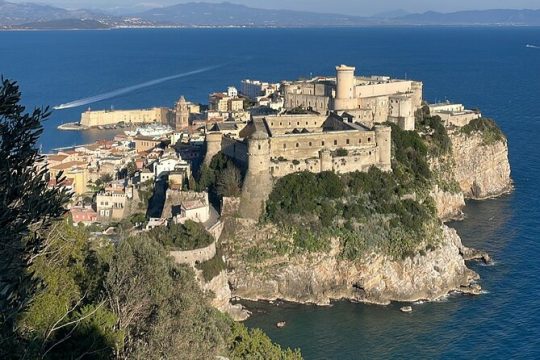
Outdoor Activities
Prices from $25


Rome Civitavecchia Cruise Port (Civitavecchia Terminal Crociere)
Prices from $17
Ancient Ostia (Ostia Antica)
Prices from $325
Ancient Rome
Prices from $530
Ara Pacis Museum (Museo dell'Ara Pacis)
Prices from $100
Arch of Constantine (Arco di Costantino)
Prices from $146
Aventine Hill (Aventino)
Prices from $100
Ballarò Market (Mercato Ballarò)
Prices from $95
Basilica of Saint Paul Outside the Walls (Basilica di San Paolo Fuori le Mura)
Prices from $169
Basilica of Santa Maria in Trastevere (Basilica di Santa Maria in Trastevere)
Prices from $688
Basilica of Santa Maria Maggiore (Basilica Papale di Santa Maria Maggiore)
Prices from $30
Basilica of St. John Lateran (Basilica di San Giovanni in Laterano)
Prices from $289
Baths of Caracalla (Terme di Caracalla)
Prices from $289
Hanukkah in Lazio
Dec 4–12, 2026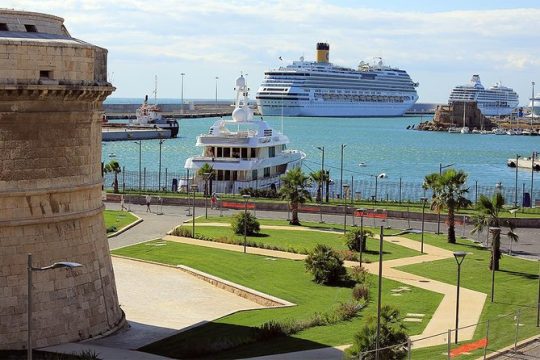
New Year’s Eve in Lazio
Thu, Dec 31, 2026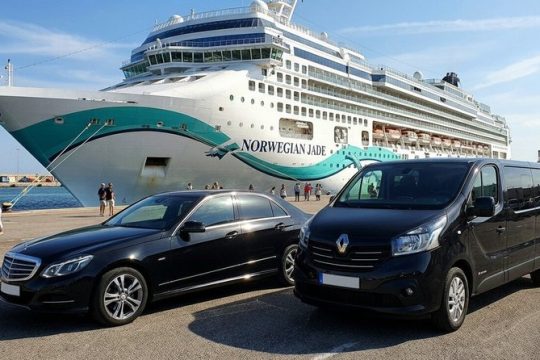
New Year’s Day long weekend in Lazio
Jan 1–3, 2027
Rainy day activities in Lazio
3 tours & activities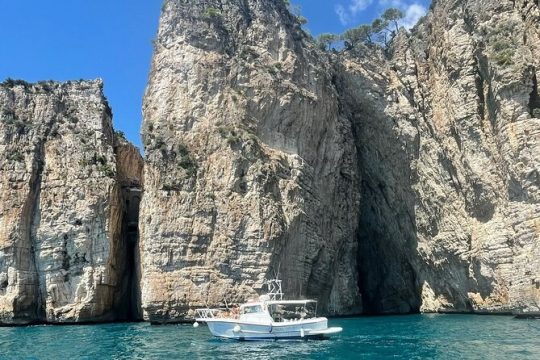
Senior-friendly tours Lazio
27 tours & activities
Lazio Foodie Tours
30 tours & activities
Family-friendly Lazio Tours
113 tours & activities
The best tours and activities for culture lovers in Lazio
101 tours & activities
Top Day Trips from Lazio
50 tours & activities
Things to do in Lazio this summer
180 tours & activities
 From $2