Early Access! Black Friday 05HRS 30MIN 23SEC Up to 20% off gift cards BLACK FRIDAY
GIFT CARD SAVINGS
$100 – $249SAVE 5% $250 – $499SAVE 10% $500 – $999SAVE 15% $1,000+SAVE 20% Shop gift cards Discount applied automatically at checkout. Each card keeps its full value.
Early Access! Black Friday 05HRS 30MIN 23SEC
UP TO 20% OFF GIFT CARDS
$100–$249(save 5%) $250–$499(save 10%) $500–$999(save 15%) $1,000+(save 20%)
Shop gift cards Discount applied automatically at checkout. Each card keeps its full value.
Isla Verde

Cool things to do in Isla Verde

Welcome to Isla Verde

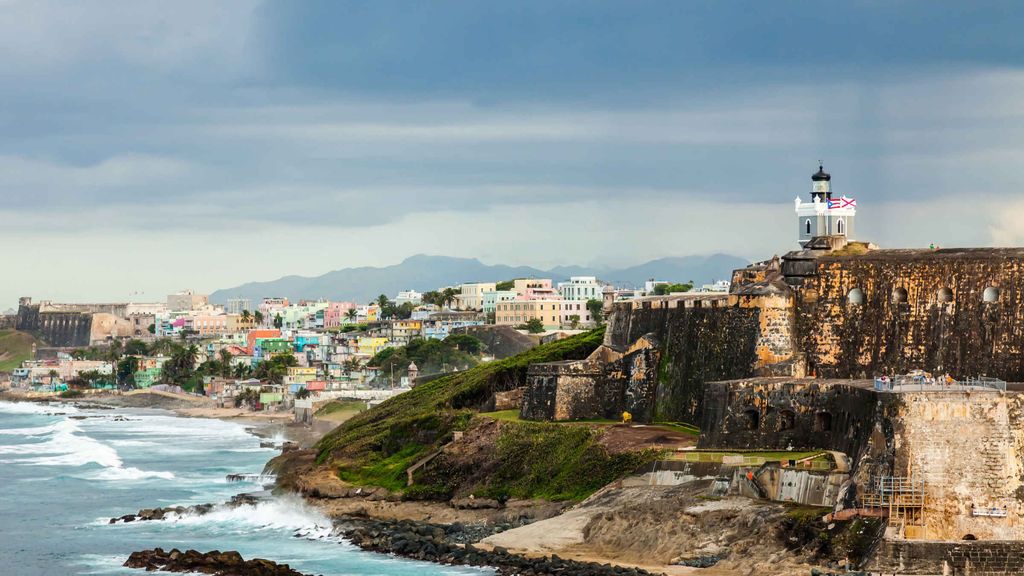
Isla Verde is the beach district just east of San Juan, a strip of hotels and soft sand close to the airport that makes a handy base for exploring Puerto Rico. Days here can start with a swim and end with dinner by the water, but the real draw is how easily you can reach rain forest, offshore cays and glowing bays. Almost every outing includes pickup from your hotel, about half last four to eight hours, and nearly all can be cancelled for free, so you can sort out the beach days and the trips once you see the forecast.

Into the rain forest

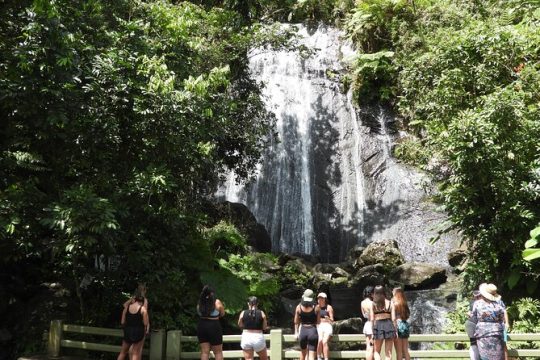
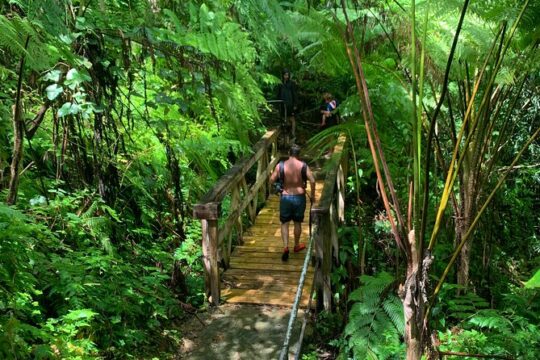
The most popular day out heads east to El Yunque National Park, a misty mountain forest that climbs from the coastal plain into the clouds. Guides lead you along shaded trails past giant ferns, streams and natural pools, with the chirp of the tiny coquí frog all around. Many outings pause for a swim beneath a waterfall, so wear a swimsuit under your clothes and pack shoes that can get wet. Plenty of itineraries finish at Luquillo Beach, a calm crescent of sand backed by palms and a row of food kiosks serving fritters and cold drinks.

Islands, snorkeling and the coast

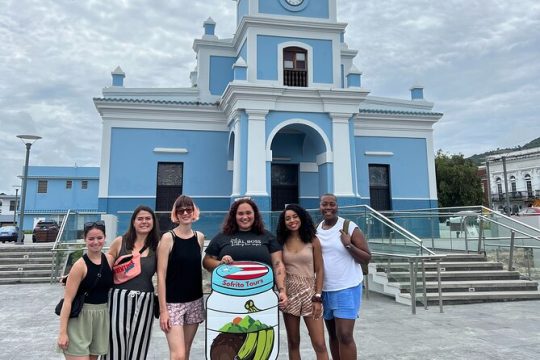
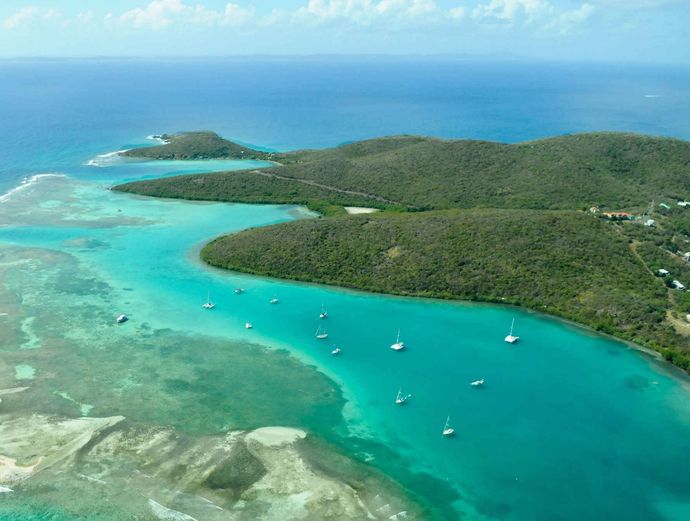
Sailing trips leave the east coast for Icacos Island (Cayo Icacos), an uninhabited cay with white sand and clear shallow water for snorkeling over reef and seagrass. Further out, Culebra Island is known for some of the most beautiful beaches in the Caribbean and makes a fine full-day trip by boat. On the north coast, Cueva del Indio is a wild stretch of sea caves, arches and rock carvings left by the island's early people, while Gozalandia Falls, inland to the west, offers a pool for swimming and ledges for jumping. A few longer days cross the mountains to Ponce, the stately southern city with its painted firehouse and colonial plaza.

Nights on the glowing bays

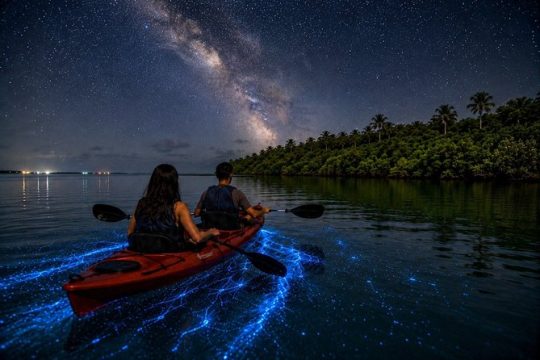
Some outings run after dark, and the reason is the bioluminescence. At Laguna Grande, a mangrove channel opens into a lagoon where tiny organisms light up blue-green with every paddle stroke. The Bioluminescent Bay (Mosquito Bay) on Vieques is known as one of the brightest in the world and needs a ferry or flight to reach. Go on a moonless night if you can, since moonlight dims the glow, and skip the insect repellent before entering the water.

Booking tips

About a third of the outings suit cruise passengers docked in San Juan, so check the return time against your ship. Groups are mostly shared, which keeps costs down and adds company on the trail. Before choosing, look at:

  • Whether lunch, gear and park access are included
  • The fitness level and how much swimming is involved
  • Age limits for kayaking and boat trips
  • What to bring, such as towels and a dry bag

Book rain forest trips for the morning, when the trails are cooler and afternoon showers are less likely.

Read more
Top 9 attractions in Isla Verde
El Yunque National Park#1
4.8 (65,091)

El Yunque National Park

El Yunque, often called El Yunque National Park, is a protected tropical rainforest covering the Luquillo Mountains in northeastern Puerto Rico, and the only tropical rainforest in the United States national forest system. People come to walk misty trails through dense greenery, swim beneath waterfalls and listen for the coquí, the tiny tree frog whose call fills the night.The Taíno people, who lived on the island before the Spanish arrived, held these mountains sacred and are said to have believed that a kindly spirit, Yokahú, watched over them from the peaks. The Spanish later called the summit El Yunque, the anvil, after its flat-topped shape. The forest was first set aside as a reserve under Spanish rule and later protected by the United States, making it one of the oldest forest reserves in the Western Hemisphere.Rising from the lowlands to cloud-wrapped peaks, the forest changes as you climb, from tall tabonuco trees on the lower slopes to groves of palms and finally the stunted, moss-covered dwarf forest near the summits, often hidden in cloud. Giant tree ferns, wild orchids and bromeliads grow everywhere, and the forest is home to the Puerto Rican parrot, a bright green bird that came close to extinction before careful conservation work began to bring it back.Among the favorite sights are La Mina Falls, where a trail through the trees ends at a cool pool beneath the cascade, and Yokahú Tower, a stone lookout with views over the canopy to the Atlantic coast. Higher up, Mount Britton Tower rises out of the cloud forest. Along the streams you may spot lizards, snails and flashes of tropical birds. A guide can name the plants and birds along the trail and explain how the forest renews itself and grows back lush and green.

More
Luquillo Beach#2
4.8 (11,629)

Luquillo Beach

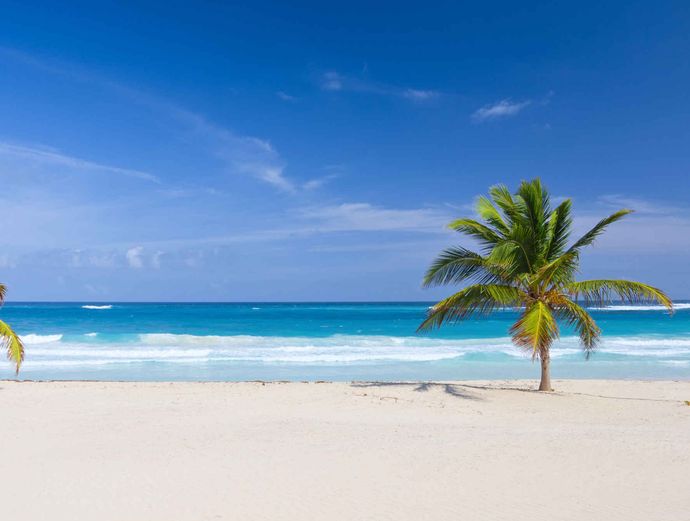
Luquillo Beach is a public beach on the northeast coast of Puerto Rico, in the town of Luquillo, officially named La Monserrate. Its sheltered water, a long stretch of sand lined with coconut palms and the green peaks of El Yunque rising behind it have made it one of the island's favorite places for a swim and a lazy day by the sea.The beach runs for about a mile along the Atlantic shore, between the ocean and the forested mountains of El Yunque National Forest. The town's name is thought to come from Yukiyu, the Taíno name for the mountain, and its people are nicknamed the coconut eaters, a playful nod to the large grove of coconut palms that shades the sand. Those palms set the scene, leaning over the beach and giving welcome patches of shade on hot days.Most visitors come simply to swim, float and relax. The water is usually calmer here than along much of the north coast, which makes the beach popular with families and with people who want an easy swim rather than surf. Local families set up for the day under the palms, and you will hear plenty of Spanish and music drifting across the sand. Food from the nearby kiosks, from fried Puerto Rican snacks to fresh fruit drinks, is part of the tradition of a day here.The coast around Luquillo also marks the start of the Northeast Ecological Corridor, a protected stretch of shoreline where endangered leatherback sea turtles sometimes come ashore. That mix of beach life, rainforest views and wild coastline is what draws people out from San Juan. A guided outing can add the stories of the area and its natural surroundings.

More
Laguna Grande#3
4.6 (10,068)

Laguna Grande

Laguna Grande is a bioluminescent lagoon in Fajardo, on the northeastern tip of Puerto Rico, where the water lights up with a blue-green glow when it is stirred at night. Ringed by mangrove forest, it is one of the island's celebrated bio bays, and visitors come to paddle through the dark and watch the water sparkle around them.The glow comes from huge numbers of microscopic plankton called dinoflagellates. When the water around them moves, each one gives off a brief flash of light, a chemical reaction that may help startle the tiny animals that would eat them. In a lagoon like this the flashes add up, so a paddle stroke leaves a trail of light, fish streak past like sparks, and drops falling from a raised hand glitter as they hit the surface.Few places in the world have water bright enough to see this so clearly, and Puerto Rico is lucky to have several. Conditions here suit the plankton. The lagoon is shallow and sheltered, linked to the sea by a narrow channel, and fed by the surrounding mangroves, whose fallen leaves and roots supply nutrients that help the organisms thrive. The mangroves are worth noticing in their own right, with red mangroves standing on arching prop roots in the water and sheltering young fish, crabs and wading birds.The lagoon lies within the protected Las Cabezas de San Juan nature reserve, a stretch of dry forest, beaches and rocky headlands on the corner of the island, crowned by a historic lighthouse. That protection keeps the shore wild and the nights dark, both vital for the glow. Out on the water, away from city lights, with stars overhead and light swirling below, it is a quiet and memorable way to spend an evening in Puerto Rico.

More
Bioluminescent Bay (Mosquito Bay)#4
4.3 (2,212)

Bioluminescent Bay (Mosquito Bay)

Mosquito Bay, also known as Puerto Mosquito, is a shallow, mangrove-lined bay on the south coast of Vieques, an island off eastern Puerto Rico. People come to see its water light up after dark, when every paddle stroke and passing fish leaves a trail of blue light, in a bay often ranked as the brightest of its kind anywhere.The light comes from a single-celled organism, a dinoflagellate called Pyrodinium bahamense, which flashes blue whenever the water around it is disturbed. These tiny plankton live in a few places around the Caribbean, but they gather here in huge numbers. The bay's warm, fairly shallow water and the mangroves along its edges create the conditions they need, and the red mangrove matters most, as its roots and fallen leaves feed the rich, sheltered waters of the lagoon. The lack of building around the shore has helped keep the water dark and clean.The bay is one of only a handful in the Caribbean that glow all year, and one of three in Puerto Rico. Its brilliance has earned it a place in record books, and it is protected as a natural reserve and a U.S. National Natural Landmark, with its mangrove shores also valued as an important home for birds. Legend says the name has nothing to do with insects. It is said to come from the Mosquito, a ship sailed by the pirate Roberto Cofresí, one of the most famous figures in Puerto Rican folklore.Out on the water, the effect is hard to picture until you see it. Dip your fingers in and they come out shimmering, and fish dart through the dark leaving streaks like sparks. Overhead, far from city lights, the sky over Vieques fills with stars, so the glow seems to come from above and below at once. A guide adds the science behind the light and keeps each outing gentle on a fragile place.

More
Culebra Island#5
4.7 (3,546)

Culebra Island

Culebra is a small island municipality off the east coast of Puerto Rico, part of the group often called the Spanish Virgin Islands. Travelers come for its slow pace, clear water and white-sand beaches, above all Flamenco Beach, along with coral reefs and a wildlife refuge that protects much of the surrounding islands.Its past is far more turbulent than its calm suggests. Taíno people are thought to have sought refuge here, and pirates and fishermen used its sheltered bays before Spanish settlers arrived in the late 19th century. Soon after Puerto Rico came under United States rule, the Navy took land around the main bay, and residents moved to the new town of Dewey. For decades the islands served as a gunnery and bombing range, until protests by local people pushed the Navy to leave in the late 20th century.Nature has reclaimed much of that ground. The Culebra National Wildlife Refuge, created in the early 20th century by Theodore Roosevelt, is one of the oldest bird sanctuaries in United States territory. Tens of thousands of seabirds, including brown boobies and sooty terns, return to nest on the cays, and leatherback, green and hawksbill turtles lay their eggs on the beaches.Flamenco Beach is the island's best-known sight, a long arc of fine white sand framed by dry hills, where rusting tanks covered in bright paint recall the military years. Beyond it, Tamarindo and Carlos Rosario offer snorkeling over reefs alive with fish, and the tiny island of Culebrita has a ruined lighthouse, once among the oldest in the Caribbean, and rocky pools where the surf rushes in. The little town of Dewey, with its colorful houses and small harbor, sets the easygoing tone. A local guide can lead you to reefs and coves that are hard to find on your own.

More
Cueva del Indio#6
4.9 (1,754)

Cueva del Indio

If you are looking for things to do in Isla Verde we have 11 Tours and Activities to Experience Cueva del Indio. Check out our verified traveler reviews and photos of Cueva del Indio tours and other things to do in Isla Verde, and book securely when you find the perfect one. Learn the best ways to see famous Cueva del Indio and explore the most popular things to do in Isla Verde.

More
Gozalandia Falls#7
5.0 (84)

Gozalandia Falls

If you are looking for things to do in Isla Verde we have 6 Tours and Activities to Experience Gozalandia Falls. Check out our verified traveler reviews and photos of Gozalandia Falls tours and other things to do in Isla Verde, and book securely when you find the perfect one. Learn the best ways to see famous Gozalandia Falls and explore the most popular things to do in Isla Verde.

More
Icacos Island (Cayo Icacos)#8
4.9 (12,762)

Icacos Island (Cayo Icacos)

Icacos Island, or Cayo Icacos, is a small, uninhabited cay off the northeast coast of Puerto Rico near Fajardo. Known for its white sand, clear turquoise water and coral reefs, it draws people who want a day of swimming, snorkeling and lazing on a quiet beach away from the mainland.Icacos is the largest of a chain of small islands and reefs off Fajardo known as La Cordillera, which is protected as a nature reserve. The protection keeps the cays free of homes, hotels and roads, and it guards the reefs, seagrass beds and seabirds that depend on these waters. The island takes its name from the icaco, the coco plum, a coastal shrub that grows along Caribbean shores. With no buildings at all, it feels very different from the busy towns along the coast.The main attraction is the water. Pale sand shelves gently into calm, clear shallows, and the colors shift from green to deep blue as the bottom drops away. Around the rocks and nearby reefs, snorkelers find coral, sea fans and schools of bright reef fish, and sometimes rays or sea turtles gliding by. The beach itself is a long curve of fine sand backed by low scrub and sea grape, with the outline of other cays and the green mountains of the main island on the horizon.Life on Icacos is simple. Visitors spend their time floating in the shallows, walking the length of the shoreline and watching pelicans dive for fish. Boats anchor offshore in the calm water, and the reefs nearby make the island part of a wider day spent around the cays of the reserve. A boat crew that knows these waters can point out the best reef spots and the marine life you might otherwise swim straight past.

More
Ponce#9
4.9 (191)

Ponce

If you are looking for things to do in Isla Verde we have 5 Tours and Activities to Experience Ponce. Check out our verified traveler reviews and photos of Ponce tours and other things to do in Isla Verde, and book securely when you find the perfect one. Learn the best ways to see famous Ponce and explore the most popular things to do in Isla Verde.

More

Good to know Isla Verde

A stay in Isla Verde moves at an easy rhythm: a guided outing in the morning, the afternoon back on the sand, and evenings at the restaurants and bars along the beachfront. Most visitors mix nature days in the mountains with boat trips to small islands and a night paddle on a lagoon. It suits couples, families with older kids and cruise passengers who want a beach base with the rest of the island close at hand.

Isla Verde is warm all year, so the choice comes down to rain and crowds. December through April brings drier, breezier weather and the busiest stretch, when hotels fill and outings sell out early. May and early June are quieter and still sunny, a good time for snorkeling and boat days. Rain picks up from June to November, with August to October the most changeable, so a loose itinerary works best then.

The international airport sits right beside Isla Verde, so the ride to your hotel is short by taxi or rideshare. Within the district you can walk between hotels, cafes and the sand, and taxis cover trips into Old San Juan. Outings to the east coast and the mountains collect you at your hotel, which spares you a rental car on winding roads. Book ahead in the dry months, when nature days and night paddles fill first. Pack reef-safe sunscreen, a light rain jacket and water shoes, and keep a waterproof pouch for your phone on boat days.

Isla Verde
Peak season Dec – Apr
Local Currency US Dollar ($)
Weather now
Language(s) Spanish
Time Zone AST (-4)
Country Code +1-787,+1-939
Attractions 9
Tours 75
Reviews 17,810

Frequently Asked Questions

The answers provided below are based on answers previously given to customers' questions.

Activity name

Discover Isla Verde