Germany attractions
More things to do in the country
 #346
Rhine Falls (Rheinfall)
The Rhine Falls, or Rheinfall, is a broad, roaring waterfall on the High Rhine at Neuhausen am Rheinfall in northern Switzerland, just outside Schaffhausen. Counted among the most powerful waterfalls in Europe, it draws visitors who want to feel the spray, hear the thunder and watch the whole river crash over a wide rock ledge.The falls are young in geological terms. They formed in the last ice age, when glaciers and their debris pushed the Rhine out of its old bed and onto a new course across a band of hard limestone. Softer gravel wore away, but the limestone held, creating the step the river still pours over. A few large rocks stand in the middle of the falls, worn by the current yet still in place, and the tallest, topped with a Swiss flag, has become the symbol of the site.People have been drawn here for centuries. Above the south bank stands Laufen Castle, a medieval stronghold with paths and balconies leading down close to the water, while on the north side the little Schlössli Wörth sits beside the calmer basin below the falls. In the age of Romanticism, writers and painters came to capture the scene, among them Goethe and the English painter J. M. W. Turner, who painted the falls more than once. Their pictures and descriptions helped make the falls a regular stop on the European grand tour.Just upstream, a stone railway bridge from the 19th century crosses the river, and trains rumble over it within sight of the cascade. The falls are also a favorite gathering place on Switzerland's national day, when fireworks over the water draw large crowds. A guide can explain the geology and the old stories that cling to this stretch of the river.
More #347
Rhine River Promenade (Rheinuferpromenade)
The Rhine River Promenade, or Rheinuferpromenade, is a broad, car-free walkway along the right bank of the Rhine in Düsseldorf, running below the old town. Locals and visitors come to stroll, cycle and sit on its wide waterside steps, watching barges glide past and the sun set across the water.For decades after the Second World War, the old town was cut off from its river by a busy multi-lane road built along the embankment. The solution was bold: engineers dug a road tunnel of about 2 kilometers beneath the riverbank, sending the traffic underground and freeing the surface for people on foot and on bikes. Architect Niklaus Fritschi designed the new promenade above it, turning a noisy traffic corridor into one of the city's favorite public spaces.The promenade is designed around the water. A long, wide staircase descends toward the river and works as an open-air grandstand, where people sit side by side with a drink or a snack and take in the view. On the old town side, cafes, restaurants and bars line the way, many pouring the dark local Altbier, while rows of trees and benches offer quieter places to pause and look across to the green meadows on the far shore.Walking the length of the promenade links many of Düsseldorf's sights. At the old town end stand Castle Square with its Castle Tower and Maritime Museum, and the Carnival Museum is close by, while farther south the path leads toward the slender Rhine Tower and the striking modern architecture of the Media Harbor, where curving towers by Frank Gehry stand beside the former docks. Together, river, promenade and old town show how a city can give its waterfront back to the people who live there.
More #348
Rhine Tower (Rheinturm)
The Rhine Tower is the tall concrete telecommunications tower on the riverbank in Düsseldorf, rising beside the Rhine at the entrance to the Media Harbor. The tallest structure in the city, it is where people go for a wide view over the river, the old town and the flat lowlands of the Lower Rhine from its observation deck and revolving restaurant.The architect Harald Deilmann designed the tower in the late 20th century to carry radio and television antennas for the region, and it soon became a city landmark as much as a piece of infrastructure. Its slender shaft and rounded cabin give Düsseldorf a skyline marker visible from far along the river. In the decades after it opened, the old commercial port beside it was gradually reborn as the Media Harbor, a district of offices, studios and adventurous modern architecture.At the top, the observation level wraps around the cabin behind wide windows that slope outward, so visitors can lean against the glass and look almost straight down to the river. Above it, the restaurant turns slowly on its platform, completing a full circle in about 72 minutes, so diners watch the bridges, the riverbanks and the rooftops of the old town drift past over a single meal. From up here the great bend of the Rhine around the city is easy to trace.Down the shaft runs one of the tower's most playful details, a light sculpture by Horst H. Baumann that works as a giant clock. Its columns of round lamps show hours, minutes and seconds, read from top to bottom, and once you learn the code you can tell the time from across the city. A guide can explain how to read it and point out the landmarks seen from above.
More #349
River Seine
The Seine is the river that flows through the heart of Paris, curving past the Eiffel Tower, the Louvre and Notre-Dame on its way to the English Channel. Its quays, bridges and islands form the backbone of the city, and people come to walk its banks, cross its bridges and see Paris from the water.The river rises on a plateau in Burgundy and winds across northern France before meeting the sea between Le Havre and Honfleur. Paris, named for the Celtic Parisii who lived along this stretch of river, grew up around the Île de la Cité, an island in its stream, where the Romans built part of their town of Lutetia. For centuries the river carried the city's trade, and the powerful guild of river merchants gave Paris its coat of arms, a ship riding the waves, and its motto, Fluctuat nec mergitur, tossed by the waves but never sunk.The banks of the Seine through central Paris are a UNESCO World Heritage Site, a corridor of monuments that reads like a history of the city. On the main island stand Notre-Dame and the Gothic jewel box of the Sainte-Chapelle, while the Louvre stretches along the right bank and the Musée d'Orsay fills a former railway station on the left. Farther downstream rise the gilded dome of Les Invalides, the Grand Palais and the Eiffel Tower. At the western tip of the Île de la Cité, willows trail into the water in the little Square du Vert-Galant.The bridges are sights in their own right, from the Pont Neuf, the oldest standing bridge in the city despite a name meaning new bridge, to the Pont Alexandre III with its gilded statues and ornate lamps. Stretches of the banks once given over to traffic now belong to walkers, cyclists and riverside cafés. A guide reveals the stories hidden along the water.
More #350
Rothenburg Market Square (Marktplatz)
Rothenburg Market Square (Marktplatz) is the heart of Rothenburg ob der Tauber, the walled medieval town on Bavaria's Romantic Road. Framed by the town hall, tall gabled houses and a clock with a famous drinking scene, it is where the storybook character that draws travelers from around the world feels strongest.Rothenburg grew up around a castle of the Staufer dynasty and became a free imperial city, answerable only to the emperor, a status that brought trade and wealth in the late Middle Ages. The town hall shows that story in stone. Its Gothic rear section belongs to the town's medieval prime, while the Renaissance front facing the square went up after fire destroyed the older wing, giving the building two faces from two eras. Its tower rises about sixty meters, and the top looks out over red roofs, walls and the Tauber valley.The square's favorite tale is the Meistertrunk, or Master Draught. During the Thirty Years' War, legend says, the Catholic general Tilly took the town and threatened to destroy it, then offered mercy if someone could drain a huge tankard of wine in one go. Former mayor Georg Nusch emptied it and saved Rothenburg. Little figures of the two men appear in the windows of the clock on the Ratstrinkstube, the old councilors' tavern, to repeat the famous drink, and townspeople stage the story at an annual festival.Around the edges, half-timbered and step-gabled houses hold cafes, bakeries selling Schneeballen, the town's crumbly pastry balls, and shops full of carved and painted souvenirs. At one corner stands the Georgsbrunnen, a Renaissance fountain topped by St. George and the dragon. In winter the square fills with the wooden stalls of a much-loved Christmas market. A guide points out the small details, from carved coats of arms to old inscriptions, that pass most visitors by.
More #351
Royal Palace
The Royal Palace is the official residence of the King of Norway, a pale neoclassical building on a rise at the top of Karl Johans gate in central Oslo. Visitors come to see its stately facade and parkland, watch the King's Guard on duty and tour the state rooms where the royal family receives its guests.The palace was commissioned in the early 19th century by King Charles III John, the former French marshal Jean-Baptiste Bernadotte, who had become king of both Norway and Sweden. The architect Hans Linstow designed it, and the building work dragged on for decades as funds ran short. Charles John died before it was finished, and his son Oscar I was the first king to use it. Only after Norway gained full independence in the early 20th century did the palace become the permanent home of a Norwegian royal family, when King Haakon VII and Queen Maud moved in.Inside, the state rooms showcase Norwegian art and craftsmanship of the 19th century. The Bird Room is painted with native birds among leafy branches, the Mirror Hall glitters with tall mirrors and chandeliers, and the Banqueting Hall is laid for state dinners when foreign heads of state visit. The palace also has its own chapel, used for royal family ceremonies.Around the palace spreads Slottsparken, a landscaped park of lawns, ponds and old trees that is open to all, and on the square in front an equestrian statue honors Charles John, the king who commissioned the palace. The soldiers at the gates belong to His Majesty the King's Guard, a battalion largely made up of young conscripts. A guide can show how the palace mirrors the story of modern Norway, from the union with Sweden to the present day.
More #352
Royal Palace Amsterdam (Koninklijk Paleis Amsterdam)
The Royal Palace Amsterdam is a grand classical building on Dam Square, the historic heart of the Dutch capital. Built as the city hall during the Dutch Golden Age and later turned into a royal residence, it is still used by the Dutch monarch for state occasions, and visitors come to see its marble halls, sculpture and period furniture.In the 17th century Amsterdam was one of the richest trading cities in the world, and its leaders wanted a town hall to match. The architect Jacob van Campen designed a vast stone building in the classical style, raised on a forest of wooden piles driven into the soft ground. When it opened, admirers called it the Eighth Wonder of the World. Inside, the city's government, courts, bank and a prison worked under one roof, and every room was decorated to remind citizens of justice, wisdom and civic virtue.Its role changed in the early 19th century, when Louis Napoleon, the brother of Napoleon Bonaparte, became King of Holland and made the city hall his palace. He filled it with elegant Empire furniture, chandeliers and clocks, and much of that collection survives, among the finest of its kind anywhere. After his reign the building passed to the House of Orange and became one of the palaces placed at the disposal of the Dutch monarch.The heart of the palace is the Citizens' Hall, a soaring marble space whose floor is inlaid with maps of the world and a chart of the heavens, so that the people of Amsterdam could walk across the globe. The sculptor Artus Quellinus and his workshop carved much of the decoration, and paintings by pupils of Rembrandt hang in the galleries. On the ground floor, the Tribunal, where death sentences were once read out, is lined with marble caryatids. Outside, a bronze Atlas shoulders the globe on the rear gable. A guide can explain the symbols that turned the building into a lesson in good government.
More #353
Römerberg Square
If you are looking for things to do in Germany we have 25 Tours and Activities to Experience Römerberg Square. Check out our verified traveler reviews and photos of Römerberg Square tours and other things to do in Germany, and book securely when you find the perfect one. Learn the best ways to see famous Römerberg Square and explore the most popular things to do in Germany.
More #354
Salzburg Cathedral (Dom zu Salzburg)
Salzburg Cathedral, the Dom zu Salzburg, is the city's great Baroque church, standing on Domplatz in the heart of the Old Town beneath the Hohensalzburg fortress. Visitors come for its vast white interior and soaring dome, its long religious history and its close ties to Mozart.A cathedral has stood here since the 8th century, when Bishop Virgil, an Irish monk, built the first church on the site, and over the following centuries it was enlarged into a vast Romanesque basilica. After a fire badly damaged that building at the end of the 16th century, the powerful prince-archbishops of Salzburg decided to replace it with something entirely new. Archbishop Wolf Dietrich cleared the ruins, and his successor brought in the Italian architect Santino Solari, whose design gave Salzburg one of the earliest Baroque churches north of the Alps. It was consecrated in the 17th century with great festivities during the Thirty Years' War.The pale marble facade, framed by twin towers, carries statues of Rupert and Virgil, the city's patron saints, beside the apostles Peter and Paul, and its three bronze doors, made after the Second World War, stand for Faith, Love and Hope. Inside, white stucco and ceiling paintings fill the nave, and light pours from the dome, which was rebuilt after a bomb pierced it during that war. Look for the medieval bronze font where Mozart was baptized and the organs he played as court organist, then head down to the crypt, which keeps traces of the earlier cathedrals and the tombs of archbishops.Music remains part of its life, from sacred concerts to the masses Mozart composed for this very church, and in summer the square in front becomes the open-air stage for Everyman, the morality play staged there since the Salzburg Festival began. A guide can read the symbols on the bronze doors and explain how the prince-archbishops used the building to display their wealth and power.
More #355
Saxon Switzerland National Park
Saxon Switzerland National Park protects a dramatic sandstone landscape along the Elbe southeast of Dresden, where the river winds out of the Czech Republic past towers, cliffs and flat-topped rock mountains. Hikers, climbers and sightseers come for the Bastei lookout and its stone bridge, the deep gorges and the strange pillars rising out of the forest.The rock began as sand laid down on the floor of an ancient sea, later lifted and worn by rain, frost and the river into the maze of shapes seen here. The name came from two Swiss artists who worked in Dresden in the 18th century and felt the scenery reminded them of home. Painters of the Romantic era, among them Caspar David Friedrich, followed, and the route they walked became known as the Painters' Way. In the 19th century a stone bridge replaced an earlier wooden one at the Bastei. The national park was created in the late 20th century and continues across the border as Bohemian Switzerland National Park.From the Bastei, high above the river at Rathen, you look down on the Elbe's loop and across to table mountains such as the Lilienstein. Around the bridge lie the scant remains of Neurathen, a medieval castle built into the rock itself. Farther east, the Schrammsteine form a jagged ridge reached by ladders and iron steps, and the Kuhstall, a large natural rock arch, opens onto a sea of treetops. Narrow gorges stay cool and mossy even in summer, and the area is also known as a birthplace of free climbing, with climbers still following strict local rules on hundreds of sandstone towers.Between the rocks, beech and spruce woods hide streams, ferns and quiet valleys, and peregrine falcons nest on some of the cliffs. A guide can explain how the sandstone formed and point out the climbing routes, castle traces and viewpoints that are easy to pass by.
More #356
Schaezlerpalais
If you are looking for things to do in Germany we have 4 Tours and Activities to Experience Schaezlerpalais. Check out our verified traveler reviews and photos of Schaezlerpalais tours and other things to do in Germany, and book securely when you find the perfect one. Learn the best ways to see famous Schaezlerpalais and explore the most popular things to do in Germany.
More #357
Schwules Museum (Gay Museum)
If you are looking for things to do in Germany we have 1 Tours and Activities to Experience Schwules Museum (Gay Museum). Check out our verified traveler reviews and photos of Schwules Museum (Gay Museum) tours and other things to do in Germany, and book securely when you find the perfect one. Learn the best ways to see famous Schwules Museum (Gay Museum) and explore the most popular things to do in Germany.
More #358
Schönbrunn Palace (Schloss Schönbrunn)
Schönbrunn Palace is the former summer residence of the Habsburg emperors, on the western side of Vienna. With more than 1,400 rooms, ornate state apartments, formal gardens and the hilltop Gloriette, it shows how one of Europe's most powerful dynasties lived, entertained and ruled.The estate began as a hunting ground. In the 16th century Emperor Maximilian II bought the land beside the river and stocked it with game, exotic birds and fishponds, and a palace followed in the next century. Its name comes from a spring on the grounds, the beautiful well that gave Schönbrunn its title. In the 18th century Empress Maria Theresa rebuilt the palace into the Baroque residence that stands there, and it became the center of court life through the warm months.History kept passing through its gates. Emperor Franz Joseph was born here and died here after a reign of almost seven decades, and the palace saw the end of the monarchy after the First World War, when it passed to the state and opened as a museum. Much later it hosted a Cold War meeting between John F. Kennedy and Nikita Khrushchev. UNESCO lists the palace and its gardens as a World Heritage Site.Inside, the state rooms move from gilded Rococo halls and the long Great Gallery, once lit for balls and banquets, to private apartments that reveal the daily habits of Franz Joseph and Empress Elisabeth. Outside, the park climbs a gentle slope to the Gloriette, a colonnaded structure with wide views over the city, passing fountains, statues, a mock Roman ruin and the glass Palm House along the way. The grounds also hold the Tiergarten, which claims to be the oldest zoo in the world. A guide helps connect the rooms to the people and court rituals that filled them.
More #359
SEA LIFE® Konstanz
SEA LIFE Konstanz is an aquarium in the harbor of Konstanz, on the shore of Lake Constance in southern Germany. It traces the path of water from alpine streams and the lake itself to the open ocean, and families come to meet local fish, jellyfish, coral dwellers and other sea creatures along the way.The layout follows the journey of the Rhine, which rises in the Alps, flows through Lake Constance and meets the sea near Rotterdam. The route begins with the fish native to Lake Constance, the great lake shared by Germany, Austria and Switzerland, and takes in a glacier cave, a mountain stream and a recreated Rotterdam harbor. From there the scenery turns marine, with a shipwreck, a coral and jellyfish area and an ocean tunnel where fish glide overhead.Further on, a rainforest section and an Antarctic area widen the picture to very different climates. Feeding sessions during the day show how the animals eat, and after closing time a torch-lit tour reveals the aquarium in a quieter, more mysterious light. The visit also includes a nature museum devoted to the Lake Constance region, which places the lake's wildlife in the context of its landscape.The local angle is what sets this aquarium apart. It begins with fish that live just beyond its walls in the lake and shows how one river links them to the creatures of distant oceans, a story that helps make sense of the whole region. The harbor setting adds to the experience, with lake boats coming and going and the tall Imperia statue turning slowly at the harbor entrance. The Imperia, a satirical figure recalling the great church council held in Konstanz in the late Middle Ages, is a local landmark in its own right.
More #360
SEA LIFE® Speyer
SEA LIFE Speyer is an aquarium on the bank of the Rhine in Speyer, a historic cathedral city in Rhineland-Palatinate within easy reach of Heidelberg. Families come to walk through an underwater tunnel, watch sharks and sea turtles glide past and wander themed zones that range from a coral world to a steamy rainforest.The aquarium is part of the SEA LIFE chain, which has sites across Europe, North America, Asia and Oceania. Its home in Speyer sits by a harbor basin on the Rhine, a fitting spot for a place devoted to water and the creatures that live in it. Inside, the displays are pitched at curious minds of every age, with plenty for younger visitors who may be meeting a shark or an octopus for the first time.The highlight for many is the underwater tunnel, where fish swim overhead and alongside as you walk. Elsewhere, seahorses hover in calm tanks, tropical reef fish dart through a coral world, moray eels peer out from rocky crevices and octopuses show off their talent for changing shape and color. A tropical rainforest zone brings a warmer, greener mood, and one area recreates the Loreley, the famous rock on the Rhine that legend links to a siren whose song lured boatmen to their doom. Sea turtles are another favorite, paddling slowly through their tank.Feeding sessions through the day let you watch the keepers at work and hear more about each species, and a short virtual reality experience adds a digital twist to the visit. One of the quirkier encounters is a meet-and-greet with giant snails, a treat for children who like their animals slow and slimy. Speyer itself, with its great Romanesque cathedral and old town, makes a fine pairing for a day by the river, and a guide can add background on the animals and the work that keeps the tanks healthy.
More #361
SEA LIFE® Timmendorfer Strand
SEA LIFE® Timmendorfer Strand is an aquarium on the seafront promenade of Timmendorfer Strand, a Baltic beach resort on the Bay of Lübeck within day-trip reach of Rostock. It is home to about 2,500 creatures, from sharks and rays to seahorses and a green sea turtle, and families come to meet them up close.The aquarium belongs to a well-known chain of sea life centers, and it is laid out as a journey through themed habitats. A rainforest area focuses on insects, a tropical ocean zone is bright with clownfish and lionfish, and a harbor area adds a maritime touch. One tank is devoted to the Baltic Sea itself, revealing the fish that live just off the beach outside.The highlight for many visitors is the underwater tunnel, where sharks and rays glide overhead and alongside as you walk through the water. The ray bay offers another close look at these flat, graceful fish, and the green sea turtle is a gentle star of the show. For something different, a virtual reality dive lets you sink into an imagined ocean without getting wet. At feeding times, the hosts share stories about the animals and how they are cared for.Timmendorfer Strand is one of the best-known resorts on this stretch of the Baltic, with a long sandy beach and a pier, and the aquarium sits right at the heart of its seafront life. After the tanks, the restaurant looks out over the open water, a reminder that the wild Baltic is only steps away. The visit suits families with curious children as well as anyone keen to understand the sea along this coast. Seeing the Baltic tank first and the real shoreline after makes the link between the two hard to forget.
More #362
Semper Opera House (Semperoper Erleben)
The Semper Opera House, or Semperoper, is the home of the Saxon State Opera on Theaterplatz in the center of Dresden, Germany. It is one of the most celebrated opera houses in Europe, admired for its grand facade above the Elbe, its lavish auditorium and the famous premieres that took place on its stage.The building is named after the architect Gottfried Semper, who designed the first opera house on this site in the 19th century. That theater burned down a few decades later, and Semper designed a second, even grander building, completed under the supervision of his son. The new house became one of the great stages of the operatic world. Richard Wagner conducted here, and several of his early operas premiered in Dresden, as did many works by Richard Strauss, including Salome and Der Rosenkavalier. Near the end of the Second World War, Allied bombing left the opera house a burned-out shell. It was carefully rebuilt during the communist era and reopened in the late 20th century, and it was restored once more after a severe flood of the Elbe early in the 21st century.The curved facade follows the shape of the auditorium behind it, and above the main entrance a bronze chariot drawn by panthers carries Dionysus and Ariadne. Statues of the playwrights Goethe and Schiller guard the doorway, along with figures of other great writers. Inside, the foyers are richly decorated with painted ceilings, chandeliers and columns that look like marble but are made of skillfully painted stucco. The horseshoe-shaped auditorium rises in tiers of red and gold, and above the stage a famous clock shows the time in five-minute steps. The Staatskapelle Dresden, one of the oldest orchestras in the world, plays in the pit.A guide shares the stories of the fires, rebuilding and premieres behind the gilded walls.
More #363
Signal Iduna Park
Signal Iduna Park, known officially as the Westfalenstadion, is where Borussia Dortmund plays its home matches, and no stadium in Germany holds more spectators. Visitors come for the club museum, a look behind the scenes on a stadium tour, and above all the sight of the vast yellow and black south terrace in full voice.The city built the stadium when the club outgrew Stadion Rote Erde, the older athletics ground that still stands next door, and the new arena opened in time to host matches at a World Cup staged in West Germany. It has since welcomed further World Cup and European Championship games, and it has been enlarged step by step, with its four grandstands roofed over and linked at the corners. Bright yellow pylons rising above the roofline hold up the canopy and make the building easy to spot across the city.The heart of the place is the south stand, the Yellow Wall, or Gelbe Wand, one of the largest standing terraces in Europe. On match days it becomes a single steep bank of fans in yellow and black, waving flags and singing for the whole game, and the noise it produces has made the stadium famous far beyond German football. The everyday name comes from a sponsorship deal with an insurance group, though many locals still call it the Westfalenstadion.Inside, a stadium tour leads through areas normally closed to the public, such as the dressing rooms, the players' tunnel and the edge of the pitch, and up into the stands for the view from the terrace. The Borusseum, the club museum built into the northeast corner, traces the story of Borussia Dortmund through trophies, shirts, photographs and film, from its working-class roots to league titles and European triumphs. A guide brings in the anecdotes and rivalries that give those trophies their meaning.
More #364
Sistine Chapel (Cappella Sistina)
The Sistine Chapel is the papal chapel inside the Apostolic Palace in Vatican City, famous for the ceiling and altar wall that Michelangelo covered with frescoes. Visitors come to stand beneath some of the most celebrated paintings in Western art, in the room where cardinals still gather to elect a new pope.The chapel was built in the late 15th century for Pope Sixtus IV, whose name it carries. He brought in leading painters of the day, among them Botticelli, Perugino and Ghirlandaio, to decorate the side walls with scenes from the lives of Moses and Christ, which still run in two facing cycles. Early in the 16th century, Pope Julius II persuaded Michelangelo, who saw himself first as a sculptor, to repaint the ceiling. Working on scaffolding high above the floor, he filled the vault with scenes from Genesis, from the separation of light and darkness to the story of Noah, surrounded by prophets, sibyls and muscular nude figures.Decades later Michelangelo returned to paint the Last Judgment across the whole altar wall. Christ stands at the center raising the saved and casting down the damned, amid a swirl of bodies rising from their graves or tumbling toward the underworld. Its many nudes shocked some churchmen, and after his death another painter was hired to cover parts of them with draperies. Look for Saint Bartholomew holding his own flayed skin, whose sagging face is widely read as a self-portrait of the artist.The most famous image of all is the Creation of Adam, where the fingers of God and the first man almost touch. A major cleaning late in the 20th century stripped away centuries of candle soot and revealed the bright colors Michelangelo actually used. When a new pope must be chosen, the chapel closes for the conclave, and the world watches its chimney for white smoke. A guide can help you read the crowded ceiling and point out details before you enter.
More #365
Sognefjorden
Sognefjorden, the Sognefjord, is the longest and deepest fjord in Norway, reaching far into the mountains of Western Norway north of Bergen. Travelers come for its sheer valley walls, waterfalls, glaciers and narrow side arms such as the Nærøyfjord, and for the villages, stave churches and orchards scattered along its shores.The fjord was carved by glaciers over a succession of ice ages, as rivers of ice ground a long trench through the rock, far below today's sea level. When the ice melted, the sea flooded in, leaving very deep water between mountains that rise straight from the shore. Its main arm runs 205 kilometers from the outer coast to its innermost village, Skjolden, throwing off branches along the way. People have farmed its narrow strips of fertile land since prehistoric times, the Vikings used it as a route inland, and in the Middle Ages communities raised wooden stave churches here, among them Urnes, one of the oldest and a UNESCO World Heritage Site.Each branch has its own character. The Nærøyfjord narrows to a slot between towering cliffs, with farms clinging to ledges and waterfalls dropping from the heights. The Aurlandsfjord leads to Flåm and to the Stegastein viewpoint, a platform jutting out high above the water. To the north, the Fjærlandsfjord and the Lustrafjord reach toward Jostedalsbreen, the largest glacier on mainland Europe, whose blue tongues spill into side valleys, while Balestrand charms with carved wooden villas, gardens and a long tradition of welcoming painters and even a German emperor. Along the sheltered shores, orchards of apples and cherries bloom against snowy peaks.On the water, the scale becomes clear: the mountains seem to close in around the boat, goats graze on impossible slopes and tiny settlements appear in coves reachable only by sea. A guide can share the legends and farming life of the fjord.
More #366
Sony Center
If you are looking for things to do in Germany we have 7 Tours and Activities to Experience Sony Center. Check out our verified traveler reviews and photos of Sony Center tours and other things to do in Germany, and book securely when you find the perfect one. Learn the best ways to see famous Sony Center and explore the most popular things to do in Germany.
More #367
Speicherstadt Coffee Roastery (Speicherstadt Kaffeerösterei)
The Speicherstadt Coffee Roastery roasts its beans in an old warehouse in Hamburg's Speicherstadt, near the port, and sells them by the cup in its cafe and by the bag in its shop. Visitors stop in for a cup brewed from beans roasted on site, to learn a little about how coffee is made and to buy a bag to take home.Coffee and this district go back a long way. The Speicherstadt rose in the late 19th century as a customs-free zone where merchants could store goods from incoming ships without paying duty, and coffee, tea and spices were among the cargoes kept in its lofts. Barges once drew up at the canal-side doors, where winches hoisted goods to the upper floors. The red-brick warehouses, trimmed with Neo-Gothic gables and turrets, rest on timber piles sunk into the soft ground, and the district has been named a World Heritage Site.The roastery carries that trade into the present. Its raw beans still come in through the Port of Hamburg, and the company works directly with growers in the countries where coffee is farmed. Roasting takes place in a drum roaster, a traditional method in which the beans tumble over heat, and the roastery says a fresh batch is roasted every day. The range runs from single-origin coffees, which show off the flavor of one growing region, to blends that combine beans from several origins.For travelers, the appeal lies in pairing the setting with the flavor. Sitting over a coffee in an old trading quarter, among buildings of the kind that once held sacks of beans, ties the cup in your hand to the harbor outside. The cafe offers a calm pause between the canals and museums of the district, and a bag of beans from the shelves makes a fitting souvenir of a city that has traded coffee for centuries.
More #368
St Nicholas Church (Nikolaikirche)
If you are looking for things to do in Germany we have 15 Tours and Activities to Experience St Nicholas Church (Nikolaikirche). Check out our verified traveler reviews and photos of St Nicholas Church (Nikolaikirche) tours and other things to do in Germany, and book securely when you find the perfect one. Learn the best ways to see famous St Nicholas Church (Nikolaikirche) and explore the most popular things to do in Germany.
More #369
St. Anne’s Church
If you are looking for things to do in Germany we have 2 Tours and Activities to Experience St. Anne’s Church. Check out our verified traveler reviews and photos of St. Anne’s Church tours and other things to do in Germany, and book securely when you find the perfect one. Learn the best ways to see famous St. Anne’s Church and explore the most popular things to do in Germany.
More #370
St. George's Basilica (Bazilika Sv. Jirí)
If you are looking for things to do in Germany we have 31 Tours and Activities to Experience St. George's Basilica (Bazilika Sv. Jirí). Check out our verified traveler reviews and photos of St. George's Basilica (Bazilika Sv. Jirí) tours and other things to do in Germany, and book securely when you find the perfect one. Learn the best ways to see famous St. George's Basilica (Bazilika Sv. Jirí) and explore the most popular things to do in Germany.
More #371
St. George’s Fountain (Georgsbrunnen)
If you are looking for things to do in Germany we have 1 Tours and Activities to Experience St. George’s Fountain (Georgsbrunnen). Check out our verified traveler reviews and photos of St. George’s Fountain (Georgsbrunnen) tours and other things to do in Germany, and book securely when you find the perfect one. Learn the best ways to see famous St. George’s Fountain (Georgsbrunnen) and explore the most popular things to do in Germany.
More #372
St. Jacob's Church (St. Jakobskirche)
St. Jacob's Church, or St. Jakobskirche, is the great Gothic parish church of Rothenburg ob der Tauber, the walled medieval town on Germany's Romantic Road. Visitors come above all for the Holy Blood Altar carved by Tilman Riemenschneider, one of the masterpieces of late Gothic sculpture, and for the soaring nave, old stained glass and two towers.Construction began in the 14th century and was not finished until late in the 15th. The church sits on the Way of St. James, the pilgrim road to Santiago de Compostela, which explains its dedication to the apostle, known in German as Jakob. One unusual feature is visible from outside: the west choir was built right over a street, so the lane still runs through a vaulted passage beneath the church.The Holy Blood Altar, raised in the west gallery, was made to hold a reliquary cross of rock crystal said to contain a drop of Christ's blood. Riemenschneider carved the Last Supper at its center, unusually placing Judas in the middle of the scene as Christ hands him the bread, while the wings show the Entry into Jerusalem and the Prayer on the Mount of Olives. Left unpainted, the limewood figures rely on light and shadow for their effect.In the east choir, the Twelve Apostles high altar by Friedrich Herlin, a pupil of Rogier van der Weyden, includes on its reverse the oldest known view of Rothenburg along with scenes from the legend of St. James, and the windows above it keep their late medieval stained glass. A large organ with some 5,500 pipes fills the nave with sound. The church became Lutheran in the 16th century, and during the Peasants' War the rebel leader Florian Geyer read out the peasants' demands from its west chancel.
More #373
St. Lambertus Cathedral
St. Lambertus is the great Gothic parish church of Düsseldorf's Old Town, a brick basilica close to the Rhine whose crooked, twisted spire is one of the city's most familiar sights. People come to see that odd tower, step into the calm interior and admire centuries of art, from late medieval carving to modern bronze doors.A church stood here before Düsseldorf was even a town, and the present hall church, with its nave and aisles of equal height, was completed in the late 14th century, as the town grew into the seat of the Dukes of Berg. Its spire has inspired local legends. One says the devil twisted it in a rage, another that it will straighten when a true virgin marries here. The plainer explanation is that it was rebuilt after a fire with damp timber, which warped as it dried.Inside, the tall, bright hall holds treasures from many periods. A soaring late Gothic sacrament house of carved stone rises in the choir, and the Renaissance tomb of Duke William the Rich recalls the ducal court that ruled from the castle nearby, whose lone tower still stands by the river. The relics of St. Apollinaris, Düsseldorf's patron saint, rest in an ornate shrine, and altars, paintings and sculptures line the aisles.The church was named a minor basilica in the 20th century, a mark of its importance to Catholics in the region. The west portal carries work by Ewald Mataré, the sculptor who taught at the Düsseldorf art academy, bringing a modern hand to a medieval building. Seen from the Rhine embankment, the spire rises beside the old castle tower, and together they form the classic view of the Old Town. A guide can tell the legends of the spire and show how the city grew up around this church.
More #374
St. Lorenz Lutheran Church
If you are looking for things to do in Germany we have 11 Tours and Activities to Experience St. Lorenz Lutheran Church. Check out our verified traveler reviews and photos of St. Lorenz Lutheran Church tours and other things to do in Germany, and book securely when you find the perfect one. Learn the best ways to see famous St. Lorenz Lutheran Church and explore the most popular things to do in Germany.
More #375
St. Mark's Basilica (Basilica di San Marco)
St. Mark's Basilica is the great cathedral of Venice, standing at the eastern end of Piazza San Marco beside the Doge's Palace, its domes and gilded facade a symbol of the city. Visitors come to walk beneath its glittering gold mosaics, see the jeweled Pala d'Oro altarpiece and stand face to face with the famous bronze horses.The story begins with a daring theft. In the 9th century, two Venetian merchants smuggled the body of Saint Mark the Evangelist out of Alexandria, hiding it, legend says, under a load of pork to keep inspectors away. Venice adopted Mark as its patron and his winged lion as its emblem, and built a church to house the relics. The present basilica dates mainly from the 11th century, modeled on a great church in Constantinople, with a dome over the center and each arm of its cross-shaped plan. For centuries it served as the doge's private chapel, becoming the city's cathedral only in the 19th century.Its nickname, the Church of Gold, comes from the mosaics that sheathe the domes, vaults and upper walls in gold glass, telling stories from Genesis, the life of Christ and the legend of Saint Mark, including the arrival of his body in Venice. Underfoot, the floor is a rippling carpet of marble inlay in geometric patterns and animal designs. Behind the high altar, the Pala d'Oro gleams with gems and Byzantine enamels, and in the museum upstairs stand the original gilded bronze horses, carried off from Constantinople by crusaders in the 13th century, while replicas take their place on the loggia outside.The exterior rewards a long look too, with marble columns gathered from across the eastern Mediterranean and, at the corner nearest the Doge's Palace, the Tetrarchs, four embracing ancient rulers carved in purple porphyry. A guide can explain how a merchant republic used art and relics to proclaim its power.
MoreDiscover Germany

Luxury & Special Occasions
Prices from $3
Tours & Sightseeing
Prices from $3
Cultural & Theme Tours
Prices from $3
Walking & Biking Tours
Prices from $3
Private & Custom Tours
Prices from $3
Food, Wine & Nightlife
Prices from $7
Day Trips & Excursions
Prices from $3
Holiday & Seasonal Tours
Prices from $3
Outdoor Activities
Prices from $3
Cruises, Sailing & Water Tours
Prices from $22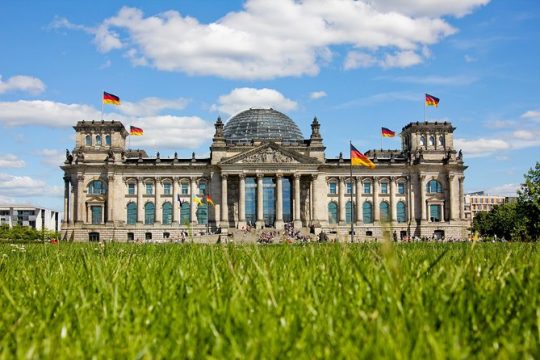
Shore Excursions
Prices from $26
Sightseeing Tickets & Passes
Prices from $5
Marienplatz
Prices from $3
Cologne Cathedral (Kölner Dom)
Prices from $3
Reichstag
Prices from $3
Odeonsplatz
Prices from $3
Brandenburg Gate (Brandenburger Tor)
Prices from $3
Memorial to the Murdered Jews of Europe (Holocaust Memorial)
Prices from $3
Dachau Concentration Camp Memorial Site
Prices from $45
Führerbunker
Prices from $4
Soviet War Memorial Tiergarten
Prices from $4
Topography of Terror
Prices from $4
Victuals Market (Viktualienmarkt)
Prices from $3
Cathedral of Our Blessed Lady (Frauenkirche)
Prices from $3


Germany Event Calendar
View all events
Christmas activities in Germany
Fri, Dec 25, 2026
Hanukkah in Germany
Dec 4–12, 2026
New Year’s Eve in Germany
Thu, Dec 31, 2026
Christmas Eve in Germany
Thu, Dec 24, 2026
New Year’s Day long weekend in Germany
Jan 1–3, 2027
Valentine's Day in Germany
Sun, Feb 14, 2027
Easter in Germany
Sun, Mar 28, 2027
Good Friday in Germany
Fri, Mar 26, 2027