


Eastern China attractions
More things to do in the region
 #16
Shanghai Tower (Shanghai Zhongxin Dasha)
Shanghai Tower is the tallest building in China, a twisting glass skyscraper in the Lujiazui financial district of Pudong, across the Huangpu River from the Bund. Visitors ride some of the fastest elevators in the world to an observation deck near the top for views across the whole sprawling city.Only a few decades ago, the land around it was mostly farmland and warehouses. When Pudong was chosen as Shanghai's new financial center, a cluster of towers rose in quick succession, first the pagoda-like Jin Mao Tower and then the Shanghai World Financial Center, with its open top. Shanghai Tower completed the trio in the early 21st century and was designed by the American firm Gensler to stand as the tallest of the three.Its shape is not just for show. The tower turns gradually as it rises, tapering toward the top, a form that helps it shrug off the strong winds that sweep in from the coast. It is wrapped in two layers of glass, and between them is a series of tall atriums with gardens, cafes and seating, so the building works like a set of stacked neighborhoods in the sky, with offices, a hotel and shops. Rainwater is collected and reused, and the design aims to save energy.Inside, an exhibition explains how the tower was designed and built, and a high-speed elevator whisks visitors up to the observation level. From the glass walls, the view takes in the curve of the Huangpu, the old facades of the Bund, the neighboring towers far below and, on clear days, the wider delta stretching to the horizon. Near the top, a huge steel damper hangs inside the building to steady it in the wind, shaped into a sculpture. A guide puts the skyline and Pudong's rapid rise into context.
More #17
The Bund (Waitan)
Walk the Bund on your own at any pace, or join a guided walking tour that explains the historic banks, hotels and customs house along the street. River cruises leave from nearby wharves and show both banks, and a public ferry crosses to Pudong for a different view. Many visitors pair the Bund with nearby Nanjing Road or the Yuyuan area, and return after dark when the skyline is lit. The Bund is an open waterfront promenade about 1.6 kilometers long, so you can walk all or part of it at your own pace. Allow an hour or two for a relaxed stroll with photo stops. The buildings along the western side mix Romanesque, Gothic, Baroque, Neoclassical and Art Deco styles, so look up as you walk. A raised levee between the road and the river blocks part of the view from street level, so walk up onto the promenade.
More #18
West Lake (Xi Hu)
If you are looking for things to do in Eastern China we have 1 Tours and Activities to Experience West Lake (Xi Hu). Check out our verified traveler reviews and photos of West Lake (Xi Hu) tours and other things to do in Eastern China, and book securely when you find the perfect one. Learn the best ways to see famous West Lake (Xi Hu) and explore the most popular things to do in Eastern China.
More #19
World Financial Center Building
The Shanghai World Financial Center is a supertall skyscraper in the Lujiazui financial district of Pudong, on the east bank of the Huangpu River. It is known for the trapezoid-shaped opening near its top, which led locals to call it the bottle opener, and for its place in one of Asia's most recognizable skylines.The tower was designed by the American firm Kohn Pedersen Fox and developed by the Japanese company Mori Building. It rises to nearly 500 meters and has more than 100 floors, including three below ground, and for a time it was the tallest building in mainland China. The opening at the summit is more than decoration: it lets strong winds pass through the top of the building, easing the pressure on the structure. Early plans showed a round opening, but the shape was changed to the trapezoid that was built.Inside, the tower stacks offices on its lower and middle floors, while a hotel fills the upper levels from the 79th to the 93rd floor. Above them, the building was fitted with three observation decks on the 94th, 97th and 100th floors, the highest a long walkway stretched across the opening at the top, with glass panels set into the floor. From that height, the curve of the river, the old waterfront of the Bund and the spreading city looked like a map.At street level, the tower is part of a remarkable cluster. It stands beside the pagoda-inspired Jin Mao Tower and the twisting Shanghai Tower, and the three supertall buildings rise side by side, each from a different stage of the district's rapid growth. Seen together from the Bund across the river, they show how quickly Pudong turned from farmland and warehouses into a forest of glass and steel.
More #20
Xin Tian Di
Xin Tian Di is a car-free district of restored lanes in central Shanghai, where old stone-gate houses have been turned into cafes, restaurants, shops and bookstores. Its name means new heaven and earth, and travelers come to stroll the alleys, eat and drink well, and see a historic neighborhood given a stylish second life.The houses are shikumen, a style that emerged in 19th-century Shanghai and blended the terraced rows of Western cities with the courtyards and carved stone doorways of Chinese homes. For generations, families crowded into them along narrow lanes. When the blocks were redeveloped, the developer kept the brick facades, stone gateways and lane layout under strict preservation rules while rebuilding the interiors, an approach that made Xintiandi an early example of placemaking in China and inspired similar projects across the country.The district also holds a place in modern Chinese history. In one of its houses, the first congress of the Chinese Communist Party met in the early 20th century, and the building is now a museum devoted to the party's founding. Nearby, the Shikumen Open House Museum recreates a family home furnished as it might have been about a century ago, and the former seat of the Korean provisional government recalls the exiles who campaigned for Korea's independence from Shanghai.The area splits into a northern block of restored lanes and a southern block with a modern mall, and the contrast between old brick and new glass is part of its character. Grey brick walls, black wooden doors and carved stone lintels make the lanes a pleasure to photograph. The landscaped lake of nearby Taipingqiao Park adds a green edge to the neighborhood. A guide can describe the busy lane life that filled these houses before their makeover.
More #21
Yuyuan Garden
Yuyuan Garden is a classical Chinese garden in the Old City of Shanghai, a walled maze of pavilions, ponds, rockeries and courtyards created by a Ming dynasty official. It offers a calm, intricate escape in one of the busiest corners of the city, and visitors come to see traditional Chinese garden design at its most ornate.The garden was begun in the 16th century by Pan Yunduan, a government official, as a place where his aging father could pass his last years in peace. Its name carries that wish, since yu means pleasing or at ease. After the Pan family declined, local merchants restored it in the 18th century, but the 19th century brought trouble: British soldiers occupied it during the First Opium War, and rebels of the Small Swords Society made it their headquarters. After more damage in the 20th century, a long restoration returned it to the form visitors see.Within its walls, the garden is divided into several sections linked by moon gates, covered walkways and winding paths, so every turn frames a new view. The Grand Rockery, piled from yellow stone, rises above a pond like a miniature mountain range. Elsewhere stands the Exquisite Jade Rock, a porous stone riddled with holes; it is said that incense burned beneath it sends smoke curling out of every opening, and water poured on top flows from each hole.Along the tops of several walls, the bodies of dragons ripple over the tiles toward carved heads, and their feet are said to have been given fewer claws than the emperor's dragons so the owner could avoid any charge of overreaching. The Hall of Heralding Spring, where the rebels gathered, recalls their uprising, and pavilions throughout are dressed with carved timber, latticed windows and roofs with upswept eaves. A guide can bring out the stories of the people who lived and fought here, which the quiet setting hardly suggests.
More #22
Zhouzhuang Water Town
If you are looking for things to do in Eastern China we have 2 Tours and Activities to Experience Zhouzhuang Water Town. Check out our verified traveler reviews and photos of Zhouzhuang Water Town tours and other things to do in Eastern China, and book securely when you find the perfect one. Learn the best ways to see famous Zhouzhuang Water Town and explore the most popular things to do in Eastern China.
More #23
Zhujiajiao
If you are looking for things to do in Eastern China we have 4 Tours and Activities to Experience Zhujiajiao. Check out our verified traveler reviews and photos of Zhujiajiao tours and other things to do in Eastern China, and book securely when you find the perfect one. Learn the best ways to see famous Zhujiajiao and explore the most popular things to do in Eastern China.
MoreDiscover Eastern China
Cruises, Sailing & Water Tours
Prices from $63
Cultural & Theme Tours
Prices from $50
Day Trips & Excursions
Prices from $112
Food, Wine & Nightlife
Prices from $65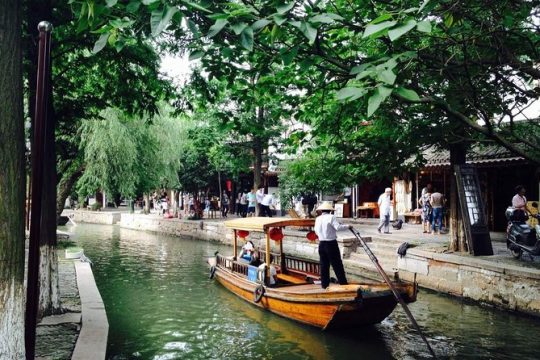
Luxury & Special Occasions
Prices from $47
Outdoor Activities
Prices from $65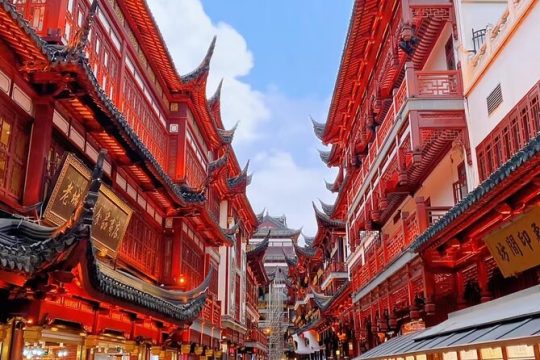
Private & Custom Tours
Prices from $47
Shopping & Fashion
Prices from $56
Shore Excursions
Prices from $47
Sightseeing Tickets & Passes
Prices from $78
Tours & Sightseeing
Prices from $47
Walking & Biking Tours
Prices from $49


Duolun Road
Prices from $80
Grand Canal
Prices from $112
Huangpu River
Prices from $84
Humble Administrator's Garden (Zhuo Zheng Yuan)
Prices from $86
Jade Buddha Temple (Yufo Si)
Prices from $48
Nanjing Road (Nanjing Lu)
Prices from $55
National Tea Museum
Prices from $118
Oriental Pearl Tower (Dongfang Mingzhu Ta)
Prices from $55
People’s Square (Renmin Guangchang)
Prices from $55
Pingjiang Road (Pingjiang Lu)
Prices from $112
Pudong
Prices from $78
Shanghai City God Temple (Chenghuang Miao)
Prices from $55
Hanukkah in Eastern China
Dec 4–12, 2026
New Year’s Eve in Eastern China
Thu, Dec 31, 2026
New Year’s Day long weekend in Eastern China
Jan 1–3, 2027
Senior-friendly tours Eastern China
9 tours & activities
Eastern China Foodie Tours
8 tours & activities
Family-friendly Eastern China Tours
27 tours & activities
The best tours and activities for culture lovers in Eastern China
10 tours & activities
Things to do in Eastern China this summer
31 tours & activities
 From $30
 From $10
 From $19
 From $30


