Frequently Asked Questions
The answers provided below are based on answers previously given to customers' questions.
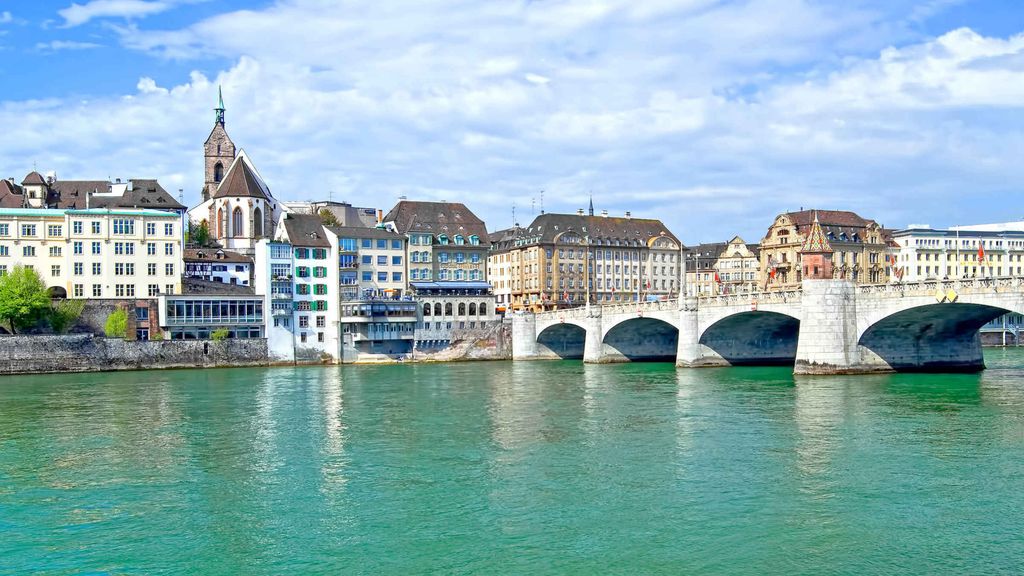
Basel stands on the Rhine where Switzerland meets France and Germany, a compact city of medieval lanes, red sandstone and world-class museums. It is also a handy gateway to the heart of the country: by road or rail, the lakes and peaks of central Switzerland are within reach for a day. Most outings start in the morning, a large share are private, and many fill a full day, so you can combine a slow look at the old town with some of the grandest mountain scenery in Europe.
Basel Minster (Basler Münster), with its red stone walls and colorful tiled roof, rises above the river and is the natural starting point for a walk. Behind it, the terrace looks out over the Rhine, where small ferries cross using only the current. Guided walks of a couple of hours wind through the old town's squares and fountains to the painted town hall on the market square, and many can be arranged as private outings for your own group. Evening walks are also available, a good way to see the old town quietly lit after the day crowds have left.
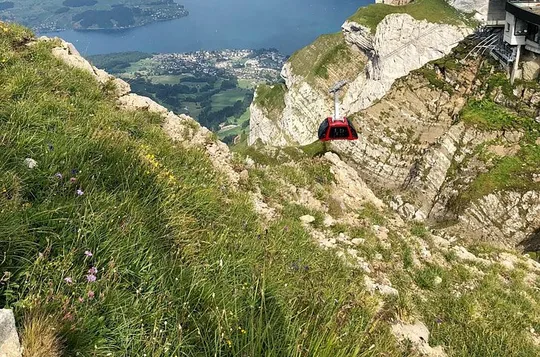
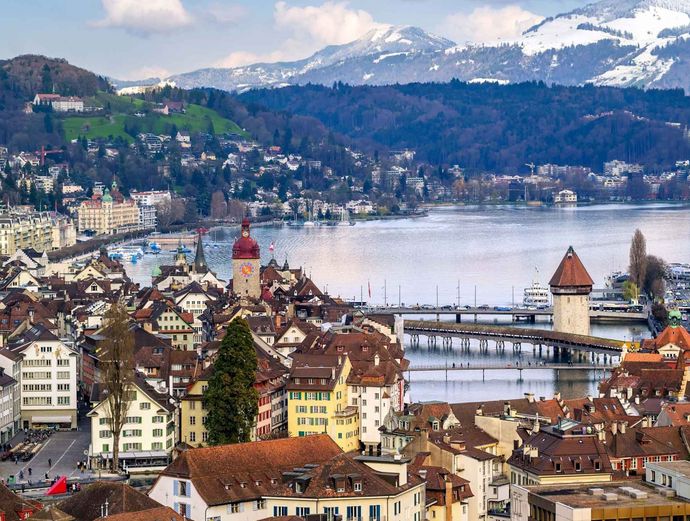
The most popular day trip runs to Lucerne (Luzern), where the wooden Chapel Bridge (Kapellbrucke) crosses the river beside its stone water tower. Nearby, the twin towers of the Hofkirche stand above the lakefront. From the city, boats head out on Lake Lucerne (Vierwaldstättersee), surrounded by steep green slopes. Many full days add an ascent of Mt. Pilatus, using the cable cars and the very steep cogwheel line of the Pilatus Railways (Pilatus Bahnen) to reach the viewpoints at the top.
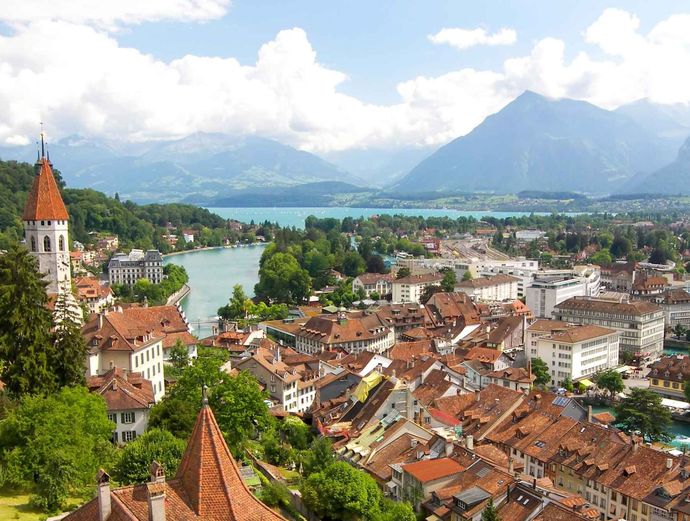
Longer trips go deeper into the mountains. In the Bernese Oberland, Kleine Scheidegg sits at the foot of the famous north faces, on the route up toward the Jungfrau and its glacier views. Lake Thun (Thunersee) and the narrow Aare Gorge, with its walkway between sheer limestone walls, are frequent stops on the way. A few itineraries reach Zermatt and the Gornergrat Railway (Gornergrat Bahn), which climbs to a ridge facing the Matterhorn. These are among the longest days you can take from Basel.
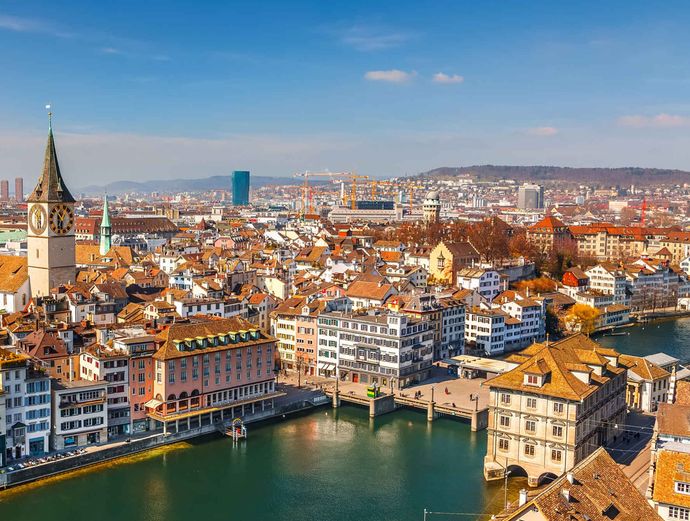
Rail tours are a feature here, and Swiss trains make even long days comfortable. Weather in the mountains can change quickly, so keep your plans flexible and favor clear days for the high peaks. Nearly every outing allows free cancellation, which helps. Families will find more than half of trips marked as suitable for children, and a fair number are wheelchair accessible. A balanced plan is a day in Basel itself, with a walk, a museum and a riverside dinner, followed by one day to Lucerne and Pilatus and, if time allows, a second to the Jungfrau region. A few trips are set up for river cruise passengers who stop in Basel, so check the meeting point if you arrive by boat.
#1The Aare Gorge, or Aareschlucht, is a narrow limestone canyon carved by the Aare River in the Bernese Oberland, between Meiringen and Innertkirchen in the Swiss Alps. Visitors come to walk on footbridges and through tunnels deep inside the gorge, where sheer rock walls rise high above the rushing green water.The gorge cuts through the Kirchet, a rocky ridge that once blocked the valley. Over many thousands of years, the glaciers of the ice ages and the meltwater beneath them wore a path through the limestone, and the river kept cutting deeper until it formed a slot only a few meters wide in places. For a long time the gorge was impassable. Local people opened it to visitors in the late 19th century by building walkways fixed to the cliffs, and it quickly became one of the area's favorite sights. Local legend says the gorge is home to the Tatzelwurm, a lizard-like dragon from Alpine folklore.The path runs along the cliff walls just above the water, sometimes on ledges, sometimes through short tunnels blasted into the rock. In the narrowest sections the walls almost touch overhead, and the light filters down in thin shafts. The limestone has been polished into smooth curves, potholes and overhangs, with ferns and moss clinging to damp ledges. The color of the Aare changes from milky turquoise to deep green depending on the season and the amount of glacier water. Near the end, the gorge opens up and the noise of the water fades. Nearby Meiringen is known for the Reichenbach Falls, where Arthur Conan Doyle staged a famous struggle in the Sherlock Holmes stories, and the town claims to be the birthplace of meringue.On a guided visit, a guide can explain how ice and water shaped the canyon over time.
More
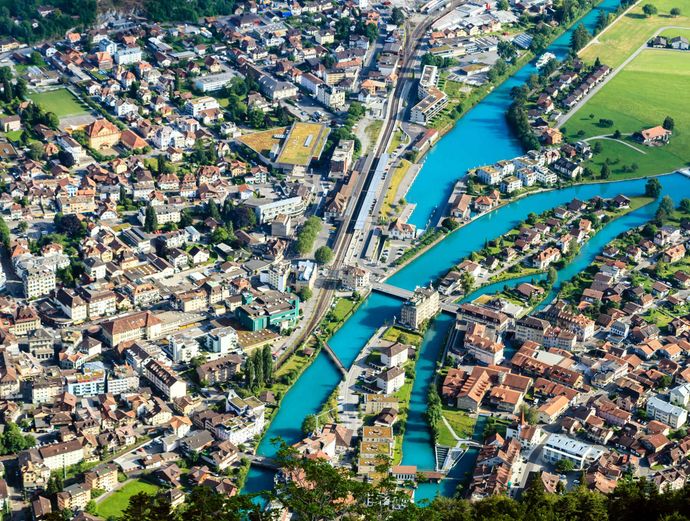
#2The Aare River is the swift, glacier-fed river that curls around the Old City of Bern, the Swiss capital. Its milky green water is the city's favorite summer playground, where locals float downstream in the current, and its bridges and banks frame some of the best views of the medieval center.The river rises in the Aar Glaciers of the Bernese Alps and runs for almost 300 kilometers, passing through Lake Brienz and Lake Thun on the way. It is the longest river whose whole course lies inside Switzerland, and where it finally meets the Rhine it brings more water than the Rhine itself, making it the main tributary of the High Rhine. In Bern it makes its most famous move, bending sharply around a steep ridge where the town's medieval founders built their streets, guarded on three sides by fast water. Eighteen bridges now cross it within the city, and a weir just south of the Old City feeds a small hydroelectric plant.Swimming in the Aare is a Bernese ritual. On hot afternoons office workers, students and families walk upstream with waterproof bags, slip in at the Eichholz river beach and let the current carry them down below the Federal Palace to the Marzili lido, where railings and steps help them climb out. On the warmest days the water fills with so many floating heads that it looks like a moving street.From above, the river is just as striking. The Rosengarten, a rose garden on the slope across the Nydegg Bridge, looks down on the green loop and the tiled roofs of the old town, while the low-lying Matte quarter, once home to boatmen, millers and craftsmen, sits right at the water's edge. A guide can explain how the river decided where Bern grew, powered its workshops and shaped its defenses.
More
#3Appenzell is a small town in northeastern Switzerland, capital of the canton of Appenzell Innerrhoden, set among green hills below the Alpstein mountains. It is a favorite excursion from Zurich, loved for its brightly painted houses, its living folk traditions and its famous cheese.The name comes from the Latin abbatis cella, the abbot's cell, a reminder that the area once belonged to the powerful abbey of St. Gallen. Its farmers won their freedom from the abbots in a series of wars in the early 15th century and joined the Swiss Confederation about a hundred years later. After the Reformation the region divided along religious lines, and Catholic Innerrhoden, with Appenzell as its seat, became one of the smallest and most traditional cantons in the country. Citizens still govern the canton at the Landsgemeinde, an open-air assembly where laws are passed by a show of hands, and many men arrive carrying a sword as proof of their right to vote.Along the Hauptgasse, the main street, narrow wooden houses wear facades painted with flowers, animals and rural scenes, and wrought-iron shop signs hang above the doors. The parish church of St. Mauritius, with its richly decorated interior, rises above the rooftops. Old customs run deep here, from herders in red vests and yellow breeches leading their cattle to the high pastures to string music and a slow, wordless yodel called the Zäuerli. Appenzeller cheese, rubbed with a closely guarded herbal brine, and a bitter herb liqueur are the best-known local flavors.Behind the town the limestone ridges of the Alpstein climb to the Säntis, and in the Wildkirchli caves high in the range archaeologists found traces of Stone Age hunters and cave bears. The surrounding countryside of scattered farmhouses and rolling meadows looks almost as neat as the painted facades. Few places in Switzerland wear their identity so openly.
More
#4Basel Minster (Basler Münster) is the red sandstone church that crowns the hill above the Rhine in the old town of Basel, Switzerland. With its two slender towers and its roof of colored tiles, it is the city's defining landmark, and visitors come for its carved portals, its tombs and cloisters and the views over the river.The hilltop was settled long before the church, first by Celts and then by a Roman fort. The building took its present shape in a late Romanesque rebuilding completed early in the 13th century. In the 14th century a great earthquake brought down five towers, the choir and several vaults, and the repairs gave the church its Gothic look; the last tower, the Martinsturm, was finished around the turn of the 16th century. Built as a Catholic cathedral, it became a Protestant church at the Reformation, when iconoclasts stripped out its altars and images.The exterior rewards a slow look. On the west front, St. George fights the dragon at the foot of one tower and St. Martin divides his cloak for a beggar beneath the other, while the porch holds a figure of the emperor Henry II, an early benefactor of the church. On the north side, the Gallus Gate ranks among the oldest Romanesque figure portals in the German-speaking world. Behind the church, the shaded Pfalz terrace looks down onto the Rhine and across to the rooftops of the far bank.Inside, the stripped-back nave feels calm and spacious. Look for the memorial to Erasmus of Rotterdam, the great humanist scholar who died in Basel, and for the sarcophagus of Queen Anne of Habsburg, wife of King Rudolf I, beside the choir. Beneath the choir lies the crypt, and beside the church stretch two cloisters from the 15th century, where the mathematician Jacob Bernoulli is remembered with a tombstone bearing a spiral, famously not the kind of spiral he had asked for.
More
#5Chapel Bridge, the Kapellbrücke, is a covered wooden footbridge that angles across the Reuss River in the heart of Lucerne. Dating from the 14th century, it ranks among the oldest covered bridges in Europe, and visitors come for its painted panels, its flower-lined sides and the stone Water Tower rising beside it.It was built as part of the town's defenses, closing off the river side of Lucerne against attack from the lake, and takes its name from St. Peter's Chapel on the old town bank. The octagonal Water Tower is even older, named for the river it stands in rather than any water it stored, and over the centuries it served as a prison, a torture chamber, a treasury and an archive.In the 17th century, triangular paintings were fitted beneath the roof beams, showing episodes from Swiss history and the lives of Lucerne's patron saints, Leodegar and Maurice. Placed where every passerby would see them, they served as a public lesson in civic pride and Catholic faith. Late in the 20th century a fire tore through much of the structure and destroyed most of the panels. The bridge was rebuilt within months, and the surviving pictures went back up alongside restored ones, with a few charred frames left in place as a reminder.Crossing the bridge leads from the theater and riverside promenade to the painted houses of the old town, with swans gliding on the green water of the Reuss below. From the walkway you can pick out the twin towers of the Jesuit Church along the river and, on clear days, the jagged ridge of Mount Pilatus beyond the rooftops. With a guide, the panels start to make sense, from the battles and saints to the miracles in scenes most people walk straight past.
More
#6Château du Haut-Koenigsbourg is a pink sandstone castle perched on a rocky spur of the Vosges hills above the Alsace plain, near Sélestat. Visitors go for its towers, ramparts and furnished rooms, and for the sweeping view from the walls across vineyards and villages toward the Black Forest and, on clear days, the Alps.A fortress has stood on this strategic height since the 12th century, when the powerful Hohenstaufen dynasty kept watch over the trade routes below, along which wine, wheat, salt and silver moved across the region. It passed through several noble families, and in the 15th century the Counts of Thierstein rebuilt it with stronger defenses against cannon. During the Thirty Years' War in the 17th century, Swedish troops besieged and burned it, and the castle was left as a ruin for more than two centuries.Its revival came at the very end of the 19th century, when Alsace belonged to the German Empire and the town of Sélestat offered the ruins to Kaiser Wilhelm II. He handed the work to the architect Bodo Ebhardt, who studied old drawings, surviving walls and other castles to rebuild it as he believed it had looked in the late Middle Ages. Some praised the result while others mocked it as a romantic fantasy, and after the First World War the castle passed to France.Inside, you climb from the lower courtyard through a fortified gate into the inner castle, with its kitchens, living quarters, chapel and a great hall decorated with heraldry and imperial emblems. Furniture, weapons and armor fill the rooms, and the great bastion at the western end shows how the castle was built to resist artillery. From the gardens and battlements the plain unfolds below like a map.
More
#7If you are looking for things to do in Basel we have 9 Tours and Activities to Experience Culture and Congress Centre (KKL). Check out our verified traveler reviews and photos of Culture and Congress Centre (KKL) tours and other things to do in Basel, and book securely when you find the perfect one. Learn the best ways to see famous Culture and Congress Centre (KKL) and explore the most popular things to do in Basel.
More
#8Engelberg is a mountain village and resort in central Switzerland, set in a high valley at the foot of Mount Titlis and within day-trip reach of Lucerne. People come to ride the cable cars up to the Titlis glacier, to ski and hike in the surrounding peaks, and to visit the great Benedictine abbey that gave the village its name and its story.The abbey was founded in the 12th century by a nobleman, Conrad of Sellenbüren, and legend says its name, meaning angel mountain, came from heavenly voices heard on the slopes. For centuries the abbots ruled the valley as a tiny independent state, until the upheavals of the French Revolutionary era swept that status away, and Engelberg later joined the canton of Obwalden, though it lies apart from the rest of the canton. Monks still live here, running a school and a dairy where cheese is made in full view of visitors.The abbey church, rebuilt in a bright Baroque style after a fire in the 18th century, holds one of the largest organs in Switzerland. Engelberg's later fame came from tourism: by the late 19th century grand hotels were welcoming summer guests drawn by the mountain air, and skiing took hold in the 20th century. The village keeps a mix of chalets, old hotels and the abbey's white walls against a backdrop of rock and ice.The great excursion is Titlis itself. A series of cable cars climbs from the valley past the lake of Trübsee to the summit area, the last stage in a gondola that slowly rotates so every passenger sees the full panorama. At the top, an ice cave tunnels into the glacier, and a suspension bridge strung along the cliff edge gives dizzying views down the sheer rock face and across the Alps. A guide can put names to the peaks and share the legends of the valley along the way.
More
#9The Gornergrat Railway is a mountain railway in Zermatt that climbs from the car-free village to the Gornergrat ridge, more than 3,000 meters up in the Swiss Alps. Travelers ride it for one of the most famous views of the Matterhorn and a sweep of glaciers and high peaks seen from the open summit.The line opened in the late 19th century, when Zermatt was growing as a base for mountaineers and the wealthy visitors who followed them. It was the first electric rack railway in Switzerland, powered from the start rather than by steam, and it uses a toothed rack between the rails to grip the steep slope. The route rises from about 1,600 meters in the village to the summit station, and it is often described as the highest open-air railway in Europe. Along the way it stops at Riffelalp, Riffelberg and Rotenboden, each a starting point for walks, and the summit holds a hotel and an astronomical observatory set in its towers.The ride is part of the experience. The train climbs through larch and pine forest above Zermatt, then out onto open alpine slopes, with the Matterhorn appearing and disappearing around the bends. At the top, a viewing platform looks out on a ring of mountains, with more than two dozen peaks above 4,000 meters, including Monte Rosa, home to the highest summit in Switzerland. Below the ridge spreads the Gorner Glacier, said to be the second-longest in the Alps, a river of ice and crevasses that meets other glaciers coming down from the summits. Near Rotenboden, the small Riffelsee lake can mirror the Matterhorn on still days, one of the best-loved sights on the line.The mountain changes with the seasons, from summer trails and wildflowers to deep winter snow. A guide can name the peaks on the skyline and explain how the glaciers have shaped and are still shaping this landscape.
More
#10Grimsel Pass is a high Alpine road in central Switzerland that climbs from the Hasli Valley in the Bernese Oberland over a bare granite saddle and down into the upper Rhone valley of Valais. Drivers, cyclists and motorcyclists come for its sweeping hairpins, its chain of turquoise reservoirs and the wild, rocky scenery near the top.Long before the road, a mule track crossed here, and in the Middle Ages traders used it to carry cheese, wine, salt and other goods between the Bernese lands, Valais and northern Italy. A hospice near the top offered travelers shelter from the mountain weather. The pass also saw fighting during the wars of the French Revolution, when French troops forced their way over against Austrian defenders. The small lake at the summit is known as the Totensee, the Lake of the Dead, a name often linked to the soldiers who fell nearby.The paved road came in the late 19th century, and in the 20th century engineers turned the high valley into one of the country's great hydropower landscapes. Massive concrete dams hold back the Grimselsee and its neighboring lakes, and the hospice, rebuilt when the rising lake covered the original, stands as a hotel on a rocky knoll above the water. Tunnels and power stations lie hidden inside the mountain, and nearby the Gelmer funicular climbs one of the steepest tracks in Europe to another high reservoir.Along the climb, the road passes the thundering Handegg falls, slabs of glacier-polished granite and wide views of jagged peaks and hanging glaciers. From the summit, a series of hairpins drops toward Gletsch, with a view across to the Furka road and the Rhone Glacier. The pass also marks a watershed, sending water north to the Rhine and south to the Mediterranean. A guide fills in the geology, the engineering and the old trade routes.
More
#11If you are looking for things to do in Basel we have 12 Tours and Activities to Experience Hofkirche. Check out our verified traveler reviews and photos of Hofkirche tours and other things to do in Basel, and book securely when you find the perfect one. Learn the best ways to see famous Hofkirche and explore the most popular things to do in Basel.
More
#12The Jungfrau is one of the great snow-covered peaks of the Bernese Alps in Switzerland, rising on the border between the Bernese Oberland and the Valais, where the village of Fieschertal lies on its southern side. Travelers come for its glaciers, its high-altitude views and the famous railway that climbs almost to its summit.Seen from Interlaken and the Lauterbrunnen valley, the Jungfrau stands beside the Eiger and the Mönch as one of three famous summits that dominate the skyline. Its name means the maiden or the young woman, a nod to its pure white face. The first recorded ascent came early in the 19th century, when the Meyer brothers of Aarau approached from the south across the glaciers of the Valais side, the same remote country that rises above Fieschertal.The mountain is best known today for the Jungfrau Railway, an engineering project of the late 19th and early 20th centuries that tunnels through the Eiger and the Mönch to reach the Jungfraujoch, the icy saddle between the Mönch and the Jungfrau. Its station is the highest in Europe, and the saddle has long been promoted as the Top of Europe. Workers spent years blasting the tunnels through solid rock, and the route remains one of the boldest mountain railways ever built.From the saddle, the view opens over the Great Aletsch Glacier, the longest glacier in the Alps, which sweeps south toward the Valais in a broad river of ice. The surrounding peaks and glaciers form part of a UNESCO World Heritage Site that stretches across the region. At the top, an ice palace is carved into the glacier, and a research observatory stands on a rocky outcrop. A guide can explain the geology, the climbing history and the railway's story as the high peaks unfold around you.
More
#13The Sphinx Observatory crowns a rocky peak above the Jungfraujoch, the high glacier saddle between the Mönch and the Jungfrau in the Swiss Alps. Besides housing a working research station, it has an open-air viewing terrace that gives visitors one of the highest and widest panoramas in Europe, with glaciers and peaks spread out below.Bringing visitors up here was a feat in itself. Late in the 19th century, the industrialist Adolf Guyer-Zeller proposed a railway bored through the Eiger and the Mönch, and building it took 16 years of hard and sometimes deadly work. The line was meant to reach the summit of the Jungfrau, but it stopped at the saddle and opened early in the 20th century. On the way up, trains pause at windows cut through the rock, one high on the north face of the Eiger and another facing a sea of ice.The observatory itself was built in the first half of the 20th century on the Sphinx, a rocky outcrop rising above the station, and it ranks among the highest astronomical observatories in the world. At more than 3,500 meters, it is one of the loftiest points in Switzerland that can be reached by public transport. Scientists use it to study the atmosphere, and it belongs to a global network that monitors greenhouse gases, fine particles and other changes in the air we breathe.From the terrace, the Aletsch Glacier, the longest in the Alps, curves away in a vast river of ice, with summits of the Bernese Alps on every side. The whole area forms part of the Swiss Alps Jungfrau-Aletsch World Heritage Site. Within the complex below, the Ice Palace leads through tunnels carved into the glacier and lined with ice sculptures. A guide can explain how the glaciers shaped these mountains and how the research above helps track a changing climate.
More
#14Kleine Scheidegg is a high mountain pass in the Bernese Oberland, set at the foot of the Eiger, Mönch and Jungfrau between the valleys of Grindelwald and Lauterbrunnen. Travelers come for the close-up view of the Eiger's north face, the start of the railway that tunnels up to the Jungfraujoch, and the walking and skiing all around.The pass sits at just over 2,000 meters on a grassy saddle between the Eiger and the Lauberhorn, and for centuries it was crossed only on foot by herders and travelers moving between the two valleys. Tourism changed that in the 19th century. A mountain inn opened, hotels followed, and near the end of the century the Wengernalp rack railway climbed up from both sides. The industrialist Adolf Guyer-Zeller then conceived an even bolder line, one that would bore through the Eiger and the Mönch to the high saddle of the Jungfraujoch. Construction took well over a decade, and Kleine Scheidegg became its starting point.The Eiger's north face, a dark wall of limestone and ice, towers over the station, and in the first half of the 20th century, as climbers vied to make the first ascent, hotel guests followed their progress and their tragedies through telescopes. The Mönch and the Jungfrau line up beside it, glaciers spilling from their flanks. In summer, wildflowers cover the meadows and trails lead off toward Wengen, Grindelwald and the foot of the Eiger. In winter the pass becomes a hub of the ski area, and the Lauberhorn downhill, a classic of the World Cup circuit, races down the slopes nearby.The station itself is a lively crossroads where trains from both valleys meet and walkers, skiers and sightseers mingle with the mountains as a backdrop. A guide helps you pick out the peaks and trace the famous climbing routes across the Eiger's face.
More
#15If you are looking for things to do in Basel we have 52 Tours and Activities to Experience Kutná Hora. Check out our verified traveler reviews and photos of Kutná Hora tours and other things to do in Basel, and book securely when you find the perfect one. Learn the best ways to see famous Kutná Hora and explore the most popular things to do in Basel.
MoreBasel is an easy, orderly place to settle into for a few days. Mornings tend to start early with a train or a car heading into the mountains, while shorter stays mix a city walk, a gallery and a long riverside evening. Most people book either a relaxed stroll through town or a full scenic day out, often in a private group. It suits art lovers, rail fans, families and anyone who wants Swiss scenery without changing hotels every night.
Summer, from June to August, is warm and lively, and locals float down the Rhine on hot afternoons, while the mountain passes and high viewpoints are at their most open. Spring and early autumn bring cooler air, fewer visitors and fine walking weather. Late winter belongs to the city's famous carnival, with lanterns and pipers in the streets, and December brings a cozy Christmas market. Winter days in the Alps are snowy and beautiful but short.
The shared airport on the French side of the border serves Basel, and fast trains link the city with Zurich, Bern and cities in Germany and France. Trams run often and reach nearly every corner of town, and the compact center is pleasant on foot. For Lucerne, the lakes and the high Alps, rail outings and guided coaches do the planning for you. Book mountain days early in summer, then pick your date by the forecast, since clouds can hide the peaks. Carry a warm layer and sunglasses even in July, and keep your passport handy for quick border crossings.

The answers provided below are based on answers previously given to customers' questions.