


Asia attractions
More things to do across the continent
 #676
Tenryu-ji Temple
If you are looking for things to do in Asia we have 4 Tours and Activities to Experience Tenryu-ji Temple. Check out our verified traveler reviews and photos of Tenryu-ji Temple tours and other things to do in Asia, and book securely when you find the perfect one. Learn the best ways to see famous Tenryu-ji Temple and explore the most popular things to do in Asia.
More #677
Terrace of the Elephants
If you are looking for things to do in Asia we have 5 Tours and Activities to Experience Terrace of the Elephants. Check out our verified traveler reviews and photos of Terrace of the Elephants tours and other things to do in Asia, and book securely when you find the perfect one. Learn the best ways to see famous Terrace of the Elephants and explore the most popular things to do in Asia.
More #678
Terrace of the Leper King
If you are looking for things to do in Asia we have 1 Tours and Activities to Experience Terrace of the Leper King. Check out our verified traveler reviews and photos of Terrace of the Leper King tours and other things to do in Asia, and book securely when you find the perfect one. Learn the best ways to see famous Terrace of the Leper King and explore the most popular things to do in Asia.
More #679
Terracotta Warriors and Horses Museum
The Terracotta Warriors and Horses Museum near Xi'an protects one of the greatest archaeological finds of the 20th century: an army of life-size clay soldiers buried to guard the tomb of China's first emperor. Ranked in vast excavated pits, they draw visitors from across the world to see an ancient empire's might frozen in clay.The army was made for Qin Shi Huang, the ruler who unified China in the 3rd century BC, standardized its writing, weights and coins, and began linking the walls that became the Great Wall. His dynasty is often said to have given China its name in the West. He had a vast mausoleum built near Mount Li, and the warriors were buried nearby to serve him in the afterlife. The figures lay hidden until local farmers digging a well in the late 20th century struck fragments of clay.The largest pit holds rank upon rank of infantry facing east, with archers at the front and chariots among the columns. A second pit holds a mixed force of cavalry, kneeling archers and chariots, and a smaller third pit appears to be the command post. No two faces are quite the same: the soldiers differ in hairstyle, armor, expression and build. Generals stand taller than the foot soldiers, their headgear and armor marking their rank. They carried real bronze weapons, some still sharp when found.The museum halls also display two half-size bronze chariots, each drawn by four bronze horses, found near the emperor's burial mound and pieced together from countless fragments. The mound itself, now a wooded hill, has never been opened, and an ancient historian described rivers of mercury and crossbows set to fire at intruders within. A guide can explain how the figures were made in workshops from molded parts and then finished by hand.
More #680
Tham Krasae Bridge
If you are looking for things to do in Asia we have 1 Tours and Activities to Experience Tham Krasae Bridge. Check out our verified traveler reviews and photos of Tham Krasae Bridge tours and other things to do in Asia, and book securely when you find the perfect one. Learn the best ways to see famous Tham Krasae Bridge and explore the most popular things to do in Asia.
More #681
Thanh Toan Bridge
If you are looking for things to do in Asia we have 1 Tours and Activities to Experience Thanh Toan Bridge. Check out our verified traveler reviews and photos of Thanh Toan Bridge tours and other things to do in Asia, and book securely when you find the perfect one. Learn the best ways to see famous Thanh Toan Bridge and explore the most popular things to do in Asia.
More #682
The Bund (Waitan)
If you are looking for things to do in Asia we have 11 Tours and Activities to Experience The Bund (Waitan). Check out our verified traveler reviews and photos of The Bund (Waitan) tours and other things to do in Asia, and book securely when you find the perfect one. Learn the best ways to see famous The Bund (Waitan) and explore the most popular things to do in Asia.
More #683
Thean Hou Temple
If you are looking for things to do in Asia we have 7 Tours and Activities to Experience Thean Hou Temple. Check out our verified traveler reviews and photos of Thean Hou Temple tours and other things to do in Asia, and book securely when you find the perfect one. Learn the best ways to see famous Thean Hou Temple and explore the most popular things to do in Asia.
More #684
Thien Hau Temple
If you are looking for things to do in Asia we have 2 Tours and Activities to Experience Thien Hau Temple. Check out our verified traveler reviews and photos of Thien Hau Temple tours and other things to do in Asia, and book securely when you find the perfect one. Learn the best ways to see famous Thien Hau Temple and explore the most popular things to do in Asia.
More #685
Tianmen Mountain
Tianmen Mountain, also called Heaven's Gate Mountain, is a sheer-sided peak in Zhangjiajie, in China's Hunan province, and part of a national park there. Its summit rises to about 1,500 meters, and people come for the giant natural arch in its cliffs, the walkways fixed to its rock faces and the views over the ridges around it.The mountain takes its name from that arch, a great opening that cuts straight through the cliff and frames the sky beyond, which gave rise to the idea of a doorway to heaven. Getting up is part of the story. One of the longest cable cars on any high mountain rises from the edge of the city to the summit, and the ride itself is a sight, floating over villages, farmland and ridges. Far below its cabins, a road with 99 hairpin bends twists up the slopes toward the arch, and from above it looks like a ribbon dropped on the mountainside.At the top, paths run along the edge of the cliffs, some with glass floors that let you look straight down past your feet to the switchbacks far below. Mist often drifts across the summit, hiding the drop one moment and revealing it the next. A temple on the summit, rebuilt in the style of the Tang dynasty, offers a calmer stop among the forest and rock. Below the arch, a stairway of 999 steps climbs to the opening itself. Nine is a lucky number in Chinese tradition, linked with long life, which makes the count of steps fitting for a gate to the heavens.A guide is useful here for more than directions, since the meanings Chinese visitors attach to the arch, the numbers and the temple give the scenery a deeper layer.
More #686
Tiger Cave Temple (Wat Tham Suea)
Tiger Cave Temple, known in Thai as Wat Tham Suea, is a working Buddhist forest temple a short way northeast of Krabi Town in southern Thailand. Many visitors come to climb the long staircase to the golden Buddha on the summit of Khao Kaeo hill, while others stay below to explore the caves and shrines where monks still meditate.The temple's name comes from a story about its beginnings. A monk meditating in the main cave is said to have seen tigers there, and the name also points to marks on the cave walls that resemble paw prints, along with a bulge of rock shaped like a giant paw. The temple took shape around the cave in the second half of the 20th century, and it has grown into one of the best-known religious sites in the province. Long before the monks arrived, people made use of these hills, and stone tools and pottery shards found nearby point to activity from prehistoric times onward.The climb is the temple's great challenge. A concrete staircase of more than 1,000 steps rises up the face of the hill, and at the top a large golden Buddha sits above wide views of Krabi Town, jagged limestone peaks and green countryside. Monkeys perch on the railings along the way, watching climbers with open curiosity.At the foot of the hill, the lower grounds are calmer and full of detail. Paths lead into limestone caves used for meditation, past an ordination hall, a chedi and a statue of Guanyin, the goddess of mercy honored in Chinese Buddhism. Monks live and practice on the grounds, so the temple feels like a living community rather than a monument. A guide can explain the symbols in each shrine and the daily rhythm of monastic life.
More #687
Tipu Sultan's Palace
Tipu Sultan's Summer Palace is an 18th-century palace built largely of teak in old Bengaluru. Begun by Hyder Ali and completed by his son Tipu Sultan, ruler of the kingdom of Mysore, it draws visitors for its graceful wooden arches and pillars and for the story of a king who long defied the British.Hyder Ali rose from army commander to master of Mysore, and his son Tipu, remembered as the Tiger of Mysore, fought a series of wars against the East India Company. The palace was completed in the late 18th century as a summer residence, and Tipu is believed to have held court from its upper-floor balconies. After he died defending his capital at Srirangapatna, the British took over the building and used it as a secretariat.The palace is modest in size but rich in detail. Teak pillars and pointed, cusped arches frame two floors around an open hall, and painted floral designs still decorate the walls and ceilings in places. The style closely resembles Daria Daulat Bagh, the summer palace Tipu built at Srirangapatna, so the two are often compared. On the upper level, balconies look down over the hall, and it is easy to picture the court gathered there when this was a royal seat.The ground floor holds a small museum about Tipu's administration, with portraits and a replica of Tipu's Tiger, the famous mechanical figure of a tiger attacking a European soldier, whose original now sits in a London museum. Tipu is remembered as a ruler with a keen interest in trade and new technology, and his armies fired iron-cased rockets at British troops, a weapon that later influenced European rocketry. The building stands close to the remains of the old Bengaluru fort, another reminder of the city's turbulent past. A guide can bring out the human side of the story, from court life to the final siege.
More #688
Tipu's Summer Palace (Daria Daulat Bagh)
Tipu's Summer Palace is a two-story palace built of teak in the old heart of Bengaluru, raised as a summer residence for Tipu Sultan, the 18th-century ruler of Mysore. Its carved pillars, arches and balconies, along with a small museum on the ruler's life, draw visitors curious about the man known as the Tiger of Mysore.Construction began under Hyder Ali, who started the palace inside the walls of Bangalore Fort, and his son Tipu Sultan completed it in the late 18th century. Tipu is said to have called it Rashk-e-Jannat, the Envy of Heaven. It served as a cool retreat in the hot months and as a seat of power: from the balconies of the upper floor, Tipu is believed to have held court. After his death in battle against the British, the palace passed to the new rulers, who used it as a secretariat for a time.The building is a fine example of Indo-Islamic design worked almost entirely in teak. Carved pillars rise to graceful arches, and floral motifs spread across the walls. On the first floor, four corner rooms once served as the women's quarters, set apart from the open court. The ground floor holds a small museum with portraits, clothing, a crown and a replica of Tipu's tiger, the famous mechanical figure of a tiger attacking a European soldier, whose original is kept in a London museum.Tipu Sultan remains one of the most debated figures in Indian history, hailed by some as a fierce opponent of British expansion and criticized by others. Standing on the wooden balconies where he once sat gives a sense of the man behind the legend. The palace is maintained by the Archaeological Survey of India, and its garden setting offers a calm pocket in a busy old quarter of markets and temples. A guide can place it in the wider story of the Mysore kingdom and its wars with the British.
More #689
Titop Island
Titop Island is a small limestone island in the central part of Ha Long Bay, in northeastern Vietnam, reached only by boat. Visitors come to climb the stone steps to its summit for a sweeping view across the bay's limestone towers, and to swim from the little crescent of pale sand at its foot.The island owes its name to a moment of space history. Gherman Titov, the Soviet cosmonaut who became the second person to orbit the Earth, came to Ha Long Bay with the Vietnamese leader Ho Chi Minh not long after his flight, and the island was renamed in his honor. A monument to Titov stands on the island. Before that, it carried other names linked to older stories, including one recalling its use as a burial place for sailors from a wrecked ship.The climb is the main event. About 400 stone steps wind up the steep slope to the summit, where the view opens in every direction across Ha Long Bay. Limestone islands topped with green rise sharply from the water, cruise boats and junks trace the channels between them, and the bay's sheer scale finally comes into focus. Few places in the bay give such a complete panorama from so small a perch.At the foot of the steps, the beach curves gently around a swimming zone, a welcome place to cool off after the climb. Around the island stretches Ha Long Bay itself, a UNESCO World Heritage Site whose name means descending dragon, from a legend that dragons sent to protect Vietnam spat out jewels that became the islands. The towers themselves were carved over immense spans of time as rain and sea slowly dissolved the limestone. A guide can share that legend, the story of the cosmonaut's visit and the geology that shaped the bay.
More #690
Todai-ji Temple
If you are looking for things to do in Asia we have 3 Tours and Activities to Experience Todai-ji Temple. Check out our verified traveler reviews and photos of Todai-ji Temple tours and other things to do in Asia, and book securely when you find the perfect one. Learn the best ways to see famous Todai-ji Temple and explore the most popular things to do in Asia.
More #691
Tofuku-ji Temple
Tofuku-ji is a large Buddhist temple in the Higashiyama ward of southeastern Kyoto and one of the city's leading Zen centers. People come for its ancient main gate, its modern rock and moss gardens, and a covered wooden bridge spanning a valley of Japanese maples famous for its autumn color.The temple was founded by Kujo Michiie, an imperial chancellor from one of the most powerful court families, who invited the monk Enni to serve as its first head priest. Michiie hoped to match the grandeur of the old monasteries of Nara, and the temple's name joins one character each from Todai-ji and Kofuku-ji. It belongs to the Rinzai school of Zen and became one of the Kyoto Gozan, the circle of five leading Zen temples that enjoyed official backing. It remains an active temple and heads its own branch of the school.The Sanmon, the temple's great main gate, is described as the oldest Zen gate of its type in Japan and is a National Treasure, rising high above the grounds. Beyond it, the Tsutenkyo bridge stretches across a ravine thick with maple trees. From its covered walkway you look down on a canopy of leaves that stays fresh green through the warm months and turns deep red in autumn, one of the most celebrated seasonal views in Kyoto.The gardens around the abbot's quarters show a very different side of the temple. They were designed by Mirei Shigemori, a landscape artist who reworked traditional forms in a bold modern spirit. Raked gravel, upright rocks and a checkerboard of moss and square paving stones give the spaces a crisp geometry, and the moss garden in particular has influenced how later Japanese designers approach gardens. In the company of a guide, the gardens' quiet symbolism becomes far easier to read.
More #692
Tokyo Imperial Palace
The Tokyo Imperial Palace is the home of the Emperor of Japan, set in a broad park of moats, stone walls and gardens in the center of Tokyo. Travelers come to stroll the East Gardens, admire the massive walls of the old castle and look across the moat to the palace bridges.The site was once Edo Castle, the seat of the Tokugawa shoguns who ruled Japan for more than two and a half centuries from this city, then called Edo. It was one of the largest castles in the world, ringed by spiraling moats. When imperial rule was restored in the Meiji period, the emperor moved from Kyoto into the castle, Edo was renamed Tokyo, meaning eastern capital, and the shoguns' stronghold became the imperial residence.Air raids near the end of the Second World War destroyed most of the palace buildings, and a modern main palace for state ceremonies and receptions was built in their place, low and elegant with sweeping rooflines. The East Gardens occupy the former main and secondary enclosures of Edo Castle, where the shogun's keep and halls once stood. Visitors walk past guardhouses, defensive gates and the huge stone base of the vanished keep, then into landscaped gardens with a pond, seasonal flowers and a teahouse set among the trees.The grounds also hold a concert hall and a museum of the imperial collections, which shows art treasures from the imperial family. Outside the walls, the wide gravel plaza in front of the palace leads to the stone bridges over the moat, among the most photographed views in Tokyo. Cherry trees and pines soften the old stone along the moats. A guide can explain how a warrior fortress became the quiet heart of a modern capital.
More #693
Tokyo Metropolitan Government Office (TMG)
The Tokyo Metropolitan Government Office (TMG) is the twin-towered headquarters of Tokyo's city government, rising over the skyscraper district of Nishi-Shinjuku. Its main building holds two public observation decks high above the street, so travelers come both for the architecture and for a sweeping look across the capital.The complex was designed by Kenzo Tange, one of Japan's most influential modern architects, when the city government moved its offices from central Marunouchi to Shinjuku in the late 20th century. It is made up of three buildings, each on its own city block. The main tower has 48 stories and stands more than 240 meters tall, and above the 33rd floor it splits into two towers, a profile often compared to a Gothic cathedral. For some years it was the tallest building in Tokyo.The two decks share the 45th floor, about 200 meters up, one in the north tower and one in the south. Wide windows look across a seemingly endless spread of rooftops, broken by the green of Shinjuku Gyoen and the forested grounds of Meiji Shrine, while Tokyo Skytree and Tokyo Tower stand out on the skyline. At ground level, a curving colonnaded plaza in front of the assembly building gives the complex the feel of a European civic square.After dark the building takes on a second role. One face of the main tower becomes a vast screen for a projection mapping show of light, color and animation, recognized as one of the largest displays of its kind. Below the decks, the floors are filled with the offices that run the city, a reminder that this is a working city hall first and a lookout second. A guide can explain how Shinjuku grew from a post town on an old highway into a cluster of towers.
More #694
Tokyo National Museum
The Tokyo National Museum, set in Ueno Park in the Taito ward of Tokyo, is the oldest national museum in Japan and its largest art museum. People come for an unrivaled survey of Japanese art, from ancient pottery to samurai armor and painted folding screens, along with treasures from across Asia.The museum grew out of a public exhibition held in the early years of the Meiji era, when Japan was opening up to the world and rushing to modernize. It later became an imperial household museum, and over the generations its holdings swelled to around 120,000 cultural properties, dozens of them designated National Treasures. Its grounds now hold several separate buildings, each with its own focus and its own character.The Honkan, the main Japanese gallery, traces the country's art from prehistory to the late 19th century, with rooms of Buddhist sculpture, calligraphy, ceramics, swords, kimono, woodblock prints and lacquerware. Smaller rooms in the Honkan explore themes such as the art of the tea ceremony. The Toyokan widens the view to the rest of Asia, with Chinese, Korean, Indian and Southeast Asian works and even Egyptian antiquities. In the Gallery of Horyuji Treasures, relics from Horyuji, one of the oldest temples in Nara, sit in a calm, modern setting.Behind the main building lies a garden with traditional teahouses set among trees, a quiet counterpoint to the galleries. The architecture rewards attention too, from the main hall's heavy tiled roof, a blend of Western and Japanese styles, to the clean lines of the newer galleries. Look closely at a sword blade, a folding screen or a tea bowl, and the patience of centuries of Japanese craftsmen comes into focus. A knowledgeable guide can decode the symbols, schools and styles behind each piece, turning a walk past display cases into a story.
More #695
Tokyo Skytree
Tokyo Skytree is a broadcasting and observation tower in Sumida ward, on the east side of central Tokyo. At 634 meters it is the tallest tower in Japan, and visitors ride up to two high observation decks for sweeping views across the city and, on the clearest days, toward distant mountains.The tower was built mainly as a broadcasting site, taking over transmission duties for TV and radio across the Kanto region as new high-rises made older antennas less effective. Its height is often linked to the old name for this region, Musashi, since the numbers six, three and four can be read as mu, sa and shi in Japanese. Its shape shifts as it rises, from a three-sided tripod at the base to a circle near the top.Smart engineering for stability shaped the design. A central concrete shaft runs up the middle of the tower, separate from the outer steel frame, and dampers between them help the structure absorb shaking, an idea that echoes the central pillars of traditional Japanese pagodas. At night, LED lighting bathes the tower in alternating themes of sky blue and purple, making it a landmark on the skyline from far across the city.The decks are the reason most people come. The lower one, at 350 meters, has wide windows facing every direction, and the upper one at 450 meters adds a glass-covered spiral walkway that climbs gently around the tower, and a glass floor panel lets visitors look straight down. At the base, the Tokyo Solamachi shopping complex and the Sumida Aquarium make the tower part of a wider destination. A guide can name the districts below and explain how old and new Tokyo meet here.
More #696
Tokyo Station (Tokyo Eki)
Tokyo Station is the city's grand rail hub in the Marunouchi district of Chiyoda, close to the Imperial Palace. Beyond catching trains, people come to admire its red brick building and restored domes, one of the most handsome pieces of early modern architecture in Japan.The station building was designed by architect Tatsuno Kingo and opened early in the 20th century as a terminus for several Tokyo lines. Its long brick front, trimmed in pale stone and topped by twin domes, drew on European railway and civic architecture and became a symbol of a modernizing capital. Seen from the plaza, the facade stretches for a remarkable distance, framing the wide avenue toward the palace. During the Second World War the building was badly damaged, and it was rebuilt with a simpler roof that stood for decades.A major renovation later restored the Marunouchi facade to its original design, bringing back the domes and the full height of the building. Step inside the dome halls and look up to see the ornate ceilings, with reliefs of eagles and the animals of the Chinese zodiac. The historic building also holds the Tokyo Station Hotel and the Tokyo Station Gallery, an art space whose exposed brick walls reveal the original structure.The station is also one of the busiest in Japan, served by conventional JR East lines, several Shinkansen lines and the Tokyo Metro Marunouchi Line. On the eastern Yaesu side, a newer face looks toward Ginza, and beneath both sides a maze of underground passages links the station with nearby stations, shops and restaurants. Ekiben, boxed meals sold for the journey, are a small station tradition worth sampling. The contrast between the quiet brick front and the rush of travelers inside is part of the experience. A guide explains the building's history and the stories hidden in its details.
More #697
Tokyo Tower
Tokyo Tower is the orange-and-white steel tower in Minato ward that has risen over central Tokyo since the years after the Second World War, inspired by the Eiffel Tower yet slightly taller. Visitors ride up to its decks for wide views across the city, and after dark its glowing frame becomes one of Tokyo's best-known night sights.The tower went up after television broadcasting began in the Kanto region, when stations needed a single tall mast to carry their signals. Its designer, Tachu Naito, a pioneer of earthquake-resistant building, took the Eiffel Tower as his model, and the finished structure rose to 333 meters, a symbol of Japan's postwar recovery. The bold orange and white paint follows aviation safety rules. Much of its broadcasting role later passed to the taller Tokyo Skytree, but the older tower kept its place in the city's affections and in many films and anime.The main deck, 150 meters up, circles the tower with windows on every side, and glass panels set into the floor let you gaze straight down the steel frame. It also holds a cafe and, unexpectedly, a small Shinto shrine. Higher still, the top deck at about 250 meters opens a broader panorama over Tokyo Bay, the skyscraper clusters of the city and the greenery of Shiba Park at the tower's feet.The FootTown building at the base adds restaurants, shops, a gallery and arcade games, so there is plenty to do before or after the ride up. At night, the tower glows in colors that change with the season, and special lighting marks festivals and causes. Seen from the grounds of Zojoji Temple next door, the lit tower rising behind old temple roofs is one of Tokyo's classic views of past and present. A guide adds the stories of how the tower rose and what it meant to a rebuilding city.
More #698
Tomb of Emperor Jingdi (Hanyangling)
If you are looking for things to do in Asia we have 1 Tours and Activities to Experience Tomb of Emperor Jingdi (Hanyangling). Check out our verified traveler reviews and photos of Tomb of Emperor Jingdi (Hanyangling) tours and other things to do in Asia, and book securely when you find the perfect one. Learn the best ways to see famous Tomb of Emperor Jingdi (Hanyangling) and explore the most popular things to do in Asia.
More #699
Tomb of Itimad-ud-Daulah
The Tomb of Itimad-ud-Daulah is a Mughal mausoleum on the east bank of the Yamuna River in Agra, often nicknamed the Baby Taj. Faced in white marble and covered in delicate stone inlay, it is smaller and more intimate than the Taj Mahal, and visitors come to admire craftsmanship that many see as a first draft for its famous successor.The tomb was commissioned in the early 17th century by Nur Jahan, the powerful wife of the emperor Jahangir, for her father, Mirza Ghiyas Beg. A Persian who rose to become one of the highest officials in the empire, he carried the title Itimad-ud-Daulah, which means pillar of the state. Her mother lies beside him in the central chamber, and other members of the family rest in the rooms around it. The family link runs deeper still: his granddaughter was Mumtaz Mahal, the empress for whom the Taj Mahal was later built.This was the first Mughal tomb to be faced almost entirely in white marble rather than red sandstone, and its surfaces are covered with inlay of colored stones set into the marble. Look closely and you will find cypress trees, flower vases, fruit and even wine vessels among the geometric patterns. Slender towers rise at the four corners, finely carved lattice screens filter light into the interior, and the inner rooms keep traces of painted decoration.The tomb stands at the center of a walled Persian-style garden cut by water channels, entered through sandstone gateways, with a pavilion on the river side looking out over the Yamuna. Away from the grand scale of the Taj, the setting invites a slower look at detail. A guide can decode the symbols worked into the stone and explain how Nur Jahan's taste shaped Mughal art.
More #700
Tomb of Tu Duc
If you are looking for things to do in Asia we have 6 Tours and Activities to Experience Tomb of Tu Duc. Check out our verified traveler reviews and photos of Tomb of Tu Duc tours and other things to do in Asia, and book securely when you find the perfect one. Learn the best ways to see famous Tomb of Tu Duc and explore the most popular things to do in Asia.
More #701
Tonlé Sap
If you are looking for things to do in Asia we have 1 Tours and Activities to Experience Tonlé Sap. Check out our verified traveler reviews and photos of Tonlé Sap tours and other things to do in Asia, and book securely when you find the perfect one. Learn the best ways to see famous Tonlé Sap and explore the most popular things to do in Asia.
More #702
Traditional Arts and Ethnology Centre
The Traditional Arts and Ethnology Centre in Luang Prabang is a museum and learning center devoted to the many ethnic cultures of Laos and the artisans who keep their crafts alive. Travelers come to understand the country beyond its temples, through clothing, textiles and everyday objects, and to buy fair-trade work made in village communities.Laos is home to dozens of officially recognized ethnic groups, many of them living in the mountains of the north, and their ways of life are easy to miss for visitors who see only the lowland towns. The center sets out to present these communities through their own objects and stories, and to support the craftspeople who carry their traditions forward. Its shops work directly with artisan groups across the country, so purchases help the makers themselves.Inside, the permanent galleries introduce peoples such as the Hmong, Akha and Khmu through their clothing, jewelry, basketry and ritual objects, with photographs and short texts that explain how each piece is made and used. Each display gives a sense of how closely craft, belief and daily life are bound together in these communities. Special exhibitions shed light on other corners of this living culture. Textiles tend to be the highlight, from fine embroidery and indigo-dyed cloth to the heritage silks that weavers still produce on traditional looms.The fair-trade shop is worth a visit in its own right, filled with handmade textiles, silks and other crafts, each linked to the community that produced it. Seeing the galleries first changes how the rest of a trip through northern Laos feels, because the patterns spotted later in a market or village suddenly come with names and stories attached. A guide adds the most by connecting the objects on display to the people who still make and wear them.
More #703
Tran Quoc Pagoda (Chua Tran Quoc)
If you are looking for things to do in Asia we have 5 Tours and Activities to Experience Tran Quoc Pagoda (Chua Tran Quoc). Check out our verified traveler reviews and photos of Tran Quoc Pagoda (Chua Tran Quoc) tours and other things to do in Asia, and book securely when you find the perfect one. Learn the best ways to see famous Tran Quoc Pagoda (Chua Tran Quoc) and explore the most popular things to do in Asia.
More #704
Trang An Grottoes
The Trang An Grottoes are a maze of river caves threaded through sheer limestone towers and watery valleys in Ninh Binh Province, south of Hanoi in northern Vietnam. Travelers come to glide by rowing boat beneath the rock, past rice paddies and small temples, through one of the most striking karst landscapes in Southeast Asia.The area lies at the heart of the Trang An Scenic Landscape Complex, which UNESCO lists as a World Heritage Site for both its natural and cultural value, the first place in Vietnam recognized on both counts. Digs in the caves have revealed traces of people who sheltered here many thousands of years ago, adapting as sea levels rose and fell around the limestone. Much later, in the 10th and 11th centuries, the nearby citadel of Hoa Lu served as the capital of an early independent Vietnamese state, and these mountains worked as natural walls.On the water, a local rower steers a slim boat with slow, steady strokes, slipping into low, dripping caves where passengers often have to duck beneath the ceiling. Some tunnels run a long way through the dark before opening onto quiet valleys ringed by cliffs. Along the routes sit temples and shrines linked to the old dynasties, several tucked at the foot of the cliffs, and a film set built for a Hollywood monster movie adds an odd modern twist.The calm is a large part of the appeal. With no engines on the water, the main sounds are the splash of oars, birdsong and the drip of the caves, and the scenery changes from rice fields to wild green slopes around almost every bend. A guide who knows the area can share the legends tied to each temple and the story of the ancient capital, which turns a lovely ride into a lesson in how this landscape shaped Vietnam's past.
More #705
Tsukiji Fish Market
If you are looking for things to do in Asia we have 3 Tours and Activities to Experience Tsukiji Fish Market. Check out our verified traveler reviews and photos of Tsukiji Fish Market tours and other things to do in Asia, and book securely when you find the perfect one. Learn the best ways to see famous Tsukiji Fish Market and explore the most popular things to do in Asia.
MoreDiscover Asia
Tours & Sightseeing
Prices from $1
Luxury & Special Occasions
Prices from $1
Cultural & Theme Tours
Prices from $1
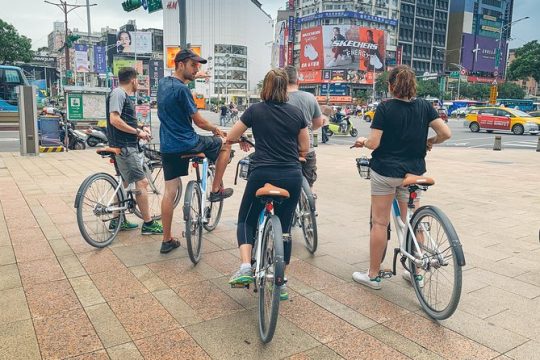
Walking & Biking Tours
Prices from $5
Private & Custom Tours
Prices from $1
Day Trips & Excursions
Prices from $5
Food, Wine & Nightlife
Prices from $14
Shore Excursions
Prices from $5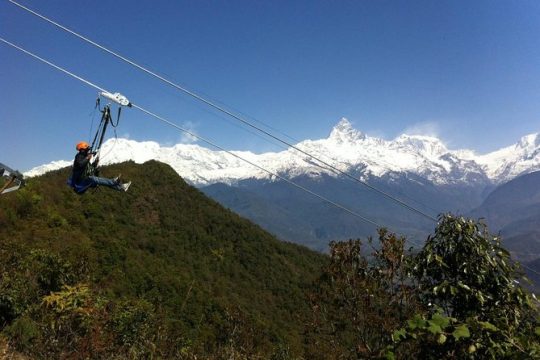
Outdoor Activities
Prices from $7
Cruises, Sailing & Water Tours
Prices from $7
Water Sports
Prices from $12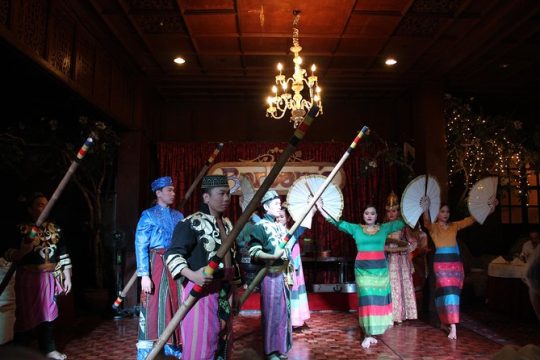
Shows, Concerts & Sports
Prices from $9
Tegenungan Waterfall (Air Terjun Tegenungan)
Prices from $8
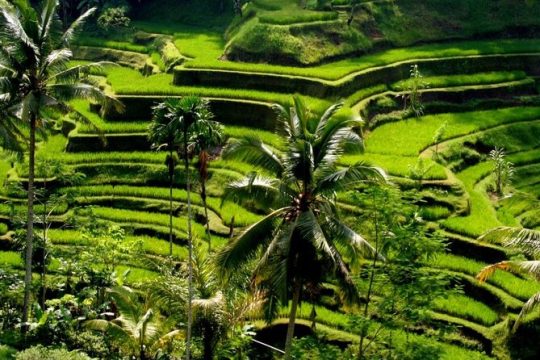
Tegalalang Rice Terrace (Sawah Terasering Tegalalang)
Prices from $8
Nishiki Market
Prices from $52
Uluwatu Temple (Pura Luhur Uluwatu)
Prices from $11
Bangkok Chinatown (Yaowarat)
Prices from $36
Cu Chi Tunnels
Prices from $14
Gion Corner
Prices from $52
Kamogawa River (Kamo River)
Prices from $52
Karangasem
Prices from $12
Mt. Batur (Gunung Batur)
Prices from $8
My Son Sanctuary
Prices from $19
Padangbai (Padang Bai)
Prices from $30





Asia Event Calendar
View all events
Hanukkah in Asia
Dec 4–12, 2026
New Year’s Eve in Asia
Thu, Dec 31, 2026
New Year’s Day long weekend in Asia
Jan 1–3, 2027
Valentine's Day in Asia
Sun, Feb 14, 2027
Easter in Asia
Sun, Mar 28, 2027
Good Friday in Asia
Fri, Mar 26, 2027


