Rhine River attractions
Fler saker att göra i regionen
 #16
Farinas doftmuseum
The Farina Fragrance Museum in Cologne occupies the house where Eau de Cologne was first made, in the old town a few streets from the cathedral. It tells the story of the light, fresh scent that carried the city's name around the world, and of the family firm behind it, often described as the oldest fragrance maker still in business.The story begins with Johann Maria Farina, a perfumer from the Italian Alps who settled in Cologne in the early 18th century and joined a family trading business there. He blended a fragrance that he said reminded him of a spring morning in Italy, with notes of citrus and blossom, and named it after his adopted city. At a time when most perfumes were heavy and strong, his clean, bright scent became a favorite at royal courts and in aristocratic houses across Europe. Its fame also brought a flood of imitators, and later generations of the family spent a great deal of effort protecting their name.Visitors move through the old house and down into its cellar, learning how the scent was distilled, blended and stored, and how it was packed and sent across the continent. Displays include old stills, bottles and labels, along with records of the firm's customers over the centuries. Along the way, the museum also looks at the wider history of perfume and at how the sense of smell works, and visitors can sample scents to understand how a fragrance is built from its parts.The house still feels like a working family business, and descendants of the founder continue to run the firm. A good guide ties each room to a chapter in the family's long history, which turns a small building into a surprisingly rich story.
Snarare #17
Frankfurts katedral (Frankfurter Dom)
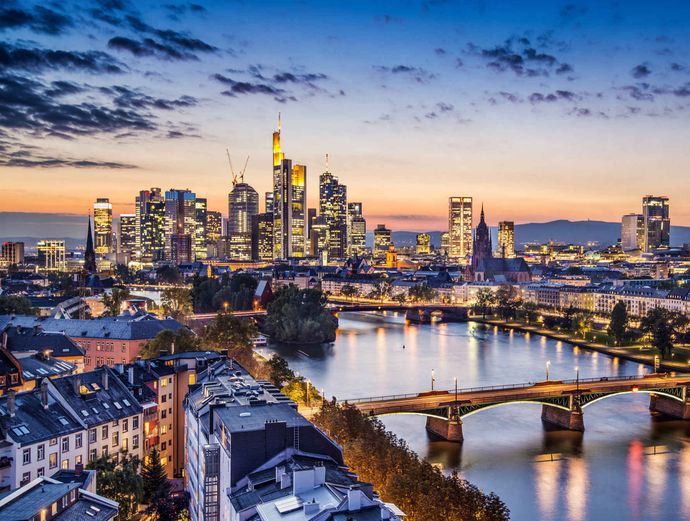
Frankfurt Cathedral, the Kaiserdom of St. Bartholomew, is the red sandstone Gothic church that rises over the heart of Frankfurt's old town. For centuries, rulers of the Holy Roman Empire were elected within its walls and later crowned at its altar, and its tall tower remains one of the city's most familiar landmarks.Despite its name, the church was never the seat of a bishop, and its fame came from politics. The Golden Bull, a decree issued by Emperor Charles IV in the 14th century, named Frankfurt as the place where the prince-electors would choose the king of the Romans, and they met in a small side chapel still known as the Election Chapel. From the 16th century the coronations moved here too, and they continued beneath these vaults until the empire's final years. Each ceremony drew princes, envoys and crowds from far and wide to this one church.The present building rose between the 13th and 15th centuries on a site used for worship since the early Middle Ages, and Roman and Carolingian foundations lie open to view in the archaeological garden just west of it. The tower stood unfinished for centuries and was only completed in the 19th century, after a great fire swept through the church. Bombing in the Second World War gutted the interior again, and the cathedral was patiently rebuilt in the years that followed.Inside, look for the richly carved choir stalls and the late Gothic altar showing the death of the Virgin, one of the finest pieces in the church. It also keeps its most precious relic, part of the skull of St. Bartholomew. A guide can walk you through an election and coronation step by step, from the electors' closed meeting in the chapel to the procession across the square that followed.
Snarare #18
Frankfurts stadshus (Romer)
If you are looking for things to do in Rhine River we have 10 Tours and Activities to Experience Frankfurt City Hall (Romer). Check out our verified traveler reviews and photos of Frankfurt City Hall (Romer) tours and other things to do in Rhine River, and book securely when you find the perfect one. Learn the best ways to see famous Frankfurt City Hall (Romer) and explore the most popular things to do in Rhine River.
Snarare #19
Hohenzollern-bron (Hohenzollernbrücke)
If you are looking for things to do in Rhine River we have 20 Tours and Activities to Experience Hohenzollern Bridge (Hohenzollernbrücke). Check out our verified traveler reviews and photos of Hohenzollern Bridge (Hohenzollernbrücke) tours and other things to do in Rhine River, and book securely when you find the perfect one. Learn the best ways to see famous Hohenzollern Bridge (Hohenzollernbrücke) and explore the most popular things to do in Rhine River.
Snarare #20
King's Alley (Konigsallee)
If you are looking for things to do in Rhine River we have 7 Tours and Activities to Experience King's Alley (Konigsallee). Check out our verified traveler reviews and photos of King's Alley (Konigsallee) tours and other things to do in Rhine River, and book securely when you find the perfect one. Learn the best ways to see famous King's Alley (Konigsallee) and explore the most popular things to do in Rhine River.
Snarare #21
Lanxess Arena
Lanxess Arena is a large indoor arena in the Deutz district of Cologne, on the east bank of the Rhine. People go for concerts, ice hockey, handball and big esports finals, and its huge steel arch makes it an easy landmark to spot from across the river.It opened under the name Kölnarena and later took its present name from a sponsor. The architect Peter Böhm designed it around a steel arch rising more than 70 meters, which carries the roof and gives the building its unmistakable outline. From the far bank, the arch curves over the rooftops of Deutz like a giant handle. Inside, the bowl holds about 20,000 people for concerts, which gives a sold-out night real scale and energy.The arena is home to the Kölner Haie, the city's ice hockey team, and a game night offers a lively taste of local sporting passion. Beyond hockey, the program covers handball and basketball, concerts, comedy, musicals and esports. Handball carries special weight here, since the sport has a devoted following across Germany. Comedy nights and touring musicals draw a different crowd again, so the hall can feel like a new place from one week to the next. Counter-Strike fans know it as The Cathedral, a nickname that speaks to its standing as a great stage for competitive gaming.An evening here shows a modern side of a city better known for its Gothic cathedral and Roman roots. Its setting adds to the occasion, since Deutz has a riverside promenade with wide views across the water to the old town and the twin spires of the cathedral. A behind-the-scenes visit, when one is available, reveals the engineering of the arch and the work of switching the hall from one kind of event to the next.
Snarare #22
Mainz katedral
Mainz Cathedral, also known as the Cathedral of St. Martin, is a massive red sandstone church in the old town of Mainz, on the Rhine in western Germany. With its six towers and long Romanesque nave, it ranks among the great imperial cathedrals of the Rhineland, and visitors come for its architecture, monuments and long royal history.Archbishop Willigis began the cathedral in the late 10th century, when the archbishops of Mainz were among the most powerful men in the Holy Roman Empire, acting as arch-chancellors and electors of its kings. A fire destroyed the first building on the very day of its consecration, and rebuilding and later fires shaped the church over the following centuries. Several German kings were crowned here in the Middle Ages. The Gothic period added side chapels, and in the 18th century the architect Franz Ignaz Michael Neumann crowned the west tower with a Baroque spire.The cathedral has a choir at each end, a feature of great Romanesque churches, with the eastern choir facing the town and the western one used for important ceremonies. Inside, the long nave is lined with grand funeral monuments to archbishops, carved in stone and marble and fixed against the pillars, forming a gallery of sculpture across several centuries. Some of the most admired pieces are by the Naumburg Master, a medieval sculptor whose work also appears in the diocesan museum. The cloister, quiet and enclosed, holds more tombs and carvings.Outside, the cathedral towers over the market square, where a fountain and old houses surround the busy market stalls. Mainz was also the home of Johannes Gutenberg, and his museum stands nearby. The cathedral treasury holds precious objects used in its services. A guide can explain the cathedral's layered architecture and its role in the empire.
Snarare #23
Media Harbor (MedienHafen)
Media Harbor, the MedienHafen, is a former Rhine port in Düsseldorf that has been reinvented as a district of offices, restaurants and bold modern architecture, just south of the old town. People come to see its striking buildings, above all the curving, leaning towers by Frank Gehry, and to stroll the waterfront beneath the city's tall Rhine Tower.The harbor was built in the late 19th century as Düsseldorf's trading port on the Rhine, lined with warehouses and cranes. As shipping changed in the 20th century, the docks fell quiet and much of the area was abandoned. Toward the end of the century the city began allowing new uses plot by plot rather than clearing everything at once, and media firms, design studios and advertising agencies moved in, giving the district its name. More than 700 companies are based here, alongside some of the city's best-known restaurants.The star of the district is the Neuer Zollhof, a set of three buildings by Frank Gehry that seem to sway and bend beside the water. One is clad in white plaster, one in red brick and one in polished steel that mirrors its neighbors, and their windows jut out from the walls like boxes. Around them, architects including David Chipperfield, Steven Holl, Joe Coenen and Claude Vasconi added their own buildings, so a walk along the quays becomes a lesson in contemporary design.Traces of the old port survive among the new towers, from railway tracks to converted warehouses, and the colorful climbing figures scaling one facade have become a playful symbol of the area. At the northern edge rises the Rhine Tower, the city's telecommunications tower, whose lights form a giant clock along its shaft, and nearby stand the round state parliament and the glassy Stadttor tower. A guide can explain how an empty port became one of Germany's most talked-about examples of urban renewal.
Snarare #24
Mercedes-Benz-museet
Mercedes-Benz Museum i Stuttgart berättar bilens historia genom en av dess äldsta tillverkare, från den allra första motorbilen till modern racing och design. Det står vid portarna till märkets huvudfabrik i Untertürkheim-distriktet, och besökarna kommer för bilarna, den slående byggnaden och hur historien utvecklas nivå för nivå. Museet öppnade i början av 2000-talet i en byggnad av de holländska arkitekterna UNStudio som inte har några vanliga golv alls. Dess form är modellerad efter en DNA-spiral, en slingrande struktur av metall och glas där ramper slingrar sig runt ett högt centralt atrium. Besökare åker hiss upp till toppen, till bilismens gryning, och arbetar sig sedan ner igen genom mer än ett sekel av ingenjörskonst. Två rutter slingrar sig ner genom nio nivåer. En följer märkets historia genom sju mytrum, vart och ett knutet till en era och utspelat mot sin tids händelser. Den andra passerar genom fem samlingsrum som grupperar fordon efter tema, såsom resor, frakt, räddningsarbete och kända ägare. Tillsammans rymmer de cirka 160 fordon och mer än 1 500 utställningsföremål, och de två stigarna korsas tillräckligt ofta för att du ska kunna växla mellan dem allt eftersom. Byggnaden är tänkt att ses både utifrån och inifrån, och dess silverfärgade kurvor har blivit ett landmärke i Neckardalen. Det mest värdefulla föremålet är Benz Patent Motor Car, byggd av Carl Benz och betraktad som den första bilen som drivs av en förbränningsmotor. På andra ställen möter du Silver Arrows-racerbilarna, en påvemobil som användes av Johannes Paulus II och ståtliga bilar tillverkade för kejsar Wilhelm II och kejsar Hirohito. En guide kan lyfta fram ingenjörskonsten och personligheterna bakom varje maskin, vilket gör att detaljerna stannar kvar långt efter besöket.
Snarare #25
Kunstpalast Museum
Museum Kunstpalast is one of Düsseldorf's leading art museums, set in a grand complex near the Rhine. Its collection stretches from classical antiquity to the present, and art lovers come for old master paintings, modern art, design and one of the largest glass collections in Europe, all under one roof.The museum traces its beginnings to an academy of art founded in the early 18th century, and for many years it went by the name Kunstmuseum Düsseldorf. Its home is the Ehrenhof, a courtyard of honor lined with brick buildings that Wilhelm Kreis designed for a major exhibition between the two world wars, including an Art Deco hall. Much later the architect Oswald Mathias Ungers led a thorough remodeling, giving the galleries a cleaner, more open frame.Inside, the range is remarkable. Paintings, drawings and sculpture move from antiquity through the Middle Ages and the Baroque into the 20th century, backed by a deep store of prints and photographs. The applied arts and design galleries gather finely made objects of daily life, and the glass rooms glow with pieces from ancient vessels to Art Nouveau and modern studio work. Painters of the Düsseldorf School, who made the city a magnet for artists in the 19th century, have their place as well.Fans of modern art should leave room for ZERO, the movement that Heinz Mack and Otto Piene started in Düsseldorf after the Second World War, working with light, movement and pure color. The museum holds a large collection of ZERO works, a fitting local chapter in a building that has gathered the city's art for generations. With a guide, the stories behind single works, from a Baroque canvas to a shimmering ZERO relief, come into focus.
Snarare #26
Nordrhein-Westfalens delstatsparlament (Landtag)
If you are looking for things to do in Rhine River we have 4 Tours and Activities to Experience North Rhine-Westphalian State Parliament (Landtag). Check out our verified traveler reviews and photos of North Rhine-Westphalian State Parliament (Landtag) tours and other things to do in Rhine River, and book securely when you find the perfect one. Learn the best ways to see famous North Rhine-Westphalian State Parliament (Landtag) and explore the most popular things to do in Rhine River.
Snarare #27
Rhenpromenaden (Rheinuferpromenade)
The Rhine River Promenade, or Rheinuferpromenade, is a broad, car-free walkway along the right bank of the Rhine in Düsseldorf, running below the old town. Locals and visitors come to stroll, cycle and sit on its wide waterside steps, watching barges glide past and the sun set across the water.For decades after the Second World War, the old town was cut off from its river by a busy multi-lane road built along the embankment. The solution was bold: engineers dug a road tunnel of about 2 kilometers beneath the riverbank, sending the traffic underground and freeing the surface for people on foot and on bikes. Architect Niklaus Fritschi designed the new promenade above it, turning a noisy traffic corridor into one of the city's favorite public spaces.The promenade is designed around the water. A long, wide staircase descends toward the river and works as an open-air grandstand, where people sit side by side with a drink or a snack and take in the view. On the old town side, cafes, restaurants and bars line the way, many pouring the dark local Altbier, while rows of trees and benches offer quieter places to pause and look across to the green meadows on the far shore.Walking the length of the promenade links many of Düsseldorf's sights. At the old town end stand Castle Square with its Castle Tower and Maritime Museum, and the Carnival Museum is close by, while farther south the path leads toward the slender Rhine Tower and the striking modern architecture of the Media Harbor, where curving towers by Frank Gehry stand beside the former docks. Together, river, promenade and old town show how a city can give its waterfront back to the people who live there.
Snarare #28
Rhentornet (Rheinturm)
Rhentornet är det höga telekommunikationstornet i betong på flodstranden i Düsseldorf, som reser sig bredvid Rhen vid ingången till Media Harbor. Det är stadens högsta byggnad och det är dit man går för att få en vidsträckt utsikt över floden, gamla stan och de platta låglanden i Niederrhen från dess utsiktsdäck och roterande restaurang. Arkitekten Harald Deilmann ritade tornet i slutet av 20-talet för att bära radio- och tv-antenner för regionen, och det blev snart ett landmärke i staden lika mycket som en del av infrastrukturen. Dess smala schakt och rundade kabin ger Düsseldorf en silhuettmarkör som är synlig från långt håll längs floden. Under årtiondena efter att den öppnade återuppstod den gamla handelshamnen bredvid gradvis som Media Harbor, ett distrikt med kontor, studior och äventyrlig modern arkitektur. Högst upp slingrar sig observationsvåningen runt kabinen bakom breda fönster som sluttar utåt, så att besökare kan luta sig mot glaset och titta nästan rakt ner mot floden. Ovanför den svänger restaurangen långsamt på sin plattform och fullbordar en hel cirkel på cirka 72 minuter, så att gästerna kan se broarna, flodstränderna och hustaken i den gamla staden glida förbi under en enda måltid. Härifrån är Rhens stora krök runt staden lätt att följa. Nerför schaktet löper en av tornets mest lekfulla detaljer, en ljusskulptur av Horst H. Baumann som fungerar som en gigantisk klocka. Dess kolonner av runda lampor visar timmar, minuter och sekunder, avlästa uppifrån och ner, och när du väl lärt dig koden kan du se tiden från hela staden. En guide kan förklara hur man läser den och peka ut landmärkena sedda uppifrån.
Snarare #29
Signal Iduna Park
Signal Iduna Park, known officially as the Westfalenstadion, is where Borussia Dortmund plays its home matches, and no stadium in Germany holds more spectators. Visitors come for the club museum, a look behind the scenes on a stadium tour, and above all the sight of the vast yellow and black south terrace in full voice.The city built the stadium when the club outgrew Stadion Rote Erde, the older athletics ground that still stands next door, and the new arena opened in time to host matches at a World Cup staged in West Germany. It has since welcomed further World Cup and European Championship games, and it has been enlarged step by step, with its four grandstands roofed over and linked at the corners. Bright yellow pylons rising above the roofline hold up the canopy and make the building easy to spot across the city.The heart of the place is the south stand, the Yellow Wall, or Gelbe Wand, one of the largest standing terraces in Europe. On match days it becomes a single steep bank of fans in yellow and black, waving flags and singing for the whole game, and the noise it produces has made the stadium famous far beyond German football. The everyday name comes from a sponsorship deal with an insurance group, though many locals still call it the Westfalenstadion.Inside, a stadium tour leads through areas normally closed to the public, such as the dressing rooms, the players' tunnel and the edge of the pitch, and up into the stands for the view from the terrace. The Borusseum, the club museum built into the northeast corner, traces the story of Borussia Dortmund through trophies, shirts, photographs and film, from its working-class roots to league titles and European triumphs. A guide brings in the anecdotes and rivalries that give those trophies their meaning.
Snarare #30
St Lambertus katedral
St. Lambertus is the great Gothic parish church of Düsseldorf's Old Town, a brick basilica close to the Rhine whose crooked, twisted spire is one of the city's most familiar sights. People come to see that odd tower, step into the calm interior and admire centuries of art, from late medieval carving to modern bronze doors.A church stood here before Düsseldorf was even a town, and the present hall church, with its nave and aisles of equal height, was completed in the late 14th century, as the town grew into the seat of the Dukes of Berg. Its spire has inspired local legends. One says the devil twisted it in a rage, another that it will straighten when a true virgin marries here. The plainer explanation is that it was rebuilt after a fire with damp timber, which warped as it dried.Inside, the tall, bright hall holds treasures from many periods. A soaring late Gothic sacrament house of carved stone rises in the choir, and the Renaissance tomb of Duke William the Rich recalls the ducal court that ruled from the castle nearby, whose lone tower still stands by the river. The relics of St. Apollinaris, Düsseldorf's patron saint, rest in an ornate shrine, and altars, paintings and sculptures line the aisles.The church was named a minor basilica in the 20th century, a mark of its importance to Catholics in the region. The west portal carries work by Ewald Mataré, the sculptor who taught at the Düsseldorf art academy, bringing a modern hand to a medieval building. Seen from the Rhine embankment, the spire rises beside the old castle tower, and together they form the classic view of the Old Town. A guide can tell the legends of the spire and show how the city grew up around this church.
Snarare #31
St. Stephans kyrka (Stephanskirche)
St. Stephan's Church in Mainz is a Gothic hall church on the Stephansberg hill above the old town, famous for its glowing blue stained-glass windows by Marc Chagall. People come for that deep blue light, for the quiet late Gothic cloister beside the nave and for a story of faith and reconciliation told in glass.The church goes back to Archbishop Willigis, who founded a collegiate foundation here near the end of the 10th century and called it a house of prayer for the empire. He was buried in the church. The building you see now was raised in the 14th century as a hall church, with three aisles of equal height under one broad roof, and the cloister was added in the late Middle Ages. Bombing in the Second World War left the church badly damaged, and its old windows were lost.The new glass came from Marc Chagall, the Jewish artist born in what is now Belarus who made France his home. A local priest, Klaus Mayer, wrote to him and won him over, and Chagall agreed to the project as a sign of friendship between Jews and Christians and between France and Germany. He worked on the windows in the last years of his long life, and they are among his final works. Scenes from the Hebrew Bible float in layers of blue, with figures such as Abraham, Jacob and Moses picked out in touches of red, yellow and green. After his death, his longtime glass collaborator Charles Marq filled the remaining windows with softer patterns in a matching blue.Inside, the effect changes with the weather, from a cool glow on gray mornings to a deep, almost underwater shimmer when the sun is out. Take time in the cloister too, where carved stone arches frame a quiet courtyard and offer a calm contrast. A guide can point out the Bible stories in each pane.
Snarare #32
Städel Museum (Städelsches Kunstinstitut und Städtische Galerie)
Städel Museum är ett av Tysklands ledande konstmuseer, beläget på floden Mains södra strand i Frankfurt. Konstälskare kommer för en samling som spänner över ungefär sju århundraden av europeisk konst, från tidiga italienska tavlor till Botticelli, Rembrandt, Vermeer, Monet och Picasso, och vidare till djärva verk av levande konstnärer. Museet började med en mans generositet. Johann Friedrich Städel, en bankir och konstmecenat från Frankfurt, lämnade sitt hus, sin samling och sin förmögenhet för att grunda ett konstinstitut för staden, och konstakademin känd som Städelschule växte också fram ur hans gåva. Släktingar utmanade hans testamente i en lång rättslig strid, men stiftelsen överlevde och blev en av de äldsta i sitt slag i Tyskland. Dess hem, en nyrenässansbyggnad vid floden Schaumainkai, skadades svårt under andra världskriget och byggdes sedan om och ut flera gånger. Gallerierna utvecklas ungefär i ordning genom århundradena. Tidiga italienska och tyska mästare får ge vika för Dürer, Cranach och Holbein, sedan för Rembrandt och Vermeer, vars geograf stannar upp över sina sjökort i det mjuka fönsterljuset. Botticellis idealiserade porträtt av en ung kvinna är bland de mest beundrade verken, och Tischbeins målning av Goethe som vilar bland ruiner på den romerska landsbygden har blivit en symbol för museet. Senare rum presenterar Monet, Degas och en stark grupp verk av Max Beckmann och de tyska expressionisterna, vilket leder vidare till Picasso. De nyaste gallerierna ligger under jord. Under museets trädgård finns en bred hall för samtida konst som är upplyst av runda takfönster i gräsmattan, vilket ger gräset ovanför dess märkliga prickiga utseende. Förutom måleri omfattar samlingen skulptur och fotografi, tillsammans med ett stort arkiv med teckningar och tryck. En guide kan berätta hur samlingen byggdes upp från en beskyddares gåva och peka ut detaljer i berömda bilder som är lätta att missa.
Snarare #33
Wallraf-Richartz-museet
If you are looking for things to do in Rhine River we have 1 Tours and Activities to Experience Wallraf-Richartz-Museum. Check out our verified traveler reviews and photos of Wallraf-Richartz-Museum tours and other things to do in Rhine River, and book securely when you find the perfect one. Learn the best ways to see famous Wallraf-Richartz-Museum and explore the most popular things to do in Rhine River.
SnarareUpptäck Rhen
Lyx & speciella tillfällen
Priser från $3
Rundturer och sightseeing
Priser från $3
Promenad- och cykelturer
Priser från $3
Kultur- och tematurer
Priser från $3
Privata och anpassade turer
Priser från $5
Kryssningar, segling och vattenturer
Priser från $29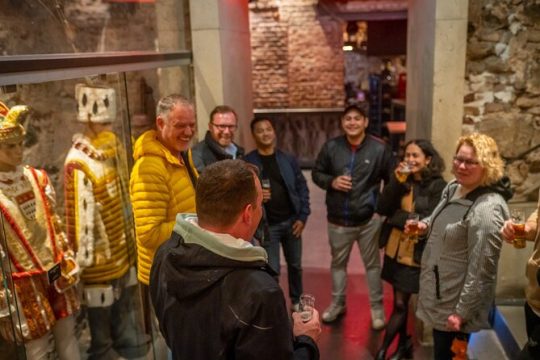
Mat, vin & nattliv
Priser från $10
Semester- och säsongsresor
Priser från $13
Flyg-, helikopter- och ballongturer
Priser från $222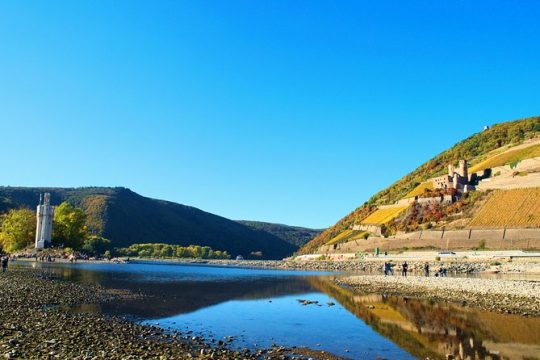
Dagsturer och utflykter
Priser från $31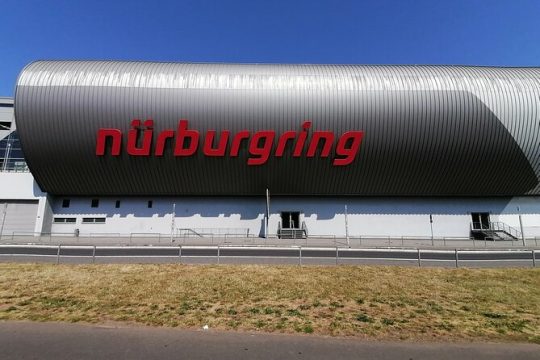
Flerdagars och utökade turer
Priser från $7,500
Äventyrsresor
Priser från $9
Kölnerdomen (Kölner Dom)
Priser från $3
Kölns gamla stadsdel (Altstadt)
Priser från $5
Museum Ludwig
Priser från $11
Roman-Germanic Museum (Römisch-Germanische Museum)
Priser från $29
BMW Museum
Priser från $7,500
Botaniska trädgården Frankfurt (Palmengarten)
Priser från $425
Cochem slott
Priser från $84
Kölns chokladmuseum (Schokoladenmuseum)
Priser från $5
Deutsches Eck (tysk hörna)
Priser från $9
Deutsches Museum
Priser från $7,500
Düsseldorfs gamla stadsdel (Altstadt)
Priser från $20
Düsseldorfs gamla rådhus (Rathaus Dusseldorf)
Priser från $3


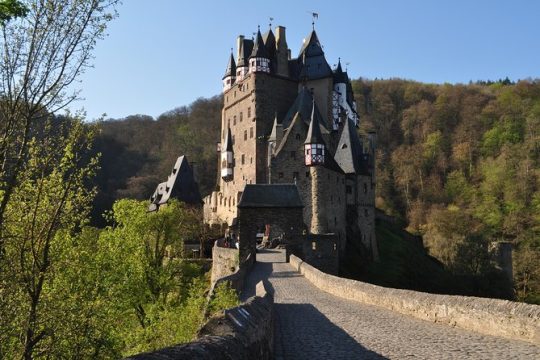

Rhenflodens evenemangskalender
Visa alla händelser
Julaktiviteter i floden Rhen
Fre, dec 25, 2026
Hanukka i floden Rhen
4–12 december 2026
Nyårsafton i floden Rhen
tors 31 december 2026
Julafton i floden Rhen
tors 24 december 2026
Nyårsdagen långhelg i floden Rhen
1–3 januari 2027
Alla hjärtans dag i floden Rhen
Sön 14 februari 2027
Påsk i floden Rhen
Sön 28 mars 2027
Långfredag i Rhen
Fre 26 mars 2027