Atrações da Alemanha
Mais coisas para fazer no país
 #346
Cataratas do Reno (Rheinfall)
As Cataratas do Reno, ou Rheinfall, são uma ampla e estrondosa queda d'água no Alto Reno, em Neuhausen am Rheinfall, no norte da Suíça, nos arredores de Schaffhausen. Consideradas entre as cachoeiras mais poderosas da Europa, atraem visitantes que desejam sentir a névoa, ouvir o estrondo e observar o rio inteiro despencar sobre uma ampla saliência rochosa. As cataratas são jovens em termos geológicos. Formaram-se na última era glacial, quando geleiras e seus detritos empurraram o Reno para fora de seu antigo leito e para um novo curso sobre uma faixa de calcário duro. O cascalho mais macio foi desgastado, mas o calcário resistiu, criando o degrau sobre o qual o rio ainda hoje despenca. Algumas grandes rochas permanecem no meio das cataratas, desgastadas pela correnteza, mas ainda no lugar, e a mais alta, coroada com uma bandeira suíça, tornou-se o símbolo do local. Pessoas são atraídas para cá há séculos. Acima da margem sul ergue-se o Castelo de Laufen, uma fortaleza medieval com caminhos e varandas que descem até perto da água, enquanto na margem norte o pequeno Castelo de Wörth fica junto à bacia mais tranquila abaixo das cataratas. Na época do Romantismo, escritores e pintores vieram retratar a paisagem, entre eles Goethe e o pintor inglês J.M.W. Turner, que pintou as cataratas mais de uma vez. Suas pinturas e descrições ajudaram a tornar as cataratas uma parada obrigatória no roteiro turístico europeu. Um pouco mais acima, uma ponte ferroviária de pedra do século XIX cruza o rio, e os trens passam por cima dela, com a cascata à vista. As cataratas também são um local de encontro popular no dia nacional da Suíça, quando fogos de artifício sobre a água atraem grandes multidões. Um guia pode explicar a geologia e as antigas histórias que se apegam a este trecho do rio.
Mais #347
Passeio do Rio Reno (Rheinuferpromenade)
The Rhine River Promenade, or Rheinuferpromenade, is a broad, car-free walkway along the right bank of the Rhine in Düsseldorf, running below the old town. Locals and visitors come to stroll, cycle and sit on its wide waterside steps, watching barges glide past and the sun set across the water.For decades after the Second World War, the old town was cut off from its river by a busy multi-lane road built along the embankment. The solution was bold: engineers dug a road tunnel of about 2 kilometers beneath the riverbank, sending the traffic underground and freeing the surface for people on foot and on bikes. Architect Niklaus Fritschi designed the new promenade above it, turning a noisy traffic corridor into one of the city's favorite public spaces.The promenade is designed around the water. A long, wide staircase descends toward the river and works as an open-air grandstand, where people sit side by side with a drink or a snack and take in the view. On the old town side, cafes, restaurants and bars line the way, many pouring the dark local Altbier, while rows of trees and benches offer quieter places to pause and look across to the green meadows on the far shore.Walking the length of the promenade links many of Düsseldorf's sights. At the old town end stand Castle Square with its Castle Tower and Maritime Museum, and the Carnival Museum is close by, while farther south the path leads toward the slender Rhine Tower and the striking modern architecture of the Media Harbor, where curving towers by Frank Gehry stand beside the former docks. Together, river, promenade and old town show how a city can give its waterfront back to the people who live there.
Mais #348
Torre do Reno (Rheinturm)
A Torre do Reno é a alta torre de concreto de telecomunicações na margem do rio em Düsseldorf, erguendo-se ao lado do Reno na entrada do Media Harbor. A estrutura mais alta da cidade, é o local onde as pessoas vão para apreciar a vista panorâmica do rio, da cidade velha e das planícies do Baixo Reno a partir de seu mirante e restaurante giratório. O arquiteto Harald Deilmann projetou a torre no final do século XX para abrigar antenas de rádio e televisão para a região, e ela logo se tornou um marco da cidade, tanto quanto uma peça de infraestrutura. Seu eixo esguio e cabine arredondada conferem a Düsseldorf um ponto de referência visível de longe ao longo do rio. Nas décadas seguintes à sua inauguração, o antigo porto comercial ao lado renasceu gradualmente como o Media Harbor, um distrito de escritórios, estúdios e arquitetura moderna arrojada. No topo, o mirante envolve a cabine por trás de amplas janelas inclinadas para fora, permitindo que os visitantes se apoiem no vidro e olhem quase diretamente para o rio. Acima, o restaurante gira lentamente em sua plataforma, completando um círculo em cerca de 72 minutos, permitindo que os clientes observem as pontes, as margens do rio e os telhados da cidade velha passarem enquanto saboreiam uma refeição. Daqui de cima, a grande curva do Reno ao redor da cidade é facilmente avistada. Descendo pelo poço, encontra-se um dos detalhes mais lúdicos da torre: uma escultura de luz de Horst H. Baumann que funciona como um relógio gigante. Suas colunas de lâmpadas redondas exibem horas, minutos e segundos, lidos de cima para baixo, e, uma vez aprendido o código, é possível saber as horas de qualquer lugar da cidade. Um guia pode explicar como lê-lo e apontar os pontos turísticos visíveis de cima.
Mais #349
Rio Sena
O Sena é o rio que atravessa o coração de Paris, serpenteando pela Torre Eiffel, pelo Louvre e pela Catedral de Notre-Dame em seu caminho até o Canal da Mancha. Seus cais, pontes e ilhas formam a espinha dorsal da cidade, e as pessoas vêm para caminhar por suas margens, atravessar suas pontes e admirar Paris da água. O rio nasce em um planalto na Borgonha e serpenteia pelo norte da França antes de desaguar no mar entre Le Havre e Honfleur. Paris, cujo nome deriva dos celtas Parisii que viviam ao longo desse trecho do rio, cresceu ao redor da Île de la Cité, uma ilha em seu curso, onde os romanos construíram parte de sua cidade de Lutécia. Durante séculos, o rio transportou o comércio da cidade, e a poderosa guilda de mercadores fluviais deu a Paris seu brasão de armas, um navio navegando pelas ondas, e seu lema, Fluctuat nec mergitur, sacudido pelas ondas, mas nunca afundado. As margens do Sena no centro de Paris são Patrimônio Mundial da UNESCO, um corredor de monumentos que se lê como a história da cidade. Na ilha principal, erguem-se Notre-Dame e a joia gótica da Sainte-Chapelle, enquanto o Louvre se estende ao longo da margem direita e o Museu d'Orsay ocupa uma antiga estação ferroviária na margem esquerda. Mais adiante, rio abaixo, avistam-se a cúpula dourada de Les Invalides, o Grand Palais e a Torre Eiffel. Na extremidade oeste da Île de la Cité, salgueiros se estendem até as águas da pequena Square du Vert-Galant. As pontes são atrações por si só, desde a Pont Neuf, a ponte mais antiga da cidade, apesar de seu nome significar "ponte nova", até a Pont Alexandre III, com suas estátuas douradas e luminárias ornamentadas. Trechos das margens, antes destinados ao tráfego, agora pertencem a pedestres, ciclistas e cafés à beira-rio. Um guia revela as histórias escondidas ao longo das águas.
Mais #350
Praça do Mercado de Rotemburgo (Marktplatz)
Rothenburg Market Square (Marktplatz) is the heart of Rothenburg ob der Tauber, the walled medieval town on Bavaria's Romantic Road. Framed by the town hall, tall gabled houses and a clock with a famous drinking scene, it is where the storybook character that draws travelers from around the world feels strongest.Rothenburg grew up around a castle of the Staufer dynasty and became a free imperial city, answerable only to the emperor, a status that brought trade and wealth in the late Middle Ages. The town hall shows that story in stone. Its Gothic rear section belongs to the town's medieval prime, while the Renaissance front facing the square went up after fire destroyed the older wing, giving the building two faces from two eras. Its tower rises about sixty meters, and the top looks out over red roofs, walls and the Tauber valley.The square's favorite tale is the Meistertrunk, or Master Draught. During the Thirty Years' War, legend says, the Catholic general Tilly took the town and threatened to destroy it, then offered mercy if someone could drain a huge tankard of wine in one go. Former mayor Georg Nusch emptied it and saved Rothenburg. Little figures of the two men appear in the windows of the clock on the Ratstrinkstube, the old councilors' tavern, to repeat the famous drink, and townspeople stage the story at an annual festival.Around the edges, half-timbered and step-gabled houses hold cafes, bakeries selling Schneeballen, the town's crumbly pastry balls, and shops full of carved and painted souvenirs. At one corner stands the Georgsbrunnen, a Renaissance fountain topped by St. George and the dragon. In winter the square fills with the wooden stalls of a much-loved Christmas market. A guide points out the small details, from carved coats of arms to old inscriptions, that pass most visitors by.
Mais #351
Royal Palace
The Royal Palace is the official residence of the King of Norway, a pale neoclassical building on a rise at the top of Karl Johans gate in central Oslo. Visitors come to see its stately facade and parkland, watch the King's Guard on duty and tour the state rooms where the royal family receives its guests.The palace was commissioned in the early 19th century by King Charles III John, the former French marshal Jean-Baptiste Bernadotte, who had become king of both Norway and Sweden. The architect Hans Linstow designed it, and the building work dragged on for decades as funds ran short. Charles John died before it was finished, and his son Oscar I was the first king to use it. Only after Norway gained full independence in the early 20th century did the palace become the permanent home of a Norwegian royal family, when King Haakon VII and Queen Maud moved in.Inside, the state rooms showcase Norwegian art and craftsmanship of the 19th century. The Bird Room is painted with native birds among leafy branches, the Mirror Hall glitters with tall mirrors and chandeliers, and the Banqueting Hall is laid for state dinners when foreign heads of state visit. The palace also has its own chapel, used for royal family ceremonies.Around the palace spreads Slottsparken, a landscaped park of lawns, ponds and old trees that is open to all, and on the square in front an equestrian statue honors Charles John, the king who commissioned the palace. The soldiers at the gates belong to His Majesty the King's Guard, a battalion largely made up of young conscripts. A guide can show how the palace mirrors the story of modern Norway, from the union with Sweden to the present day.
Mais #352
Palácio Real de Amsterdã (Koninklijk Paleis Amsterdam)
The Royal Palace Amsterdam is a grand classical building on Dam Square, the historic heart of the Dutch capital. Built as the city hall during the Dutch Golden Age and later turned into a royal residence, it is still used by the Dutch monarch for state occasions, and visitors come to see its marble halls, sculpture and period furniture.In the 17th century Amsterdam was one of the richest trading cities in the world, and its leaders wanted a town hall to match. The architect Jacob van Campen designed a vast stone building in the classical style, raised on a forest of wooden piles driven into the soft ground. When it opened, admirers called it the Eighth Wonder of the World. Inside, the city's government, courts, bank and a prison worked under one roof, and every room was decorated to remind citizens of justice, wisdom and civic virtue.Its role changed in the early 19th century, when Louis Napoleon, the brother of Napoleon Bonaparte, became King of Holland and made the city hall his palace. He filled it with elegant Empire furniture, chandeliers and clocks, and much of that collection survives, among the finest of its kind anywhere. After his reign the building passed to the House of Orange and became one of the palaces placed at the disposal of the Dutch monarch.The heart of the palace is the Citizens' Hall, a soaring marble space whose floor is inlaid with maps of the world and a chart of the heavens, so that the people of Amsterdam could walk across the globe. The sculptor Artus Quellinus and his workshop carved much of the decoration, and paintings by pupils of Rembrandt hang in the galleries. On the ground floor, the Tribunal, where death sentences were once read out, is lined with marble caryatids. Outside, a bronze Atlas shoulders the globe on the rear gable. A guide can explain the symbols that turned the building into a lesson in good government.
Mais #353
Praça Romerberg
Se você está procurando o que fazer na Alemanha, temos 25 passeios e atividades para você aproveitar a Praça Römerberg. Confira as avaliações e fotos de viajantes verificados sobre os passeios pela Praça Römerberg e outras atrações na Alemanha, e reserve com segurança quando encontrar a opção perfeita. Descubra as melhores maneiras de conhecer a famosa Praça Römerberg e explore as atividades mais populares na Alemanha.
Mais #354
Catedral de Salzburgo (Dom zu Salzburg)
Salzburg Cathedral, the Dom zu Salzburg, is the city's great Baroque church, standing on Domplatz in the heart of the Old Town beneath the Hohensalzburg fortress. Visitors come for its vast white interior and soaring dome, its long religious history and its close ties to Mozart.A cathedral has stood here since the 8th century, when Bishop Virgil, an Irish monk, built the first church on the site, and over the following centuries it was enlarged into a vast Romanesque basilica. After a fire badly damaged that building at the end of the 16th century, the powerful prince-archbishops of Salzburg decided to replace it with something entirely new. Archbishop Wolf Dietrich cleared the ruins, and his successor brought in the Italian architect Santino Solari, whose design gave Salzburg one of the earliest Baroque churches north of the Alps. It was consecrated in the 17th century with great festivities during the Thirty Years' War.The pale marble facade, framed by twin towers, carries statues of Rupert and Virgil, the city's patron saints, beside the apostles Peter and Paul, and its three bronze doors, made after the Second World War, stand for Faith, Love and Hope. Inside, white stucco and ceiling paintings fill the nave, and light pours from the dome, which was rebuilt after a bomb pierced it during that war. Look for the medieval bronze font where Mozart was baptized and the organs he played as court organist, then head down to the crypt, which keeps traces of the earlier cathedrals and the tombs of archbishops.Music remains part of its life, from sacred concerts to the masses Mozart composed for this very church, and in summer the square in front becomes the open-air stage for Everyman, the morality play staged there since the Salzburg Festival began. A guide can read the symbols on the bronze doors and explain how the prince-archbishops used the building to display their wealth and power.
Mais #355
Parque Nacional da Suíça Saxônica
Saxon Switzerland National Park protects a dramatic sandstone landscape along the Elbe southeast of Dresden, where the river winds out of the Czech Republic past towers, cliffs and flat-topped rock mountains. Hikers, climbers and sightseers come for the Bastei lookout and its stone bridge, the deep gorges and the strange pillars rising out of the forest.The rock began as sand laid down on the floor of an ancient sea, later lifted and worn by rain, frost and the river into the maze of shapes seen here. The name came from two Swiss artists who worked in Dresden in the 18th century and felt the scenery reminded them of home. Painters of the Romantic era, among them Caspar David Friedrich, followed, and the route they walked became known as the Painters' Way. In the 19th century a stone bridge replaced an earlier wooden one at the Bastei. The national park was created in the late 20th century and continues across the border as Bohemian Switzerland National Park.From the Bastei, high above the river at Rathen, you look down on the Elbe's loop and across to table mountains such as the Lilienstein. Around the bridge lie the scant remains of Neurathen, a medieval castle built into the rock itself. Farther east, the Schrammsteine form a jagged ridge reached by ladders and iron steps, and the Kuhstall, a large natural rock arch, opens onto a sea of treetops. Narrow gorges stay cool and mossy even in summer, and the area is also known as a birthplace of free climbing, with climbers still following strict local rules on hundreds of sandstone towers.Between the rocks, beech and spruce woods hide streams, ferns and quiet valleys, and peregrine falcons nest on some of the cliffs. A guide can explain how the sandstone formed and point out the climbing routes, castle traces and viewpoints that are easy to pass by.
Mais #356
Palácio de Schaezler
Se você está procurando o que fazer na Alemanha, temos 4 passeios e atividades para você conhecer o Palácio Schäzeller. Confira as avaliações e fotos de viajantes verificados sobre os passeios pelo Palácio Schäzeller e outras atividades na Alemanha, e reserve com segurança quando encontrar a opção perfeita. Descubra as melhores maneiras de visitar o famoso Palácio Schäzeller e explore as atrações mais populares da Alemanha.
Mais #357
Museu Schwules (Museu Gay)
Se você está procurando o que fazer na Alemanha, temos 1 passeio e atividade para conhecer o Museu Gay (Schwules Museum). Confira as avaliações e fotos de viajantes verificados sobre os passeios ao Museu Gay e outras atividades na Alemanha e reserve com segurança quando encontrar a opção perfeita. Descubra as melhores maneiras de visitar o famoso Museu Gay e explore as atividades mais populares na Alemanha.
Mais #358
Palácio de Schönbrunn (Schloss Schönbrunn)
O Palácio de Schönbrunn é a antiga residência de verão dos imperadores Habsburgos, na zona oeste de Viena. Com mais de 1,400 quartos, aposentos suntuosos, jardins formais e a Gloriette no topo da colina, o palácio revela como uma das dinastias mais poderosas da Europa vivia, recebia visitas e governava. A propriedade começou como um terreno de caça. No século XVI, o Imperador Maximiliano II comprou as terras junto ao rio e as povoou com caça, aves exóticas e tanques de peixes, e um palácio foi construído no século seguinte. Seu nome deriva de uma nascente nos terrenos, o belo poço que deu nome a Schönbrunn. No século XVIII, a Imperatriz Maria Teresa reconstruiu o palácio, transformando-o na residência barroca que ali se encontra, e ele se tornou o centro da vida da corte durante os meses mais quentes. A história continuou a passar por seus portões. O Imperador Francisco José nasceu e morreu ali, após um reinado de quase sete décadas, e o palácio testemunhou o fim da monarquia após a Primeira Guerra Mundial, quando passou para o domínio do Estado e foi aberto como museu. Muito mais tarde, o palácio foi palco de um encontro da Guerra Fria entre John F. Kennedy e Nikita Khrushchev. A UNESCO considera o palácio e seus jardins Patrimônio Mundial. Em seu interior, os aposentos reais variam de salões rococós dourados e a longa Grande Galeria, outrora iluminada para bailes e banquetes, a apartamentos privados que revelam os hábitos diários de Francisco José e da Imperatriz Elisabeth. Do lado de fora, o parque sobe uma suave encosta até a Gloriette, uma estrutura com colunas que oferece amplas vistas da cidade, passando por fontes, estátuas, uma réplica de uma ruína romana e a estufa de vidro das palmeiras. Os jardins também abrigam o Tiergarten, considerado o zoológico mais antigo do mundo. Um guia ajuda a conectar os cômodos às pessoas e aos rituais da corte que os preenchiam.
Mais #359
SEA LIFE® Constança
SEA LIFE Konstanz is an aquarium in the harbor of Konstanz, on the shore of Lake Constance in southern Germany. It traces the path of water from alpine streams and the lake itself to the open ocean, and families come to meet local fish, jellyfish, coral dwellers and other sea creatures along the way.The layout follows the journey of the Rhine, which rises in the Alps, flows through Lake Constance and meets the sea near Rotterdam. The route begins with the fish native to Lake Constance, the great lake shared by Germany, Austria and Switzerland, and takes in a glacier cave, a mountain stream and a recreated Rotterdam harbor. From there the scenery turns marine, with a shipwreck, a coral and jellyfish area and an ocean tunnel where fish glide overhead.Further on, a rainforest section and an Antarctic area widen the picture to very different climates. Feeding sessions during the day show how the animals eat, and after closing time a torch-lit tour reveals the aquarium in a quieter, more mysterious light. The visit also includes a nature museum devoted to the Lake Constance region, which places the lake's wildlife in the context of its landscape.The local angle is what sets this aquarium apart. It begins with fish that live just beyond its walls in the lake and shows how one river links them to the creatures of distant oceans, a story that helps make sense of the whole region. The harbor setting adds to the experience, with lake boats coming and going and the tall Imperia statue turning slowly at the harbor entrance. The Imperia, a satirical figure recalling the great church council held in Konstanz in the late Middle Ages, is a local landmark in its own right.
Mais #360
SEA LIFE® Speyer
SEA LIFE Speyer is an aquarium on the bank of the Rhine in Speyer, a historic cathedral city in Rhineland-Palatinate within easy reach of Heidelberg. Families come to walk through an underwater tunnel, watch sharks and sea turtles glide past and wander themed zones that range from a coral world to a steamy rainforest.The aquarium is part of the SEA LIFE chain, which has sites across Europe, North America, Asia and Oceania. Its home in Speyer sits by a harbor basin on the Rhine, a fitting spot for a place devoted to water and the creatures that live in it. Inside, the displays are pitched at curious minds of every age, with plenty for younger visitors who may be meeting a shark or an octopus for the first time.The highlight for many is the underwater tunnel, where fish swim overhead and alongside as you walk. Elsewhere, seahorses hover in calm tanks, tropical reef fish dart through a coral world, moray eels peer out from rocky crevices and octopuses show off their talent for changing shape and color. A tropical rainforest zone brings a warmer, greener mood, and one area recreates the Loreley, the famous rock on the Rhine that legend links to a siren whose song lured boatmen to their doom. Sea turtles are another favorite, paddling slowly through their tank.Feeding sessions through the day let you watch the keepers at work and hear more about each species, and a short virtual reality experience adds a digital twist to the visit. One of the quirkier encounters is a meet-and-greet with giant snails, a treat for children who like their animals slow and slimy. Speyer itself, with its great Romanesque cathedral and old town, makes a fine pairing for a day by the river, and a guide can add background on the animals and the work that keeps the tanks healthy.
Mais #361
SEA LIFE® Timmendorfer Strand
SEA LIFE® Timmendorfer Strand is an aquarium on the seafront promenade of Timmendorfer Strand, a Baltic beach resort on the Bay of Lübeck within day-trip reach of Rostock. It is home to about 2,500 creatures, from sharks and rays to seahorses and a green sea turtle, and families come to meet them up close.The aquarium belongs to a well-known chain of sea life centers, and it is laid out as a journey through themed habitats. A rainforest area focuses on insects, a tropical ocean zone is bright with clownfish and lionfish, and a harbor area adds a maritime touch. One tank is devoted to the Baltic Sea itself, revealing the fish that live just off the beach outside.The highlight for many visitors is the underwater tunnel, where sharks and rays glide overhead and alongside as you walk through the water. The ray bay offers another close look at these flat, graceful fish, and the green sea turtle is a gentle star of the show. For something different, a virtual reality dive lets you sink into an imagined ocean without getting wet. At feeding times, the hosts share stories about the animals and how they are cared for.Timmendorfer Strand is one of the best-known resorts on this stretch of the Baltic, with a long sandy beach and a pier, and the aquarium sits right at the heart of its seafront life. After the tanks, the restaurant looks out over the open water, a reminder that the wild Baltic is only steps away. The visit suits families with curious children as well as anyone keen to understand the sea along this coast. Seeing the Baltic tank first and the real shoreline after makes the link between the two hard to forget.
Mais #362
Ópera Semper (Semperoper Erleben)
The Semper Opera House, or Semperoper, is the home of the Saxon State Opera on Theaterplatz in the center of Dresden, Germany. It is one of the most celebrated opera houses in Europe, admired for its grand facade above the Elbe, its lavish auditorium and the famous premieres that took place on its stage.The building is named after the architect Gottfried Semper, who designed the first opera house on this site in the 19th century. That theater burned down a few decades later, and Semper designed a second, even grander building, completed under the supervision of his son. The new house became one of the great stages of the operatic world. Richard Wagner conducted here, and several of his early operas premiered in Dresden, as did many works by Richard Strauss, including Salome and Der Rosenkavalier. Near the end of the Second World War, Allied bombing left the opera house a burned-out shell. It was carefully rebuilt during the communist era and reopened in the late 20th century, and it was restored once more after a severe flood of the Elbe early in the 21st century.The curved facade follows the shape of the auditorium behind it, and above the main entrance a bronze chariot drawn by panthers carries Dionysus and Ariadne. Statues of the playwrights Goethe and Schiller guard the doorway, along with figures of other great writers. Inside, the foyers are richly decorated with painted ceilings, chandeliers and columns that look like marble but are made of skillfully painted stucco. The horseshoe-shaped auditorium rises in tiers of red and gold, and above the stage a famous clock shows the time in five-minute steps. The Staatskapelle Dresden, one of the oldest orchestras in the world, plays in the pit.A guide shares the stories of the fires, rebuilding and premieres behind the gilded walls.
Mais #363
Parque Signal Iduna
Signal Iduna Park, known officially as the Westfalenstadion, is where Borussia Dortmund plays its home matches, and no stadium in Germany holds more spectators. Visitors come for the club museum, a look behind the scenes on a stadium tour, and above all the sight of the vast yellow and black south terrace in full voice.The city built the stadium when the club outgrew Stadion Rote Erde, the older athletics ground that still stands next door, and the new arena opened in time to host matches at a World Cup staged in West Germany. It has since welcomed further World Cup and European Championship games, and it has been enlarged step by step, with its four grandstands roofed over and linked at the corners. Bright yellow pylons rising above the roofline hold up the canopy and make the building easy to spot across the city.The heart of the place is the south stand, the Yellow Wall, or Gelbe Wand, one of the largest standing terraces in Europe. On match days it becomes a single steep bank of fans in yellow and black, waving flags and singing for the whole game, and the noise it produces has made the stadium famous far beyond German football. The everyday name comes from a sponsorship deal with an insurance group, though many locals still call it the Westfalenstadion.Inside, a stadium tour leads through areas normally closed to the public, such as the dressing rooms, the players' tunnel and the edge of the pitch, and up into the stands for the view from the terrace. The Borusseum, the club museum built into the northeast corner, traces the story of Borussia Dortmund through trophies, shirts, photographs and film, from its working-class roots to league titles and European triumphs. A guide brings in the anecdotes and rivalries that give those trophies their meaning.
Mais #364
Capela Sistina (Cappella Sistina)
The Sistine Chapel is the papal chapel inside the Apostolic Palace in Vatican City, famous for the ceiling and altar wall that Michelangelo covered with frescoes. Visitors come to stand beneath some of the most celebrated paintings in Western art, in the room where cardinals still gather to elect a new pope.The chapel was built in the late 15th century for Pope Sixtus IV, whose name it carries. He brought in leading painters of the day, among them Botticelli, Perugino and Ghirlandaio, to decorate the side walls with scenes from the lives of Moses and Christ, which still run in two facing cycles. Early in the 16th century, Pope Julius II persuaded Michelangelo, who saw himself first as a sculptor, to repaint the ceiling. Working on scaffolding high above the floor, he filled the vault with scenes from Genesis, from the separation of light and darkness to the story of Noah, surrounded by prophets, sibyls and muscular nude figures.Decades later Michelangelo returned to paint the Last Judgment across the whole altar wall. Christ stands at the center raising the saved and casting down the damned, amid a swirl of bodies rising from their graves or tumbling toward the underworld. Its many nudes shocked some churchmen, and after his death another painter was hired to cover parts of them with draperies. Look for Saint Bartholomew holding his own flayed skin, whose sagging face is widely read as a self-portrait of the artist.The most famous image of all is the Creation of Adam, where the fingers of God and the first man almost touch. A major cleaning late in the 20th century stripped away centuries of candle soot and revealed the bright colors Michelangelo actually used. When a new pope must be chosen, the chapel closes for the conclave, and the world watches its chimney for white smoke. A guide can help you read the crowded ceiling and point out details before you enter.
Mais #365
Sognefjord
Sognefjorden, the Sognefjord, is the longest and deepest fjord in Norway, reaching far into the mountains of Western Norway north of Bergen. Travelers come for its sheer valley walls, waterfalls, glaciers and narrow side arms such as the Nærøyfjord, and for the villages, stave churches and orchards scattered along its shores.The fjord was carved by glaciers over a succession of ice ages, as rivers of ice ground a long trench through the rock, far below today's sea level. When the ice melted, the sea flooded in, leaving very deep water between mountains that rise straight from the shore. Its main arm runs 205 kilometers from the outer coast to its innermost village, Skjolden, throwing off branches along the way. People have farmed its narrow strips of fertile land since prehistoric times, the Vikings used it as a route inland, and in the Middle Ages communities raised wooden stave churches here, among them Urnes, one of the oldest and a UNESCO World Heritage Site.Each branch has its own character. The Nærøyfjord narrows to a slot between towering cliffs, with farms clinging to ledges and waterfalls dropping from the heights. The Aurlandsfjord leads to Flåm and to the Stegastein viewpoint, a platform jutting out high above the water. To the north, the Fjærlandsfjord and the Lustrafjord reach toward Jostedalsbreen, the largest glacier on mainland Europe, whose blue tongues spill into side valleys, while Balestrand charms with carved wooden villas, gardens and a long tradition of welcoming painters and even a German emperor. Along the sheltered shores, orchards of apples and cherries bloom against snowy peaks.On the water, the scale becomes clear: the mountains seem to close in around the boat, goats graze on impossible slopes and tiny settlements appear in coves reachable only by sea. A guide can share the legends and farming life of the fjord.
Mais #366
Sony Center
Se você está procurando o que fazer na Alemanha, temos 7 passeios e atividades para você conhecer o Sony Center. Confira as avaliações e fotos de viajantes verificados sobre os passeios pelo Sony Center e outras atrações na Alemanha, e reserve com segurança quando encontrar a opção perfeita. Descubra as melhores maneiras de visitar o famoso Sony Center e explore as atividades mais populares na Alemanha.
Mais #367
Torrefação de Café Speicherstadt (Speicherstadt Kaffeerösterei)
The Speicherstadt Coffee Roastery roasts its beans in an old warehouse in Hamburg's Speicherstadt, near the port, and sells them by the cup in its cafe and by the bag in its shop. Visitors stop in for a cup brewed from beans roasted on site, to learn a little about how coffee is made and to buy a bag to take home.Coffee and this district go back a long way. The Speicherstadt rose in the late 19th century as a customs-free zone where merchants could store goods from incoming ships without paying duty, and coffee, tea and spices were among the cargoes kept in its lofts. Barges once drew up at the canal-side doors, where winches hoisted goods to the upper floors. The red-brick warehouses, trimmed with Neo-Gothic gables and turrets, rest on timber piles sunk into the soft ground, and the district has been named a World Heritage Site.The roastery carries that trade into the present. Its raw beans still come in through the Port of Hamburg, and the company works directly with growers in the countries where coffee is farmed. Roasting takes place in a drum roaster, a traditional method in which the beans tumble over heat, and the roastery says a fresh batch is roasted every day. The range runs from single-origin coffees, which show off the flavor of one growing region, to blends that combine beans from several origins.For travelers, the appeal lies in pairing the setting with the flavor. Sitting over a coffee in an old trading quarter, among buildings of the kind that once held sacks of beans, ties the cup in your hand to the harbor outside. The cafe offers a calm pause between the canals and museums of the district, and a bag of beans from the shelves makes a fitting souvenir of a city that has traded coffee for centuries.
Mais #368
Igreja de São Nicolau (Nikolaikirche)
Se você está procurando o que fazer na Alemanha, temos 15 passeios e atividades para você conhecer a Igreja de São Nicolau (Nikolaikirche). Confira as avaliações e fotos de viajantes verificados sobre os passeios à Igreja de São Nicolau (Nikolaikirche) e outras atividades na Alemanha, e reserve com segurança quando encontrar a opção perfeita. Descubra as melhores maneiras de visitar a famosa Igreja de São Nicolau (Nikolaikirche) e explore as atividades mais populares na Alemanha.
Mais #369
Igreja de Santa Ana
Se você está procurando o que fazer na Alemanha, temos 2 passeios e atividades para você conhecer a Igreja de Santa Ana. Confira as avaliações e fotos de viajantes verificados sobre os passeios à Igreja de Santa Ana e outras atividades na Alemanha, e reserve com segurança quando encontrar a opção perfeita. Descubra as melhores maneiras de visitar a famosa Igreja de Santa Ana e explore as atividades mais populares na Alemanha.
Mais #370
Basílica de São Jorge (Bazilika Sv. Jirí)
Se você está procurando o que fazer na Alemanha, temos 31 passeios e atividades para você conhecer a Basílica de São Jorge (Bazilika Sv. Jirí). Confira as avaliações e fotos de viajantes verificados sobre os passeios à Basílica de São Jorge (Bazilika Sv. Jirí) e outras atividades na Alemanha, e reserve com segurança quando encontrar a opção perfeita. Descubra as melhores maneiras de visitar a famosa Basílica de São Jorge (Bazilika Sv. Jirí) e explore as atividades mais populares na Alemanha.
Mais #371
Fonte de São Jorge (Georgsbrunnen)
Se você está procurando o que fazer na Alemanha, temos 1 passeio e atividade para conhecer a Fonte de São Jorge (Georgsbrunnen). Confira as avaliações e fotos de viajantes verificados sobre os passeios à Fonte de São Jorge (Georgsbrunnen) e outras atividades na Alemanha, e reserve com segurança quando encontrar a opção perfeita. Descubra as melhores maneiras de ver a famosa Fonte de São Jorge (Georgsbrunnen) e explore as atividades mais populares na Alemanha.
Mais #372
Igreja de São Jacó (St. Jakobskirche)
St. Jacob's Church, or St. Jakobskirche, is the great Gothic parish church of Rothenburg ob der Tauber, the walled medieval town on Germany's Romantic Road. Visitors come above all for the Holy Blood Altar carved by Tilman Riemenschneider, one of the masterpieces of late Gothic sculpture, and for the soaring nave, old stained glass and two towers.Construction began in the 14th century and was not finished until late in the 15th. The church sits on the Way of St. James, the pilgrim road to Santiago de Compostela, which explains its dedication to the apostle, known in German as Jakob. One unusual feature is visible from outside: the west choir was built right over a street, so the lane still runs through a vaulted passage beneath the church.The Holy Blood Altar, raised in the west gallery, was made to hold a reliquary cross of rock crystal said to contain a drop of Christ's blood. Riemenschneider carved the Last Supper at its center, unusually placing Judas in the middle of the scene as Christ hands him the bread, while the wings show the Entry into Jerusalem and the Prayer on the Mount of Olives. Left unpainted, the limewood figures rely on light and shadow for their effect.In the east choir, the Twelve Apostles high altar by Friedrich Herlin, a pupil of Rogier van der Weyden, includes on its reverse the oldest known view of Rothenburg along with scenes from the legend of St. James, and the windows above it keep their late medieval stained glass. A large organ with some 5,500 pipes fills the nave with sound. The church became Lutheran in the 16th century, and during the Peasants' War the rebel leader Florian Geyer read out the peasants' demands from its west chancel.
Mais #373
Catedral de São Lambertus
St. Lambertus is the great Gothic parish church of Düsseldorf's Old Town, a brick basilica close to the Rhine whose crooked, twisted spire is one of the city's most familiar sights. People come to see that odd tower, step into the calm interior and admire centuries of art, from late medieval carving to modern bronze doors.A church stood here before Düsseldorf was even a town, and the present hall church, with its nave and aisles of equal height, was completed in the late 14th century, as the town grew into the seat of the Dukes of Berg. Its spire has inspired local legends. One says the devil twisted it in a rage, another that it will straighten when a true virgin marries here. The plainer explanation is that it was rebuilt after a fire with damp timber, which warped as it dried.Inside, the tall, bright hall holds treasures from many periods. A soaring late Gothic sacrament house of carved stone rises in the choir, and the Renaissance tomb of Duke William the Rich recalls the ducal court that ruled from the castle nearby, whose lone tower still stands by the river. The relics of St. Apollinaris, Düsseldorf's patron saint, rest in an ornate shrine, and altars, paintings and sculptures line the aisles.The church was named a minor basilica in the 20th century, a mark of its importance to Catholics in the region. The west portal carries work by Ewald Mataré, the sculptor who taught at the Düsseldorf art academy, bringing a modern hand to a medieval building. Seen from the Rhine embankment, the spire rises beside the old castle tower, and together they form the classic view of the Old Town. A guide can tell the legends of the spire and show how the city grew up around this church.
Mais #374
Igreja Luterana de St. Lorenz
Se você está procurando o que fazer na Alemanha, temos 11 passeios e atividades para você conhecer a Igreja Luterana de São Lourenço. Confira as avaliações e fotos de viajantes verificados sobre os passeios à Igreja Luterana de São Lourenço e outras atividades na Alemanha, e reserve com segurança quando encontrar a opção perfeita. Descubra as melhores maneiras de conhecer a famosa Igreja Luterana de São Lourenço e explore as atividades mais populares na Alemanha.
Mais #375
Basílica de São Marcos (Basílica de São Marcos)
St. Mark's Basilica is the great cathedral of Venice, standing at the eastern end of Piazza San Marco beside the Doge's Palace, its domes and gilded facade a symbol of the city. Visitors come to walk beneath its glittering gold mosaics, see the jeweled Pala d'Oro altarpiece and stand face to face with the famous bronze horses.The story begins with a daring theft. In the 9th century, two Venetian merchants smuggled the body of Saint Mark the Evangelist out of Alexandria, hiding it, legend says, under a load of pork to keep inspectors away. Venice adopted Mark as its patron and his winged lion as its emblem, and built a church to house the relics. The present basilica dates mainly from the 11th century, modeled on a great church in Constantinople, with a dome over the center and each arm of its cross-shaped plan. For centuries it served as the doge's private chapel, becoming the city's cathedral only in the 19th century.Its nickname, the Church of Gold, comes from the mosaics that sheathe the domes, vaults and upper walls in gold glass, telling stories from Genesis, the life of Christ and the legend of Saint Mark, including the arrival of his body in Venice. Underfoot, the floor is a rippling carpet of marble inlay in geometric patterns and animal designs. Behind the high altar, the Pala d'Oro gleams with gems and Byzantine enamels, and in the museum upstairs stand the original gilded bronze horses, carried off from Constantinople by crusaders in the 13th century, while replicas take their place on the loggia outside.The exterior rewards a long look too, with marble columns gathered from across the eastern Mediterranean and, at the corner nearest the Doge's Palace, the Tetrarchs, four embracing ancient rulers carved in purple porphyry. A guide can explain how a merchant republic used art and relics to proclaim its power.
MaisDescubra a Alemanha

Luxo e ocasiões especiais
Preços de $3
Passeios e pontos turísticos
Preços de $3
Passeios culturais e temáticos
Preços de $3
Passeios a pé e de bicicleta
Preços de $3
Passeios Privados e Personalizados
Preços de $3
Comida, Vinho e Vida Noturna
Preços de $7
Passeios e excursões de um dia
Preços de $3
Passeios de férias e sazonais
Preços de $3
Atividades ao ar livre
Preços de $3
Cruzeiros, passeios de barco e passeios aquáticos
Preços de $22
Excursões em terra
Preços de $26
Bilhetes e passes turísticos
Preços de $5
Marienplatz
Preços de $3
Catedral de Colônia (Kölner Dom)
Preços de $3
Reichstag
Preços de $3
Odeonsplatz
Preços de $3
Portão de Brandemburgo (Brandenburger Tor)
Preços de $3
Memorial aos Judeus Assassinados da Europa (Memorial do Holocausto)
Preços de $3
Memorial do Campo de Concentração de Dachau
Preços de $45
Führerbunker
Preços de $4
Memorial da Guerra Soviética Tiergarten
Preços de $4
Topografia do Terror
Preços de $4
Mercado de alimentos (Viktualienmarkt)
Preços de $3
Catedral de Nossa Senhora (Frauenkirche)
Preços de $3
Atividades para dias chuvosos na Alemanha

Excursões para idosos na Alemanha

Excursões gastronômicas na Alemanha

Excursões na Alemanha ideais para famílias

Os melhores passeios e atividades para os amantes da cultura na Alemanha

Top 10 Alemanha 2026

Melhores viagens de um dia da Alemanha

O que fazer na Alemanha neste verão

Calendário de eventos da Alemanha
Ver todos os eventos
Atividades de Natal na Alemanha
Sexta-feira, 25 de dez de 2026
Hanukkah na Alemanha
4 a 12 de dezembro de 2026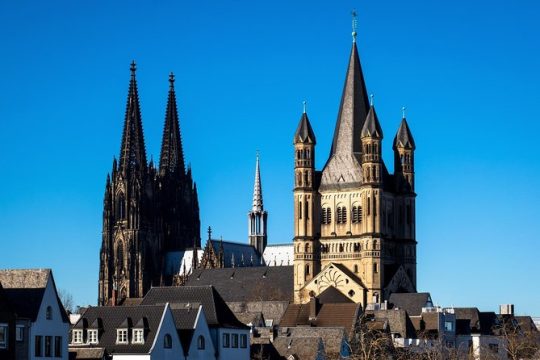
Véspera de Ano Novo na Alemanha
Qui, 31 de dezembro de 2026
Véspera de Natal na Alemanha
Qui, 24 de dezembro de 2026
Fim de semana prolongado de Ano Novo na Alemanha
1 a 3 de janeiro de 2027
Dia dos Namorados na Alemanha
Dom, 14 de fev de 2027
Páscoa na Alemanha
Dom, 28 mar 2027
Sexta-feira Santa na Alemanha
Sex, 26 de março de 2027