Atrações da Baviera
Mais coisas para fazer na região
 #76
Mina de sal de Hallstatt (Salzwelten Hallstatt)
A Mina de Sal de Hallstatt, conhecida em alemão como Salzwelten Hallstatt, fica nas montanhas acima da vila à beira do lago de Hallstatt, na região de Salzkammergut, na Áustria. É frequentemente descrita como a mina de sal mais antiga do mundo, e os visitantes vêm para percorrer seus túneis montanha adentro e aprender como o sal moldou este vale por milhares de anos. O sal é extraído desta montanha desde os tempos pré-históricos, e a riqueza que proporcionou tornou o alto vale um dos lugares mais importantes da Europa antiga. Túmulos encontrados perto da mina deram nome à cultura Hallstatt, uma era inteira da Idade do Ferro europeia. Mineiros em séculos posteriores também fizeram descobertas notáveis, incluindo um corpo preservado no sal e degraus de madeira deixados por trabalhadores da Idade do Bronze. Mais tarde, o sal era bombeado como salmoura para o vale, e a paisagem de Hallstatt agora faz parte de um Patrimônio Mundial da UNESCO. No subsolo, a visita guiada percorre antigas galerias escavadas por gerações de mineiros. Os guias explicam como o sal era cortado, dissolvido e transportado, e escorregadores de madeira, outrora usados pelos mineiros para descer entre os níveis, levam os visitantes para baixo numa descida rápida e animada. No fundo da montanha, um lago de sal subterrâneo tranquilo é iluminado para um breve espetáculo, e exposições relembram as pessoas que trabalharam ali e as descobertas que fizeram. Acima do solo, o vale alpino reserva suas próprias recompensas. O antigo cemitério fica entre os prados, e uma plataforma de observação se projeta da encosta da montanha sobre os telhados de Hallstatt e o lago azul profundo lá embaixo. O contraste entre os túneis escuros e antigos e a paisagem alpina luminosa é parte do encanto. Um guia dá vida à história com contos sobre os mineiros, as descobertas e a longa fortuna que o sal construiu ali.
Mais #77
Passarela de Hallstatt
The Hallstatt Skywalk is a viewing platform high on the salt mountain above Hallstatt, the lakeside village in Austria's Salzkammergut. It juts out from the cliff to give a bird's-eye view down onto the rooftops, church spires and the deep blue Hallstätter See, ringed by the peaks of the Dachstein range.Its other name, the World Heritage View, explains the attraction. Below lies the heart of the Hallstatt-Dachstein Salzkammergut cultural landscape, protected by UNESCO for the way people have shaped this valley over thousands of years. The wealth behind it all came from salt. Miners have worked the mountain beneath the platform since prehistoric times, and the finds from a vast ancient cemetery in the high valley were so rich that archaeologists named a whole era of European prehistory, the Hallstatt culture, after the village.The platform stands beside the Rudolfsturm, a stone tower built in the 13th century to guard the salt works, which now holds a restaurant. The Skywalk itself is a modern steel walkway that pushes out past the edge of the rock face, so the village and the lake seem to drop away beneath your feet. From here the boats on the water look like toys, and the mountains across the lake rise straight from the shore.The high valley behind the platform is worth a wander too. Paths lead past the old miners' buildings, information boards on the prehistoric burial ground and the entrance to the salt mine, where tunnels hold traces of Bronze Age mining, including one of the oldest wooden staircases in Europe. The village below, squeezed between lake and cliff, has drawn painters and photographers for generations. A guide brings to life the miners, the salt trade and the people buried on the mountain long before the Romans.
Mais #78
Hangar-7
Se você está procurando o que fazer na Baviera, temos 3 passeios e atividades para você conhecer o Hangar 7. Confira as avaliações e fotos de viajantes verificados sobre os passeios ao Hangar 7 e outras atrações na Baviera, e reserve com segurança quando encontrar a opção perfeita. Descubra as melhores maneiras de visitar o famoso Hangar 7 e explore as atividades mais populares na Baviera.
Mais #79
Hard Rock Café Munique
Se você está procurando o que fazer na Baviera, temos 1 passeio e atividade para você curtir o Hard Rock Cafe de Munique. Confira as avaliações e fotos de viajantes verificados sobre os passeios ao Hard Rock Cafe de Munique e outras atividades na Baviera, e reserve com segurança quando encontrar a opção perfeita. Descubra as melhores maneiras de conhecer o famoso Hard Rock Cafe de Munique e explore as atrações mais populares da Baviera.
Mais #80
Praça dos Heróis (Heldenplatz)
Se você está procurando o que fazer na Baviera, temos 41 passeios e atividades para você conhecer a Praça dos Heróis (Heldenplatz). Confira as avaliações e fotos de viajantes verificados sobre os passeios pela Praça dos Heróis (Heldenplatz) e outras atrações na Baviera, e reserve com segurança quando encontrar a opção perfeita. Descubra as melhores maneiras de conhecer a famosa Praça dos Heróis (Heldenplatz) e explore as atividades mais populares na Baviera.
Mais #81
Novo Palácio de Herrenchiemsee
Herrenchiemsee New Palace is the grand royal palace that King Ludwig II of Bavaria built on Herreninsel, an island in Lake Chiemsee southeast of Munich. Modeled on Versailles as a tribute to Louis XIV of France, it draws visitors with its gilded state rooms, its long Hall of Mirrors and the strange story of a palace that was never finished.Ludwig, often called the Fairy Tale King, admired the absolute monarchy of the French Sun King and wanted a palace to honor him. Work began in the later 19th century on a lavish scale, and it drained the royal purse at the same time as his other projects at Neuschwanstein and Linderhof. When the king died in mysterious circumstances, building stopped. He had spent only a few days living here, and large parts of the palace were left as bare walls. Those unfinished rooms can still be seen, and they make a striking contrast with the finished ones.The completed rooms are some of the most opulent in Germany. The Ambassadors' Staircase recreates a stairway at Versailles that had been lost, the state bedroom is heavy with gold and velvet, and the Hall of Mirrors outdoes its French model in length, lit by rows of candle chandeliers. The south wing holds a museum devoted to Ludwig, with his robes, portraits and objects from his life. Outside, formal gardens with fountains and statues of classical gods run toward the lake.The island has an older history too. The Old Palace, once an Augustinian monastery, is where experts met after the Second World War to draft the basis of the West German constitution. Fraueninsel, the smaller island nearby, is home to a Benedictine convent and a fishing village. A guide brings out the details of Ludwig's dream and the cost that came with it.
Mais #82
Centro Histórico de Viena
The Historic Center of Vienna is the old Innere Stadt, the compact heart of the Austrian capital, where Gothic spires, Baroque palaces and imperial buildings crowd the streets within the Ringstrasse. Listed by UNESCO as a World Heritage Site, it draws travelers to St. Stephen's Cathedral, the Hofburg, its famous coffeehouses and a musical heritage few cities can match.Vienna's story begins with Vindobona, a Roman military camp on the Danube frontier. In the Middle Ages the Babenberg dukes and then the Habsburgs made the town their seat, and for more than six centuries the Habsburgs governed their growing realm from the Hofburg. Stout walls held off two Ottoman sieges, until Emperor Franz Joseph ordered them torn down in the 19th century to make way for the Ringstrasse, a broad boulevard of grand public buildings, museums and parks.Within this small area you can walk from the Gothic nave and patterned tile roof of St. Stephen's Cathedral to the sprawling Hofburg, with its imperial apartments, treasury and Spanish Riding School. Narrow lanes open onto broad spaces such as the Graben, with its Baroque plague column, and Am Hof, while palaces built for noble families now hold museums and galleries. Mozart lived and composed in a house just behind the cathedral, and the city's coffeehouse tradition lives on in wood-paneled rooms where people linger over newspapers and cake.Music runs through the district. Haydn sang as a choirboy at St. Stephen's, Beethoven lodged in a house on the old city ramparts, and the State Opera and the Golden Hall of the Musikverein still carry the classical tradition forward. What makes the center special is how closely everything sits together, so a short stroll can cross several centuries of architecture. A guide can connect these layers and explain how an imperial capital grew into a modern city.
Mais #83
Palácio Imperial de Hofburg (Hofburg Wien)
Os Apartamentos Imperiais e o Museu Sisi são acessados pelo Michaelerkuppel, sob a grande cúpula voltada para a Michaelerplatz. Bagagens, bastões de selfie e cães não são permitidos no interior, e fotografias com flash são proibidas. Rampas, barras de apoio para cadeiras de rodas e um elevador dão acesso a todas as áreas de exposição, e cadeiras de rodas podem ser emprestadas gratuitamente na catraca mediante apresentação de um documento de identidade. As barras de apoio não são adequadas para cadeiras de rodas muito pesadas ou de três rodas, portanto, consulte a equipe do museu antes da sua visita. Os ingressos diários têm horários de entrada fixos, e o complexo Hofburg também abriga uma biblioteca, uma igreja e vários museus, caso você queira passar mais tempo lá.
Mais #84
Fortaleza de Hohensalzburg (Festung Hohensalzburg)
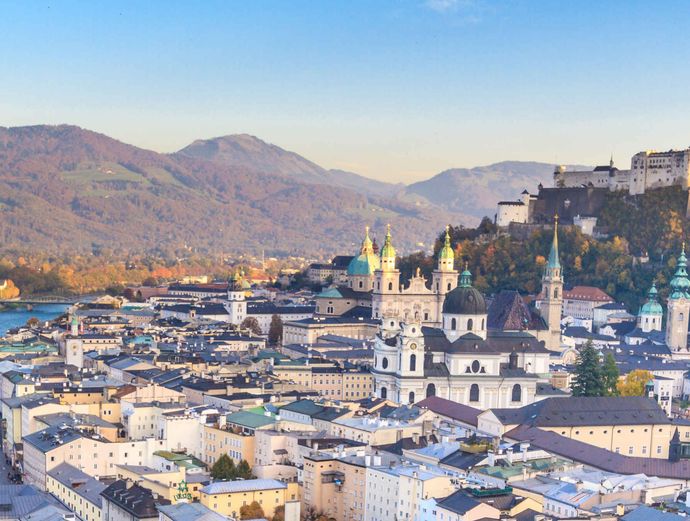
A Fortaleza de Hohensalzburg é o grande castelo branco que coroa a colina acima da Cidade Velha de Salzburgo, na Áustria. Ela está entre os maiores castelos medievais da Europa e atrai visitantes por seus aposentos principescos, seus museus e pelas amplas vistas panorâmicas das cúpulas e torres da cidade até os Alpes ao fundo. A construção da fortaleza começou no século XI, idealizada pelo Arcebispo Gebhard, que desejava um reduto para os príncipes-arcebispos de Salzburgo durante uma acirrada disputa de poder entre o papa e o imperador. Arcebispos posteriores continuaram a construção, adicionando torres, muralhas e baluartes ao longo de vários séculos. As maiores mudanças ocorreram por volta da virada do século XVI, sob o comando do Arcebispo Leonhard von Keutschach, cujo emblema pessoal, um nabo, está esculpido em pedra por todo o castelo. A fortaleza nunca foi tomada à força. Quando as tropas francesas chegaram durante as Guerras Napoleônicas, ela foi entregue sem resistência e, posteriormente, serviu como quartel e prisão. Em seu interior, os aposentos principescos são o destaque. O Salão Dourado possui um teto azul profundo salpicado de tachas douradas, que remetem a um céu estrelado, e a Câmara Dourada abriga um magnífico fogão gótico revestido com azulejos de cerâmica pintados. Em uma das torres, um enorme órgão mecânico conhecido como Touro de Salzburgo ainda toca melodias que ecoam pelos telhados, apelidado assim pelo som grave e retumbante que produz. O museu da fortaleza aborda o cotidiano e a defesa na colina, desde armas e armaduras até a história dos arcebispos, enquanto um museu regimental e uma pequena exposição de marionetes complementam as atrações. Entre os edifícios, pátios e muralhas se abrem vistas em todas as direções: a Cidade Velha se estende abaixo, o Rio Salzach serpenteia pela cidade e as cordilheiras se alinham no horizonte. Um guia pode mostrar como o castelo cresceu camada por camada, algo difícil de deduzir apenas pelas pedras.
Mais #85
Fortaleza Hohenwerfen (Erlebnisburg Hohenwerfen)
A Fortaleza de Hohenwerfen é um castelo medieval erguido sobre uma rocha íngreme acima da cidade mercantil de Werfen, no vale do Salzach, ao sul de Salzburgo, nos Alpes austríacos. Os visitantes vêm pela paisagem dramática, pela coleção de armas e pela sombria história da prisão dentro de suas muralhas, e pelas águias e falcões que sobrevoam o prado abaixo das muralhas. O arcebispo Gebhard de Salzburgo mandou construir o castelo no século XI, durante a amarga luta entre o papa e o imperador alemão, conhecida como a Querela das Investiduras. Irmã da Fortaleza de Hohensalzburg, na cidade, ela protegia a rota através do vale, nos Alpes Orientais. Arcebispos posteriores a ampliaram e a utilizaram como base militar e refúgio de caça, e a restauraram após os danos sofridos na Guerra dos Camponeses, no século XVI. Hohenwerfen também serviu como uma temida prisão estatal. Entre os prisioneiros, encontram-se um arcebispo medieval, um governador da Estíria capturado durante a revolta camponesa e o príncipe-arcebispo Wolf Dietrich von Raitenau, que foi encarcerado após sua queda do poder. No século XX, o castelo passou dos Habsburgos para o regime nazista, que ali mantinha uma escola para funcionários do partido. Após a Segunda Guerra Mundial, a gendarmaria austríaca o utilizou para treinamento policial. Hoje, os pátios e muralhas oferecem vistas panorâmicas do vale e dos picos circundantes. O arsenal exibe armas e armaduras de vários séculos, e a histórica falcoaria, com seu próprio pequeno museu, abriga águias, falcões, gaviões e abutres que sobrevoam as muralhas. Os cinéfilos podem reconhecer o castelo como a fortaleza nazista no filme de guerra "Onde as Águias Ousam" (Where Eagles Dare), e ele aparece ao fundo da cena do piquenique na encosta em "A Noviça Rebelde" (The Sound of Music). Um guia dá vida às celas e às antigas histórias.
Mais #86
Hradcany (Colina do Castelo)
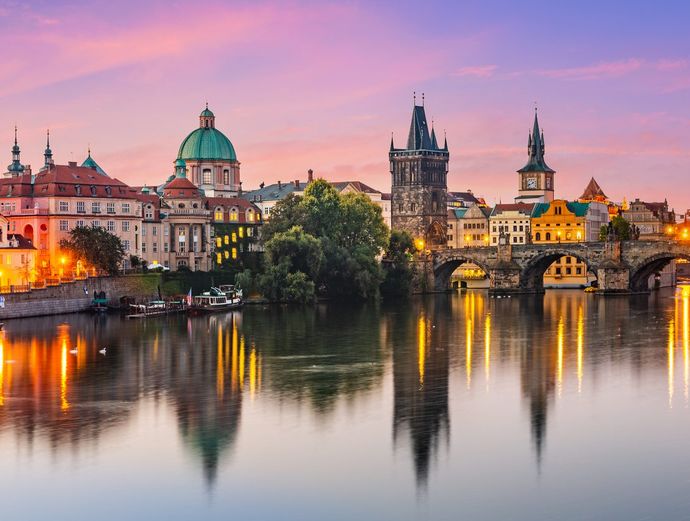
Hradcany (Castle Hill) is the historic district crowning the hill above Prague's Lesser Town, home to Prague Castle and a cluster of noble palaces, churches and quiet lanes. Travelers come for St. Vitus Cathedral, the royal palace and Golden Lane, and for sweeping views over the red roofs and spires of the city below.The story begins with the castle. Its origins reach back to the 9th century, when Czech princes fortified the ridge, and over the centuries that followed it grew into one of the largest castle complexes anywhere, more than 500 meters long. A town grew up beside its walls in the Middle Ages, and Hradčany remained a separate borough until the late 18th century, when Prague's historic towns were joined into one city. Fire and rebuilding left the district with the grand Renaissance and Baroque palaces that line its streets.Inside the castle walls, St. Vitus Cathedral soars in Gothic spires and holds royal tombs, stained glass and the richly decorated chapel of St. Wenceslas. Nearby stand the Old Royal Palace, with its vaulted Vladislav Hall, the Romanesque Basilica of St. George, and Golden Lane, a row of tiny colorful houses tucked into the fortifications where castle guards and craftsmen once lived and where Franz Kafka later wrote. The castle is also the seat of the Czech president, and uniformed guards change shifts at its gates.Beyond the castle, the rest of Hradčany is calmer. Hradčany Square is framed by the Archbishop's Palace and the Schwarzenberg Palace, with its patterned sgraffito facade, while the Sternberg Palace holds a national collection of European old master paintings. Further west lie the Loreta, a Baroque pilgrimage shrine with a famous carillon, the vast Černín Palace and the Strahov Monastery with its ornate libraries, while the tiny lane of Nový Svět keeps a village feel. A guide can bring the kings, saints and court intrigues of the hill to life.
Mais #87
Palácio Imperial (Hofburg)
Se você está procurando o que fazer na Baviera, temos 13 passeios e atividades para você conhecer o Palácio Imperial (Hofburg). Confira as avaliações e fotos de viajantes verificados sobre os passeios pelo Palácio Imperial (Hofburg) e outras atrações na Baviera, e reserve com segurança quando encontrar a opção perfeita. Descubra as melhores maneiras de visitar o famoso Palácio Imperial (Hofburg) e explore as atividades mais populares na Baviera.
Mais #88
Cidade Velha de Innsbruck (Altstadt)
Innsbruck Old Town, the Altstadt, is the compact medieval heart of the Tyrolean capital, set beside the Inn River with the peaks of the Nordkette rising straight behind it. Visitors come for its arcaded lanes, pastel facades and the Golden Roof, a gleaming late-Gothic balcony that has become the emblem of Innsbruck.The town grew up around a bridge over the Inn, which gave it its name, and by the late Middle Ages it was a busy stop on the trade route over the Alps between Germany and Italy. Its golden age came around the turn of the 16th century under Emperor Maximilian I, who made the town a favorite seat of his court. He added the Golden Roof to the old ducal residence as a royal box for watching tournaments and festivities in the square below, roofing its oriel with fire-gilded copper tiles and decorating it with carved reliefs of himself and his two wives.Around it, tall burghers' houses with deep arcades line the lanes, once sheltering merchants and their wares from snow and rain. The Helbling House nearby is a Gothic building dressed in the 18th century with stucco ornament as lavish as icing on a cake. The City Tower, a watchtower from the late Middle Ages, rises beside the old town hall, and a few steps away stand the Hofburg palace and the Court Church, where larger-than-life bronze figures of kings and heroes guard Maximilian's empty tomb.Just beyond the old gates, the broad Maria-Theresien-Straße adds Baroque palaces and Saint Anne's Column, raised to give thanks for the retreat of Bavarian troops in the 18th century. What sets the old town apart is its backdrop, since at the end of many lanes the mountains seem close enough to touch. A guide can decode the painted house signs, coats of arms and faded frescoes that most people walk past.
Mais #89
Judenplatz
Se você está procurando o que fazer na Baviera, temos 16 passeios e atividades para você conhecer a Judenplatz. Confira as avaliações e fotos de viajantes verificados sobre os passeios pela Judenplatz e outras atrações da Baviera, e reserve com segurança quando encontrar a opção perfeita. Descubra as melhores maneiras de conhecer a famosa Judenplatz e explore as atividades mais populares da Baviera.
Mais #90
Parque Kampa
Se você está procurando o que fazer na Baviera, temos 29 passeios e atividades para você aproveitar o Parque Kampa. Confira as avaliações e fotos de viajantes verificados sobre os passeios no Parque Kampa e outras atrações na Baviera, e reserve com segurança quando encontrar a opção perfeita. Descubra as melhores maneiras de conhecer o famoso Parque Kampa e explore as atividades mais populares na Baviera.
Mais #91
Castelo Karlstejn (Hrad Karlstejn)
Karlštejn Castle is a Gothic fortress that Emperor Charles IV built on a wooded crag in the Berounka valley, southwest of Prague, as a treasure house for the crown jewels and holy relics. Visitors come for its stacked towers, royal halls and the gem-studded Chapel of the Holy Cross.Charles IV, King of Bohemia and Holy Roman Emperor, founded the castle in the 14th century, when Prague stood at the center of his empire. It was meant as a fortified sanctuary for the imperial regalia and the relics he gathered, and its buildings climb the hill in stages, from the Imperial Palace to the Marian Tower and finally the Great Tower, a rise often read as a journey from the earthly to the sacred. Charles is said to have withdrawn here for days of prayer.The castle's greatest treasure is the Chapel of the Holy Cross in the Great Tower, where the crown jewels were once kept. Its lower walls are inlaid with polished semiprecious stones, the gilded vault glitters with glass stars, a sun and a moon like a heavenly sky, and the upper walls are lined with panel paintings of saints by Master Theodoric, the court painter. Below it, the Marian Tower holds the Chapel of St. Catherine and a church whose wall paintings include rare portraits of Charles himself, while the Imperial Palace keeps the royal chambers.During the Hussite wars the castle withstood a long siege, and the crown jewels stayed safe behind its walls. Its crisp silhouette owes much to a 19th-century restoration in a romantic neo-Gothic spirit, which gave the towers and roofs an idealized medieval look. The ramparts look out over the forested hills of the Bohemian Karst, a protected landscape of limestone and woodland. A guide can unpack the symbolism of the chapels and the legends that cling to Charles and his treasure.
Mais #92
Kitzsteinhorn
Se você está procurando o que fazer na Baviera, temos 2 passeios e atividades para você conhecer o Kitzsteinhorn. Confira as avaliações e fotos de viajantes verificados sobre os passeios no Kitzsteinhorn e outras atividades na Baviera, e reserve com segurança quando encontrar a opção perfeita. Descubra as melhores maneiras de visitar o famoso Kitzsteinhorn e explore as atividades mais populares na Baviera.
Mais #93
La Petite France
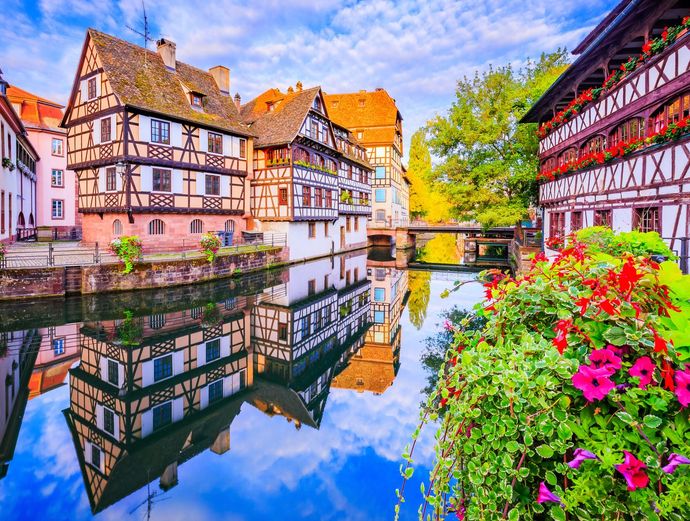
La Petite France is the old waterside quarter of Strasbourg, where the River Ill splits into channels around half-timbered houses, mills and locks on the edge of the city's historic center. People come to wander its lanes and footbridges, admire the houses reflected in the water and see one of the most picturesque corners of Alsace.For centuries this was the district of tanners, millers and fishermen, who depended on the fast-flowing river for their trades. Its curious name comes from a hospice built here in the late Middle Ages for people with syphilis, which German speakers then called the French disease, and the label stuck to the whole quarter. The tanners dried their hides in open lofts beneath the steep roofs, and the Maison des Tanneurs, one of the finest of their houses, still stands at the water's edge. The river also served the city's defense: the Ponts Couverts, bridges guarded by medieval towers, once carried wooden roofs, and in the 17th century the Barrage Vauban was built upstream so that the land south of the city could be flooded against an attacking army.The quarter's charm lies in its details: carved beams and flower boxes on houses that lean over the water, and swing bridges that pivot aside to let boats into the locks. Beyond the rooftops rises the spire of the cathedral, and the whole of the Grande Île, Petite France included, is a World Heritage site.Petite France shows how a district built for hard, smelly work became a favorite subject for painters and photographers, its old workshops turned into homes, restaurants and small hotels. A guide can tell the story of Strasbourg's defenses, from the medieval towers to Vauban's dam, and explain how the city changed hands between France and Germany over the centuries.
Mais #94
Lago de Constança
Se você está procurando o que fazer na Baviera, temos 5 passeios e atividades para você aproveitar o Lago de Constança. Confira as avaliações e fotos de viajantes verificados sobre os passeios no Lago de Constança e outras atividades na Baviera, e reserve com segurança quando encontrar a opção perfeita. Descubra as melhores maneiras de conhecer o famoso Lago de Constança e explore as atividades mais populares na Baviera.
Mais #95
Lago Misurina (Lago di Misurina)
Lake Misurina (Lago di Misurina) is a mountain lake in the Dolomites of northern Italy, close to Cortina d'Ampezzo in the far north of the Veneto. The largest natural lake in the Cadore area, it is loved for the jagged peaks mirrored in its calm water and for the easy path that circles it.The lake sits in a high mountain basin, fed and drained by the Ansiei stream, and it is surprisingly shallow, no more than about 5 meters deep. Meadows and conifer woods frame the shore, softening the rock walls beyond. To the south rises the long ridge of the Sorapiss, the spires of the Cadini di Misurina stand to the east, and Monte Cristallo closes the view to the west, so a short stroll brings a changing panorama of famous Dolomite summits.Like many places in the Dolomites, the lake has its legend, and it is a sad one. The story goes that the giant King Sorapiss doted on his willful daughter, Misurina, and agreed to become a mountain so she could win a magic mirror from the Queen of Monte Cristallo. When the girl slipped from his stony shoulders and fell, his tears filled the basin, and she is said to lie beneath the water still. Look across to the Sorapiss from the northern shore and the tale is easy to picture.The lake also has a place in sporting history. When the Winter Olympics came to Cortina d'Ampezzo in the middle of the 20th century, the speed skating races were held on its frozen surface, the last time Olympic skaters competed on natural ice. The mountain air is prized too: the grand hotel on the shore houses the only center in Italy devoted to treating asthma in children. The Italian singer Claudio Baglioni even wrote a song about the lake.
Mais #96
Lago Mummelsee
Se você está procurando o que fazer na Baviera, temos 12 passeios e atividades para você aproveitar o Lago Mummelsee. Confira as avaliações e fotos de viajantes verificados sobre os passeios no Lago Mummelsee e outras atividades na Baviera, e reserve com segurança quando encontrar a opção perfeita. Descubra as melhores maneiras de conhecer o famoso Lago Mummelsee e explore as atividades mais populares na Baviera.
Mais #97
Museu de Belas Artes de Lille (Palais des Beaux Arts de Lille)
Se você está procurando o que fazer na Baviera, temos 9 passeios e atividades para você conhecer o Museu de Belas Artes de Lille (Palais des Beaux Arts de Lille). Confira as avaliações e fotos de viajantes verificados sobre os passeios ao Museu de Belas Artes de Lille (Palais des Beaux Arts de Lille) e outras atividades na Baviera, e reserve com segurança quando encontrar a opção perfeita. Descubra as melhores maneiras de visitar o famoso Museu de Belas Artes de Lille (Palais des Beaux Arts de Lille) e explore as atividades mais populares na Baviera.
Mais #98
Antiga Câmara Municipal de Lindau (Altes Rathaus)
Se você está procurando o que fazer na Baviera, temos 2 passeios e atividades para você conhecer a antiga prefeitura de Lindau (Altes Rathaus). Confira as avaliações e fotos de viajantes verificados sobre os passeios pela antiga prefeitura de Lindau (Altes Rathaus) e outras atividades na Baviera, e reserve com segurança quando encontrar a opção perfeita. Descubra as melhores maneiras de visitar a famosa antiga prefeitura de Lindau (Altes Rathaus) e explore as atividades mais populares na Baviera.
Mais #99
Ludwigstraße
Se você está procurando o que fazer na Baviera, temos 5 passeios e atividades para você aproveitar a Ludwigstrasse. Confira as avaliações e fotos de viajantes verificados sobre os passeios pela Ludwigstrasse e outras atrações da Baviera, e reserve com segurança quando encontrar a opção perfeita. Descubra as melhores maneiras de conhecer a famosa Ludwigstrasse e explore as atividades mais populares da Baviera.
Mais #100
Fortaleza de Marienberg
Se você está procurando o que fazer na Baviera, temos 2 passeios e atividades para você conhecer a Fortaleza de Marienberg. Confira as avaliações e fotos de viajantes verificados sobre os passeios à Fortaleza de Marienberg e outras atividades na Baviera, e reserve com segurança quando encontrar a opção perfeita. Descubra as melhores maneiras de visitar a famosa Fortaleza de Marienberg e explore as atividades mais populares na Baviera.
Mais #101
Mauthausen
The Mauthausen Memorial preserves the site of a former Nazi concentration camp on a hill above the town of Mauthausen, in Upper Austria near Linz and the Danube. Visitors come to learn what happened here and to remember the tens of thousands of prisoners who died, in a place whose walls and buildings still show how the camp worked.The SS opened the camp soon after Nazi Germany annexed Austria, choosing the site for its granite quarries, where prisoners were forced to cut and carry stone for the regime's building projects. Mauthausen grew into the hub of a wide network of subcamps, including Gusen nearby, and it was one of the harshest camps in the Nazi system, where brutal labor was itself a method of murder. Prisoners came from across Europe, among them political opponents, Spanish Republicans, Soviet prisoners of war, Jews and Roma. American troops liberated the camp in the last days of the war in Europe, and the site was later made a memorial.The fortress-like granite walls and gate still enclose the roll call square, where prisoners were made to stand for hours in all weather, along with surviving barracks. Exhibitions tell the history of the camp and the stories of individual prisoners, and the former gas chamber and crematoria are preserved as places of mourning. In the Room of Names, the known dead are listed one by one. Below the camp lies the quarry and the steep Stairs of Death, where exhausted prisoners hauled heavy blocks of granite up the slope. Outside the walls, monuments raised by many nations honor their citizens who died here.A visit is sobering, but it gives a clear and lasting understanding of where hatred and dictatorship can lead. A guide can connect each building to the experiences of the people held there, making the history personal rather than abstract.
Mais #102
Museu do Crime Medieval
Se você está procurando o que fazer na Baviera, temos 6 passeios e atividades para você conhecer o Museu Medieval do Crime. Confira as avaliações e fotos de viajantes verificados sobre os passeios pelo Museu Medieval do Crime e outras atividades na Baviera, e reserve com segurança quando encontrar a opção perfeita. Descubra as melhores maneiras de visitar o famoso Museu Medieval do Crime e explore as atividades mais populares na Baviera.
Mais #103
Abadia de Melk (Stift Melk)
Melk Abbey is a Benedictine monastery perched on a rocky ridge above the Danube in the town of Melk, at the gateway to Austria's Wachau valley. Its golden yellow Baroque buildings and twin-towered church draw visitors for their lavish halls, painted ceilings and one of the most celebrated monastic libraries in Europe.The rock once held a castle of the Babenberg family, the first rulers of Austria, and in the late 11th century one of them handed it to Benedictine monks. The monks have lived and prayed here without a break ever since, running a school that still teaches children from the region. In the early 18th century Abbot Berthold Dietmayr set out to rebuild the abbey as a statement of faith and power, and the architect Jakob Prandtauer created the vast Baroque complex seen from the river. Napoleon later used the abbey as a headquarters during his campaigns, and the novelist Umberto Eco named one of his heroes, Adso of Melk, after the place.Inside, the Imperial Corridor stretches past portraits of Austria's rulers to rooms that now hold the abbey museum, with treasures such as an ornate medieval cross. The Marble Hall is painted with a ceiling fresco by Paul Troger, and a curving terrace links it to the library, where carved shelves hold rows of old leather-bound volumes and manuscripts beneath another Troger ceiling. The abbey church glows with gold, marble and frescoes by Johann Michael Rottmayr, crowned by a high dome.Below the abbey, a Baroque garden pavilion painted with exotic scenes sits among paths and old trees. From the terrace beside the church, the view stretches along the Danube and over the rooftops of the town. A guide can explain the meaning of the frescoes and the daily life of the monks who still call Melk home.
Mais #104
Museu Mercedes-Benz
O Museu da Mercedes-Benz em Stuttgart conta a história do automóvel através de uma de suas fabricantes mais antigas, desde o primeiro carro motorizado até as corridas e o design modernos. Ele fica nos portões da principal fábrica da marca, no distrito de Untertürkheim, e os visitantes vêm pelos carros, pelo edifício impressionante e pela forma como a história se desenrola andar por andar. O museu foi inaugurado no início do século XXI em um edifício projetado pelos arquitetos holandeses do UNStudio, que não possui andares convencionais. Sua forma é inspirada em uma espiral de DNA, uma estrutura sinuosa de metal e vidro onde rampas se curvam em torno de um alto átrio central. Os visitantes sobem de elevador até o topo, para o alvorecer do automobilismo, e depois descem percorrendo mais de um século de engenharia. Dois percursos serpenteiam pelos nove andares. Um deles segue a história da marca através de sete salas temáticas, cada uma ligada a uma era e contextualizada pelos eventos de seu tempo. O outro passa por cinco salas de coleção que agrupam veículos por tema, como viagens, transporte de carga, resgate e proprietários famosos. Juntos, os dois espaços abrigam cerca de 160 veículos e mais de 1,500 peças em exposição, e os dois caminhos se cruzam com frequência suficiente para que você possa alternar entre eles durante a visita. O edifício foi projetado para ser apreciado tanto por dentro quanto por fora, e suas curvas prateadas se tornaram um marco do vale do Neckar. A peça mais valiosa é o Benz Patent Motor Car, construído por Carl Benz e considerado o primeiro automóvel movido a motor de combustão interna. Em outros locais, você encontrará os carros de corrida Flechas de Prata, um Papamóvel usado por João Paulo II e carros imponentes feitos para o Imperador Guilherme II e o Imperador Hirohito. Um guia pode explicar a engenharia e as personalidades por trás de cada máquina, o que ajuda a que os detalhes permaneçam na sua memória por muito tempo após a visita.
Mais #105
Catedral de Mondsee (Basílica de São Miguel)
Mondsee Cathedral, properly the Basilica of St. Michael, is the great former abbey church of Mondsee, a lakeside market town in Austria's Salzkammergut, east of Salzburg. People come to admire its richly carved Baroque altars and to see the church where the wedding scene of The Sound of Music was filmed.The church grew from one of the oldest monasteries in Austria. Odilo, Duke of Bavaria, founded a Benedictine abbey here in the 8th century on the remains of a Roman settlement, and it soon became a major center of learning. Monks in its scriptorium produced illustrated manuscripts, and early in the 9th century they made one of the earliest known translations of part of the Bible into Old High German, a version of the Gospel of Matthew that survives in fragments. The abbey lasted more than a thousand years until the emperor dissolved it in the late 18th century, after which the monastery buildings became a private castle.The basilica dominates the town center, its twin towers rising above the market square. Inside, Gothic vaults from the late Middle Ages arch over a lavish Baroque interior. The altars carved by Meinrad Guggenbichler, a sculptor who worked in Mondsee in the late 17th century, fill the church with expressive saints, angels and swirling ornament, and one altar holds a large reliquary with the jeweled skeleton of a medieval abbot. Pope John Paul II raised the church to the rank of a basilica, crowning its long religious story.For film fans, the church needs no introduction. In The Sound of Music, Maria and Captain von Trapp marry beneath these vaults, and her long walk down the aisle is among the best-remembered moments in the film. Outside, the lake and its ring of mountains make Mondsee a lovely place to linger. A guide can connect the abbey's medieval scholars with the Hollywood crew who arrived many centuries later.
MaisDescubra a Baviera

Luxo e ocasiões especiais
Preços de $3
Passeios culturais e temáticos
Preços de $3
Passeios e pontos turísticos
Preços de $3
Passeios a pé e de bicicleta
Preços de $3
Passeios e excursões de um dia
Preços de $3
Comida, Vinho e Vida Noturna
Preços de $8
Passeios de férias e sazonais
Preços de $3
Atividades ao ar livre
Preços de $3
Passeios Privados e Personalizados
Preços de $3
Bilhetes e passes turísticos
Preços de $26
Excursões em terra
Preços de $42
Passeios aéreos, de helicóptero e de balão
Preços de $288
Marienplatz
Preços de $3
Odeonsplatz
Preços de $3
Memorial do Campo de Concentração de Dachau
Preços de $44
Mercado de alimentos (Viktualienmarkt)
Preços de $3
Catedral de Nossa Senhora (Frauenkirche)
Preços de $3
Residência de Munique (Residenz München)
Preços de $3
Igreja de São Pedro (Peterskirche)
Preços de $3
Jardim Inglês (Englischer Garten)
Preços de $3
Palácio de Nymphenburg (Schloss Nymphenburg)
Preços de $19
Olympiapark
Preços de $3
Casa de Albrecht Dürer
Preços de $3
Deutsches Museum
Preços de $3
Atividades para dias chuvosos na Baviera

Passeios turísticos para idosos na Baviera

Excursões gastronômicas na Baviera

Passeios pela Baviera ideais para famílias

Os melhores passeios e atividades para os amantes da cultura na Baviera

Top 10 da Baviera em 2026

Melhores viagens de um dia saindo da Baviera

O que fazer na Baviera neste verão

Calendário de eventos da Baviera
Ver todos os eventos
Atividades de Natal na Baviera
Sexta-feira, 25 de dez de 2026
Hanukkah na Baviera
4 a 12 de dezembro de 2026
Véspera de Ano Novo na Baviera
Qui, 31 de dezembro de 2026
Véspera de Natal na Baviera
Qui, 24 de dezembro de 2026
Fim de semana prolongado de Ano Novo na Baviera
1 a 3 de janeiro de 2027
Dia dos Namorados na Baviera
Dom, 14 de fev de 2027
Páscoa na Baviera
Dom, 28 mar 2027
Sexta-feira Santa na Baviera
Sex, 26 de março de 2027