Attraksjoner i Dalmatia
Flere ting å gjøre i regionen
 #76
Kornati nasjonalpark
Kornati National Park protects most of the Kornati archipelago, a maze of bare, rocky islands in the Adriatic off northern Dalmatia, between Zadar and Šibenik. The islands are known for their pale stone, steep sea cliffs and clear water, and visitors come to sail, swim and dive among what is often called the densest archipelago in the Mediterranean.The park was created in the late 20th century to protect both the islands and the sea around them. It takes in dozens of islands, islets and reefs, many of them tiny, scattered along a stretch of sea about 35 kilometers in length. The largest, Kornat, is a long, slender ridge of limestone about 25 kilometers long and never more than about 2.5 kilometers wide, and it makes up roughly two-thirds of the park's land.The landscape looks wild, yet people shaped it. For centuries farmers and shepherds, most of them from Murter and Dugi Otok, owned the land, grazing sheep and planting olives, vines and figs in pockets of soil, and they built long dry-stone walls across the slopes. Overgrazing and the burning of scrub stripped away much of the vegetation, leaving the bare stone that gives the islands their lunar look. There are no permanent villages, only simple stone houses in sheltered coves where owners stay when they come to tend their land.On the seaward side, many islands end in sheer cliffs that drop straight into the open Adriatic, known locally as crowns. Underwater, the park protects algae, corals and sponges, and these waters were once the richest in the Adriatic for sponge divers. Its seagrass meadows shelter the noble pen shell, a large and endangered mollusk. A skipper who knows the islands can tell the stories behind the walls, coves and island names.
Mer #77
Kotor klokketårn
Kotor-klokketårnet er steintårnet med en stor urskive som hilser besøkende velkommen på hovedtorget i Kotors befestede gamleby, ved Montenegros adriaterhavskyst. Det vender mot byens hovedport, og folk stopper her som det naturlige første synet av byen, en markør for dens venetianske århundrer og et møtested på torget. Kotor tilbrakte flere århundrer under Republikken Venezia, som befestet byen ved inngangen til den dype, fjellomringede bukten. Tårnet stammer fra tidlig på 17-tallet, i den venetianske perioden, og det har stått gjennom hvert århundre siden, et kjent landemerke for byen. Hvis du ser nøye etter, kan du se at det heller litt, en påminnelse om bakken som forskyver seg under det gjennom årene. Tårnet blander trekk fra forskjellige perioder, med en solid steinbase, små vinduer og en ornamentert øvre del kronet av klokken. Foran det står en liten steinpyramide kjent som skamstøtten, hvor folk som brøt byens lover en gang ble stilt ut for forbipasserende å se. Plassen rundt den, Trg od Oružja eller Våpenplassen, har fått navnet sitt fra våpnene som en gang ble laget, reparert og lagret der under venetiansk styre. Resten av plassen fyller ut bildet av Kotors fortid. Gamle steinbygninger kanter kantene, blant annet det tidligere palasset til de venetianske guvernørene, og den polerte belegningen er blitt slitt glatt av generasjoner av føtter. Bak hustakene sikksakk bymurene seg opp den bratte fjellsiden mot festningen ovenfor. En guide kan peke ut de utskårne våpenskjoldene og løverelieffene som venetianske Kotor etterlot seg på fasadene sine.
Mer #78
Kravice-fossen (Vodopad Kravica)
Kravice-fossen er et bredt forheng av fallende vann i Trebižat-elven i Hercegovina, den sørlige regionen i Bosnia-Hercegovina, en kort kjøretur fra byen Ljubuški. Elven renner over en lang bue av mosedekket stein og ned i et grønt basseng, og folk kommer for å svømme, ha piknik og kjøle seg ned ved et av landets mest elskede naturattraksjoner. Fossene er laget av tufa, en myk, porøs stein som bygger seg opp når det mineralrike vannet i Trebižat renner over planter og stein og etterlater en fin skorpe. Mose som klamrer seg til kantene fanger opp enda mer av dette mineralet, slik at kaskaden sakte fortsetter å bygge seg opp. I stedet for å falle ned som ett glatt lag, deler elven seg i dusinvis av separate bekker og bånd av hvitt vann, og om våren, når strømmen er på sitt sterkeste, smelter mange av dem sammen til en enkelt brølende vegg. Landet rundt fossen tilhørte en gang Zaim-beg Selimić, en grunneier og velgjører fra Ljubuški, og en gammel vannmølle står fortsatt i nærheten av dammen, en påminnelse om dagene da elvens kraft ble satt i arbeid for nærliggende landsbyer. Like ved ligger en liten grotte dekket av stalaktitter. Landskapet i Hercegovina rundt Kravice er tørt og steinete store deler av året, noe som gjør de tette trærne og grøntområdene langs elvebredden enda mer overraskende. De fleste besøkende tilbringer tiden sin i og rundt vannet, vasser ut fra de grunne kantene, svømmer mot spruten eller sitter på steinene og ser på lyset skifte over fossen. Små kafeer ved vannet serverer kaffe og grillet lokal mat, og om sommeren gir en tausvinge dristigere svømmere en vei inn. Stier langs bredden åpner opp forskjellige vinkler på kaskaden, inkludert steder hvor du kan nyte dens fulle bredde samtidig. En guide på en dagstur fra Mostar kan forklare hvordan tufaen dannes og dele lokale historier om elven.
Mer #79
Kruja slott
If you are looking for things to do in Dalmatia we have 56 Tours and Activities to Experience Kruja Castle. Check out our verified traveler reviews and photos of Kruja Castle tours and other things to do in Dalmatia, and book securely when you find the perfect one. Learn the best ways to see famous Kruja Castle and explore the most popular things to do in Dalmatia.
Mer #80
Kujundziluk (gamle basaren)
If you are looking for things to do in Dalmatia we have 9 Tours and Activities to Experience Kujundziluk (Old Bazaar). Check out our verified traveler reviews and photos of Kujundziluk (Old Bazaar) tours and other things to do in Dalmatia, and book securely when you find the perfect one. Learn the best ways to see famous Kujundziluk (Old Bazaar) and explore the most popular things to do in Dalmatia.
Mer #81
Lake Bled
Bled-sjøen er en isbresjø i De juliske Alpene i det nordvestlige Slovenia, kjent for den lille øya i midten, kronet av en hvit kirke, og middelalderslottet som ligger på en klippe over kysten. Folk kommer for utsikten, øya og slottet, og for en enkel spasertur rundt vannet med fjellene som reiser seg bak. Bled slott er blant de eldste slottene i Slovenia, først registrert tidlig på 11-tallet, da en tysk keiser ga landet til biskopene i Brixen, som holdt det i århundrer. Øya, ofte kalt landets eneste naturlige øy, har vært et sted for tilbedelse siden tidlig middelalder, og Marias himmelfartskirke som står der tok sin nåværende barokke form på 17-tallet. På 19-tallet åpnet en sveitsisk lege ved navn Arnold Rikli et kursted her, som promoterte sol, frisk luft og bading i innsjøen, og Bled ble et fasjonabelt tilfluktssted. Inne i øykirken henger ønskeklokken. Legenden sier at en sørgende enke fikk støpt en klokke til minne om mannen sin, men den gikk tapt i røff vann på vei over innsjøen. Etter hennes død sendte paven en ny klokke, og alle som ringer på den sies å få et ønske oppfylt. Båtmennene som ror besøkende over, driver et yrke som går tilbake til 18-tallet, da keiserinne Maria Theresa ga lokale familier rett til å frakte pilegrimer til øya. Oppe på klippen har slottet et kapell med veggmalerier, et museum om regionens fortid og terrasser som vender rett ned til øya. Tilbake i byen er den lagdelte kremkaken kjent som kremšnita en lokal institusjon. En guide kan fortelle om legendene og historien som binder innsjøen, øya og slottet sammen.
Mer #82
Skadarsjøen
Skadarsjøen er den største innsjøen på Balkan, og strekker seg over grensen mellom Montenegro og Albania sør for Podgorica. Den montenegrinske siden er en nasjonalpark med sivområder, vannliljer og bratte kalksteinsåser, og reisende kommer for båtturer forbi øyklostre, fiskevær og et stort antall fugler. Innsjøen ligger i et karstbasseng, hovedsakelig matet av Morača-elven og av kilder som stiger opp fra selve innsjøbunnen, og den renner gjennom Bojana-elven til Adriaterhavet. Størrelsen øker og krymper med årstidene, ettersom vannet sprer seg over store områder på nordsiden, mens den sørvestlige bredden forblir steinete og bratt. I senmiddelalderen var kysten hjertet av Zeta, middelalderstaten som kom før Montenegro, og dens herskere bygde kirker og klostre på de små øyene. Familien Crnojević gjorde festningen Žabljak ved innsjøen til sin hovedstad før de flyttet inn i fjellene. Senere århundrer brakte osmanske forter, grensekamper og, under andre verdenskrig, en senket dampbåt som fortsatt ligger i nærheten av Rijeka Crnojevića. På vannet glir båter gjennom kanaler omkranset av siv og vannliljer til småøyer som Beška, med sine to små kirker, og Grmožur, en tidligere festning som senere fungerte som fengsel. Innsjøen er et av Europas viktigste fuglereservater og et av de siste festningene for den dalmatiske pelikanen, parkens symbol, sammen med hegrer, skarver og mange trekkende arter. Fiskere fanger fortsatt karpe og den lille løken som dukker opp på lokale menyer. Landsbyer som Virpazar og Rijeka Crnojevića, med sin grasiøse gamle steinbro, holder et rolig tempo, og åsene rundt dem er kjent for vingårder som produserer rød Vranac-vin. En lokal båtguide kjenner de skjulte kanalene, de beste fuglestedene og historiene til øykirkene.
Mer #83
Latin Bridge (Latinska Ćuprija)
The Latin Bridge is an Ottoman stone bridge over the Miljacka River in central Sarajevo and one of the oldest crossings in the city. It is known around the world for the assassination of Archduke Franz Ferdinand of Austria on the street corner at its northern end, the event that set off the First World War.A bridge has stood here since early Ottoman times, and the first was probably made of wood. A court record from the 16th century notes a stone bridge built by Ali Ajni-Beg, and when a great flood battered it late in the 18th century, the Sarajevo merchant Abdulah-aga Briga paid for the rebuilding. The name comes from the Catholic quarter it led to, which the Ottomans called Latinluk, the place of the Latins. Under Austro-Hungarian rule, walkways on brackets were added along its sides to handle heavy traffic.The bridge rests on four arches and three sturdy piers, and two round openings known as eyes pierce the stonework above them, lightening the load and giving the bridge a look so distinctive that the eyes appear on the seal of Sarajevo. On a summer morning early in the 20th century, the archduke and his wife Sophie were being driven along the riverbank after a failed bomb attack when their car turned into the side street by the bridge. A young Bosnian Serb, Gavrilo Princip, stepped forward and shot them both, and within weeks Europe was at war.How that day is remembered has shifted with the times. In the Yugoslav era the crossing was renamed Princip's Bridge, the assassin was celebrated as a hero, and footprints set into the pavement marked where he stood. After the Yugoslav Wars the old name returned, and a plaque near the corner now records the event in a cooler tone. A guide can explain how each generation has read Princip's act and what the bridge means to Sarajevo.
Mer #84
Gamlebyen i Ljubljana
Ljubljana Old Town is the historic heart of Slovenia's capital, a compact quarter of Baroque churches, pastel townhouses and riverside cafes along both banks of the Ljubljanica River, below the castle hill. People come to wander its bridges and squares, eat at the market and enjoy one of the most relaxed city centers in Europe.The town grew up in the Middle Ages on a narrow strip between the castle hill and the river, near the site of the Roman town of Emona. For centuries it was ruled by the Habsburgs as the capital of the province of Carniola. A powerful earthquake at the end of the 19th century damaged much of the city, and the rebuilding left many of the Vienna Secession facades seen around Prešeren Square and the main streets. In the 20th century, the architect Jože Plečnik reshaped the riverbanks with terraces, colonnades and bridges, giving Ljubljana the elegant, human-scaled look it keeps.Prešeren Square, named for the national poet whose statue faces the window of his beloved, is the meeting point, overlooked by the pink Franciscan Church of the Annunciation. From there Plečnik's Triple Bridge fans across the water into the old streets. Nearby stand his long colonnaded market along the river, the Dragon Bridge with its green copper dragons, the Town Hall and the Robba Fountain of the three Carniolan rivers, and St. Nicholas Cathedral with its bronze doors.Narrow streets such as Mestni trg, Stari trg and Gornji trg wind beneath the castle, full of small shops, galleries and wine bars, while the riverside terraces fill with tables under the willows. The castle above gives a view over the red roofs to the Alps on clear days. A local guide brings out the stories in the details, from the dragon legend to Plečnik's quiet touches that are easy to walk past.
Mer #85
Kjærlighetshistoriemuseet
If you are looking for things to do in Dalmatia we have 2 Tours and Activities to Experience Love Stories Museum. Check out our verified traveler reviews and photos of Love Stories Museum tours and other things to do in Dalmatia, and book securely when you find the perfect one. Learn the best ways to see famous Love Stories Museum and explore the most popular things to do in Dalmatia.
Mer #86
Nedre by (Donji Grad)
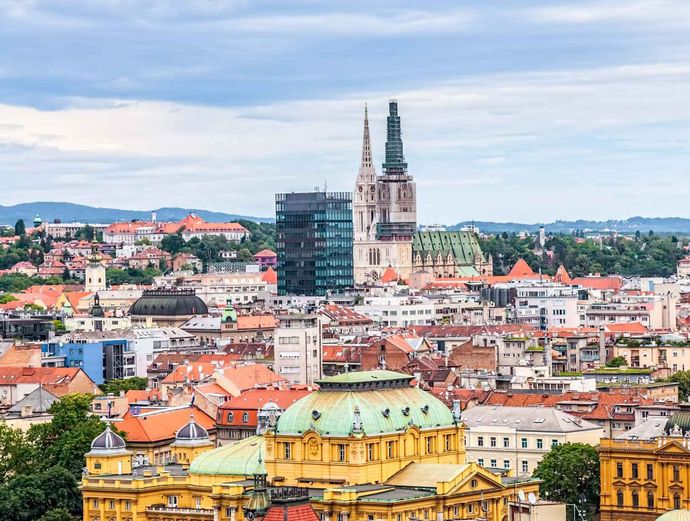
Lower Town, or Donji Grad, is the elegant 19th-century heart of Zagreb, a grid of broad streets, leafy squares and grand public buildings spreading south from the old hilltop quarters. Travelers come for its chain of parks called the Green Horseshoe, its museums and theaters, and the Austro-Hungarian architecture that gives the Croatian capital its Central European air.The district took shape after the separate hilltop towns of Gradec and Kaptol were joined into one city in the 19th century. As the railway arrived and Zagreb prospered, planners laid out a regular grid on the open land below, and after a strong earthquake damaged much of the city, a wave of rebuilding gave Lower Town its confident look. City engineer Milan Lenuci planned the U-shaped run of squares and gardens that carries his name, and Croatia's leading cultural institutions, from the Academy of Sciences and Arts to the National Theatre, settled along it.Walking the horseshoe, you pass Zrinjevac, a park of tall plane trees with a lacy music pavilion and an old weather column, then the Academy's gallery of old master paintings and the yellow Art Pavilion, first built for an exhibition in Budapest and then re-erected here. King Tomislav rides in bronze facing the main station, the Botanical Garden offers a green pause, and the western arm leads to the ochre National Theatre, fronted by Ivan Meštrović's sculpture the Well of Life. Museums along the way include the Mimara, the Museum of Arts and Crafts and the Ethnographic Museum.Between the parks, Lower Town is very much a living neighborhood, with cafe-lined Flower Square, busy Ilica street and passages and courtyards that hide bars and bookshops. Many facades carry sculpted figures, wrought iron balconies and carved details that reward anyone who looks up. A guide can explain how a provincial town remade itself as a capital worthy of the name.
Mer #87
Medjugorje
Medjugorje is a village in Herzegovina, in southern Bosnia and Herzegovina, that has become one of the best-known Catholic pilgrimage sites in Europe. Pilgrims come because local children reported visions of the Virgin Mary here, and they pray in the parish church and climb the rocky hills above the village.Before the visions were reported in the late 20th century, Medjugorje was a quiet rural parish in the municipality of Citluk. Word of the children's accounts spread quickly, and pilgrims soon arrived from around the world, until more than a million people were coming each year. The Vatican allows pilgrimages to the village but has not declared the reported events to be genuine, so Medjugorje occupies an unusual space between popular devotion and official caution.The twin-towered parish church of St James is the center of village life, and its daily round of prayer builds toward an evening Mass, often celebrated at an outdoor altar behind the church. Apparition Hill, where the first reports centered, is a stony slope climbed along a path marked by bronze reliefs, with a white statue of Mary near the top. Cross Mountain rises higher above the village, topped by a large concrete cross, and the Stations of the Cross mark the way to its summit.Whatever one believes about the visions, the mood is striking, with rosaries murmured on the hillsides, confessions heard in many languages and pilgrims sitting in silence among the rocks. A youth festival brings crowds of young pilgrims for music, talks and prayer. Around the church, the village has grown to welcome its visitors, with guesthouses, shops full of religious souvenirs and cafes along the main street. A guide can explain how a rural parish became a global pilgrimage site, while treating it with the respect due a living place of faith.
Mer #88
Mestrovic-galleriet (Galerija Mestrovic)
If you are looking for things to do in Dalmatia we have 3 Tours and Activities to Experience Mestrovic Gallery (Galerija Mestrovic). Check out our verified traveler reviews and photos of Mestrovic Gallery (Galerija Mestrovic) tours and other things to do in Dalmatia, and book securely when you find the perfect one. Learn the best ways to see famous Mestrovic Gallery (Galerija Mestrovic) and explore the most popular things to do in Dalmatia.
Mer #89
Meteora
Meteora is a cluster of giant rock pillars rising above the plain of Thessaly in Greece, with Orthodox monasteries perched on their summits. The name means suspended in the air, and visitors come to see the monasteries, their painted chapels and the extraordinary landscape of sheer gray towers above the town of Kalabaka.The pillars formed from layers of sandstone and conglomerate laid down by ancient rivers, then lifted and carved by earthquakes, wind and water over vast stretches of time. Hermits began living in caves and crevices in the rock as early as the 11th century, seeking solitude for prayer. In the 14th century a monk from Mount Athos named Athanasios founded the Great Meteoron on one of the highest rocks, and others followed. At their peak the rock tops held many monastic communities, and a handful remain active, home to small groups of monks and nuns. The whole area is a World Heritage Site.For centuries the only way up was by removable wooden ladders or in nets hauled up by rope and windlass, a ride monks are said to have trusted entirely to God, replacing the rope, the story goes, only when the Lord let it break. Steps were cut into the rock in the 20th century, and some of the old winch houses can still be seen.Inside, the monasteries are richly decorated. The Great Meteoron holds a museum of manuscripts, icons and old monastic tools, Varlaam keeps a huge barrel once used to store water, and the small church of St. Nicholas Anapafsas is covered in frescoes by the Cretan painter Theophanes. Rousanou clings to a narrow ridge, while Holy Trinity, seen in a James Bond film, sits alone on its spire. A guide can explain the daily rhythm of prayer and work for those who still live here.
Mer #90
Mljet Island
If you are looking for things to do in Dalmatia we have 27 Tours and Activities to Experience Mljet Island. Check out our verified traveler reviews and photos of Mljet Island tours and other things to do in Dalmatia, and book securely when you find the perfect one. Learn the best ways to see famous Mljet Island and explore the most popular things to do in Dalmatia.
Mer #91
Museum for den kroatiske uavhengighetskrigen (Homeland War Museum)
If you are looking for things to do in Dalmatia we have 2 Tours and Activities to Experience Museum of Croatian War of Independence (Homeland War Museum). Check out our verified traveler reviews and photos of Museum of Croatian War of Independence (Homeland War Museum) tours and other things to do in Dalmatia, and book securely when you find the perfect one. Learn the best ways to see famous Museum of Croatian War of Independence (Homeland War Museum) and explore the most popular things to do in Dalmatia.
Mer #92
Onofrios fontene
Onofrio's Fountain, often called the Large Onofrio Fountain, is a domed stone fountain inside Pile Gate, at the head of the broad Stradun in Dubrovnik's walled Old Town. Built in the 15th century to bring fresh water into the city, it still pours from the mouths of carved stone faces set around its many sides.For a walled city that could be cut off by siege, a reliable water supply was a matter of survival. In the 15th century the Republic of Ragusa, as Dubrovnik was then known, hired the Neapolitan builder Onofrio della Cava to provide one. He laid an aqueduct that carried water from a spring at Šumet, well outside the walls, to two public fountains at either end of the main street. It was a remarkable feat of engineering for its time, and the water kept flowing to the town for centuries.The large fountain was once far more ornate, dressed in sculpted decoration. The great earthquake of the 17th century, which wrecked much of Dubrovnik, destroyed most of that ornament. What survives is a wide, sixteen-sided basin under a low dome, with a carved mask on each side spouting water into a channel at its foot, and people still pause here to fill bottles and cool their hands.At the other end of the Stradun, near Luža Square and the city bell tower, stands its partner, the Small Onofrio Fountain, a daintier piece carved with reliefs by the sculptor Pietro di Martino of Milan. Seeing both gives a sense of how the water once reached the whole town. A guide can trace the old aqueduct's route and explain why clean water mattered so much to a trading republic that guarded its health and its independence for centuries.
Mer #93
Orlandos søyle (Orlandov Stup)
If you are looking for things to do in Dalmatia we have 16 Tours and Activities to Experience Orlando's Column (Orlandov Stup). Check out our verified traveler reviews and photos of Orlando's Column (Orlandov Stup) tours and other things to do in Dalmatia, and book securely when you find the perfect one. Learn the best ways to see famous Orlando's Column (Orlandov Stup) and explore the most popular things to do in Dalmatia.
Mer #94
Ostrog-klosteret (Manastir Ostrog)
Ostrog Monastery is a Serbian Orthodox monastery built into a sheer cliff face high above the Zeta valley in central Montenegro, between Podgorica and Nikšić. It is the most visited pilgrimage site in the country, drawing believers and travelers alike to its gleaming white facade and the relics of Saint Basil of Ostrog.The monastery was founded in the 17th century by Saint Basil, a bishop of Herzegovina, who sought refuge in the rock from Ottoman raids and settled in natural caves high on the mountain. After his death, his body was kept in the cave church, and stories of healing spread across the Balkans. Over the centuries the monastery was damaged by fire and war and rebuilt each time, and pilgrims of many faiths, Orthodox Christians, Catholics and Muslims among them, still come to pray at his shrine.The complex has two parts. The Lower Monastery, set among trees farther down the slope, centers on the Church of the Holy Trinity, built in the 19th century, with the monks' quarters and lodgings for pilgrims. The Upper Monastery is the famous one, its whitewashed walls set into the cliff so that from below it looks as if it grows from the stone. Inside are two tiny cave churches, their walls and ceilings painted directly onto the rock with frescoes of saints. Saint Basil's relics rest in the Church of the Presentation, and a grapevine growing out of the rock nearby is said to be miraculous. Many pilgrims make the climb between the two monasteries barefoot as an act of devotion.A guide can explain the life of the saint, the meaning of the icons and the rituals that pilgrims follow at the shrine, and why the cliff has drawn the faithful for so long.
Mer #95
Paklenica nasjonalpark
If you are looking for things to do in Dalmatia we have 2 Tours and Activities to Experience Paklenica National Park. Check out our verified traveler reviews and photos of Paklenica National Park tours and other things to do in Dalmatia, and book securely when you find the perfect one. Learn the best ways to see famous Paklenica National Park and explore the most popular things to do in Dalmatia.
Mer #96
Peljesac -halvøya
If you are looking for things to do in Dalmatia we have 57 Tours and Activities to Experience Peljesac Peninsula. Check out our verified traveler reviews and photos of Peljesac Peninsula tours and other things to do in Dalmatia, and book securely when you find the perfect one. Learn the best ways to see famous Peljesac Peninsula and explore the most popular things to do in Dalmatia.
Mer #97
Plitvice Lakes National Park
Plitvicesjøenes nasjonalpark er en rekke terrasserte innsjøer i de skogkledde åsene i det sentrale Kroatia, hvor vann renner fra ett basseng til det neste over naturlige demninger og gjennom en lang rekke kaskader. Det er landets eldste nasjonalpark og den største, og hele området er oppført på UNESCOs verdensarvliste for måten det viser hvordan vann fortsatt former landet. Disse naturlige demningene er kjernen i historien. Over tusenvis av år har moser, alger og bakterier som vokser i det mineralrike vannet fanget kalsiumkarbonat og bygd vegger av travertin som holder innsjøene tilbake. Barrierene fortsetter å vokse, slik at fossefall forskyves, nye kanaler åpnes og gamle tørker ut. De øvre innsjøene ligger på dolomitt blant skog, mens de nedre ligger i en dyp kalksteinskløft som ender ved den store fossen, den høyeste i Kroatia. Det du først legger merke til er fargen. Avhengig av mineralene, dybden og solvinkelen, blir vannet turkis, jade, blått eller mykt grått, og det er klart nok til å se ørret drive over sunkne tømmerstokker. Trebroer går rett over overflaten og rett forbi fossene, slik at du går gjennom vannsprøyten i stedet for å se på den på avstand. Rundt innsjøene gir bøke- og furuskog ly for brunbjørner, ulver, gauper og mange fuglearter, selv om de fleste besøkende ser lite mer enn ender, fisk og øyenstikkere. Parken har også et mørkere kapittel. Ved starten av den kroatiske uavhengighetskrigen fant et av de første væpnede sammenstøtene i konflikten sted her, og stedet ble satt på UNESCOs liste over truede arter inntil det kunne tas vare på igjen. En guide fremhever forskjellene mellom innsjøene og plantene og dyrelivet langs kysten, detaljer som er lette å overse når man går alene.
Mer #98
Poljud Stadium (Stadion Poljud)
If you are looking for things to do in Dalmatia we have 6 Tours and Activities to Experience Poljud Stadium (Stadion Poljud). Check out our verified traveler reviews and photos of Poljud Stadium (Stadion Poljud) tours and other things to do in Dalmatia, and book securely when you find the perfect one. Learn the best ways to see famous Poljud Stadium (Stadion Poljud) and explore the most popular things to do in Dalmatia.
Mer #99
Postojna-hulen
Postojna-hulen er et enormt kalksteinsgrottesystem i karstlandet i sørvestlige Slovenia, like utenfor byen Postojna. Det er en av Europas mest berømte utstillingsgrotter, og folk kommer for å ta dens underjordiske tog og gå gjennom store haller fulle av stalaktitter, stalagmitter og bleke steingardiner formet over ufattelige tidsperioder. Pivka-elven hugget ut hulen, og den renner fortsatt gjennom de nedre passasjene. Graffiti i de gamle inngangspartiene viser at folk vandret inn i middelalderen, og forskeren Johann Weikhard von Valvasor beskrev hulen på 17-tallet. Berømmelsen begynte tidlig på 19-tallet, da en lokal lyktetenner ved navn Luka Čeč fant veien inn i en enorm ny seksjon, og besøkende fulgte snart etter. En grottejernbane, først drevet av guider, ble anlagt på 19-tallet, og elektrisk lys kom hit før det nådde Slovenias hovedstad. Hele systemet strekker seg over mer enn 24 kilometer, og den offentlige ruten dekker den mest spektakulære strekningen. Toget suser forbi glitrende formasjoner før en spasertur fører gjennom kamre kjent for sin farge og form. Se etter Brilliant, en skinnende hvit stalagmitt som har blitt hulens symbol, og en bro over en dyp kløft som russiske krigsfanger bygde under første verdenskrig. Ruten ender i konsertsalen, et kammer så stort og resonant at det har vært vertskap for forestillinger. Postojna er også kjent for olmen, en blind, blek, salamanderlignende amfibie som bare lever i grunnvannet i denne regionen og kan klare seg i årevis uten mat. Lokalbefolkningen trodde en gang at de var drageunger som var skylt opp av dypet. Et akvarium på ruten lar deg se dem på nært hold. En guide hjelper deg med å lese formasjonene og den lange historien om hvordan hulen ble utforsket.
Mer #100
Preseren-plassen (Presernov Trg)
If you are looking for things to do in Dalmatia we have 26 Tours and Activities to Experience Preseren Square (Presernov Trg). Check out our verified traveler reviews and photos of Preseren Square (Presernov Trg) tours and other things to do in Dalmatia, and book securely when you find the perfect one. Learn the best ways to see famous Preseren Square (Presernov Trg) and explore the most popular things to do in Dalmatia.
Mer #101
Revelin festning
If you are looking for things to do in Dalmatia we have 11 Tours and Activities to Experience Revelin Fortress. Check out our verified traveler reviews and photos of Revelin Fortress tours and other things to do in Dalmatia, and book securely when you find the perfect one. Learn the best ways to see famous Revelin Fortress and explore the most popular things to do in Dalmatia.
Mer #102
Roski-fossen (Roski Slap)
If you are looking for things to do in Dalmatia we have 2 Tours and Activities to Experience Roski Waterfall (Roski Slap). Check out our verified traveler reviews and photos of Roski Waterfall (Roski Slap) tours and other things to do in Dalmatia, and book securely when you find the perfect one. Learn the best ways to see famous Roski Waterfall (Roski Slap) and explore the most popular things to do in Dalmatia.
Mer #103
Salona
If you are looking for things to do in Dalmatia we have 1 Tours and Activities to Experience Salona. Check out our verified traveler reviews and photos of Salona tours and other things to do in Dalmatia, and book securely when you find the perfect one. Learn the best ways to see famous Salona and explore the most popular things to do in Dalmatia.
Mer #104
Sarajevo-tunnelen
The Sarajevo Tunnel, also called the Tunnel of Hope, was a hand-dug passage beneath the city's airport runway that kept besieged Sarajevo supplied during the Bosnian War. A museum in the family house at its Butmir end preserves a short stretch of it, and visitors come to understand how the city survived one of the longest sieges in modern history.When Bosnian Serb forces encircled Sarajevo, the one gap in the ring lay across the airport, which was held by the United Nations and could not be crossed openly. To break the blockade, the Bosnian army secretly dug a tunnel under the runway, linking the Dobrinja neighborhood inside the city with free territory at Butmir. Teams worked around the clock from both ends, digging with shovels and picks, carting the earth away in wheelbarrows and battling constant groundwater. After a few months the two crews met beneath the runway.The passage was so low that most people had to stoop, yet it became the city's lifeline. Food, fuel, aid, newspapers and weapons came in, and thousands of soldiers and civilians passed through every day in both directions. Workers laid an oil pipeline, telephone lines and electric cables along its length, and the country's president was once carried through in a chair. The Butmir entrance was hidden in an ordinary house owned by the Kolar family, whose walls still carry the scars of shelling.The family turned the house into a museum after the war and runs it privately, without state funding. Its exhibits recall daily life in the besieged city, when residents queued for water under sniper fire and burned furniture and books to stay warm. A guide can explain what the tunnel meant to ordinary Sarajevans and how the city endured.
Mer #105
Split arkeologiske museum (Arheoloski Muzej Split)
If you are looking for things to do in Dalmatia we have 1 Tours and Activities to Experience Split Archaeological Museum (Arheoloski Muzej Split). Check out our verified traveler reviews and photos of Split Archaeological Museum (Arheoloski Muzej Split) tours and other things to do in Dalmatia, and book securely when you find the perfect one. Learn the best ways to see famous Split Archaeological Museum (Arheoloski Muzej Split) and explore the most popular things to do in Dalmatia.
MerOppdag Dalmatia

Luksus og spesielle anledninger
Priser fra $3
Turer og sightseeing
Priser fra $3
Cruise, seiling og vannturer
Priser fra $6
Kultur- og tematurer
Priser fra $3
Dagsturer og utflukter
Priser fra $3
Vannsport
Priser fra $11
Friluftsliv
Priser fra $6
Gå- og sykkelturer
Priser fra $3
Private og tilpassede turer
Priser fra $3
Shore Excursions
Priser fra $9
Mat, vin og natteliv
Priser fra $17
Ferie- og sesongturer
Priser fra $9
Lokrum øya
Priser fra $3
Dubrovniks gamle bymurer
Priser fra $3
Gamlebyen i Dubrovnik
Priser fra $3
St. Lawrence festning (Fort Lovrijenac)
Priser fra $6
Blue Lagoon Kroatia (Krknjasi Bay)
Priser fra $54
St. Dominus-katedralen (Katedrala Svetog Duje)
Priser fra $4
Haugporten
Priser fra $3
Zlatni Rat Beach (Det gylne horn)
Priser fra $101
Banje strand
Priser fra $3
Bisevo Blue Cave (Modra Spilja)
Priser fra $85
Elafitiøyene (Elaphites)
Priser fra $31
Gregor av Nin (Grgur Ninski)
Priser fra $4


Dalmatia arrangementskalender
Vis alle hendelser
Hanukkah i Dalmatia
4.–12. desember 2026
Nyttårsaften i Dalmatia
tor 31. desember 2026
Nyttårsdag langhelg i Dalmatia
1.–3. januar 2027
Valentinsdag i Dalmatia
Søn 14. februar 2027
Påske i Dalmatia
Sol, 28. mars 2027
Langfredag i Dalmatia
fre 26. mars 2027