Beierse bezienswaardigheden
Meer te doen in de regio
 #106
Mozartplein (Mozartplatz)
Mozartplatz is a handsome square in the heart of Salzburg's Old Town, named for the city's most famous son, Wolfgang Amadeus Mozart, whose bronze statue stands at its center. Ringed by grand old buildings and steps from the cathedral, it is where many visitors begin exploring the historic center and its Mozart connections.The square was created in the late 16th century by Prince-Archbishop Wolf Dietrich von Raitenau, who cleared away a block of houses as part of his plan to remake Salzburg in the Italian style. Two centuries later the town's most gifted musician left for Vienna, frustrated with life under the archbishops, and it took Salzburg decades after his death to celebrate him properly. In the middle of the 19th century, the city finally raised its first public monument to Mozart here, and the square took his name.The bronze figure was designed by the Munich sculptor Ludwig Schwanthaler and shows the composer standing on a tall stone pedestal. Its unveiling became a major celebration, attended by Mozart's two surviving sons. His widow, Constanze, had lived in a house on this very square in her final years but died shortly before the monument was finished. While workers dug the foundations, they uncovered a Roman mosaic from Iuvavum, the town that stood here in antiquity, and a copy of it now sits at the base.Around the square, the buildings tell more of Salzburg's story. The Neue Residenz, once a palace of the archbishops, carries a carillon of bells in its tower that rings out over the rooftops at set times of day. Cafes spill onto the cobbles, and the cathedral dome and the fortress on its hill above complete the view. A guide can add the backstage stories of a city that took its time to embrace its genius.
Meer #107
Geboorteplaats van Mozart (Mozarts Geburtshaus)
Mozart's Birthplace is the house on Salzburg's Getreidegasse where Wolfgang Amadeus Mozart was born and spent his childhood, now a museum devoted to his early life. Behind its bright yellow facade, the family's apartment holds portraits, letters and instruments, and music lovers come to see where the young prodigy first learned to play.The Mozarts rented their apartment from Johann Lorenz Hagenauer, a merchant and family friend who owned the building, which is why it is also known as the Hagenauer House. Leopold Mozart, a violinist and composer in the service of the prince-archbishop, raised his children Nannerl and Wolfgang here in the 18th century, and from this home the family set out on the long concert tours that made the boy famous across Europe. As the household outgrew the space, they moved across the river to a larger home on what is now Makartplatz.The house opened as a museum in the late 19th century and is cared for by the International Mozarteum Foundation. The rooms trace the composer's life and family through letters, documents and portraits, among them the famous unfinished painting of Mozart at the keyboard by his brother-in-law Joseph Lange, and treasured instruments from his youth. Other floors recreate a comfortable middle-class Salzburg home of the time and show how his operas have been staged.The house stands on Getreidegasse, a narrow lane of tall merchant houses known for its wrought-iron guild signs, and its rear looks onto Universitätsplatz, where market stalls fill the square. In the modest rooms where the family cooked, practiced and entertained, it is easy to picture a gifted child at the keyboard while his father planned the tours ahead. A guide can bring in the letters and anecdotes that reveal Mozart's humor and his complicated bond with his hometown.
Meer #108
Mullersches Volksbad
Dit is een functionerend binnenzwembad en sauna in een historisch gebouw, dus neem een badpak en handdoek mee als u er gebruik van wilt maken. Er is een groot zwembad van 31 meter om baantjes te trekken en een kleinere, warmere ruimte waar u heerlijk kunt ontspannen. De sauna beschikt over een Romeins-Ierse sauna, een Finse sauna en een stoombad, en is op sommige dagen alleen toegankelijk voor vrouwen. Vanwege monumentenzorg is het gebouw niet volledig rolstoeltoegankelijk en zijn er speciale parkeerplaatsen voor mindervaliden beschikbaar. Het café en de biertuin zijn niet bereikbaar vanuit het zwembad.
Meer #109
Speelgoedmuseum München (Spielzeugmuseum)
If you are looking for things to do in Bavaria we have 1 Tours and Activities to Experience Munich Toy Museum (Spielzeugmuseum). Check out our verified traveler reviews and photos of Munich Toy Museum (Spielzeugmuseum) tours and other things to do in Bavaria, and book securely when you find the perfect one. Learn the best ways to see famous Munich Toy Museum (Spielzeugmuseum) and explore the most popular things to do in Bavaria.
Meer #110
Museumkwartier (MuseumsQuartier)
If you are looking for things to do in Bavaria we have 12 Tours and Activities to Experience Museum Quarter (MuseumsQuartier). Check out our verified traveler reviews and photos of Museum Quarter (MuseumsQuartier) tours and other things to do in Bavaria, and book securely when you find the perfect one. Learn the best ways to see famous Museum Quarter (MuseumsQuartier) and explore the most popular things to do in Bavaria.
Meer #111
nationaal Museum
If you are looking for things to do in Bavaria we have 12 Tours and Activities to Experience National Museum. Check out our verified traveler reviews and photos of National Museum tours and other things to do in Bavaria, and book securely when you find the perfect one. Learn the best ways to see famous National Museum and explore the most popular things to do in Bavaria.
Meer #112
Oude Hoofdbrug (Alte Mainbrücke)
If you are looking for things to do in Bavaria we have 3 Tours and Activities to Experience Old Main Bridge (Alte Mainbrücke). Check out our verified traveler reviews and photos of Old Main Bridge (Alte Mainbrücke) tours and other things to do in Bavaria, and book securely when you find the perfect one. Learn the best ways to see famous Old Main Bridge (Alte Mainbrücke) and explore the most popular things to do in Bavaria.
Meer #113
Oude stenen brug
If you are looking for things to do in Bavaria we have 6 Tours and Activities to Experience Old Stone Bridge. Check out our verified traveler reviews and photos of Old Stone Bridge tours and other things to do in Bavaria, and book securely when you find the perfect one. Learn the best ways to see famous Old Stone Bridge and explore the most popular things to do in Bavaria.
Meer #114
Paulaner Brouwerij (Paulaner Brauerei München)
If you are looking for things to do in Bavaria we have 1 Tours and Activities to Experience Paulaner Brewery (Paulaner Brauerei München). Check out our verified traveler reviews and photos of Paulaner Brewery (Paulaner Brauerei München) tours and other things to do in Bavaria, and book securely when you find the perfect one. Learn the best ways to see famous Paulaner Brewery (Paulaner Brauerei München) and explore the most popular things to do in Bavaria.
Meer #115
Praagse Burcht (Prazský Hrad)
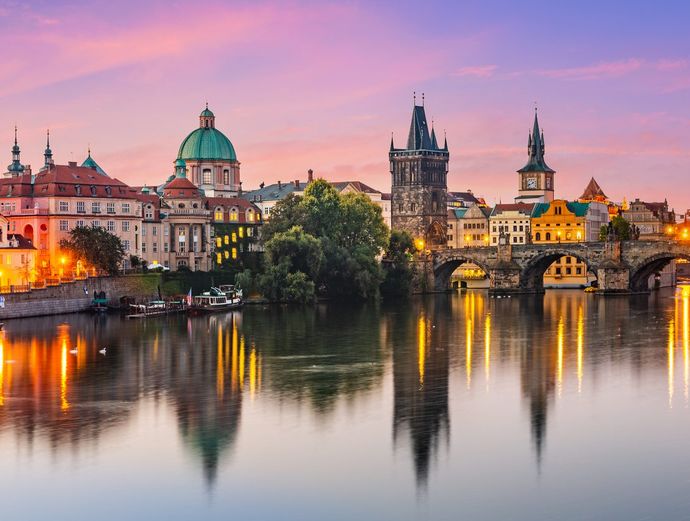
Prague Castle is the vast fortified complex on the hill above the Vltava River, home to Bohemian rulers for more than a thousand years and the seat of the Czech president. Within its walls stand palaces, churches, gardens and the soaring St. Vitus Cathedral, and people come to see the heart of Czech history in one place.The castle was founded in the 9th century by Prince Bořivoj of the Přemyslid dynasty, and every age since has added to it: Romanesque churches, Gothic halls, Renaissance palaces and the uniform facades of an 18th-century rebuilding under Empress Maria Theresa. It is often described as the largest ancient castle complex in the world. Here Holy Roman Emperor Charles IV made Prague an imperial capital in the 14th century, Rudolf II gathered artists, astronomers and alchemists, and the Defenestration of Prague, when royal officials were thrown from a window, helped spark the Thirty Years' War.St. Vitus Cathedral dominates everything, a Gothic giant begun in the 14th century and completed only in the 20th, with a chapel lined in semiprecious stones, the silver tomb of St. John of Nepomuk and stained glass that includes a window by Alfons Mucha. The Old Royal Palace holds the vaulted Vladislav Hall, once wide enough for indoor jousting, and the Romanesque Basilica of St. George is the oldest surviving church in the castle.Golden Lane, a row of tiny painted houses built into the walls, once sheltered castle guards and craftsmen, and Franz Kafka wrote for a time in one of them. The castle gardens step down the slopes with views over the red roofs of the Lesser Town, and the Czech crown jewels are kept here, though they are shown only on rare occasions. A guide makes the centuries of kings, emperors and presidents easier to follow as you cross from courtyard to courtyard.
Meer #116
Oude stadsplein van Praag (Staromestské Námestí)
Het plein is een voetgangerszone, omgeven door historische gebouwen, en is geschikt voor alle leeftijden en soorten reizigers. Trek ongeveer een uur uit om rond te kijken, en meer als u de toren van het oude stadhuis beklimt of een kerk bezoekt. De astronomische klok trekt elk uur een menigte naar de voet van het oude stadhuis, dus kom een paar minuten van tevoren. In het Kinský-paleis aan het plein is een kunstmuseum van de Tsjechische Nationale Galerij gevestigd, en aan de randen van het plein vindt u cafés en restaurants.
Meer #117
Kathedraal van Regensburg (St. Peter Kathedraal)
If you are looking for things to do in Bavaria we have 7 Tours and Activities to Experience Regensburg Cathedral (St Peter Cathedral). Check out our verified traveler reviews and photos of Regensburg Cathedral (St Peter Cathedral) tours and other things to do in Bavaria, and book securely when you find the perfect one. Learn the best ways to see famous Regensburg Cathedral (St Peter Cathedral) and explore the most popular things to do in Bavaria.
Meer #118
De oude binnenstad van Regensburg
Regensburg Old Town is the medieval heart of this Bavarian city, a maze of lanes, squares and tall patrician towers near the point where the Danube, Naab and Regen rivers meet. Listed by UNESCO together with the Stadtamhof district, it is among the best-preserved medieval centers in Germany, and travelers come to wander its streets, cross its old stone bridge and admire its Gothic cathedral.The city's story begins with Rome. In the 2nd century, legionaries built a fort here called Castra Regina to guard the Danube frontier, and part of its northern gate, the Porta Praetoria, still stands among later buildings. In the Middle Ages Regensburg became one of the richest trading cities in the German lands, with goods moving along the river and over the Alps to Venice. Its merchant families showed off their wealth by building towers modeled on those of Italian cities, and several still rise above the rooftops.The Stone Bridge, completed in the 12th century, was a marvel of medieval engineering and for centuries the only fixed crossing of the Danube for a long stretch of the river. A tiny sausage kitchen at its foot claims a history almost as long. St. Peter's Cathedral, with its twin openwork spires and glowing medieval stained glass, ranks among the finest Gothic churches in Bavaria. Close by, the Old Town Hall was the meeting place of the Imperial Diet of the Holy Roman Empire, which sat here without a break for well over a century.Because the city escaped major destruction in the Second World War, its layers of history survive side by side, from Roman stones to Romanesque churches and Baroque facades. The astronomer Johannes Kepler died in Regensburg, and the house where he spent his last days is now a small museum. Across the river, Stadtamhof offers a quieter view back to the skyline of towers and spires.
Meer #119
Rijnwatervallen (Rheinfall)
De Rijnwaterval, of Rheinfall, is een brede, bulderende waterval aan de Boven-Rijn bij Neuhausen am Rheinfall in Noord-Zwitserland, net buiten Schaffhausen. De waterval behoort tot de krachtigste van Europa en trekt bezoekers die de waternevel willen voelen, het gedonder willen horen en de hele rivier over een brede rotswand willen zien storten. De waterval is geologisch gezien jong. Hij ontstond tijdens de laatste ijstijd, toen gletsjers en hun puin de Rijn uit zijn oude bedding duwden en een nieuwe loop over een strook hard kalksteen lieten vormen. Zacht grind erodeerde, maar de kalksteen bleef staan en vormde de trap waar de rivier nog steeds overheen stort. Een paar grote rotsen staan midden in de waterval, door de stroming afgesleten maar nog steeds op hun plaats, en de hoogste, bekroond met een Zwitserse vlag, is het symbool van de plek geworden. Mensen worden hier al eeuwenlang naartoe getrokken. Boven de zuidelijke oever staat kasteel Laufen, een middeleeuwse vesting met paden en balkons die naar het water leiden, terwijl aan de noordkant het kleine Schlössli Wörth ligt naast het rustigere bassin onder de waterval. In de tijd van de romantiek legden schrijvers en schilders het tafereel vast, onder wie Goethe en de Engelse schilder J.M.W. Turner, die de watervallen meermaals schilderde. Hun schilderijen en beschrijvingen droegen ertoe bij dat de watervallen een vaste stop werden op de Grand Tour door Europa. Iets stroomopwaarts overspant een stenen spoorbrug uit de 19e eeuw de rivier, waarover treinen denderen, met uitzicht op de waterval. De watervallen zijn ook een geliefde plek op de Zwitserse nationale feestdag, wanneer vuurwerk boven het water grote menigten trekt. Een gids kan uitleg geven over de geologie en de oude verhalen die aan dit deel van de rivier verbonden zijn.
Meer #120
Marktplein Rothenburg (Marktplatz)
Rothenburg Market Square (Marktplatz) is the heart of Rothenburg ob der Tauber, the walled medieval town on Bavaria's Romantic Road. Framed by the town hall, tall gabled houses and a clock with a famous drinking scene, it is where the storybook character that draws travelers from around the world feels strongest.Rothenburg grew up around a castle of the Staufer dynasty and became a free imperial city, answerable only to the emperor, a status that brought trade and wealth in the late Middle Ages. The town hall shows that story in stone. Its Gothic rear section belongs to the town's medieval prime, while the Renaissance front facing the square went up after fire destroyed the older wing, giving the building two faces from two eras. Its tower rises about sixty meters, and the top looks out over red roofs, walls and the Tauber valley.The square's favorite tale is the Meistertrunk, or Master Draught. During the Thirty Years' War, legend says, the Catholic general Tilly took the town and threatened to destroy it, then offered mercy if someone could drain a huge tankard of wine in one go. Former mayor Georg Nusch emptied it and saved Rothenburg. Little figures of the two men appear in the windows of the clock on the Ratstrinkstube, the old councilors' tavern, to repeat the famous drink, and townspeople stage the story at an annual festival.Around the edges, half-timbered and step-gabled houses hold cafes, bakeries selling Schneeballen, the town's crumbly pastry balls, and shops full of carved and painted souvenirs. At one corner stands the Georgsbrunnen, a Renaissance fountain topped by St. George and the dragon. In winter the square fills with the wooden stalls of a much-loved Christmas market. A guide points out the small details, from carved coats of arms to old inscriptions, that pass most visitors by.
Meer #121
Kathedraal van Salzburg (Dom zu Salzburg)
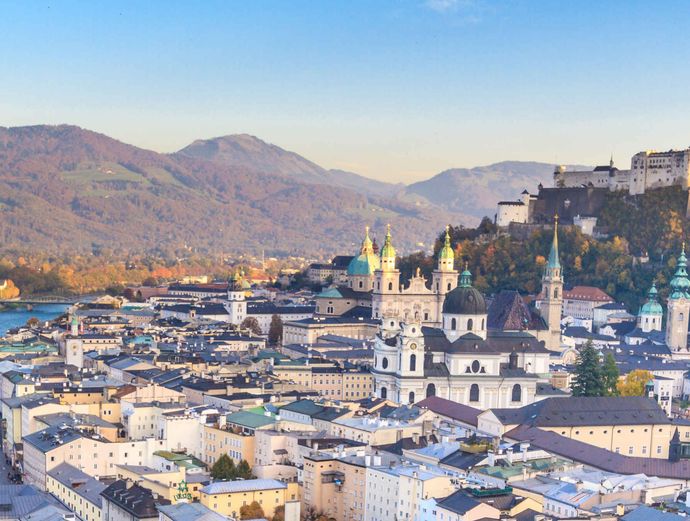
Salzburg Cathedral, the Dom zu Salzburg, is the city's great Baroque church, standing on Domplatz in the heart of the Old Town beneath the Hohensalzburg fortress. Visitors come for its vast white interior and soaring dome, its long religious history and its close ties to Mozart.A cathedral has stood here since the 8th century, when Bishop Virgil, an Irish monk, built the first church on the site, and over the following centuries it was enlarged into a vast Romanesque basilica. After a fire badly damaged that building at the end of the 16th century, the powerful prince-archbishops of Salzburg decided to replace it with something entirely new. Archbishop Wolf Dietrich cleared the ruins, and his successor brought in the Italian architect Santino Solari, whose design gave Salzburg one of the earliest Baroque churches north of the Alps. It was consecrated in the 17th century with great festivities during the Thirty Years' War.The pale marble facade, framed by twin towers, carries statues of Rupert and Virgil, the city's patron saints, beside the apostles Peter and Paul, and its three bronze doors, made after the Second World War, stand for Faith, Love and Hope. Inside, white stucco and ceiling paintings fill the nave, and light pours from the dome, which was rebuilt after a bomb pierced it during that war. Look for the medieval bronze font where Mozart was baptized and the organs he played as court organist, then head down to the crypt, which keeps traces of the earlier cathedrals and the tombs of archbishops.Music remains part of its life, from sacred concerts to the masses Mozart composed for this very church, and in summer the square in front becomes the open-air stage for Everyman, the morality play staged there since the Salzburg Festival began. A guide can read the symbols on the bronze doors and explain how the prince-archbishops used the building to display their wealth and power.
Meer #122
Schaezlerpaleis
If you are looking for things to do in Bavaria we have 4 Tours and Activities to Experience Schaezlerpalais. Check out our verified traveler reviews and photos of Schaezlerpalais tours and other things to do in Bavaria, and book securely when you find the perfect one. Learn the best ways to see famous Schaezlerpalais and explore the most popular things to do in Bavaria.
Meer #123
Paleis Schönbrunn (Schloss Schönbrunn)
Paleis Schönbrunn is de voormalige zomerresidentie van de Habsburgse keizers, gelegen aan de westkant van Wenen. Met meer dan 1,400 kamers, rijkversierde staatsvertrekken, formele tuinen en de Gloriette op de heuveltop, laat het zien hoe een van Europa's machtigste dynastieën leefde, gasten ontving en regeerde. Het landgoed begon als jachtgebied. In de 16e eeuw kocht keizer Maximiliaan II het land aan de rivier en voorzag het van wild, exotische vogels en visvijvers. In de volgende eeuw volgde een paleis. De naam is afgeleid van een bron op het terrein, de prachtige put waaraan Schönbrunn zijn naam dankte. In de 18e eeuw liet keizerin Maria Theresia het paleis herbouwen tot de barokke residentie die er nu staat, en het werd het centrum van het hofleven tijdens de warme maanden. De geschiedenis bleef door de poorten van het paleis trekken. Keizer Franz Joseph werd hier geboren en stierf hier na een regeerperiode van bijna zeven decennia. Het paleis was getuige van het einde van de monarchie na de Eerste Wereldoorlog, toen het in handen van de staat kwam en als museum werd geopend. Veel later vond er een ontmoeting plaats tussen John F. Kennedy en Nikita Chroesjtsjov tijdens de Koude Oorlog. UNESCO heeft het paleis en de bijbehorende tuinen op de Werelderfgoedlijst geplaatst. Binnen variëren de staatsvertrekken van vergulde rococo-zalen en de lange Grote Galerij, die ooit verlicht was voor bals en banketten, tot privévertrekken die een inkijkje geven in het dagelijks leven van Franz Joseph en keizerin Elisabeth. Buiten loopt het park geleidelijk omhoog naar de Gloriette, een zuilengalerij met een weids uitzicht over de stad, langs fonteinen, beelden, een nagebouwde Romeinse ruïne en het glazen Palmenhuis. Op het terrein bevindt zich ook de Tiergarten, die naar eigen zeggen de oudste dierentuin ter wereld is. Een gids helpt de verschillende vertrekken te verbinden met de mensen en hofrituelen die er plaatsvonden.
Meer #124
Sint-Annakerk
If you are looking for things to do in Bavaria we have 2 Tours and Activities to Experience St. Anne’s Church. Check out our verified traveler reviews and photos of St. Anne’s Church tours and other things to do in Bavaria, and book securely when you find the perfect one. Learn the best ways to see famous St. Anne’s Church and explore the most popular things to do in Bavaria.
Meer #125
Sint-Jorisfontein (Georgsbrunnen)
If you are looking for things to do in Bavaria we have 1 Tours and Activities to Experience St. George’s Fountain (Georgsbrunnen). Check out our verified traveler reviews and photos of St. George’s Fountain (Georgsbrunnen) tours and other things to do in Bavaria, and book securely when you find the perfect one. Learn the best ways to see famous St. George’s Fountain (Georgsbrunnen) and explore the most popular things to do in Bavaria.
Meer #126
Sint-Jakobskerk (St. Jakobskirche)
St. Jacob's Church, or St. Jakobskirche, is the great Gothic parish church of Rothenburg ob der Tauber, the walled medieval town on Germany's Romantic Road. Visitors come above all for the Holy Blood Altar carved by Tilman Riemenschneider, one of the masterpieces of late Gothic sculpture, and for the soaring nave, old stained glass and two towers.Construction began in the 14th century and was not finished until late in the 15th. The church sits on the Way of St. James, the pilgrim road to Santiago de Compostela, which explains its dedication to the apostle, known in German as Jakob. One unusual feature is visible from outside: the west choir was built right over a street, so the lane still runs through a vaulted passage beneath the church.The Holy Blood Altar, raised in the west gallery, was made to hold a reliquary cross of rock crystal said to contain a drop of Christ's blood. Riemenschneider carved the Last Supper at its center, unusually placing Judas in the middle of the scene as Christ hands him the bread, while the wings show the Entry into Jerusalem and the Prayer on the Mount of Olives. Left unpainted, the limewood figures rely on light and shadow for their effect.In the east choir, the Twelve Apostles high altar by Friedrich Herlin, a pupil of Rogier van der Weyden, includes on its reverse the oldest known view of Rothenburg along with scenes from the legend of St. James, and the windows above it keep their late medieval stained glass. A large organ with some 5,500 pipes fills the nave with sound. The church became Lutheran in the 16th century, and during the Peasants' War the rebel leader Florian Geyer read out the peasants' demands from its west chancel.
Meer #127
St. Lorenz Lutherse Kerk
If you are looking for things to do in Bavaria we have 11 Tours and Activities to Experience St. Lorenz Lutheran Church. Check out our verified traveler reviews and photos of St. Lorenz Lutheran Church tours and other things to do in Bavaria, and book securely when you find the perfect one. Learn the best ways to see famous St. Lorenz Lutheran Church and explore the most popular things to do in Bavaria.
Meer #128
San Marcoplein (Piazza San Marco)
Het San Marcoplein, Piazza San Marco, is het grootste openbare plein van Venetië, omzoomd door lange arcaden en aan één uiteinde afgesloten door de Basiliek van San Marco met zijn gouden koepel. Sinds de Middeleeuwen is het het ceremoniële hart van de stad en komen reizigers de gebouwen bewonderen die ooit de macht van de Republiek Venetië uitstraalden. Het plein begon als een tuin en een kanaal voor de dogenkapel, die gebouwd was om de relieken van Sint-Marcus te huisvesten, die in de vroege Middeleeuwen door Venetiaanse kooplieden uit Alexandrië waren gesmokkeld. In de daaropvolgende eeuwen werd het kanaal gedempt en het plein geplaveid en vergroot, en verrezen de arcaden van de kantoren van de procuratoren, de ambtenaren die de basiliek bewaakten, langs de zijkanten. Toen Napoleon de stad veroverde, sloot hij het westelijke uiteinde af met een nieuwe vleugel, en de vaak aan hem toegeschreven opmerking dat het plein de mooiste salon van Europa was, is sindsdien blijven bestaan. De basiliek combineert Byzantijnse koepels, marmer van over de Middellandse Zee en mozaïeken die goudkleurig glanzen in de bogen boven de deuren. Boven de hoofdingang staan kopieën van vier bronzen paarden die uit Constantinopel zijn meegebracht, terwijl de originelen veilig binnen worden bewaard. De bakstenen klokkentoren, de campanile, torent boven het plein uit; deze stortte begin 20e eeuw in en werd in zijn oorspronkelijke staat herbouwd. Aan de noordzijde toont de klokkentoren de dierenriem en de gevleugelde leeuw van Sint-Marcus, terwijl twee bronzen figuren de uren slaan op de klok. Naast de basiliek opent de Piazzetta zich naar de lagune tussen twee hoge zuilen, de ene bekroond met de leeuw en de andere met Sint-Theodorus, met aan één zijde het Dogenpaleis. Een gids kan de houtsnijwerken en mozaïeken lezen als bladzijden uit een geschiedenisboek.
Meer #129
Sint-Pietersabdij (Stift Sankt Peter)
If you are looking for things to do in Bavaria we have 19 Tours and Activities to Experience St. Peter's Abbey (Stift Sankt Peter). Check out our verified traveler reviews and photos of St. Peter's Abbey (Stift Sankt Peter) tours and other things to do in Bavaria, and book securely when you find the perfect one. Learn the best ways to see famous St. Peter's Abbey (Stift Sankt Peter) and explore the most popular things to do in Bavaria.
Meer #130
Sint-Stefanuskathedraal (Stephansdom)
De Stephansdom, ofwel de Sint-Stephansdom, is de grote gotische kathedraal van Wenen en staat aan de Stephansplatz in het hart van de oude stad. De hoge zuidelijke torenspits en het dak met de karakteristieke dakpannen maken het tot het bekendste symbool van Wenen. Bezoekers komen er om het imposante schip, de gebeeldhouwde schatten en het uitzicht vanaf de torens te bewonderen. Op deze plek stond vanaf de 12e eeuw een romaanse kerk, waarvan de westgevel met de Reuzenpoort en twee Heidense Torens bewaard is gebleven. In de 14e eeuw begon hertog Rudolf IV van de Habsburgse familie met de herbouw van de kerk in gotische stijl, een werk dat ruim een eeuw duurde. De zuidelijke toren werd voltooid, maar de noordelijke toren bleef onafgemaakt en werd later bekroond met een kleine renaissancetop. Aan het einde van de Tweede Wereldoorlog woedden er branden in de oude stad en stortte het dak in, waardoor een groot deel van het interieur werd verwoest. De kathedraal werd herbouwd met hulp van alle Oostenrijkse provincies en is nog steeds een geliefd nationaal symbool. Mozart trouwde hier en zijn uitvaartdienst werd gehouden in een van de kapellen. Het dak is bedekt met duizenden geglazuurde tegels in een zigzagpatroon, met aan één kant een dubbele adelaar en wapenschilden. Binnen is het lange schip bekleed met beelden op de pilaren en de stenen preekstoel is versierd met levendige hoofden van de kerkvaders. Aan de voet ervan kijkt een beeldhouwer uit een raam, een figuur die traditioneel wordt beschouwd als een zelfportret. Andere schatten zijn onder meer het graf van keizer Frederik III en een verguld altaar met vleugels. In de noordelijke toren hangt de Pummerin, een van de grootste klokken van Europa, oorspronkelijk gegoten uit kanonnen die door het Ottomaanse leger waren achtergelaten. Ondergronds bevinden zich de catacomben met urnen met overblijfselen van de Habsburgers en de botten van pestslachtoffers. Een gids kan de verborgen details en verhalen die in de steen zijn gebeiteld, toelichten.
Meer #131
Sint-Vituskathedraal (Katedrála Sv. Vita)
St. Vitus Cathedral is the great Gothic church inside Prague Castle, the seat of the Archbishop of Prague and the largest church in the Czech Republic. People come for its soaring nave and spires, the jeweled chapel of Saint Wenceslas and the tombs of Bohemian kings, all set at the heart of the castle complex above the city.Duke Wenceslas founded a rotunda on this spot in the 10th century, and a Romanesque basilica later replaced it. In the 14th century the future emperor Charles IV ordered a new cathedral in the French Gothic manner. Matthias of Arras began the work, and after his death the young Peter Parler took over, adding the bold net vaulting and much of the sculpture. Wars and lean centuries then halted construction for generations, leaving the building half finished. Only in the 19th century did a society of patrons revive the project, and the western nave and twin spires were completed in the early 20th century, almost six centuries after the first stone was laid.Inside, the Chapel of Saint Wenceslas is the treasure. Its lower walls are set with polished semiprecious stones and gilding, with painted scenes from the saint's life above, and a small door leads up to the chamber where the Bohemian crown jewels are kept. Nearby stands the silver tomb of Saint John of Nepomuk, a dazzling Baroque work, and the marble royal mausoleum where emperors and kings lie. Look for the stained glass window by Alphonse Mucha in a side chapel, its figures glowing in his flowing Art Nouveau style. Outside on the south side, the Golden Gate carries a medieval mosaic of the Last Judgment, and coronation processions once passed beneath it.Kings of Bohemia were crowned here for centuries, and the building carries that ceremonial weight. A guide can point out the portrait busts of royals and builders high in the triforium, Parler's own face among them.
Meer #132
Steen aan de Rijn
If you are looking for things to do in Bavaria we have 5 Tours and Activities to Experience Stein am Rhein. Check out our verified traveler reviews and photos of Stein am Rhein tours and other things to do in Bavaria, and book securely when you find the perfect one. Learn the best ways to see famous Stein am Rhein and explore the most popular things to do in Bavaria.
Meer #133
Kathedraal van Straatsburg (Cathédrale Notre Dame de Strasbourg)
If you are looking for things to do in Bavaria we have 32 Tours and Activities to Experience Strasbourg Cathedral (Cathédrale Notre Dame de Strasbourg). Check out our verified traveler reviews and photos of Strasbourg Cathedral (Cathédrale Notre Dame de Strasbourg) tours and other things to do in Bavaria, and book securely when you find the perfect one. Learn the best ways to see famous Strasbourg Cathedral (Cathédrale Notre Dame de Strasbourg) and explore the most popular things to do in Bavaria.
Meer #134
Swarovski Kristallwelten (Swarovski Kristallwelten)
Swarovski Crystal Worlds, or Swarovski Kristallwelten, is an art and entertainment park in Wattens, in Austria's Inn Valley a short way east of Innsbruck, built by the crystal company in its home town. People come for a series of underground rooms where artists have turned crystal into strange and dazzling installations, all set beneath a grass-covered giant.The story starts with Daniel Swarovski, a glass cutter from Bohemia who invented a machine for cutting crystal precisely and settled in Wattens near the end of the 19th century, drawn by mountain streams that could power his workshop. The firm grew into a household name, and to mark a century in business it asked the Viennese artist André Heller to create a place that would show crystal as art rather than merchandise. Heller's answer was the Giant, a huge head covered in grass with sparkling crystal eyes and a mouth that spills a waterfall, with a world of rooms hidden inside the hillside behind it. The site was later expanded with a large garden and new buildings.Inside, the Chambers of Wonder are each the work of a different designer or artist, and they change over time. Highlights have included a dome lined with mirrors that turns you into the center of a glittering kaleidoscope, mechanical sculptures, rooms of light and sound, and pieces by well-known artists, fashion designers and architects. Some rooms are calm and meditative, others playful or a little unsettling, and the darkness makes every facet catch the light.Outside, the garden is a destination in its own right. A cloud of hand-mounted crystals hovers over a black mirror pool, a crystal carousel turns among the trees, and a maze shaped like a hand rewards children who find their way through. There is also a large shop full of the brand's jewelry and figurines. A guide can explain the history of the family firm and the ideas behind the art.
Meer #135
Wenceslasplein (Václavské Námesti)
Wenceslas Square is the long, sloping boulevard at the center of Prague's New Town, running up to the domed National Museum. Lined with grand hotels, shops and cafes, it is where Czechs have gathered at the great turning points of their history, and visitors come for its architecture, its buzz and the stories behind it.The square began as a horse market in the 14th century, when King Charles IV founded the New Town and laid out a broad open space for trading. It was renamed after Saint Wenceslas, the patron saint of the Czech lands, in the 19th century, a time of rising national feeling. The National Museum building at its upper end, with its grand facade and dome, went up in that same era as a symbol of Czech culture and learning.In front of the museum stands Josef Václav Myslbek's equestrian statue of Saint Wenceslas, flanked by other Czech patron saints, and the space around it has long served as the country's meeting point. Independence was celebrated here at the end of the First World War. The student Jan Palach set himself on fire near the museum in protest against the Soviet-led occupation, and a small memorial set into the ground marks the spot. Then, in the Velvet Revolution, huge crowds filled the square day after day until the communist regime gave way.Walking the square, look for the Art Nouveau front of the Hotel Evropa, the arcades and passages that lead off the main street, and the balcony of the Melantrich building, where Václav Havel and Alexander Dubček spoke to the protesters. The Lucerna passage nearby holds David Černý's sculpture of Saint Wenceslas riding an upside-down horse, a cheeky reply to the statue up the hill. Above the shopfronts, buildings from the late 19th century to the interwar years stand side by side, so it pays to keep looking up.
MeerOntdek Beieren

Luxe & Speciale Gelegenheden
Prijzen vanaf $3
Culturele & Thema Tours
Prijzen vanaf $3
Rondleidingen en bezienswaardigheden
Prijzen vanaf $3
Wandel- en fietstochten
Prijzen vanaf $3
Dagtochten & Excursies
Prijzen vanaf $3
Eten, wijn en nachtleven
Prijzen vanaf $8
Vakantie- en seizoensrondleidingen
Prijzen vanaf $3
outdoor activiteiten
Prijzen vanaf $3
Privé- en op maat gemaakte rondleidingen
Prijzen vanaf $3
Tickets en passen voor bezienswaardigheden
Prijzen vanaf $26
Kustexcursies
Prijzen vanaf $42
Lucht-, helikopter- en ballonvaarten
Prijzen vanaf $288
Marienplatz
Prijzen vanaf $3
Odeonsplatz
Prijzen vanaf $3
Herdenkingsplaats concentratiekamp Dachau
Prijzen vanaf $44
Victuals-markt (Viktualienmarkt)
Prijzen vanaf $3
Kathedraal van Onze-Lieve-Vrouw (Frauenkirche)
Prijzen vanaf $3
Residentie München (Residenz München)
Prijzen vanaf $3
Sint-Pieterskerk (Peterskirche)
Prijzen vanaf $3
Engelse tuin (Englischer Garten)
Prijzen vanaf $3
Paleis Nymphenburg (Schloss Nymphenburg)
Prijzen vanaf $19
Olympisch park
Prijzen vanaf $3
Het huis van Albrecht Dürer
Prijzen vanaf $3
Deutsches Museum
Prijzen vanaf $3
Activiteiten voor regenachtige dagen in Beieren

Seniorenvriendelijke rondreizen in Beieren

Culinaire tours in Beieren

Gezinsvriendelijke Beieren-rondleidingen

De beste tours en activiteiten voor cultuurliefhebbers in Beieren

Top 10 Beieren 2026

Topdagtochten vanuit Beieren

Wat te doen in Beieren deze zomer

Beieren Evenementenkalender
Bekijk alle evenementen
Kerstactiviteiten in Beieren
vr 25 dec 2026
Chanoeka in Beieren
4–12 december 2026
Oud en Nieuw in Beieren
Do 31 december 2026
Kerstavond in Beieren
Do 24 december 2026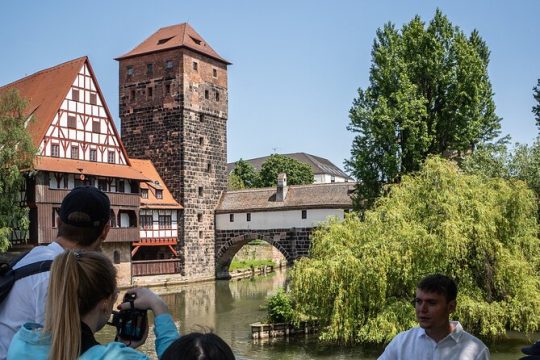
Nieuwjaarsdag lang weekend in Beieren
1–3 januari 2027
Valentijnsdag in Beieren
Zo, 14 februari 2027
Pasen in Beieren
Zo 28 mrt.2027
Goede Vrijdag in Beieren
vr 26 maart 2027