ケベックの観光スポット
州内で楽しめるその他のアクティビティ
 #16
テラスダッフェリン
Terrasse Dufferin is the broad wooden boardwalk that runs along the clifftop beside the Château Frontenac in Old Quebec, high above the St. Lawrence River. It is the city's best-loved promenade, where people stroll for the wide river views, the street performers and the sense of walking over four centuries of history.The boardwalk is named after Lord Dufferin, Governor General of Canada, under whom it was built in the 19th century; it was opened by his successor, the Marquess of Lorne, and his wife, Princess Louise, a daughter of Queen Victoria. Beneath the planks lie the remains of the Saint-Louis forts and of Château Saint-Louis, the residence of French and later British governors, which stood here from the early days of New France until a fire ruined it in the 19th century. After the fire an earlier, shorter terrace was laid over the ruins, and Dufferin had it greatly extended.Parks Canada protects the remains as a national historic site, and skylights set into the deck let you peer down at the old cellars and stone walls. Six gazebos with benches line the route, named Frontenac, Lorne, Princess Louise, Victoria, Dufferin and Plessis, and they frame views across the river to Lévis and downstream toward the Île d'Orléans. At the northern end, near the Château, stands a monument to Samuel de Champlain, who founded Quebec at the foot of these cliffs.The south end keeps one of the city's oldest winter traditions, a steep wooden slide where toboggans have raced down toward the Château since the late 19th century, and it becomes a highlight of the Winter Carnival. A guide can bring the buried history to life, from the French governors who ruled New France from this clifftop to the British officials who took their place.
その他
 #18
マウントロイヤルパーク
Mount Royal Park is the large green space that spreads across Mount Royal, the hill that rises above downtown Montreal and gave the city its name. People come to walk its wooded trails, relax by Beaver Lake and gaze from its belvederes over the skyscrapers, the St. Lawrence River and the plains beyond.The French explorer Jacques Cartier climbed the hill in the 16th century and named it Mont Royal. In the 19th century, as wealthy families built mansions on its slopes and woodcutters thinned its forest, the city bought the land to protect it as a park for everyone. Montreal hired Frederick Law Olmsted, the landscape architect behind New York's Central Park, to design it. Rather than flatten the mountain into lawns, he laid out a winding carriage road that climbs gently through the woods, revealing the views bit by bit, so that the way to the top feels like a journey into nature.At the top, the Kondiaronk Belvedere, named after a Huron-Wendat chief who helped negotiate a great peace treaty, opens onto the classic panorama of downtown, with the stone Chalet du Mont-Royal behind it. Farther along, the illuminated Mount Royal Cross recalls the wooden cross that the city's founder, Paul de Chomedey de Maisonneuve, carried up the hill in thanks after the young settlement was spared from a flood. Beaver Lake, an artificial pond added in the 20th century, draws families to its grassy banks, and forests of maple and oak shelter a surprising variety of birds.Near the Sir George-Étienne Cartier Monument, at the foot of the mountain, drummers and dancers gather on Sundays for the tam-tams, a free-spirited city tradition. A guide can explain how Olmsted's ideas shaped the park and how it became Montreal's favorite backyard.
その他 #19
セント ポール通り (サン ポール通り)
ケベックで楽しめるアクティビティをお探しなら、サン・ポール通り(Rue Saint-Paul)を体験できるツアーやアクティビティが13種類あります。サン・ポール通り(Rue Saint-Paul)ツアーやケベックのその他のアクティビティに関する旅行者の口コミや写真をご覧ください。お気に入りのツアーが見つかったら、安心してご予約いただけます。有名なサン・ポール通り(Rue Saint-Paul)を効率よく観光する方法や、ケベックで人気の観光スポットをご紹介します。
その他 #20
ジャック・カルティエ広場(Place Jacques-Cartier)
Place Jacques-Cartier is the sloping cobblestone square at the heart of Old Montreal, running from City Hall down toward the Old Port and the St. Lawrence River. People come to stroll among its kiosks, terraces and street performers, admire the old stone buildings around it, and soak up the lively atmosphere of the historic quarter.The square occupies land that once belonged to the gardens of the Château Vaudreuil, the grand residence of a French colonial governor. After the château burned at the start of the 19th century, the owners gave the land to the city on condition that it become a public market, and for decades farmers sold produce here. It was named after Jacques Cartier, the French navigator who sailed up the St. Lawrence in the 16th century and claimed the region for France. At the top stands Nelson's Column, raised by Montreal's British merchants to honor Admiral Horatio Nelson after Trafalgar, and older than its famous counterpart in London.Around the square, stone buildings from the 19th century and earlier now hold restaurants, cafes and shops, their terraces spilling onto the sloping street in warm weather. Street artists sketch portraits and performers draw crowds near the bottom, close to the waterfront. City Hall, a grand Second Empire building across rue Notre-Dame, closes the view at the top; from its balcony, President Charles de Gaulle made his famous call for a free Quebec in the 20th century. Nearby stand the Château Ramezay, a colonial governor's house turned museum, and the domed Bonsecours Market.Looking down the slope, the square frames a view of the river and the islands beyond, a reminder that the city grew up as a port. A guide can explain how the old market, the governor's gardens and the river trade shaped this corner of Montreal.
その他 #21
モントリオール チャイナタウン
ケベック州で楽しめるアクティビティをお探しですか?モントリオールのチャイナタウンを体験できるツアーやアクティビティを9種類ご用意しています。モントリオールのチャイナタウンツアーやケベック州のその他のアクティビティに関する旅行者の口コミや写真をご覧ください。お気に入りのツアーが見つかったら、安心してご予約いただけます。有名なモントリオールのチャイナタウンを効率よく観光し、ケベック州で人気の観光スポットを巡りましょう。
その他 #22
マウント ロワイヤルの聖ジョゼフ礼拝堂 (L'Oratoire Saint-Joseph du Mont-Royal)
ケベックで何かアクティビティをお探しなら、サン・ジョセフ・オラトリオ・ド・モン・ロワイヤル(L'Oratoire Saint-Joseph du Mont-Royal)を体験できるツアーやアクティビティが15種類あります。サン・ジョセフ・オラトリオ・ド・モン・ロワイヤル(L'Oratoire Saint-Joseph du Mont-Royal)ツアーやケベックのその他のアクティビティに関する旅行者の口コミや写真をご覧ください。お気に入りのツアーが見つかったら、安心してご予約いただけます。有名なサン・ジョセフ・オラトリオ・ド・モン・ロワイヤル(L'Oratoire Saint-Joseph du Mont-Royal)を訪れる最適な方法を学び、ケベックで最も人気のあるアクティビティを探ってみましょう。
その他 #23
モンモランシー滝公園 (Parc de la Chute-Montmorency)
モンモレンシー滝公園は、ケベック市の端にある力強い滝を取り囲んでいます。モンモレンシー川は、セントローレンス川と合流する直前に崖から流れ落ちます。観光客は、崖の上、頂上にかかる橋、そして滝のふもとから滝を眺め、上にある邸宅の歴史を探訪します。17世紀初頭、サミュエル・ド・シャンプランは、当時ヌーベルフランス総督であったフランス海軍提督、モンモレンシー公アンリ2世にちなんでこの滝に名前を付けました。18世紀後半、ヴィクトリア女王の父であるケント公エドワード王子は、伴侶とともに滝を見下ろすカントリーハウスに住んでおり、その場所に建つ邸宅は今でもケントハウスとして知られています。この滝は戦争の舞台にもなりました。七年戦争中、ジェームズ・ウルフ将軍は川の東岸にイギリス軍を駐屯させ、滝の下にあるボーポールのフランス軍陣地への攻撃を試みましたが失敗に終わりました。ここでの敗北は、ヌーベルフランスとケベック市自体の運命を決定づけたアブラハム平原での有名な勝利のわずか数週間前のことだった。滝は季節によって変化する。夏には、川底の鉄分が水を金色に染め、夏の夜には崖の上空で国際花火大会が夜空を彩る。冬には、滝の麓で水しぶきが凍り、地元の人々が「砂糖の塊」と呼ぶ大きな白い山になる。ケーブルカーが麓と頂上を結び、遊歩道や階段が展望台へと続いており、そこでは顔に霧を感じることができる。ガイドが、静かな公園に隠されたシャンプラン、王子、そして戦いの物語を語ってくれる。
その他 #24
モントリオール市庁舎 (モントリオール市庁舎)
ケベック州で楽しめるアクティビティをお探しなら、モントリオール市庁舎(Hotel de Ville de Montréal)を体験できるツアーやアクティビティを5つご紹介します。モントリオール市庁舎(Hotel de Ville de Montréal)ツアーやケベック州で楽しめるその他のアクティビティに関する、旅行者によるレビューや写真をご覧ください。お気に入りのツアーが見つかったら、安心してご予約いただけます。有名なモントリオール市庁舎(Hotel de Ville de Montréal)を効率よく見学する方法や、ケベック州で人気の観光スポットをご紹介します。
その他 #25
オルレアン島 (オルレアン島)
ケベック州で楽しめるアクティビティをお探しですか?オルレアン島(イル・ドールレアン)を満喫できるツアーやアクティビティが18種類あります。オルレアン島(イル・ドールレアン)ツアーやケベック州のその他のアクティビティに関する旅行者の口コミや写真をご覧ください。お気に入りのツアーが見つかったら、安心してご予約いただけます。有名なオルレアン島(イル・ドールレアン)を効率よく観光する方法や、ケベック州で人気の観光スポットをご紹介します。
その他 #26
アブラハム平原 (Plaines d'Abraham)
The Plains of Abraham is a large historic park on the clifftops of Upper Town in Quebec City, high above the Saint Lawrence River. It is where British and French armies fought the battle that decided the fate of New France, and people come to walk its lawns, read its monuments and take in the river views.The land takes its name from Abraham Martin, a river pilot and early settler of New France who held land in the area in the 17th century. Its place in history came in the 18th century, during the Seven Years' War. In a daring night move, British troops under General James Wolfe climbed the cliffs from the river and formed lines on the plateau outside the city walls. The French commander, the Marquis de Montcalm, marched out to meet them, and the fighting was over very quickly. Both generals were mortally wounded. Quebec fell, and within a few years France had handed its North American colony to Britain.The French came back the next spring and won the Battle of Sainte-Foy nearby, but they could not retake the city. Long after the guns fell silent, the battlefield became the core of a national park created in the early 20th century to honor both sides, and landscaped lawns, groves and gardens slowly spread across the old ground.Walking the park, you pass Martello towers built by the British to defend the city, cannons and monuments to the soldiers of both armies, and the Joan of Arc Garden with its formal flower beds. Lookouts open onto the river and the far shore. The park is also the city's great open space, where residents jog, picnic and gather on warm evenings. A guide brings the battles to life and shows where the armies stood.
その他 #27
プラトー・モン・ロワイヤル(プラトー)
ケベック州で楽しめるアクティビティをお探しなら、プラトー・モン・ロワイヤル(高原地帯)を体験できるツアーやアクティビティが14種類あります。プラトー・モン・ロワイヤル(高原地帯)ツアーやケベック州のその他のアクティビティに関する旅行者の口コミや写真をご覧ください。お気に入りのツアーが見つかったら、安心してご予約いただけます。有名なプラトー・モン・ロワイヤル(高原地帯)を効率よく観光する方法や、ケベック州で人気の観光スポットをご紹介します。
その他 #28
ケベックシティクルーズポート
The Quebec City Cruise Port is the passenger harbor on the St. Lawrence River at the foot of Old Quebec, where cruise ships tie up almost beneath the walls of the old city. For passengers it is the doorstep to one of the oldest cities in North America, with the cliffs, spires and copper roofs of the upper town rising straight above the quays.Quebec City grew from a French trading post founded at this narrow point in the river in the early 17th century, and the waterfront has been busy with ships ever since. In the 19th century the Old Port was one of the great harbors of the British Empire, loading timber for shipbuilding and receiving waves of immigrants from Europe. Later, as industrial shipping shifted to other docks, much of the old waterfront was reshaped for visitors, with promenades, a marina and the cruise terminal taking the place of sheds and warehouses.Most ships berth at Pointe-à-Carcy, where the Ross Gaudreault Terminal looks out over the river and the busy channel. From the decks and the quay, the view takes in the Château Frontenac high on the cliff, the green slopes and stone ramparts of the Citadelle, and the ferries crossing to Lévis on the far shore. Just inland lies the lower town, with Place Royale and its small stone church, Notre-Dame-des-Victoires, the narrow lanes of Petit-Champlain lined with shops and cafés, and the funicular that climbs the cliff to the upper town.The setting explains the city itself. Its name comes from an Algonquian word for the place where the river narrows, and from here the St. Lawrence widens steadily toward the Gulf and the Atlantic. Holding this narrow passage meant controlling the route into the continent, which is why the French fortified the cliff and the British fought to take it. A local guide can connect the waterfront to that French and British past.
その他 #29
ケベックシティ旧港(ヴューポール)
ケベックで楽しめるアクティビティをお探しですか?ケベック旧港(ヴィユー・ポール)を体験できるツアーやアクティビティを5つご用意しています。ケベック旧港(ヴィユー・ポール)ツアーをはじめとするケベックのおすすめアクティビティに関する旅行者の口コミや写真をご覧ください。お気に入りのツアーが見つかったら、安心してご予約いただけます。有名なケベック旧港(ヴィユー・ポール)を効率よく観光する方法や、ケベックで人気の観光スポットをご紹介します。
その他 #30
アッパータウン(オートヴィル)
ケベックで楽しめるアクティビティをお探しですか?アッパータウン(オートヴィル)を体験できるツアーやアクティビティを15種類ご用意しています。アッパータウン(オートヴィル)ツアーをはじめとするケベックのおすすめアクティビティに関する旅行者の口コミや写真をご覧ください。お気に入りのツアーが見つかったら、安心してご予約いただけます。有名なアッパータウン(オートヴィル)を効率よく観光する方法や、ケベックで人気の観光スポットをご紹介します。
その他 #31
ケベック州ローワータウン(バスヴィル)
Quebec's Lower Town, or Basse-Ville, is the oldest part of Quebec City, a district of stone houses and narrow streets squeezed between the cliff of Cap Diamant and the St. Lawrence River. People come to stroll its cobbled lanes and boutiques, see the square where the city was founded, and look up at the Château Frontenac crowning the cliff above.Samuel de Champlain founded Quebec on this narrow shore in the early 17th century, building a fortified trading post called the Habitation near what is now Place Royale. The square became the commercial heart of New France, with a market, merchants' houses and, later, the stone church of Notre-Dame-des-Victoires, named for French successes against English attacks. Fire, bombardment and later decline took their toll, and much of the district was carefully restored in the 20th century to recall its French colonial look.Rue du Petit-Champlain, often called one of the oldest commercial streets in North America, winds along the foot of the cliff beneath wrought-iron shop signs, lined with galleries, craft studios and cafés. The Breakneck Steps, the city's oldest staircase, plunge into it from above. Nearby, a vast trompe-l'oeil mural, the Fresco of the Quebecers, paints the city's history across the side of a building, with famous figures from Champlain onward looking out from its painted windows, stairways and balconies.Place Royale itself is a small square of steep-roofed stone houses with a bust of Louis XIV at its center, and the modest church on one side ranks among the oldest stone churches in North America. Down by the water, the Museum of Civilization and the Old Port add modern layers to the district, while the ferry across the river to Lévis gives one of the finest views back toward the cliff and the château.
その他 #32
モントリオール オリンピック パーク (パルク オリンピック ド モントリオール)
モントリオール・オリンピック・パークは、市が夏季オリンピックを開催した際に建設された、市の東端に広がるスポーツ複合施設です。その中心は、傾斜した塔を持つオリンピック・スタジアムで、大胆なコンクリートのデザインであり、人々はその建築、オリンピックの物語、そして塔の頂上からの眺めを求めて訪れます。フランス人建築家ロジャー・タイリベールは、スタジアムとその塔を、開閉式の屋根を持ち上げるマストを備えた曲線的なコンクリートのシェルという、一つの劇的な彫刻として設計しました。その野心には代償が伴いました。建設は予算を大幅に超過し、スタジアムは完成前にオープンし、塔はオリンピックから約10年後にようやく完成しました。地元の人々は、ドーナツ型の屋根からビッグO、そして返済に約30年かかった負債からビッグオーとニックネームを付けました。屋根自体も独自の物語となりました。当初の布製のカバーは穏やかな天候でしか開けることができず、何度も破れ、最終的には固定式の屋根に交換されました。長年にわたり、このスタジアムはモントリオール・エクスポズの野球チームの本拠地であり、アメリカンフットボール、サッカー、大規模コンサート、見本市なども開催されてきました。タワーは45度の角度で傾き、高さは約165メートルで、世界で最も高い傾斜タワーです。スタジアム周辺には、広場からタワーの下にあるオリンピック水泳プール(現在も地元の水泳選手が利用)まで、オリンピックの面影が残っています。タワーのふもとにあるかつてのオリンピック自転車競技トラックは、生きた生態系の屋内博物館であるバイオドームになっています。展望台からは、街、モン・ロワイヤル、セントローレンス川を一望できます。ガイドが、オリンピックの舞台裏や、建物の完成までの長い道のりについて説明してくれます。
その他 #33
モントリオールの地下都市
ケベック州で楽しめるアクティビティをお探しなら、モントリオール地下街を体験できるツアーやアクティビティを5つご紹介します。モントリオール地下街ツアーをはじめとするケベック州のおすすめアクティビティについて、旅行者の口コミや写真をご覧ください。お気に入りのツアーが見つかったら、安心してご予約いただけます。有名なモントリオール地下街を効率よく観光し、ケベック州で人気の観光スポットを巡りましょう。
その他 #34
アーティラリーパーク遺産
ケベック州で楽しめるアクティビティをお探しなら、アーティラリー・パーク・ヘリテージ・サイトを体験できるツアーやアクティビティを12種類ご用意しています。アーティラリー・パーク・ヘリテージ・サイトのツアーやケベック州のその他のアクティビティに関する旅行者の口コミや写真をご覧ください。お気に入りのツアーが見つかったら、安心してご予約いただけます。有名なアーティラリー・パーク・ヘリテージ・サイトを効率よく観光する方法や、ケベック州で人気の観光スポットをご紹介します。
その他 #35
ケベック城塞 (シタデル ド ケベック)
ケベック城塞は、旧市街の端、セントローレンス川を見下ろす崖の最高地点、キャップ・ディアマンにある星形の石造りの要塞です。有名な連隊の本拠地であり、カナダ総督の公邸でもあるこの要塞には、軍事史、式典、そして川を見渡す絶景を求めて人々が訪れます。フランス人は17世紀から18世紀にかけてこの要衝を要塞化し、その時代の石造りの火薬庫が今も城壁内に残っています。現在の城塞の姿は、19世紀前半にイギリス人がアメリカとの戦争で植民地が南からの侵略にどれほど脆弱であるかを痛感した後に建設したものです。技術者たちは、防御側があらゆる接近をカバーできるように、低く傾斜した壁と稜堡を設計しました。この要塞は、北米に建設されたイギリスの要塞としては最大規模であるとよく言われています。恐れていた攻撃は起こらず、要塞は一度も戦闘を経験することはありませんでした。20世紀初頭から、この要塞は、第一次世界大戦と第二次世界大戦、そしてそれ以降も輝かしい戦績を残したフランス語を話す歩兵連隊、ロイヤル22連隊の本拠地となっています。連隊博物館では、古い火薬庫と元軍刑務所に展示された制服、武器、勲章、個人所有物を通して、その歴史が語られています。式典の日には、赤いチュニックと背の高い熊皮帽をかぶった兵士たちが練兵場で衛兵交代式を行い、連隊のマスコットであるバティスという名のヤギが参加することもあります。城壁からは、川、対岸のレヴィ、旧ケベックの屋根が一望できます。ガイドが、壁だけでは分からない軍隊生活や要塞の設計の詳細を解説します。
その他 #36
ケベックの要塞国定史跡
The Fortifications of Quebec National Historic Site protects the stone ramparts, gates and bastions that still ring Old Quebec, the only walled city left in North America north of Mexico. Visitors walk the walls for views over the old town and the St. Lawrence, pass through the historic gates, and explore the military buildings of Artillery Park.The French began fortifying their capital in the 17th century, when New France faced attacks from the English colonies, and in the 18th century military engineers raised the stone walls that still guard the western side of the city. Just beyond them lie the Plains of Abraham, where the battle that decided the fate of New France was fought. After the British conquest, the new rulers reinforced the defenses against a feared American invasion and built the star-shaped Citadelle on the heights of Cap Diamant.By the late 19th century the walls had lost their military purpose, and the city began tearing down gates to ease traffic. The governor general, Lord Dufferin, argued for saving them instead, and his plan turned the ramparts into a promenade and rebuilt gates such as Saint-Louis and Kent in a romantic, castle-like style. That choice helped keep the character of the old town, now a UNESCO World Heritage Site.Walking the ramparts, you pass cannon still aimed toward the river, grassy bastions and the stone gates that frame the streets of the old town. At Artillery Park, a cluster of buildings shows how soldiers lived and worked over the centuries, from the French-built Dauphine Redoubt to the officers' quarters and an old foundry that produced ammunition. Inside, a large scale model of the city, made in the early 19th century, lets you see Quebec as the British garrison knew it.
その他 #37
アルベール・ジル銅美術館とブティック
Albert Gilles Copper Art Museum and Boutique is a family-run studio, small museum and shop in Château-Richer, on the Côte-de-Beaupré east of Quebec City. Visitors come to see how decorative copper is embossed by hand, admire the family's work and try the craft themselves, then browse for a handmade piece to take home.Copper embossing, the craft of working a thin sheet of metal into raised designs with hand tools, has been the family's trade for many decades. The studio carries the name of Albert Gilles, the artist who founded it, and his family has kept the work going in this riverside village. Copper from this workshop decorates dozens of churches across North America, including the doors of the Basilica of Sainte-Anne-de-Beaupré just along the shore, and the family's contribution has been honored by the Conseil de la culture du Québec.Exhibits begin with copper as a raw material, follow its use through the ages and then show how a flat sheet becomes a detailed relief, with examples of the studio's major commissions along the way. In the workshop you can try your hand, tracing a design and pressing it into the soft metal until a picture rises from the surface. The boutique turns the same skills toward smaller gifts and pieces for the home.The Côte-de-Beaupré was among the first stretches of New France to be farmed, and its villages, churches and old houses give the shore a strong sense of the past. That setting suits a craft so closely tied to church art, and seeing the copper doors of the nearby basilica brings the family's skill into sharp focus. A guide familiar with the shore can add the history of the parishes and the pilgrims who have long traveled this way to Sainte-Anne.
その他
 #39
要塞博物館(Musée du Fort)
ケベックで何かアクティビティをお探しですか?フォート博物館(Musée du Fort)を体験できるツアーとアクティビティが2つあります。フォート博物館(Musée du Fort)ツアーやケベックのその他のアクティビティに関する旅行者の口コミや写真をご覧ください。ぴったりのツアーが見つかったら、安心してご予約いただけます。有名なフォート博物館(Musée du Fort)を効率よく観光する方法や、ケベックで人気の観光スポットをご紹介します。
その他 #40
ラシーヌ運河 (Canal de Lachine)
ケベック州で楽しめるアクティビティをお探しなら、ラシーン運河(Canal de Lachine)を体験できるツアーやアクティビティが6つあります。ラシーン運河(Canal de Lachine)ツアーやケベック州のその他のアクティビティに関する旅行者の口コミや写真をご覧ください。お気に入りのツアーが見つかったら、安心してご予約いただけます。有名なラシーン運河(Canal de Lachine)を巡る最適な方法や、ケベック州で人気の観光スポットをご紹介します。
その他 #41
モントリオールの聖パトリック大聖堂
St. Patrick's Basilica is the historic church of Montreal's English-speaking Catholics, many of them Irish, a Gothic Revival landmark in the heart of downtown. Visitors step inside for its soaring, richly painted interior, where Irish shamrocks and French fleurs-de-lys share the decoration, and for a moment of calm amid the city's bustle.The basilica rose in the middle of the 19th century, when the city's English-speaking Catholic community had outgrown the churches it used before. It opened as the Great Famine was driving huge numbers of Irish emigrants across the Atlantic, and many of them landed in Montreal. Architect Pierre-Louis Morin and Father Félix Martin, a Jesuit, designed it in the Gothic Revival style, with pointed arches, tall windows and a steeple that rises about 69 meters. The building stretches about 71 meters, and its decoration joins the emblems of Ireland and French Quebec, a sign of the two communities that shaped Catholic Montreal.Inside, slender columns draw the eye up to the vaulted ceiling and along the nave to the sanctuary. Ten bells hang in the tower, and the oldest of them ranks among the oldest in the city. Look closely and the shamrock turns up again and again, a small signature of the congregation that built the church. Though traffic hums along the boulevard outside, the interior feels hushed, and the city's Irish story seems close at hand.The basilica remains the spiritual home of Montreal's Irish community, which marks St. Patrick's Day with one of the oldest parades in North America. It is now a minor basilica and a national historic site of Canada. A guide can explain how Irish newcomers helped build Montreal, from its canals to its bridges, and how this church became their anchor.
その他 #42
アメリカフランス語博物館 (Musée de l'Amerique Francophone)
The Museum of Francophone America (Musée de l'Amérique Francophone) sits in Old Quebec beside the Séminaire de Québec and explores the story of French culture in North America. Billed as the oldest museum in Canada, it draws visitors with eclectic collections, from paintings and rare books to fossils and coins, and with a chapel organ rebuilt on an old model.The museum grew from the collections of the Séminaire de Québec, founded in the 17th century by François de Laval to train priests for New France. Laval later became the first bishop of Quebec, and his name lives on in the city's university. Over the generations the seminary built up paintings, books, coins and fossils, and these became the core of the Seminary museum. It has changed its name several times and is now part of the Musée de la civilisation, which runs several of the city's heritage sites.The building is part of the appeal, with a rounded facade based on plans by Thomas Baillairgé, a leading Quebec architect of the 19th century. Inside, the chapel houses an organ that reconstructs an 18th-century instrument once heard in the cathedral next door. The collections range widely, taking in paintings, silverware, coins, stamps, fossils and books, a mix that reflects the wide interests of the seminary that assembled it.Its exhibitions follow French speakers across the continent, from the Saint Lawrence valley to Acadia and Louisiana, and look at how their language and customs endured. The setting deepens the story, since the seminary's stone wings and courtyards rank among the oldest buildings in Old Quebec. The historic district around it is a World Heritage site and the only walled city in North America north of Mexico. With a guide, the objects open a window onto faith, learning and daily life in New France.
その他 #43
ノートルダム デ ヴィクトワール教会 (Église Notre-Dame-des-Victoires)
ケベックで何かアクティビティをお探しなら、ノートルダム・デ・ヴィクトワール教会(Église Notre-Dame-des-Victoires)を体験できるツアーやアクティビティが8つあります。ノートルダム・デ・ヴィクトワール教会(Église Notre-Dame-des-Victoires)ツアーやケベックのその他のアクティビティに関する旅行者の口コミや写真をチェックして、ぴったりのツアーが見つかったら安心して予約しましょう。有名なノートルダム・デ・ヴィクトワール教会(Église Notre-Dame-des-Victoires)を効率よく見学する方法を学び、ケベックで人気のアクティビティを探ってみましょう。
その他 #44
Pointe-à-Callière
Pointe-à-Callière is Montreal's museum of archaeology and history, built in Old Montreal on the very spot where the city was founded. Visitors come to walk through the real remains of the early settlement underground, see artifacts dug up on site, and follow the story of Montreal from Indigenous times to the busy port city it became.This point of land, where a small river once met the St. Lawrence, was a meeting place for Indigenous peoples long before Europeans arrived. In the 17th century French settlers led by Paul de Chomedey de Maisonneuve and Jeanne Mance founded Ville-Marie here, the mission that grew into Montreal. The name of the point comes from Louis-Hector de Callière, a later governor who built his residence on the site. The museum opened in the late 20th century to mark a city anniversary, and archaeologists have kept digging and adding new sections ever since.The main building, a modern structure with a tall lookout tower, stands over the remains of Callière's house. From it, paths lead down into the crypt beneath Place Royale, where you walk among foundations of walls, the city's first Catholic cemetery, the outlines of old buildings and a stone sewer from the 19th century that was itself built over the buried river. Further sections reveal traces of Fort Ville-Marie and an early marketplace, and the old customs house on the square is part of the complex.Exhibitions draw on the many objects found during the digs, from Indigenous pottery and tools to French colonial ceramics and everyday items from later centuries. A multimedia show sets the scene by tracing the history of the site over the ages, and temporary exhibitions bring major collections from around the world. The tower gives a broad view over the Old Port and the river. A guide helps you read the layers of masonry and connect each find to the people who left it.
その他 #45
ケベックシティ首都天文台 (Observatoire de la Capitale)
ケベックシティ首都展望台(Observatoire de la Capitale)は、ケベックシティで最も高いタワーであるマリー・ギヤールビルの31階にある屋内展望ギャラリーです。窓からは、城壁に囲まれた旧市街、国会議事堂、そして広大なセントローレンス川を一望できます。このタワーにはケベック州政府のオフィスが入居しており、歴史的な城壁のすぐ外側、州議会の近くに建っています。タワーの名前は、17世紀のウルスラ会修道女で、マリー・オブ・ジ・インカーネーションとしても知られるマリー・ギヤールにちなんで名付けられました。彼女はヌーベルフランスで最初の女子学校を設立し、植民地の創設者の一人として記憶されています。展望台は、首都を紹介する場所として政府によって運営されており、街の景色と歴史が一体となるように設計されています。フロア全体に大きな窓が設置されているため、街を端から端まで見渡すことができます。片側には、シャトー・フロンテナックの緑色の銅屋根と城壁内の古い石造りの家々が立ち並ぶ旧市街ケベックが広がっています。もう片側には、ヌーベルフランスの運命が決定されたアブラハム平原と、オルレアン島に向かって湾曲する広い川が広がっています。さらに遠くには、ローレンシャン丘陵がそびえ立っています。オリヴィエ・デュフールの芸術監督のもと制作されたマルチメディアプレゼンテーション「ホライズンズ」は、映像、音、光を用いて、この街の歴史とケベックのアイデンティティのルーツをたどります。パネルと音声解説により、城塞から港まで、下の屋根、尖塔、ランドマークの名前と照らし合わせることができます。上空から首都を眺めると、下の曲がりくねった通りでは分からない街のレイアウトがはっきりと分かります。ガイドが、見えるそれぞれのランドマークにまつわる戦い、教会、人々についての物語を付け加えます。
その他ケベック州を発見しよう







モントリオール旧港 (ビュー ポール ド モントリオール)
からの価格 $1
オールド モントリオール (ヴュー モントリオール)
からの価格 $5
ラロンド
からの価格 $18
モントリオール バイオスフィア (la Biosphere)
からの価格 $18
カナダ歴史博物館
からの価格 $10
カナダ国立美術館
からの価格 $41
モントリオールのノートルダム大聖堂 (Basilique Notre-Dame de Montréal)
からの価格 $1
旧ケベック (Vieux-Québec)
からの価格 $4
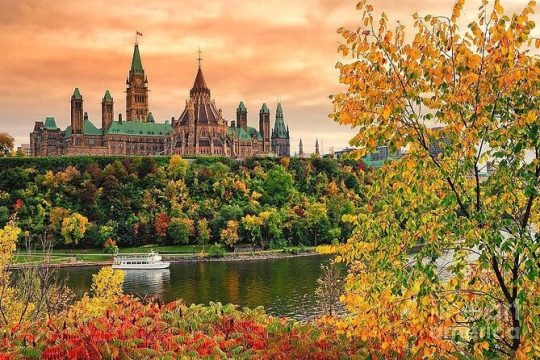
オタワ国会議事堂
からの価格 $41
ロイヤルカナディアンミント
からの価格 $41
ケベック ロイヤル スクエア (Place-Royale)
からの価格 $3
ボンスクール市場(ボンスクールマルシェ)
からの価格 $5




ケベックのイベントカレンダー
すべてのイベントを表示
ケベック州でボクシングデーにやるべきこと(2026年更新)
26年2026月XNUMX日(土)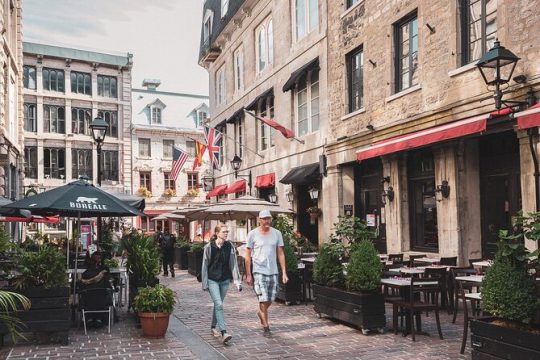
ケベック州でカナダ・デーにやるべきこと(2026年更新)
1年2027月XNUMX日(木)
ケベックのクリスマスアクティビティ
25年2026月XNUMX日金曜日
ケベックのハヌカ
4 年 12 月 2026 ~ XNUMX 日
ケベックでの大晦日
31年2026月XNUMX日(木)
ケベックのクリスマスイブ
24年2026月XNUMX日(木)
ケベックの元旦の長い週末
1年3月2027日~XNUMX日
ケベックのバレンタインデー
14年2027月XNUMX日日
ケベックのイースター
28月2027日、XNUMX日
ケベックの聖金曜日
26 年 2027 月 XNUMX 日(金)