attrazioni di Salisburgo
Altre cose da fare in città
 #46
Cappella della Notte Silenziosa (Stille Nacht Kapelle)
Se stai cercando cose da fare a Salisburgo, abbiamo 1 tour e attività per visitare la Cappella Silenziosa (Stille Nacht Kapelle). Dai un'occhiata alle recensioni verificate dei viaggiatori e alle foto dei tour della Cappella Silenziosa (Stille Nacht Kapelle) e di altre cose da fare a Salisburgo, e prenota in tutta sicurezza quando trovi quello che fa per te. Scopri i modi migliori per vedere la famosa Cappella Silenziosa (Stille Nacht Kapelle) ed esplora le cose più popolari da fare a Salisburgo.
altro #47
Sankt Gilgen (San Gilgen)
St. Gilgen is a lakeside village at the northwestern tip of Lake Wolfgang in Austria's Salzkammergut, within easy reach of Salzburg. Visitors come for its pastel houses and church spire against blue water, cable car rides up the Zwölferhorn for sweeping lake and mountain views, and the village's close ties to the family of Wolfgang Amadeus Mozart.The village takes its name from its parish church, dedicated to Saint Giles, and it grew as the seat of a district court on the old road between Salzburg and the salt country to the east. Mozart's mother, Anna Maria Pertl, was born here in the court building, where her father served as an official. Decades later the composer's beloved sister Nannerl moved into the same house as a married woman, living there for years with her husband, the local magistrate.That house, near the lakeshore, carries a memorial to mother and daughter, and a fountain with a figure of the young Mozart graces the central square that bears his name. The parish church, with its slender spire, adds a richly furnished Baroque interior. Flower boxes brighten the balconies along the lanes that run toward the lake. Down at the water, passenger boats leave the village pier for St. Wolfgang and Strobl farther along the shore, while swimmers, sailors and anglers make the most of its clear depths.Above the village rises the Zwölferhorn, whose name, roughly twelve peak, comes from the way the noon sun stands over its summit when seen from the village. From the top, the view takes in Lake Wolfgang, several neighboring lakes and a long line of Alpine peaks. A guide can tie together the Mozart family story, the salt trade that shaped the region and the tale of Saint Wolfgang, the medieval bishop who gave the lake its name.
altro #48
Abbazia di San Pietro (Stift Sankt Peter)
Se stai cercando cose da fare a Salisburgo, abbiamo 19 tour e attività per visitare l'Abbazia di San Pietro (Stift Sankt Peter). Dai un'occhiata alle recensioni verificate dei viaggiatori e alle foto dei tour dell'Abbazia di San Pietro (Stift Sankt Peter) e di altre attività a Salisburgo, e prenota in tutta sicurezza quando trovi quella perfetta per te. Scopri i modi migliori per visitare la famosa Abbazia di San Pietro (Stift Sankt Peter) ed esplora le attrazioni più popolari di Salisburgo.
altro #49
Chiesa di San Pietro (Peterskirche)
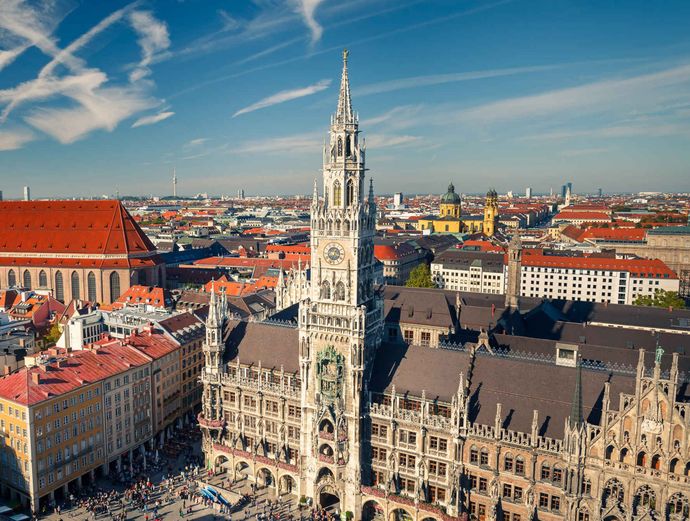
St. Peter's Church, known to locals as Alter Peter, is the oldest parish church in Munich, standing just off Marienplatz in the heart of the old town. Visitors come to see its richly decorated Baroque interior and to climb its tower, which gives one of the best views over the city's rooftops.A church stood on this low rise, the Petersbergl, even before Munich was founded as a market town in the 12th century, so locals often treat it as the place where the city began. The first Romanesque building gave way to a Gothic church, rebuilt after a great fire in the 14th century and later reshaped in the Baroque style. Bombing in the Second World War left it badly damaged, and it was carefully rebuilt in the decades that followed.Inside, the nave glows with white stucco, ceiling frescoes and gilded altars. The high altar centers on a seated figure of Saint Peter carved by the late Gothic sculptor Erasmus Grasser, surrounded by Baroque figures of the four Church Fathers. In a side aisle, look for the skeleton of Saint Munditia, dressed in gold and gems and laid in a glass case, a striking reminder of the devotion of earlier centuries.The tower is the other draw. Its narrow stair leads to a gallery that circles the spire, with views across the twin domes of the Frauenkirche, the Gothic front of the New Town Hall and the market stalls of the Viktualienmarkt below, and on clear days the Alps along the southern horizon. An old local saying holds that anyone who has not seen Alter Peter has not seen Munich. A guide can share more of the stories and nicknames tied to the church.
altro #50
Cattedrale di Santo Stefano (Stephansdom)
St. Stephen's Cathedral, or Stephansdom, is Vienna's great Gothic cathedral, standing on Stephansplatz in the heart of the old city. Its tall south spire and patterned tile roof make it the best known symbol of Vienna, and visitors come to see its soaring nave, carved treasures and views from the towers.A Romanesque church stood on the site from the 12th century, and its west front survives with the Giant's Door and two Heathen Towers. In the 14th century Duke Rudolf IV of the Habsburg family began rebuilding the church in the Gothic style, and work went on for well over a century. The south tower was finished, but the north tower was left incomplete and later capped with a small Renaissance top. At the end of the Second World War fires swept through the old city and the roof collapsed, destroying much of the interior. The cathedral was rebuilt with help from every Austrian province, and it remains a much loved national symbol. Mozart was married here, and his funeral service was held in one of its chapels.The roof is covered in thousands of glazed tiles laid in a zigzag pattern, with a double-headed eagle and coats of arms on one side. Inside, the long nave is lined with statues on its pillars, and the stone pulpit is carved with lively heads of the church fathers. At its base, a sculptor looks out from a window, a figure traditionally taken as a self-portrait. Other treasures include the tomb of Emperor Frederick III and a gilded winged altar. The north tower holds the Pummerin, one of the largest bells in Europe, first cast from cannons left by the Ottoman army. Below ground, the catacombs hold urns of Habsburg remains and the bones of plague victims.A guide can point out the hidden details and stories carved into the stone.
altro #51
St. Wolfgang im Salzkammergut
Se stai cercando cose da fare a Salisburgo, abbiamo 2 tour e attività per visitare St. Wolfgang im Salzkammergut. Dai un'occhiata alle recensioni verificate dei viaggiatori e alle foto dei tour di St. Wolfgang im Salzkammergut e di altre attività a Salisburgo, e prenota in tutta sicurezza quando trovi quella perfetta per te. Scopri i modi migliori per visitare il famoso St. Wolfgang im Salzkammergut ed esplora le attrazioni più popolari di Salisburgo.
altro #52
Stiegl Brauwelt
Se stai cercando cose da fare a Salisburgo, abbiamo 1 tour e attività per visitare Stiegl Brauwelt. Dai un'occhiata alle recensioni verificate dei viaggiatori e alle foto dei tour di Stiegl Brauwelt e di altre attività a Salisburgo, e prenota in tutta sicurezza quando trovi quella perfetta per te. Scopri i modi migliori per visitare il famoso Stiegl Brauwelt ed esplora le attività più popolari di Salisburgo.
altro #53
Mondi di Cristallo Swarovski (Swarovski Kristallwelten)
Swarovski Crystal Worlds, o Swarovski Kristallwelten, è un parco artistico e di intrattenimento situato a Wattens, nella valle dell'Inn, in Austria, poco a est di Innsbruck, costruito dalla stessa azienda di cristalli nella sua città natale. I visitatori vengono per ammirare una serie di stanze sotterranee dove artisti hanno trasformato il cristallo in installazioni strane e abbaglianti, tutte situate sotto un gigante ricoperto d'erba. La storia inizia con Daniel Swarovski, un tagliatore di vetro boemo che inventò una macchina per tagliare il cristallo con precisione e si stabilì a Wattens verso la fine del XIX secolo, attratto dai torrenti di montagna che alimentavano la sua officina. L'azienda divenne un nome di fama mondiale e, per celebrare il suo centenario, chiese all'artista viennese André Heller di creare un luogo che mostrasse il cristallo come arte piuttosto che come merce. La risposta di Heller fu il Gigante, un'enorme testa ricoperta d'erba con scintillanti occhi di cristallo e una bocca da cui sgorga una cascata, con un mondo di stanze nascoste all'interno della collina retrostante. Il sito fu successivamente ampliato con un grande giardino e nuovi edifici. All'interno, le Camere delle Meraviglie sono ciascuna opera di un diverso designer o artista e cambiano nel tempo. Tra le attrazioni principali figurano una cupola rivestita di specchi che trasforma i visitatori in un caleidoscopio scintillante, sculture meccaniche, stanze di luce e suono e opere di artisti, stilisti e architetti di fama. Alcune stanze sono tranquille e meditative, altre giocose o leggermente inquietanti, e l'oscurità fa sì che ogni dettaglio catturi la luce. All'esterno, il giardino è una meta imperdibile. Una nuvola di cristalli incastonati a mano aleggia su una vasca di specchi neri, una giostra di cristallo ruota tra gli alberi e un labirinto a forma di mano premia i bambini che riescono a trovarne la via. C'è anche un ampio negozio con i gioielli e le statuette del marchio. Una guida può illustrare la storia dell'azienda di famiglia e le idee che si celano dietro le opere.
altro #54
Mercato delle vettovaglie (Viktualienmarkt)
Se stai cercando cose da fare a Salisburgo, abbiamo 60 tour e attività per visitare il Mercato Alimentare (Viktualienmarkt). Dai un'occhiata alle recensioni verificate dei viaggiatori e alle foto dei tour del Mercato Alimentare (Viktualienmarkt) e di altre attività a Salisburgo, e prenota in tutta sicurezza quando trovi quella perfetta per te. Scopri i modi migliori per visitare il famoso Mercato Alimentare (Viktualienmarkt) ed esplora le attività più popolari di Salisburgo.
altro #55
Grotte di ghiaccio di Werfen (Eisriesenwelt)
The Werfen Ice Caves, known in German as Eisriesenwelt, the World of the Ice Giants, form the largest ice cave system in the world, hidden inside the Hochkogel mountain of the Tennengebirge range above Werfen, south of Salzburg. People come to walk among frozen falls, ice walls and halls of glittering formations deep inside the rock.The cave stretches for more than 42 kilometers, though only about the first kilometer is coated in ice and the rest is bare limestone. Locals long avoided the entrance, believing it led to hell. A Salzburg naturalist, Anton Posselt, made the first recorded exploration in the late 19th century but went only a short way in, and his report was soon forgotten. Early in the 20th century the speleologist Alexander von Mörk took up the search and led expeditions deeper, and the show cave opened after the First World War.The ice exists because of a quirk of airflow. In winter, cold air sinks into the open entrance and freezes the meltwater that trickles down from the snow above. In summer, a chilly wind blows outward from the cave and keeps the formations from thawing, so the ice survives from one year to the next, shifting its shape slightly as it grows and melts back.The route passes a chain of named sights by lamplight: Posselt Hall with its tall ice stalagmite and a cross marking how far its discoverer reached, the Great Ice Embankment, Hymir's Castle, named after a giant from Norse myth, and the curtains of ice known as the Ice Organ. Further in, the Alexander von Mörk Cathedral holds the explorer's ashes, since he died in the First World War. The route ends at the Ice Palace, deep inside the mountain about a kilometer from the entrance.
altroScopri Salisburgo
Lusso e occasioni speciali
Prezzi da $5
Tour culturali e tematici
Prezzi da $5
Cibo, vino e vita notturna
Prezzi da $16
Tour e visite guidate
Prezzi da $4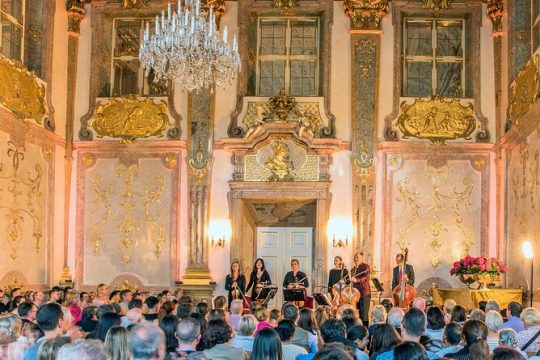
Spettacoli, concerti e sport
Prezzi da $37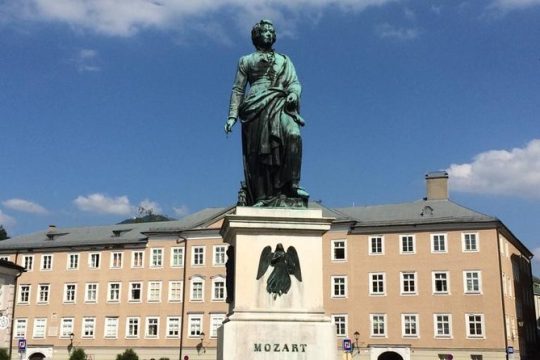
Tour privati e personalizzati
Prezzi da $5
Crociere, vela e tour acquatici
Prezzi da $21
Gite ed escursioni giornaliere
Prezzi da $95
Attività all'aperto
Prezzi da $20
Tour a piedi e in bicicletta
Prezzi da $4
Tour in aereo, elicottero e mongolfiera
Prezzi da $211
Tour festivi e stagionali
Prezzi da $37
Palazzo e giardini di Mirabell (Schloss Mirabell e Mirabellgarten)
Prezzi da $4
Fortezza Hohensalzburg (Festung Hohensalzburg)
Prezzi da $4
Castello di Hellbrunn (Schloss Hellbrunn)
Prezzi da $34
Cattedrale di Mondsee (Basilika San Michele)
Prezzi da $84
Casa natale di Mozart (Mozarts Geburtshaus)
Prezzi da $4
Abbazia di Nonnberg (Stift Nonnberg)
Prezzi da $20
Duomo di Salisburgo (Dom zu Salisburgo)
Prezzi da $4
Centro storico di Salisburgo (Salzburger Altstadt)
Prezzi da $21
Schloss Leopoldskron
Prezzi da $34
Residenza Mozart (Mozart-Wohnhaus)
Prezzi da $4
Piazza Mozart (Mozartplatz)
Prezzi da $7
Castello di Ambras (Schloss Ambras Innsbruck)
Prezzi da $214
Attività nei giorni di pioggia a Salisburgo

Tour di Salisburgo adatti agli anziani

Tour gastronomici di Salisburgo

Tour di Salisburgo adatti alle famiglie
I migliori tour e attività per gli amanti della cultura a Salisburgo

Top 10 Salisburgo 2026

Le migliori gite di un giorno da Salisburgo

Cosa fare a Salisburgo quest'estate

Calendario degli eventi di Salisburgo
Visualizza tutti gli eventi
Attività natalizie a Salisburgo
Venerdì, 25 dicembre 2026
Hanukkah a Salisburgo
4-12 dicembre 2026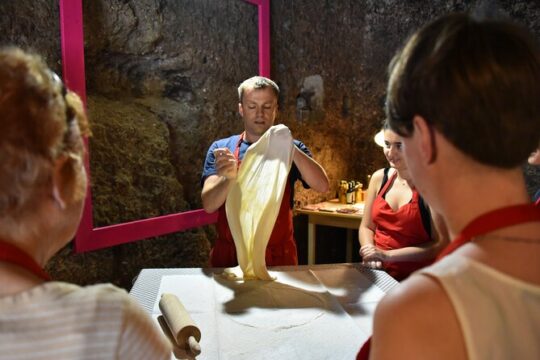
Capodanno a Salisburgo
Giovedì 31 dicembre 2026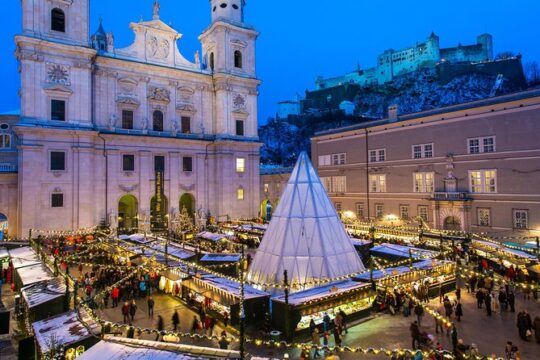
Vigilia di Natale a Salisburgo
Giovedì 24 dicembre 2026
Lungo weekend di Capodanno a Salisburgo
1-3 gennaio 2027
San Valentino a Salisburgo
Domenica 14 febbraio 2027
Pasqua a Salisburgo
Domenica 28 marzo, 2027
Venerdì Santo a Salisburgo
Venerdì 26 marzo 2027