attrazione di Nuova Delhi
Altre cose da fare in città
 #16
Har ki Pauri Ghat
Se stai cercando cose da fare a Nuova Delhi, abbiamo 1 tour e attività da provare a Har ki Pauri Ghat. Dai un'occhiata alle recensioni verificate dei viaggiatori e alle foto dei tour di Har ki Pauri Ghat e di altre cose da fare a Nuova Delhi, e prenota in tutta sicurezza quando trovi quello che fa per te. Scopri i modi migliori per vedere il famoso Har ki Pauri Ghat ed esplora le cose più popolari da fare a Nuova Delhi.
altro #17
Tempio ISKCON Delhi
Se stai cercando cose da fare a Nuova Delhi, abbiamo 1 tour e attività per visitare il Tempio ISKCON di Delhi. Dai un'occhiata alle recensioni verificate dei viaggiatori e alle foto dei tour del Tempio ISKCON di Delhi e di altre attività a Nuova Delhi, e prenota in tutta sicurezza quando trovi quella perfetta per te. Scopri i modi migliori per visitare il famoso Tempio ISKCON di Delhi ed esplora le attrazioni più popolari di Nuova Delhi.
altro #18
Jal Mahal (Palazzo dell'Acqua)
Jal Mahal is a sandstone palace that seems to float in the middle of Man Sagar Lake, on the road from Jaipur to Amer Fort, with the Aravalli hills rising behind it. Travelers stop at the lakeshore to admire its reflection, its domed corner pavilions and the calm water that surrounds it.The lake itself came first. In the 16th century Raja Man Singh of Amber is said to have dammed a seasonal river here to ease drought, creating the reservoir that still carries his name. The palace was built later as a pleasure retreat for the rulers of Amber, and it was enlarged in the 18th century under Maharaja Jai Singh II, the founder of Jaipur, who used the lake for royal duck-shooting parties. Its design blends Rajput and Mughal styles, a mix found across the palaces of the region. Over time the lake silted up and became polluted, until a restoration effort in the early 21st century cleaned the water and repaired the building.When the lake is full, most of the palace's floors lie hidden under the water, and only the top storey shows, which is why it appears to rest on the surface. Its rooftop once held a terraced garden, and octagonal chhatris with curved roofs mark each corner. The sandstone glows warmly at the edges of the day, and the reflection doubles the building on calm mornings. Migratory birds gather on the lake in the cooler months, adding life to the water around the walls.Behind the lake, the ridges of the Nahargarh hills and their old fort walls complete the view, and the shore comes alive in the evenings with stalls selling snacks and crafts. A guide adds the tales of royal hunting parties and courtly leisure that went with the palace, turning a quick photo stop into a glimpse of how the rulers of Jaipur relaxed.
altro #19
Jantar Mantar
Se stai cercando cose da fare a Nuova Delhi, abbiamo 12 tour e attività per visitare Jantar Mantar. Dai un'occhiata alle recensioni verificate dei viaggiatori e alle foto dei tour di Jantar Mantar e di altre attività a Nuova Delhi, e prenota in tutta sicurezza quando trovi quella perfetta per te. Scopri i modi migliori per ammirare il famoso Jantar Mantar ed esplora le attrazioni più popolari di Nuova Delhi.
altro #20
Parco nazionale di Keoladeo Ghana
Se stai cercando cose da fare a Nuova Delhi, abbiamo 1 tour e attività per visitare il Parco Nazionale di Keoladeo Ghana. Dai un'occhiata alle recensioni verificate dei viaggiatori e alle foto dei tour del Parco Nazionale di Keoladeo Ghana e di altre attività a Nuova Delhi, e prenota in tutta sicurezza quando trovi quella perfetta per te. Scopri i modi migliori per visitare il famoso Parco Nazionale di Keoladeo Ghana ed esplora le attività più popolari a Nuova Delhi.
altro #21
Mercato di Khan
Khan Market is an upscale shopping district in central New Delhi, a compact horseshoe of shops, bookstores, boutiques, cafes and restaurants near Lodi Gardens and India Gate. Popular with diplomats, expatriates and well-off local families, it is one of the city's favorite places to browse, sip coffee and eat out.The market has humble origins. After the Partition of India in the middle of the 20th century, the government built it to help refugees rebuild their livelihoods, many of them from the North-West Frontier Province. It was named after Khan Abdul Jabbar Khan, known as Dr. Khan Sahib, a political leader from the frontier and brother of the famous nonviolent campaigner Khan Abdul Ghaffar Khan. The plan was simple: a U-shaped, two-story block with shops on the ground floor and family flats above.Over the following decades its fortunes changed completely. The surrounding area of leafy avenues and government bungalows became one of Delhi's most exclusive districts, the flats upstairs were turned one by one into shops, cafes and restaurants, and the refugee bazaar grew into one of the priciest shopping addresses in India. Yet it has kept a modest, walkable scale, with a busy middle lane and back passages full of small businesses.Bookshops are a particular pleasure, their shelves stacked high with Indian and international titles, and they sit side by side with designer boutiques, jewelers, home stores and branded showrooms. Cafes and restaurants, many of them tucked into the former upstairs flats, serve everything from coffee and cake to Indian, Asian and European cooking. Look up as you walk and you can still see the outline of the original flats above the shopfronts. The mix of old family shops and polished new names gives the market a character all its own, part neighborhood bazaar and part fashionable meeting place.
altro #22
Giardini di Lodhi
Se stai cercando cose da fare a Nuova Delhi, abbiamo 1 tour e attività per visitare i Giardini Lodhi. Dai un'occhiata alle recensioni verificate dei viaggiatori e alle foto dei tour dei Giardini Lodhi e di altre cose da fare a Nuova Delhi, e prenota in tutta sicurezza quando trovi quello che fa per te. Scopri i modi migliori per visitare i famosi Giardini Lodhi ed esplora le attrazioni più popolari di Nuova Delhi.
altro #23
Mehtab Bagh (Giardino al chiaro di luna)
Mehtab Bagh, the Moonlight Garden, is a Mughal riverside garden in Agra on the far bank of the Yamuna, directly facing the Taj Mahal. People come for the quiet, unobstructed view of the mausoleum across the water, especially its reflection in the garden's pool, and for a sense of how the Mughals designed their gardens and tombs as one composition.The site is linked to the earliest days of the dynasty: Babur, the first Mughal emperor, is said to have laid out a chain of gardens along this bank of the river, and Mehtab Bagh was the last of them. When Shah Jahan built the Taj Mahal for his wife Mumtaz Mahal in the 17th century, the garden was given a plan lined up exactly with the tomb, extending the Taj complex across the river. From here, the emperor and his court could admire the white marble shining under the moon, which gave the garden its name.Over time the river flooded the garden again and again, burying it under silt until little more than ruined walls and a tower remained. Archaeologists excavated it late in the 20th century and found the outline of a classic charbagh, a garden divided into four parts by walkways and water channels, with a large octagonal pool at the riverside edge and the remains of fountains and pavilions. The garden was then replanted with the kinds of flowering and fruit trees, shrubs and grasses the Mughals favored, based on pollen and plant remains found in the soil. The story of a black marble twin of the Taj planned for this spot is a legend, though it still captures imaginations.As you walk the long central path toward the river, the Taj grows larger with every step, framed by trees and open sky, seen from an angle most visitors to the tomb never get. A guide can explain the symbolism of the garden's layout.
altro #24
Museo Nazionale Gandhi
Se stai cercando cose da fare a Nuova Delhi, abbiamo 2 tour e attività per visitare il Museo Nazionale Gandhi. Dai un'occhiata alle recensioni verificate dei viaggiatori e alle foto dei tour del Museo Nazionale Gandhi e di altre cose da fare a Nuova Delhi, e prenota in tutta sicurezza quando trovi quello che fa per te. Scopri i modi migliori per visitare il famoso Museo Nazionale Gandhi ed esplora le attrazioni più popolari di Nuova Delhi.
altro #25
Palazzo del Vento (Hawa Mahal)
Hawa Mahal, the Palace of Winds, is the honeycombed pink sandstone facade that rises above a busy street in Jaipur's old walled city. Travelers come to see its hundreds of small latticed windows, built so royal women could watch street life unseen, and to climb inside for views over the Pink City's rooftops.Maharaja Sawai Pratap Singh, grandson of the ruler who founded Jaipur, commissioned the palace at the end of the 18th century, and the architect Lal Chand Ustad gave it its unusual form. Built as an extension of the women's quarters of the neighboring City Palace, it allowed the ladies of the court, who lived in seclusion, to look down on processions, festivals and the everyday bustle of the bazaar without being seen. The design blends Rajput and Mughal traditions, and its shape, rising in tiers to a narrow crest, is often likened to the crown of the god Krishna, to whom the maharaja was devoted.The famous facade is surprisingly shallow. Behind its five stories of small windows, the upper floors are only a single room deep, more a screen than a building, which is why the palace looks so different from the side. The latticework let breezes flow through the rooms, and fountains once added to the cooling effect in the hot summers, which gave the palace its name. Inside, you pass from a large courtyard through chambers and narrow passageways, some with panels of colored glass that scatter light across the floors, up to the top levels, where the view stretches along the street to the City Palace and Jantar Mantar.The rows of tiny domed windows, each picked out in white against the pink stone, have become one of the best-known images of Rajasthan. A guide can show how the palace fits into the carefully planned grid of streets that set Jaipur apart from other cities of its time.
altro #26
Parante Wali Gali
Se stai cercando cose da fare a Nuova Delhi, abbiamo 1 tour e attività da provare a Paranthe Wali Gali. Dai un'occhiata alle recensioni verificate dei viaggiatori e alle foto dei tour di Paranthe Wali Gali e di altre cose da fare a Nuova Delhi, e prenota in tutta sicurezza quando trovi quello che fa per te. Scopri i modi migliori per visitare la famosa Paranthe Wali Gali ed esplora le cose più popolari da fare a Nuova Delhi.
altro #27
Raj Ghat
Se stai cercando cosa fare a Nuova Delhi, ti proponiamo 3 tour e attività per vivere al meglio Raj Ghat. Consulta le recensioni verificate dei viaggiatori e guarda le foto dei tour di Raj Ghat e di altre attività a Nuova Delhi, e prenota in tutta sicurezza quando trovi quella perfetta per te. Scopri i modi migliori per ammirare il famoso Raj Ghat ed esplora le attrazioni più popolari di Nuova Delhi.
altro #28
Ram Jhulahu
Se stai cercando cose da fare a Nuova Delhi, abbiamo 1 tour e attività per visitare Ram Jhula. Dai un'occhiata alle recensioni verificate dei viaggiatori e alle foto dei tour di Ram Jhula e di altre cose da fare a Nuova Delhi, e prenota in tutta sicurezza quando trovi quello che fa per te. Scopri i modi migliori per vedere il famoso Ram Jhula ed esplora le attrazioni più popolari di Nuova Delhi.
altro #29
Swaminarayan Akshardham
Swaminarayan Akshardham is a vast Hindu temple complex on the bank of the Yamuna River in East Delhi, built to honor Swaminarayan and the spiritual heritage of India. Visitors come for its intricately carved central temple, its exhibition halls, a boat ride through India's past and an evening water show, all set among landscaped gardens.The complex was built by BAPS, a Hindu devotional organization in the Swaminarayan tradition, and it opened with its spiritual leader, Pramukh Swami Maharaj, presiding. Swaminarayan himself was a Hindu teacher of the late 18th and early 19th centuries whom followers revere as a manifestation of the divine. Thousands of craftsmen and volunteers worked on the project, raising the temple in pink sandstone and white marble by traditional methods that use no structural steel.The central monument rises on more than 230 carved pillars beneath nine domes, its surfaces covered with figures of deities, dancers, musicians, animals and flowers. Around its base runs a plinth carved with a long parade of elephants, and inside, a large murti, or sacred image, of Swaminarayan forms the focus of worship. The detail is so dense that it rewards slow looking, and the pale stone seems to change color as the light moves across it.Beyond the temple, the exhibitions tell stories in different ways. Sahajanand Darshan uses dioramas to present Swaminarayan's life and teachings, Nilkanth Darshan screens a large-format film about the long pilgrimage he made across India as a teenager, and Sanskruti Vihar carries visitors by boat past scenes from India's ancient Vedic past. Outside, the Bharat Upavan garden is lined with bronze statues of figures from Indian history, and after dark a musical fountain in a stepwell-style courtyard stages a show of water, light and sound. A guide can explain the beliefs behind the imagery, helping first-time visitors understand a place that is both monument and house of worship.
altro #30
Taj Mahal
Il Taj Mahal è la tomba in marmo bianco che l'imperatore moghul Shah Jahan fece costruire ad Agra, nel nord dell'India, per la sua amata moglie Mumtaz Mahal. Spesso definito l'edificio più bello del mondo, attrae i viaggiatori per la sua simmetria impeccabile, le delicate pietre intarsiate e una cupola che sembra cambiare colore con la luce. Mumtaz Mahal morì di parto nel XVII secolo e l'imperatore, affranto dal dolore, ordinò una tomba degna di lei. Migliaia di scalpellini, intagliatori e calligrafi vi lavorarono per circa due decenni, seguendo un progetto generalmente attribuito all'architetto Ustad Ahmad Lahauri, con marmo bianco del Rajasthan e pietre preziose provenienti da tutta l'Asia. La fine di Shah Jahan fu agrodolce, perché dopo essere stato deposto dal figlio Aurangzeb, trascorse i suoi ultimi anni confinato nel Forte di Agra con vista sulla tomba, e ora riposa accanto alla moglie al suo interno. L'avvicinamento è accuratamente preparato. Si attraversa un imponente portale di arenaria rossa e la tomba appare incorniciata dal suo arco, sospesa sopra un giardino formale diviso in settori da canali d'acqua e una vasca riflettente. Il marmo è ricoperto di fiori intarsiati in corniola, giada e lapislazzuli, e versetti del Corano incorniciano gli archi, con le lettere che si ingrandiscono man mano che salgono, in modo da apparire uniformi anche dal basso. Quattro slanciati minareti si ergono agli angoli, costruiti in modo da inclinarsi leggermente verso l'esterno, e una moschea in arenaria rossa su un lato è affiancata da una gemella identica sull'altro, per mantenere intatta la simmetria. All'interno, i cenotafi dell'imperatore e dell'imperatrice si trovano dietro un tramezzo di marmo finemente scolpito. Un dettaglio merita un'attenta osservazione: il cenotafio dell'imperatore, posto accanto a quello della moglie, è l'unico elemento dell'intero complesso a rompere il perfetto equilibrio. Una guida può spiegare come il giardino, il fiume e le iscrizioni fossero intesi a evocare i giardini del paradiso.
altro #31
Tempio del Dio Sole (Tempio delle Scimmie di Galtaji)
Se stai cercando cose da fare a Nuova Delhi, abbiamo 1 tour e attività per visitare il Tempio del Dio Sole (Tempio delle Scimmie di Galtaji). Dai un'occhiata alle recensioni verificate dei viaggiatori e alle foto dei tour del Tempio del Dio Sole (Tempio delle Scimmie di Galtaji) e di altre cose da fare a Nuova Delhi, e prenota in tutta sicurezza quando trovi quello perfetto per te. Scopri i modi migliori per visitare il famoso Tempio del Dio Sole (Tempio delle Scimmie di Galtaji) ed esplora le cose più popolari da fare a Nuova Delhi.
altro #32
Tomba di Itimad-ud-Daulah
The Tomb of Itimad-ud-Daulah is a Mughal mausoleum on the east bank of the Yamuna River in Agra, often nicknamed the Baby Taj. Faced in white marble and covered in delicate stone inlay, it is smaller and more intimate than the Taj Mahal, and visitors come to admire craftsmanship that many see as a first draft for its famous successor.The tomb was commissioned in the early 17th century by Nur Jahan, the powerful wife of the emperor Jahangir, for her father, Mirza Ghiyas Beg. A Persian who rose to become one of the highest officials in the empire, he carried the title Itimad-ud-Daulah, which means pillar of the state. Her mother lies beside him in the central chamber, and other members of the family rest in the rooms around it. The family link runs deeper still: his granddaughter was Mumtaz Mahal, the empress for whom the Taj Mahal was later built.This was the first Mughal tomb to be faced almost entirely in white marble rather than red sandstone, and its surfaces are covered with inlay of colored stones set into the marble. Look closely and you will find cypress trees, flower vases, fruit and even wine vessels among the geometric patterns. Slender towers rise at the four corners, finely carved lattice screens filter light into the interior, and the inner rooms keep traces of painted decoration.The tomb stands at the center of a walled Persian-style garden cut by water channels, entered through sandstone gateways, with a pavilion on the river side looking out over the Yamuna. Away from the grand scale of the Taj, the setting invites a slower look at detail. A guide can decode the symbols worked into the stone and explain how Nur Jahan's taste shaped Mughal art.
altroScopri Nuova Delhi

Tour culturali e tematici
Prezzi da $1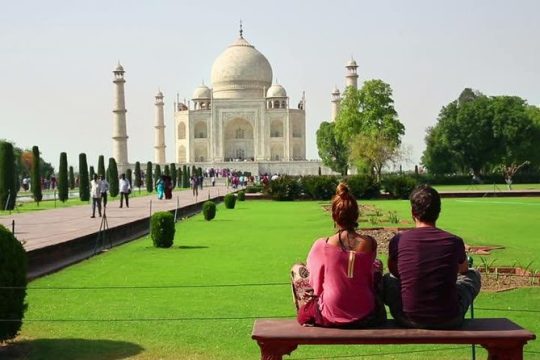
Gite ed escursioni giornaliere
Prezzi da $13
Lusso e occasioni speciali
Prezzi da $1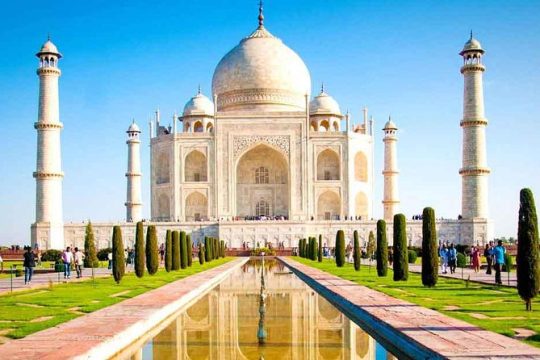
Tour privati e personalizzati
Prezzi da $1
Tour e visite guidate
Prezzi da $1
Tour a piedi e in bicicletta
Prezzi da $8
Cibo, vino e vita notturna
Prezzi da $22
Attività all'aperto
Prezzi da $29
Shopping e moda
Prezzi da $40
Escursioni sulla spiaggia
Prezzi da $16
Tour VIP ed esclusivi
Prezzi da $110
Chandni Chowk
Prezzi da $8
Gurudwara Bangla Sahib
Prezzi da $5
Gurudwara Sis Ganj Sahib
Prezzi da $8
Tomba di Humayun
Prezzi da $8
India Gate
Prezzi da $5
Jama Masjid (Masjid e Jahan Numa)
Prezzi da $5
Khari Baoli
Prezzi da $8
Tempio del Loto (luogo di culto Bahá'í)
Prezzi da $5
Parlamento
Prezzi da $5
Palazzo presidenziale (Rashtrapati Bhavan)
Prezzi da $20
Qutub Minar
Prezzi da $5
Forte Rosso (Lal Qila)
Prezzi da $5


Calendario degli eventi di Nuova Delhi
Visualizza tutti gli eventi
Cose da fare a Nuova Delhi durante il Diwali (aggiornato al 2026)

Hanukkah a Nuova Delhi
4-12 dicembre 2026
Capodanno a Nuova Delhi
Giovedì 31 dicembre 2026
Lungo weekend di Capodanno a Nuova Delhi
1-3 gennaio 2027
San Valentino a Nuova Delhi
Domenica 14 febbraio 2027
Pasqua a Nuova Delhi
Domenica 28 marzo, 2027
Venerdì Santo a Nuova Delhi
Venerdì 26 marzo 2027