attrazioni di Genova
Altre cose da fare in città
 #16
Kutna Hora
Se stai cercando cose da fare a Genova, abbiamo 52 tour e attività per vivere l'esperienza di Kutná Hora. Consulta le recensioni verificate dei viaggiatori e guarda le foto dei tour di Kutná Hora e di altre attività a Genova, e prenota in tutta sicurezza quando trovi quella perfetta per te. Scopri i modi migliori per visitare la famosa Kutná Hora ed esplora le attrazioni più popolari di Genova.
altro #17
La biosfera
La Biosfera is a glass sphere set over the water in the old harbor of Genoa, Italy, sheltering a tiny tropical rainforest. Designed by the Genoese architect Renzo Piano and standing beside the city's famous aquarium, it lets visitors step from the Ligurian seafront into a humid world of giant ferns, exotic plants and birds.The sphere was built when Genoa hosted a summit of the G8, the group of leading industrial nations, and it crowned a long transformation of the waterfront. Piano, born in the city, had earlier reimagined the run-down old port as a public space of promenades and attractions for the celebrations marking five centuries since the voyage of Columbus, another son of Genoa. It is also known as the Glass Bubble, and its gleaming curve has become one of the most recognizable shapes on the harbor.Inside the sphere, about 20 meters across, a computer-controlled climate keeps the air warm and humid all year. Tree ferns reach as high as seven meters, and the beds hold banana plants, coffee, cocoa, vanilla, pepper and delicate orchids. Birds flit between the branches, turtles and fish live in small pools, and stick insects hide in plain view among the leaves for sharp-eyed children to find.The engineering is part of the appeal. Movable sails open and close to shade the plants from the strong Mediterranean sun, and a heat pump that draws on the seawater below supplies warmth, reflecting the environmental thinking found in much of Piano's work. Looking out through the lattice of steel and glass, you see ferries, cranes and the old city climbing the hills behind the port. With a guide, the bubble becomes part of the larger story of a harbor that Genoa won back from neglect.
altro #18
La torre pendente di Pisa
La Torre Pendente di Pisa è il campanile indipendente del Duomo di Pisa, situato nella piazza dei Miracoli, all'interno delle mura della città toscana di Pisa. Nota in tutto il mondo per la sua inclinazione, la torre in marmo bianco attrae i viaggiatori desiderosi di ammirarla di persona, salire la sua scala a chiocciola e godersi la piazza circostante. I lavori di costruzione della torre iniziarono nel XII secolo, quando Pisa era una ricca repubblica marinara desiderosa di ostentare il proprio potere. I costruttori avevano raggiunto solo il terzo piano quando la torre iniziò ad affondare nel terreno soffice e impregnato d'acqua su un lato. Guerre e problemi finanziari interruppero la costruzione per quasi un secolo, dando al terreno il tempo di assestarsi e probabilmente salvando la torre dal crollo. Quando i lavori ripresero, i muratori cercarono di compensare rendendo i piani superiori più alti sul lato inferiore, motivo per cui la torre presenta attualmente una leggera curvatura. La cella campanaria fu infine aggiunta nel XIV secolo e l'inclinazione continuò ad aumentare per centinaia di anni. Alla fine del XX secolo, gli ingegneri temevano che potesse crollare e la torre rimase chiusa per anni mentre si procedeva con cautela all'aspirazione del terreno dal lato più alto. L'intervento ridusse l'inclinazione e stabilizzò la struttura senza eliminare la caratteristica inclinazione che l'ha resa famosa. Da vicino, la torre si presenta come un cilindro di arcate sovrapposte, ciascuna circondata da snelle colonne, con sette campane sospese in cima. Condivide la piazza con la cattedrale, il battistero circolare e il cimitero monumentale, tutti siti Patrimonio dell'Umanità dell'UNESCO. La leggenda narra che Galileo Galilei, originario di Pisa, abbia lasciato cadere dei pesi dalla cima per verificare le sue teorie sulla caduta dei corpi. Una guida può mostrarvi le sculture, le iscrizioni e le particolarità costruttive che la maggior parte dei visitatori non nota.
altro #19
Faro di Genova (La Lanterna)
Se stai cercando cose da fare a Genova, abbiamo 2 tour e attività per visitare il Faro di Genova (La Lanterna). Dai un'occhiata alle recensioni verificate dei viaggiatori e alle foto dei tour del Faro di Genova (La Lanterna) e di altre attività da fare a Genova, e prenota in tutta sicurezza quando trovi quella perfetta per te. Scopri i modi migliori per vedere il famoso Faro di Genova (La Lanterna) ed esplora le cose più popolari da fare a Genova.
altro #20
Cattedrale di Lucca (Duomo di Lucca)
Lucca Cathedral (Duomo di Lucca), dedicated to St Martin, is the principal church of the walled Tuscan city of Lucca. Its richly carved Romanesque facade, a revered wooden crucifix known as the Volto Santo and masterpieces of Renaissance sculpture and painting inside make it one of the great artistic treasures of Tuscany.A church has stood here since the early Middle Ages, and it was rebuilt on a grand scale in the 11th century by Bishop Anselm, who went on to become Pope Alexander II. The famous west front was added in the early 13th century by Guidetto da Como. It is noticeably lopsided, because the builders had to squeeze it against the older bell tower, but the three tiers of open galleries above the portico, each column carved differently with twisting patterns, animals and inlaid marble, make up for any lack of symmetry.Under the portico, reliefs show the labors of the months and the life of St Martin, and a small labyrinth carved into a pillar recalls the myth of Theseus. A sculpture of St Martin sharing his cloak with a beggar once stood on the facade, and the original is now kept inside. In the nave, a marble shrine shaped like a small temple, by the Renaissance sculptor Matteo Civitali, shelters the Volto Santo, a dark wooden crucifix that, according to legend, was carved by Nicodemus and reached Lucca by miracle. Pilgrims have venerated it for centuries.The interior holds further treasures. The marble tomb of Ilaria del Carretto, carved by Jacopo della Quercia, shows the young noblewoman resting serenely with a small dog at her feet, a symbol of fidelity, and a Last Supper by Tintoretto glows above one of the side altars. Next door, excavations beneath the church of San Giovanni reveal older layers of Lucca's past. A guide can show how pilgrims, bishops and wealthy merchant families each left their mark on the building.
altro #21
Fontana di Madonna Verona (Fontana di Madonna Verona)
Se stai cercando cose da fare a Genova, abbiamo 2 tour e attività per ammirare la Fontana di Madonna Verona. Dai un'occhiata alle recensioni verificate dei viaggiatori e alle foto dei tour della Fontana di Madonna Verona e di altre attività a Genova, e prenota in tutta sicurezza quando trovi quello che fa per te. Scopri i modi migliori per vedere la famosa Fontana di Madonna Verona ed esplora le attrazioni più popolari di Genova.
altro #22
Palazzo dei Rolli
The Palazzi dei Rolli are the grand noble palaces of Genoa, many of them lined up along Via Garibaldi and the other Strade Nuove in the historic center. Listed by UNESCO as a World Heritage Site, they show the wealth of the city's banking families at their height, and visitors come for their painted halls, courtyards, gardens and art collections.In the 16th century the Republic of Genoa had no royal palace in which to receive kings, popes and ambassadors. Instead it kept official lists, the rolli, of private palaces whose owners were obliged to host important guests on behalf of the state. The houses were ranked by size and splendor, and the grandest were reserved for the most important visitors. At the same time, leading families laid out Strada Nuova, a new street of palaces built side by side on a slope above the old medieval lanes, to show off fortunes made lending money to the kings of Spain and others. Peter Paul Rubens was so impressed that he made drawings of the palaces and published them as a book to inspire builders in northern Europe.Three of the best known palaces on Via Garibaldi form the Strada Nuova Museums. Palazzo Rosso keeps its frescoed rooms and portraits by Anthony van Dyck. Palazzo Bianco holds paintings by Genoese, Flemish and Spanish masters, and Palazzo Doria-Tursi keeps Il Cannone, the favorite violin of the Genoa-born virtuoso Niccolò Paganini. Elsewhere you can glimpse grand staircases, hanging gardens and loggias through open doorways, and Palazzo Reale on Via Balbi shows how one family palace grew into a royal residence.Walking the street with a guide helps you see how each facade, atrium and painted ceiling was designed to impress a visiting prince, and how the families competed with one another for the honor of hosting him.
altro #23
Palazzo Vecchio
Palazzo Vecchio is the fortress-like town hall that towers over Piazza della Signoria in the center of Florence, the seat of city power since the Middle Ages. Visitors come for its richly painted halls and Medici apartments, its sculptures and the tall stone tower that has marked the city's skyline for centuries.The palace was begun at the end of the 13th century, to designs usually credited to Arnolfo di Cambio, as the seat of the priors who governed the medieval republic. Its rough stone walls, battlements and slender, off-center tower were built to impress and to defend. In the 16th century Duke Cosimo I de' Medici moved his family in and had the interior transformed into a princely residence. When the court later moved across the river to the Pitti Palace, the building became known as the old palace, the name it still carries.The great hall, the Salone dei Cinquecento, is the showpiece. Leonardo da Vinci and Michelangelo were each asked to paint a battle scene on its walls, but neither finished, and Giorgio Vasari later covered the walls with vast battle paintings and a ceiling of gilded panels celebrating Cosimo. Michelangelo's marble Genius of Victory stands in the hall, and researchers have long searched for traces of Leonardo's lost work beneath Vasari's paint.Beyond it lies a maze of smaller rooms: the tiny, windowless study of Francesco I, lined with painted cupboard doors; the Hall of Lilies, with gold fleurs-de-lis on a blue ground and Donatello's bronze Judith and Holofernes; and a room of painted cabinets holding a huge globe and maps of the known world. A copy of Michelangelo's David guards the main door, where the original once stood. A guide helps untangle the politics and art behind each room.
altro #24
Piazza
Se stai cercando cose da fare a Genova, ti proponiamo 2 tour e attività per vivere l'esperienza di Piazza Loading. Consulta le recensioni verificate dei viaggiatori e guarda le foto dei tour di Piazza Loading e di altre attività a Genova, e prenota in tutta sicurezza quando trovi quello che fa per te. Scopri i modi migliori per ammirare la famosa Piazza Loading ed esplora le attrazioni più popolari di Genova.
altro #25
Piazza Ferrari
Se stai cercando cosa fare a Genova, abbiamo 19 tour e attività per vivere al meglio Piazza de Ferrari. Consulta le recensioni verificate dei viaggiatori e guarda le foto dei tour di Piazza de Ferrari e di altre attività a Genova, e prenota in tutta sicurezza quando trovi quella perfetta per te. Scopri i modi migliori per ammirare la famosa Piazza de Ferrari ed esplora le attrazioni più popolari di Genova.
altro #26
Battistero di Pisa
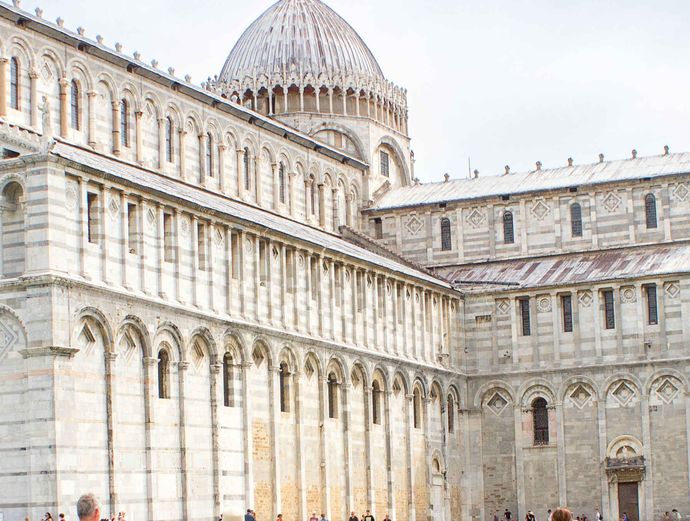
The Pisa Baptistery is the great round marble building on the Piazza dei Miracoli, facing the cathedral and the Leaning Tower, and the largest baptistery in Italy. Visitors come for its blend of Romanesque and Gothic carving, its magnificent pulpit by Nicola Pisano, and the extraordinary echo beneath its dome.Work began in the middle of the 12th century, when Pisa was a rich maritime republic spending its trading wealth on the cathedral square. The first architect, known as Diotisalvi, laid out the circular plan and the Romanesque lower story. Building stopped and started for generations, and in the 13th century Nicola Pisano and his son Giovanni added the Gothic upper levels with their pinnacles, gables and statues. The dome was not finished until the 14th century, which is why the building reads like a short history of Italian architecture.Inside, the round hall is spare and airy, letting a few works hold the eye. Nicola Pisano's pulpit, carved in the 13th century, rests on columns, some carried on the backs of lions, with marble panels showing the Nativity, the Adoration of the Magi, the Presentation in the Temple, the Crucifixion and the Last Judgment, crowded with figures that echo ancient Roman sculpture. The large font at the center, inlaid with marble patterns, was made for baptism by immersion, and a bronze statue of John the Baptist stands at its heart.The dome's acoustics are the building's party trick. A single sung note hangs and layers in the air for many seconds, so a short run of notes can build into a chord. Climb to the upper gallery for a view down onto the font and pulpit, and out through the windows across the lawns to the cathedral. Look up at the outside too, where the dome is roofed in red tiles on one side and gray lead on the other, an oddity that is easy to spot from the square.
altro #27
Ponte Vecchio
Il transito dei veicoli sul ponte è vietato, quindi si attraversa a piedi, e la parte centrale della campata è spesso affollata. La traversata dura solo pochi minuti, ma calcolate circa mezz'ora per curiosare tra i negozi e ammirare il fiume. I negozi sono per lo più gioiellerie e negozi d'oro, quindi il ponte è più adatto a guardare le vetrine che a una lunga sosta. Collega Piazza della Signoria con Palazzo Pitti, quindi si inserisce facilmente in una passeggiata tra le due zone.
altro #28
Riserva Marina Portofino (Area Marina Protetta di Portofino)
Se stai cercando cose da fare a Genova, ti proponiamo 3 tour e attività per vivere al meglio la Riserva Marina di Portofino (Area Marina Protetta di Portofino). Consulta le recensioni verificate dei viaggiatori e guarda le foto dei tour della Riserva Marina di Portofino (Area Marina Protetta di Portofino) e di altre attività a Genova, e prenota in tutta sicurezza quando trovi quella perfetta per te. Scopri i modi migliori per visitare la famosa Riserva Marina di Portofino (Area Marina Protetta di Portofino) ed esplora le attrazioni più popolari di Genova.
altro #29
Riomaggiore
Riomaggiore è chiusa al traffico automobilistico e le sue case si arrampicano sui crinali a picco sul mare, quindi aspettatevi salite e scalinate. Da qui parte la Via dell'Amore, un sentiero pianeggiante a senso unico per Manarola, che si percorre in meno di 30 minuti. I sentieri escursionistici del parco nazionale utilizzano la Cinque Terre Card, quindi verificate quale versione è adatta al vostro itinerario. Calcolate due o tre ore per visitare il borgo, di più se aggiungete una passeggiata lungo la costa o una nuotata nella piccola spiaggia di ciottoli. Via Colombo e il porto offrono ristoranti e bar, molti dei quali rimangono aperti fino a tardi.
altro #30
Museo di Palazzo Reale (Museo di Palazzo Reale)
The Royal Palace Museum, or Museo di Palazzo Reale, fills the main floor of a grand 17th-century palace on Via Balbi in Genoa. Visitors come for a restored ballroom, rooms still furnished as a noble home, a fine collection of Baroque art and a hanging garden looking out over the old port.The palace was begun in the 17th century for the Balbi, a wealthy merchant family who also gave the street its name. It is one of the series of great Genoese residences now under UNESCO protection, raised when the city's bankers ranked among the richest in Europe. Early in the 18th century the architect Carlo Fontana remodeled it for its new owner, Eugenio Durazzo, giving it much of its present grandeur. In the early 19th century it passed to the House of Savoy, the dynasty that later ruled a united Italy, and that royal ownership explains its name.A monumental staircase leads up to a run of state rooms dressed with mirrors, gilding and period furniture. The restored ballroom is the showpiece, a setting built for receptions and court life. On the walls hang works by Flemish, Bolognese, Venetian, Genoese and Neapolitan painters, and the rooms also hold Baroque sculpture, tapestries, oriental ceramics and painted silks. Behind a portico of three arches, the hanging garden is paved with a patterned pebble mosaic and opens onto a view of the old port.Few places in Genoa show as clearly how the city's elite lived, since merchants, aristocrats and royals each left their mark on the same rooms. The garden view makes the point too, placing the palace within sight of the harbor that paid for it. A guide can sort out which owner added what, turning a walk through gilded rooms into a story.
altro #31
San Fruttuoso
Se stai cercando cose da fare a Genova, ti proponiamo 10 tour e attività per scoprire San Fruttuoso. Consulta le recensioni verificate dei viaggiatori e guarda le foto dei tour di San Fruttuoso e di altre attività a Genova, e prenota in tutta sicurezza quando trovi quella perfetta per te. Scopri i modi migliori per visitare la famosa San Fruttuoso ed esplora le attrazioni più popolari di Genova.
altro #32
Santa Margherita Ligure
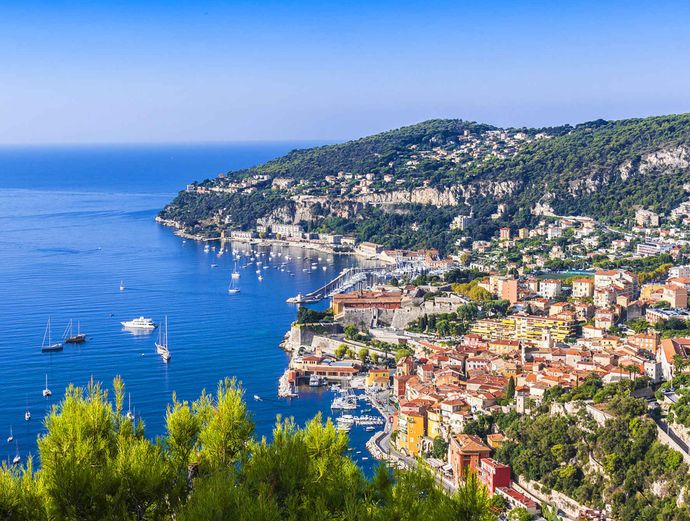
Santa Margherita Ligure è una località balneare sul Golfo del Tigullio, nella Riviera Ligure a sud-est di Genova, di fronte al promontorio di Portofino. È apprezzata per il suo lungomare fiancheggiato da palme, le facciate color pastello e la basilica barocca, nonché per la sua posizione strategica alle porte di Portofino e della costa boscosa del promontorio. La città si è sviluppata dalla fusione di due antichi borghi, Pescino e Corte, e la sua storia antica è costellata di incursioni. Il re longobardo Rothari e in seguito i predoni saraceni la devastarono nell'Alto Medioevo, Genova la conquistò dalla famiglia Fieschi nel XIII secolo, e nel XVI secolo il corsaro Dragut la saccheggiò, insieme alla vicina Rapallo. Genova rispose con il compatto castello sul mare che ancora oggi protegge il porto. Sotto Napoleone i due borghi furono uniti a formare Porto Napoleone, e dopo la sua caduta la città assunse il nome di Santa Margherita d'Antiochia, a cui è dedicata la chiesa principale. Dopo la Seconda Guerra Mondiale la città si è trasformata in una rinomata località turistica, e il suo lungomare è costellato di eleganti ville e hotel. La Basilica di Santa Margherita, iniziata nel XVII secolo sui resti di una chiesa medievale, è riccamente decorata in stile barocco. Sulla collina sopra il porto, il complesso di Villa Durazzo riunisce due ville nobiliari, un castello del XVI secolo e un parco realizzato nel XVII secolo, con ampie vedute sul golfo. Appena fuori città, sulla strada per Portofino, sorge la storica Abbazia di Cervara, e sulle colline, il borgo di San Lorenzo della Costa conserva una chiesa medievale con un trittico fiammingo. La vita ruota ancora attorno al porto, dove i pescherecci attraccano accanto agli yacht e i tavolini dei caffè si affacciano sul mare. Parte del territorio comunale si trova all'interno del Parco Regionale di Portofino, e una guida può collegare le sue attrazioni con le ville, le abbazie e i borghi di pescatori del promontorio.
altro #33
Spianata Castelletto
Spianata Castelletto is a broad panoramic terrace on the hillside above Genoa's historic center, looking out over the old town and the port. Genoese and visitors alike come for one of the best views in the city, a sweep of slate roofs, towers and domes running down to the harbor and the open sea.The terrace takes its name from the Castelletto, a fortress that once stood on this spot and guarded the city from above. In time the people of Genoa came to see it less as a protector than as a threat, since an enemy who seized it could turn its guns on the streets below. Popular pressure finally brought it down in the middle of the 19th century, and the leveled ground, the spianata, was turned into a public belvedere. Photographs taken in the early 20th century helped make the view famous, and it soon became one of the classic sights of Genoa.The terrace is linked to the streets below by an Art Nouveau lift, a beautifully preserved piece of early 20th-century engineering whose upper station is a small ornate pavilion. The poet Giorgio Caproni, who spent his youth in Genoa, wrote a much-loved poem about it, declaring that when his time came to go to heaven he would ride up in the Castelletto lift by night.From the railing the layered city opens out: the tight medieval alleys known as caruggi, the bell towers and domes of the old churches, the cranes and ferries of the port, and the green hills behind, dotted with villas, sanctuaries and the forts that once ringed Genoa. The terrace is a favorite local spot for a pause and a chat. A guide can name the landmarks below and trace how the city grew from the waterfront up the hills.
altro #34
Vernazza
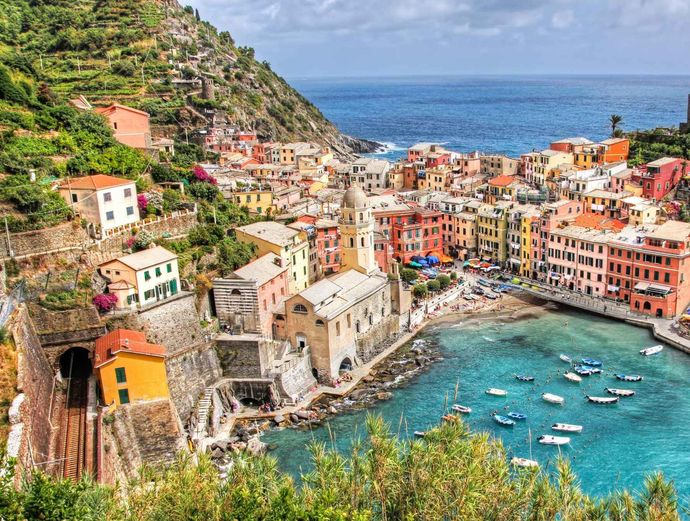
Vernazza è uno dei cinque borghi di pescatori delle Cinque Terre, sulla frastagliata costa ligure dell'Italia nord-occidentale. Le sue case color pastello si affacciano su un piccolo porto naturale, sotto una torre di avvistamento medievale, e i viaggiatori vengono attratti da questo scenario da cartolina, dai sentieri a picco sul mare e dalla rilassata vita di paese. Il borgo si sviluppò nel Medioevo come insediamento marinaro e il suo porto riparato gli conferì un ruolo importante lungo questo tratto di costa. Furono erette fortificazioni per proteggersi dalle incursioni dal mare e la torre rotonda del Castello Doria si erge ancora oggi sulla punta rocciosa sopra l'acqua. Per secoli gli abitanti di Vernazza hanno coltivato anche i ripidi pendii alle spalle del paese, ricavandone stretti terrazzamenti sorretti da muretti a secco e piantando viti e ulivi. Questo paesaggio di terrazzamenti e borghi è oggi protetto all'interno del Parco Nazionale delle Cinque Terre ed è riconosciuto come Patrimonio dell'Umanità dall'UNESCO. Nel borgo stesso, la via principale scende lungo una stretta valle fino a una piazzetta sul porto, dove le barche da pesca vengono tirate a secco. La chiesa di Santa Margherita di Antiochia sorge proprio in riva al mare, il suo campanile è un punto di riferimento visibile dal mare, e un ripido sentiero sale dal borgo fino al santuario collinare della Madonna di Reggio. Vernazza ha dimostrato anche una notevole resilienza. All'inizio del XXI secolo, una violenta alluvione ha riversato fango e detriti lungo la via principale, e residenti e volontari hanno scavato e ricostruito il borgo. I terrazzamenti locali producono ancora vino, tra cui il dolce Sciacchetrà ottenuto da uve appassite, e i caffè del porto servono acciughe fresche e pesto, i sapori della Liguria. Una passeggiata con una guida locale svela le storie che si celano dietro le pietre e le persone che mantengono vivo il borgo.
altroScopri Genova

Lusso e occasioni speciali
Prezzi da $6
Tour privati e personalizzati
Prezzi da $6
Tour culturali e tematici
Prezzi da $6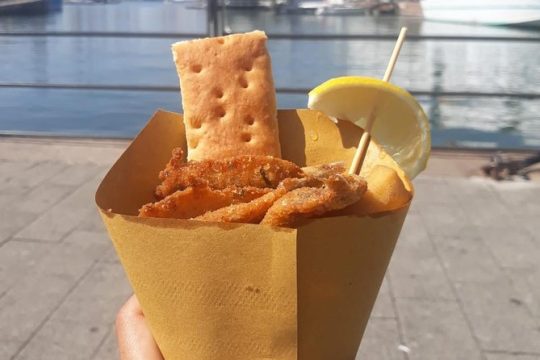
Escursioni sulla spiaggia
Prezzi da $28
Tour e visite guidate
Prezzi da $7
Tour a piedi e in bicicletta
Prezzi da $6
Corsi e laboratori
Prezzi da $117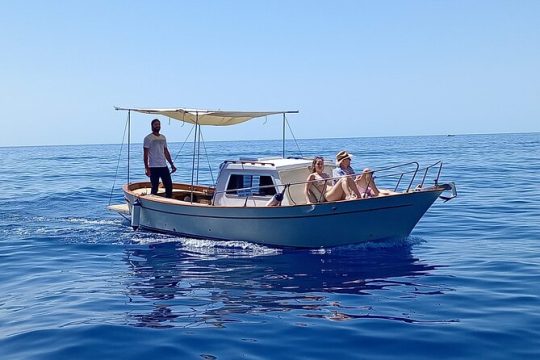
Crociere, vela e tour acquatici
Prezzi da $78
Gite ed escursioni giornaliere
Prezzi da $73
Cibo, vino e vita notturna
Prezzi da $28
Tour festivi e stagionali
Prezzi da $77
Adatto ai bambini
Prezzi da $28
Cattedrale di Genova (Cattedrale di San Lorenzo)
Prezzi da $6
Acquario di Genova
Prezzi da $28
Basilica della Santissima Annunziata del Vastato
Prezzi da $7
Basilica di Santa Margherita
Prezzi da $187
baffi
Prezzi da $28
Boccadasse
Prezzi da $28
Castello Brown
Prezzi da $101
Complesso Museale e Archeologico della Cattedrale di Lucca
Prezzi da $503
Chiesa di San Giorgio (Chiesa di San Giorgio)
Prezzi da $129
Italia corsa
Prezzi da $28
Palazzo Ducale (Palazzo Ducale)
Prezzi da $15
Duomo di Firenze (Cattedrale di Santa Maria dei Fiori)
Prezzi da $583


Calendario Eventi Genova
Visualizza tutti gli eventi
Cose da fare a Genova durante il Ferragosto (aggiornato al 2026)
Domenica 15 agosto 2027
Hanukkah a Genova
4-12 dicembre 2026
Capodanno a Genova
Giovedì 31 dicembre 2026
Capodanno lungo weekend a Genova
1-3 gennaio 2027
San Valentino a Genova
Domenica 14 febbraio 2027
Pasqua a Genova
Domenica 28 marzo, 2027
Venerdì Santo a Genova
Venerdì 26 marzo 2027