Frequently Asked Questions
The answers provided below are based on answers previously given to customers' questions.
Viti Levu is Fiji's largest island, and for most visitors it is where the trip begins, with the international airport at Nadi on the dry western side and the capital, Suva, on the greener southeast coast. Days here mix warm water with village life: river journeys, mud baths, orchid gardens, reef cruises and visits that open a window onto Fijian and Indo-Fijian culture. Most outings start in the morning, and a large majority include pickup from your hotel, which makes planning simple even if you are staying out on the resort coast. Expect friendly guides, a relaxed pace and plenty of time outdoors.
The western side has several easy half days. The Garden of the Sleeping Giant, set at the foot of the mountains, is known for its orchids and quiet jungle paths. Nearby in the Sabeto Valley, the Sabeto Hot Springs and Mud Pool let you coat yourself in warm mud, rinse off in thermal pools and leave with soft skin and a good laugh. In Nadi town, the Sri Siva Subramaniya Temple is a vividly painted Hindu temple, and visitors are welcome if they dress modestly. For a wide view of the coast and the offshore islands, Vuda Lookout sits on a ridge above the western plains.
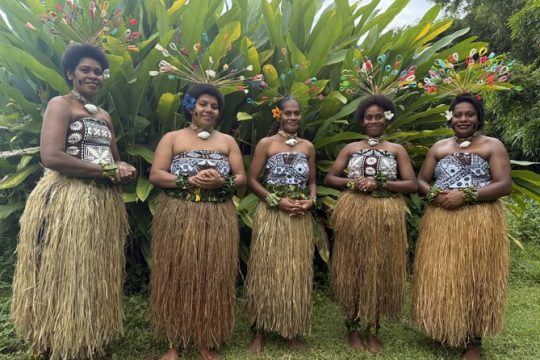
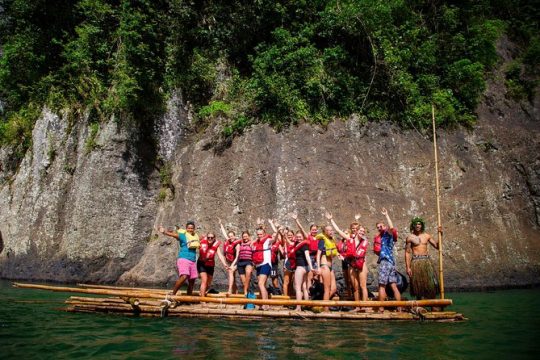
The heart of many trips is a village visit. On the Navua River, longboats carry you past waterfalls and steep green gorges to a community where you join a kava ceremony, share a meal and hear how the village lives. Toward the south, Sigatoka is known for its towering sand dunes and its fertile river valley. In Suva, the Fiji Museum holds canoes, carvings and stories of the islands' long seafaring past. About half of the outings take four to eight hours, the right length for a river day with lunch included.
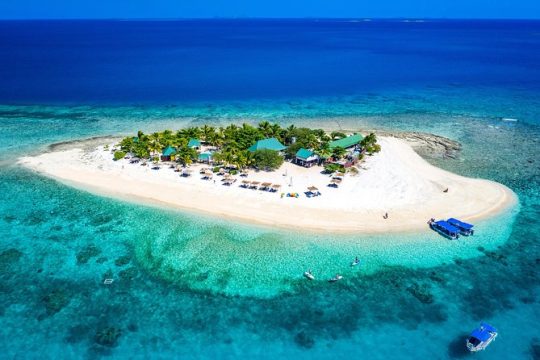
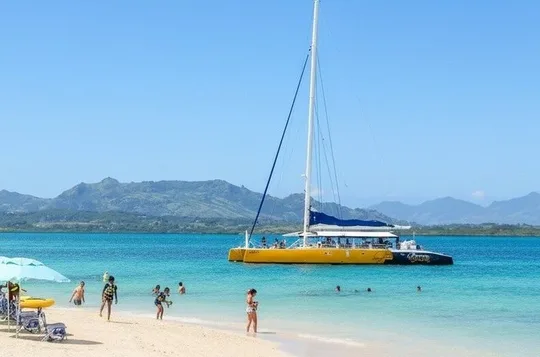
Fiji's reefs and islands are never far away. Day cruises head out to small sandy islands for snorkeling, swimming and a barbecue lunch, and sailing trips let you watch the coast slide by from the deck. Families find this island especially easy, since most outings welcome children and many of the water trips suit young swimmers. A few longer packages stretch over several days for travelers who want to go further into the interior or out to the smaller islands.
About half of the departures are timed for cruise visitors, so on a port day pick a half-day or a shorter river trip close to where you dock. With a longer stay, spread things out: one day for Nadi and the mud pools, one for the river and a village, one for the sea. Most bookings offer free cancellation, which helps if tropical weather changes your plans. Pack reef-safe sunscreen, light clothing that covers the shoulders and knees for village and temple visits, and a change of clothes for after the mud pool.
Group trips are the norm here, with about a quarter offered as private outings for couples or families who want their own guide and vehicle. Shared minivans keep costs down and make it easy to meet other travelers, while a private car lets you stop for photos whenever you like.
#1If you are looking for things to do in Viti Levu we have 1 Tours and Activities to Experience Navua River Village and Kava Ceremony. Check out our verified traveler reviews and photos of Navua River Village and Kava Ceremony tours and other things to do in Viti Levu, and book securely when you find the perfect one. Learn the best ways to see famous Navua River Village and Kava Ceremony and explore the most popular things to do in Viti Levu.
More
#2The Fiji Museum is the country's national museum, set in Thurston Gardens in the capital, Suva. Its galleries trace the islands' story from the first settlers through colonial rule to modern Fiji, and visitors come for its great canoes, its archaeology and objects that range from ancient pottery to the rudder of HMS Bounty.The museum began as the work of volunteers. A group called the Friends of Fiji Museum gathered the first collection, and the institution moved between several homes before it settled in its garden setting among the lawns and old trees of central Suva. Over time it has also become a center for research, and its staff have taken part in excavations on several Fijian islands. Its collections now cover the full sweep of Fijian history.Those digs feed the archaeology galleries, whose holdings reach back about 3,700 years and show how early voyagers settled the islands and made their lives there. The best-known single object is the Ratu Finau, a large double-hulled canoe that shows the skill of Fijian boatbuilders and the seafaring that linked the Pacific islands. Nearby, the rudder of HMS Bounty, the ship made famous by its mutiny, draws visitors who know the story from books and films.Other rooms carry the story forward. Displays look at the impact of colonial rule on island life, the history of the Indo-Fijian communities whose families came to work on the islands, and the manuscripts that record Fiji's past in writing. Galleries of contemporary art show how Fijian artists work with that heritage now. Together they give a rounded picture of a nation shaped by many peoples. A guide can bring out the stories behind individual pieces, from the canoes to the everyday tools, that labels alone cannot tell.
More
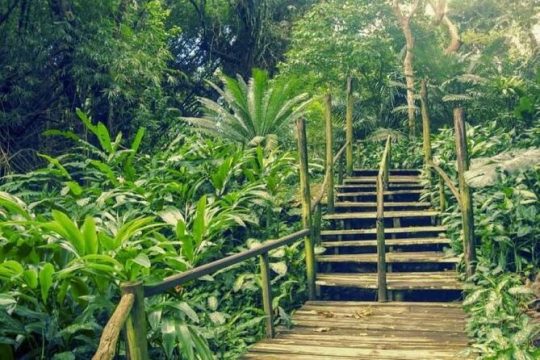
#3You can stroll the garden on your own at an easy pace, but a guide helps you spot the orchids and native plants and explains how the collection began. Many half-day outings from Nadi combine the garden with nearby sights such as a mud pool and hot springs or a village visit. A packed picnic suits the quiet setting. The garden suits plant lovers, families and anyone who wants a quiet walk away from the beaches. Plan on one to two hours to walk the paths and the jungle trail. The collection includes more than two thousand kinds of orchids across about twenty hectares. Bring sun protection, water and comfortable shoes, since paths run through open garden and forest. The garden is a short drive from Nadi, so it fits easily into a half day.
More
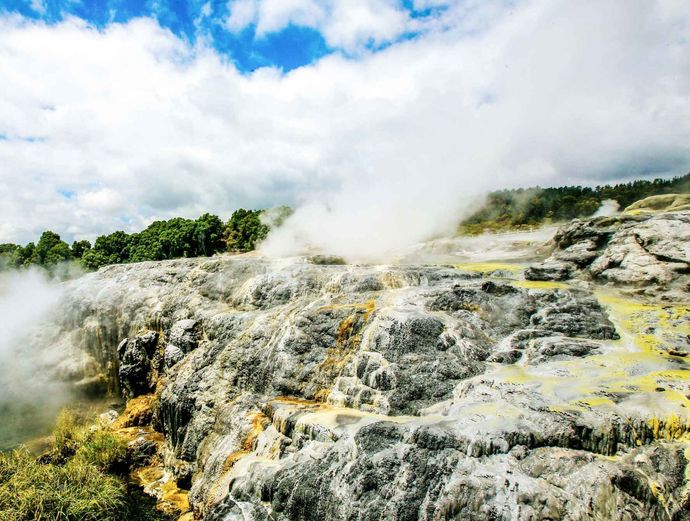
#4Sabeto Hot Springs and Mud Pool is a natural geothermal bathing spot in the Sabeto Valley on Viti Levu, Fiji's main island, in the countryside north of Nadi. Visitors come to smear themselves in warm mud, let it dry in the sun and then soak it away in a series of hot pools, with green mountains rising all around.The valley lies beneath the Sabeto Mountains, whose ridgeline is said to look like a giant asleep on his back, the figure that gave the nearby Garden of the Sleeping Giant its name. Heat from deep underground warms the water that rises here, feeding both the mud pool and the bathing pools beside it. The setting is simple and rustic, closer to a village bathing place than a resort spa, with open-air pools set among grass and trees.The visit follows a three-step ritual. First comes the mud, scooped from the pool and spread over skin from head to toe, which many bathers believe leaves it soft and smooth. Next you sit in the sun while the coating dries and cracks into a stiff shell, a stage that usually brings plenty of laughter and photos. Finally you slip into the warm pools to rinse it away, moving from one to the next and letting the heat loosen tired muscles. Many visitors round off the soak with a massage offered on site.It is a playful, hands-on outing that feels very different from a day on Fiji's beaches, and it suits couples, friends and families alike. The valley also offers a glimpse of rural Viti Levu, far from the resort strip, where daily life moves at an easy pace. A local guide can share stories of the valley and its customs, turning a muddy soak into a small window on Fijian life.
More
#5The Sabeto Valley is a green rural valley in the hills just inland from Nadi, the town where most international visitors first arrive in Fiji, on the main island of Viti Levu. People come for two simple pleasures: a soak in natural hot springs after a coating of warm mud, and a wander among the orchids of the Garden of the Sleeping Giant.The valley lies beneath a ridge of mountains whose outline is said to resemble a giant asleep on his back, and that silhouette gave the best-known garden in the area its name. The mud pools sit where heat from deep underground warms springs that well up into simple open-air baths. The setting is informal and rustic, with tropical greenery around the edges and the hills rising steeply behind.A dip here is less a spa treatment than a cheerful, messy ritual. Being smeared from head to toe in dark mud tends to bring out plenty of laughter, and many visitors say it leaves their skin feeling softer. The long, unhurried soak in warm spring water afterward is the reward, with green hills on every side. The pools are shared, which gives the place a friendly, communal mood.The Garden of the Sleeping Giant was created by the actor Raymond Burr, best known for playing the television lawyer Perry Mason, to house his private collection of orchids. He had close ties to Fiji, and the garden has grown into a showcase of tropical flowers, with paths leading past lily ponds and into the forest at the foot of the hills. A guide adds the local knowledge that turns the valley into more than a quick detour, from the names of plants to the life of the villages nearby.
More
#6Sigatoka is a small market town on the southwest coast of Viti Levu, Fiji's main island, sitting where the broad Sigatoka River meets the sea. Travelers stop here for its busy produce market, the giant sand dunes just west of town, and trips up the green river valley into the island's interior.The town grew as a trading center for the Sigatoka Valley, a wide stretch of fertile farmland often called the salad bowl of Fiji. Vegetables, root crops and fruit from inland farms arrive at the market, where stalls are piled with taro, cassava, chilies, pineapples and bundles of greens, and vendors sell kava root for the evening ceremonies held in many villages. The main street has a mix of small shops, cafes and colonial-era buildings, and a bridge carries the coast road across the river.Along the shore west of town lie the Sigatoka Sand Dunes, protected as Fiji's first national park. The wind-shaped ridges rise behind the beach and are partly covered in forest and grasses. Archaeologists working in the dunes have found pottery from the Lapita people, among the first settlers of the Pacific islands, along with ancient burial grounds, making the site one of the most important in the region for the story of how Fiji was first peopled.Upriver, the valley opens into farms and traditional villages, some reached only by boat or rough road. On a ridge above the river near town stands Tavuni Hill Fort, a stronghold built by a Tongan chief and his followers who settled here centuries ago, with terraces, house platforms and wide views over the valley. Together, the dunes, the fort and the villages give a fuller sense of Fijian life and history than a beach stay alone. A guide from the area can explain the customs you meet in the villages and the meaning of what has been found in the dunes.
More
#7Guided visits run through much of the day and are the best way to understand the temple's Dravidian architecture, the colorful carvings and the role of each shrine. Walking in on your own works too, but a guide explains the symbolism and customs you would otherwise miss. Many half-day tours combine the temple with other Nadi sights and nearby gardens, so it fits easily into a wider day out. Dress modestly with your legs and shoulders covered, and expect to remove your shoes before entering. Photography is not allowed inside the temple premises. Visitors are asked not to enter if they have eaten meat that day. The inner sanctums are for worshippers, but guided visits explain the carvings and architecture. An on-site restaurant serves traditional vegetarian food.
More
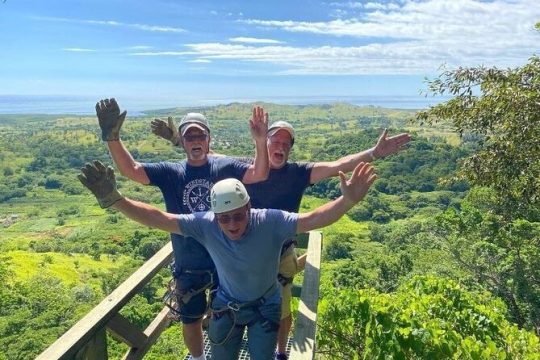
#8Vuda Lookout is a viewpoint at Vuda Point, the headland on the west coast of Viti Levu, Fiji's main island, between Nadi and Lautoka. Travelers stop here for a wide outlook over the coast and the islands offshore, and for a place that Fijian tradition links to the very beginning of the nation's story.Fijian oral tradition holds that Vuda Point is where the canoes of the Melanesian ancestors of the Fijian people first came ashore after a long ocean crossing. That gives this quiet stretch of coast a weight far beyond its size, and the story remains part of local identity. From the high ground you can picture the arrival: the sheltered shoreline, the green country rising behind it and the wide sea the voyagers crossed.Close by is Viseisei, often described as the oldest settlement in Fiji, where traditional thatched bures stand among village homes and a small museum keeps local heritage. On the water below the point, Vuda Marina shelters yachts from many countries, a busy stopover for sailors crossing the South Pacific, so the view mixes ancient legend with masts and modern voyagers. To the south lies Nadi, the main gateway to Fiji, and to the north lies Lautoka, known as the Sugar City for its cane mill, which places the point at the heart of the west coast.Look out to sea and the Mamanuca and Yasawa islands line the horizon, low shapes of green and sand scattered across blue water. Between the islands, the marina and the farmland inland, the lookout sums up much of western Viti Levu in a single sweep. A local guide can tell the landing story the way it is told in the villages, which turns a fine view into a meaningful one.
MoreViti Levu moves at an unhurried pace. A minivan often collects you after an early breakfast for a day inland, a reef cruise or a river trip with a village welcome, and most people are back by the pool by midafternoon.
Shorter outings fill the gaps: the orchids at the Garden of the Sleeping Giant, a soak in the Sabeto mud pools or the view from Vuda Lookout. Evenings tend to be quiet and resort-based.
Families, honeymooners and cruise passengers all settle in easily, since outings take little planning.
Viti Levu is warm all year, so the choice comes down to rain. May to October is drier and slightly cooler, with sunny days, calm seas and easy hiking. It is also the busiest stretch, so book river days and cruises early.
November to April is the hot, humid wet season, with heavy downpours and some stormy days. Crowds thin, the hills turn deep green and the sea is at its warmest for snorkeling.
The western side around Nadi stays sunnier than Suva in every month, so base yourself in the west if dry weather matters most.

The answers provided below are based on answers previously given to customers' questions.