


USA attractions
More things to do in the country
 #136
Louis Armstrong Park
You can wander the grounds on your own, looking for the Louis Armstrong statue, the monuments and Congo Square. Guided walking tours of Tremé and the French Quarter often stop here and explain how Sunday gatherings in the square shaped the city's music. A guide adds history and stories that signs alone do not give, and the park pairs well with nearby jazz sites. The park sits just across Rampart Street from the French Quarter in the Tremé neighborhood and includes Congo Square. Congo Square is listed on the National Register of Historic Places and is part of the New Orleans Jazz National Historical Park. Plan on about one to two hours to walk the grounds, see the statues and read about Congo Square. There are no playgrounds, and events such as festivals and concerts can make parts of the park busy.
More #137
360 Chicago Observation Deck (Formerly John Hancock Observatory)
You can enjoy the 360-degree views on your own, with ramps and windows all the way around the deck. Many visitors add the TILT ride, where a platform leans out over the city. Reserved entry times help on busy days, and an evening visit lets you watch the sky change. The deck pairs well with a Magnificent Mile walking tour or a river architecture cruise. Most visitors spend about 45 minutes to an hour on the 94th floor. Elevators, restrooms and the ramps around the deck work for wheelchairs, scooters and strollers. Outside food and drinks are not allowed on the deck, except sealed water bottles, and the CloudBar sells drinks and snacks. Service dogs are welcome with proper identification, but pets and support animals should stay home. Sensory bags with headphones and fidget tools are available at the ticketing desk.
More #138
Art Institute of Chicago
The Art Institute of Chicago is one of the oldest and largest art museums in the United States, set on the edge of Grant Park in downtown Chicago. People come for a collection that spans thousands of years and nearly every corner of the world, and above all for a run of famous paintings that many visitors know from postcards long before they arrive.The museum and its art school were founded in the late 19th century, and the institution moved into its Beaux-Arts home on Michigan Avenue around the time of the city's great world's fair. Two bronze lions by the sculptor Edward Kemeys have guarded the entrance ever since and are often decorated for holidays and sports victories. In the early 21st century the light-filled Modern Wing, designed by Renzo Piano, added galleries for modern and contemporary art and a footbridge that links the museum to Millennium Park.The painting galleries hold many of the most recognized works in American and European art. Georges Seurat's A Sunday on La Grande Jatte fills a wall with tiny dots of color, Edward Hopper's Nighthawks shows a late-night diner under fluorescent light, and Grant Wood's American Gothic presents its stern, pitchfork-holding farmer and the woman beside him. The Impressionist and Post-Impressionist rooms are especially strong, with Monet's haystacks, Gustave Caillebotte's rain-washed Paris street and Van Gogh's painting of his bedroom in Arles.Beyond the famous canvases, the museum rewards wandering. On the lower level, the Thorne Miniature Rooms recreate European and American interiors from several centuries in tiny, exact detail. Marc Chagall's America Windows glow in deep blue, and other galleries hold arms and armor, ancient Greek and Egyptian objects, Asian art, photography and design. A guide can share the stories behind the paintings, from how they were made to how they came to Chicago.
More #139
Bayside Marketplace
You can browse the shops, eat by the water and watch the boats on your own. Narrated boat tours leave from the marina and pass Star Island, the cruise ships and the Art Deco district, which gives a sense of Miami's skyline from the water. Evenings pair well with live music, and the nearby observation wheel and downtown museums make it easy to build a full day. Bayside is an open-air waterfront shopping and dining center, so wear light clothing and bring sun protection. Individual shops and restaurants set their own hours, so check the directory for the places you want. Complimentary wheelchairs are offered, and stroller parking is available in the adjacent garage. Plan about one to three hours for shopping, a meal and a walk along the marina. Live music and events are held on site, so the mood changes between weekdays and weekend evenings.
More #140
Carpenters' Hall
Carpenters' Hall is easy to see on your own as a short stop, and the exhibits and park rangers explain what happened here. A guided walking tour of Independence Park puts it in context alongside Independence Hall, the Liberty Bell and nearby Old City streets. Guided options also include food, ghost and after-hours history walks that pass the hall, so you can pair it with other sights. Carpenters' Hall is where the First Continental Congress met, and it is a short, easy stop in Independence National Historical Park. Most visits take 20 to 30 minutes, which suits families and anyone short on time. Inside you can see the Assembly Room, a model of the hall, and the Speaker's chair with a replica guests can sit in. The hall is still owned by the Carpenters' Company, so it keeps its own days and holiday closures. Call ahead if you need wheelchair or other access information, since the hall does not list it online.
More #141
New England Holocaust Memorial
You can walk through the towers on your own at any hour. A tour led by a trained guide adds the history behind each tower and the survivor quotes inside the glass. Because the memorial sits on the Freedom Trail, many walking tours pair it with Faneuil Hall, Quincy Market and other nearby historic sights. The memorial is an outdoor space that is open and accessible to the public at all times. Six glass towers stand for six major extermination camps, with survivor quotes inside and numbers engraved on the outer walls. Most visits take 20 to 30 minutes, longer if you read the quotes. It is a place of remembrance, so keep your voice low and treat the space with respect. Dress for the weather, since the memorial is open air.
More #142
Texas Capitol
The Texas Capitol is the grand domed statehouse at the top of Congress Avenue in downtown Austin, home to the state legislature and the governor's office. Built of pink-red granite and set in broad, tree-shaded grounds, it draws visitors to its soaring rotunda, its legislative chambers and the monuments that trace the story of Texas.The building replaced an earlier capitol that burned in the late 19th century. To pay for it, the state traded a vast tract of Panhandle land to the builders, who turned it into one of the largest cattle ranches in the West. The architect Elijah E. Myers produced a design in the Renaissance Revival style, and the walls were raised from sunset red granite quarried in the Hill Country near Marble Falls, donated by the quarry's owners. When it was finished, its dome stood a little taller than the U.S. Capitol in Washington, a detail Texans still like to point out.Inside, the rotunda is the showpiece. Portraits of every president of the Republic of Texas and every governor of the state ring its walls, and far above, a single star shines at the center of the dome's underside. Underfoot, a terrazzo floor shows the seals of the six nations whose flags have flown over Texas. The restored House and Senate chambers recall the building's early years, and corridors lined with art lead to an underground extension, lit by skylights, that was added late in the 20th century.High atop the dome stands the Goddess of Liberty, holding a lone star aloft, though the figure up there is a replica of the weathered original. Out on the grounds, monuments honor the defenders of the Alamo, the Texas cowboy, veterans of many wars and other chapters of the state's past, and the Great Walk leads up from Congress Avenue to the south door. A guide can explain how the unusual land deal paid for the building.
More #143
Charlestown Navy Yard
You can walk the yard on your own, step into the visitor center and board the ships when they are open. A guided option brings the shipyard to life with stories of the frigate Constitution and the wartime destroyer. Many visitors join a Freedom Trail walking tour that ends here, or pair the yard with a harbor cruise or a longer Boston history tour. The yard is a former shipyard in Boston National Historical Park, home to the USS Constitution, the USS Cassin Young and a visitor center. The grounds are open at all hours, but the ships, visitor center and museum keep their own seasonal hours. The USS Constitution is an active Navy ship, so expect security screening and possibly a photo ID check for adults boarding. The visitor center is fully accessible, but both ships involve steep ramps, steps and narrow spaces and are not accessible. Restrooms are in the visitor center and the USS Constitution Museum.
More #144
Thomas Jefferson Memorial
The Thomas Jefferson Memorial is a domed, columned monument beside the Tidal Basin in Washington, DC, honoring the author of the Declaration of Independence and third president of the United States. Visitors come to stand before his towering bronze statue, read his words carved into the walls and take in the views across the water.The memorial was designed by John Russell Pope, who drew on the Pantheon in Rome and on Jefferson's own love of classical architecture, seen in his designs for Monticello and the University of Virginia. Its site and style stirred debate, and protesters even chained themselves to cherry trees that were to be cleared for construction. President Franklin D. Roosevelt laid the cornerstone and dedicated the finished memorial during the Second World War, on the anniversary of Jefferson's birth.The war left its mark on the statue. Metal was scarce, so the first figure of Jefferson was a painted plaster cast, and the bronze by sculptor Rudulph Evans replaced it only after the war ended. Jefferson stands in a long fur-collared coat, gazing toward the White House across the water. Around him, panels carry passages from the Declaration of Independence, his writings on religious freedom and his thoughts on how laws and institutions must change with the times, while a frieze below the dome carries his vow of eternal hostility against every form of tyranny over the mind of man.Jefferson's legacy is complicated, since the man who wrote that all men are created equal held people in slavery at Monticello throughout his adult life, and a visit invites reflection on both sides of that story. The setting adds to the experience: the cherry trees ringing the basin, first given by the city of Tokyo, frame the white marble, and the dome is mirrored in the still water. A guide can connect the memorial to the city plan and to the other monuments in view.
More #145
Second Bank of the United States
The Second Bank of the United States is a marble Greek Revival temple on Chestnut Street in Philadelphia, built for the nation's central bank and later turned into a portrait gallery. Visitors come for its columned front, the story of a political fight that shaped American finance and likenesses of the founding generation painted from life.Congress chartered the bank early in the 19th century, after a costly war with Britain had left the country's finances in disarray. Its home, designed by William Strickland and modeled on the Parthenon in Athens, was among the earliest major Greek Revival buildings in the country and helped make the style a favorite for banks and public halls. Under its forceful president, Nicholas Biddle, the bank grew into a financial giant, which President Andrew Jackson viewed as a threat to ordinary Americans. In the bank war that followed, Jackson vetoed a new charter and pulled federal deposits, and the bank's national role came to an end.The building later spent decades as a custom house before becoming a portrait gallery within the national park. Its collection holds more than 150 portraits of founders, statesmen and other figures of the Revolutionary era. Many once hung in the museum Charles Willson Peale ran in Independence Hall, where he displayed the heroes of the Revolution he had painted, and works by Thomas Sully hang beside them.Walking the gallery, you meet the famous faces of the founding story alongside lesser-known delegates, officers and thinkers, which gives the period a more human scale. Outside, the Doric columns of the marble portico make one of the purest classical facades in the city. Its story is a reminder that arguments over money and power are as old as the republic.
More #146
Millennium Park
Millennium Park is Chicago's showpiece public park, set on the eastern edge of the Loop beside Michigan Avenue and filled with landmark public art and architecture. Visitors come to see their reflection in Cloud Gate, splash in Crown Fountain, wander a prairie-inspired garden and catch open-air concerts beneath Frank Gehry's soaring bandshell.The park sits on land that was long given over to railroad tracks and surface parking lots at the edge of Grant Park. City leaders decided to cover the rail yards with a new park to mark the turn of the millennium, and although it opened several years late and well over budget, it quickly became one of the city's most popular attractions. Because the whole park rests on top of a parking garage and rail lines, it ranks among the largest green roofs in the world.Its stars are the artworks. Cloud Gate, by the British artist Anish Kapoor, is a gleaming stainless steel sculpture nicknamed the Bean, whose mirrored curves bend the skyline and the people around it into fun-house reflections. At Crown Fountain, designed by the Spanish artist Jaume Plensa, two glass-block towers display video faces of Chicagoans that appear to spout water from their mouths. The Jay Pritzker Pavilion, Gehry's bandshell, bursts with curling ribbons of steel above the stage, while a trellis of steel pipes arches over the lawn to carry the sound system.Quieter corners balance the spectacle. The Lurie Garden, created by a design team that included the Dutch plantsman Piet Oudolf, mixes perennials and grasses that shift in color through the seasons, and Gehry's snaking BP Bridge, clad in steel plates, winds east toward the lakefront parks. Renzo Piano designed the slender Nichols Bridgeway that glides over Monroe Street to the Art Institute's modern wing, so the park doubles as an outdoor gallery of contemporary architecture.
More #147
Palm Springs Aerial Tramway
If you are looking for things to do in USA we have 3 Tours and Activities to Experience Palm Springs Aerial Tramway. Check out our verified traveler reviews and photos of Palm Springs Aerial Tramway tours and other things to do in USA, and book securely when you find the perfect one. Learn the best ways to see famous Palm Springs Aerial Tramway and explore the most popular things to do in USA.
More #148
Mercedes-Benz Superdome
The Superdome is the giant domed stadium in downtown New Orleans, home field of the NFL's New Orleans Saints and the stage for the Sugar Bowl. Known for years as the Mercedes-Benz Superdome and now carrying the Caesars name, it draws visitors for big games, concerts and its place in the city's story.The idea came from a local businessman, David Dixon, who was campaigning to bring professional football to the city and knew the league wanted a covered stadium before it would expand there. The state's governor backed the plan after touring Houston's Astrodome and, by his own account, wanted one of his own, only bigger. The Louisiana Superdome opened in the late 20th century with a steel dome spanning about 680 feet, long described as the largest fixed domed structure in the world, and it was designed to host football, baseball and basketball under one roof.Its most painful chapter came with Hurricane Katrina, when residents who could not leave the city sheltered inside as a refuge of last resort and the storm's winds tore away part of the roof covering. The building stayed closed for more than a year, and the night it reopened, with the Saints beating the Atlanta Falcons before a roaring home crowd, became a symbol of the city's return. A later renovation replaced the old ramps with bright atriums and opened up the concourses.Over the decades the dome has hosted more Super Bowls than almost any other stadium, along with college basketball's Final Four, title fights, wrestling spectacles and concerts by the Rolling Stones and many others. Each autumn it also fills for the Bayou Classic, the long-running football rivalry between two historically Black universities, complete with marching bands. A guide can add the stories and legends that local fans tell about the building.
More #149
Mt. San Jacinto State Park and Wilderness
Mount San Jacinto State Park protects the granite high country of the San Jacinto Mountains, rising above Palm Springs in Riverside County, California. Travelers come to trade the desert heat for cool pine forest, mountain meadows and trails that climb toward San Jacinto Peak, the highest point in the California State Park System at more than 10,800 feet.The park covers about 14,000 acres, much of it designated wilderness where roads give way to footpaths. It is managed by California State Parks, and part of its forest is old growth, recognized by a national network that honors forests left largely undisturbed. A web of trails crosses the park, including a stretch of the Pacific Crest Trail, the long-distance route that runs from Mexico to Canada along the mountain spine of the West.For most visitors the adventure begins on the Palm Springs side, where the aerial tramway's rotating cars climb the sheer walls of Chino Canyon, swapping cactus and creosote for tall pines in a matter of minutes. Few journeys in Southern California change the scenery so completely in so short a time. From the mountain station, paths fan out into Long Valley and on toward Round Valley and the summit, while the Idyllwild side offers campgrounds, a visitor center and picnic spots beneath the trees.The summit is a jumble of weathered granite boulders, and the view from the top is the park's great reward, sweeping over the Coachella Valley far below and out across desert basins and distant ranges. The naturalist John Muir counted it among the most sublime sights on earth. Along the trails, watch for mule deer and noisy Steller's jays, and notice how the forest changes as you climb, thinning toward the bare rock of the summit.
More #150
Congress Avenue Bridge (South Congress Bridge)
You can watch from the bridge sidewalks or the riverbanks, but being on the water gives a different view as the bats stream overhead. Sunset boat tours and kayak or paddleboard outings on Lady Bird Lake are popular, and many pair the bat flight with an evening downtown walk past the Capitol and the lakefront trails. The bridge crosses Lady Bird Lake and is best known for its large colony of Mexican free-tailed bats that roost underneath. The bats fly out at dusk, so plan to arrive well before sunset to find a good spot. Sidewalks run along both sides of the bridge, and the nearby riverbanks and trails also work for watching. Bad weather can affect the flight, so a clear evening gives the best chance of a good show.
More #151
President's House
The President's House site in Philadelphia marks where George Washington and John Adams lived during the years the city served as the nation's capital. Its open-air exhibit reveals the foundations of the mansion and tells the story of the enslaved people Washington held there, setting the ideals of liberty beside the reality of slavery.The three-story brick house was built in the years before the Revolution and passed through many hands. Richard Penn, a lieutenant governor of Pennsylvania, lived in it; the British general William Howe made it his headquarters during the occupation; and Benedict Arnold lived there as military governor. After a fire, the financier Robert Morris rebuilt it, and Washington stayed as his guest during the Constitutional Convention. Later it became the executive mansion, home first to Washington and then to Adams until the government moved to the new capital on the Potomac.Nine enslaved people lived and worked in Washington's household here. Among them were Hercules, the celebrated chef, who escaped to freedom, and Ona Judge, Martha Washington's maid and seamstress, who fled and built a new life in New Hampshire. Others included Christopher Sheels, the president's teenage attendant, and Moll, a nursemaid to Martha's grandchildren. The house was torn down in the 19th century, and its remains lay buried until archaeologists dug here early in the 21st century and found the basement foundations, including a hidden kitchen, an underground passage and the base of a bow window Washington had described in a letter.The memorial presents these finds with low walls and door and window frames that suggest the layout of the house, a view down into the excavated foundations, and panels and videos that follow the story from slavery through the Underground Railroad, the Civil War and emancipation to the civil rights movement. A guide can add the human stories behind each name.
More #152
Driskill Hotel (The Driskill)
You can look around the public areas of the hotel on your own, taking in the lobby, the historic vault, the carved facade and the grand arches. Guided history tours bring the stories to life, from the cattleman who built it to the governors' inaugural balls and the legends of its ghosts. It pairs well with a downtown Austin walking tour that includes the nearby Capitol and Sixth Street. The Driskill is a working hotel, so access beyond the public lobby and shared spaces is for guests. Plan on about 30 to 60 minutes to see the lobby, rotunda and historic details. The original building has stairs and old-style architecture, so ask the front desk about step-free routes. Look for the vault, the carved limestone busts and the Richardsonian arches, which are easy to overlook. The hotel sits on Brazos Street in downtown Austin, with paid parking nearby and plenty of restaurants within walking distance.
More #153
T-Mobile Park (Safeco Field)
On a game day you can watch a Mariners game from the stands and walk the concourse. Off-season and select days, guided ballpark tours take you behind the scenes, with a longer version that adds the team clubhouse. A pregame tour on some game days covers baseball history in the Pacific Northwest and may include a look at batting practice. Private group tours are also available, and the ballpark pairs well with a sightseeing walk through nearby Pioneer Square. T-Mobile Park is the home of the Seattle Mariners, and the roof covers the seats but does not fully enclose the park, so dress for Seattle weather. Walking tours take about 75 minutes and cover areas such as the Hall of Fame, the warning track and the rooftop boardwalk. Stops on a tour depend on ballpark activity and can change, and late arrivals cannot join. The park has a clear bag policy, so check the size limits before game day and leave large bags behind. The field is at street level, and stairs, escalators and elevators lead to the main concourse.
More #154
Chicago Cultural Center
Wander the building on your own with the self-guided list of top sights or a short audio tour. For more depth, join a building tour led by volunteer docents on Thursday and Friday afternoons. Sign up at the Randolph Street desk when you arrive, since places go first come, first served. Private group tours can be arranged by appointment. Millennium Park sits right across Michigan Avenue. No tickets are needed for the exhibitions, concerts and programs, so you can drop in whenever the building is open. A self-guided list of top sights takes an hour or less, and short audio tours are available in English and Spanish. Preston Bradley Hall holds the large Tiffany glass dome, the building's best-known feature. The wheelchair-accessible entrance is at street level at Garland Court and Randolph Street, and restrooms and elevators are accessible. A first-floor artisan market features work by local artists.
More #155
Congress Hall in Philadelphia
You can join the park's own short programs inside the hall, which walk through the House and Senate chambers. A guided walking tour of the wider historic district adds stories about the founders and links Congress Hall with Independence Hall, the Liberty Bell and the surrounding streets. Pairing it with a guided visit lets you see several sites of the early republic in one outing. Congress Hall stands on Independence Square and is where the United States Congress met when Philadelphia was the capital. Visitors pass through a security screening before entering the buildings on the square, so bring only small bags to speed things up. Weapons, pepper spray and pocket knives are not allowed through screening. The first floor is wheelchair accessible, and assistive listening devices and audio description are available on request. Tours leave at regular intervals during the day, and a short visit fits easily alongside other sites on the square.
More #156
Lake Michigan
Lake Michigan is the vast freshwater lake that forms Chicago's entire eastern edge, a shoreline of public beaches, parks, harbors and a long lakefront path. People come to swim and sunbathe in summer, to walk or cycle beside the water, and to see the city's skyline rise straight up from the shore.It is the only one of the five Great Lakes that lies entirely within the United States, and it is big enough that the far shore stays out of sight, so from the sand it reads more like a sea than a lake. Chicago grew where it did because of this water, which linked the young settlement to shipping routes across the Great Lakes. Early on, the city's founders set the shore aside as public ground meant to stay open and free, a principle later defended in court by the merchant Montgomery Ward, and landfill steadily pushed the parkland further out into the lake, leaving a public waterfront few big cities can match.The shore is a chain of sandy beaches, from busy North Avenue Beach with its views back to the towers of the Gold Coast to quieter stretches farther north and south. Harbors full of sailboats, the long arm of Navy Pier and the green spaces of Grant Park and Museum Campus sit right on the water, and from the point by the Adler Planetarium the skyline lines up across the harbor. The water itself changes mood with the weather, glassy and blue on calm days, gray and rough when the wind turns, and in deep winter ice piles up along the breakwaters.Locals treat the lakefront as the city's shared backyard, where summer evenings bring volleyball games, picnics and long walks as the light fades over the towers, and a guide can add the stories of the buildings and the people who kept this shore public.
More #157
Boston Theater District
If you are looking for things to do in USA we have 2 Tours and Activities to Experience Boston Theater District. Check out our verified traveler reviews and photos of Boston Theater District tours and other things to do in USA, and book securely when you find the perfect one. Learn the best ways to see famous Boston Theater District and explore the most popular things to do in USA.
More #158
Seattle Great Wheel
Most visitors ride the wheel as part of a stroll along the waterfront. A guided walking or food tour of the pier area, a harbor cruise, or a combined waterfront itinerary lets you see the aquarium, the market and the shoreline with local context. Riding at sunset gives the best light over Elliott Bay, and a private or VIP cabin makes a good treat for a special occasion. The ride lasts around 12 minutes and makes three turns of the wheel. The cabins are enclosed and climate controlled, so the ride works in cool or wet weather. Most cabins seat up to eight riders, and one VIP cabin has a glass floor. Wheelchair users can roll into the cabins using a lift and ramp. The wheel may pause in strong wind or unsettled weather.
More #159
Boston Athenaeum
The Boston Athenaeum is one of the oldest independent membership libraries in the United States, housed in a stately building on Beacon Hill beside the Granary Burying Ground. Book lovers, art fans and architecture buffs come for its galleries, its celebrated reading rooms and a collection that includes much of George Washington's own library.The Athenaeum was founded early in the 19th century by members of the Anthology Society, a circle of Boston literary men linked to a magazine, whose first goal was a reading room. Inspired by similar institutions in Liverpool, they soon widened their ambitions to books on every subject, along with paintings, sculpture, coins and natural curiosities. The library moved several times before settling into its present home on Beacon Street, built in the middle of the 19th century to designs by Edward Clarke Cabot, with a sandstone facade in a restrained Palladian style.Early in the 20th century the building was enlarged upward, gaining two set-back upper floors and a fifth-floor reading room that ranks among the most admired interiors in Boston, with tall windows and long shelves of books. The collections run to more than 600,000 volumes, with strengths in Boston history, literature and the fine arts. Treasures include the largest share of Washington's library from Mount Vernon, a first edition of Audubon's Birds of America, busts of Washington, Franklin and Lafayette by Jean-Antoine Houdon that once belonged to Thomas Jefferson, and portraits by Gilbert Stuart and John Singer Sargent.The Athenaeum has long been part of Boston's intellectual life. Its members included Ralph Waldo Emerson, Nathaniel Hawthorne, Louisa May Alcott and John Quincy Adams, and its galleries hosted the early exhibitions of the Museum of Fine Arts. One of its librarians, Charles Ammi Cutter, devised a classification system whose call numbers still turn up in libraries across the country. A docent adds the stories of the readers, writers and collectors who shaped the place.
More #160
Seattle Aquarium
Visit on your own at an easy pace and time your route around the daily presentations. Guided options include behind-the-scenes style experiences and waterfront sightseeing tours that pair the aquarium with nearby Pike Place Market and the central waterfront. Timed entry keeps arrival simple, and a guided city itinerary adds local stories to the day. Allow about two hours to see the whole aquarium, and longer if you eat at the cafe or catch the daily presentations. Wheelchairs can be borrowed at Guest Services on a first-come basis, and the aquarium is certified sensory-inclusive. Strollers are welcome, but the aquarium does not rent them or offer storage for them. Eating is not allowed in several habitats, including the whole Ocean Pavilion, and flash photography is prohibited near the animals. Dress in layers, because the visit mixes indoor and outdoor spaces.
More #161
Voodoo Authentica
Voodoo Authentica is a shop and cultural center on Dumaine Street in the French Quarter of New Orleans, devoted to the city's Voodoo tradition. Visitors come to see working altars and spiritual art, to browse handmade ritual goods and to learn about a living faith often misunderstood outside the city.New Orleans Voodoo grew from the spiritual traditions that enslaved West Africans brought to Louisiana, mixed with Catholic practice and later strengthened by refugees who arrived from Haiti after its revolution. In the 19th century, figures such as Marie Laveau, the city's most famous Voodoo priestess, held great influence across the community. Gatherings in Congo Square, a short walk from here, kept African music and dance alive. Over time, tourist curio shops turned Voodoo into a cartoon of pins and curses. Voodoo Authentica was founded as a counterweight, run by practitioners who wanted to present the religion with respect and accuracy.Inside, the small space is packed with color. Altars hold candles, flowers, statues and offerings to the spirits known as the loa, each with its own colors, foods and symbols. Veve, the sacred drawings used to call the spirits, appear in paintings and metalwork. Shelves carry hand sewn dolls, gris gris bags made for protection or luck, candles, oils, books and art from Haitian and African artists. Each piece connects to a practice, and staff are happy to explain how items are used and what they mean.The shop also serves as a meeting place for practitioners, and it hosts an annual festival that celebrates Voodoo with music, ceremony and talks. Its location puts it among the French Quarter's old Creole townhouses, with their iron balconies and courtyards. A guide adds the history of Voodoo in the city and its key figures.
More #162
Charleston City Market
You can wander the market sheds freely at your own pace, browsing stalls of Lowcountry arts and crafts. A guided walking tour of the historic district often includes the market alongside nearby landmarks, and a guide adds context on its Greek Revival hall and long trading history. Food tours and evening visits to the Night Market are other good ways to see it. The market suits all ages, with local arts, crafts, food and souvenirs to browse. Allow about an hour to walk the full length, and longer if you stop to talk with makers or shop. Wear comfortable shoes, since you will be on your feet on historic paving throughout your visit. A separate Night Market runs on Friday and Saturday evenings for most of the year. The market is closed on Christmas Day.
More #163
Museum of Science, Boston
Most visitors explore on their own, following the three wings at their own pace and timing stops around the Theater of Electricity, live animal presentations and planetarium shows. A guided visit, such as a small-group city tour that includes the museum, adds context and takes the planning off your hands. The museum also pairs well with a Charles River stroll or a wider Boston sightseeing itinerary. The museum suits families, school groups and curious adults, with hands-on exhibits, live presentations, a planetarium and 4-D films alongside the exhibit halls. Allow a half day to see the main wings and catch a show or two, since the theaters and presentations run on their own schedules. Food is not allowed in the exhibit halls, but you can bring your own and eat in the Riverview Café, the Atrium or on the front plaza. Wheelchairs, electric scooters and strollers can be borrowed at the lobby Information Desk, and every theater has wheelchair-accessible seating. Noise-reducing headphones, a low sensory map and marked quiet break areas help visitors who find the busy halls loud or bright.
More #164
Brooklyn Bridge
The Brooklyn Bridge is the great stone-and-steel suspension bridge across the East River, linking Lower Manhattan with Brooklyn. People come to walk its raised wooden promenade beneath the pointed arches of its stone towers, with wide views of the skyline, the harbor and the Statue of Liberty in the distance.The bridge was the vision of the engineer John A. Roebling, who designed it but died from an injury suffered while surveying the site before construction began. His son Washington Roebling took charge, only to be disabled by caisson disease after working in the pressurized chambers sunk beneath the riverbed for the foundations. He then followed the work from a window in Brooklyn Heights, while his wife, Emily Warren Roebling, carried his instructions to the site, mastered the engineering herself and became the crucial link to the builders.When it opened in the late 19th century, it was the longest suspension bridge in the world and the first to hang from steel-wire cables, a bold design that some feared would not hold. To prove its strength, the showman P. T. Barnum led a parade of elephants across the span. Emily Roebling was the first to cross it, riding in a carriage ahead of the official opening. Its web of diagonal stays and vertical suspenders, the great main cables and the pointed arches of the towers soon became symbols of the city.Walking the bridge is one of the classic New York experiences. The promenade runs above the traffic lanes, so you look down on the cars and out across the water, with the towers of Manhattan rising ahead or the brownstones and waterfront parks of Brooklyn coming into view. A plaque on one of the towers honors the Roeblings, and the bridge has appeared in countless films, songs and paintings. A guide can explain how the caissons were sunk and how the cables were spun strand by strand above the river.
More #165
Fort Adams State Park
Fort Adams State Park surrounds Fort Adams, a massive stone fortress on a peninsula at the mouth of Newport Harbor in Rhode Island. People come to explore the fort's tunnels and ramparts, to enjoy wide harbor and bay views from its lawns, and to attend the music festivals and sailing events held on its grounds.The site is named for President John Adams, and the first fort here dated from the end of the 18th century. The fortress you see now was built in the first half of the 19th century as part of a national program of coastal defenses, designed by the French military engineer Simon Bernard and overseen for years by Joseph Totten. Many of the stonemasons who built it were Irish immigrants who settled in Newport. It became one of the largest coastal forts in the country, yet it never fired its guns at an enemy. During the Civil War the United States Naval Academy moved to Newport for safety, and the fort briefly served as part of its home.Inside the walls, a broad parade ground is ringed by granite and brick casemates where soldiers once lived and guns once stood. Below them runs a network of tunnels known as listening galleries, built so defenders could hear and stop enemy miners digging under the walls. From the ramparts above, the views take in Narragansett Bay, the Newport Bridge and the busy harbor full of sailboats.The park beyond the fort covers broad lawns, a small beach and sailing facilities, and it is one of the best places in Newport to watch boats come and go. It is also the long-time home of the Newport Jazz Festival and the Newport Folk Festival. Nearby stands the Eisenhower House, once used as a summer White House. A guide brings the soldiers and stonemasons of the fort back to life.
MoreDiscover USA

Luxury & Special Occasions
Prices from $1
Tours & Sightseeing
Prices from $1
Kid Friendly
Prices from $5
Cruises, Sailing & Water Tours
Prices from $14
Cultural & Theme Tours
Prices from $1
Water Sports
Prices from $10
Outdoor Activities
Prices from $5
Day Trips & Excursions
Prices from $1
Walking & Biking Tours
Prices from $1
Private & Custom Tours
Prices from $1
Food, Wine & Nightlife
Prices from $5
Sightseeing Tickets & Passes
Prices from $3


Marine Park
Prices from $50
River Street Savannah
Prices from $20
Old Fort Jackson
Prices from $42
House of Blues
Prices from $11
Marina City
Prices from $11
The Magnificent Mile
Prices from $8
French Quarter
Prices from $1
Wrigley Building
Prices from $11
Chicago River
Prices from $28
Merchandise Mart (The Mart)
Prices from $11
Chicago Riverwalk
Prices from $6
Castillo de San Marcos National Monument
Prices from $5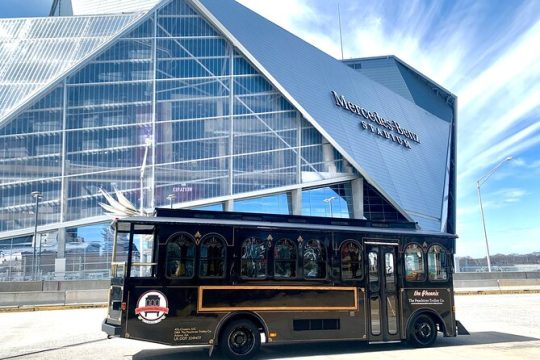
Hanukkah in USA
Dec 4–12, 2026
Christmas Eve in USA
Thu, Dec 24, 2026
Christmas activities in USA
Fri, Dec 25, 2026
Rainy day activities in USA
690 tours & activities
Senior-friendly tours USA
5,947 tours & activities
USA Foodie Tours
3,010 tours & activities
Family-friendly USA Tours
9,332 tours & activities
The best tours and activities for culture lovers in USA
7,393 tours & activities
Top 10 USA 2026
10 tours & activities
Top Day Trips from USA
2,721 tours & activities
Things to do in USA this summer
14,279 tours & activities


