


USA attractions
More things to do in the country
 #76
Art Museum of the Americas
If you are looking for things to do in USA we have 3 Tours and Activities to Experience Art Museum of the Americas. Check out our verified traveler reviews and photos of Art Museum of the Americas tours and other things to do in USA, and book securely when you find the perfect one. Learn the best ways to see famous Art Museum of the Americas and explore the most popular things to do in USA.
More #77
Hirshhorn Museum and Sculpture Garden
Most people explore the museum on their own, moving through the galleries at their own pace and using the QR codes on labels for extra background on their phones. A guided visit adds helpful context to challenging contemporary work. The museum sits on the National Mall, so it also pairs well with a walking tour of nearby Smithsonian museums and monuments. The round building shows modern and contemporary art, so it suits teens and adults more than small children. The campus and exhibitions are accessible, with captioning and assistive listening available. Scan the QR codes on artwork labels to tailor your visit, so bring a charged phone and headphones. The sculpture garden lies across Jefferson Drive, sits below street level and is reached by ramps.
More #78
International Spy Museum
Once your timed entry begins, you can move through the exhibits at your own pace and spend a few hours on the displays. A guided visit adds expert stories and the context behind the objects, which suits first-timers. Many walking tours of Washington's spy history pair the museum with nearby sights around L'Enfant Plaza, the National Mall and The Wharf. Most visitors spend about two and a half to three hours inside, and your ticket works all day if you step out for a break. The main audience is ages nine and up, and anyone under eighteen must be accompanied by an adult. Expect a bag check and a metal detector; free lockers are available, and large items such as luggage are not allowed in the exhibition. Food, drinks and gum are not allowed in the exhibition, though bottled water is fine, and the food court at L'Enfant Plaza is steps away. Wheelchairs are welcome, and umbrella and compact travel strollers fit, while larger strollers can be left in the lobby cloak room.
More #79
Little Round Top
Many people walk up on their own, since the summit and its monuments are signed. A guided battlefield tour brings the fight for this hill to life, explaining the troop positions you can see from the rocks. Tours often combine Little Round Top with Devil's Den, the Wheatfield and Pickett's Charge, and some ride on a bus or in your own vehicle with a guide on board. The hill has 2.3 miles of trails, so you can make a quick summit stop or a longer walk. About 0.7 miles of paths are accessible, including a concrete ramp and sidewalks from the summit parking lot. Natural-surface trails are steep and uneven and are not wheelchair accessible. Stay on marked trails and sidewalks, and do not sit or lean on the rebuilt stone breastworks. Restrooms are seasonal at the Wheatfield Road trailhead, so plan ahead in winter.
More #80
National Museum of Women in the Arts
If you are looking for things to do in USA we have 2 Tours and Activities to Experience National Museum of Women in the Arts. Check out our verified traveler reviews and photos of National Museum of Women in the Arts tours and other things to do in USA, and book securely when you find the perfect one. Learn the best ways to see famous National Museum of Women in the Arts and explore the most popular things to do in USA.
More #81
Washington DC Chinatown
Chinatown is easy to explore on your own by walking H Street, spotting the archway and choosing a restaurant. A guided food tour adds tastings and stories from the community. Walking tours can also link Chinatown with nearby Penn Quarter and Judiciary Square, making a longer downtown day with a local guide to explain the history. Chinatown is a small area along H and I Streets NW between 5th and 8th Streets, so it is easy to cover on foot. The Friendship Archway over H Street at 7th Street is the main photo stop. About 20 Chinese and Asian restaurants are in the neighborhood, and nearly all are family owned. Capital One Arena is in the area, so streets can get busy on event nights. Plan about an hour for a stroll and add time for a meal.
More #82
National Geographic Museum
The National Geographic Museum is the public gallery of the National Geographic Society, housed at the society's headquarters at 17th and M Streets in downtown Washington, DC. It shows the stories behind famous expeditions, photographs and scientific finds, drawing on objects and images gathered over more than a century of exploring the planet.The society was formed in the late 19th century by a small group of explorers and scientists who wanted geographic knowledge to reach ordinary readers, not just specialists. Run as a nonprofit devoted to science and education, it went on to back journeys to the poles, the deep ocean and remote mountain ranges, and its magazine, with the familiar yellow frame on every cover, carried those discoveries into homes around the world.The museum gives visitors a closer look at some of the things that came back. Its holdings include the camera Robert Peary used at the North Pole, a plain-looking tool that recorded one of the most debated moments in polar history, and pottery that Jacques Cousteau raised from a shipwreck during his undersea work. Exhibitions have ranged widely, from wildlife and ancient cultures to ocean science and the craft of photography, often pairing artifacts with large prints, film and hands-on displays.After a major renovation, the museum reopened under a new name that puts exploration at the center of what it presents. Readers who grew up with the magazine will recognize many of the stories on the walls, and seeing the real objects gives those familiar tales a weight that print alone cannot. Younger visitors often meet those explorers and photographers for the first time here. A guide can add the background on the people whose work fills the rooms and on how the society shaped the way the world sees itself.
More #83
Gettysburg National Military Park
Gettysburg National Military Park preserves the fields, ridges and woods around the small Pennsylvania town where Union and Confederate armies fought the largest battle of the Civil War. Visitors come to follow the three days of fighting across the landscape, see the monuments raised by veterans and states, and visit the cemetery where Abraham Lincoln delivered the Gettysburg Address.In the summer of the war's third year, Robert E. Lee led his Army of Northern Virginia north into Pennsylvania, hoping a victory on Union soil would weaken the North's will to fight. His troops collided with the Union Army of the Potomac, under George Meade, at Gettysburg, where many roads met. After two days of fierce fighting on the hills and ridges around town, Lee ordered a massive assault on the Union center, known as Pickett's Charge, and it was thrown back with terrible losses. The defeat ended his invasion, and the battle is often seen as a turning point of the war.Months later, Lincoln came to dedicate a national cemetery for the Union dead and delivered his short address on the meaning of their sacrifice, words that rank among the most famous in American history. Veterans returned in the decades that followed to mark where their units had fought, filling the battlefield with statues, stone markers and memorials. You can climb Little Round Top for its view over the boulders of Devil's Den, walk the open fields crossed in Pickett's Charge to the stone wall at the Angle, and see cannon lined up along the ridges where the armies faced each other.At the visitor center, a huge circular painting of Pickett's Charge, created in the 19th century, wraps around viewers with the chaos of the final assault, and the museum displays weapons, uniforms and belongings soldiers left behind. Beyond it, the quiet farm fields and orchards make the scale of what happened here all the harder to imagine.
More #84
Mallory Square
Mallory Square is the waterfront plaza in Key West's Old Town where crowds gather each evening to watch the sun slip into the Gulf of Mexico. Its Sunset Celebration, a lively mix of jugglers, musicians, craft sellers and snack carts, is one of the town's best-loved traditions and a classic way to end a day in the Keys.Long before the jugglers arrived, this was a working waterfront. In the 19th century Key West grew wealthy from wrecking, the risky business of salvaging cargo from ships that ran onto the reefs offshore, and a tall monument on the square honors the wreckers. The sunset gathering began more than half a century ago as an informal habit among artists, musicians and free spirits who came to the water's edge to toast the end of the day, and over time it grew into an organized nightly festival.When the city opened a cruise ship pier on the square, the move angered people who cherished the sunset ritual, and a local rule followed that sends the big ships out to sea well before dusk. Most evenings bring tightrope walkers, fire jugglers, acrobats and animal acts, each with a ring of onlookers, alongside painters and craft stalls. Some of the acts have performed here for decades and become local legends. When the sun finally touches the water, the crowd breaks into applause.The square has a quieter side as well. The Key West Historic Memorial Sculpture Garden lines up nearly 40 bronze busts of people who shaped the island, from Ernest Hemingway and Tennessee Williams to President Harry Truman and the railroad builder Henry Flagler, and the grand old Customshouse rises nearby. A local guide can fill in the tales of wreckers, writers and presidents that give this small island its outsized character.
More #85
Hanauma Bay
Hanauma Bay is a sheltered, crescent-shaped bay on the southeast shore of Oahu, east of Honolulu, protected as a nature preserve. Its calm, shallow waters cover a living coral reef full of tropical fish, and people come mainly to snorkel among them in one of Hawaii's best-known marine sanctuaries.The bay began as a volcanic crater. Tens of thousands of years ago a vent at the edge of the Koʻolau Range built a ring of volcanic tuff, and over time the sea broke through one side and filled the bowl, creating a protected cove where coral could take hold. The Hawaiian name is usually explained as joining words for a bay and for the curves of the land around it.Native Hawaiians fished here for generations under kapu rules that limited harvesting and protected fish stocks, and Hawaiian royalty came here to relax. In the 20th century, as tourism on Oahu boomed, crowds grew huge, and trampling, fish feeding, sunscreen and pollution badly damaged the reef. The bay was declared a Marine Life Conservation District, which banned fishing and taking coral or sea life, and later came visitor limits and an education program run with the University of Hawaii. Temporary closures, including one prompted by coral bleaching, have given the reef breathing room to recover.From the rim of the crater the whole bay spreads out below, a ring of turquoise water with darker patches of reef around a sandy beach and green slopes. In the water, parrotfish graze on the coral and other reef fish dart through the shallows in bright colors. Swimming here shows how fragile a reef is and how much it can bounce back when it is cared for. Going with someone who knows the reef helps you name what you see and understand why it matters.
More #86
Statue of Liberty
The Statue of Liberty is the colossal copper statue of a robed woman holding a torch aloft on Liberty Island in New York Harbor. A gift from the people of France, it has welcomed ships into the harbor for well over a century, and visitors come to see it up close, learn its story and look back at the Manhattan skyline across the water.The idea came from French admirers of American democracy, among them the scholar Édouard de Laboulaye, who proposed a monument to American independence and to the friendship between the two nations. The sculptor Frédéric Auguste Bartholdi designed the figure, and the engineer Gustave Eiffel devised the iron framework that supports its copper skin. The statue was built in Paris, shipped across the Atlantic in pieces and reassembled on a granite pedestal, paid for largely by small donations from Americans after the publisher Joseph Pulitzer campaigned for funds. It was dedicated in the late 19th century.Every detail carries meaning. The torch stands for enlightenment, the tablet in her left hand bears the date of the Declaration of Independence in Roman numerals, and a broken chain lies at her feet. The copper first shone a reddish brown, then weathered over the years to its familiar pale green. As steamships carried millions of immigrants into the harbor, many of them through nearby Ellis Island, the statue became a symbol of welcome, captured in Emma Lazarus's poem The New Colossus, in which the statue asks for the world's tired and poor.On the island, the Statue of Liberty Museum displays the original torch, which was replaced in the late 20th century, along with a full-size copy of the face and the story of how the monument was built. A guide can explain how the frame lets the statue flex in strong harbor winds and share the stories of the immigrants who first saw it from the decks of arriving ships.
More #87
Patriots Point Naval & Maritime Museum
Patriots Point Naval & Maritime Museum is a floating and shoreside museum on Charleston Harbor in Mount Pleasant, South Carolina, built around the aircraft carrier USS Yorktown. People come to walk the decks of real warships, see historic aircraft up close and learn how American sailors lived and fought at sea.The Yorktown was built during the Second World War and named for an earlier carrier of the same name lost at the Battle of Midway. She fought across the Pacific and earned the nickname The Fighting Lady, then served on through the Cold War and the Vietnam era. Late in her career she picked up the crew of Apollo 8 from the ocean after the first crewed flight around the Moon. Once retired, she was towed to Charleston Harbor to become the centerpiece of a new naval museum.Aboard the carrier you can climb from the hangar deck to the flight deck, where restored planes and helicopters stand in rows, and then explore the bridge, the ready rooms, the mess decks and the cramped berthing spaces. The ship also houses the Medal of Honor Museum, which tells the stories of the people who received the nation's highest award for valor. Moored nearby is the destroyer USS Laffey, famous for surviving a long and furious attack by kamikaze planes off Okinawa, which earned her the name The Ship That Would Not Die. On shore, the Vietnam Experience recreates a riverine support base, with boats, huts and a helicopter set among the marsh grasses.Between the ships, the waterfront gives wide views across the harbor toward downtown Charleston and Fort Sumter. A guide adds the human detail, from the routines of a crew of thousands to the moments when a single decision decided a battle.
More #88
Halona Blowhole
Many visitors stop on their own while driving the southeast coast out of Waikiki, then continue to Hanauma Bay or Sandy Beach. Guided island and coastal tours often include a stop here, and a guide can explain how the lava tube formed and what the Hawaiian name means. A guided stop also saves you the work of finding parking and planning the rest of the drive. This is a roadside lookout, so most visits are a short stop on the coastal drive. Watch the spray from the viewing area, since the sea cliffs around the blowhole are steep, slippery and sharp underfoot. Keep children away from the railings and from moving cars in the parking lot. The parking lot is on the ocean side of the road and can get busy. Swimming at the small cove beside the lookout is advised only when the surf is calm.
More #89
Kewalo Basin
You can stroll the harbor and the small beach park on your own, but the best way to experience Kewalo Basin is from the water. Charter and excursion boats leave from here for deep-sea fishing, whale watching in winter and sunset cruises. A guided trip puts you with a crew who knows where the fish and whales are. Kewalo Basin is a working commercial harbor, so expect boats, crews and fishing gear along the docks. Most visitors come for a charter or excursion trip, so confirm your meeting point with the operator. The harbor sees heavy visitor traffic from charter customers, so allow extra time to find parking and check in. A small beach park on the ocean side suits swimming, picnicking and sightseeing. Ala Moana Beach Park next door has lifeguards, showers and restrooms for before or after a trip.
More #90
Savannah City Market
City Market is easy to explore on your own. Stroll the blocks between Ellis Square and Franklin Square and step into galleries, gift shops and cafes as you go. A guided walking tour of the Historic District adds context on the market's long history and the squares around it. Evening history walks and food tours also pair well with a stop here, and a guide takes the guesswork out of choosing where to eat. City Market is an open district of galleries, boutiques, cafes and restaurants, so it suits all ages and you can browse at your own pace. There is no admission gate, so plan an hour or two to wander, and longer if you stop for a meal. Each shop, gallery and restaurant sets its own hours, so some places may be closed while others are open. Many buildings are restored 19th-century warehouses, so ask individual shops about step-free access if you use a wheelchair or stroller. Public restrooms and several restaurants and cafes are on site, which makes it an easy lunch or dinner stop.
More #91
Liberty Bell Center
The Liberty Bell Center in Philadelphia is the glass-walled hall that shelters the Liberty Bell, the cracked bronze bell that became a symbol of freedom around the world. It stands in Independence National Historical Park, across the street from Independence Hall, and visitors come to see the bell up close and learn how it earned its fame.The colonial Pennsylvania Assembly ordered the bell in the 18th century for its State House, the building now known as Independence Hall, and had it cast in London. It cracked the first time it was rung, so two local metalworkers, John Pass and John Stow, melted it down and recast it, and their names still appear on its face. Around its crown runs a verse from the Book of Leviticus calling for liberty to be proclaimed throughout the land. In the 19th century abolitionists seized on those words, gave the bell its name and made it an emblem of the fight against slavery. The wide crack that silenced it for good appeared in the same century.Inside, a walkway of exhibits follows the bell's second life as a symbol. Photographs, documents and films show how it toured the country by train to fairs and expositions, how suffragists commissioned a replica with its clapper chained silent until women won the vote, and how civil rights campaigners and freedom movements abroad borrowed its image. The walk ends in a light-filled chamber where the bell hangs from its wooden yoke, and through the glass behind it rises the brick tower of Independence Hall.Seeing it in person, many visitors are struck by how such a modest, damaged object came to carry so much meaning. A guide can separate the legends, such as the popular tale that it rang out to announce independence, from what the records actually show.
More #92
Arthur Ravenel Jr. Bridge (Cooper River Bridge)
The Arthur Ravenel Jr. Bridge is the tall cable-stayed bridge that spans the Cooper River to link the Charleston peninsula with the town of Mount Pleasant. With its two diamond-shaped towers and fan of white cables, it has become a modern landmark of the city, and its shared path draws walkers, runners and cyclists for sweeping views of Charleston Harbor.Before it opened in the early years of this century, two older steel truss bridges did the job. The first dated from the Roaring Twenties and the second from the postwar decades, and both had become narrow, steep and too low for the bigger container ships heading upriver to the port. The state replaced them with a single, wider crossing built high enough for large vessels to pass beneath, and the old bridges were taken down once traffic moved over. The new span was named for Arthur Ravenel Jr., a Charleston politician who served in Congress and the state senate and pushed hard to fund the project.At the time it opened, the main span was the longest of any cable-stayed bridge in the Western Hemisphere, and the towers are visible from much of the Lowcountry. Locals quickly adopted the bridge as a place to exercise, and the dedicated pedestrian and bike lane on its harbor side is a big part of its appeal. The annual Cooper River Bridge Run, one of the largest road races in the country, starts in Mount Pleasant and crosses it to finish downtown.From the top, the view spreads across church steeples and rooftops on the peninsula, the wide mouth of the harbor and the open ocean beyond. Container ships, sailboats and dolphins share the water below, and the aircraft carrier Yorktown sits moored at Patriots Point on the Mount Pleasant shore. A guide on a bike or walking tour can point out landmarks and share stories of the river and the port.
More #93
Lafitte's Blacksmith Shop Bar
Lafitte's Blacksmith Shop is a bar set in one of the oldest surviving buildings in New Orleans, at the far end of Bourbon Street in the French Quarter. People come for a drink in its dim, weathered rooms, for the story that the privateer Jean Lafitte once used it as a front for smuggling, and for a rare glimpse of colonial building methods.The building most likely went up as a house late in the 18th century, when Louisiana was under Spanish rule, and it survives as a rare example of briquette-entre-poteaux, a French colonial method of filling a heavy timber frame with brick. Patches of worn plaster reveal the old brick and posts underneath, giving the cottage its famously rough, slightly crooked look. It is a National Historic Landmark and part of the protected Vieux Carré historic district.The name recalls Jean and Pierre Lafitte, privateers and smugglers who ran a thriving trade in contraband around the Gulf Coast in the early 19th century. Local lore says a smithy here served as a cover for their dealings, and Pierre is said to have worked as a blacksmith, though no document ties them to the building. The brothers later fought beside Andrew Jackson in the Battle of New Orleans, which only polished their reputation as roguish heroes.Its life as a bar began in the middle of the 20th century, when a bohemian cafe here drew writers and celebrities such as Tennessee Williams and became a haven for the city's gay community. Inside, low ceilings, uneven floors and soft lighting keep the mood of an old tavern, and music often drifts from a piano in the back room. Like many old Quarter buildings, it is said to be haunted. A guide brings out the colonial craftsmanship in the walls and the colorful characters who passed through the door.
More #94
Key West Aquarium
The Key West Aquarium is a small, long-running public aquarium on Mallory Square in Old Town Key West, Florida. Families and curious travelers come to meet the sharks, sea turtles, rays and reef fish of the Florida Keys up close, and to learn about the shallow seas and mangroves that surround the island.The aquarium was built during the Great Depression as a public works project meant to revive Key West, whose economy had collapsed, by giving visitors a reason to come. It was one of the first tourist attractions on the island and among the earliest open-air aquariums in the state, with sunlight falling into the tanks from above. Over the decades it has been expanded several times and updated, but it has kept its original simple building near the harbor and its focus on the local waters rather than distant oceans.Exhibits are arranged around the marine habitats of the Keys. One area recreates the mangrove shoreline, where young fish shelter among the roots, and another shows the coral reef that runs offshore, with colorful grunts, snappers, angelfish and moray eels. A large tank holds nurse sharks and other species, and an outdoor pool is home to sea turtles, many of which were rescued after injuries and cannot return to the wild. Stingrays glide in an open tank, and the touch pool lets children feel the rough shell of a conch or the spines of an urchin. Staff talks explain how the animals feed, hunt and survive, and why the reef needs protecting.A visit here makes a good first look at Keys sea life before snorkeling the real reef, and a staff guide adds the stories of individual animals and how they came to live here.
More #95
Sandy Beach Park
Sandy Beach Park is a broad stretch of sand on Oahu's rugged southeast shore, east of Honolulu along the Ka Iwi coast. It is famous for a thundering shore break that draws expert bodysurfers and bodyboarders, while most visitors come to watch the action, relax on the grass and take in the dramatic coastline.Swells arrive here from deep water and break suddenly and hard on a steep, shallow bottom close to shore, throwing riders toward firmly packed sand. That combination produces fast, hollow waves that skilled bodysurfers love, but it has also made Sandy Beach notorious as one of the most dangerous beaches in Hawaii, known for neck and back injuries, often among visitors who underestimate it. Its reputation has earned it some grim nicknames among islanders.The beach lies at the foot of Koko Crater, one of the old volcanic cones that shape this corner of Oahu, and dark lava rock frames the sand on either side. Just to the west, the Halona Blowhole sends seawater spouting through a lava tube, and the tiny cove beside it starred in a famous beach scene from the film From Here to Eternity. To the east, the coast road curves toward Makapuu Point and its lighthouse, with small islands offshore.Behind the sand, the park's wide lawn is a local favorite for flying kites and family picnics. The beach has long been a proving ground for island bodysurfers, among them Barack Obama, who grew up in Honolulu and returned here to ride the waves. In calmer moments, the clear turquoise water against black lava makes this one of the most photogenic stops along the coast. A guide brings out the geology and local lore of this shoreline, explaining how lava, wind and surf carved its cliffs and coves.
More #96
South Beach
You can spend a whole day here on your own with a towel, a rented chair and a stroll along Ocean Drive. For more depth, an Art Deco walking tour explains the pastel buildings along the strip, while surf lessons, kayak and paddleboard rentals and jet ski outings add time on the water. Evening food and nightlife tours help first-time visitors find the best spots. South Beach faces the open Atlantic, so surf and currents vary; swim near a lifeguard stand and look at the flag first. Flags show the sea's roughness: red means high, yellow medium, green low, and purple means stinging marine life. Parking is paid, and city garages are generally cheaper than metered street spaces, so consider walking, biking or the free trolley. Lummus Park behind the sand has restrooms, playgrounds, volleyball courts and a paved path for walking or biking. Ocean Drive is much busier at night than in the morning, so families may prefer to visit earlier in the day.
More #97
Pioneer Square
Pioneer Square is Seattle's oldest neighborhood, a compact district of red brick and carved stone buildings on the southern edge of downtown near Elliott Bay. People come for its handsome Victorian streetscapes, its galleries and cafés, and the stories of fire, gold rush fortunes and a buried street level that still lies beneath the sidewalks.Seattle's founders settled here in the middle of the 19th century, and Henry Yesler built a steam sawmill on the waterfront. Logs were skidded down the steep slope of what is now Yesler Way to feed it, giving the street the nickname Skid Road, a phrase that later spread across the country as skid row. Late in the century a great fire swept through the wooden town, and the district was rebuilt quickly in brick and stone, much of it in the heavy, arched Richardsonian Romanesque style.During the rebuilding the city also raised the streets by one or two stories to cure chronic flooding and drainage problems, leaving the old storefronts below the new sidewalks. Those abandoned passages became Seattle's famous underground, and glass prisms set into the pavement above still let daylight into them. Soon after, the Klondike gold rush made the district the place where prospectors bought supplies before heading north, a boom remembered by the Klondike Gold Rush National Historical Park, which has its Seattle base here.When plans in the 20th century threatened to clear the old blocks for parking and new development, residents fought back, and the area became one of the city's first protected historic districts. In the triangular plaza at its heart stand an ornate iron pergola and a carved totem pole, while the white terra-cotta Smith Tower nearby was once the tallest building on the West Coast. Cobbled Occidental Park and the tiny Waterfall Garden add quiet corners between the brick blocks.
More #98
St. Louis Cemetery No. 3
St. Louis Cemetery No. 3 is a historic Catholic cemetery on Esplanade Avenue in New Orleans, near Bayou St. John and City Park. Its neat rows of whitewashed above-ground tombs make it one of the best places in the city to see the distinctive burial customs of New Orleans up close.The cemetery opened in the middle of the 19th century, when the older St. Louis cemeteries near the French Quarter were filling up and the city was spreading along Esplanade toward the bayou. It was laid out on the site of an earlier burial ground and has been run ever since by the Catholic Church. Families from nearby Creole neighborhoods buried their dead here, and new burials still take place among tombs more than a century old.New Orleans buries above ground partly because of its high water table and partly out of French and Spanish custom. Family tombs here are built of brick covered in plaster, many shaped like small temples or chapels, and the local custom of waiting a year and a day allows the same vault to be used again and again. Along the edges run long walls of oven vaults for families without a tomb of their own, and benevolent and religious societies built shared tombs for their members. Together they form what locals call cities of the dead.Look for the marble memorial to the architect James Gallier, who shaped much of the 19th-century city, and the grave of the photographer E. J. Bellocq, known for his haunting portraits of Storyville. Iron gates, carved angels and fading inscriptions in French reward a slow walk. A guide can decode the symbols on the tombs and tell the stories of the families inside.
More #99
Tennessee State Capitol
You can walk the grounds on your own, with terraced gardens, statues and the Belvedere overlook on the north slope. Inside, a guided tour led by museum staff explains the chambers, the history and the architecture, which adds context you would miss alone. Many visitors pair the Capitol with nearby Legislative Plaza, the Tennessee Supreme Court and downtown walking routes for a half-day civic history outing. The Capitol suits history and architecture fans, and a guided tour of the building takes about 45 minutes. It is a working government building, so it opens on weekdays only and closes on weekends and state holidays. Expect airport-style security screening at the door, and leave large bags and backpacks behind. Entrances differ by route, and the Motlow Tunnel links Charlotte Avenue to elevators in the basement, which helps if you want to avoid the hill.
More #100
Devil’s Den
If you are looking for things to do in USA we have 3 Tours and Activities to Experience Devil’s Den. Check out our verified traveler reviews and photos of Devil’s Den tours and other things to do in USA, and book securely when you find the perfect one. Learn the best ways to see famous Devil’s Den and explore the most popular things to do in USA.
More #101
National Memorial Cemetery of the Pacific
You can walk the grounds on your own, but a guided visit adds the stories behind the memorial. A guide can explain the Hawaiian name Puowaina, the courts of the missing and the graves of Medal of Honor recipients. Many half-day Oahu sightseeing tours and Pearl Harbor itineraries include a stop here, which makes the visit easy to fit around other sights. This is an active national cemetery and war memorial, so keep your voice low and dress respectfully. Plan about an hour to walk the grounds, see the memorial courts and enjoy the view over Honolulu. Funeral services take place here, so some areas can be busy or closed off during burials. You may leave fresh flowers in metal containers, but glass objects, balloons and permanent plantings are not allowed.
More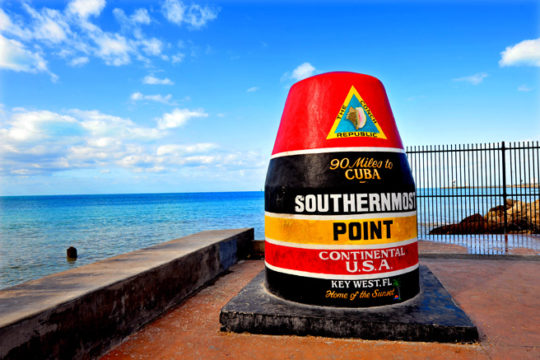 #102
Southernmost Point of the Continental USA
Most people visit on their own and spend only a few minutes on a photo. The buoy also works as one stop on a longer outing. Trolley, walking and bike tours of Old Town can include it, so ask the operator whether it is on the route. Many visitors pair it with sunset at Mallory Square. The buoy stands on an open street corner, so there is no gate, ticket or set visit time, and it suits every age. Seawall and plaza work around the buoy may limit access, so check with the City of Key West before you go. Most visitors queue for a photo, so take a few quick shots and let the next group step up. The marker is not the true southernmost point. Ballast Key holds that title, and the island's own southern tip is on Navy land closed to civilians.
More #103
Old South Meeting House
You can explore the exhibits at your own pace, but guided options bring the building's story to life. Themed tours cover topics such as the Boston Massacre and slavery and resistance, and a guide can point out details you might otherwise walk past. Many visitors pair it with the nearby Old State House, or join a guided Freedom Trail walking tour that includes it. A 3D online tour also shows areas closed to the public. This historic meeting house tells the story of the protests that led to the Boston Tea Party, so it suits history fans and families with older children. The entrance is on the Washington Street side, and the building is wheelchair accessible at the entrance and in the main hall. An elevator serves the restrooms and gift shop on the lower floor. Service animals are welcome in the galleries, and large-print materials, Braille, audio guides and visual descriptions are available. A combined visit with the Old State House fits easily into a Freedom Trail day.
More #104
King Kamehameha Statue
You can see the statue on your own in a few minutes, since it stands outdoors on King Street. A guided walking tour of downtown Honolulu adds the stories behind the king, the courthouse behind him, and nearby ʻIolani Palace, Kawaiahaʻo Church and the State Capitol. A good guide brings the history of the district to life, and a combined itinerary saves you from planning each stop. The statue suits all ages and takes about 15 to 30 minutes to see, longer if you add the palace and nearby sights. It stands outdoors on a busy downtown street, so bring sun protection and a hat. The building behind the statue, Aliʻiōlani Hale, houses the state Supreme Court, so treat it as a working courthouse. Around Kamehameha Day, the statue is draped in flower lei, which draws large crowds and busy streets.
More #105
Old Ursuline Convent
A guided tour is the best way to see the convent, because the docents explain how the Ursuline sisters ran a hospital, a school and an orphanage here in the colonial period. Tours cover the formal gardens, the church and the first floor of the building. It also pairs well with a walking tour of the French Quarter, where you can add nearby historic sites in one outing. The convent is a historic building in the French Quarter, and a visit suits anyone interested in New Orleans history and colonial architecture. Allow about an hour to see the building, the church and the formal gardens. It is a working religious site, so dress modestly and keep your voice low inside the church. The historic floors and steps can be uneven, so ask ahead about wheelchair and stroller access.
MoreDiscover USA

Luxury & Special Occasions
Prices from $1
Tours & Sightseeing
Prices from $1
Kid Friendly
Prices from $5
Cruises, Sailing & Water Tours
Prices from $14
Cultural & Theme Tours
Prices from $1
Water Sports
Prices from $10
Outdoor Activities
Prices from $5
Day Trips & Excursions
Prices from $1
Walking & Biking Tours
Prices from $1
Private & Custom Tours
Prices from $1
Food, Wine & Nightlife
Prices from $5
Sightseeing Tickets & Passes
Prices from $3


Marine Park
Prices from $50
River Street Savannah
Prices from $20
Old Fort Jackson
Prices from $42
House of Blues
Prices from $11
Marina City
Prices from $11
The Magnificent Mile
Prices from $8
French Quarter
Prices from $1
Wrigley Building
Prices from $11
Chicago River
Prices from $28
Merchandise Mart (The Mart)
Prices from $11
Chicago Riverwalk
Prices from $6
Castillo de San Marcos National Monument
Prices from $5
Hanukkah in USA
Dec 4–12, 2026
Christmas Eve in USA
Thu, Dec 24, 2026
Christmas activities in USA
Fri, Dec 25, 2026
Rainy day activities in USA
690 tours & activities
Senior-friendly tours USA
5,947 tours & activities
USA Foodie Tours
3,010 tours & activities
Family-friendly USA Tours
9,332 tours & activities
The best tours and activities for culture lovers in USA
7,393 tours & activities
Top 10 USA 2026
10 tours & activities
Top Day Trips from USA
2,721 tours & activities
Things to do in USA this summer
14,279 tours & activities


