Extended Today Black Friday 06HRS 11MIN 33SEC Up to 20% off gift cards BLACK FRIDAY
GIFT CARD SAVINGS
$100 – $249SAVE 5% $250 – $499SAVE 10% $500 – $999SAVE 15% $1,000+SAVE 20% Shop gift cards Discount applied automatically at checkout. Each card keeps its full value.
Top activities
Top landmarks
Cruise ship visitors
Trip ideas
Nearby places
Black Friday
Extended Today Black Friday 06HRS 11MIN 33SEC
UP TO 20% OFF GIFT CARDS
$100–$249(save 5%) $250–$499(save 10%) $500–$999(save 15%) $1,000+(save 20%)
Shop gift cards Discount applied automatically at checkout. Each card keeps its full value.
Tallinn

Cool things to do in Tallinn

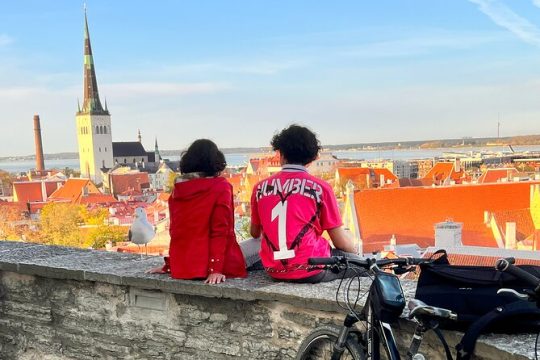
Welcome to Tallinn

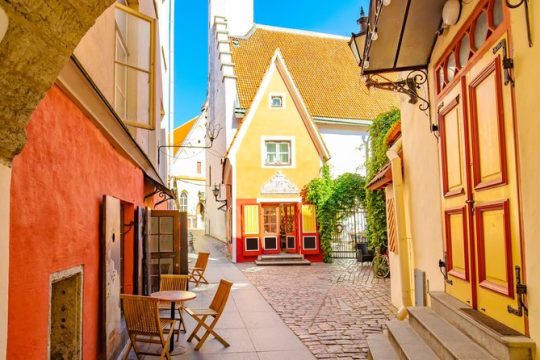
Tallinn is the capital of Estonia and one of the best-preserved medieval cities in northern Europe, with cobbled lanes, merchant houses and red-roofed towers packed inside its old walls. It is also a modern, compact city where you can go from Gothic halls to a contemporary art museum in a short tram ride. Most guided outings start in the morning, nearly half can be booked as private, and the center is small enough that a single walk covers a great deal. Cruise ships dock close to the old center, so a port day here feels relaxed rather than rushed.

Old Town, Upper and Lower

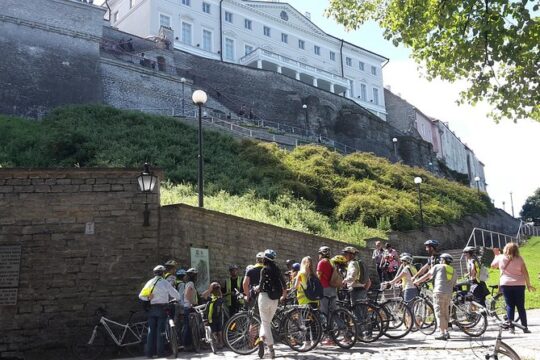
The Old Town is split into two levels. The lower town grew around Tallinn Town Hall and its market square, once the trading heart of a Hanseatic port, and the Tallinn City Wall still rings much of it with towers you can walk past or climb. Up the steep lanes on Toompea hill sits the upper town, where Toompea Castle houses the Estonian parliament, the onion domes of Alexander Nevsky Cathedral face it across the square, and the Dome Church holds rows of carved coats of arms. Viewing platforms here look down over the rooftops toward the harbor. Freedom Square, just outside the walls, marks the modern city and its story of independence.

Beyond the Walls: Kadriorg and Pirita

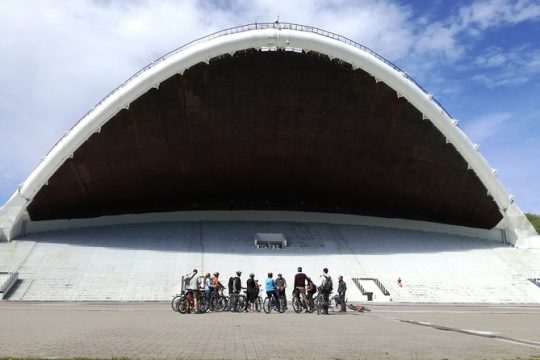
A short ride east brings you to Kadriorg Park, laid out around Kadriorg Palace, the baroque residence that Peter the Great built for his wife. The park also holds the Kumu Art Museum, the national gallery of Estonian art, in a striking modern building cut into the slope. Nearby, the Tallinn Song Festival Grounds are where huge choirs gather and where singing played a part in the country's peaceful road to independence. Further along the coast, Pirita has a long sandy beach, the ruins of a convent and a yachting harbor, a pleasant stop by bike or bus.

Picking Your Pace

Tours here come in many lengths. A walk through the Old Town takes two to four hours, and about a third of the options run four to eight hours, often adding Kadriorg, the coast or the forests, bogs and manor houses of the countryside. A few are full days, and a handful run over several days. About half of the outings suit children, and evening walks give you a calmer look at the lanes once the day crowds have gone. More than a third are timed for cruise passengers, and roughly a quarter include pickup.

Before You Go

Wear sturdy shoes: the cobblestones are uneven and the climb to Toompea is steep. Check whether church and museum entries are included, and if you arrive by ship, choose an outing that starts near the terminal so you can walk back on your own. Nearly every booking allows free cancellation, so you can lock in a plan early and adjust if the Baltic weather turns gray.

Allow time after your tour to wander the lanes again by yourself, when the light is soft and the squares are quieter. Couples often save the city walls and the viewing platforms for late afternoon, while first-timers tend to start with a guided walk and then return to the places they liked best.

Read more
Top 15 attractions in Tallinn
Tallinn Town Hall#1
4.8 (1,048)

Tallinn Town Hall

Outside the summer season, visits are arranged in advance, and guided visits and groups must be booked by email several days ahead. A guided visit brings out the stories of the building, from the cellar to the attic, that are easy to miss on your own. In summer a combined ticket covers the Town Hall and the tower. Many visitors add a guided walking tour of the Old Town on the same day. The Town Hall spans four floors from the cellar to the attic, and the attic is closed for much of the year. The tower is a separate visit, and its climb is 115 steps that grow steeper and taller as you go up. Only the main floor is wheelchair accessible and there is no accessible toilet, so wheelchair users should contact the venue ahead. Last entry is 30 minutes before closing, so allow time before the doors shut.
More
Toompea Castle#2
4.6 (1,744)

Toompea Castle

Toompea Castle is the medieval fortress on Toompea hill in Tallinn's Old Town, home to the Riigikogu, Estonia's parliament, behind a striking pink Baroque facade. Visitors come to see its towers and walls, above all Tall Hermann with the national flag on top, and to learn how the castle mirrors Estonia's long history of foreign rule and independence.An Estonian wooden stronghold crowned the hill before Danish crusaders captured it in the early 13th century and began building in stone. The knights of the Livonian Order later turned it into a square castle with corner towers, and over the following centuries it passed to Swedish and then Russian rule. In the 18th century, under Catherine the Great, the eastern side was rebuilt as a Baroque governor's palace, the pink building facing the square. After Estonia first won independence early in the 20th century, a parliament hall in a bold expressionist style was built inside the old courtyard.Tall Hermann, the tallest tower, rises at the castle's southwest corner, and whoever flew a flag from it was showing who held power over the country. The blue, black and white flag went up there again as Soviet rule crumbled, a moment many Estonians still remember with pride. Other medieval towers and long stretches of wall survive around the complex, and they look most imposing from the green slopes below. Inside, the assembly hall surprises with its bright, angular decoration, among the few expressionist interiors of its kind in Europe.Few buildings sum up a country so neatly, with Danish, German, Swedish and Russian layers wrapped around the seat of a free nation. A guide can trace those layers stone by stone and explain how the hilltop nobles and the merchants of the Lower Town lived side by side yet apart.

More
Tallinn City Wall#3
4.5 (35)

Tallinn City Wall

The wall walk is simple to do on your own, and it takes little time. To understand why Tallinn built such a long line of defenses and how each tower was used, join a guided walking tour of the Old Town that includes the wall. Many guided routes combine it with Toompea, Town Hall Square and the old gates, which makes a rewarding half day of medieval history. You can walk a short section of the wall that links Nun's Tower, Sauna Tower and Golden Foot Tower. The walk gives views over the Old Town rooftops and toward Toompea Castle. Bring cash, because payment at the wall is taken in cash. The stretch is short, so it fits easily into a day of Old Town sightseeing. Opening days and hours change by season, and the wall is closed on some weekdays, so check before you go.

More
Freedom Square (Vabaduse väljak)#4
4.8 (647)

Freedom Square (Vabaduse väljak)

Most people see the square on foot as part of a walk through Tallinn's Old Town, since it sits at its southern edge. A guided walking tour usually pairs it with the medieval streets and tells the story of Estonian independence and the Soviet era, which gives the monument and the surrounding buildings real meaning. On your own, you can combine it with the church and art hall beside it in under an hour. Freedom Square is an open public plaza, so there is no ticket, gate or set visiting time. Most visitors need 15 to 30 minutes, or longer if you add the church and art hall beside it. Concerts and state events sometimes take over the square, so parts of it may be fenced off. The Victory Column is a war memorial, so keep your voice down during ceremonies.

More
Alexander Nevsky Cathedral#5
4.5 (1,374)

Alexander Nevsky Cathedral

Visiting on your own takes little time, since the cathedral sits on Lossi plats beside Toompea Castle. A guided Old Town walking tour adds depth, linking the cathedral with Toompea's viewing platforms and the lower town. A guide can explain the Russian Revival architecture, the carved iconostases and the huge bells, and the complicated feelings many people have about the building. The cathedral is an active Orthodox church, so cover your shoulders and knees, and women may be asked to cover their heads. Photography and filming inside are not allowed without permission. Services take place here, so access to the interior can be limited during worship. The cathedral stands on Toompea hill and the approach and entrance involve steps, which can be difficult for wheelchairs and strollers. Most visitors spend about half an hour here, then continue to other sights on Toompea.

More
Balti Jaam Market#6
4.1 (306)

Balti Jaam Market

Balti Jaam Market is a covered market in Tallinn, housed in old limestone warehouses next to the Baltic railway station, a short way from the Old Town. Locals shop here for meat, fish and vegetables, and visitors come to browse the stalls, taste Estonian food and see one of the city's former industrial corners in a new role.The market sits where the districts of Kalamaja and Kelmiküla meet, an area long shaped by the railway. It started out as a pavilion beside the station and was later rebuilt as a modern market hall. The three warehouses at its core date from the late 19th century, and railway sidings once ran between them. The renewal kept much of their historic limestone, so the old stone walls still frame the stalls, mixing industrial heritage with fresh design.Inside, each hall has its own character. One is lined with small kiosks, others are given over to meat, fish and root vegetables, and a food and drinks area serves dishes to eat on the spot. It is a good place to see the ingredients of everyday Estonian cooking up close and to chat with the traders who sell them. Upstairs, the second floor belongs to restaurants and bars, which turn the old warehouses into a place to linger over a meal.Part of the pleasure is the setting itself. Trains still come and go from the station next door, the limestone walls recall the city's railway past, and the crowd mixes residents doing their shopping with travelers grazing from stall to stall. Even a short wander through the halls shows how Tallinn eats, shops and spends a free afternoon. It feels less like a showpiece than a working part of the city, which is exactly why it is worth a visit.

More
Dome Church#7
4.3 (480)

Dome Church

Most visitors drop in on their own as part of a walk around Toompea hill. A guided walking tour of the Old Town often covers this hill and gives the background on the cathedral, its coats of arms and its place near the parliament and Alexander Nevsky Cathedral. Concerts and organ recitals offer another way to enjoy the interior. The Dome Church is an active Lutheran cathedral, so keep voices low and expect some limits during services and events. It is open Tuesday to Sunday from 10:00 to 16:00. Inside are many tombstones, sarcophagi and coats of arms, plus a baroque pulpit and altarpiece, so it rewards a slow look. Wheelchair users should arrange access with the church a few days ahead.

More
Helsinki Cathedral (Tuomiokirkko)#8
4.8 (2,781)

Helsinki Cathedral (Tuomiokirkko)

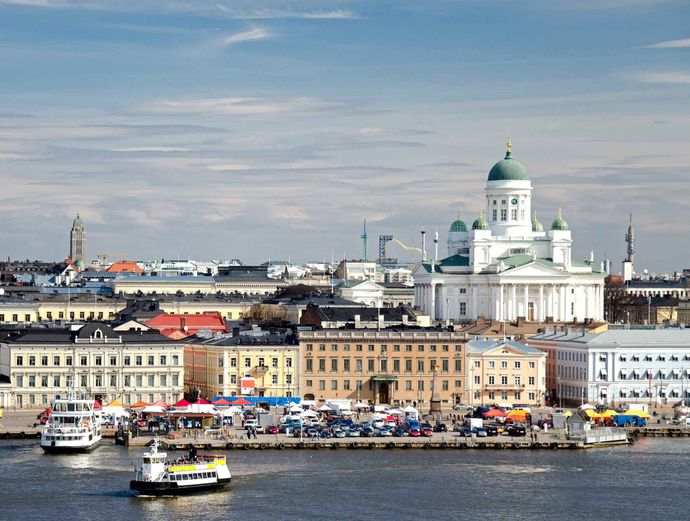
Helsinki Cathedral is the white, green-domed Lutheran church that towers over Senate Square in the center of Finland's capital, the city's best-known landmark. Visitors come to climb its broad steps for views over the square toward the harbor, admire its crisp neoclassical design, and step inside an interior of calm, light-filled simplicity.The cathedral was the crowning piece of a new capital. After Finland passed from Swedish to Russian rule in the early 19th century, Helsinki was chosen as the seat of government, and the German-born architect Carl Ludvig Engel was asked to give it a monumental center. He designed Senate Square as a single classical ensemble, with the government palace, the university and this church on the rise above. Engel did not live to see it finished, and it was completed in the middle of the 19th century, originally named St. Nicholas' Church in honor of the Russian tsar who was also Grand Duke of Finland.Look up as you approach and you will see the twelve apostles standing along the roofline, and a cluster of smaller domes and bell towers added by Engel's successor around the great central dome. Inside, the decoration is deliberately restrained, with white walls, an altarpiece framed in gold, a grand organ and statues of the Reformation leaders Martin Luther and Philipp Melanchthon alongside Mikael Agricola, the bishop who laid the foundations of written Finnish.Beneath the church, the vaulted crypt serves as a space for exhibitions and concerts. Out front, Senate Square centers on a statue of Tsar Alexander II, remembered warmly in Finland for reforms that widened its self-rule, and the square becomes the city's stage for New Year celebrations and public gatherings. The cathedral still holds regular services and weddings, so it remains a living church rather than a museum. A guide can explain how a church named for a tsar became a backdrop for an independent nation's proudest moments.

More
Helsinki Central Library Oodi#9
4.7 (3,132)

Helsinki Central Library Oodi

Many visitors explore on their own with the floor plan and information desk maps, moving between floors at your own pace. A 360-degree virtual tour is also available. Groups can book a guided tour of about an hour with a local guide, and Oodi pairs well with a walking tour of central Helsinki taking in Parliament House, Kiasma and Central Park. Oodi is a working public library, so many people come to read, study, borrow items or just look around. The building has a cafe and restaurant, and you may eat your own small snacks on the floors, away from computers and machines. All facilities are accessible, strollers are welcome, and a wheelchair can be borrowed at the first-floor information desk. There is no luggage storage, so travel light. Only guide dogs are allowed, and photo shoots need advance notice.

More
Helsinki Music Centre (Musiikkitalo)#10
4.4 (605)

Helsinki Music Centre (Musiikkitalo)

Helsinki Music Centre, or Musiikkitalo, is the main concert venue of Finland's capital, standing beside Kansalaistori Square in the city center, across the street from Parliament House. It is home to two leading orchestras and a renowned music academy, and people come for concerts in its acclaimed main hall and for its glass and copper architecture.The building opened in the early 21st century, the result of long debate about giving Helsinki a hall with first-rate acoustics, since nearby Finlandia Hall had never fully satisfied musicians. It was designed by the Finnish firm LPR Architects after an architectural competition, and it brought together under one roof the Helsinki Philharmonic Orchestra, the Finnish Radio Symphony Orchestra and the Sibelius Academy, Finland's leading school of music.The heart of the building is the main concert hall, laid out in the vineyard style, with terraces of seats rising on all sides of the stage so that no listener sits far from the musicians. Its acoustics were shaped by Yasuhisa Toyota, known for concert halls around the world, and the hall is admired for its clear, warm sound. Smaller halls for chamber music, organ recitals, experimental work and student performances surround it. The orchestras rehearse here as well as perform, and students of the academy study and practice in the same building.From outside, the building shows a calm face of glass, with the copper-clad main hall visible through the glazing like an instrument in its case. The foyers work as an open public space for the city, a place to meet and linger. The building belongs to a cluster of cultural landmarks around Töölönlahti Bay, a park-lined inlet at the heart of the city. A guide can explain how architects and acousticians worked together on every surface of the hall.

More
Helsinki Senate Square (Senaatintori)#11
4.7 (3,210)

Helsinki Senate Square (Senaatintori)

Senate Square is the grand neoclassical heart of Helsinki, a wide cobbled square crowned by the white, green-domed Helsinki Cathedral at the top of a broad flight of steps. Surrounded by the Government Palace, the main building of the University of Helsinki and some of the city's oldest houses, it is the place to see how the Finnish capital took shape.The square was born of a change of rulers. When Finland passed from Sweden to the Russian Empire in the early 19th century, the tsar made Helsinki the capital of the new Grand Duchy and ordered a monumental center worthy of the role. Johan Albrecht Ehrenström drew up the town plan, and the German-born architect Carl Ludvig Engel designed the buildings around the square, giving Helsinki the stately columns and pale facades that earned it comparisons with St Petersburg. The cathedral, originally dedicated to St Nicholas, was completed after Engel's death, and its four smaller domes were added by his successor.In the middle stands a bronze statue of Emperor Alexander II, raised in the late 19th century by Finns who remembered him as a reforming ruler who revived their parliament and strengthened the Finnish language. A few older merchant houses, Sederholm House among them, recall the small town that stood here before Engel's plan, while the Government Palace on the east side holds the prime minister's office. From the top of the cathedral steps the whole composition falls into place, with the university and palace facing each other across the cobbles. Each winter the square hosts a Christmas market, and through the year it serves as a stage for concerts and celebrations.The ensemble has changed remarkably little since Engel's day. A guide can explain how the square mirrored Finland's position between east and west, and how the statue of a Russian emperor came to be treasured by Finns.

More
Kadriorg Palace#12
4.5 (510)

Kadriorg Palace

Kadriorg Palace is an elegant Baroque palace in Kadriorg Park, east of Tallinn's Old Town, built by the Russian tsar Peter the Great for his wife, Catherine. It houses the Kadriorg Art Museum, and visitors come for its grand main hall, its collection of European and Russian art and the formal gardens around it.Peter began the palace in the early 18th century, after his armies took Tallinn during the Great Northern War, and named the estate after Catherine: both the Estonian name Kadriorg and its German equivalent mean Catherine's valley. The Italian architect Nicola Michetti drew up the plans in the style now called Petrine Baroque, and the main building was finished within a few years. After Peter died, Catherine lost interest in the estate.The palace went on to serve many masters. For nearly two centuries it housed the governors of the Russian province of Estonia, and after Estonian independence it hosted art exhibitions before becoming the official residence of the head of state, Konstantin Päts, between the two world wars. During the German occupation it again housed a civilian governor, and under Soviet rule it served as the main home of the Art Museum of Estonia but slowly fell into disrepair. A long restoration, supported by the Swedish government, reopened it to the public around the turn of the millennium.The highlight inside is the two-story main hall, decorated with stucco work that includes Catherine's initials and crowned by a painted ceiling. The surrounding rooms display foreign art from the 16th to the 20th century, with works by painters such as Jacob Jordaens, Angelica Kauffman and Ilya Repin. Behind the palace, the flower garden follows the plan of the gardener Ilya Surmin, with Poseidon fountains at its heart. A guide can bring out Catherine's remarkable rise from humble origins to empress.

More
Kadriorg Park#13
4.7 (667)

Kadriorg Park

Kadriorg Park is a large historic park on the eastern side of Tallinn, laid out around a Baroque palace that the Russian tsar Peter the Great built for his wife Catherine. People come for its formal gardens, ponds and shady avenues, and for the art museums and the presidential palace set among the trees.Peter the Great took control of Estonia early in the 18th century during the Great Northern War, and soon afterward he ordered a summer residence by the sea outside the walls of Tallinn. The Italian architect Niccolò Michetti designed the palace in the Baroque style, with a grand hall rising two stories and a formal garden behind it. The name Kadriorg means Catherine's Valley in Estonian. While the palace was going up, the tsar stayed in a modest house on the grounds, which is kept as a small museum.The palace holds the Kadriorg Art Museum, with European and Russian paintings from several centuries, and the Mikkel Museum shows a private collection in the old palace kitchen. At the top of the park, the striking modern building of Kumu, the Art Museum of Estonia, displays the country's own art, while the Presidential Palace, built between the world wars, stands beside the old palace garden. Around them spread the Swan Pond with its little island pavilion, a flower garden, a Japanese garden and long tree-lined avenues.At the seaward end of the park, the bronze angel of the Russalka Memorial holds a cross aloft in memory of a warship lost with all hands in the Gulf of Finland. The park has been a favorite promenade for Tallinn's residents for three centuries, and its mix of royal history, art and green space makes it feel like a city within the city. A guide can point out the traces of the tsar's plan that are easy to miss among the gardens.

More
Kumu Art Museum (Kumu Kunstimuuseum)#14
4.8 (56)

Kumu Art Museum (Kumu Kunstimuuseum)

Kumu Art Museum is Estonia's main art museum, set into a limestone slope on the edge of Kadriorg Park in Tallinn. People come to see the story of Estonian art from the 18th century onward under one roof, along with changing exhibitions of modern and contemporary art from Estonia and abroad.Kumu belongs to the Art Museum of Estonia, and its building was designed by the Finnish architect Pekka Vapaavuori, who won a design competition for the project. Rather than sitting on top of the land, the museum is cut into the bank of Lasnamäe hill, so its curving walls of stone, copper and glass seem to grow out of the slope. The result gave the national collection a purpose-built home and a landmark of its own.The permanent galleries trace Estonian art through three broad chapters. The classics cover the painters and sculptors who shaped a national art, from portraits and landscapes to early modern experiments. A second section looks at art made during the Soviet occupation, when artists worked within official rules or quietly pushed against them. The third follows the work made after independence, as artists took up new freedoms and new forms. Together, the sections tell the country's modern history as clearly as any textbook.Temporary exhibitions bring in modern and contemporary art from Estonia and further afield, so a visit can swing from historic canvases to installations and video. The building also holds an auditorium, a library and a bookstore, along with a cafe and a restaurant, and it works as a cultural meeting place as much as a gallery. A guide is most valuable in the Soviet-era rooms, where the stories behind the works are as gripping as the art.

More
Olde Hansa#15
4.4 (61)

Olde Hansa

If you are looking for things to do in Tallinn we have 1 Tours and Activities to Experience Olde Hansa. Check out our verified traveler reviews and photos of Olde Hansa tours and other things to do in Tallinn, and book securely when you find the perfect one. Learn the best ways to see famous Olde Hansa and explore the most popular things to do in Tallinn.

More

Good to know Tallinn

A few days in Tallinn feel unhurried. Most mornings start with a guided stroll, and by lunch you have climbed Toompea hill, crossed the market square and found a warm cafe for a break.

Afternoons suit a slower outing to Kadriorg Park east of the center or a drive to the coast and countryside, and evenings go to long dinners inside the walls.

Private outings are common, which suits couples and families with children, and the short distances make the city an easy first taste of the Baltics.

Summer, from June to August, brings long light evenings, open terraces and the busiest streets. Around midsummer the sky barely darkens, so save the walls and viewpoints for late in the day.

May and September are calmer and mild, good for walking without the crowds. Autumn turns Kadriorg Park gold, though the days shorten quickly, so start early.

Winter is dark and cold, often with snow, yet the Christmas market in the main square makes December a cozy time to come. Dress warmly and keep walks short.

  • Tallinn Airport is a short ride from the center, and ferries from Helsinki and Stockholm dock beside the walls.
  • Cruise ships berth within walking distance of the old quarter, so a port day needs no transfer.
  • The old quarter is best on foot, and trams and buses run out to Kadriorg and the seaside.
  • For manor houses, bogs and national parks, choose a tour with transport.
  • Pack a warm layer and a rain jacket, even in July.
  • Plan a midday coffee break, since the steep lanes tire legs quickly.
Tallinn
Peak season Jun – Aug
Local Currency Euro (€)
Weather now
Language(s) Estonian
Time Zone EET (+2)
Country Code +372
Attractions 25
Tours & Tickets 112
Verified reviews 4,155

Frequently Asked Questions

The answers provided below are based on answers previously given to customers' questions.

Activity name

Discover Tallinn