Swiss Alps attractions
More things to do in the region
 #16
Jungfrau
The Jungfrau is one of the great snow-covered peaks of the Bernese Alps in Switzerland, rising on the border between the Bernese Oberland and the Valais, where the village of Fieschertal lies on its southern side. Travelers come for its glaciers, its high-altitude views and the famous railway that climbs almost to its summit.Seen from Interlaken and the Lauterbrunnen valley, the Jungfrau stands beside the Eiger and the Mönch as one of three famous summits that dominate the skyline. Its name means the maiden or the young woman, a nod to its pure white face. The first recorded ascent came early in the 19th century, when the Meyer brothers of Aarau approached from the south across the glaciers of the Valais side, the same remote country that rises above Fieschertal.The mountain is best known today for the Jungfrau Railway, an engineering project of the late 19th and early 20th centuries that tunnels through the Eiger and the Mönch to reach the Jungfraujoch, the icy saddle between the Mönch and the Jungfrau. Its station is the highest in Europe, and the saddle has long been promoted as the Top of Europe. Workers spent years blasting the tunnels through solid rock, and the route remains one of the boldest mountain railways ever built.From the saddle, the view opens over the Great Aletsch Glacier, the longest glacier in the Alps, which sweeps south toward the Valais in a broad river of ice. The surrounding peaks and glaciers form part of a UNESCO World Heritage Site that stretches across the region. At the top, an ice palace is carved into the glacier, and a research observatory stands on a rocky outcrop. A guide can explain the geology, the climbing history and the railway's story as the high peaks unfold around you.
More #17
Jungfraujoch Sphinx Observatory (Sphinx-Observatorium)
The Sphinx Observatory crowns a rocky peak above the Jungfraujoch, the high glacier saddle between the Mönch and the Jungfrau in the Swiss Alps. Besides housing a working research station, it has an open-air viewing terrace that gives visitors one of the highest and widest panoramas in Europe, with glaciers and peaks spread out below.Bringing visitors up here was a feat in itself. Late in the 19th century, the industrialist Adolf Guyer-Zeller proposed a railway bored through the Eiger and the Mönch, and building it took 16 years of hard and sometimes deadly work. The line was meant to reach the summit of the Jungfrau, but it stopped at the saddle and opened early in the 20th century. On the way up, trains pause at windows cut through the rock, one high on the north face of the Eiger and another facing a sea of ice.The observatory itself was built in the first half of the 20th century on the Sphinx, a rocky outcrop rising above the station, and it ranks among the highest astronomical observatories in the world. At more than 3,500 meters, it is one of the loftiest points in Switzerland that can be reached by public transport. Scientists use it to study the atmosphere, and it belongs to a global network that monitors greenhouse gases, fine particles and other changes in the air we breathe.From the terrace, the Aletsch Glacier, the longest in the Alps, curves away in a vast river of ice, with summits of the Bernese Alps on every side. The whole area forms part of the Swiss Alps Jungfrau-Aletsch World Heritage Site. Within the complex below, the Ice Palace leads through tunnels carved into the glacier and lined with ice sculptures. A guide can explain how the glaciers shaped these mountains and how the research above helps track a changing climate.
More #18
Kleine Scheidegg
Kleine Scheidegg is a high mountain pass in the Bernese Oberland, set at the foot of the Eiger, Mönch and Jungfrau between the valleys of Grindelwald and Lauterbrunnen. Travelers come for the close-up view of the Eiger's north face, the start of the railway that tunnels up to the Jungfraujoch, and the walking and skiing all around.The pass sits at just over 2,000 meters on a grassy saddle between the Eiger and the Lauberhorn, and for centuries it was crossed only on foot by herders and travelers moving between the two valleys. Tourism changed that in the 19th century. A mountain inn opened, hotels followed, and near the end of the century the Wengernalp rack railway climbed up from both sides. The industrialist Adolf Guyer-Zeller then conceived an even bolder line, one that would bore through the Eiger and the Mönch to the high saddle of the Jungfraujoch. Construction took well over a decade, and Kleine Scheidegg became its starting point.The Eiger's north face, a dark wall of limestone and ice, towers over the station, and in the first half of the 20th century, as climbers vied to make the first ascent, hotel guests followed their progress and their tragedies through telescopes. The Mönch and the Jungfrau line up beside it, glaciers spilling from their flanks. In summer, wildflowers cover the meadows and trails lead off toward Wengen, Grindelwald and the foot of the Eiger. In winter the pass becomes a hub of the ski area, and the Lauberhorn downhill, a classic of the World Cup circuit, races down the slopes nearby.The station itself is a lively crossroads where trains from both valleys meet and walkers, skiers and sightseers mingle with the mountains as a backdrop. A guide helps you pick out the peaks and trace the famous climbing routes across the Eiger's face.
More #19
La Maison du Gruyère
La Maison du Gruyère is a visitor center devoted to Gruyère cheese in Pringy, at the foot of the medieval town of Gruyères in the Swiss canton of Fribourg. Travelers come to watch the famous cheese take shape in a demonstration dairy and learn how the surrounding pastures give it its flavor, a trip within reach of Lausanne.Gruyère takes its name from the town and district of Gruyères, where dairy farming in the upper valleys has shaped life for centuries. It is a hard cheese made from raw cow's milk and aged for months to develop its deep, nutty flavor, and it is a classic fondue cheese. Farmers across the region bring their milk to village dairies, where it is turned into large wheels, and the visitor center shows that process in the open.The interactive exhibition follows the path from meadow to cellar, with hands-on displays on the cows, the herbs and grasses they graze and the people who tend them. In the demonstration dairy, cheesemakers work the milk in big copper vats, cutting and pressing the curd as visitors look on. Rows of wheels resting in the cellar show how much patience goes into each one.Just up the hill, the medieval town of Gruyères adds a castle, a cobbled main street and a museum devoted to the artist H. R. Giger, known for his designs for the film Alien. Together, the dairy and the hilltop town show how one food has shaped the identity of a whole region. Green slopes, grazing cows and the peaks of the Fribourg Prealps make the setting as memorable as the cheese. A guide can explain the strict rules that protect the Gruyère name and how the taste changes as a wheel ages.
More #20
Lake Brienz (Brienzersee)
Lake Brienz is a slender Alpine lake in the Bernese Oberland, stretching east from Interlaken toward the village of Brienz. Its water glows a vivid turquoise against steep wooded mountainsides, and visitors come for boat trips, quiet lakeside villages, the woodcarving tradition of Brienz and the falls at Giessbach.The lake was carved by glaciers and is fed mainly by the Aare, which flows down from the glaciers near the Grimsel Pass, enters at Brienz and leaves at the western end to wind through Interlaken into Lake Thun. The Lütschine, carrying water from the valleys of Grindelwald and Lauterbrunnen, flows in near Bönigen. Fine rock flour carried by the meltwater hangs in the water and scatters the sunlight, which gives the lake its milky turquoise color.Across the water from Brienz, the Giessbach Falls tumble down the mountainside in a long staircase of cascades through the forest. In the 19th century a grand hotel rose beside them to receive the first wave of Alpine tourists, and its little funicular railway, among the oldest in Europe, has been hauling guests up from the lake ever since. A path leads behind one of the cascades, so you can look out through a curtain of falling water.Brienz itself is known across Switzerland for woodcarving, with a school that has trained carvers for generations, and for the steam cog railway that climbs to the summit of the Brienzer Rothorn. Nearby, the Ballenberg open-air museum gathers historic farmhouses from all over the country. On the southern shore, the small village of Iseltwald sits on a little peninsula, and its jetty became famous after appearing in a Korean television drama. A guide can name the peaks around the lake and share stories of the old lake steamers.
More #21
Lake Thun (Thunersee)
Lake Thun is a long Alpine lake in the Bernese Oberland of Switzerland, running between the medieval town of Thun and the resort of Interlaken beneath a ring of mountains. Its blue-green water, shoreline castles and views of snowy peaks draw people for boat trips, lakeside villages and walks along the water.The lake was shaped by glaciers during the last Ice Age and is fed by the Aare, which flows in from Lake Brienz through Interlaken. In the early 18th century engineers channeled the lively Kander River into the lake to keep the farmland around Thun dry, and the sediment it carried built a wide delta near Spiez. The shores have been settled since prehistoric times, and medieval lords raised strongholds along them to control trade and travel.Those castles are a big part of the appeal. Thun Castle, with its corner turrets, crowns the hill above the old town. Oberhofen Castle seems to rise straight from the water, its slender lake tower a favorite of photographers, while Spiez Castle guards a sheltered bay beside sloping vineyards. Schadau and Hünegg add 19th-century romance with their parkland gardens and lavish interiors.Above the north shore, the St. Beatus Caves wind deep into the cliffs, tied to the legend of an Irish monk who drove out a dragon and lived there as a hermit. Across the water rises the near-perfect pyramid of the Niesen, and on clear days the Eiger, Mönch and Jungfrau line the horizon. Historic paddle steamers still sail the lake, their polished brass and churning wheels a pleasure in themselves. A guide can link the castles, caves and villages into a single story of the lake and the families who ruled it.
More #22
Lucerne (Luzern)
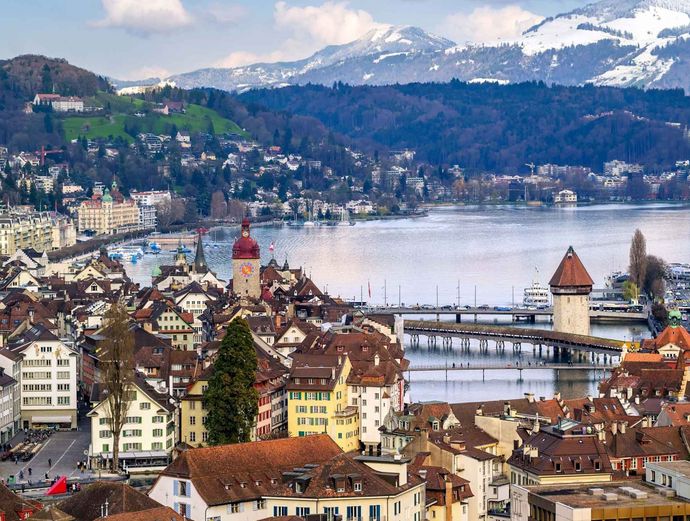
Lucerne is a lakeside city in central Switzerland, built where the Reuss River flows out of Lake Lucerne beneath a ring of mountains. Travelers come for its covered wooden bridges, a well-kept medieval old town and the way water, peaks and painted houses all fit into one small, walkable place.The town grew up around a Benedictine monastery and gained real importance once a trade route over the Gotthard Pass opened in the Middle Ages, putting Lucerne on the road between northern Europe and Italy. It joined the early Swiss Confederation in the 14th century and remained a Catholic stronghold through the Reformation, which explains its many church towers. The Hofkirche, with its slender twin spires, and the pale Jesuit Church on the riverbank are two of the finest. In the 19th century steamships and grand hotels turned Lucerne into one of the first great resort towns in Europe, and writers, royals and composers followed.The Chapel Bridge is the city's emblem, a timber walkway angled across the river with painted triangular panels under its roof showing scenes from local history and legend. A fire badly damaged it late in the 20th century, and much of what you walk on was rebuilt. Downstream, the smaller Spreuer Bridge carries a darker cycle of paintings on the Dance of Death. In the old town squares, house fronts are covered in murals, and the Musegg Wall still runs along the hill above with its row of watchtowers. The Lion Monument, a dying lion cut into a sandstone cliff, honors Swiss Guards killed defending the French king during the Revolution.Lucerne also has strong museums, including the large Swiss Museum of Transport and a private collection rich in Picasso and Paul Klee. A guide is good at finding the stories hidden in the bridge panels and facade paintings that most people pass without noticing.
More #23
Maison Cailler
Maison Cailler is the visitor center of the Cailler chocolate factory in Broc, a village in the Gruyère region of western Switzerland. It tells the story of chocolate and of one of the country's oldest chocolate brands, and shows how milk from the surrounding pastures goes into the bars made next door.The brand began in the early 19th century, when François-Louis Cailler opened a chocolate works near Vevey on Lake Geneva after learning the craft in Italy. Later in the century, his son-in-law Daniel Peter found a way to combine cocoa with milk, creating one of the first milk chocolates, an invention that changed Swiss chocolate for good. Cailler's grandson Alexandre opened a new factory in Broc at the end of the 19th century, drawn by the supply of fresh milk from the Gruyère herds, and chocolate has been made here ever since.The exhibition is staged as a series of themed rooms. It begins with cocoa in the ancient cultures of Mesoamerica, follows the bean across the ocean to the courts of Europe, and then turns to the Swiss pioneers and the Cailler family, using sets, sound and projections in place of glass cases. Further on, a hands-on area introduces the raw ingredients, so you can look at, touch and smell cocoa beans, hazelnuts, almonds and more before seeing how they come together.The Cailler name became part of Nestlé in the first half of the 20th century, but the brand kept its own identity and recipes, among them the twig-shaped Branches bars that many Swiss grew up with. In a chocolate workshop, visitors can make and decorate their own creations. The Gruyère countryside around Broc, with its dairy farms and the castle town of Gruyères on its hill, makes the factory part of a wider story about milk, cheese and chocolate in the region.
More #24
Matterhorn
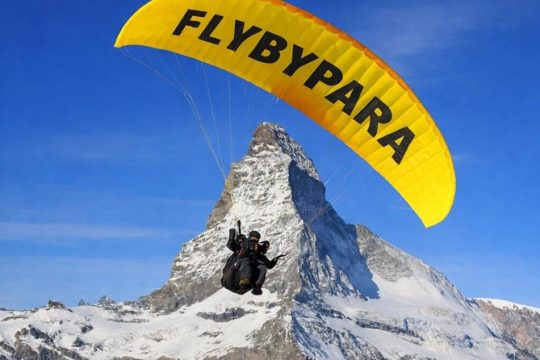
The Matterhorn is the famous pyramid-shaped peak on the border between Switzerland and Italy, rising above the village of Zermatt in the Valais Alps. Travelers come to see its sharp, lonely summit from viewpoints, trails and mountain railways, and to learn the dramatic story of the people who first climbed it.For a long time the Matterhorn was considered impossible to climb, and it was one of the last great Alpine peaks to be conquered. In the middle of the 19th century, the English climber Edward Whymper and a party of six reached the summit by the Swiss ridge. On the way down a rope broke, and four men fell to their deaths, a tragedy that made the mountain famous around the world and changed how people thought about climbing. A few days later, a team led by the Italian guide Jean-Antoine Carrel reached the top from the Italian side. The broken rope is now displayed in the Matterhorn Museum in Zermatt.The mountain's four steep faces point almost exactly to the four compass directions, which is why it looks so different from each valley. From Zermatt, the classic view shows the east and north faces, with the Hörnli ridge running up between them. From the Gornergrat, the peak rises beyond a sea of glaciers and other high summits, and on calm mornings it is mirrored in the small Riffelsee lake. From the Klein Matterhorn, the highest viewpoint, you look across the glaciers toward Italy, where the mountain is known as Monte Cervino. Zermatt itself has old wooden chalets and barns on stilts, built to keep mice out of the grain, and a cemetery for climbers lost on the mountain.A local guide can share mountain stories and help you pick out the climbing routes on the faces.
More #25
Matterhorn Glacier Paradise
Matterhorn Glacier Paradise is the summit station on the Klein Matterhorn, a rocky peak high above Zermatt on the border between Switzerland and Italy. At close to 3,900 meters, it is the highest point in Europe you can reach by cable car, and people ride up for wide views over glaciers and snowy summits, with the Matterhorn itself close at hand.The Klein Matterhorn, or Little Matterhorn, belongs to the Breithorn massif, across the Theodul Pass from its famous neighbor. A Swiss naturalist first climbed it in the late 18th century, and for generations after that it was the domain of mountaineers. Plans for a lift met years of objections from Zermatt residents and environmental groups before engineers finally strung cables to a station just below the top in the late 20th century. Concrete for the station had to be flown in by helicopter, and crews worked through bitter cold and fierce wind. Later lifts added glass-walled gondolas, and the system now links Zermatt with Breuil-Cervinia on the Italian side.From the station, an elevator in the rock and a short flight of stairs lead out to a viewing platform on the summit. On clear days the panorama sweeps across the Monte Rosa massif, the Breithorn and a long chain of high Alpine peaks reaching into Italy and France. Below the station, a cave cut into the glacier lets you walk among blue walls of ancient ice decorated with carved sculptures. A tunnel through the mountain opens onto the snowfields on the south side.Those snowfields form a ski area that stays open all year, described as the largest and highest summer ski area in Europe, so skiers in helmets share the cabins with sightseers in sunglasses. Climbers also start here for the Breithorn and other big summits nearby. With a guide, the view comes with the first-ascent stories of the Matterhorn and its neighbors.
More #26
Mountaineers’ Cemetery
If you are looking for things to do in Swiss Alps we have 7 Tours and Activities to Experience Mountaineers’ Cemetery. Check out our verified traveler reviews and photos of Mountaineers’ Cemetery tours and other things to do in Swiss Alps, and book securely when you find the perfect one. Learn the best ways to see famous Mountaineers’ Cemetery and explore the most popular things to do in Swiss Alps.
More #27
Mt. Pilatus
Mt. Pilatus is the craggy mountain that rises above Lucerne in Central Switzerland, with its highest point, the Tomlishorn, at more than 2,100 meters. People go up for the wide views over Lake Lucerne and the Alps, the summit walks and the ride on what is described as the steepest cogwheel railway in the world.The mountain has long attracted stories. One legend held that the body of Pontius Pilate was buried in a small lake on its slopes and that disturbing it would bring foul weather, so climbing was once restricted. Others told of dragons living in its caves, and the dragon remains the mountain's emblem. The name may also come from a Latin word for capped, a fitting description of a peak that often wears a cap of cloud. Tourism took hold in the 19th century, and the cogwheel line from Alpnachstad opened in the late 19th century, an engineering feat that still uses a special rack design to climb gradients that would defeat an ordinary train. Gondolas and an aerial cableway from Kriens, including the cable car called the Dragon Ride, later added a second way up.At the top, the Pilatus Kulm area has viewing terraces, a historic hotel and restaurants clustered around the stations. Short paths lead to the Esel, a rocky peak just above the station with a broad panorama, and along the ridge toward the Tomlishorn, where on a clear day the view runs from the lakes of Central Switzerland to snowcapped ranges in the distance. Tunnels and galleries in the rock lead to lookouts, and alpine choughs often wheel around the terraces. The ride itself is part of the appeal, whether the train edges up through forest and rock or the cabins glide over meadows.Pilatus is often part of a classic round trip by boat, rail and cable car. A guide adds the legends and the engineering story along the way.
More #28
Mt. Titlis
Mt. Titlis is a glacier-capped peak above the village of Engelberg in central Switzerland, and one of the easiest places in the Alps to stand among year-round snow. Travelers come for the ride up, the views across a sea of summits and the attractions built into the ice and rock near the top.The mountain rises to more than 3,200 meters on the border between the cantons of Obwalden and Bern, in the Uri Alps. Men from Engelberg probably made the first climb to the summit in the 18th century, in an age when few people climbed mountains for pleasure. A cable car reached the upper station at Klein Titlis more than half a century ago, opening the high glacier to people who had never worn crampons. On clear days the summit looks out across the Bernese Alps and, to the north, toward the lakes of central Switzerland.The final stretch is made in the Rotair, the first cable car in the world whose cabin turns a full circle as it climbs, so every passenger sees the glacier, the crevasses and the cliffs below. At the top, the Cliff Walk, opened early in the 21st century, is billed as the highest suspension bridge in Europe, a narrow span strung along a sheer rock face above a drop that makes many people grip the rails.Inside the glacier, an illuminated cave leads through tunnels of blue-white ice, and in summer the snowfield outside becomes a playground for tubing and sledding. The Titlis Glacier covering the northern side has shrunk sharply over the past century, which gives a visit an added weight. Down in the valley, Engelberg's Benedictine monastery has stood since the Middle Ages, and the village grew up around it. A guide can name the peaks on the horizon and explain how the ice has changed.
More #29
Pilatus Railways (Pilatus Bahnen)
The Pilatus Railway is the cogwheel line that climbs from Alpnachstad, on the shore of Lake Alpnach, to the summit of Mount Pilatus above Lucerne. It is known as the steepest cogwheel railway in the world, and people ride it for the climb itself and for the wide views over Central Switzerland waiting at the top.The line opened in the late 19th century, when Swiss engineers were finding ways to bring trains high into the mountains. The slope of Pilatus was too sheer for an ordinary rack, so the engineer Eduard Locher designed his own system, with two horizontal cogwheels gripping a central rack from either side so the train stays locked to the track. No other railway adopted the design, and it still carries every train up the mountain. The first cars ran on steam, electric railcars took over in the first half of the 20th century, and their red bodies have become part of the mountain's look.The route starts among meadows and forest, then crosses bare rock and slips through short tunnels cut into the cliffs while the lake drops away below. At the top, Pilatus Kulm has two hotels, open terraces and short paths to the neighboring peaks. The Dragon Path is a gallery tunneled through the rock with windows looking straight out over the drop, and on clear days the view runs across Lake Lucerne, the Swiss Plateau and a long line of snowy Alpine summits.Pilatus has always been a mountain of stories. Medieval locals believed dragons lived in its caves, and an old legend held that the restless ghost of Pontius Pilate haunted a small lake on its slopes, which may explain the name. A guide can point out the peaks one by one and fill in the legends that the summit signs only hint at.
More #30
Riffelsee
If you are looking for things to do in Swiss Alps we have 3 Tours and Activities to Experience Riffelsee. Check out our verified traveler reviews and photos of Riffelsee tours and other things to do in Swiss Alps, and book securely when you find the perfect one. Learn the best ways to see famous Riffelsee and explore the most popular things to do in Swiss Alps.
More #31
Schilthorn
If you are looking for things to do in Swiss Alps we have 8 Tours and Activities to Experience Schilthorn. Check out our verified traveler reviews and photos of Schilthorn tours and other things to do in Swiss Alps, and book securely when you find the perfect one. Learn the best ways to see famous Schilthorn and explore the most popular things to do in Swiss Alps.
More #32
Schynige Platte
Schynige Platte is a high mountain viewpoint in the Bernese Oberland, above Wilderswil near Interlaken, reached by a historic cogwheel railway. People ride up for a wide view of the Eiger, Mönch and Jungfrau, an alpine flower garden and ridge trails high above the lakes.The summit station stands at nearly 2,000 meters, looking straight across to the three best-known peaks of the region. Getting there is part of the appeal. The cogwheel line climbs from Wilderswil in vintage carriages, winding steadily uphill as the valley drops away and the views widen with every bend. It belongs to the generation of mountain railways that helped turn this corner of Switzerland into a classic Alpine destination.At the top, the panorama is the headline. To one side the Eiger, Mönch and Jungfrau line up across the valley; to the other, the land falls away toward Lake Thun and Interlaken far below. Beside the station, a botanical alpine garden gathers about 800 plants, a living record of what grows at this height. Marked trails lead out from the station, including a flower and panorama trail and a short circular loop with picture frames that set the peaks up like paintings.Serious hikers can follow a long high route all the way to Grindelwald-First, one of the classic ridge walks of the region. Those who prefer to stay close can settle on the sun terrace of the panorama restaurant and mountain hotel near the top. In season, alphorn players perform near the station each day, their deep notes carrying across the slopes. For many visitors, the mix of old railway, wildflowers and big-mountain scenery sums up the Swiss Alps in a single outing. A guide can name the peaks and flowers and share the local stories behind them.
More #33
Segantini Museum
The Segantini Museum in St. Moritz is devoted to Giovanni Segantini, the painter famous for his radiant scenes of Alpine life and landscape. A domed hall at its heart holds his best-known work, the triptych Life, Nature and Death, and art lovers come to see it alongside other major paintings of the mountains.Segantini, who was born in what is now northern Italy, spent his final years in the mountains of the Engadine and Bregaglia, painting the high valleys with a bright, shimmering technique built from fine strokes of pure color. His most ambitious idea was the Engadine Panorama, a vast painting of the region meant to be shown in a specially built pavilion. Money ran short, and the project was scaled down into the triptych Life, Nature and Death, which became the work he is most remembered for.The museum was set up after the painter's death, and its design drew on his sketch for the panorama pavilion, so the building itself carries a trace of the dream he never finished. The triptych fills the domed hall, its three large canvases following the cycle of life in the mountains. Elsewhere the collection includes Midday in the Alps, a sunlit view of high pasture, and the first version of Ave Maria, a gentle evening scene from his earlier years.Beyond the permanent rooms, the museum stages special exhibitions that set Segantini's mountain landscapes beside the work of other artists, offering fresh ways to see his light and his subjects. Few places let you look at Alpine paintings in the very valley that inspired them, and when you step outside afterward, the peaks around St. Moritz seem to continue the pictures on the walls. A guide can explain the symbolism of the triptych and the painstaking technique behind its glow.
More #34
St. Beatus Caves (St. Beatus-Höhlen)
The St. Beatus Caves are a limestone cave system in the cliffs above Lake Thun, near Interlaken in the Swiss Alps. Visitors come to follow lit paths through grottos full of stalactites and stalagmites, past underground pools and rushing waterfalls, and to hear the old legend of the monk and the dragon.According to legend, Saint Beatus was an early missionary who came to the shores of Lake Thun and found the cave occupied by a dragon. He drove the beast away and made the cave his hermitage, living there until his death. His grave became a place of pilgrimage through the Middle Ages, until the Reformation, when the authorities in Bern walled up the entrance to put an end to the pilgrimages. Centuries later the caves were explored, fitted with paths and lighting, and opened to visitors.Explorers have mapped many kilometers of passages, and visitors walk about one kilometer of them, through grottos, halls and narrow inner gorges. Water has shaped everything here: formations hang from the ceilings and rise from the floors, clear pools reflect the lights, and waterfalls tumble through the rock before pouring out of the cave mouth, where bridges carry the path across the spray on the way in. The legend is never far away, and the dragon reappears in playful touches all around the site.Outside, the caves sit in forest high above the lake, and the terrace by the entrance looks across the water to the mountains beyond. A small museum on site tells the story of cave exploration and the explorers who mapped the deeper passages, and children enjoy a playground with a dragon slide. A guide brings out the legend, the geology and the long history of the place.
More #35
Sunnegga
If you are looking for things to do in Swiss Alps we have 2 Tours and Activities to Experience Sunnegga. Check out our verified traveler reviews and photos of Sunnegga tours and other things to do in Swiss Alps, and book securely when you find the perfect one. Learn the best ways to see famous Sunnegga and explore the most popular things to do in Swiss Alps.
More #36
Zermatlantis Matterhorn Museum
If you are looking for things to do in Swiss Alps we have 1 Tours and Activities to Experience Zermatlantis Matterhorn Museum. Check out our verified traveler reviews and photos of Zermatlantis Matterhorn Museum tours and other things to do in Swiss Alps, and book securely when you find the perfect one. Learn the best ways to see famous Zermatlantis Matterhorn Museum and explore the most popular things to do in Swiss Alps.
More #37
Zermatt Mountain Railways (Zermatt Bergbahen)
If you are looking for things to do in Swiss Alps we have 5 Tours and Activities to Experience Zermatt Mountain Railways (Zermatt Bergbahen). Check out our verified traveler reviews and photos of Zermatt Mountain Railways (Zermatt Bergbahen) tours and other things to do in Swiss Alps, and book securely when you find the perfect one. Learn the best ways to see famous Zermatt Mountain Railways (Zermatt Bergbahen) and explore the most popular things to do in Swiss Alps.
MoreDiscover Swiss Alps

Outdoor Activities
Prices from $35
Cultural & Theme Tours
Prices from $24
Day Trips & Excursions
Prices from $89
Luxury & Special Occasions
Prices from $24
Tours & Sightseeing
Prices from $8
Air, Helicopter & Balloon Tours
Prices from $461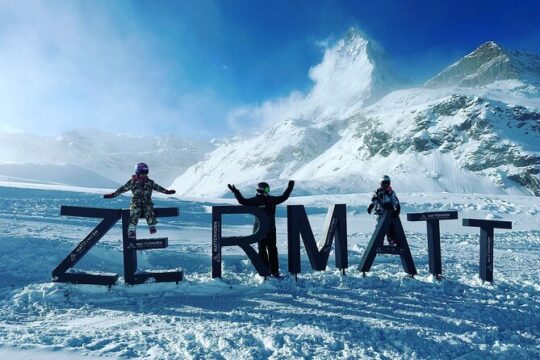
Classes & Workshops
Prices from $169
Cruises, Sailing & Water Tours
Prices from $101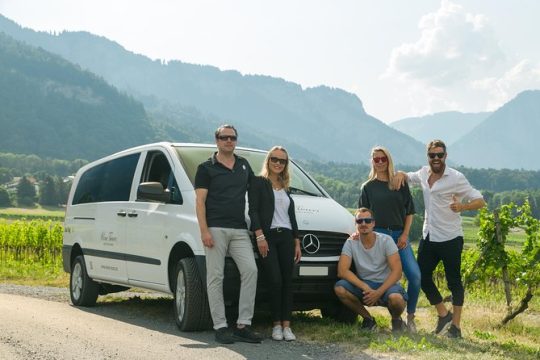
Food, Wine & Nightlife
Prices from $67
Holiday & Seasonal Tours
Prices from $101
Private & Custom Tours
Prices from $31
Shore Excursions
Prices from $315
Bernina Express
Prices from $99
Aare Gorge
Prices from $291
Aare River
Prices from $132
Adventure Park Interlaken (Seilpark Interlaken)
Prices from $55
Ballenberg, Swiss Open-Air Museum
Prices from $35
Chur Old Town
Prices from $120
Eiger
Prices from $176
Engelberg
Prices from $291
First Cliff Walk
Prices from $145
Glacier Canyon
Prices from $26
Gornergrat Railway (Gornergrat Bahn)
Prices from $259
Grimsel Pass
Prices from $217


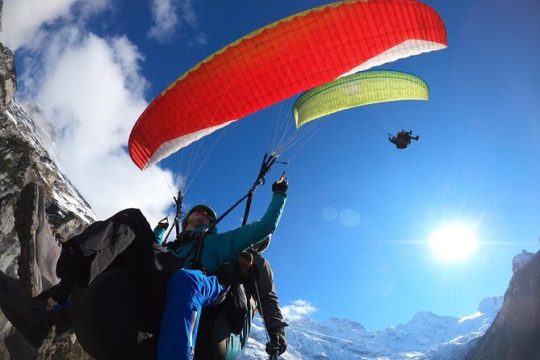


Swiss Alps Event Calendar
View all events
Christmas activities in Swiss Alps
Fri, Dec 25, 2026
Hanukkah in Swiss Alps
Dec 4–12, 2026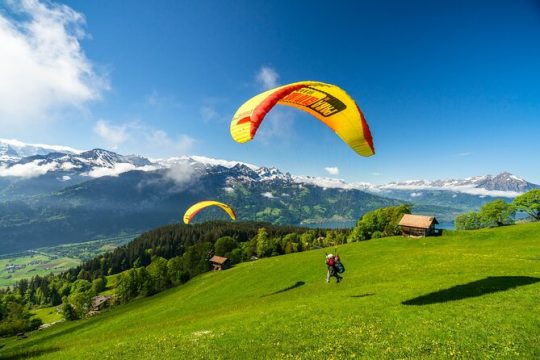
New Year’s Eve in Swiss Alps
Thu, Dec 31, 2026
Christmas Eve in Swiss Alps
Thu, Dec 24, 2026
New Year’s Day long weekend in Swiss Alps
Jan 1–3, 2027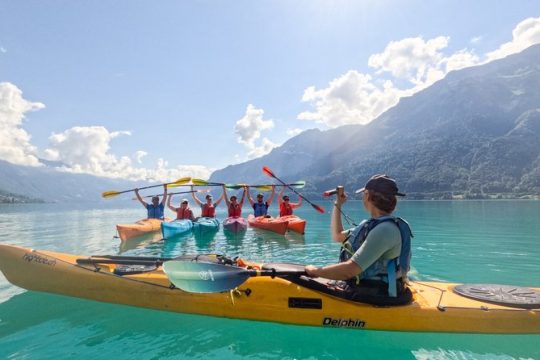
Valentine's Day in Swiss Alps
Sun, Feb 14, 2027
Easter in Swiss Alps
Sun, Mar 28, 2027
Good Friday in Swiss Alps
Fri, Mar 26, 2027