Frequently Asked Questions
The answers provided below are based on answers previously given to customers' questions.
Stornoway is the only town of any size in the Outer Hebrides, a harbor of fishing boats, ferries and visiting cruise ships on the east coast of the Isle of Lewis. It makes a natural base for exploring the island, and the tours that leave from here are private outings by road, led by local guides who grew up with the island's history and its Gaelic culture. In a single morning-to-afternoon trip you can reach the Callanish Standing Stones, the Iron Age tower at Dun Carloway and the cliffs beneath the Butt of Lewis Lighthouse, then be back in town for dinner by the water.
Before or after a tour, Stornoway itself rewards an easy stroll. The waterfront is lined with shops, cafes and small galleries, and across the inner harbor stands Lews Castle, a Victorian mansion set in wooded grounds that feel surprising on an island so short of trees. It is a gentle introduction to Lewis, and a good place to pick up Harris Tweed or local crafts. Most tours here include pickup from your accommodation in town, which keeps the morning simple.
Stornoway is a regular port of call, and at least one tour is designed as a shore excursion that meets passengers near the ship. For a day ashore, a private car is a practical choice: you head straight out across the moor without waiting for a full coach to load, and the guide can shape the route around your sailing time. Even so, check the return time against your ship's schedule before you book, and allow a buffer for single-track roads.
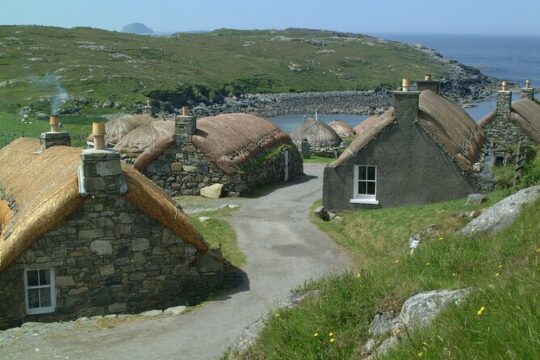
Leaving town, the road crosses the island westward over open peatland dotted with lochans. The first big stop is usually Callanish, where a ring of weathered stones and long avenues of standing slabs sit on a low ridge overlooking a sea loch. Farther along the coast, the broch at Dun Carloway still rises in a curved wall of stacked stone, and you can step inside to see the narrow gallery between its two walls. Heading north, villages give way to cropped grass and finally the lighthouse at the Butt of Lewis, where gannets and fulmars ride the wind above the surf. A guide may add a stop at a restored blackhouse village or a white sand bay, depending on time.
All of the tours are private and fill a good part of the day, so they suit couples and small groups who want a personal pace rather than a packed schedule. Mornings are the main departure time, though a few also run later in the day, which can be a fine option during the long northern evenings. Most allow free cancellation, but it is worth reading the terms of each. Reviews from past guests are consistently excellent and often mention the warmth of the guides. Dress in layers, bring something waterproof and expect wind at the coast, because island weather rarely stays the same for long.
#1Many visitors drive up and explore on their own, walking the headland and watching the sea from the cliff edge. A guided tour of the island adds local stories and context and usually links the lighthouse with other stops on the north coast, such as the village of Eoropie, St Moluag's Church and Dun Eistean, so the trip feels like a full outing. This is a short stop for anyone who enjoys wild coastal scenery, usually 30 to 60 minutes with a walk along the cliffs. The headland is exposed and is described as one of the windiest places in the UK, so bring a windproof jacket. Keep children and pets close and stay back from the cliff edges. The lighthouse stands at the end of a minor road, so bring food and water before you set out.
More
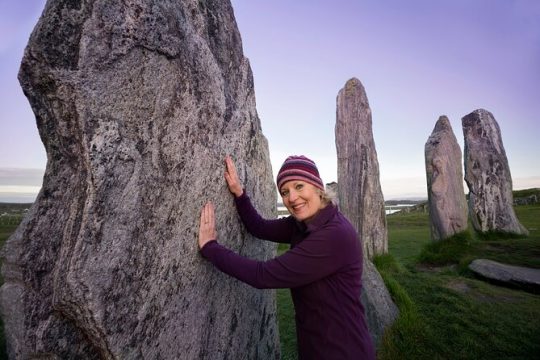
#2You can walk the stones at your own pace, and the exhibition at the visitor centre adds useful background on the site. A guided visit brings the circle, the avenue and the burial cairn to life with the stories behind them. Many guided day tours also combine Callanish with other sights in west Lewis, so you see more without planning a route yourself. The site suits most ages and takes about one to two hours with time in the exhibition and the café. A visitor pass covers the stones and the new exhibition, while the café, shop and toilets need no booking. The visitor centre has accessible parking bays, baby changing facilities and highchairs, and the café offers vegan, vegetarian and gluten-free choices. Paths and ground around the stones are open and exposed, so wear sturdy shoes and bring a waterproof layer.
More
#3You can climb to the broch by yourself, read the boards in Gaelic and English and visit the exhibition at the Doune Broch Centre by the car park. A guided tour of western Lewis adds expert explanation of how brochs were built and lived in, and often combines the broch with other heritage stops nearby, such as standing stones and blackhouse villages. The broch is open all year round, and a well-maintained path climbs the rocky hillside from the car park, so wear sturdy shoes. Plan on about an hour for the climb, the broch itself and the exhibition at the Doune Broch Centre. The climb, the steep rock below one side and the stairs inside the walls make the site harder for visitors with limited mobility. Information boards are in Gaelic and English, and you can enter a few ground-level chambers inside the broch.


MoreStornoway feels calm and spacious. Most travelers book a private car outing that crosses open moorland to the Callanish Standing Stones, the broch at Dun Carloway and the Butt of Lewis Lighthouse, back by late afternoon.
Back in town, the harbor makes a slow evening, with a waterfront stroll, small galleries, local crafts and a pub meal under long northern skies.
It suits couples, small groups of adults and cruise passengers who want history and Gaelic culture explained by someone local, and anyone drawn to big skies.
Late spring and summer, from May to August, bring the mildest weather and very long evenings. Seabirds nest on the cliffs and wildflowers cover the machair by the beaches. Book guides early, and pack layers even in July.
September and early October can be lovely, with fewer visitors and soft light, though days shorten fast and the wind picks up.
Winter is short on daylight and often wild and windy. It suits travelers who enjoy big seas, empty roads and the chance of northern lights.

The answers provided below are based on answers previously given to customers' questions.