Slovakia attractions
More things to do in the country
 #16
Michael's Gate (Michalska Brana)
If you are looking for things to do in Slovakia we have 10 Tours and Activities to Experience Michael's Gate (Michalska Brana). Check out our verified traveler reviews and photos of Michael's Gate (Michalska Brana) tours and other things to do in Slovakia, and book securely when you find the perfect one. Learn the best ways to see famous Michael's Gate (Michalska Brana) and explore the most popular things to do in Slovakia.
More #17
Michael’s Tower
If you are looking for things to do in Slovakia we have 10 Tours and Activities to Experience Michael’s Tower. Check out our verified traveler reviews and photos of Michael’s Tower tours and other things to do in Slovakia, and book securely when you find the perfect one. Learn the best ways to see famous Michael’s Tower and explore the most popular things to do in Slovakia.
More #18
Mirabell Palace and Gardens (Schloss Mirabell und Mirabellgarten)
If you are looking for things to do in Slovakia we have 78 Tours and Activities to Experience Mirabell Palace and Gardens (Schloss Mirabell und Mirabellgarten). Check out our verified traveler reviews and photos of Mirabell Palace and Gardens (Schloss Mirabell und Mirabellgarten) tours and other things to do in Slovakia, and book securely when you find the perfect one. Learn the best ways to see famous Mirabell Palace and Gardens (Schloss Mirabell und Mirabellgarten) and explore the most popular things to do in Slovakia.
More #19
Mozart’s Birthplace (Mozarts Geburtshaus)
Mozart's Birthplace is the house on Salzburg's Getreidegasse where Wolfgang Amadeus Mozart was born and spent his childhood, now a museum devoted to his early life. Behind its bright yellow facade, the family's apartment holds portraits, letters and instruments, and music lovers come to see where the young prodigy first learned to play.The Mozarts rented their apartment from Johann Lorenz Hagenauer, a merchant and family friend who owned the building, which is why it is also known as the Hagenauer House. Leopold Mozart, a violinist and composer in the service of the prince-archbishop, raised his children Nannerl and Wolfgang here in the 18th century, and from this home the family set out on the long concert tours that made the boy famous across Europe. As the household outgrew the space, they moved across the river to a larger home on what is now Makartplatz.The house opened as a museum in the late 19th century and is cared for by the International Mozarteum Foundation. The rooms trace the composer's life and family through letters, documents and portraits, among them the famous unfinished painting of Mozart at the keyboard by his brother-in-law Joseph Lange, and treasured instruments from his youth. Other floors recreate a comfortable middle-class Salzburg home of the time and show how his operas have been staged.The house stands on Getreidegasse, a narrow lane of tall merchant houses known for its wrought-iron guild signs, and its rear looks onto Universitätsplatz, where market stalls fill the square. In the modest rooms where the family cooked, practiced and entertained, it is easy to picture a gifted child at the keyboard while his father planned the tours ahead. A guide can bring in the letters and anecdotes that reveal Mozart's humor and his complicated bond with his hometown.
More #20
Prague Castle (Prazský Hrad)
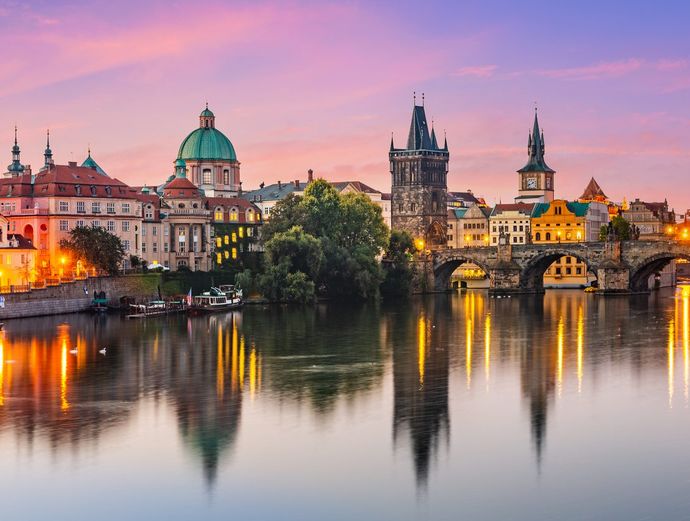
Prague Castle is the vast fortified complex on the hill above the Vltava River, home to Bohemian rulers for more than a thousand years and the seat of the Czech president. Within its walls stand palaces, churches, gardens and the soaring St. Vitus Cathedral, and people come to see the heart of Czech history in one place.The castle was founded in the 9th century by Prince Bořivoj of the Přemyslid dynasty, and every age since has added to it: Romanesque churches, Gothic halls, Renaissance palaces and the uniform facades of an 18th-century rebuilding under Empress Maria Theresa. It is often described as the largest ancient castle complex in the world. Here Holy Roman Emperor Charles IV made Prague an imperial capital in the 14th century, Rudolf II gathered artists, astronomers and alchemists, and the Defenestration of Prague, when royal officials were thrown from a window, helped spark the Thirty Years' War.St. Vitus Cathedral dominates everything, a Gothic giant begun in the 14th century and completed only in the 20th, with a chapel lined in semiprecious stones, the silver tomb of St. John of Nepomuk and stained glass that includes a window by Alfons Mucha. The Old Royal Palace holds the vaulted Vladislav Hall, once wide enough for indoor jousting, and the Romanesque Basilica of St. George is the oldest surviving church in the castle.Golden Lane, a row of tiny painted houses built into the walls, once sheltered castle guards and craftsmen, and Franz Kafka wrote for a time in one of them. The castle gardens step down the slopes with views over the red roofs of the Lesser Town, and the Czech crown jewels are kept here, though they are shown only on rare occasions. A guide makes the centuries of kings, emperors and presidents easier to follow as you cross from courtyard to courtyard.
More #21
Primate's Palace (Primaciálny Palác)
If you are looking for things to do in Slovakia we have 11 Tours and Activities to Experience Primate's Palace (Primaciálny Palác). Check out our verified traveler reviews and photos of Primate's Palace (Primaciálny Palác) tours and other things to do in Slovakia, and book securely when you find the perfect one. Learn the best ways to see famous Primate's Palace (Primaciálny Palác) and explore the most popular things to do in Slovakia.
More #22
Slavín
If you are looking for things to do in Slovakia we have 10 Tours and Activities to Experience Slavín. Check out our verified traveler reviews and photos of Slavín tours and other things to do in Slovakia, and book securely when you find the perfect one. Learn the best ways to see famous Slavín and explore the most popular things to do in Slovakia.
More #23
Slovak National Theatre
The Slovak National Theatre is the country's leading company for opera, ballet and drama, based in Bratislava. Its historic home is an ornate neo-Renaissance theater on Hviezdoslav Square in the Old Town, and people come to see a performance, admire the facade and its fountain, or explore the building behind the scenes.The building is older than the company. It was designed by the Viennese architects Fellner and Helmer, whose theaters dot Central Europe, and it opened in the late 19th century as the City Theatre, when Bratislava was still known as Pressburg or Pozsony. On opening night the Hungarian composer Ferenc Erkel conducted his own opera Bánk bán. The auditorium was decorated with frescoes and paintings and first lit by hundreds of gas lamps, and a chandelier with more than 2,500 bulbs now hangs above the seats.The company itself was founded after the First World War, when the new state of Czechoslovakia set out to give Slovakia a national stage. Its opera, drama and ballet ensembles moved into the former City Theatre, though in the early years much of the repertoire was in Czech, because Slovak plays, actors and singers were still scarce. The sopranos Edita Gruberová and Lucia Popp are among the famous voices linked with its stage.In front of the theater stands the Ganymede Fountain, created by the sculptor Viktor Tilgner in the late 19th century, its figures rising from a basin in the middle of the square. Early in the 21st century the company gained a large modern building near the Danube, giving all three ensembles a shared home, yet the historic theater still hosts opera, ballet and drama. A guide can explain how the house has changed over the generations and point out details in its decoration.
More #24
Spis Castle
If you are looking for things to do in Slovakia we have 1 Tours and Activities to Experience Spis Castle. Check out our verified traveler reviews and photos of Spis Castle tours and other things to do in Slovakia, and book securely when you find the perfect one. Learn the best ways to see famous Spis Castle and explore the most popular things to do in Slovakia.
More #25
St. Martin's Cathedral (Dom svateho Martina)
St. Martin's Cathedral is the great Gothic church of Bratislava, set where the Old Town meets the slope up to the castle. For close to three centuries the kings and queens of Hungary were crowned here, and visitors come for that royal past, the lofty nave and the gilded copy of the Hungarian crown on top of the spire.A Romanesque church stood on the site first, and the present building rose in stages through the 14th and 15th centuries, its tower doubling as a bastion in the town walls. After the Ottomans overran much of Hungary in the 16th century, the city, then known as Pressburg, became the kingdom's capital, and the cathedral took over as the place of coronation. A long line of Habsburg monarchs and their consorts were crowned beneath its vaults, Maria Theresa among them.Inside, three aisles of equal height give the church its open, airy feel, and the side chapels hold some of the finest Baroque art in Slovakia. The highlight is Georg Raphael Donner's lead statue of St. Martin on horseback, cutting his cloak to share with a beggar, with the saint dressed not as a Roman soldier but as a Hungarian hussar. Donner also designed the chapel of St. John the Almoner, a richly decorated space made to house the saint's relics.The tower rises well above the old rooftops, and the crown at its tip, set on a gilded cushion, announces the city's royal role from far away. Small brass crowns embedded in the pavement trace the route newly crowned monarchs took through the streets after the ceremony. In the 20th century a busy road to the New Bridge was cut right past the church's walls, sweeping away much of the old Jewish quarter that once stood below the castle.
More #26
St. Stephen's Cathedral (Stephansdom)
St. Stephen's Cathedral, or Stephansdom, is Vienna's great Gothic cathedral, standing on Stephansplatz in the heart of the old city. Its tall south spire and patterned tile roof make it the best known symbol of Vienna, and visitors come to see its soaring nave, carved treasures and views from the towers.A Romanesque church stood on the site from the 12th century, and its west front survives with the Giant's Door and two Heathen Towers. In the 14th century Duke Rudolf IV of the Habsburg family began rebuilding the church in the Gothic style, and work went on for well over a century. The south tower was finished, but the north tower was left incomplete and later capped with a small Renaissance top. At the end of the Second World War fires swept through the old city and the roof collapsed, destroying much of the interior. The cathedral was rebuilt with help from every Austrian province, and it remains a much loved national symbol. Mozart was married here, and his funeral service was held in one of its chapels.The roof is covered in thousands of glazed tiles laid in a zigzag pattern, with a double-headed eagle and coats of arms on one side. Inside, the long nave is lined with statues on its pillars, and the stone pulpit is carved with lively heads of the church fathers. At its base, a sculptor looks out from a window, a figure traditionally taken as a self-portrait. Other treasures include the tomb of Emperor Frederick III and a gilded winged altar. The north tower holds the Pummerin, one of the largest bells in Europe, first cast from cannons left by the Ottoman army. Below ground, the catacombs hold urns of Habsburg remains and the bones of plague victims.A guide can point out the hidden details and stories carved into the stone.
More #27
Tatra National Park
If you are looking for things to do in Slovakia we have 3 Tours and Activities to Experience Tatra National Park. Check out our verified traveler reviews and photos of Tatra National Park tours and other things to do in Slovakia, and book securely when you find the perfect one. Learn the best ways to see famous Tatra National Park and explore the most popular things to do in Slovakia.
More #28
UFO Observation Deck
The UFO Observation Deck is the flying saucer shaped structure perched on the pylon of the SNP Bridge in Bratislava, high above the Danube. Visitors head up to its open-air deck and restaurant for wide views over the castle, the Old Town and the river.The SNP Bridge, named after the Slovak National Uprising against Nazi Germany in the Second World War, was built in the communist era, and the saucer was completed as part of it. The bridge was long called the New Bridge, and many locals still use that name. It is an asymmetrical, double-decked road bridge hung from cables fixed to a single slanted pylon that rises about 95 meters above the water. Its construction was controversial, because much of the old Jewish quarter and a synagogue below the castle were cleared for the approach road.From the deck the city opens out. Bratislava Castle sits on its hill beside the river, St. Martin's Cathedral and the rooftops of the Old Town spread below, and on the far bank the Petržalka district stretches away in long rows of housing blocks. The view reaches toward Austria, and barges and riverboats pass beneath your feet. As evening falls, the castle and the other bridges light up along the river.The saucer itself, balanced on the twin legs of the pylon, has become a symbol of Bratislava and a much-photographed piece of late modernist design. Its bold outline makes it easy to pick out from almost anywhere along the riverfront. Inside, the restaurant and bar, known simply as UFO, serve meals and drinks with the view as a backdrop. Walking and cycling paths run along both sides of the bridge, so the crossing itself becomes part of the outing.
More #29
Váci Street (Váci Utca)
Váci Street, or Váci utca, is the best-known pedestrian street in central Budapest, running through the old Inner City of Pest from Vörösmarty Square toward the Great Market Hall. Visitors come to stroll, shop and stop for coffee on a lively route that links several of the city's busiest corners.The name points north. The street began as the road that left the walled medieval town of Pest and headed toward Vác, a cathedral town upriver on the Danube, and it kept that name as Pest grew beyond its old walls. Over the 18th and 19th centuries it turned into an elegant shopping street lined with town houses, fine shops and coffeehouses, where the city's well-to-do came to see and be seen. Even early in the 19th century, merchants were opening shops here, among them the first Alter és Kiss store.Walking it means looking up as well as at the shop windows. Above the chain stores, cafés and restaurants rise ornate facades from the late 19th century, and the Thonet House, designed by Ödön Lechner, shows off the colorful Zsolnay ceramic tiles that became one of the city's trademarks. The northern half, close to Vörösmarty Square, gathers the big fashion brands and the grand old cafés nearby, while the southern stretch, beyond the wide road leading to the Elisabeth Bridge, has a more local feel on its way to the market hall.The street is also a stage for everyday Budapest life: street musicians, souvenir stalls stacked with paprika and embroidered linen, and the steady flow of people heading between the river and the shops. At the southern end, the great iron and brick market hall makes a fine finale, with produce stalls below and food counters upstairs. A guide can tell you who lived and traded behind the facades.
MoreDiscover Slovakia
Cruises, Sailing & Water Tours
Prices from $28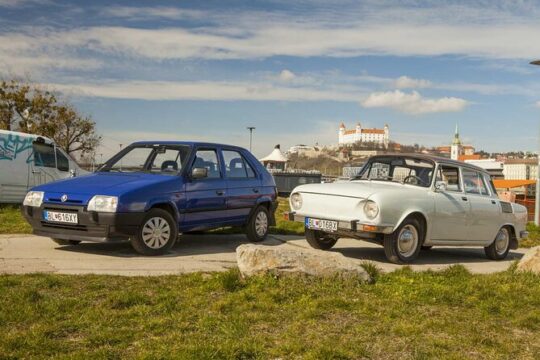
Cultural & Theme Tours
Prices from $3
Luxury & Special Occasions
Prices from $3
Tours & Sightseeing
Prices from $6
Classes & Workshops
Prices from $99
Day Trips & Excursions
Prices from $66
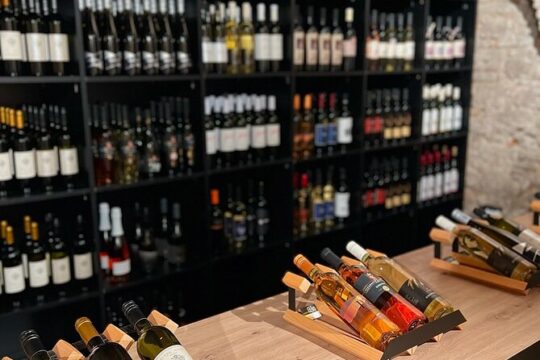
Food, Wine & Nightlife
Prices from $8
Holiday & Seasonal Tours
Prices from $28
Multi-day & Extended Tours
Prices from $391
Outdoor Activities
Prices from $17
Private & Custom Tours
Prices from $6
Shore Excursions
Prices from $22
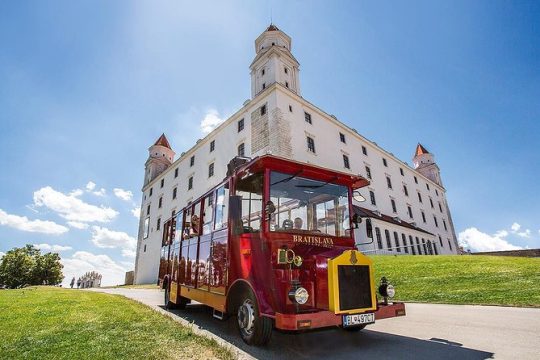
Bratislava Castle (Bratislavsky Hrad)
Prices from $3
Bratislava Old Town (Stare Mesto)
Prices from $4
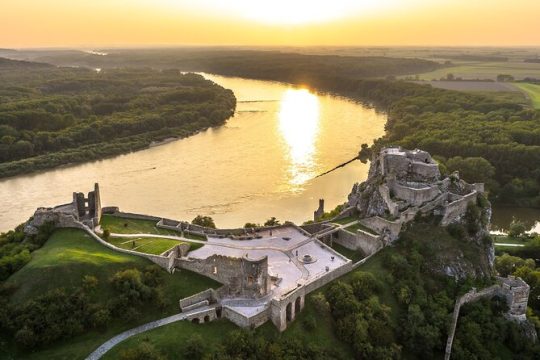
Devin Castle (Devinsky Hrad)
Prices from $28
Bratislava Old Town Hall (Stara Radnica)
Prices from $4
Buda Castle (Budai Vár)
Prices from $134
Charles Bridge (Karluv Most)
Prices from $950
Esztergom
Prices from $101
Eurovea Galleria
Prices from $48
Heroes' Square (Hosök Tere)
Prices from $134
Historic Center of Vienna
Prices from $139
Hlavne Namestie
Prices from $4
Hofburg Imperial Palace (Hofburg Wien)
Prices from $469




Slovakia Event Calendar
View all events
Hanukkah in Slovakia
Dec 4–12, 2026
New Year’s Eve in Slovakia
Thu, Dec 31, 2026
New Year’s Day long weekend in Slovakia
Jan 1–3, 2027
Valentine's Day in Slovakia
Sun, Feb 14, 2027
Easter in Slovakia
Sun, Mar 28, 2027
Good Friday in Slovakia
Fri, Mar 26, 2027