Frequently Asked Questions
The answers provided below are based on answers previously given to customers' questions.
Podgorica, the capital of Montenegro, is a relaxed, green city that puts the whole of this small country within a day's reach. From here you can glide across Lake Skadar, visit Ostrog Monastery set into a sheer cliff, and drive to the walled lanes of Kotor Old Town on the Adriatic. The tours that start here lean toward private and longer outings: most can be booked with your own guide, and many fill four to eight hours or a full day. A few run over several days, and travellers give them a perfect average rating, a strong sign for anyone planning a first visit.
Lake Skadar, the largest lake in the Balkans, lies just south of the city and is one of the easiest escapes from it. Boat trips drift past water lilies, reed beds and tiny island monasteries, and birdwatchers come for pelicans, herons and cormorants. Many outings add a stop in a village for local wine and smoked fish. Closer still, the falls known as Montenegro Niagara Falls spill over a broad rock shelf on the Cijevna River, a short and pleasant detour on any half day.
Ostrog Monastery, whitewashed and built into a cliff face high above the valley, is the country's most important pilgrimage site and draws visitors of every faith. Modest clothing is expected, with shoulders and knees covered. To the west, Lovćen National Park rises above the coast, and a climb to its summit mausoleum gives views across mountains, the Bay of Kotor and on clear days far out to sea. In the north, the Tara River Canyon cuts one of the deepest gorges in Europe, and outdoor tours offer rafting on its clear water or a look from the tall bridge that spans it.
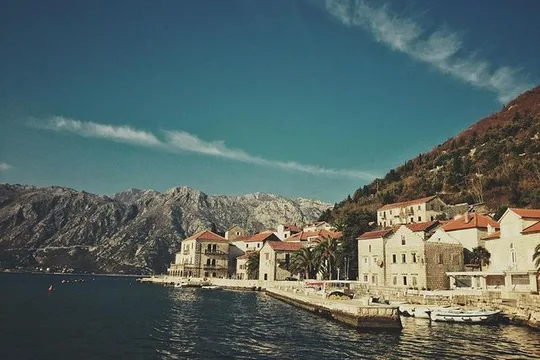
A drive to the coast brings you to Kotor Old Town, a maze of stone squares, churches and cats tucked beneath steep fortress walls. Nearby, off the waterfront town of Perast, Our Lady of the Rocks stands on a small artificial islet reached by a short boat ride. Some tours from Podgorica link these sights with cruise arrivals, and a share of transfers serve the port at Kotor, so cruise passengers can combine a sightseeing day with a lift to or from the ship.
With most tours running private, you can shape the day around your interests, from a long lunch by the lake to extra time on a mountain road. Nearly half include hotel pickup, which simplifies early starts, and almost all depart in the morning. Mountain roads are narrow and winding, so allow plenty of travel time. Accessible options are scarce, and fewer than a third of tours are marked as kid friendly. Most offer free cancellation, useful if weather changes your plans.
#1Kotor Old Town is the walled medieval heart of Kotor, a port at the inner end of the Bay of Kotor on Montenegro's Adriatic coast. Its marble-paved lanes, churches and palaces sit at the foot of a steep mountain, and visitors come for the architecture, the long Venetian history and the views from the fortress walls high above.People have lived on this sheltered shore since ancient times, and the town passed through the hands of Romans, Byzantines and medieval Serbian rulers before Venice took control in the 15th century. Under Venetian rule, which lasted for centuries, Kotor became a fortified trading port and grew the stone houses and defenses that shape it now. Later it came under Austrian rule, and after a damaging earthquake in the 20th century much of the town was carefully restored. UNESCO lists the old town and its bay as a World Heritage Site.The town is a tangle of narrow streets that open into small squares, each with its own church or palace. The Cathedral of Saint Tryphon, a Romanesque church with twin bell towers, is the town's spiritual center and holds relics and frescoes. Nearby, the little Church of Saint Luke once served both Catholic and Orthodox worshippers, while the Orthodox Church of Saint Nicholas stands on its own square. Grand family palaces, a clock tower and a maritime museum recall the wealth of local sea captains. Above it all, the defensive walls zigzag up the mountainside to the fortress of San Giovanni, passing the small Church of Our Lady of Remedy along the way. Kotor is also known for its many cats, which roam the lanes and have become a local symbol.A guide can bring out the stories of the sailors, merchants and saints who built this compact town.
#2Lake Skadar is the largest lake in the Balkans, spreading across the border between Montenegro and Albania south of Podgorica. The Montenegrin side is a national park of reed beds, water lilies and steep limestone hills, and travelers come for boat trips past island monasteries, fishing villages and huge numbers of birds.The lake sits in a karst basin, fed mainly by the Morača River and by springs that rise from the lake bed itself, and it drains through the Bojana River to the Adriatic Sea. Its size swells and shrinks with the seasons, as the water spreads over wide areas on the northern side while the southwestern shore stays rocky and steep. In the late Middle Ages the shores were the heart of Zeta, the medieval state that came before Montenegro, and its rulers built churches and monasteries on the small islands. The Crnojević family made the lakeside fortress of Žabljak their capital before moving into the mountains. Later centuries brought Ottoman forts, border struggles and, during the Second World War, a sunken steamboat that still lies near Rijeka Crnojevića.On the water, boats glide through channels lined with reeds and lily pads to islets such as Beška, with its two small churches, and Grmožur, a former fortress that later served as a prison. The lake is one of Europe's most important bird reserves and one of the last strongholds of the Dalmatian pelican, the park's symbol, along with herons, cormorants and many migrating species. Fishermen still catch carp and the tiny bleak that appear on local menus. Villages such as Virpazar and Rijeka Crnojevića, with its graceful old stone bridge, keep a slow pace, and the hills around them are known for vineyards producing red Vranac wine.A local boat guide knows the hidden channels, the best bird spots and the stories of the island churches.
#3Lovćen National Park protects Mount Lovćen, the limestone mountain that rises behind Kotor and Cetinje in southwest Montenegro. Travelers go for the mausoleum of Petar II Petrović Njegoš near the summit and for some of the widest views in the country, reaching from the Bay of Kotor to the Adriatic and far inland.The mountain holds a special place in Montenegrin identity. Its dark slopes, once thickly covered in forest, are often said to have given the country its name, Crna Gora, the Black Mountain. Njegoš, a 19th century prince-bishop and the nation's best-known poet, asked to be buried on the peak of Jezerski Vrh. A small chapel was built there for him, but it was badly damaged during the First World War. After the Second World War a new monument was planned, and in the second half of the 20th century it was replaced by the mausoleum designed by the Croatian sculptor Ivan Meštrović.At the summit, two granite figures of women in traditional dress stand guard at the entrance. Inside, a large statue shows Njegoš seated in thought with a great eagle spreading its wings behind him, set beneath a gilded mosaic ceiling. Beyond the building, a circular viewing platform sits on the edge of the peak, with layers of ridges, valleys and coastline falling away on every side. On clear days the panorama takes in the winding bay, Lake Skadar and the open sea.The rest of the park is a karst landscape of beech forests, rocky meadows and small upland villages. Hikers follow marked trails between the peaks, and the old road from the coast twists up through switchbacks with views over Kotor. Njeguši, the village where Njegoš was born, is known for its smoked ham and cheese. A local guide adds the history and legends that bind the mountain to the nation.
#4Montenegro Niagara Falls is the local nickname for a broad, low waterfall on the Cijevna River, just outside Podgorica near the town of Tuzi. People come for the surprising sight of white water pouring over a wide rock ledge in an otherwise dry, stony plain, and for a cool, green pause by the river close to the capital.The Cijevna rises in the mountains across the border in Albania and runs through a deep limestone canyon before it reaches the plain around Podgorica and joins the Morača River. Over a very long time, its water has carved the stone of the riverbed into smooth channels, potholes and terraces. Near Tuzi, the river spills over one of these shelves in a long curtain of small cascades, and its curving shape, rather than its height, is what earned the playful comparison with the famous falls in North America.The setting is simple and relaxed. Water foams across the ledge into clear pools, and the pale rock around the falls is sculpted into ripples, ridges and basins that are fun to explore on foot. Smooth slabs at the water's edge make natural seats for watching the river tumble past. Trees along the banks give patches of shade, and the sound of the water carries well beyond the river. Local families come here to cool off, fish, picnic and linger over long lunches beside the cascades.Upstream, the Cijevna canyon cuts deeply into the hills, a wilder side of the same river for anyone curious about the landscape beyond the falls. Together they show a softer, quieter face of Montenegro than the busy coast or the high mountains. A guide can explain the journey of the river from the Albanian peaks to the plain.
#5If you are looking for things to do in Podgorica we have 23 Tours and Activities to Experience Ostrog Monastery (Manastir Ostrog). Check out our verified traveler reviews and photos of Ostrog Monastery (Manastir Ostrog) tours and other things to do in Podgorica, and book securely when you find the perfect one. Learn the best ways to see famous Ostrog Monastery (Manastir Ostrog) and explore the most popular things to do in Podgorica.
#6The island has no bridge or road, so the only way across is a short boat ride from Perast. Plan on about 30 to 45 minutes on the island for the church, the museum and the quay. Cover your shoulders and knees, leave swimwear behind and take off hats inside the church. The museum holds Baroque paintings, silver votive tablets and a tapestry stitched over many years. Public restrooms are close to the church and museum.
#7The Tara River Canyon is a deep, wooded gorge in northern Montenegro, carved by the Tara River through the mountains of Durmitor National Park. Often counted among the deepest canyons in Europe, it draws travelers for the views from its high arched bridge, its clear green water and the rafting trips that run through its rapids.The river rises in the mountains of eastern Montenegro and flows northwest through limestone country, cutting a gorge so steep that for long stretches the only way through is on the water. Forests of black pine, fir and beech cling to the slopes, and springs and waterfalls pour in from the cliffs. The river and its basin are protected as a UNESCO biosphere reserve, and much of the canyon lies inside a national park listed as a World Heritage Site. The water is famously clean and clear, a cool green even in summer.The Đurđevića Tara Bridge is the canyon's best-known landmark, a concrete arch bridge completed shortly before the Second World War to carry the road high above the river. During the war, partisans blew up one of its arches to stop advancing Italian troops, and the engineer who had helped build it took part in the demolition and was later captured and executed. The bridge was repaired after the war, and its graceful arches have become a symbol of the region. A zip line now sends riders flying across the gorge beside it.Downstream, the Tara meets the Piva River at the border with Bosnia and Herzegovina, and together they form the Drina. Along the way, the canyon walls rise far overhead while the river runs through calm pools and fast white water. A guide on the river knows each rapid by name and can share the local stories tied to the villages and bends along its course.
Podgorica is less a place to tick off sights than a practical, friendly base for seeing Montenegro. Days usually begin early with a private driver and guide, then unfold along mountain roads, lake shores and coastal towns before an evening back in the city's cafes. Most visitors book long private outings shaped around their own interests, and a few join trips lasting several days. It suits couples, small groups and independent travelers who want variety without packing up each morning.
Spring, from April to June, is green and mild, and the rivers run high for rafting in the north. July and August are very hot in the city, so most people head for the lake, the mountains or the sea, which is when the coast is busiest. September and October bring warm days, harvest time in the vineyards and softer light. Winter is cool and often wet in the lowlands, with snow closing some high mountain roads.
The airport sits just south of the city, and a rail line links the capital with the coast at Bar and north toward Serbia. The center is flat and easy to walk, with plenty of taxis for short hops. Beyond the city, buses are slow and roads twist through the mountains, so a private driver is the easiest choice. Book private guides early for summer dates. Pack sturdy shoes, sunscreen and a hat for hot days, a warm layer for high passes and covered clothing for church and monastery visits. Expect drives to take longer than maps suggest.
The answers provided below are based on answers previously given to customers' questions.