Frequently Asked Questions
The answers provided below are based on answers previously given to customers' questions.
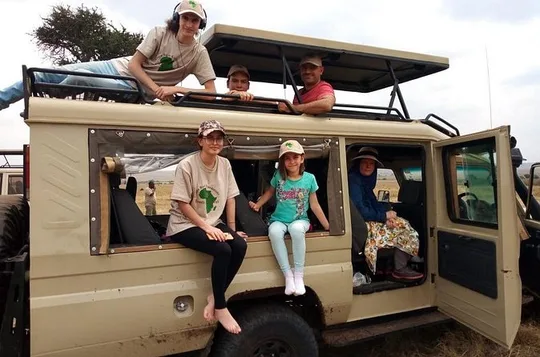
Nairobi is the only capital city in the world with a national park on its doorstep, and its tours make the most of that. Lions, rhinos and giraffes roam grassland within sight of the downtown towers, and orphaned baby elephants are fed a short drive from the suburbs. Every outing here starts in the morning, nearly all include pickup from your hotel, and they run for half a day or a full day, so you can be on a game drive soon after breakfast and back before dinner. Nearly all are suitable for children, every one can be cancelled for free, and thousands of travelers have left glowing reviews.
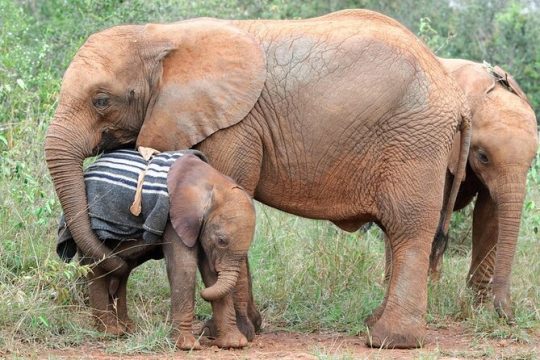
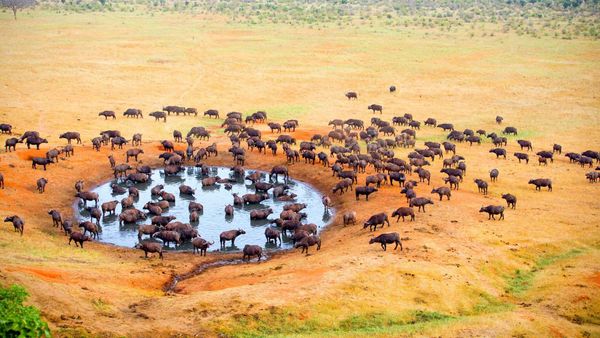
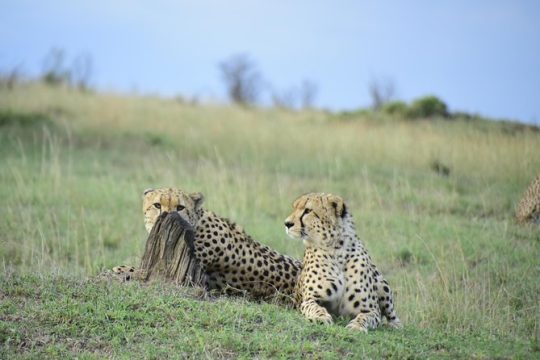
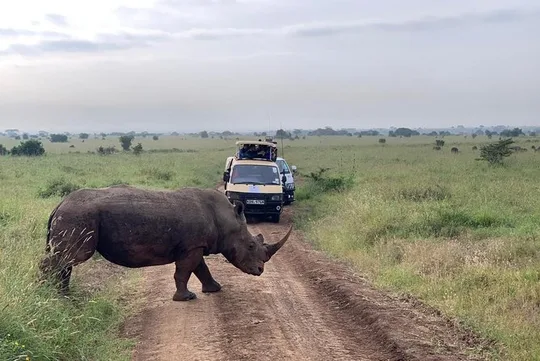
Nairobi National Park is the headline. Open plains, acacia scrub and a river forest hold buffalo, zebra, giraffe and big cats, with the city skyline behind them, which makes for photos you will not get anywhere else. Half-day game drives in a pop-up roof vehicle are the classic way to see it, and early starts give you the best chance of spotting animals on the move. Nearby, the Sheldrick Wildlife Trust raises orphaned elephants and rhinos, and visitors can watch the young elephants come in for feeding and a mud bath. At the Giraffe Centre you meet endangered Rothschild's giraffes eye to eye from a raised platform and can hand-feed them pellets. These three stops pair well in one morning, and they are a favorite with families.
The city side of Nairobi rewards a few hours too. The Karen Blixen Museum, the farmhouse of the Danish author of Out of Africa, sits in the leafy suburb named after her, with gardens looking toward the Ngong Hills. Nairobi National Museum covers the natural history and cultures of Kenya, including early human finds from the region. Downtown, the Kenyatta International Convention Centre has a rooftop viewpoint over the city, and the August 7th Memorial Park is a quiet garden honoring the victims of the embassy bombing on that site. Guided city drives tie these together, and walking or cycling options let you see more at street level.
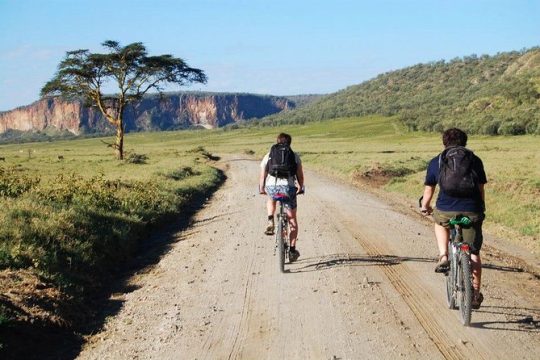
Full-day trips head northwest into the Great Rift Valley. Lake Naivasha offers boat rides among hippos and fish eagles, often combined with a walking safari on Crescent Island. Hell's Gate National Park is known for its red cliffs and gorge, and it is one of the few parks in Kenya where you can hike or cycle among zebra and giraffe. Lake Nakuru National Park, farther on, is a protected home for rhinos and is known for the flamingos that gather on its shores. These are long days on the road in a minivan or four-wheel-drive vehicle, so pack water and a warm layer for the early start.
Nearly half of the tours are private, which helps if you want to linger at a sighting or travel with small children. Layover tours are offered for travelers with a long wait at the airport, built around a quick game drive. A few points to check:
Evening tours are not offered, so plan nights at your hotel and keep mornings free for the animals.
#1If you are looking for things to do in Nairobi we have 4 Tours and Activities to Experience Nairobi National Park. Check out our verified traveler reviews and photos of Nairobi National Park tours and other things to do in Nairobi, and book securely when you find the perfect one. Learn the best ways to see famous Nairobi National Park and explore the most popular things to do in Nairobi.
More
#2If you are looking for things to do in Nairobi we have 1 Tours and Activities to Experience August 7th Memorial Park. Check out our verified traveler reviews and photos of August 7th Memorial Park tours and other things to do in Nairobi, and book securely when you find the perfect one. Learn the best ways to see famous August 7th Memorial Park and explore the most popular things to do in Nairobi.
More
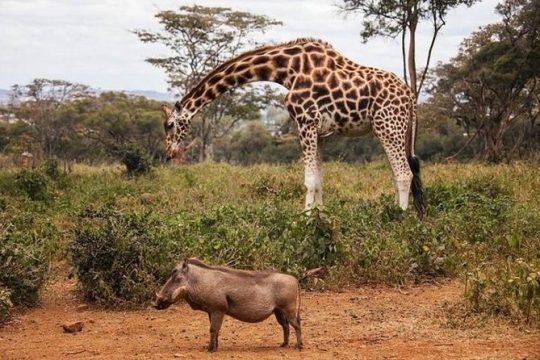
#3The Giraffe Centre is a conservation and education center in the green Lang'ata area on the edge of Nairobi, devoted to protecting the Rothschild giraffe. Visitors climb onto a raised platform to meet the giraffes face to face, offer them food pellets and learn how breeding work here has helped secure the future of this rare subspecies.It began as a private rescue. Jock and Betty Leslie-Melville learned that the remaining Rothschild giraffes in western Kenya were losing their land to farms, so they brought a young giraffe to their home outside Nairobi and began breeding the animals there. Their small effort grew into a charitable center that has raised calves for release into protected parks, and its education program has introduced generations of Kenyan school children to wildlife conservation.On the platform, the giraffes lean in at eye level, and their long, dark, rough tongues curl around pellets offered from an open palm. Their heads, topped by short horns called ossicones, look surprisingly large at such close range. The Rothschild giraffe is easy to tell apart from its relatives: its legs are pale below the knee, as if it were wearing white socks, and its coat is broken into large patches edged in cream. Warthogs trot around the grounds below, kneeling to graze, and staff give a short talk on Kenya's wildlife and the threats it faces.Beyond the platform, a nature sanctuary of native forest has a quiet walking trail that draws birdwatchers, and the tea house and shop raise money for the center's work. On neighboring land stands the ivy-covered manor house where the founders once lived, which later became famous for giraffes leaning in through its windows at breakfast. A guide can introduce individual giraffes by name and share the quirks that set each one apart.
More
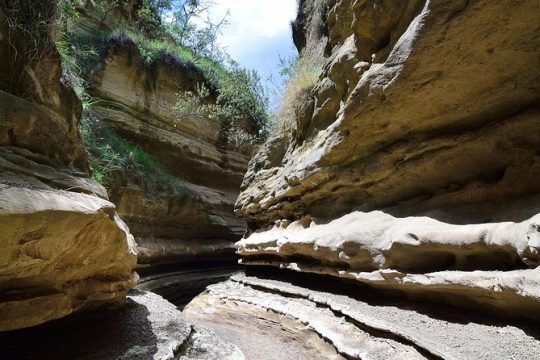
#4Hell's Gate National Park is a compact wilderness in Kenya's Great Rift Valley, just south of Lake Naivasha and within easy reach of Nairobi. Visitors come to walk or cycle among grazing zebra and giraffe, beneath towering volcanic rock columns, and down into a narrow gorge carved through red cliffs.The name dates from the 19th century, when European explorers passed through and gave it to the narrow break in the cliffs, once a channel that carried water into a vast prehistoric lake. Fischer's Tower, a lone volcanic plug rising from the valley floor, is named after one of those travelers, the German explorer Gustav Fischer. The ground here is still restless: steam vents hiss on the slopes, and the Olkaria geothermal plants inside the park turn that underground heat into electricity for Kenya's grid.Across the grassy plains, zebra, buffalo and giraffe graze below the cliffs, baboons patrol the rocks, and more than 100 bird species have been recorded, among them birds of prey that nest on the crags. Central Tower, a second volcanic column, rises near the head of the main gorge, where a path drops between walls of red and ochre rock carved by water over long ages. A smaller side gorge leads to hot springs bubbling up through the rock.Hell's Gate is one of just two national parks in Kenya where cycling is allowed, which gives a visit an unusual freedom: you move through wildlife country under your own power rather than behind a vehicle window. Rock climbers also test themselves on the sheer faces of Fischer's Tower. A Maasai Cultural Centre introduces the traditions of the people whose herds have long grazed this part of the valley, and simple campsites let visitors sleep under the Rift Valley sky. A local guide can add the Maasai legends linked to the towers and the gorge.
More
#5If you are looking for things to do in Nairobi we have 1 Tours and Activities to Experience Karen Blixen Museum. Check out our verified traveler reviews and photos of Karen Blixen Museum tours and other things to do in Nairobi, and book securely when you find the perfect one. Learn the best ways to see famous Karen Blixen Museum and explore the most popular things to do in Nairobi.
More
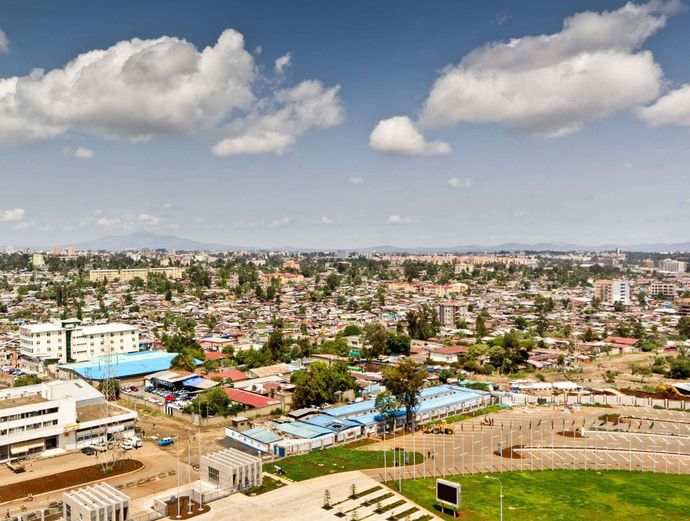
#6The Kenyatta International Convention Centre, known as KICC, is a conference complex and office tower on City Square in central Nairobi, and one of the most recognizable buildings in Kenya. Visitors come for its distinctive architecture and, above all, for the open rooftop deck, which looks out over the city to the Ngong Hills.The complex was commissioned by Jomo Kenyatta, Kenya's first president and the man whose name it bears, and completed about a decade after independence as a symbol of the young nation's ambitions. It rose in three phases, beginning with the podium, then the main tower and finally the plenary hall, to designs by Norwegian architect Karl Henrik Nøstvik working with Kenyan architect David Mutiso. Standing more than 100 meters tall, the tower was the tallest building in Kenya for decades, and it remains a defining feature of the Nairobi skyline.The design draws on African forms. The amphitheater beside the tower rises in a cone shape that recalls a traditional hut, and the cylindrical tower is crowned by a helipad. The plenary hall ranks among the largest conference chambers in East Africa and has hosted major international gatherings. In the courtyard, a statue of Kenyatta stands among gardens, pools and fountains, a calm space at the heart of the busy capital.Most visitors make for the open-air deck at the top of the tower. From there the city unfolds on all sides: the high-rises of the central business district, the Parliament Buildings, the broad green sweep of Uhuru Park and, far beyond, the ridged outline of the Ngong Hills, at whose foot Karen Blixen once farmed. A revolving restaurant used to turn slowly on the upper floors. Seeing Nairobi from this height makes it easy to grasp how quickly the capital has grown around the tower.
More
#7If you are looking for things to do in Nairobi we have 4 Tours and Activities to Experience Lake Naivasha. Check out our verified traveler reviews and photos of Lake Naivasha tours and other things to do in Nairobi, and book securely when you find the perfect one. Learn the best ways to see famous Lake Naivasha and explore the most popular things to do in Nairobi.
More
#8Lake Nakuru National Park protects a shallow alkaline lake in Kenya's Rift Valley, just south of the town of Nakuru. Safari travelers come for flamingos on the shore, black and white rhinos, Rothschild's giraffes and lions, and a bird list of more than 400 species.The park was created more than half a century ago and covers a few hundred square kilometers of lake, grassland, woodland and rocky cliffs. The name Nakuru is often said to mean a dusty place in the Maasai language. At its center lies the lake, whose shallow, alkaline water feeds blooms of algae that in turn feed the flamingos. The lake has no outlet, so its water stays salty and rich in minerals. Flock sizes swing with the state of the water, which is part of the lake's natural rhythm.The park is also one of Kenya's strongholds for rhinos. A fenced area protects both black and white rhinos, and the sight of these heavy animals grazing near the water is a highlight for many visitors. Rothschild's giraffes, a rare subspecies with pale lower legs, browse among the acacias, while waterbuck, buffalo and zebra graze the grassland. Lions, leopards and hyenas complete the cast of predators.Birdlife is the other great draw. Alongside the flamingos, fish eagles, pelicans and cormorants work the shoreline, and the woodland holds many smaller species. The best-known viewpoint is Baboon Cliff, which looks out over the lake, its fringe of birds and the walls of the Rift Valley beyond. The mix of a soda lake, wooded slopes and big game in one compact park gives a classic picture of the Rift Valley and its wildlife. An experienced guide reads the landscape, picks out distant animals and shares the story of the park's conservation work.

More
#9The Nairobi National Museum is Kenya's flagship museum, set on Museum Hill near central Nairobi and run by the National Museums of Kenya. Visitors go for a broad introduction to the country, from fossils of early humans and its famous wildlife to the cultures, history and art of its people.It began as a natural history museum and library founded by a society of naturalists who studied the wildlife of East Africa. It was later renamed the Coryndon Museum, after a colonial governor, and it became the National Museum once Kenya gained independence. The building's long history mirrors that of Nairobi itself, which grew from a railway depot into a capital. A major rebuild closed its doors for a time, and it reopened with new permanent exhibitions that tell a much broader national story.The galleries cover a remarkable range. The early human history displays draw on Kenya's central place in the study of human origins, with fossils from the Lake Turkana region and beyond. The story of mammals shows the animals that bring so many travelers to East Africa, and seeing them up close in the displays helps visitors recognize them later in the wild. The history of Kenya traces the country's path to independence and nationhood. Other rooms explore cultural life and traditions, and a gallery on money follows trade and currency through the region's past.The grounds are part of the experience. A botanical garden with a nature trail offers shade and calm, and the snake park nearby introduces some of Kenya's reptiles at close range. Lying on its hill above the busy roads, the museum feels removed from the noise of the capital. A guide helps link the fossils, the wildlife and the cultures into one story of the land and its people, which gives useful context for any safari or journey that follows.
More
#10If you are looking for things to do in Nairobi we have 1 Tours and Activities to Experience Sheldrick Wildlife Trust. Check out our verified traveler reviews and photos of Sheldrick Wildlife Trust tours and other things to do in Nairobi, and book securely when you find the perfect one. Learn the best ways to see famous Sheldrick Wildlife Trust and explore the most popular things to do in Nairobi.
MoreNairobi days start early and wind down by evening. Most visitors book a morning game drive in Nairobi National Park, then add the Giraffe Centre or the Karen Blixen Museum before lunch, or give a full day to Lake Naivasha and Hell's Gate National Park.
Evenings are quiet hotel time, so plan dinner close to where you stay. The city works best as the first or last stop of a safari, or as a short break between flights.
It suits families, wildlife photographers and anyone with just a day or two in Kenya.
Nairobi sits high, just south of the equator, so days stay pleasant all year and nights can turn cool. Pack a warm layer whatever the month.
The long dry season, from June to October, is prime time for game drives, with short grass and animals near water. A second dry spell comes in January and February, and both fill up, so book early.
The long rains fall from March to May, the short rains in November and December. The park turns green, crowds thin out, and a flexible plan helps if a track turns muddy.

The answers provided below are based on answers previously given to customers' questions.