Morocco attractions
More things to do in the country
 #16
Bab Bou Jeloud (Bab Boujeloud)
If you are looking for things to do in Morocco we have 2 Tours and Activities to Experience Bab Bou Jeloud (Bab Boujeloud). Check out our verified traveler reviews and photos of Bab Bou Jeloud (Bab Boujeloud) tours and other things to do in Morocco, and book securely when you find the perfect one. Learn the best ways to see famous Bab Bou Jeloud (Bab Boujeloud) and explore the most popular things to do in Morocco.
More #17
Bahia Palace (Palais Bahia)
Bahia Palace is a 19th-century palace in the medina of Marrakech, Morocco, built for the family of a powerful grand vizier and famed for its craftsmanship. Its name means brilliance, and visitors wander through a sequence of courtyards, gardens and reception rooms glowing with zellige mosaics, carved stucco and painted cedar.The palace was begun by Si Moussa, grand vizier to the sultan, and greatly expanded near the end of the 19th century by his son Ba Ahmed, who served as regent and grand vizier during the youth of Sultan Abdelaziz and was the real power in Morocco for years. Ba Ahmed wanted the finest palace of his age and brought in craftsmen from Fez and across the country, adding wing after wing. Legend says he named it after a favorite wife, and the private quarters were arranged around courtyards for his wives and concubines.After Ba Ahmed's death at the turn of the 20th century, the sultan's household stripped the palace of its furniture and treasures, which is why the beauty now lies in the walls, floors and ceilings themselves. Under the French protectorate that followed, the resident-general, Marshal Lyautey, made the palace his home in Marrakech, and its rooms hosted French officials and guests.Highlights include the Grand Courtyard, a vast open space paved in marble and tiles and edged by a wooden gallery, and the Small Riad, where carved stucco arches and painted ceilings surround a fountain. Garden courtyards shaded by orange trees, jasmine and banana plants offer cool corners between the buildings. Look up at the ceilings of painted and carved cedar, each room different, and down at the geometric zellige tiles, cut by hand into tiny pieces and fitted together like a puzzle. A guide can tell you which rooms belonged to whom in the vizier's household.
More #18
Ben Youssef Madrasa (Medersa Ben Youssef)
The Ben Youssef Madrasa is a former Islamic college in the old medina of Marrakech, and one of the largest and most richly decorated in North Africa. Visitors come to stand in its marble courtyard, surrounded by carved cedar, lacy stucco and colorful tilework, and to peer into the tiny rooms where students once lived.A madrasa first stood here in the 14th century, founded by the Marinid sultan Abu al-Hasan, but the building you see dates from the 16th century, when the Saadian sultan Abdallah al-Ghalib rebuilt it on a grand scale. It took its name from the neighboring Ben Youssef Mosque, which honors the Almoravid ruler Ali ibn Yusuf. For centuries students came here to study the Qur'an, law and theology, living in small cells around the courtyards and attending lessons in the prayer hall. The college closed in the 20th century and was later restored and opened to visitors as a historic monument.The main courtyard is the heart of the building, a long open space with a rectangular pool reflecting the arcades on either side. Every surface is worked: glazed zellij tiles in geometric patterns at the base, then bands of carved plaster with Arabic inscriptions and interlacing designs, and above that cedar wood carved into friezes and deep eaves. At the far end, the prayer hall holds a mihrab framed by some of the finest stucco in the building, with a dome of delicate honeycomb carving. Upstairs, narrow corridors lead to a warren of small student rooms, which show how simply the scholars lived amid all this decoration.The craftsmanship rewards a slow look, since patterns that seem identical turn out to vary from panel to panel. A guide can place the madrasa within the wider history of the medina and the dynasties that ruled from Marrakech.
More #19
Bou Inania Medersa (Madrasa Bou Inania)
The Bou Inania Madrasa is a medieval religious school in Fes el-Bali, the old walled medina of Fez, and one of the finest examples of Marinid architecture in Morocco. Visitors come to stand in its marble courtyard and take in walls covered in zellij tilework, carved stucco and cedar wood of remarkable detail.The Marinid sultan Abu Inan Faris ordered the madrasa built in the 14th century, when his dynasty was filling Fez with colleges to train scholars and officials. Its name comes from that of its founder. It was laid out around a central courtyard, with galleries, a prayer hall and upstairs rooms where students lived during their studies. It was also the only madrasa in Morocco to serve as a congregational mosque for Friday prayers, and a tiled minaret rises over its northwestern corner.The decoration is the reason to come. Bands of zellij, small hand-cut tiles fitted into geometric patterns, cover the lower walls, while carved stucco above them turns Arabic calligraphy and interlacing designs into something close to lace. Higher still, panels and beams of carved cedar frame the courtyard in warm brown wood. The floor is paved in marble, and a narrow channel of running water crosses the courtyard in front of the prayer hall.Step in from the busy lane and the noise of the medina drops away, leaving light, water and carved surfaces. Just across the street, the Dar al-Magana carries a historic water clock on its facade, a row of brass bowls and small wooden windows whose exact workings are still debated. The madrasa stands near Bab Bou Jeloud, the blue-tiled gate that is one of the main entrances to the old city. A guide can read the inscriptions aloud and explain how students lived and learned within these walls.
More #20
Chefchaouen Medina
Chefchaouen Medina is the old quarter of Chefchaouen, a small town in the Rif Mountains of northern Morocco known the world over for houses and lanes painted in shades of blue. Travelers come to wander its stepped alleys, browse workshops and craft stalls and enjoy the unhurried pace of a mountain town that feels far removed from Morocco's big cities.The town began as a small fortress, founded late in the 15th century by Ali ibn Rashid al-Alami to guard against Portuguese raids on northern Morocco. It soon grew, as Muslims and Jews leaving Spain after the Reconquista settled here and brought Andalusian ways of building with them. Jews once made up about a third of the population. For centuries it remained isolated in its mountains, and few Europeans ever set foot inside. Spain occupied the town early in the 20th century, and for a brief spell it belonged to the Republic of the Rif before Spanish troops returned.No one agrees on why the walls are blue. Some say the color stands for the sky and heaven, others that it keeps mosquitoes away, and some locals claim the painting spread in the late 20th century to draw visitors. Whatever the reason, doorways, steps and walls glow in cobalt, sky blue and turquoise, set off by potted plants and by the woven textiles, leatherwork and carved wood sold in the little shops.At the heart of the medina, the main square is overlooked by the kasbah, a rammed-earth citadel with ten towers that dates from the town's founding, and by the Great Mosque, the oldest in town, with its unusual eight-sided minaret. Just outside the old walls, the Ras el-Maa spring, the town's original water source, tumbles down from the mountain. A guide can explain how Andalusian roots shaped the town's houses and crafts.
More #21
Crocoparc
Crocoparc is a crocodile park in Drarga, on the edge of Agadir in southern Morocco, where hundreds of Nile crocodiles live among landscaped gardens. Families and nature lovers come to see these ancient reptiles up close and to learn how the park works to protect them.The park describes itself as a conservation and education project devoted to the Nile crocodile, one of Africa's largest reptiles and a survivor of a far older age. Spread over about four hectares, it combines animal basins with planted gardens, so a visit feels as much like a stroll through a botanical park as a trip to a zoo. Even the entrance makes a point, since the building that greets you is shaped like a crocodile.Paths wind past ponds and pools where the crocodiles bask on the banks, glide through the water or lie perfectly still with only their eyes above the surface. Gardens filled with plants from many parts of the world line the way, with shaded corners and falling water between the enclosures. Watching the animals, you notice details that are hard to see anywhere else: the armored ridges along their backs, the slow sweep of a tail, and the sudden burst of speed when one finally decides to move.Crocodiles are not the only residents. The park also keeps giant tortoises, iguanas, pythons and small, quick marmosets, which give younger visitors plenty to look at between the crocodile pools. Behind the scenes, a nursery allows scientists and students to study how crocodiles breed and how the young develop, which ties the park to research as well as display. A restaurant and leisure areas round out the grounds, giving the visit the feel of a garden day out. With a guide, the quiet basins turn into lessons on how these animals hunt, nest and survive.
More #22
El-Badi Palace (Palais el-Badi)
If you are looking for things to do in Morocco we have 1 Tours and Activities to Experience El-Badi Palace (Palais el-Badi). Check out our verified traveler reviews and photos of El-Badi Palace (Palais el-Badi) tours and other things to do in Morocco, and book securely when you find the perfect one. Learn the best ways to see famous El-Badi Palace (Palais el-Badi) and explore the most popular things to do in Morocco.
More #23
Essaouira Beach
You can enjoy Essaouira Beach on your own with a long walk south from the ramparts toward the river mouth. Guided options add more: horseback rides along the sand, windsurfing and kitesurfing lessons, and day tours that pair the beach with the medina and the fishing harbor. Day trips from Marrakech often include a stop here, which saves you the long drive. The broad sandy beach runs about 5 km south from the harbor, and the busiest stretch is near the medina. The wind is strong and steady for much of the year, so bring a windbreaker and expect blowing sand if you plan to sunbathe. The wind also draws windsurfers and kitesurfers to the area, and horse riders work the beach near the medina. The beach gets quieter and wilder farther south, so keep walking if you want more space.
More #24
Grand Mosque of Chefchaouen
If you are looking for things to do in Morocco we have 1 Tours and Activities to Experience Grand Mosque of Chefchaouen. Check out our verified traveler reviews and photos of Grand Mosque of Chefchaouen tours and other things to do in Morocco, and book securely when you find the perfect one. Learn the best ways to see famous Grand Mosque of Chefchaouen and explore the most popular things to do in Morocco.
More #25
Hassan Tower (Tour Hassan)
Hassan Tower is the great unfinished minaret of a mosque begun in Rabat by the Almohad caliph Yaqub al-Mansur, rising above an esplanade on the south bank of the Bou Regreg river. People come to see the red sandstone tower, the forest of columns left from the mosque and the white marble Mausoleum of Mohammed V beside it.In the late 12th century, the caliph planned a mosque on a vast scale, meant to rank among the largest in the Islamic world. When he died, work stopped. The tower was left far short of the height it was meant to reach, and the prayer hall was never completed. Later earthquakes added to the damage, leaving an ambitious project frozen partway through. Even incomplete, it became one of Rabat's defining landmarks and is part of the city's UNESCO World Heritage listing.The square tower is built of red sandstone, and each face carries its own arrangement of carved interlaced arches and decorative panels, so it changes character as you walk around it. Inside, instead of stairs, a series of ramps winds upward, said to have been wide enough for a horse and rider to reach the top. Around its base stand hundreds of columns of varying heights, the remains of the prayer hall, laid out in rows across the plaza.Across the esplanade, the Mausoleum of Mohammed V honors the king who led Morocco to independence, and it also holds the tombs of his sons, King Hassan II and Prince Moulay Abdallah. Its white marble walls and green tiled roof contrast with the weathered sandstone of the tower. Inside, a white onyx tomb lies beneath a carved mahogany dome, often watched over by royal guards in ceremonial dress. A guide can tie the two monuments together, linking medieval ambition and modern nationhood on a single site.
More #26
Kairaouine Mosque (Mosque of al-Qarawiyyin)
If you are looking for things to do in Morocco we have 1 Tours and Activities to Experience Kairaouine Mosque (Mosque of al-Qarawiyyin). Check out our verified traveler reviews and photos of Kairaouine Mosque (Mosque of al-Qarawiyyin) tours and other things to do in Morocco, and book securely when you find the perfect one. Learn the best ways to see famous Kairaouine Mosque (Mosque of al-Qarawiyyin) and explore the most popular things to do in Morocco.
More #27
Kasbah Museum
The Kasbah Museum occupies the old fortress at the center of the medina in Chefchaouen, the blue-washed mountain town in northern Morocco. Behind its earthen walls lie a shady garden, a small ethnographic museum and a tower with views over the rooftops, and visitors come to learn the town's story and enjoy a quiet break from the busy lanes.The kasbah is the oldest part of the medina. It was built as a fortress in the late 15th century, when Ali ibn Rashid al-Alami founded Chefchaouen as a base against the Portuguese, who were then seizing towns along the Moroccan coast. The town's position high in the Rif foothills made it easy to defend. Its thick rammed-earth walls and towers guarded the new settlement, and refugees from Andalusia who arrived soon after helped shape the town that grew around it.The fortress did not stay unchanged. Later rulers enlarged and altered it, adding a taller tower on the western side, and it was modified again during the Spanish Protectorate in the 20th century. Inside, a modest ethnographic museum gathers local weaving, carved woodwork, old weapons and musical instruments, a small window on the crafts and customs of the Rif region. Weaving in particular remains a living craft in Chefchaouen, where looms still clatter in small workshops around the medina.The courtyard garden, green and enclosed by the old walls, is a calm counterpoint to the square outside. In one corner rises a ten-sided tower, and climbing it rewards you with a view over the blue and white houses of the medina, the octagonal minaret of the Great Mosque next door and the slopes of the Rif beyond. Outa el Hammam, the square at the gate, is the social hub of Chefchaouen, so the kasbah stands where the town's past and present meet.
More #28
Kasbah of the Udayas
If you are looking for things to do in Morocco we have 1 Tours and Activities to Experience Kasbah of the Udayas. Check out our verified traveler reviews and photos of Kasbah of the Udayas tours and other things to do in Morocco, and book securely when you find the perfect one. Learn the best ways to see famous Kasbah of the Udayas and explore the most popular things to do in Morocco.
More #29
Kik Plateau (Plateau du Kik)
If you are looking for things to do in Morocco we have 1 Tours and Activities to Experience Kik Plateau (Plateau du Kik). Check out our verified traveler reviews and photos of Kik Plateau (Plateau du Kik) tours and other things to do in Morocco, and book securely when you find the perfect one. Learn the best ways to see famous Kik Plateau (Plateau du Kik) and explore the most popular things to do in Morocco.
More #30
Koutoubia Mosque (Mosquée Koutoubia)
The Koutoubia Mosque is the largest mosque in Marrakech and the city's best-known landmark, its square sandstone minaret rising above the medina near the Jemaa el-Fnaa square. Travelers come to admire one of the finest towers in the Islamic world and to stroll the gardens that surround it.The mosque was founded in the 12th century by the Almohads, a dynasty with roots in the Atlas Mountains who captured Marrakech and made it their capital. Their first mosque on the site was soon replaced by a second one built right beside it, possibly because the original was not aligned correctly toward Mecca, and the excavated foundations of that first building can be seen next to the present walls. The minaret was finished under a later Almohad ruler, and its design shaped two famous towers of the same era, the Giralda in Seville and the Hassan Tower in Rabat. The name comes from the booksellers' market that once crowded around its base.The minaret is the part everyone notices. Each face carries a different pattern of carved stone, with interlacing arches and lattice panels that grow richer toward the top, and a band of turquoise tilework runs beneath the crown. Metal globes cap the lantern at the summit, and local legends say they were once made of gold. For centuries the tower was the tallest structure in the city, a landmark for travelers and caravans approaching across the plain. The great carved wooden pulpit made for the mosque in Cordoba is kept at the Badi Palace across the medina, where its inlaid panels can be seen up close.Around the mosque, wide paved plazas and rose gardens give space to stand back and take in its proportions, and the call to prayer carries across the square through the day. A guide can explain the Almohad story and the meaning behind the decoration on each side of the tower.
More #31
Lake Dayet Sriji (Lake of Merzouga)
If you are looking for things to do in Morocco we have 1 Tours and Activities to Experience Lake Dayet Sriji (Lake of Merzouga). Check out our verified traveler reviews and photos of Lake Dayet Sriji (Lake of Merzouga) tours and other things to do in Morocco, and book securely when you find the perfect one. Learn the best ways to see famous Lake Dayet Sriji (Lake of Merzouga) and explore the most popular things to do in Morocco.
More #32
Majorelle Garden (Jardin Majorelle)
Majorelle Garden, or Jardin Majorelle, is a vivid walled garden in the Gueliz district of Marrakech, Morocco. Known for its cobalt-blue villa, rare plants and shaded paths, it draws visitors who want a quiet, colorful escape from the busy streets and a look at the legacy of Yves Saint Laurent.The garden was created by the French painter Jacques Majorelle, who settled in Marrakech in the early 20th century and spent decades shaping the land around his home. He built a studio in a bold, modern style, painted it an intense shade of blue that came to be called Majorelle blue, and filled the grounds with plants gathered from many parts of the world. He opened the garden to the public, but after his death it fell into neglect. The fashion designer Yves Saint Laurent and his partner Pierre Bergé bought it to save it from development and restored it with great care. A memorial to Saint Laurent stands in the garden.The planting is the heart of the place. Towering cacti and succulents grow beside bamboo groves, palms, bougainvillea and pools of water lilies, and the colors of the walls, pots and paths, from that famous blue to lemon yellow and green, make the plants stand out. Water runs through channels and fountains, and birds gather in the trees, giving the garden a calm, enclosed feel.The former studio now houses the Berber Museum, which displays jewelry, textiles, weapons and everyday objects from the Amazigh peoples of North Africa, showing the variety of their crafts across mountains, desert and coast. The nearby Yves Saint Laurent Museum explores the designer's work and his love for Morocco. A guide can explain how a painter's private garden became one of the best-loved places in the city.
More #33
Mausoleum of Mohammed V
If you are looking for things to do in Morocco we have 2 Tours and Activities to Experience Mausoleum of Mohammed V. Check out our verified traveler reviews and photos of Mausoleum of Mohammed V tours and other things to do in Morocco, and book securely when you find the perfect one. Learn the best ways to see famous Mausoleum of Mohammed V and explore the most popular things to do in Morocco.
More #34
Medina of Fez (Fes el-Bali)
Walking the medina on your own lets you wander at your own pace, but the lanes branch constantly and street signs are often only in Arabic. A guided walking tour can take you along the main souk streets, past the historic university area and to the tannery viewpoints, and explain the crafts and architecture along the way. Many visitors choose a half-day or full-day guided walk on their first morning. Fes el-Bali is a large car-free walled city, so expect to be on foot the whole time, with donkeys and carts sharing the lanes. The lanes are narrow, uneven and sloped, which makes wheelchairs and strollers hard to manage. Street signs are often only in Arabic, so carry a map of the main gates or an offline map on your phone. Carry some cash in dirhams for small purchases, and wear comfortable shoes and modest clothing. Most visitors stay on the main commercial streets, where the major monuments, workshops and the tannery viewpoints are found.
More #35
Merzouga
If you are looking for things to do in Morocco we have 3 Tours and Activities to Experience Merzouga. Check out our verified traveler reviews and photos of Merzouga tours and other things to do in Morocco, and book securely when you find the perfect one. Learn the best ways to see famous Merzouga and explore the most popular things to do in Morocco.
More #36
Morocco Sahara Desert
The Morocco Sahara Desert is best known to travelers through Erg Chebbi, a great sea of towering sand dunes beside the village of Merzouga in the far southeast of the country. People come to ride camels into the dunes, sleep in desert camps and watch the sand shift from gold to deep orange as the sun goes down.Erg Chebbi lies on the far western edge of the Sahara, close to the Algerian border, where wind-blown sand has piled up into a long band of dunes, some of them standing about 150 meters above the surrounding stony plain. The erg runs for nearly 30 kilometers from north to south but only a few kilometers across, so the dunes rise suddenly and dramatically out of the flat, dark desert. Merzouga, a small village on its western side, has grown into the main gateway for visitors.Most visitors come for the dunes themselves, and the most traditional way to meet them is from the back of a camel, swaying slowly over the crests as desert caravans once did. Nights in the desert camps bring music around a fire, often with drums and song, and a sky so dark that the Milky Way stands out clearly overhead. Even sitting quietly on a ridge to watch the sunset, as the shadows stretch and the sand glows, feels like a small adventure.The country around the erg adds depth to a visit. Nearby Khamlia is known for its Gnawa musicians, whose hypnotic, rhythmic music has roots in sub-Saharan Africa and is played on a three-stringed bass lute and clattering iron castanets. A seasonal salt lake draws flamingos, a surprising sight in such dry country, and to the north lies the Tafilalt oasis, where the ruins of Sijilmasa recall a medieval city that once thrived on the caravan trade across the Sahara.
More #37
Mt. Toubkal (Jebel Toubkal)
Mount Toubkal, or Jebel Toubkal, is the highest mountain in North Africa, rising in the High Atlas range of Morocco within Toubkal National Park, south of Marrakech. Trekkers come to climb to its summit for views across the Atlas peaks, and to walk through the Amazigh villages and valleys at its foot.The High Atlas rose as Africa pushed against Europe, folding and lifting ancient rock into a wall of mountains that separates the plains around Marrakech from the desert lands to the south. For centuries the valleys have been home to Amazigh farming communities, who terraced the slopes, built villages of stone and earth, and grazed their flocks on the high pastures in summer. Europeans first recorded climbing to the summit in the early 20th century, and the national park was set up some years later to protect the region.On the way up, walnut groves and terraced gardens around Imlil give way to the shrine of Sidi Chamharouch, a pilgrimage site built around a huge white-painted boulder. Higher still, the trees vanish and the trail enters a stark world of scree, rock and wind, with mountain huts tucked beneath the final slopes. The summit is marked by a metal tripod, and on a clear day the view sweeps over jagged ridges toward the desert in one direction and the hazy plains in the other.Much of the experience lies below the peak. Mule trains carry supplies along the paths, flat-roofed villages cling to the hillsides, and guesthouses serve mint tea on terraces that look straight up at the high ridges. Many trekkers find these encounters as memorable as the summit itself. A guide shares the language, customs and mountain lore of the Amazigh communities that call these valleys home.
More #38
Nejjarine Museum of Wooden Arts and Crafts (Musée Nejjarine)
If you are looking for things to do in Morocco we have 1 Tours and Activities to Experience Nejjarine Museum of Wooden Arts and Crafts (Musée Nejjarine). Check out our verified traveler reviews and photos of Nejjarine Museum of Wooden Arts and Crafts (Musée Nejjarine) tours and other things to do in Morocco, and book securely when you find the perfect one. Learn the best ways to see famous Nejjarine Museum of Wooden Arts and Crafts (Musée Nejjarine) and explore the most popular things to do in Morocco.
More #39
Oukaimeden
If you are looking for things to do in Morocco we have 4 Tours and Activities to Experience Oukaimeden. Check out our verified traveler reviews and photos of Oukaimeden tours and other things to do in Morocco, and book securely when you find the perfect one. Learn the best ways to see famous Oukaimeden and explore the most popular things to do in Morocco.
More #40
Ourika Valley (Vallée de l’Ourika)
The Ourika Valley is a green mountain valley in Morocco's High Atlas, roughly 30 kilometers from Marrakech, carved by a river that tumbles past Berber villages and terraced fields. Travelers come for cool air, riverside cafes, waterfalls in the hills and a glimpse of rural Atlas life close to the city.The valley is named after the Ourika, a tribe that the medieval historian Ibn Khaldun counted among the most famous of the region. Most of its people are Amazigh, or Berber, speakers of Shilha, and despite the short distance to Marrakech they have held on to much of their traditional mountain life. Earthen houses cling to the slopes, and families farm narrow terraces fed by channels drawn from the river. The same river can rise fast after mountain storms, and flash floods are part of local memory.High up the valley, the village of Setti Fatma is the launch point for mountain walks, above all the scramble beside a rushing stream to a chain of cascades. Along the river, cafes set out low tables on platforms above the water, and lunch is often a slow-cooked tagine to the sound of the current. Lower down, Tnine-de-l'Ourika hosts a traditional weekly souk, and the Anima garden, created by Austrian artist André Heller on once-arid land, blends exotic plants with sculpture.For many travelers the valley is a first taste of the Atlas, where high peaks and mud-walled villages replace the bustle of the medina. The shift from the dry plain around the city to this green, well-watered cleft in the mountains is part of the pleasure. A local guide can share the customs of the Amazigh villages and help you find the easiest path up to the falls.
More #41
Ouzoud Falls (Cascades d’Ouzoud)
You can walk the single path from the top of the falls down to the pool and back on your own. A guided day trip is worth considering because it handles the long drive from Marrakesh and usually adds local commentary on the gorge, the monkeys and the village. Many guided options include a boat ride at the base, a stop at a riverside restaurant and some free time for a swim in warm months. The falls drop about 110 meters in three tiers into the gorge of the El Abid River, so wear sturdy walking shoes or sandals. The walk down from the entrance is on a cemented path lined with small shops and restaurants and takes about 20 minutes. Small boats run on the pool at the bottom of the falls and take you close to the spray, so expect to get wet. Wild Barbary monkeys live in the trees and by the river, and you should not feed them. Enjoy the viewpoints near the top of the tallest drop from a comfortable distance back from the cliff edge.
More #42
Ouzoud Waterfalls (Cascades d’Ouzoud)
The Ouzoud Waterfalls are a group of cascades in Morocco's Middle Atlas, tumbling over reddish cliffs into a deep, green gorge northeast of Marrakech. They draw visitors for the power of the water, the rainbows that form in the spray, the wild monkeys in the surrounding olive groves and the path down to the pools at the bottom.The water falls in three main drops, with a total height of about 110 meters, before the stream joins the gorge of the El Abid River below. The site lies beside the village of Ait Taguella in Azilal Province, in a rural Amazigh area of small farms and olive orchards. The name is often linked to a Berber word for grinding grain, which suits the little mills that have long used the stream's force above the edge of the falls.From the top, a path winds down past olive trees, small cafes and stalls to the base, where the full height of the falls comes into view and the mist cools the air. Small boats carry visitors across the pool toward the thundering water. Barbary macaques, the only macaques that live in Africa, roam the trees along the gorge and are among the site's best-loved residents.The setting is as much of a draw as the falls themselves. After the noise of Marrakech's souks, the valley offers greenery, cool water and a glimpse of village life in the Moroccan countryside, with olive groves spreading above the cliffs. For many travelers, the falls offer a first taste of the rural Middle Atlas. A guide can explain how local families live from the land and from the visitors who come to the falls, and point out details along the way that are easy to miss.
More #43
Palmeraie (Palm Grove)
If you are looking for things to do in Morocco we have 5 Tours and Activities to Experience Palmeraie (Palm Grove). Check out our verified traveler reviews and photos of Palmeraie (Palm Grove) tours and other things to do in Morocco, and book securely when you find the perfect one. Learn the best ways to see famous Palmeraie (Palm Grove) and explore the most popular things to do in Morocco.
More #44
Place Outa el Hammam
If you are looking for things to do in Morocco we have 4 Tours and Activities to Experience Place Outa el Hammam. Check out our verified traveler reviews and photos of Place Outa el Hammam tours and other things to do in Morocco, and book securely when you find the perfect one. Learn the best ways to see famous Place Outa el Hammam and explore the most popular things to do in Morocco.
More #45
Ras el-Maa Waterfall
The spring is an easy short walk, so many visitors go on their own. A guided walking tour of the blue medina is a good way to see it with context, since a guide can explain how the town grew around this water source and how locals use it. Active travelers often combine the spring with a hike into the surrounding Rif mountains or a day trip to Akchour. Ras el-Maa is the spring that has long supplied Chefchaouen with water, and it sits just outside the eastern edge of the medina. It is an outdoor spot with a few small cafes nearby and good views of the cascading water. Locals still wash clothes at the water, so keep a respectful distance and ask before photographing people. The route includes stairs down to the riverside path, so it is not well suited to wheelchairs or strollers. Shade is limited at midday, so bring sun protection and water in warm weather.
MoreDiscover Morocco

Luxury & Special Occasions
Prices from $6
Tours & Sightseeing
Prices from $6
Cultural & Theme Tours
Prices from $9
Shore Excursions
Prices from $6
Private & Custom Tours
Prices from $9
Outdoor Activities
Prices from $6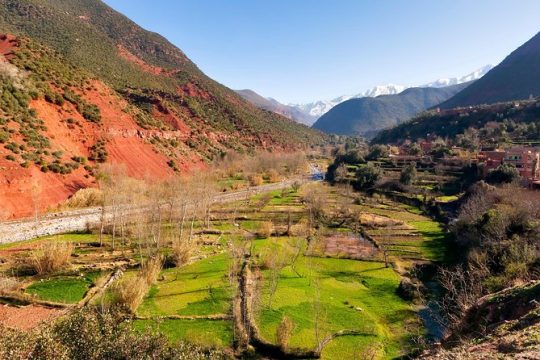
Day Trips & Excursions
Prices from $6
Multi-day & Extended Tours
Prices from $99
Shopping & Fashion
Prices from $17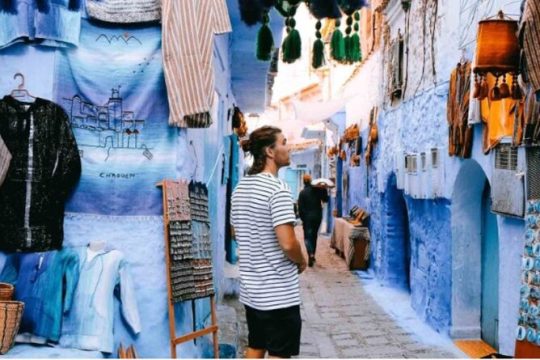
Walking & Biking Tours
Prices from $6
Air, Helicopter & Balloon Tours
Prices from $109
Food, Wine & Nightlife
Prices from $16


Hassan II Mosque
Prices from $39
Marche Central de Casablanca
Prices from $39
Mohammed V Square
Prices from $50
Notre Dame de Lourdes Cathedral
Prices from $50
Old Medina of Casablanca
Prices from $28
Quartier Habous (Habous Quarter)
Prices from $28
Cape Spartel
Prices from $45
Caves of Hercules
Prices from $45
Jemaa el-Fna (Djemaa el-Fna)
Prices from $9
Kasbah of Aït Ben Haddou (Ksar of Ait Benhaddou)
Prices from $23
Medina of Marrakesh
Prices from $17
Agadir Kasbah Ruins (Agadir Oufella)
Prices from $111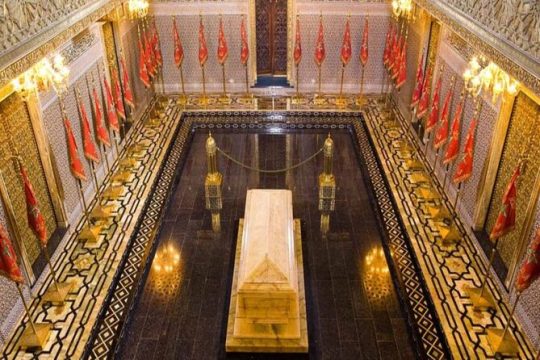
Hanukkah in Morocco
Dec 4–12, 2026
New Year’s Eve in Morocco
Thu, Dec 31, 2026
New Year’s Day long weekend in Morocco
Jan 1–3, 2027
Rainy day activities in Morocco
2 tours & activities
Senior-friendly tours Morocco
67 tours & activities
Morocco Foodie Tours
21 tours & activities
Family-friendly Morocco Tours
151 tours & activities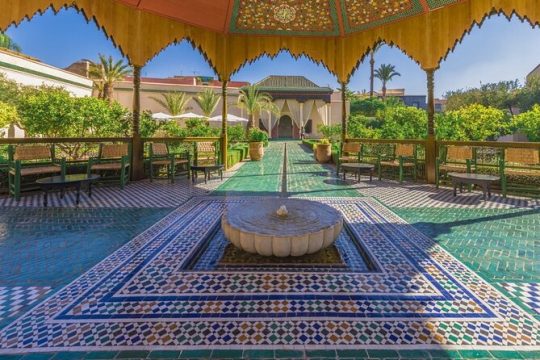
The best tours and activities for culture lovers in Morocco
87 tours & activities
Top 10 Morocco 2026
7 tours & activities
Top Day Trips from Morocco
43 tours & activities
Things to do in Morocco this summer
145 tours & activities
 From $5

 From $3