Frequently Asked Questions
The answers provided below are based on answers previously given to customers' questions.
Liège sits on the Meuse in the French-speaking south of Belgium, a working city with a big appetite, steep stairways and a long history as the seat of powerful prince-bishops. Its tours are short, flexible and mostly private: nearly all can be booked for your own group, nearly all can be cancelled for free, and you can pick a morning, afternoon or evening slot on most of them. That makes Liège easy to fit around a train timetable, a day trip to the Ardennes or a long lunch.
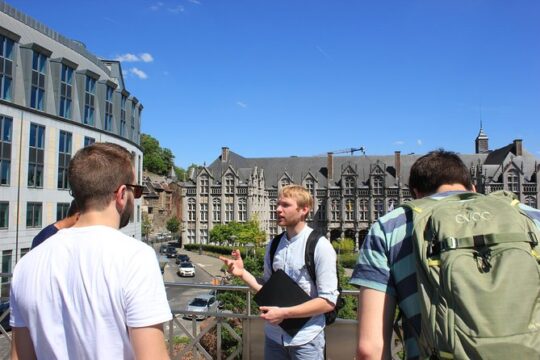
The city is best understood on foot. Guided walks and audio-guided routes take in the Prince-Bishops' Palace on Place Saint-Lambert, the narrow lanes of the Hors-Château quarter and the stairway of the Montagne de Bueren, which climbs straight up the hillside to a view over rooftops and river. A guide will point out the courtyards hidden behind plain doors and explain how the city grew rich on coal and steel. More than half of the tours last two to four hours, enough for a full loop with a stop for a waffle or a glass of peket, the local gin.
If you are short on time, about a fifth of the outings run under two hours. Self-guided options let you set off whenever you like and walk at whatever speed suits you.
La Batte Market stretches along the riverbank on Sunday mornings, a long, busy street market with deep roots in the life of the city. Stalls sell cheese, bread, fruit, clothes, plants and live birds, and the crowd is half the fun. Several walks are timed to pass through it. Food is a natural theme in Liège: try the dense, caramelized Liège waffle, meatballs in a sweet and tangy syrup sauce, and the beers in the city's many small bars.
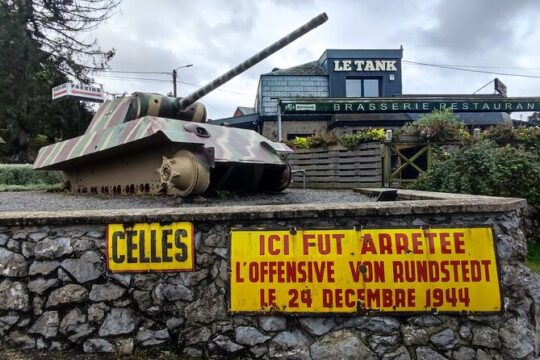
A few longer outings head south to Bastogne, the Ardennes town at the center of the Battle of the Bulge. The Bastogne War Museum tells the story of the siege through the eyes of soldiers and civilians, and the surrounding countryside still holds memorials and foxholes in the woods. These trips take most of a day, so plan a lighter evening afterward. They suit history readers and anyone with a family link to the war.
For a rainy afternoon or a group of friends, escape games in the city make a change from sightseeing. Some private tours are pitched as luxury experiences with a car and driver. A few practical points help:
Two days covers the old town, the market and a long excursion to Bastogne without rushing, with evenings free for the cafés and bars around the Carré.
#1If you are looking for things to do in Liège we have 5 Tours and Activities to Experience Bastogne. Check out our verified traveler reviews and photos of Bastogne tours and other things to do in Liège, and book securely when you find the perfect one. Learn the best ways to see famous Bastogne and explore the most popular things to do in Liège.
More
#2The Bastogne War Museum is a modern museum on the Mardasson hill outside Bastogne, in the Belgian Ardennes, devoted to the Second World War and above all to the Battle of the Bulge. It explains how the conflict reached this small market town and why the siege fought here became a defining moment of the war's final winter.In the last winter of the war in Europe, German forces launched a surprise offensive through the snowbound Ardennes, aiming to split the Allied armies. Bastogne sat where several main roads met, and American troops, including paratroopers of the 101st Airborne Division, were surrounded there. When the Germans demanded their surrender, the American commander, General Anthony McAuliffe, sent back a one-word answer, Nuts, and the town held out until Patton's Third Army broke through the ring. The fighting cost thousands of lives on both sides and left Bastogne badly damaged.The museum tells this story through the eyes of four people caught up in it: a Belgian boy, a schoolteacher, a young German soldier and an American paratrooper. Their voices carry you from the road to war through occupation and liberation to the battle itself, with uniforms, weapons, vehicles and everyday belongings on display along the way. Several immersive scenes, staged with sound, light and film, set you in the frozen forest and among civilians sheltering from the shelling.The museum stands beside the Mardasson Memorial, a great star-shaped monument raised by the Belgian people to honor the American soldiers who were killed or wounded in the battle. Its walls carry the names of the American states, and the crypt below is decorated with mosaics by the French artist Fernand Léger. From the top of the memorial you look out over the rolling countryside where the fighting took place.
More
#3If you are looking for things to do in Liège we have 2 Tours and Activities to Experience La Batte Market. Check out our verified traveler reviews and photos of La Batte Market tours and other things to do in Liège, and book securely when you find the perfect one. Learn the best ways to see famous La Batte Market and explore the most popular things to do in Liège.
MoreLiège rewards an unhurried, hungry visit. Most people start with a private or self-guided walk through the old center, then settle in for a long, hearty lunch and an afternoon in a café.
Evenings bring escape games and busy student bars, and Sunday mornings belong to La Batte Market by the river. A longer day trip to Bastogne and its war museum suits history readers.
The city suits couples, friends and small groups who like a guide to themselves and a city with a down-to-earth feel.
Late spring and summer bring the longest days and the best weather for walks and café terraces. June to August is the busiest stretch, so book weekend slots and evening games early.
Autumn is mild and quieter, a pleasant time to wander the old lanes and linger over long lunches. La Batte Market runs every Sunday morning, whatever the season.
Winter is cold and gray, with early dusk, but a Christmas market lights up the center in December, and escape rooms and museums keep the short days full.

The answers provided below are based on answers previously given to customers' questions.