Frequently Asked Questions
The answers provided below are based on answers previously given to customers' questions.
Larnaca is a relaxed seafront city on the south-east coast of Cyprus, with a palm-lined promenade, a salt lake on its edge and the island's main airport a short drive away. That makes it a natural base: dozens of tours run from here, travellers rate them highly, and the choice reaches every corner of Cyprus, from mountain villages to ancient tombs. More than half can be booked privately, so you can see the island at your own pace.
Close to town, Larnaca Salt Lake is one of the most memorable sights on the island. Flamingos gather on the water for part of the year, and the Hala Sultan Tekke mosque stands among palm trees on the shore. Back in the city, the Church of Saint Lazarus and the seafront Finikoudes promenade are easy to see on foot. Short outings of under two hours make up about a quarter of the choice, good for a first evening or a gap between flights.
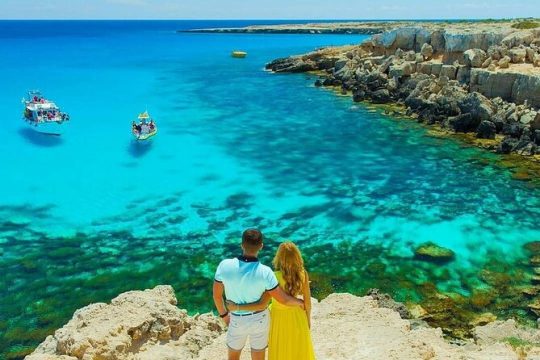
East of Larnaca, the coast turns into sandy bays and sea cliffs. Nissi Beach is the best-known strand, with pale sand and shallow, clear water, and Cape Greco Viewpoint looks over sea caves and rock arches at the island's south-eastern tip. Nearby, Agioi Anargyroi Church sits on the cliff edge above the sea, and the Love Bridge is a natural rock arch popular for photos. Boat tours along this coast add swimming stops in quiet coves and a look at the caves from the water.
Full-day outings, a bit over a quarter of the choice, head inland and west. Lefkara, in the hills, is known for its lace and silverwork, and many routes continue into the Troodos Mountains, with pine forest, painted churches and cooler air. Omodos Village, among vineyards on the southern slopes, has a stone square, a monastery and wine to taste. Further west, Paphos Archaeological Park holds Roman mosaics among the best in the Mediterranean, and the Tombs of the Kings are carved into rock near the sea. Kolossi Castle, a medieval stronghold near Limassol, is a common stop on the way. To the north, outings cross into Nicosia, where Buyuk Han, an Ottoman inn with a courtyard of cafés and craft shops, sits in the old city.
Most departures leave in the morning, so plan early starts for the longer drives. Pickup from your hotel is included on about half of options, and private drivers make it easy to combine stops in your own order.
Families will find a fair number of options that welcome children, and a few run as multi-day trips around the island. Book cancellable where possible: nearly every option here allows it, which keeps your plans flexible if flights or weather change.
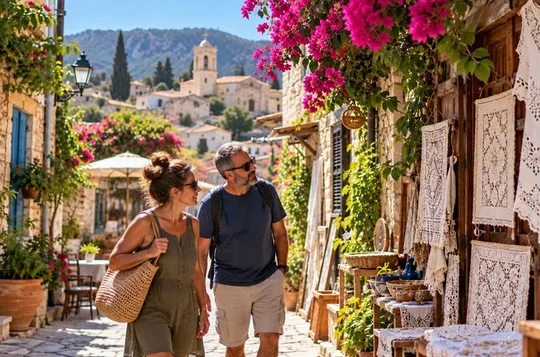
#1Lefkara is a hill village in the Larnaca District of Cyprus, on the southern slopes of the Troodos Mountains, known across the island for its handmade lace and silver filigree. People come to wander its stone lanes, watch the lace being stitched by hand and see a traditional Cypriot village that has kept its old character.The name joins the Greek words for white and hills, a nod to the pale limestone and silica of the surrounding slopes. People have lived here since prehistoric times, and under Frankish and Venetian rule in the Middle Ages the village was a fief that grew, by the 16th century, into one of the largest towns in Cyprus. Its lace, known as lefkaritika, became famous far beyond the island. A well-loved local story holds that Leonardo da Vinci came here in the late 15th century and bought an altar cloth for the cathedral in Milan. In the early 20th century, emigration emptied much of the village, and tourism later in the century gave its crafts a new market.The village itself is the main sight. Older houses turn plain stone walls to the street and open onto inner courtyards, while later two-story homes have shops on the ground floor, tiled roofs, long balconies and neoclassical touches. Many have been carefully restored. Lacemakers still work geometric patterns handed down through families, and silversmiths twist fine wire into filigree for jewelry and ornaments. The Church of the Holy Cross, Timios Stavros, rises above the rooftops, its bell tower a landmark from the lanes below. Down the hill sits Kato Lefkara, the smaller lower village, with its own quiet streets and chapels.A local guide can show how the stitches are made and how the craft has passed from mothers to daughters, which makes the work in every shop window easier to appreciate.
More
#2The Troodos Mountains form the green, forested heart of Cyprus, rising in the west and center of the island to its highest summit, Mount Olympus. People head here for pine-scented hiking, stone villages, monasteries and a group of small Byzantine churches covered inside with remarkable painted walls.The range has an unusual origin. The rocks of Troodos formed deep under an ancient ocean floor and were later pushed up above the sea, so geologists come from around the world to study a piece of oceanic crust that can be walked on. The area is recognized as a geopark, and copper mined from these hills gave Cyprus wealth and, many believe, its very name in the ancient world.In the Byzantine and medieval centuries, villagers and monks built modest churches in the valleys, often with steep wooden roofs to shed winter snow. Their plain exteriors give little warning of what lies inside: walls and ceilings painted from top to bottom with saints, gospel scenes and portraits of the families who paid for them, created over several hundred years. Ten of these churches share a joint world heritage listing. The Kykkos Monastery, founded in the 11th century, is the richest on the island and guards an icon of the Virgin traditionally said to have been painted by Saint Luke.Beyond the churches, the mountains offer shaded trails, small waterfalls such as Caledonia, and Cedar Valley, where native Cyprus cedars grow and wild mouflon sheep sometimes appear. Villages like Platres, Kakopetria and Omodos have narrow lanes, balconies draped with vines, and tavernas serving grilled meat and local trout. The slopes also grow grapes for Commandaria, a sweet dessert wine made in Cyprus since antiquity. With a guide, the frescoes come alive as stories rather than faded figures, and the side valleys become easier to read.
More
#3Many visitors see the chapel on foot, following a marked coastal trail that starts at the church and links to Konnos and the sea caves. Others view the cliffs from the water on a sightseeing cruise along the Cape Greco coast. A guided walk or boat trip adds the story of Saints Kosmas and Damianos and the cape's geology, and can pair the chapel with nearby sea caves and viewpoints. The chapel is small and sits on an exposed cliff edge, so bring sun protection, water, and sturdy shoes. The chapel itself is a short stop, while the marked loop trail that starts here takes about 45 minutes. Stone steps lead from beside the chapel down toward the cave with the holy water, and the footing can be uneven. Cape Greco is a protected area, so stay on marked paths and leave nesting and resting wildlife undisturbed. A picnic area is nearby, so pack food and drinks for a longer stay on the cape.
More
#4Buyuk Han, the Great Inn, is a grand Ottoman caravanserai in the walled old city of North Nicosia, and the biggest of its kind on the island. Its two stories of arcades wrap around a wide courtyard with a small mosque at the center, and people come to admire the building and browse the handmade crafts sold in its old rooms.The Ottomans built it in the 16th century, soon after they took Cyprus from the Venetians, to lodge merchants and travelers and their goods. Records name the island's first Ottoman governor as its founder, and its design followed the Koza Han, a silk market inn in Bursa. It was run as a religious endowment that was expected to earn its keep, with trade on the ground floor and rooms for guests above.After the British took over the island in the 19th century, the inn served as the city's central prison, later took in travelers again, and then housed poor families who rented its rooms for very little. A long restoration in the late 20th century brought it back to life as a center for art and craft. Shopkeepers are expected to make what they sell, so the traditional Cypriot handicrafts on offer come straight from local makers, most of them women.The building forms a near square of about 50 by 45 meters. As you walk the arcades, look for the stone chimneys above the rooms, one for each old fireplace, and for the little mosque in the courtyard with its fountain for washing before prayer. The two floors hold more than 60 rooms, and from the upper gallery you look straight down into the courtyard. A guide can explain how inns like this one kept trade moving across the Ottoman world.
More
#5You can drive or take the local bus to the park and walk to the viewpoint, then continue on the signposted trails along the cliffs. To see the sea caves up close, a boat trip from Ayia Napa is the best way, since some caves can only be reached from the water. Guided jeep safaris, cycling tours and sunrise or sunset outings also make good ways to cover the park. The viewpoint is part of Cape Greco National Forest Park, which has signposted trails, picnic areas and public toilets. Wear sturdy shoes, bring water and use sun protection, because there is little shade on the headland. The park has a small snack van, so carry your own food and drinks for a longer stay. Parking near the viewpoint can fill up in peak season, so arrive early or walk from the bus stop. Paths are rocky and uneven, so the walk is not well suited to wheelchairs or small strollers.
More
#6Kolossi Castle is a medieval fortress just west of Limassol in southern Cyprus, a tall, square stone keep rising from the flat farmland near Kolossi village. Built by crusader knights, it is linked to the island's sugar trade and to Commandaria, the sweet wine named after the castle's commandery.In the early 13th century the Lusignan king of Cyprus granted the land around Kolossi to the Knights of St. John, the Hospitallers, and after the crusader states fell the order made Cyprus its headquarters for a time. The estate became their Grand Commandery, one of the richest holdings of the order, producing sugar cane and wine. The Knights Templar held it briefly, and the first castle was damaged in later raids. The keep that stands now was built in the mid-15th century under the Grand Commander Louis de Magnac, whose coat of arms is carved on the east wall beside the royal arms of the Lusignan kings.The keep rises three stories behind thick walls, and its entrance was once reached by a drawbridge, guarded from above by a machicolation. Inside, the lower floor held storerooms and water cisterns, the middle floor has a large fireplace and a faded wall painting of the Crucifixion, and the top floor held the commander's quarters. A spiral stone staircase leads up to the flat roof, where the battlements look out over the fields and orchards that once fed the commandery's wealth, toward the sea and the Akrotiri peninsula.Beside the keep stand the stone remains of the sugar mill, where cane was crushed and boiled down. The sweet Commandaria wine made in the hills nearby still carries the commandery's name, and many people consider it one of the oldest named wines still in production. A guide can bring the knights' business empire to life and explain how a crusader estate came to give its name to a wine.
More
#7Kourion is an ancient city on a clifftop above the south coast of Cyprus, west of Limassol, whose ruins look out over Episkopi Bay and the open sea. It is one of the most important archaeological sites on the island, and visitors come for its Greco-Roman theater, its fine floor mosaics and the sweeping view from the edge of the bluff.According to legend, settlers from Argos in Greece founded the city, and by the Classical period it was one of the independent city-kingdoms of Cyprus, with its own kings and coins. It thrived through Hellenistic and Roman rule as a wealthy center for farming and trade. In the 4th century AD a series of powerful earthquakes destroyed much of the town. Kourion was rebuilt as an early Christian city, with a large basilica and its own bishop, before raids from the sea in the early Middle Ages led people to abandon the site.The theater, cut into the slope facing the sea, began as a Greek building and was enlarged by the Romans, who later adapted it for shows with wild animals. Nearby, the House of Eustolios has richly patterned floors with birds and fish, and a mosaic inscription that welcomes visitors and names Christ, a sign of the change in faith. The House of Achilles and the House of the Gladiators hold more mosaic scenes, and the remains of a public bath, a fountain house, the basilica and a forum fill out the picture of daily life.A short distance west lie the ruins of the Sanctuary of Apollo Hylates, god of the woodland, with a partly rebuilt temple front, and a Roman stadium where athletes once raced. The clifftop setting, with the bay spread out below, makes the ruins feel open and alive. A guide brings the inscriptions and mosaic scenes to life and helps you picture the city in its busy heyday.
More
#8Kykkos Monastery, the Monastery of the Virgin of Kykkos, is the richest and best-known monastery in Cyprus, set high on a forested ridge in the western Troodos Mountains. Pilgrims and travelers come to venerate its ancient icon of the Virgin Mary, admire the gilded church and mosaic-covered cloisters, and visit a museum of religious treasures.The monastery's story begins with a hermit named Esaias, who lived in these mountains near the end of the 11th century. According to tradition, he cured the daughter of the Byzantine emperor Alexios Komnenos, and in gratitude the emperor sent him an icon of the Virgin said to have been painted by the Apostle Luke, along with funds to build a church to house it. The icon has been the heart of Kykkos ever since. For centuries it has been kept under a covering of silver and gilt, and by long custom no one looks directly at the face beneath. Islanders have long carried it in procession and prayed before it for rain in times of drought.Fire swept through the monastery several times over the centuries, and most of the buildings you see date from rebuilding after the last of these, in the 19th century. The icon survived each disaster, which only deepened its reputation. In the 20th century the monastery played a part in the island's political life. Archbishop Makarios III, the first president of independent Cyprus, entered Kykkos as a young novice, and fighters in the struggle against British rule used it as a base. His tomb lies on a nearby hilltop.Inside the walls, the church glows with gilded woodwork, chandeliers and wall paintings, and the courtyards and arcades are lined with modern mosaics in gold and bright color. The museum displays icons, manuscripts, embroidered vestments, silver and ancient Cypriot finds. A guide can share the legends of the icon and the monastery's place in Cypriot history.
More
#9Larnaca Salt Lake is a chain of four shallow salt lakes on the western edge of Larnaca, on the southeast coast of Cyprus. In winter the lakes fill with water and the largest, Aliki, turns pink with greater flamingos, and birdwatchers, walkers and photographers come to see one of the island's great natural sights so close to town.The lakes follow a yearly rhythm. Winter rains fill them to an average depth of only about a meter, and together they spread across more than two square kilometers. In the dry summer months the water evaporates and leaves behind a hard, glittering crust of salt. That crust was once a valuable resource. Salt from the lake was among Cyprus's major exports, and workers gathered it with the help of donkeys, piling it into pyramid-shaped heaps along the shore.The wildlife is the main draw. Thousands of greater flamingos spend the winter here, wading through the shallows to feed on tiny brine shrimp, and their honking calls carry across the water. They are far from alone: around 85 species of waterbirds have been recorded, and the lakes serve as an important stopover for migrating birds. Its importance is recognized by international wetland protection under the Ramsar Convention, a place in the European Union's network of protected nature sites and status as an Important Bird Area.On the shore stands the Hala Sultan Tekke, a shrine held sacred in Ottoman Islam and built around a tomb said to be that of Umm Haram, a relative of the Prophet Muhammad. Its dome and minaret rise among palm trees, and the sight of the shrine mirrored in the winter lake, with flamingos in the foreground, is the picture many visitors take home. A naturalist guide helps you tell the different waterbirds apart.
More
#10The Love Bridge is a natural limestone arch on the rocky coast just outside Ayia Napa, in the southeast of Cyprus. Wind and waves shaped it into a graceful curve over the Mediterranean, and people come to see it, take photographs and swim or snorkel in the clear water below.The arch is the work of time rather than human hands. Over thousands of years, the sea and the weather wore away the soft limestone of the shoreline, hollowing out caves and arches and leaving a narrow span of rock standing above the waves. The same forces shaped the jagged coast around it, a stretch of ledges, inlets and small coves that runs east along the headland. It is also known as the Monachus Monachus Arch, after the scientific name of the rare Mediterranean monk seal.Its popular name comes from a local tradition. Couples would stand together on the arch, make a wish and hope it would keep their love strong for life. Over time the bridge became a favorite backdrop for wedding portraits and couples' photos, and it is easy to see why. The pale rock, the deep blue sea and the open horizon make a simple, romantic scene that changes with the light through the day.The water is part of the appeal. Around the arch it is a clear, glassy blue, so you can see the rocky bottom and the small fish darting between the ledges, and snorkelers explore the shallows beneath the cliffs. Nearby, Grecian Bay beach and the small chapel of Agios Epifanios are within easy reach, and coastal paths link viewpoints where the rock drops straight into the sea. Seen from a boat, the arch and the sea caves beside it take on a different shape, and a local guide can share the legends of this stretch of shore.
More
#11If you are looking for things to do in Larnaca we have 5 Tours and Activities to Experience Nissi Beach. Check out our verified traveler reviews and photos of Nissi Beach tours and other things to do in Larnaca, and book securely when you find the perfect one. Learn the best ways to see famous Nissi Beach and explore the most popular things to do in Larnaca.
More
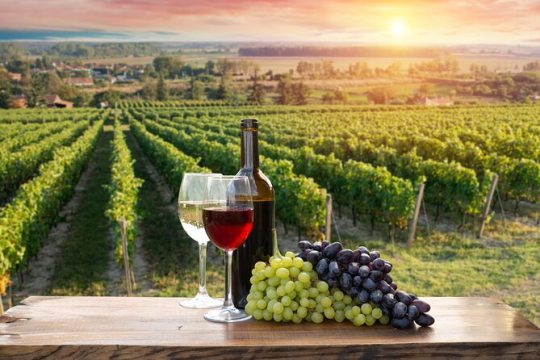
#12Omodos is a wine village high in the Troodos Mountains of Cyprus, in the hills of Limassol District, built around a broad square and a large old monastery. People come for its stone lanes, its local wine and a slower, older picture of Cypriot mountain life than the coast can offer.The village grew up around the Monastery of the Holy Cross, known in Greek as Timios Stavros, and the church remains the center of local life. Tradition links the monastery to relics of the Passion that pilgrims still come to venerate. Inside, the carved wooden iconostasis, the painted icons and the old doors reward a slow look, and the rooms around the monastery courtyard hint at the generations of monks who once lived and worked there.Wine is the other thread in the village story. Omodos belongs to the Krasochoria, the cluster of wine villages on the southern slopes of the Troodos, where families have tended vines on terraced hillsides for centuries. A medieval press shows how grapes were once crushed and squeezed by hand and heavy wooden beam, and small wineries make wine from native grapes such as Xynisteri and Mavro, along with the clear grape spirit called zivania. Shops in the lanes sell lace, needlework and sweets made from grape must, and you may see older women crocheting in a doorway.Much of the pleasure lies in the setting itself: stone houses with wooden balconies and shuttered windows, vine-covered courtyards, archways and views over the slopes of the surrounding hills. Cafes and taverns spill onto the square in front of the monastery, which fills with life on feast days. A guide adds the stories behind the monastery, the old press and the wine craft that still shapes the village.
More
#13Paphos Archaeological Park covers much of the ancient city of Nea Paphos beside the harbor of Kato Paphos, on the southwest coast of Cyprus. It is best known for the colorful Roman mosaic floors of four grand villas, among the finest in the Mediterranean, and for ruins that span from Hellenistic times to the Middle Ages.The city was founded near the end of the 4th century BC, when Nicocles, the last king of the older settlement of Palaipafos, moved his people down to this sheltered harbor. It grew into the capital of Cyprus from the 2nd century BC to the 4th century AD, under Hellenistic and then Roman rule, and wealthy officials and merchants built lavish homes here. The whole site is part of a World Heritage listing that covers the monuments of Paphos.Those homes are the stars of the park. The House of Dionysos, found by chance when a farmer was plowing his land, has floors showing the god of wine in triumph and the tale of the first people to taste wine. The House of Theseus shows the hero battling the Minotaur, the House of Aion presents a beauty contest presided over by Aion, god of eternity, and the House of Orpheus depicts the musician charming wild animals with his lyre. Their detail, color and sense of movement are remarkable after so many centuries underground.Beyond the villas, the park holds a small stone Odeon, restored and still used for performances, the outline of the old Agora, and the Asklepieion, a healing sanctuary dedicated to the god of medicine. Near the harbor rise the jumbled ruins of Saranta Kolones, or Forty Columns, a medieval castle named for the granite columns scattered around it, while the remains of an early Christian basilica recall the city's later history. A guide can explain how people in Roman Paphos lived, worshipped and entertained themselves.
More
#14The Rock of Aphrodite, known in Greek as Petra tou Romiou, is a tall rock rising from the sea beside a shingle beach near Kouklia, on the road between Paphos and Limassol in Cyprus. According to legend, the goddess of love rose from the sea foam here, and people come for the myth, the dramatic shoreline and a swim in clear water.In Hesiod's telling, Aphrodite was born from the foam that rose after Cronus cast the severed parts of his father Uranus into the sea. Local tradition adds that the waves carried her first toward Kythera and then to Cyprus, and some say the rock itself is part of the god. The story gave this coast deep meaning in the ancient world, and nearby Kouklia was the site of Palaepaphos, where a great sanctuary of Aphrodite was founded in the 12th century BC.The name Petra tou Romiou means Rock of the Greek, and it comes from another legend entirely. The Byzantine hero Digenis Akritas is said to have hurled the boulder from the Troodos Mountains to drive off Saracen raiders, and a nearby rock is known as the Saracen Rock. Another tale ties the name of a neighboring beach, Achni, to Achaean warriors said to have landed there on their way home from Troy.The scene itself is simple and beautiful, with a pale rock rising from turquoise water, smaller stacks scattered around it and white cliffs curving along the shore. Waves rattle the smooth pebbles, and low evening sun turns the rock a warm gold. A popular local saying promises lasting youth or love to anyone who swims around the rock. A guide can untangle the layers of myth and explain how Cyprus came to be known as the island of Aphrodite.
More
#15The Tombs of the Kings is an ancient burial ground in Paphos, on the west coast of Cyprus, where grand underground tombs were carved straight out of the rock close to the sea. People come to wander among the sunken courtyards, columns and burial chambers of a necropolis used for centuries by the city's leading families.The tombs date from the Hellenistic period, when Paphos served as the capital of Cyprus under the Ptolemies of Egypt, and they remained in use into Roman times. The royal name came later, inspired by the scale and finish of the monuments rather than by anyone buried in them, since the rock chambers belonged to officials and wealthy citizens.Their builders borrowed the forms of houses for the living. Several of the largest tombs center on an open courtyard cut down into the bedrock and ringed by Doric columns, with burial chambers and niches opening off it like rooms around an atrium, a plan that echoes tombs built in Alexandria in the same era. Steps lead down into these courtyards, and some walls still carry traces of plaster and painted decoration. Smaller tombs are simpler, with niches cut into the rock for single burials, and the contrast hints at the different ranks of the people laid to rest.After the ancient burials ended, the site had a long afterlife. Early Christians are thought to have sheltered in some tombs, people later lived in others, and over the centuries both building stone and the goods buried with the dead were carried away. Excavations in the 20th century cleared the courtyards that visitors walk through, and the site forms part of the Paphos listing as a World Heritage Site. Walking from tomb to tomb across the rocky plain, with the sea beyond, gives a sense of the ambitions of the ancient city. A guide can explain how the chambers were cut, sealed and used.
MoreLarnaca moves at a gentle seaside pace. Mornings start with coffee on the waterfront, and many visitors then set off with a private driver or on a full-day outing to mountain villages, ancient ruins and the island's other cities.
Shorter trips fill the gaps between beach time, and evenings end with grilled fish and a slow walk by the water.
The town suits couples, history lovers and anyone who wants an easy, sunny first look at Cyprus, with the airport close at hand for short stays.
Summer, from June to September, is hot, dry and busy. It is perfect for swimming, so plan long sightseeing days for early mornings and keep the afternoons for the sea.
Spring brings wildflowers, green hills and comfortable temperatures for walking ruins and villages, which makes it the best season for full days inland.
Fall stays warm, and the sea is still pleasant well into October. Winter is mild with occasional rain, a quiet time for culture, and the salt lake often draws flamingos in the cooler months.

The answers provided below are based on answers previously given to customers' questions.