Extended Today Black Friday 04HRS 49MIN 51SEC Up to 20% off gift cards BLACK FRIDAY
GIFT CARD SAVINGS
$100 – $249SAVE 5% $250 – $499SAVE 10% $500 – $999SAVE 15% $1,000+SAVE 20% Shop gift cards Discount applied automatically at checkout. Each card keeps its full value.
Extended Today Black Friday 04HRS 49MIN 51SEC
UP TO 20% OFF GIFT CARDS
$100–$249(save 5%) $250–$499(save 10%) $500–$999(save 15%) $1,000+(save 20%)
Shop gift cards Discount applied automatically at checkout. Each card keeps its full value.
Kosovo

Cool things to do in Kosovo

Welcome to Kosovo

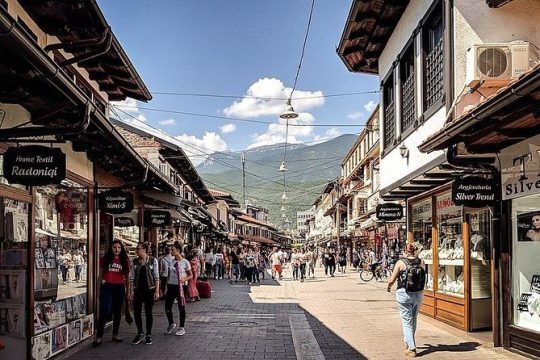
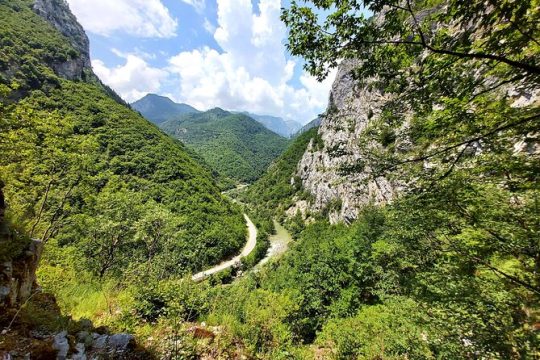
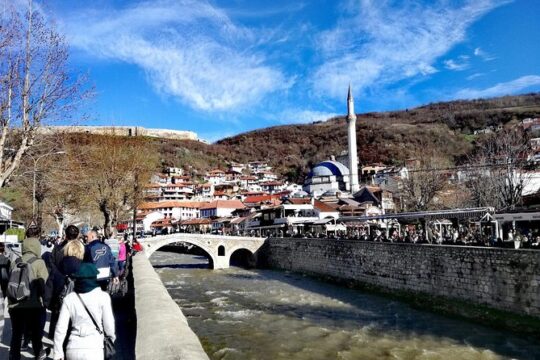
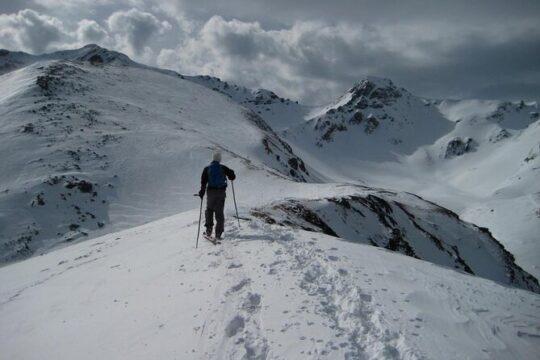
Kosovo is one of Europe's youngest countries, a small, landlocked corner of the Balkans framed by high mountains and dotted with Ottoman bridges, Serbian Orthodox monasteries and busy cafés. Few travelers make it here, and that is part of the appeal: the welcome is warm, the coffee culture runs from early morning to late at night, and history sits close to the surface, from Roman and Byzantine ruins to the memorials of a much more recent conflict. The landscape changes quickly, from wide farming plains in the middle of the country to the steep peaks along its western and southern borders, where hikers and skiers find plenty of room. Albanian is the main language, though English is widely spoken among younger people, which makes getting by easy. For nearly every visitor the trip runs through Pristina, the capital, which is both the country's main gateway and the base for almost all of its tours. From there, guided days head out to mountain gorges, painted medieval monasteries, archaeological sites and old market towns, and longer trips cross into neighboring countries. Outings here are mostly private and cultural, built around history, heritage and food, with walking routes in the city and minivan days on the road. Reviews are consistently glowing, a sign of how personal small-country guiding can be.

Pristina

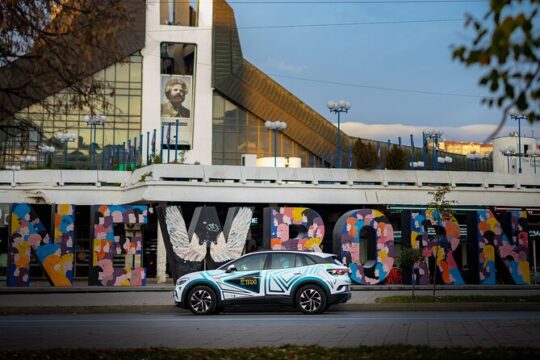
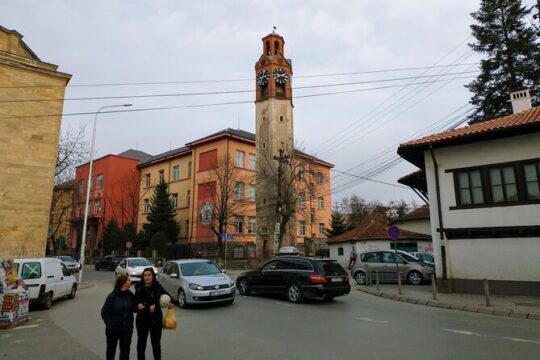
Pristina is young, energetic and a little rough around the edges, and it rewards anyone who slows down to look. The pedestrian boulevard through the center fills with families and students every evening, and the cafés along it pour some of the best macchiato in the region. A walking tour connects the city's layers in a few hours: Ottoman mosques and an old clock tower in the bazaar quarter, socialist-era buildings such as the striking domed and latticed national library, and monuments to independence that show how recently the country took its present shape. Guides here tend to share personal stories alongside the history, which makes even a short walk feel like a conversation. Food walks are another good way in, with stops for flaky burek, grilled meats, peppers stuffed with cheese and the strong Turkish-style coffee older locals still prefer. To see how Kosovar families lived in earlier centuries, visit the Pristina Ethnographic Museum (Muzeu Etnologjik), an Ottoman-era house complex where costumes, carpets and household objects fill the low wooden rooms.

The capital also works as a launch pad. Private sightseeing tours and bus or minivan trips leave the city for full days in the countryside, visiting medieval monasteries with painted frescoes, Roman ruins, mountain villages and the stone bridges and minarets of the old southern towns. Because the borders are close, many itineraries also slip across into North Macedonia for the day. Archaeology fans can visit the excavated remains of a Roman town just outside the capital, where foundations and mosaics reveal a busy provincial city. In its capital you can tour the Memorial House of Mother Teresa (Spomen Kuka na Majka Tereza), which honors the nun who was born there, walk the walls of Skopje Kale Fortress above the river, and ride a cable car up to the Millennium Cross (Mileniumski Krst) on the mountain overlooking the city. Multi-day trips go further, linking Kosovo with Albania, Montenegro and the rest of the western Balkans in one route. Back in Pristina, evenings are lively, with jazz bars, craft beer pubs and rooftop terraces that stay busy well after dinner. With most tours run privately, you can set the pace, add a stop for a long lunch or linger wherever the history speaks to you.

Read more
Top 5 attractions in Kosovo
Memorial House of Mother Teresa (Spomen Kuka na Majka Tereza)#1
4.8 (1,123)

Memorial House of Mother Teresa (Spomen Kuka na Majka Tereza)

The Memorial House of Mother Teresa is a museum and chapel in central Skopje dedicated to the city's most famous daughter, the Catholic nun who became Saint Teresa of Calcutta. It stands on the site of the church where she was baptized, and visitors come to learn about her childhood here and the work with the poor that made her known around the world.She was born in Skopje as Anjezë Gonxhe Bojaxhiu into an Albanian Catholic family, and she grew up here until she left as a young woman to join a missionary order of nuns, a path that led her to India. There she founded the Missionaries of Charity and spent her life caring for the dying, the sick and the destitute in the slums of Calcutta, work that brought her the Nobel Peace Prize and, after her death, sainthood.The church of the Sacred Heart of Jesus, where she was baptized, was lost in the earthquake that devastated Skopje in the 20th century. The memorial house rose on its site early in the 21st century, and its eclectic design has divided opinion among architects. It was conceived in the spirit of a cenotaph, a memorial to someone buried elsewhere, in this case in Calcutta. Some of her relics, including a fragment of bone sent from the Vatican, are kept inside, turning the museum into a place of pilgrimage as well.Inside, the exhibits trace her life from a Skopje girlhood to the streets of Calcutta through photographs, documents and personal belongings. Fittingly for a building on the site of her baptism, she is said to have regarded the day she was baptized, rather than the day she was born, as her true birthday. A guide can also show how the surrounding center was rebuilt after the earthquake that swept her childhood church away.

More
Millennium Cross (Mileniumski Krst)#2
4.8 (406)

Millennium Cross (Mileniumski Krst)

The Millennium Cross is a giant steel cross standing on Krstovar, the highest peak of Vodno Mountain on the southern edge of Skopje, the capital of North Macedonia. It is one of the tallest crosses in the world, and people go up for the wide view over the city and the valley of the Vardar River.The cross was raised at the turn of the millennium to mark the start of Christianity's third millennium, as a project backed by the Macedonian Orthodox Church. Standing more than 60 meters high on the ridge, it was designed to be seen from almost everywhere in the city below. After dark it is lit up, so it hangs over Skopje as a bright shape against the black outline of the mountain. For many residents it stands for faith and for the long Orthodox heritage of the country, and for nearly everyone in town it is the landmark that marks the southern skyline.Vodno is Skopje's own mountain, a wooded ridge where locals come to walk, run, cycle and picnic on weekends, and the cross crowns its summit. From the open ground around its base, the city opens out in a long sweep: the Old Bazaar and the stone fortress beside the river, the newer districts stretching across the plain, and the hills and higher ranges rising beyond. On clear days the view carries far across the surrounding countryside. Paths fan out from the top through the woods, and the cable car line runs down the slope through the trees, so riders get a bird's-eye look at the forest on the way.Standing at the foot of the cross gives a real sense of its size, with the steel frame towering overhead. A local guide can name the districts and landmarks laid out across the valley and explain what the cross means to the people of Skopje.

More
Pristina Ethnographic Museum (Muzeu Etnologjik)#3
4.9 (99)

Pristina Ethnographic Museum (Muzeu Etnologjik)

The Ethnological Museum in Pristina, the capital of Kosovo, occupies the Emin Gjiku complex, a group of historic Ottoman-era buildings in the city center. Visitors come to see traditional costumes, crafts, weapons and household objects that show how people in Kosovo lived, worked and celebrated over the centuries, in a setting that is itself a protected monument.The complex dates from the 18th century and once belonged to the family of Emin Gjikolli, whose name survives in the Turkish form Eminçik, still used for the site. Its main house and guest house stand around an inner courtyard, and the separate guest quarters recall the central place of hospitality in Albanian tradition. For years the buildings held a nature museum, but after conservation work funded with international support they were given a new role as an ethnological museum devoted to the life and customs of Kosovo.The displays trace daily life in Kosovo from the 15th to the 20th century. Traditional clothing is a highlight, including bridal costumes from the mountain region of Rugova, along with handmade linen and textiles. Old firearms recall the skill of gunsmiths in towns such as Prizren, Peja and Gjakova, and cases of delicate filigree jewelry show off a craft for which the region is still known. Household items, from wooden tools and containers to pottery used for baking bread, reveal how families cooked, stored food and worked.Music has its place too. Among the instruments are a lahuta, the single-stringed fiddle that traditionally accompanies Albanian epic songs, and a Neolithic ocarina found at Runik, proof that people have made music on this land for thousands of years. The old buildings and their quiet courtyard offer a calm pause from the busy streets of the modern capital. With a guide, the objects open onto stories of weddings, crafts and family life across Kosovo.

More
Skopje Kale Fortress#4
4.8 (1,409)

Skopje Kale Fortress

Skopje Kale Fortress is the old stronghold on the highest point of Skopje's old town, overlooking the Vardar River and the city center. People climb up to walk along its walls and towers, see the remains of many centuries of settlement and look out over the rooftops, minarets and mountains around the capital of North Macedonia.The hill has drawn settlers since prehistoric times, and archaeologists have found traces of Neolithic and Bronze Age life beneath the later walls. The fortress itself was raised in the early Byzantine period, after an earthquake destroyed the Roman city of Scupi nearby, and over the centuries it changed hands many times as empires and kingdoms fought over the valley. For most of its life it was the military heart of the city, guarding the river crossing below.In the 20th century, the great earthquake that struck Skopje damaged much of what still stood, and parts of the walls have since been restored. Excavations in the grounds have turned up foundations, coins, pottery and other finds from many periods, showing how long people have lived on this spot and how much of the city's story is layered here.Inside the walls, the ground opens into a broad space where the outlines of old buildings are marked in stone, and the restored towers and battlements give a sense of how the fortress once worked. From the ramparts, the view takes in the Stone Bridge, the domes and minarets of the Old Bazaar below, the new buildings of the center and the cross on Mount Vodno beyond the city. It is a calm place compared with the busy streets beneath it, and a good spot to understand how Skopje fits into its valley. A guide can bring out the layers of history hidden in the stones.

More
Skopje Old Bazaar#5
4.7 (725)

Skopje Old Bazaar

Skopje's Old Bazaar, the Stara Čaršija, is the historic market quarter of North Macedonia's capital, spread along the east bank of the Vardar River across the Stone Bridge from the city center. One of the oldest and largest bazaars in the Balkans, it draws visitors for its Ottoman mosques, inns and bathhouses and its lanes of small workshops.Trade has centered here since at least the 12th century, but the quarter took its lasting shape after the Ottoman conquest in the late 14th century. In the 15th century the local governors Ishak Bey and his son Isa Bey paid for mosques, inns and markets, and by the 16th and 17th centuries the bazaar was at its height, with merchants from Dubrovnik and Venice and a sizable Jewish trading community. A great fire in the late 17th century burned much of the city, and earthquakes struck more than once, yet the quarter was rebuilt each time.Many of its landmarks survive. The Mustafa Pasha Mosque, close to the fortress, has a tall, slender minaret and a broad dome, while the Ishak Bey Mosque is known locally as the Decorated Mosque. Travelers once rested in caravanserais such as the large Kuršumli Han, named for its lead-covered roof, and Suli Han, which now houses an art academy and a museum of the bazaar. Two old bathhouses, Daut Pasha Hamam and Čifte Hamam, have become art galleries, their domed rooms a fine setting for paintings.Not every building is Ottoman. The Church of the Holy Salvation was built partly below ground, since rules of the time limited how tall churches could be, and inside hides a richly carved wooden iconostasis. A stone clock tower, the covered Bezisten market and rows of jewelers' shops complete the picture. A guide helps read this layered quarter, where Muslim and Christian heritage sit side by side.

More

Good to know Kosovo

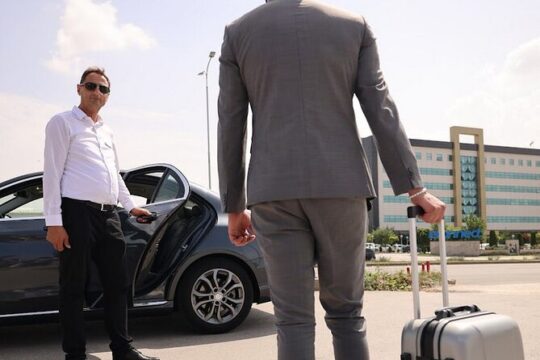
Kosovo is a relaxed, personal place to travel. Most outings are private, so a guide meets you in the morning and builds the day around what you enjoy, from faith and food to mountain scenery, with coffee stops along the way.
Days run from a half day to a full one, and evenings in Pristina are social, spent strolling the center, eating out and lingering over drinks on a terrace.

It suits independent travelers, history buffs and anyone adding a quieter stop to a wider Balkan trip.

Late spring and early fall are the most comfortable seasons, with mild days for walking around Pristina and clear views on drives into the mountains.

July and August are warm and busy, when many Kosovars living abroad come home and the cafés and festivals hum late into the night. Book guides early for these weeks.

Winter is cold and often snowy, with short days and slower mountain roads. It suits travelers who like quiet streets, unhurried museum visits and a warm café to come back to.

  • The international airport near the capital is the main gateway, and buses connect with neighboring countries.
  • Distances are short, but buses to rural sights are scarce, so a driver or minivan tour helps.
  • Reserve a few days ahead, since most tours are private and guides book up on busy dates.
  • Bring your passport on any day that crosses a border, and check the entry rules for your nationality.
  • Dress modestly for monasteries and mosques, with shoulders and knees covered.
  • Carry some cash for small cafés and shops.
Kosovo
Peak season Jul – Aug
Local Currency Euro (€)
Weather now
Time Zone CET (+1)
Country Code +383
Attractions 5
Tours & Tickets 29
Verified reviews 238

Frequently Asked Questions

The answers provided below are based on answers previously given to customers' questions.

Activity name

Discover Kosovo