Extended Today Black Friday 01HRS 26MIN 12SEC Up to 20% off gift cards BLACK FRIDAY
GIFT CARD SAVINGS
$100 – $249SAVE 5% $250 – $499SAVE 10% $500 – $999SAVE 15% $1,000+SAVE 20% Shop gift cards Discount applied automatically at checkout. Each card keeps its full value.
Black Friday
Extended Today Black Friday 01HRS 26MIN 12SEC
UP TO 20% OFF GIFT CARDS
$100–$249(save 5%) $250–$499(save 10%) $500–$999(save 15%) $1,000+(save 20%)
Shop gift cards Discount applied automatically at checkout. Each card keeps its full value.
Kos

Cool things to do in Kos

Welcome to Kos

Kos is a small, sunny island in the Dodecanese, and much of its appeal lies in how easily it opens onto the islands around it. From its harbor you can sail to a smoking volcano on Nisyros, cross to the medieval lanes of Rhodes, or spend a slow day swimming off a quiet beach. Most outings here start in the morning, a good share include a pickup from your hotel, and nearly all can be cancelled for free if your plans shift, so you can book early and still keep the week loose.

Boat trips and island hopping from Kos

The sea is the main event. About half of the trips on offer run between four and eight hours, which is the natural length for a crossing to a neighboring island, some time ashore and the sail home. The most talked-about of these goes to Nisyros, where you walk down into the crater of the Nisyros Volcano and feel the warm, sulfur-scented ground underfoot before lunch in a white village on the rim. Other days on the water are more about the coast itself: anchoring in clear bays, swimming from the deck and drifting back to port in the late afternoon. Most of these trips welcome children.

Day trips to Rhodes and farther afield

A longer group of outings crosses to Rhodes for a full day. Those built around Rhodes Town walk you through the old walled quarter toward Eleftherias Square, with time to look at the harbor and the knights' buildings. Others head down the coast to Lindos, where white houses climb toward an ancient hilltop citadel, or out to the ruins of Ancient Kamiros, the hillside fortress of Kritinia Castle and the shaded paths of the Valley of the Butterflies. A few plan a stop at Limnionas Beach, and the odd one reaches as far as Mykonos Town. These are long days with early starts, so check the return time and what is included before you choose.

  • Look for hotel pickup if you are staying outside Kos Town.
  • Bring sun protection and water for crater walks and ruins.
  • Read the sea conditions note, since crossings can change on windy days.
  • Wear shoes with grip for volcanic ground and old stone steps.

Private outings and cruise stops

Roughly a third of the options are private, which suits couples, small groups or anyone wanting a guide and boat to themselves. A private sail lets you choose which coves to linger in, and a private car tour of the island can mix ancient sites with a beach lunch. If you arrive by ship, about a quarter of tours start close to the cruise port and are timed to fit a day in harbor; confirm the return time against your sailing before you book. Shorter options of under two hours exist too, handy for an evening on the water or a quick look around town.

How to shape your days on Kos

Plan one big crossing, to Nisyros or Rhodes, early in your stay so a windy day has room to move. Fill the next days with a half-day boat trip and a slow morning at a beach, then save an evening for a sunset sail. The mix of short and long outings makes rest easy to fit in.

Read more
Top 9 attractions in Kos
Acropolis of Rhodes#1
4.9 (1,241)

Acropolis of Rhodes

The Acropolis of Rhodes is the ancient upper town of Rhodes, spread across the slopes of Monte Smith hill on the western edge of the modern city. Its partly rebuilt Temple of Pythian Apollo, stadium and small odeon look out toward the sea, and visitors come to wander the terraces of a Hellenistic city in an open, green setting.Rhodes city was founded in the late 5th century BC, when the island's three older cities, Lindos, Kameiros and Ialysos, joined forces to build a new capital on its northern tip. Its upper town on the hill was never a walled citadel but an open sanctuary of temples, sports grounds and green terraces held up by retaining walls. Here the citizens worshipped Athena and Zeus as protectors of the city and honored Apollo, and the stadium hosted games in honor of Helios, the sun god who was the patron of the island.On the hilltop, a few Doric columns and a corner of the Temple of Pythian Apollo have been set back up, and they can be seen from the harbor below. Down the slope, the long stadium has been restored with tiers of stone seats, and beside it sits the small marble odeon, where little beyond the orchestra and the first rows of seats is original. Fragments of the Temple of Athena Polias and Zeus Polieus crown the northern end, and rock-cut grottoes once used for worship and leisure lie among the trees.Much of what stands was uncovered and rebuilt by Italian archaeologists while the island was under Italian rule in the early 20th century, and Greek archaeologists have carried on the work since the Second World War, repairing wartime damage to the temple. The hill's name honors a British admiral, Sidney Smith, who is said to have used it as a lookout. A guide can conjure up the bustling ancient city that once spread below the hill.

More
Ancient Kamiros#2
4.7 (162)

Ancient Kamiros

Ancient Kamiros was one of the three great Dorian cities of Rhodes, and its ruins spread over a hillside above the island's northwest coast. Visitors come to walk its ancient streets, trace the walls of houses and temples, and look out from the acropolis over the slopes below to the sea.Dorian Greeks founded the city in an area Mycenaean settlers had known before them, and it prospered on the farmland of the surrounding hills. Legend names its founder as Kameiros, a grandson of the sun god Helios, and Homer lists it with Ialysos and Lindos among the Rhodian towns that sent ships to Troy. Late in the fifth century BC the three joined to found the new city of Rhodes at the island's northern tip, and Kamiros slowly lost importance. An earthquake in the third century BC brought down the city and its temple, and though it was rebuilt, another quake and the pull of Rhodes left it to fade under the earth.Archaeologists began uncovering the site in the 19th century, and many early finds went to the British Museum, while Italian teams later cleared and restored much of what stands. The city climbs three terraces. At the bottom lie a Doric temple, probably to Apollo, a fountain house facing a small agora and a precinct crowded with altars to many gods. The middle terrace holds the homes, set along streets laid out on a regular grid. On top, the acropolis carried the temple of Athena Kameiras and a long colonnaded stoa, built over a covered reservoir that once held water for about 400 families.With no modern village built over the ruins, the whole plan reads clearly, from the sanctuary at the foot of the hill to the temple ground on the summit. A guide can people those streets, explaining how families lived, worshiped and shared their water in a small Greek city.

More
Eleftherias Square#3
4.2 (35)

Eleftherias Square

Eleftherias Square, whose name means Freedom Square, is the main square of Kos Town, a short way up from the harbor on the Greek island of Kos. Surrounded by the Archaeological Museum, an old mosque and busy cafes, it is where many visitors begin exploring the town's mix of ancient, Ottoman and Italian-era landmarks.Much of what you see dates from the years after a powerful earthquake struck Kos in the first half of the 20th century, while the island was under Italian rule. The Italians used the rebuilding to reshape the center, clearing ruined quarters and laying out open spaces and public buildings in a confident style. Their work gave the square its present form and, by uncovering ancient remains beneath the damaged town, opened up the archaeological sites that now sit among the streets.The Archaeological Museum is the square's main sight, set in a neoclassical building on one side of the open space. Its galleries hold mosaics, statues and other finds from Kos and nearby islands, among them a statue long thought to portray Hippocrates, the father of medicine, who was born on Kos. Beside the museum stands the Defterdar Mosque, a reminder of the long centuries when the island was part of the Ottoman Empire.The public library and the municipal market also face the square, so it stays part of daily life in town rather than a monument alone. From its edges, lanes of the old town lead to the Ancient Agora, where columns and foundations of the ancient city lie open to the sky. Sitting at a cafe here, with Ottoman and Italian buildings in view and ancient ruins a few minutes away, you get a quick sense of the many layers of Kos's past.

More
Kritinia Castle#4
4.5 (48)

Kritinia Castle

If you are looking for things to do in Kos we have 4 Tours and Activities to Experience Kritinia Castle. Check out our verified traveler reviews and photos of Kritinia Castle tours and other things to do in Kos, and book securely when you find the perfect one. Learn the best ways to see famous Kritinia Castle and explore the most popular things to do in Kos.

More
Limnionas Beach#5
4.6 (7)

Limnionas Beach

If you are looking for things to do in Kos we have 1 Tours and Activities to Experience Limnionas Beach. Check out our verified traveler reviews and photos of Limnionas Beach tours and other things to do in Kos, and book securely when you find the perfect one. Learn the best ways to see famous Limnionas Beach and explore the most popular things to do in Kos.

More
Lindos#6
4.8 (1,555)

Lindos

Lindos is a whitewashed village on the east coast of Rhodes, Greece, gathered beneath a steep rock crowned by an ancient acropolis. It is one of the most visited places on the island, and travelers come for its maze of lanes, its old captains' houses and the ruins high above the sea.Lindos was one of three ancient cities on Rhodes, a busy port with a powerful navy and wide trade links across the Mediterranean. Its most famous citizen was Cleobulus, counted among the Seven Sages of ancient Greece. The sanctuary of Athena Lindia on the acropolis drew worshippers for centuries. Later, the Byzantines fortified the rock, and in the Middle Ages the Knights of St John built a castle around the ancient temple. In the following centuries, Lindos sea captains grew rich from trade and built fine houses in the village below.On the acropolis, the ruins of the temple of Athena sit at the edge of the cliff, with a long colonnaded stoa leading up to it. At the foot of the stairs, the stern of an ancient warship is carved in relief into the rock face. The walls of the knights' castle wrap around the summit, and from the top the view takes in the turquoise water of St Paul's Bay, where tradition says the apostle Paul came ashore. Back in the village, the Church of the Panagia holds colorful frescoes, and the captains' houses have carved stone doorways and courtyards paved with black and white pebble mosaics.Small shops, cafes and rooftop terraces fill the lanes, with views of the acropolis lit up at night. Below the village, sandy beaches line the curved bay. A guide brings out the layers of ancient, medieval and island history found here.

More
Mykonos Town (Chora Mykonos)#7
4.8 (8,412)

Mykonos Town (Chora Mykonos)

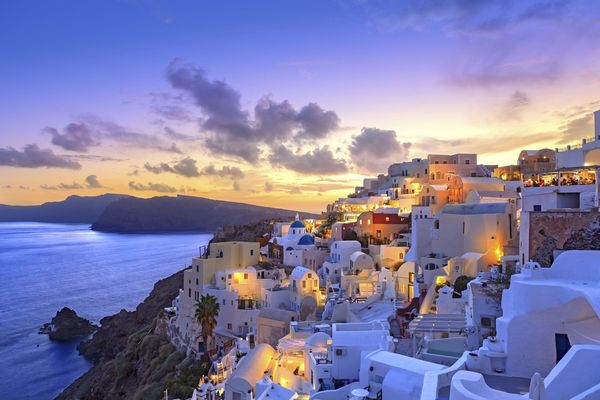
Mykonos Town, known locally as Chora, is the main town of the Greek island of Mykonos, a maze of whitewashed houses, blue doors and narrow lanes wrapped around a harbor on the west coast. Visitors come for its Cycladic architecture, its row of windmills, the seaside houses of Little Venice and an energy that runs from morning coffee to late at night.The town's twisting layout was no accident. Lanes were kept narrow and crooked to break the force of the island's strong winds and, according to local tradition, to confuse pirates who raided the Aegean for centuries. In the Middle Ages, the Venetians held the island and built a castle on the rise above the harbor; the Kastro quarter takes its name from it. Later, the town grew wealthy from seafaring and trade, and in the Greek War of Independence the local heroine Manto Mavrogenous spent her fortune on the fight; her bust stands in a square named for her.In the Kastro area stands Paraportiani, a lumpy, gleaming white church made of several chapels joined together over the centuries. Just beyond, Little Venice lines the shore with old captains' houses whose wooden balconies hang directly over the waves. On the ridge above, the Kato Mili windmills once ground grain for the island, their thatched caps turned toward the wind. Back in the center, Matoyianni Street is lined with boutiques, and Petros the pelican, the town's long-standing mascot, often wanders the waterfront.Small museums fill in the story, from ancient finds in the Archaeological Museum to island crafts and furniture in the Folklore Museum and ship models in the Aegean Maritime Museum. Between them, tiny chapels with red or blue domes appear around almost every corner. A guide can explain how a modest island port turned into one of the best-known towns in the Mediterranean.

More
Nisyros Volcano (Nisiros)#8
4.4 (459)

Nisyros Volcano (Nisiros)

Nisyros Volcano is the heart of Nisyros, a small, round island in the Dodecanese within reach of Kos and Rhodes. The whole island is the summit of an active volcano, and people come to walk down onto the floor of its Stefanos crater, where hissing vents, yellow sulfur crystals and a sharp smell of rotten eggs make it feel like another planet.Greek myth gives the island a violent birth. During the war between the gods and the giants, Poseidon is said to have torn a piece off neighboring Kos and hurled it at the giant Polybotes, trapping him beneath the rock, and locals once blamed the rumbling underground on his struggles. Geologists tell a different story: a caldera a few kilometers across formed in a series of eruptions over the past 150,000 years, and later steam-driven blasts punched smaller craters into its floor. The most recent of these came in the late 19th century, and scientists still keep a close watch on the volcano.Stefanos, the largest of the craters, is a wide, pale bowl with a flat floor streaked in white, yellow and gray. Steam pours from fumaroles around its edges, the ground is warm underfoot, and small pools of muddy water bubble and spit. Around the rim, green slopes and terraced hillsides make a striking contrast with the bare crater. The island's villages are worth the time too: Nikia and Emporios look down into the caldera from high perches, and Mandraki, the port, gathers its whitewashed houses below a medieval castle of the Knights Hospitaller and the cave monastery of Panagia Spiliani.The heat beneath the island is strong enough that it has been studied as a source of geothermal power, though islanders voted against tapping it. A guide can read the crater's colors and vents for you and explain why this quiet-looking island counts as one of the active volcanoes of the Aegean.

More
Valley of the Butterflies (Petaloudes)#9
4.6 (417)

Valley of the Butterflies (Petaloudes)

The Valley of the Butterflies, or Petaloudes, is a shaded, wooded valley in the west of Rhodes, in Greece's Dodecanese islands, where a stream runs beneath tall trees. In summer it fills with great numbers of resting moths, and visitors come to walk the path along the water, cross its little bridges and see the trunks and rocks covered in patterned wings.Despite the name, the insects are not butterflies but Jersey tiger moths. At rest they fold their wings into a cream and dark brown striped pattern that blends with the bark, but when they take off they flash bright red and orange hindwings, so a startled cluster can suddenly burst into color. They gather here in the dry heat of the Greek summer because the valley offers shade, moisture from the stream and Oriental sweetgum trees, whose resin gives the air a sweet, vanilla-like scent that seems to draw them in.The moths come to the valley to rest rather than to feed, living largely on reserves built up earlier in their lives, so every unnecessary flight burns energy they need to survive and breed. That is why the valley is protected as a natural area and why its quiet atmosphere matters. The calm suits the place, with the sound of running water, dappled light through the leaves, and small pools and waterfalls along the way.At the top of the path stands the small Monastery of Panagia Kalopetra, founded in the 18th century by Alexander Ypsilantis, a Greek nobleman who ruled the principality of Wallachia. It is a peaceful spot at the end of the climb, with a simple church and views over the green hills of the island's interior. The contrast between the cool, shaded ravine and the dry hillsides around it is part of what makes the valley feel like a small world of its own.

More

Good to know Kos

A week on Kos usually mixes slow beach mornings with a few bigger days at sea. Many visitors book a boat trip or two and one long crossing to a neighboring island.

Kos Town has a harbor, a castle and Roman ruins scattered among its streets, all easy to see on foot in the evening. Inland, quieter villages make a good change from the long sandy beaches.

The island suits families, couples and anyone who wants sun and some history without a packed schedule or long drives.

Summer, from June to August, is hot, dry and lively, with the warmest sea and the busiest beaches. The meltemi, a strong northerly wind, often blows in July and August and can make crossings rough.

May and June bring green hills, wildflowers and comfortable days for ruins and cycling. September and October keep the water warm for swimming, with fewer people on the sand.

In winter many hotels and boat trips close, and the island is quiet and mostly local. It suits a slow stay, but check that the outings you want are running.

  • Kos International Airport sits in the middle of the island, and taxis and transfers run from there.
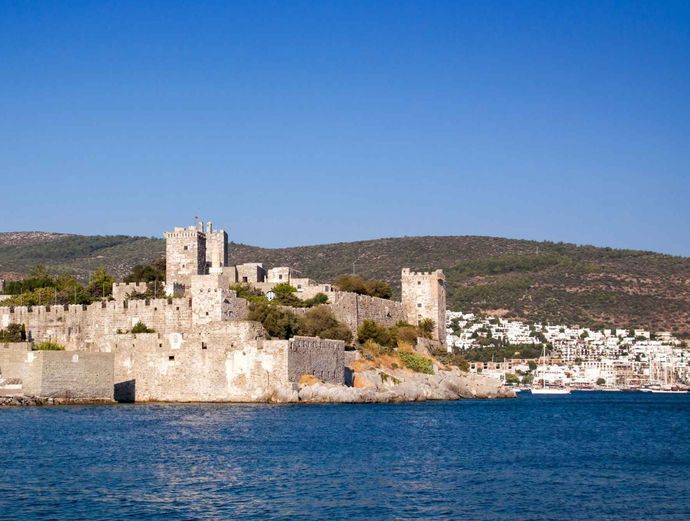
  • Ferries and fast boats link Kos Town with Rhodes, Nisyros, Kalymnos and Bodrum in Turkey.
  • The island is fairly flat, so cycling is popular, and local buses connect the main resorts.
  • Car and scooter rental is easy to arrange if you want to explore the villages yourself.
  • Book the big island days early in summer, and take a light jacket for the sail home.
  • Pack seasickness tablets if the swell bothers you.
Kos
Peak season Jun – Aug
Local Currency Euro (€)
Weather now
Time Zone EET (+2)
Attractions 9
Tours & Tickets 58
Verified reviews 5,431

Frequently Asked Questions

The answers provided below are based on answers previously given to customers' questions.

Activity name

Discover Kos