Extended Today Black Friday 15HRS 49MIN 45SEC Up to 20% off gift cards BLACK FRIDAY
GIFT CARD SAVINGS
$100 – $249SAVE 5% $250 – $499SAVE 10% $500 – $999SAVE 15% $1,000+SAVE 20% Shop gift cards Discount applied automatically at checkout. Each card keeps its full value.
Top activities
Top landmarks
Cruise ship visitors
Trip ideas
Nearby places
Black Friday
Extended Today Black Friday 15HRS 49MIN 44SEC
UP TO 20% OFF GIFT CARDS
$100–$249(save 5%) $250–$499(save 10%) $500–$999(save 15%) $1,000+(save 20%)
Shop gift cards Discount applied automatically at checkout. Each card keeps its full value.
Halifax

Cool things to do in Halifax

Welcome to Halifax

Halifax is the capital of Nova Scotia, a hilly harbor city where a star-shaped fort looks down over a busy waterfront boardwalk. Its long seafaring history shows up everywhere, from museums about shipwrecks and immigrants to the rocky fishing coves just outside town. Well over a hundred experiences are on offer, and more than half are set up for travellers arriving by cruise ship, so it is easy to see the highlights even in a single day ashore. With more time, longer drives take you along the coast to Peggy's Cove and the legendary treasure island of Oak Island.

History on the Hill and the Waterfront

The Halifax Citadel National Historic Site crowns the hill above downtown, with ramparts, barracks and costumed soldiers who fire a cannon at noon. Below it, the Old Town Clock has kept time for the garrison for generations. Walking tours wind down through the city past Province House, the provincial legislature, Government House, Halifax City Hall and St Paul's Church, one of the oldest buildings in the city. Along the harbor, the Maritime Museum of the Atlantic tells the stories of the Titanic and the Halifax Explosion, while the Canadian Museum of Immigration at Pier 21 recalls the many newcomers who first stepped onto Canadian soil here. These sights sit close together, which makes a guided walk a good choice for first-timers.

Gardens and Quiet Corners

The Halifax Public Gardens offer a calm break, a formal Victorian garden of flowerbeds, ponds and a bandstand in the middle of the city. A short ride away, Fairview Lawn Cemetery holds the graves of many Titanic victims, laid out in gentle curves that echo the shape of a ship's bow. Many history tours stop here, and it is a moving visit for anyone interested in that story.

Coastal Drives to Peggy's Cove

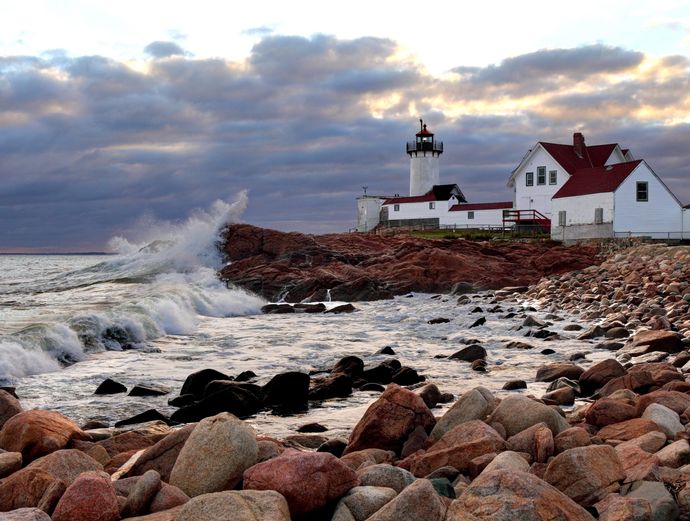
Nearly half of the tours from Halifax run four to eight hours, and most of those head out along the coast. Peggy's Cove is the classic stop, a tiny fishing village with a lighthouse perched on smooth granite rocks above the Atlantic. Stay well back from the wet rocks near the water, because waves here can be powerful. Other routes travel to the South Shore, passing Mahone Bay and stopping near Oak Island, where treasure hunters have been digging for centuries. Some trips also visit colorful Lunenburg, a historic fishing town.

Making the Most of Your Visit

Most tours start in the morning, and evening outings are common too, from harbor cruises to pub walks. Nearly half of the experiences are private, a good fit for small families or friends sharing a car. A few points to weigh as you choose:

  • Cruise passengers should check the return time against the all-aboard time.
  • Hotel pickup is included on nearly half of tours.
  • Bring a warm layer, since the coast can be cool and windy.
  • Few tours are suitable for wheelchair users, so ask ahead if you need access.

Nearly every tour offers free cancellation, which helps if weather or ship schedules change.

Read more
Top 15 attractions in Halifax
Halifax Citadel National Historic Site#1
4.5 (4,644)

Halifax Citadel National Historic Site

The Halifax Citadel is a star-shaped stone fort on the summit of Citadel Hill in downtown Halifax, built by the British to guard one of their most important naval harbors. People come to walk its ramparts and barracks, watch interpreters dressed as Victorian soldiers drill on the parade square and take in wide views over the city and the water.A fort has crowned this hill almost since Halifax was founded in the 18th century, and the one standing now is the fourth. Earlier works of earth and timber gave way to this masonry citadel, raised over many years in the 19th century when Britain worried about attack from the United States. Its builders shaped it as a star so that guns could sweep every approach, then ringed it with a deep dry ditch and thick earthen ramparts. It never faced an enemy assault, though it served as a garrison through both world wars.Inside the walls you can explore the barracks, the powder magazine and dim passages built into the defenses, along with an army museum devoted to the region's soldiers. Interpreters take on the roles of the 78th Highland Regiment and the Royal Artillery, complete with kilts, bagpipes and drums, and stage sentry changes and musket drills. A cannon has been fired at noon for generations, a custom that once gave ships in the harbor and people in town a reliable time signal.The ramparts also give some of the best views in Halifax, across the downtown towers to the harbor, Georges Island and Dartmouth on the far shore. Below the hill stands the Old Town Clock, ordered by a British prince who commanded the garrison around the turn of the 19th century, and it has marked the hours for the city ever since. A guide can add a sense of daily life for the men stationed here, from cramped barrack rooms to the drills that filled their days.

More
Halifax Public Gardens#2
4.6 (3,373)

Halifax Public Gardens

You can wander the gardens on your own, following the paths past the fountains, ponds and bandstand, or use the audio tours that cover the gardens and nearby Camp Hill Cemetery. Volunteer-led horticultural and historical tours run in the warmer months and add plant knowledge and local stories. The gardens sit beside Spring Garden Road and across from Victoria Park, so shopping and a park stroll fit into one outing. The gardens fill a full downtown block with Victorian formal landscape, flower beds, fountains, ponds and a bandstand. Pets, bicycles and jogging are not allowed inside, and smoking is not permitted anywhere in the gardens. Bike parking is available outside the main gate. Picnics are welcome in the family lawn area facing Summer Street, and visitors are asked to stay on the pathways elsewhere. Volunteer-led guided tours last about an hour.

More
St Paul's Church#3
4.7 (1,822)

St Paul's Church

St. Paul's Church is a white wooden Anglican church on the Grand Parade in downtown Halifax, Nova Scotia. Founded along with the city itself, it is the oldest building in Halifax and the oldest Protestant church in Canada, and visitors come for its colonial interior, its memorials and the stories built into its walls.The British founded Halifax in the middle of the 18th century as a military and naval base, and the church followed within a year under the patronage of King George II. Its timber frame was cut in New England and shipped north, and the design was based on a London chapel by the architect James Gibbs, giving the young garrison town a touch of Georgian elegance. Later in that century it became the cathedral of the first Anglican bishop appointed to a British colony.Inside, the church reads like a page of colonial history. A gallery runs around the nave, and the walls are crowded with memorial tablets and painted coats of arms honoring governors, soldiers, sailors and merchants of early Halifax. Some of the city's early leaders lie in the crypt beneath the floor. The church has been enlarged over the years, yet its Georgian character remains intact.Its best-known stories come from the Halifax Explosion, the disaster early in the 20th century when a munitions ship blew up in the harbor and devastated much of the city. A fragment of metal from the blast is still lodged in the wall above the doors, and in one upstairs window the shattered glass left an outline that many see as a human profile. The church is a National Historic Site of Canada. A guide can share the legends that have grown up around these marks.

More
Fairview Lawn Cemetery#4
4.6 (2,222)

Fairview Lawn Cemetery

You can wander the cemetery on your own, using the small markers and the sloping rows to find the Titanic graves. A guided walk or a narrated Halifax city tour adds the stories behind the names, including the unidentified victims and the Halifax Explosion burials nearby. Many visitors combine it with a harbourfront Titanic exhibit or a wider tour of Halifax history. This is an active municipal cemetery, so keep your voice low, stay on the paths and treat the graves with respect. Most visitors spend 30 to 60 minutes walking the Titanic section and reading the small granite markers on the slope. The Titanic graves sit in curved rows on a gently sloping hillside, so wear comfortable shoes with good grip. There are no food services on site, so bring water if you plan to linger. Large tour coaches are not allowed inside the grounds, so guided groups usually walk in from the entrance.

More
Peggy’s Cove#5
4.6 (2,357)

Peggy’s Cove

Peggy's Cove is a small fishing village on the Atlantic coast of Nova Scotia, southwest of Halifax, built around a narrow inlet on the eastern shore of St. Margarets Bay. Its red-and-white lighthouse on smooth granite rocks is one of the most photographed scenes in Canada, and people come for the lighthouse, the sea and the look of a working village.The village was settled in the early 19th century by families who fished the waters off the rocky shore, and lobster and fishing boats still tie up in the cove. Stories differ over the name: one tells of a shipwreck survivor called Peggy, while others link it to St. Margarets Bay, since Peggy is an old nickname for Margaret. The lighthouse dates from the early 20th century and once guided boats into the bay. In the late 20th century, Swissair Flight 111 crashed into the sea offshore, and a memorial nearby honors those who were lost.The bare granite around the village was scraped clean by glaciers during the last ice age, which left giant boulders scattered across the open barrens. The lighthouse stands on a broad sweep of this rock, with waves breaking white below. In the village, brightly painted houses and fishing sheds perch above the water on wooden stilts and docks, beside stacked lobster traps and buoys. The deGarthe Gallery shows paintings by the Finnish-born artist William deGarthe, who also carved a large sculpture into a granite outcrop behind his home, honoring local fishermen and their families.The quiet harbor, weathered wharves and open ocean give the place a simple, honest charm. A guide can share the village's history and legends and point out details along the coast that are easy to pass by.

More
Canadian Museum of Immigration at Pier 21#6
4.5 (1,024)

Canadian Museum of Immigration at Pier 21

The Canadian Museum of Immigration at Pier 21 fills a former ocean terminal on the Halifax waterfront where generations of newcomers first set foot in Canada. It tells their stories alongside the wider history of immigration to the country, and many visitors come hoping to trace the journeys of their own families.Through the middle decades of the 20th century, Pier 21 was where ocean liners from Europe tied up and passengers walked down the gangways into a busy immigration shed. Families hoping for a new start, refugees and displaced people after the Second World War, war brides with small children and evacuees sent away from Britain all passed through its halls. During the war the traffic also ran the other way, as Canadian troops sailed from the pier to fight overseas. Once air travel replaced the liners, the shed fell quiet, and the building, the last surviving ocean immigration shed in Canada, was later reborn as a national museum.Inside, two main exhibitions share the story. The Pier 21 Story looks at the shed in its busiest years, and a scale model shows how the building once stood on the working harbor front. The Canadian Immigration Story widens the lens to four centuries of people settling in Canada, with touchscreens and multimedia displays that follow why newcomers left home, how they traveled and what awaited them. A family history center offers help searching records for relatives who made the crossing.Standing in the restored shed, close to the water where the liners once docked, it is easy to picture the crowds, the noise and the nerves of arrival day. For many Canadian families the building is a place of memory as much as history, linked to a grandparent's first steps on new soil. A guided visit adds the anecdotes and voices of people who passed through, giving the bare facts a human scale.

More
Halifax Seaport Farmers' Market#7
4.3 (557)

Halifax Seaport Farmers' Market

The Halifax Seaport Farmers' Market is a busy market hall on the Halifax waterfront, where farmers, bakers, fishers and makers from across Nova Scotia sell what they grow, catch and craft. It traces its roots to the earliest years of the city, and locals and visitors come to shop, snack and get a taste of the province in one place.Halifax was founded as a British garrison town in the middle of the 18th century, and a public market began trading almost as soon as the settlement took shape. The market has moved several times since then and is often described as the oldest continuously operating farmers' market in North America. For many years it filled the old stone brewery buildings near the downtown waterfront before settling into its bright, modern home at the Seaport, beside the piers where ocean liners and immigrant ships once docked.Inside, the stalls shift with the seasons and the harvest. Depending on the week, you might find fresh bread and pastries, local cheeses, fish and shellfish from Atlantic waters, preserves, honey and maple products, along with fruit and vegetables from farms around the province. Prepared food stalls cook dishes drawn from many different kitchens, and artisans sell handmade goods and crafts. Many vendors are the people who grew or made what they are selling, so a quick chat at the counter can turn into a lesson in Nova Scotia farming or fishing.The setting adds to the appeal. The market sits on the working harbor among the old piers, with views across the water toward Georges Island and Dartmouth, and the Canadian Museum of Immigration at Pier 21, which tells the story of the people who arrived here by sea, is just steps away. A local guide can introduce you to the producers and explain how this market has fed the city for generations.

More
Oak Island#8
4.8 (468)

Oak Island

Oak Island is a small wooded island in Mahone Bay on Nova Scotia's South Shore, famous for one of the longest running treasure hunts in the world. Its so-called Money Pit has drawn diggers, engineers and dreamers for more than two centuries, and visitors come to see where the search has taken place and to hear the legend first hand.According to the story, in the late 18th century a young man exploring the island found a hollow in the ground under an old oak, with signs that someone had dug there before. He and his friends began to excavate and, as the tale is told, found layers of logs at regular depths. Later treasure companies reported a stone with strange markings, and as they dug deeper the shaft flooded with seawater, leading many to believe that whoever buried the prize had built tunnels to protect it. Each new attempt brought new shafts, new tunnels and new collapses, and several men lost their lives in the search.Theories about the treasure are almost as famous as the island itself. Some say it hides the loot of a pirate such as Captain Kidd, while others point to the Knights Templar, lost French crown jewels or even manuscripts that would prove who really wrote Shakespeare's plays. A young Franklin D. Roosevelt took part in a treasure company here in the early 20th century and followed the story for years. A long-running television series later brought the hunt to a worldwide audience.On a visit you see the island's shoreline, Smith's Cove, the swamp, the area of the Money Pit and the remains of past digs, along with artifacts at the Interpretive Centre. A guide sorts fact from legend and explains what each team believed it had found.

More
Old Town Clock#9
4.8 (614)

Old Town Clock

Most people see the Old Town Clock on their own as part of a stroll through downtown. A guided walking tour of historic Halifax makes the stop more rewarding, since guides explain Prince Edward's role in the clock and how it fits into the city's garrison past. Combine it with Citadel Hill, the waterfront and the downtown streets for an easy half-day itinerary. The clock is a streetside landmark, and most visitors need only a few minutes to see it. It stands on the eastern slope of Citadel Hill facing Brunswick Street, so expect a climb if you approach from below. Parks Canada operates and maintains the tower, and the building beneath it is a caretaker residence, so plan to view it from outside. The three-tiered octagonal tower and its Palladian-style base reward a slow look and a few photos.

More
Point Pleasant Park#10
4.9 (545)

Point Pleasant Park

Most visitors simply walk the trails on their own, following the perimeter loop or wandering inland to the old batteries and monuments. A guided walk adds the military history, including the Prince of Wales Tower and the harbor defenses that once guarded Halifax. The park pairs well with a Halifax city tour or a waterfront and South End stroll, and in summer outdoor theater is staged on site. Point Pleasant Park is a large forested park at the southern tip of the Halifax peninsula, with walking trails and harbor views. The perimeter loop is about 3.4 km, and the full trail network is much longer, so a visit can be short or last half a day. Many trails are wide and easy, and many are wheelchair accessible. Most of the park is off-leash for dogs, with posted leash-only areas such as the parking lots. The park holds the Prince of Wales Tower, a Martello tower that is the oldest of its kind in North America.

More
Province House#11
4.8 (555)

Province House

You can walk through the historic rooms on your own using a self-guided tour, moving at your own speed. A guided tour adds the stories behind the chambers, the architecture and how the legislature works, which many visitors find worthwhile. Groups can arrange a tour in advance. The building pairs well with a walk through downtown Halifax, including the nearby waterfront and other historic sites. Province House suits history, architecture and politics fans, and it is the home of the Nova Scotia legislature. Visitors can explore on their own with a self-guided tour, and guided tours are also offered. Everyone goes through a security screening before entering, so allow a few extra minutes and have photo identification with you if you are an adult. Last admittance is half an hour before the building closes, so do not arrive right at closing time. Groups and school classes need to book ahead, and anyone with access needs should check with the building before visiting.

More
Government House#12
4.9 (278)

Government House

The main way inside is a guided tour, which brings the formal rooms to life with stories about the governors who lived and worked here. Outside tour season, the house opens for a garden party and some seasonal evening events. Pair it with a nearby stop at Province House and a walk along Barrington Street for a half day of Halifax history and government. Government House is the official residence and office of Nova Scotia's lieutenant governor, so public access is limited to set tours and special openings. Public tours are guided only, so you see the rooms with a guide rather than wandering freely. The house is wheelchair accessible, with accessible parking spaces on Barrington Street in front of the property. There is no parking on site, so plan to walk, take transit or park elsewhere downtown. The Georgian house is a National Historic Site, and its rooms hold art and antiques reflecting the province's history.

More
Halifax City Hall#13
4.8 (342)

Halifax City Hall

Most visitors explore City Hall on their own, walking around the building and across Grand Parade to look at the stonework and clock tower. A guided walking tour of downtown Halifax often includes this square along with nearby historic sites, adding stories you would not get from the outside alone. Halifax City Hall is a working government building, so check what is open before planning to go inside. The sandstone building has a clock tower, and the north face of the clock is permanently set to the minute of the Halifax Explosion. Grand Parade, the open square in front, is a good place to take photos and sit for a break. A stop here is short, so it fits easily into a walk through downtown.

More
Lunenburg#14
4.9 (157)

Lunenburg

Lunenburg is a historic seaport on the South Shore of Nova Scotia, on Canada's Atlantic coast, and its Old Town is a UNESCO World Heritage Site. Visitors come to see one of the best surviving planned British colonial towns in North America, with brightly painted wooden houses climbing the hill above a working harbor.The British founded the town in the 18th century, bringing in Protestant settlers largely from German-speaking lands, and planned it on paper as a tight grid of streets and blocks. The plan was laid down with little regard for the steep slope, which is why many roads climb sharply up from the water. Much of the town's early layout and housing survives, giving the streets a rare sense of continuity, and walking them today you follow the same lines the first settlers paced out.Fishing and shipbuilding made Lunenburg's fortune. Its shipyards built the Bluenose, the famous racing schooner whose image appears on the Canadian dime, and visitors can tour Bluenose II, a replica of the original. On the waterfront, a row of bright red buildings holds the Fisheries Museum of the Atlantic, with vessels tied up at the wharf and an aquarium of local sea life that tells the story of fishing on this coast.The houses are a big part of the pleasure. Many are painted in bold reds, yellows and blues, and some show the Lunenburg bump, a distinctive overhanging dormer above the front door. Above the town stands Lunenburg Academy, an ornate wooden school with towers that is now a National Historic Site. Down by the harbor, shops, restaurants, breweries and inns fill the old streets near the water. A guide can bring out the stories of the seafaring families who built the town.

More
Maritime Museum of the Atlantic#15
4.6 (458)

Maritime Museum of the Atlantic

The Maritime Museum of the Atlantic is Halifax's museum of the sea, set right on the downtown waterfront beside the harbor it celebrates. Visitors come for its galleries on shipwrecks, sailing ships and the Royal Canadian Navy, its moving displays on the Titanic and the Halifax Explosion, and its collection of small boats and ship models.Part of the Nova Scotia Museum, it is one of the oldest and largest maritime museums in Canada, and it tells the story of a province whose fortunes have always been tied to the sea. Halifax grew around one of the finest natural harbors in the world, serving as a naval base, a trading port and a gateway for immigrants. The museum's building includes a restored 19th-century ship chandlery, where sailors once bought rope, tools and supplies, its shelves still stocked as they would have been. Outside at the wharf lies the CSS Acadia, a steam-powered survey ship that charted Canada's northern and eastern waters for decades.Some exhibits carry special weight. When the Titanic sank, ships sent from Halifax recovered many of the victims, and the museum holds one of the most important collections of wooden artifacts from the liner, including a deck chair and pieces of ornate carved paneling pulled from the sea. Another gallery tells the story of the Halifax Explosion, when a munitions ship blew up in the harbor during the First World War and flattened much of the city's north end, one of the largest explosions before the atomic age. Elsewhere you find ship portraits and models, naval history, and displays on the many wrecks of Sable Island, long known as the graveyard of the Atlantic.The small craft gallery, filled with dories, canoes and sailing dinghies, shows how ordinary Nova Scotians fished, raced and traveled along the coast. A guide can connect these stories to the working harbor outside the windows.

More

Good to know Halifax

A Halifax day moves at an easy harbor pace. Most people start on the waterfront boardwalk, climb up to the Citadel, then head out along the coast in the afternoon to see a lighthouse village such as Peggy's Cove.

Evenings end with seafood and a local beer. Cruise passengers fit the highlights into one day ashore, while longer stays leave room for the orchards and vineyards of the Annapolis Valley.

The city suits history fans, families and anyone who likes a friendly, walkable port by the sea.

Summer, from June through August, is the warmest and busiest season, with patio dining, festivals and the widest choice of boat trips. Reserve coastal tours early on days when ships are in.

Fall brings the heaviest run of cruise calls, crisp air and bright leaves along the coastal roads, especially from late September through October.

Spring is mild but often foggy and damp, a good season for museums. Winter is cold and snowy, many seasonal outings pause, and the city is left mostly to locals and indoor sights.

  • Halifax Stanfield International Airport is a good drive north of downtown, with shuttles, taxis and rental cars.
  • Cruise ships dock at the seaport, within walking distance of most central sights.
  • Downtown is compact but hilly, a small ferry crosses to Dartmouth, and the coast needs a car or tour.
  • Book coastal trips early when several ships are in, as seats go quickly.
  • Pack a rain jacket and shoes with good grip.
  • Keep plans loose, since sea fog can drift in quickly and hide the views.
Halifax
Peak season Jun – Oct
Local Currency Canadian Dollar (CA$)
Weather now
Time Zone AST (-4)
Attractions 19
Tours & Tickets 141
Verified reviews 9,968

Frequently Asked Questions

The answers provided below are based on answers previously given to customers' questions.

Activity name

Discover Halifax