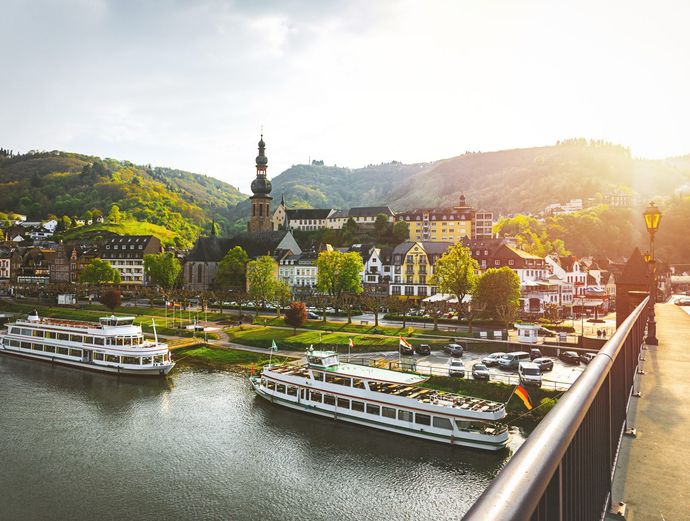
Flanders attractions
More things to do in the region
 #16
Bruges City Hall (Stadhuis van Brugge)
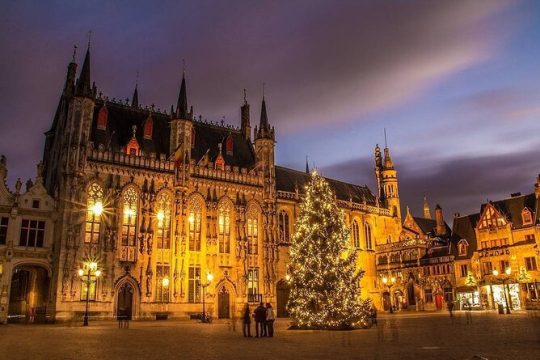
If you are looking for things to do in Flanders we have 12 Tours and Activities to Experience Bruges City Hall (Stadhuis van Brugge). Check out our verified traveler reviews and photos of Bruges City Hall (Stadhuis van Brugge) tours and other things to do in Flanders, and book securely when you find the perfect one. Learn the best ways to see famous Bruges City Hall (Stadhuis van Brugge) and explore the most popular things to do in Flanders.
More #17
Historic Centre of Bruges
If you are looking for things to do in Flanders we have 23 Tours and Activities to Experience Historic Centre of Bruges. Check out our verified traveler reviews and photos of Historic Centre of Bruges tours and other things to do in Flanders, and book securely when you find the perfect one. Learn the best ways to see famous Historic Centre of Bruges and explore the most popular things to do in Flanders.
More #18
Butcher's Hall (Vleeshuis)
If you are looking for things to do in Flanders we have 17 Tours and Activities to Experience Butcher's Hall (Vleeshuis). Check out our verified traveler reviews and photos of Butcher's Hall (Vleeshuis) tours and other things to do in Flanders, and book securely when you find the perfect one. Learn the best ways to see famous Butcher's Hall (Vleeshuis) and explore the most popular things to do in Flanders.
More #19
Cathedral of Our Lady
The Cathedral of Our Lady is Antwerp's great Gothic cathedral, rising above the old town with a spire that is the tallest church tower in the Low Countries. Visitors come for its soaring white interior and above all for its masterpieces by Peter Paul Rubens, the city's most famous painter, among them The Raising of the Cross and The Descent from the Cross.Building began in the 14th century on the site of an earlier church and went on for nearly two centuries, paid for by a city growing rich on trade. Only one of the two planned towers was ever finished, which gives the front its lopsided silhouette, and that north tower, with its lacelike stonework, became an emblem of Antwerp. The cathedral survived a great fire in the 16th century, but worse followed when Protestant iconoclasts stripped much of its interior, and again under French revolutionary rule, when it was looted and came close to demolition.Rubens, who lived and worked in Antwerp, is present here on a grand scale. The Raising of the Cross and The Descent from the Cross, huge triptychs full of straining bodies and dramatic light, hang in the two arms of the transept, while his Assumption of the Virgin crowns the high altar. French forces carried several of the paintings off to Paris, and they came home only after Napoleon's fall.Beyond the paintings, look for the Baroque pulpit, carved with birds, branches and allegorical figures, and for the side chapels with their altars and stained glass. In the square outside, a small statue of a boy and his dog recalls A Dog of Flanders, a 19th-century novel whose final scene unfolds inside this very church, where the young hero longs to see the Rubens paintings. A guide can help you read the symbols in the art and the city's history in the stone.
More #20
De Halve Maan Brewery
De Halve Maan is a family-run brewery in the historic center of Bruges, on the Walplein square near the Beguinage. Travelers come to see beer made where it has been brewed for centuries, to climb to its rooftop for a view over the city and to taste beers such as Brugse Zot.Brewing on this spot goes back to at least the 16th century, when a brewery called Die Maene, the moon, stood here. In the 19th century the Maes family took it over, and the brewery has stayed in the same family through several generations. Its name means the half moon. The best-known beers carry local stories: Brugse Zot, the Bruges Fool, recalls a tale of townspeople asking a visiting emperor to fund a madhouse, only to be told that the whole town was already full of fools. Straffe Hendrik, a strong beer, is named after Henri Maes, one of the family's brewers.The tour moves from the working brewing hall up through the older parts of the building, where historic brewing equipment used over past centuries, from copper vessels to an old open cooling tank in the attic, shows how beer was made before modern machinery. The climb ends on the rooftop, where the towers and stepped gables of Bruges spread out in every direction.The brewery is also known for an unusual piece of modern engineering: an underground pipeline that carries beer beneath the streets of the old town to a bottling plant on the edge of the city, sparing the medieval lanes from heavy trucks. Supporters helped fund it in return for a supply of beer. A guide brings these stories to life between the stairs and the tasting.
More #21
Grand Market Place (Grote Markt van Antwerpen)
The Grote Markt, or Grand Market Place, is the historic main square of Antwerp, framed by the Renaissance city hall and a row of tall guild houses topped with gilded figures. At its center stands the Brabo Fountain, which tells the legend behind the city's name, and visitors come to admire the facades, sit at a cafe terrace and soak up the life of the old town.According to legend, a giant called Druon Antigoon once controlled the river Scheldt and demanded a toll from every passing ship, cutting off the hand of any captain who refused to pay. A young Roman soldier, Silvius Brabo, defeated the giant, cut off his hand and threw it into the river. Hand werpen, Dutch for throwing a hand, is said to explain the name Antwerp. The fountain, made by the sculptor Jef Lambeaux in the 19th century, shows Brabo in mid-throw atop a rocky pile.The city hall fills one long side of the square. It went up in the 16th century, when Antwerp ranked among the richest trading ports in Europe, on the foundations of an older hall lost to fire. Its architect, Cornelis Floris, blended Flemish tradition with Italian Renaissance ideas, raising a richly decorated central bay of columns, statues and coats of arms above an arcaded ground floor, and his design was widely imitated across the Low Countries.Around the rest of the square, narrow guild houses display the pride of the city's trades, with stepped and scrolled gables and gilded figures on their peaks. The house of Sint-Joris is an original 16th-century building, and others, such as De Valk and De Mouwe, still carry their old names. Above the rooftops rises the spire of the Cathedral of Our Lady, only a short walk away. A guide can explain how the guilds ran trade and daily life in the old port city.
More #22
Choco-Story, the Chocolate Museum
Choco-Story is a museum about chocolate in the medieval center of Bruges, close to the city's main squares. It traces how cacao traveled from the forests of Central America to the chocolate shops of Belgium, and visitors come as much for the history and the old objects as for the chocolate itself.The museum was created by a Belgian family with long ties to the chocolate trade, who gathered a collection of objects linked to cacao and wanted to share it. It occupies Huis de Croon, a historic house that once served as a wine tavern, so the old building itself is part of the visit. The aim is to show that chocolate has a much longer and stranger past than a box of pralines suggests.The rooms begin with the Maya and the Aztecs, who prized cacao beans enough to use them as money and drank chocolate as a bitter, spiced drink at court and in rituals. From there the story follows cacao across the ocean to Spain and on to the courts and cafes of Europe, where sugar and later milk turned it into something new. Further rooms show how chocolate became an industry, and how Belgium earned its name for fine chocolate, helped by the invention of the filled praline in Brussels. Along the way are decorated cups and pots, old molds, tins, packaging and posters, along with displays on how cacao is grown, fermented and roasted.The tone is light and curious, so children and adults can enjoy it together, and the displays balance old pieces with plain explanations. A guide can add the human side of the trade, from the growers in the tropics to the chocolatiers who made Bruges a chocolate city.
More #23
Essex Farm Cemetery
Essex Farm Cemetery is a First World War burial ground beside the canal north of Ypres, in the Belgian region of Flanders. It is bound up with In Flanders Fields, the poem that turned the red poppy into an emblem of remembrance, which a Canadian army doctor is said to have written beside these graves.During the Second Battle of Ypres, Canadian artillery units set up a dressing station in the canal bank here, and the dead were buried in the ground beside it. Among them was Lieutenant Alexis Helmer, killed by a shell. His friend John McCrae, the brigade's doctor, saw him buried, and soon afterward wrote the verses that open with poppies blowing between the crosses. Helmer's grave was later lost, but the poem went on to be read at memorials around the world. The cemetery takes its name from the Essex Regiment, whose men were among those buried here, and it was laid out after the war by the architect Sir Reginald Blomfield.More than 1,000 soldiers lie here, over 100 of them unidentified, in neat rows of pale headstones around the Cross of Sacrifice and the Stone of Remembrance. Behind the graves, small concrete shelters set into the bank show where the wounded were treated, and a memorial beside them carries the words of the poem. Many visitors pause at the grave of Valentine Strudwick, a rifleman who was just 15 when he died, and at that of Thomas Barratt, awarded the Victoria Cross for stalking enemy snipers. On the bank above stands a memorial to the 49th West Riding Division.Together with other cemeteries and memorials of the Western Front, the site is part of a UNESCO World Heritage listing. A guide can show how a single poem written in grief came to shape the way the world remembers the war.
More #24
Ghent Town Hall (Stadhuis)
If you are looking for things to do in Flanders we have 12 Tours and Activities to Experience Ghent Town Hall (Stadhuis). Check out our verified traveler reviews and photos of Ghent Town Hall (Stadhuis) tours and other things to do in Flanders, and book securely when you find the perfect one. Learn the best ways to see famous Ghent Town Hall (Stadhuis) and explore the most popular things to do in Flanders.
More #25
Hill 60
If you are looking for things to do in Flanders we have 16 Tours and Activities to Experience Hill 60. Check out our verified traveler reviews and photos of Hill 60 tours and other things to do in Flanders, and book securely when you find the perfect one. Learn the best ways to see famous Hill 60 and explore the most popular things to do in Flanders.
More #26
Historium Brugge
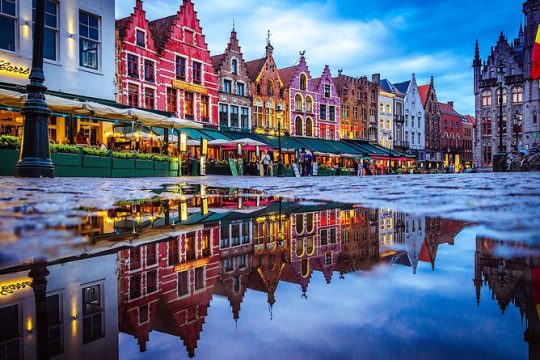
Historium Brugge is a multimedia attraction on the Markt, the main square of Bruges, that recreates the city's medieval golden age. Visitors follow a story through film sets, sound and virtual reality that show Bruges as it might have looked when it ranked among the richest trading cities in Europe.The setting is the 15th century, when Bruges was a jewel of the Burgundian Netherlands, tied to the North Sea by the Zwin inlet, and merchants from Italy, Spain, England and the Hanseatic towns filled its markets. Bruges was also where the painter Jan van Eyck worked, and the tale centers on a young apprentice in his studio whose search for a missing model leads through the daily life of the medieval town. The plot is woven around a real masterpiece, van Eyck's Madonna with Canon Joris van der Paele, which hangs in the city's Groeninge Museum.Detailed sets, lighting and sound effects turn each room into a scene from the period rather than a display behind glass. A separate exhibition sets the fiction beside the facts, with background on the art, trade and everyday life of the time. In the virtual reality experience you sail into the medieval port aboard a merchant ship, watching towers and quays appear as traders arriving from the sea would have seen them. From the tower and panoramic terrace, the real Markt spreads out below, with the Belfry rising opposite and rows of gabled houses along its sides.When the Zwin silted up and trade shifted to Antwerp, Bruges slipped into a long quiet decline, which is partly why so much of that medieval city still stands. It suits travelers who like to picture a place before exploring it, since many of the scenes echo streets, canals and buildings you can then find for yourself outside.
More #27
Menin Gate Memorial
If you are looking for things to do in Flanders we have 21 Tours and Activities to Experience Menin Gate Memorial. Check out our verified traveler reviews and photos of Menin Gate Memorial tours and other things to do in Flanders, and book securely when you find the perfect one. Learn the best ways to see famous Menin Gate Memorial and explore the most popular things to do in Flanders.
More #28
St. Nicholas’ Church (Sint-Niklaaskerk)
St. Nicholas' Church, or Sint-Niklaaskerk, is one of the great medieval churches of Ghent, standing on the Korenmarkt in the heart of the old city. Built from gray-blue stone in the Scheldt Gothic style, it draws visitors for its soaring interior, its guild chapels and its tall central tower, a landmark of the city skyline.Merchants and craftsmen who traded at the nearby grain market began building it in the early 13th century, dedicating it to Nicholas, patron saint of traders. Its stone came by boat along the Scheldt from quarries around Tournai, and the river gave the regional style its name. Instead of a facade tower, the builders raised a tower over the crossing, which served as a lookout and held the town bells until the Belfry rose nearby. The church suffered in the religious unrest of the 16th century, and over time houses and shops were built right up against its walls.Those houses were cleared during a long restoration in the 20th century, revealing the clean outline of the exterior again. Inside, the nave rises in cool, pale stone, light falls through tall windows, and chapels once paid for by the guilds line the aisles. The great organ, made by the celebrated French builder Aristide Cavaillé-Coll in the 19th century, is among the finest in Belgium and still sounds at concerts. Outside, look up at the slender turrets at each corner of the crossing tower.Seen from St. Michael's Bridge just to the west, the church lines up with the Belfry and St. Bavo's Cathedral to form the famous row of three medieval towers that has become the signature view of Ghent. A guide can explain how the wealth of the grain and cloth trades raised all three, and what each guild chapel meant to the craftsmen who kept it.
More #29
Tyne Cot Cemetery
If you are looking for things to do in Flanders we have 22 Tours and Activities to Experience Tyne Cot Cemetery. Check out our verified traveler reviews and photos of Tyne Cot Cemetery tours and other things to do in Flanders, and book securely when you find the perfect one. Learn the best ways to see famous Tyne Cot Cemetery and explore the most popular things to do in Flanders.
More #30
Atomium
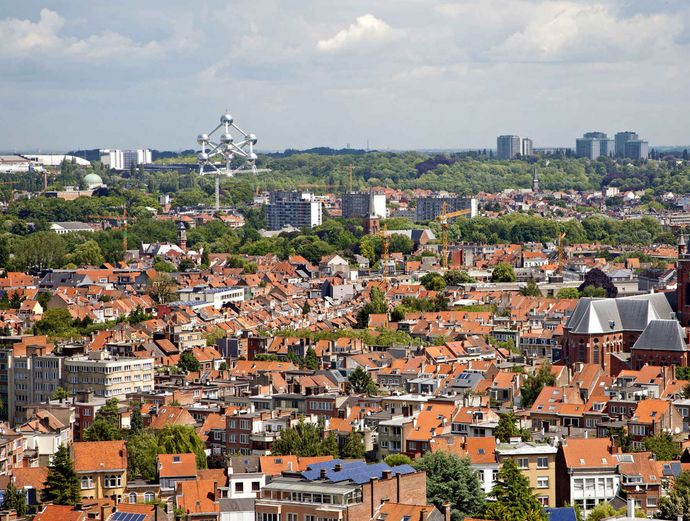
The Atomium is a giant steel structure in the shape of an iron crystal, magnified billions of times, standing in the Heysel area in the north of Brussels, Belgium. Built for a world's fair, it became the city's most recognizable landmark, and visitors come to explore its spheres, exhibitions and views over the city.The engineer André Waterkeyn designed the Atomium for the Brussels world's fair in the middle of the 20th century, with the architects André and Jean Polak. The fair celebrated science, progress and peaceful uses of atomic energy in the years after the Second World War, and the Atomium was its centerpiece, a symbol of faith in the future. It was meant to stand only for the duration of the fair, but it proved so popular that it stayed. Early in the 21st century it was thoroughly renovated, and the original aluminum cladding was replaced with stainless steel that gleams in the sun.The spheres are linked by tubes that hold escalators, stairs and one of the fastest lifts of its time, which carries visitors straight up the central column. Inside, a permanent exhibition tells the story of the world's fair and the building itself, with photographs, models and objects from the period. Other spheres host temporary exhibitions on design, art, architecture and science. Riding the long escalators through the tubes, under shifting lights, is part of the fun.The top sphere offers a wide view over Brussels, the green spaces of the Heysel plateau and the miniature models of Mini-Europe below. After dark, rows of small lights make the spheres sparkle against the sky. A guide helps explain the science behind the shape and the optimism of the era that produced it.
More #31
Beaumont-Hamel Newfoundland Memorial
The Beaumont-Hamel Newfoundland Memorial is a preserved First World War battlefield in the Somme, within reach of Amiens, where the Newfoundland Regiment was nearly wiped out on the opening day of the Battle of the Somme. Visitors come to walk its grassy trench lines and cemeteries and to stand beneath the bronze caribou that watches over the old front.Newfoundland was then a separate dominion of the British Empire, not yet part of Canada, and its regiment advanced that morning across open ground raked by German machine guns. In less than an hour most of the men who went forward had been killed or wounded, a loss felt in nearly every community on the island. Months later, the 51st Highland Division finally captured Y Ravine and the nearby villages during the Battle of the Ancre.After the war, Newfoundland acquired the ground, and Field Marshal Douglas Haig, who had led British forces on the Somme, dedicated the memorial. Its centerpiece is a great bronze caribou, the regiment's emblem, by the British sculptor Basil Gotto, raised on a rocky mound and facing the old enemy lines. Bronze tablets at its base list more than 800 Newfoundlanders with no known grave, soldiers, naval reservists and merchant sailors alike. Landscape architect Rudolph Cochius planted more than 5,000 native trees, among them spruce, dogberry and juniper, to echo the island's own landscape.Beyond the caribou, the grass still follows the zigzag of trenches and the craters of shells, making this one of the only places where the lines of that day can be traced. Halfway across the old No Man's Land stands the Danger Tree, a replica marking the spot where many Newfoundlanders fell. Three cemeteries lie within the park, along with a kilted Highlander for the 51st Division and a triangular monument to the 29th. With a guide, the folds in the grass become a battle you can follow step by step.
More #32
Bourgogne des Flandres Brewery
The Bourgogne des Flandres Brewery is a small working brewery in the historic center of Bruges, set in an old building beside one of the city's canals. It makes the deep red-brown ale of the same name, and people come to see how it is brewed, taste it at the source and relax at the bar overlooking the water.The beer was first brewed in Bruges in the early 20th century by the Van Houtryve family, local brewers who created a Flemish ale with a gentle sourness and fruity depth. When the family brewery eventually closed, production moved away from the city to a lambic brewery near Brussels, and for decades Bourgogne des Flandres was a Bruges beer made elsewhere. Brewing finally came home when a new brewery opened here on the canal, adding to the city's brewing tradition and giving the beer a place to tell its own story.The beer's character comes from blending. A dark, malty ale brewed on site is mixed with lambic, a spontaneously fermented beer aged in oak, which brings a tart, wine-like edge to the sweetness of the base. The visit follows the process through the historic brewing room, with the brewing vessels on show, and explains each step through displays and stories of the family. At the end comes the tasting, and the brewery also pours its blond ale, Blonden Os, for those who prefer a gentler beer.Bruges has brewed beer for centuries, and the brewery sits a few steps from the belfry, the canals and the museums of the old town, so a stop here feels part of the city rather than apart from it. From the terrace, the view takes in passing boats, swans and the gabled houses across the water. A guide fills in the wider story of Belgian brewing and the place of Flemish red-brown ales within it.
More #33
Brabo Fountain
If you are looking for things to do in Flanders we have 1 Tours and Activities to Experience Brabo Fountain. Check out our verified traveler reviews and photos of Brabo Fountain tours and other things to do in Flanders, and book securely when you find the perfect one. Learn the best ways to see famous Brabo Fountain and explore the most popular things to do in Flanders.
More #34
Brussels Royal Palace (Palais Royal de Bruxelles)
The Royal Palace of Brussels is the official palace of the King of the Belgians, facing Brussels Park in the center of the city. It is where the king works and receives heads of state, and visitors come for its long formal facade and its gilded state rooms, among the most lavish interiors in Belgium.The palace stands close to the site of the old Coudenberg Palace, home for centuries to the dukes of Brabant and later to rulers such as Emperor Charles V, until a fire destroyed it in the 18th century. The present building grew from separate town houses that were joined together in the early 19th century, when the Netherlands ruled the region. After Belgium won its independence, the kings of the Belgians took it over, and Leopold II gave it a grander facade and much of its current look in the early 20th century. The royal family actually lives at the Castle of Laeken, on the northern edge of the city.Inside, a ceremonial staircase leads to a sequence of reception rooms rich in marble, crystal chandeliers and gilding. The Throne Room is one of the most opulent, and the Mirror Room holds a startling modern touch: the Belgian artist Jan Fabre covered its ceiling with the shimmering green wing cases of countless jewel beetles, a work called Heaven of Delight. Other rooms display tapestries, portraits and fine furniture gathered by successive monarchs.Outside, watch the flag on the roof, which flies when the king is in the country. The ruins of the Coudenberg survive underground nearby as a separate archaeological site. Across the square, Brussels Park, laid out in the 18th century with straight avenues and fountains, mirrors the palace's formal symmetry. A guide adds the ceremonies, royal personalities and politics that shaped these rooms.
More #35
Brussels Town Hall (Hotel de Ville)
Brussels Town Hall is the Gothic civic palace that fills the south side of the Grand Place, the city's great central square. Its lacy facade, crowded with statues, and its slender tower crowned by Saint Michael make it one of the most recognizable buildings in Belgium, and visitors come to admire the exterior and see its ceremonial rooms.The building went up in the 15th century, when Brussels was a wealthy center of the cloth trade and its merchants and guilds wanted a seat of government to match. It was raised in stages, which explains why the two wings are not identical: one is longer than the other, and the tower does not sit quite in the middle. A popular legend says the architect threw himself from the top when he noticed the imbalance, but the story has no basis, and the uneven plan simply reflects a building that grew over decades.The square around it changed dramatically in the late 17th century, when French artillery bombarded Brussels and most of the Grand Place burned. The town hall's stone shell and tower came through, and the guild houses rose again around it in a richer Baroque style, which is why the Gothic hall now stands among more flamboyant neighbors. Many of the facade figures you see are later replacements, carved in the 19th century to show dukes, duchesses, saints and allegorical figures from the city's past. High above, a gilded Saint Michael, the city's patron, overcomes a dragon.Inside, the council once met in rooms that are still used for ceremonial occasions. The Gothic Room, the Maximilian Room and the Wedding Room carry the same sense of civic pride as the facade, with richly worked walls and ceilings that reward a slow look. A guide helps decode the statues, coats of arms and stories that fill every corner of the building.
More #36
Café Den Turk
If you are looking for things to do in Flanders we have 2 Tours and Activities to Experience Café Den Turk. Check out our verified traveler reviews and photos of Café Den Turk tours and other things to do in Flanders, and book securely when you find the perfect one. Learn the best ways to see famous Café Den Turk and explore the most popular things to do in Flanders.
More #37
Central Station
If you are looking for things to do in Flanders we have 9 Tours and Activities to Experience Central Station. Check out our verified traveler reviews and photos of Central Station tours and other things to do in Flanders, and book securely when you find the perfect one. Learn the best ways to see famous Central Station and explore the most popular things to do in Flanders.
More #38
Chocolaterie Van Hoorebeke
Chocolaterie Van Hoorebeke is a family-run chocolate shop on Sint-Baafsplein, facing St. Bavo's Cathedral in the historic heart of Ghent, Belgium. Known for its classic Belgian pralines, made partly by hand on the premises, it is a favorite stop for travelers who want to taste the local chocolate tradition between visits to the city's medieval landmarks.Luc and Christine Van Hoorebeke founded the business, first running a shop outside the city center before moving into the heart of town. It is still a family affair: their son Cédric later opened a second shop on Jan Breydelstraat, near the Castle of the Counts. The pralines are made with Callebaut chocolate from one of Belgium's best-known producers, and the workshop mixes machine production with careful handwork.The filled chocolate known as the praline is a Belgian invention, first made in Brussels early in the 20th century, and this shop sticks to that classic style. Its best seller pairs caramel with fleur de sel, a balance of sweet and salt, while more adventurous pieces bring in cinnamon, ginger, mint or chili pepper. Behind the glass counters, neat rows of pralines in different shapes and finishes make choosing a box half the fun.The most memorable detail is the glass panel set into the floor, through which you can look down into the workshop as the chocolatiers shape and finish the day's batches. For many visitors, seeing pralines made a few steps from where they are sold is what sets the shop apart from Ghent's many other chocolate counters. Step back outside and you stand in one of Ghent's grandest squares, with St. Bavo's Cathedral, home of the van Eyck brothers' Ghent Altarpiece, on one side and the Belfry rising nearby, so a box of pralines fits easily into a day among the city's medieval treasures.
More #39
Cinquantenaire Park (Parc du Cinquantenaire)
Cinquantenaire Park, or Parc du Cinquantenaire, is a large public park on the eastern edge of the European Quarter in Brussels, crowned by a monumental triumphal arch. People come to stroll its formal lawns and tree-lined paths, visit the major museums housed in its great halls, and take in a monument to Belgian independence on a truly grand scale.The site was once a military exercise ground, and the park was created for a national exhibition celebrating fifty years since Belgium won its independence. King Leopold II championed the project as a showcase for his young country, and the architect Gédéon Bordiau worked on its buildings for nearly two decades until his death. The king then brought in the French architect Charles Girault, who turned the planned single arch into the triple arch you see, finished early in the 20th century for the 75th anniversary of independence. On top, a bronze chariot group shows Brabant raising the national flag.Arcades curve out from the arch to two vast exhibition halls, now home to three museums. The Art and History Museum, one of the largest art museums in Europe, holds collections ranging from antiquities to decorative arts; the Royal Museum of the Armed Forces and Military History fills the north side with weapons, uniforms and a hall of aircraft; and Autoworld gathers more than 300 vintage and classic vehicles. Around the park stand two more surprises: the Great Mosque of Brussels, created from an oriental pavilion built for the exhibition, and a small temple-like pavilion by Victor Horta that houses Jef Lambeaux's sculpted relief of the Human Passions.The park works as both a city green and an open-air lesson in how a young nation chose to present itself to the world. A guide can explain the symbolism of the sculptures and the politics behind the project, including the colonial ambitions of the king who drove it forward.
More #40
Diamond District
Antwerp's Diamond District is a compact quarter of streets beside Antwerp Centraal station, through which a large share of the world's diamonds pass. Visitors come to see a working hub of the global diamond trade at close range, browse jewelers' windows and learn how stones are cut and sold.Antwerp's link with diamonds goes back to the 15th century, when it was one of the busiest ports in Europe. Local polishers worked with the scaif, a wheel that let them cut stones with many facets and release the fire that rough diamonds hide. In the late 19th century, families from Amsterdam founded a local diamond industry that grew into the modern district.The quarter is a tight grid of trading offices and workshops, with hundreds of workshops serving around 1,500 companies. Four exchanges operate here, where dealers meet to buy and sell stones and deals have long been sealed with a handshake and a word of trust. Security is tight throughout, a reminder of the value carried along these few streets. From the second half of the 20th century much of the polishing moved to India, where labor was cheaper, but Antwerp kept its role as a meeting place for buyers and sellers from across the world.The district is closely tied to Antwerp's Orthodox Jewish community, long central to the trade, though dealers from India and many other countries work alongside them. Along Hoveniersstraat and the nearby streets, plain office doors hide busy trading floors, and dealers move between buildings with fortunes folded into small paper packets. The contrast between the plain streets and the wealth inside them is part of the district's fascination. Jewelers' windows glitter with finished pieces, and a guide can explain the long journey from rough stone to polished gem.
More #41
Diamond Museum (Diamantmuseum)
The Diamond Museum, or Diamantmuseum, is a museum in the historic center of Bruges dedicated to diamonds and the skill of the people who shape them. Visitors come for its displays of gems and jewelry, live polishing demonstrations and the city's long history in the diamond trade.In the late Middle Ages Bruges was one of the great trading cities of northern Europe, where merchants from Italy, the Hanseatic towns and beyond dealt in luxury goods, precious stones among them. Local tradition credits a 15th-century Bruges craftsman, Lodewijk van Berken, with perfecting a way to polish diamonds on a spinning wheel coated with diamond dust, which made it possible to cut facets with new precision. Historians debate the details, but the story gave the city a lasting place in the history of the gem. Antwerp later took over as the great diamond center of the Low Countries, after the silting of the Zwin cut Bruges off from the sea.The museum builds on that heritage. Its exhibits explain how diamonds are born under intense heat and pressure deep inside the earth, how volcanic eruptions carry them toward the surface, and how miners recover them. A collection of diamonds and jewelry then shows what skilled hands can make of the rough stones, and helps explain why the angle of each facet matters so much to the way a diamond sparkles.The highlight for many visitors is the polishing demonstration, when a skilled polisher shows how a stone is shaped and brought to a shine, one facet at a time. Seeing the work up close makes it clear why the trade prized patience and a steady hand. A guide can set the museum within the wider story of medieval Bruges, its merchants and its craftsmen.
More #42
European Parliament
If you are looking for things to do in Flanders we have 9 Tours and Activities to Experience European Parliament. Check out our verified traveler reviews and photos of European Parliament tours and other things to do in Flanders, and book securely when you find the perfect one. Learn the best ways to see famous European Parliament and explore the most popular things to do in Flanders.
More #43
Friet Museum
The Friet Museum in Bruges is a lighthearted museum devoted to the potato and to Belgium's beloved fries, housed in a Gothic former wool hall in the historic center. Visitors come to learn how a humble tuber from South America became a national passion, then finish with a portion of fries downstairs. It makes a playful change from the churches and art museums that fill much of the city.The museum was founded by Eddy Van Belle, who also opened other museums in Bruges, including one about chocolate. For its home he chose the Saaihalle, a Gothic hall where wool cloth was once traded and one of the oldest buildings in the old town. Bruges grew wealthy on the medieval cloth trade, which makes the hall a fitting reminder of the city's merchant past. Its facade was restored before the museum opened, so the story of a modern snack now unfolds inside walls that have stood since the Middle Ages.Inside, the exhibits follow the potato from its origins in Peru, where Andean farmers grew it long before Europeans arrived, across the ocean to Europe and on into Belgian kitchens. Old potato peelers, chip-making machines, photographs and artwork show how the spud traveled from field to fryer. A video explains how to make good fries, and any Belgian will tell you the secret is frying them twice.Many Belgians insist that fries belong to them rather than to France, and the museum treats that national pride with a light touch. Out on the streets, the frietkot, or fry stand, is part of everyday life, and fry stands at the Market Square serve them in the shadow of the Belfry. A guide can explain the friendly rivalry over who invented the fry and why the dish means so much to Belgians.
More #44
Ghent City Center
Ghent City Center is the historic heart of Ghent, a Flemish city in Belgium where medieval churches, guildhalls and a moated castle crowd around canals and cobbled squares. It is a working university city rather than a museum piece, and people come for its towers and waterfront, its art treasures and its lively cafés and bars.In the Middle Ages Ghent was one of the largest and richest cities in northern Europe, grown wealthy on the cloth trade, and its merchants and guilds left their mark in stone. The counts of Flanders ruled from the Gravensteen, a forbidding castle rebuilt in the 12th century, while the citizens answered with the Belfry, a tall tower that guarded the town's charters and rang its bells. The emperor Charles V was born here around the turn of the 16th century and later punished the city harshly for rising against his taxes.The finest sight lies inside St. Bavo's Cathedral: the Ghent Altarpiece, the Adoration of the Mystic Lamb, painted by the brothers Hubert and Jan van Eyck in the 15th century and counted among the masterpieces of European art. Down by the water, the Graslei and Korenlei face each other across the Leie river, two rows of gabled guild and merchant houses that once served the busy medieval port. Nearby, St. Michael's Bridge gives the classic view of the city's three towers: St. Nicholas' Church, the Belfry and the cathedral.Beyond the big landmarks, the center rewards wandering. The Patershol, a tangle of narrow medieval lanes, is packed with small restaurants, the Vrijdagmarkt square has been a place of markets and public gatherings for centuries, and the Groot Vleeshuis, a medieval covered meat hall, now celebrates East Flemish food. After dark, many of the main buildings glow under a citywide lighting plan. A guide can bring the guilds, revolts and rival powers to life street by street.
More #45
Ghent Friday Market (Vrijdagmarkt)
The Ghent Friday Market (Vrijdagmarkt) is one of the oldest and largest squares in the historic center of Ghent, in Belgium's Flanders region. It takes its name from a weekly market held here for more than eight centuries, and travelers come for the stalls, the guildhalls turned cafes and the statue of the city's medieval hero, Jacob van Artevelde.Through the Middle Ages the square was the stage for Ghent's great public moments, from celebrations to bloody clashes between the guilds. Its best-known figure is Jacob van Artevelde, who led the city in the early years of the Hundred Years' War and steered it toward England, whose wool kept Ghent's weavers at work. On this square he proclaimed Edward III of England king of France, the first formal declaration of that claim, and here, a few years later, he was murdered.Van Artevelde's statue stands at the center of the square, unveiled in the 19th century when Belgium was rediscovering its medieval heroes. Gabled guild houses frame the edges, most of them now bars, restaurants and terraces. On one corner the Toreken, the old tanners' guildhouse, keeps its slender turret, while the north side is dominated by two large Art Nouveau buildings put up by Ghent's socialist movement around the turn of the 20th century, a reminder of the city's later life as an industrial center.On market mornings the square still does the job it was named for, as traders lay out their goods much as their predecessors did in the Middle Ages. Step a few paces off the square to find Dulle Griet, a huge red-painted iron cannon from the 15th century and one of the largest guns of its kind ever forged. Between the cannon, the statue and the gables, few places in Ghent tell so much of the city's story in one view.
MoreDiscover Flanders

Cultural & Theme Tours
Prices from $3
Luxury & Special Occasions
Prices from $3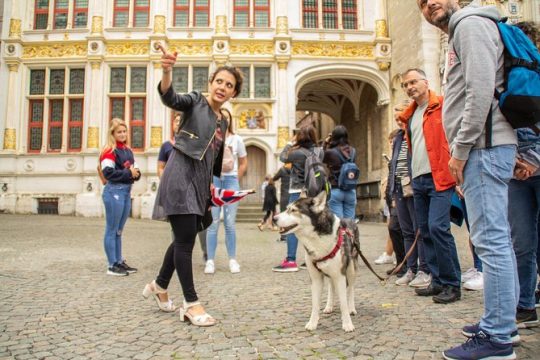
Walking & Biking Tours
Prices from $3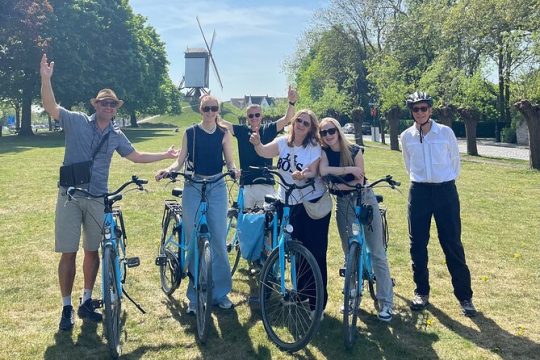
Tours & Sightseeing
Prices from $3
Cruises, Sailing & Water Tours
Prices from $11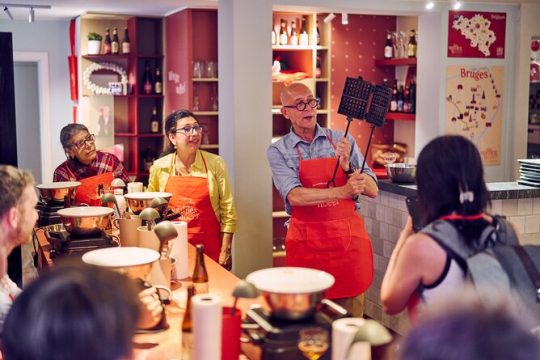
Food, Wine & Nightlife
Prices from $3
Transfers & Ground Transport
Prices from $27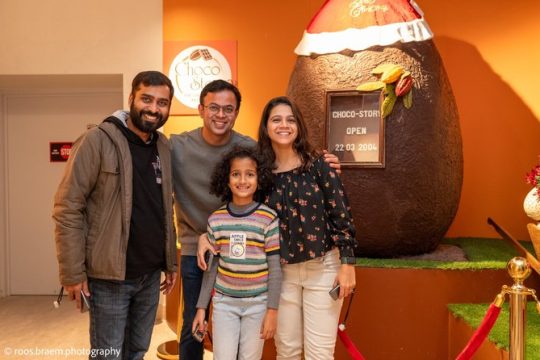
Sightseeing Tickets & Passes
Prices from $11
Day Trips & Excursions
Prices from $83
Holiday & Seasonal Tours
Prices from $13
Air, Helicopter & Balloon Tours
Prices from $268
Classes & Workshops
Prices from $89
Burg Square
Prices from $3
Basilica of the Holy Blood (Heilig-Bloedbasiliek)
Prices from $3
Belfry of Bruges (Belfort van Brugge)
Prices from $3
Minnewater (Lake of Love)
Prices from $3
Princely Beguinage Ten Wijngaarde (Begijnhof)
Prices from $3
Church of Our Lady (Onze-Lieve-Vrouwekerk)
Prices from $3
Market Square (Markt)
Prices from $3
St. Bavo's Cathedral (Sint-Baafskathedraal)
Prices from $3
Graslei and Korenlei
Prices from $3
Groeningemuseum
Prices from $3
Bruges Beer Museum (Brugs Biermuseum)
Prices from $3
Gravensteen Castle (Castle of the Counts)
Prices from $3





Flanders Event Calendar
View all events
Christmas activities in Flanders
Fri, Dec 25, 2026
Hanukkah in Flanders
Dec 4–12, 2026
New Year’s Eve in Flanders
Thu, Dec 31, 2026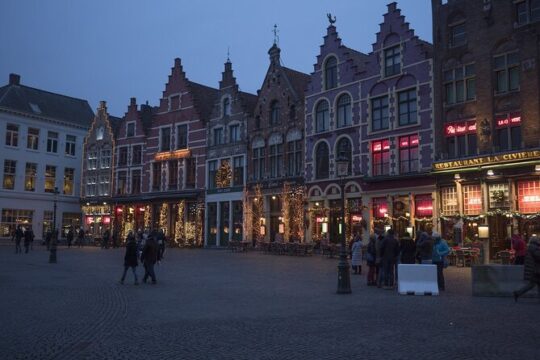
Christmas Eve in Flanders
Thu, Dec 24, 2026
New Year’s Day long weekend in Flanders
Jan 1–3, 2027
Valentine's Day in Flanders
Sun, Feb 14, 2027
Easter in Flanders
Sun, Mar 28, 2027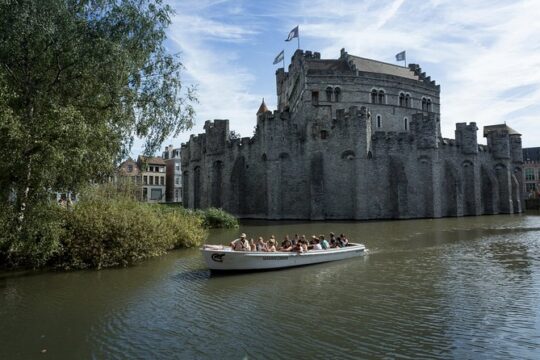
Good Friday in Flanders
Fri, Mar 26, 2027